
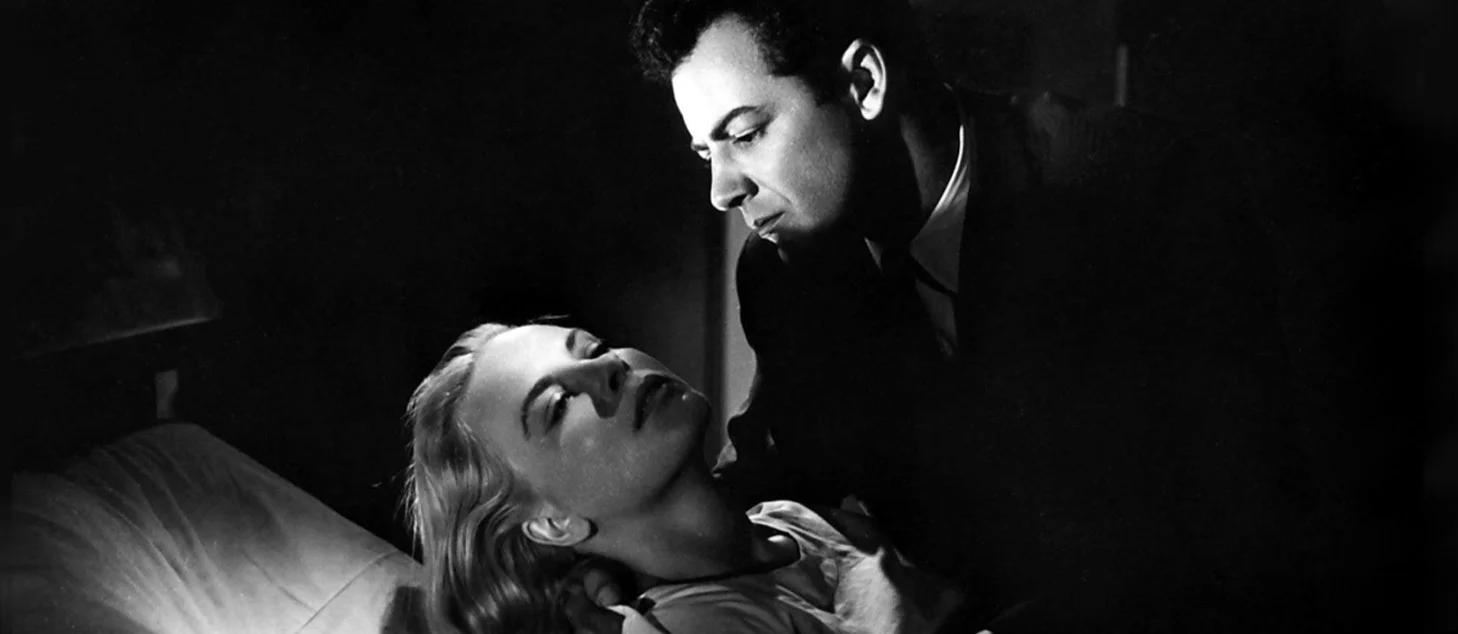


A lavish new 4K restoration and encoding of the noir classic The Big Combo has arrived, in an attractive steelbox presentation. The disc label is Ignite Films, which doesn’t scrimp for quality; included is a second worthy noir gem in HD, Robert Florey’s The Crooked Way.
When star Cornel Wilde acted on his ambition to produce, he made no false moves. If his first ‘Theodora Production’ overachieves on every level, it’s because he hired some of the best independent talent available. The Big Combo was written by the wildcat writer Philip Yordan, whose own company co-produced. The show was photographed by the cinematographer now considered the prime exponent of ‘noir’ lighting, John Alton.
To direct, Wilde secured the services of Joseph H. Lewis, who came with an industry reputation for artistic resourcefulness. Lewis’s killers-on-the-run tale Gun Crazy made his reputation with innovative visual techniques applied to ‘dangerous’ content; he had already been praised for his suspense skills on the superlative Columbia sleeper My Name Is Julia Ross. The Big Combo matches those films for expressive direction and compelling psychological overtones. The film’s most memorable moments have a dream-like quality, as if existing in an alternate chiaroscuro ‘pulp universe’ devoid of detail. On the surface a standard gangster tale, Combo excels as a study of three tormented, very disturbed characters.
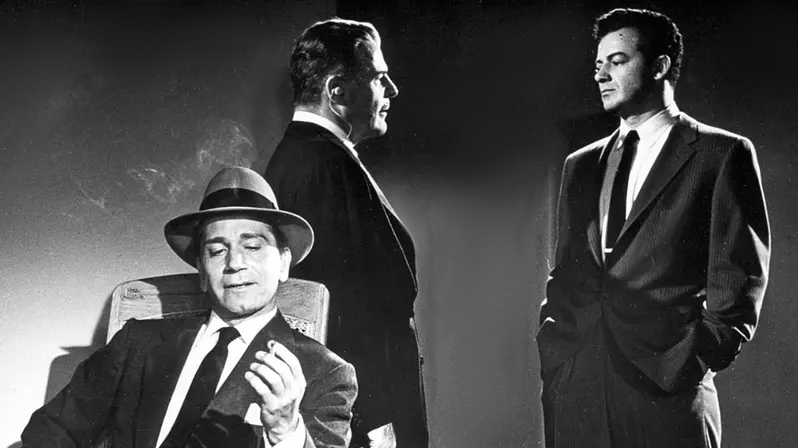
That other ’50s crime director Phil Karlson may have been more consistent, but Joseph H. Lewis was the stylist who wowed the French critics. The Big Combo appeared at the waning end of a noir cycle that had already mutated into police dramas filmed in a semi-realistic television style, as best typified (and transcended) by Don Siegel’s The Lineup.
Lewis’s earlier hit Gun Crazy was noted for its blacklisted author, Dalton Trumbo. Prolific writer/producer/dealmaker Philip Yordan was currently fronting for a pool of blacklisted screenwriters, taking official screen credit on eight different films in just two years. He is said to have folded more than one writer’s work into some scripts, adding his own polish and putting his name on the result. As a production partner, Yordan gave himself strong billing on this particular film.
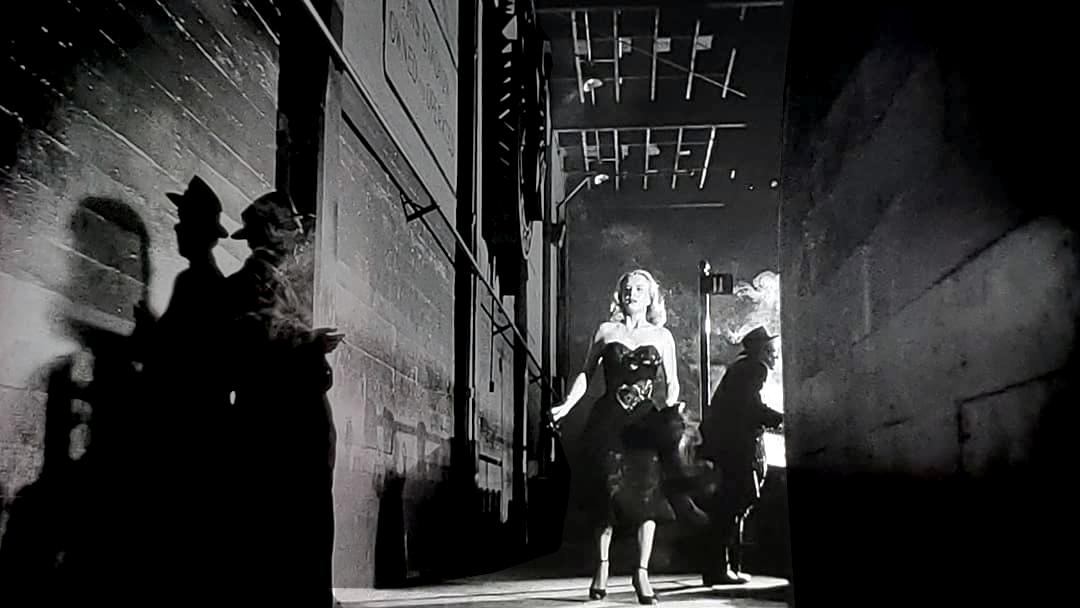
Most every scene in The Big Combo resembles a graphic cover illustration from a vintage crime paperback. The efforts of Detective Leonard Diamond (Cornel Wilde) to bring down mob kingpin Mr. Brown (Richard Conte) are so extreme as to border on obsession. Leonard is equally compelled to win the affections of Brown’s unstable girlfriend, Susan Lowell (Jean Wallace). Her physical attraction to the dynamic, aggressive Brown borders on sex addiction; she has abandoned her career as a pianist and stays with Brown despite suspecting him of terrible crimes. After his superior reprimands him for overspending, Diamond threatens and cajoles previous Brown associates in search of information about Brown’s first wife, who may have been murdered. But Brown’s hit men Fante & Mingo (Lee van Cleef & Earl Holliman) remove potential witnesses faster than Diamond can uncover them. Brown then sets his executioners on the scent of Diamond himself, which puts the detective’s sometime girlfriend Rita (Helene Stanton) in jeopardy. Diamond needs Susan’s trust if he is to force a confrontation with his underworld nemesis.
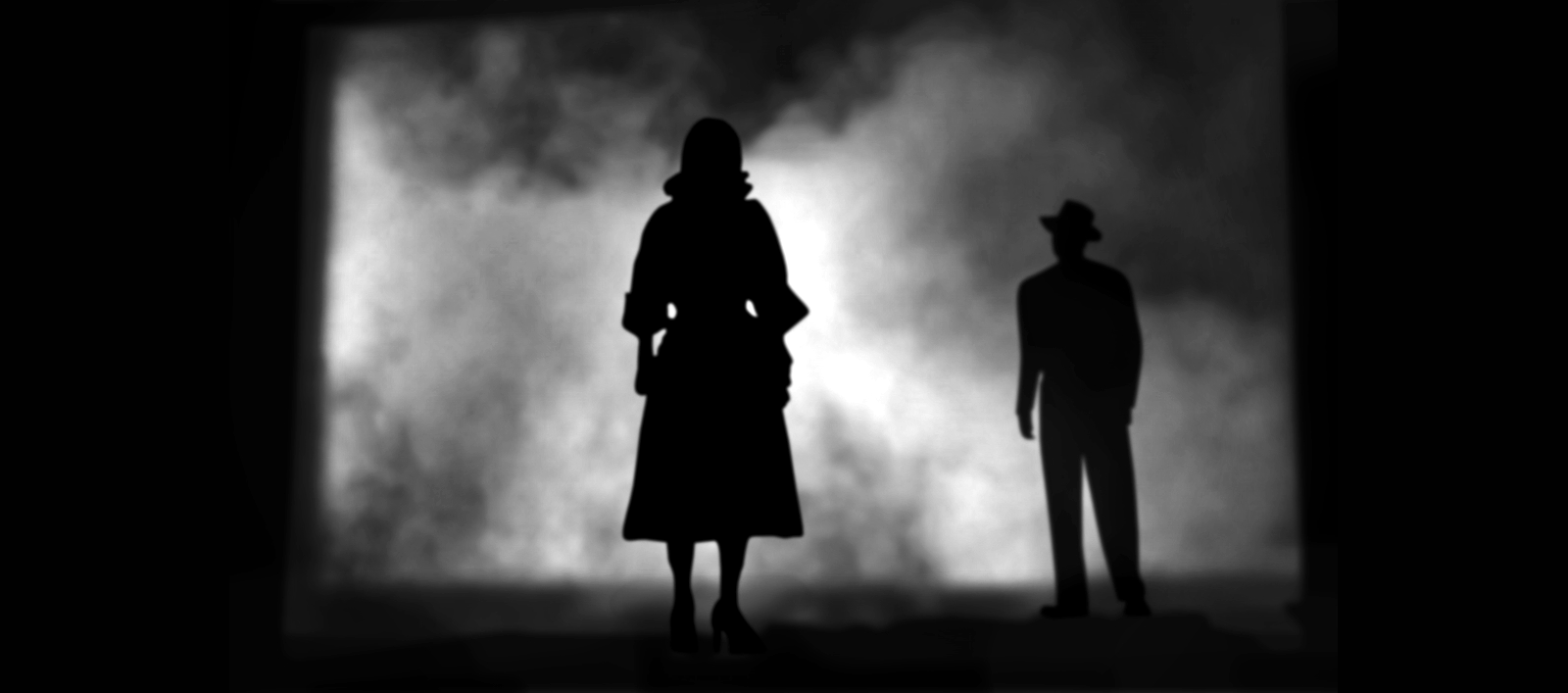
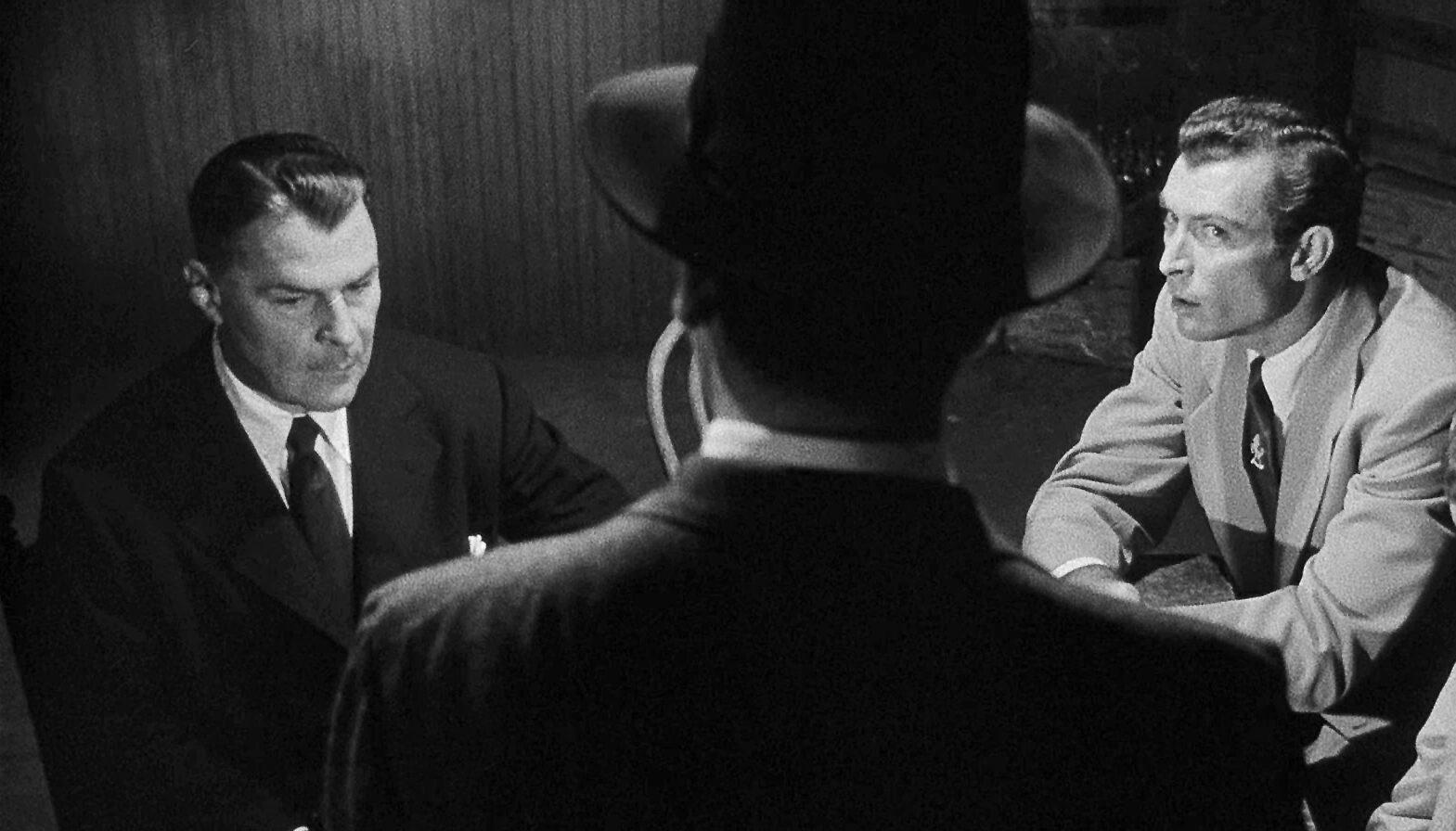
Take a step back from The Big Combo and its storyline is almost generic: the all-important difference is its intense characters and arresting style. The genius behind Combo’s stunning look is its legendary cameraman John Alton, whose career ranged from MGM’s glossy musical An American in Paris to the early crime films of Anthony Mann. The ‘pure light and pure dark’ of Alton’s artful images motivate repeat viewings of his key noir pictures: T-Men, Raw Deal, Hollow Triumph, He Walked by Night, Border Incident, Mystery Street. At least half of the action in Combo is set in darkened corridors and rooms where little is visible beyond the actors. John Alton had a knack for using highly stylized pools of illumination and weird light sources, yet still maintaining a semi-realistic frame of reference. His lighting direction helps Lewis suggest entire settings without showing them. The film’s foggy conclusion suggests a full airport tarmac, but was filmed on a small sound stage.
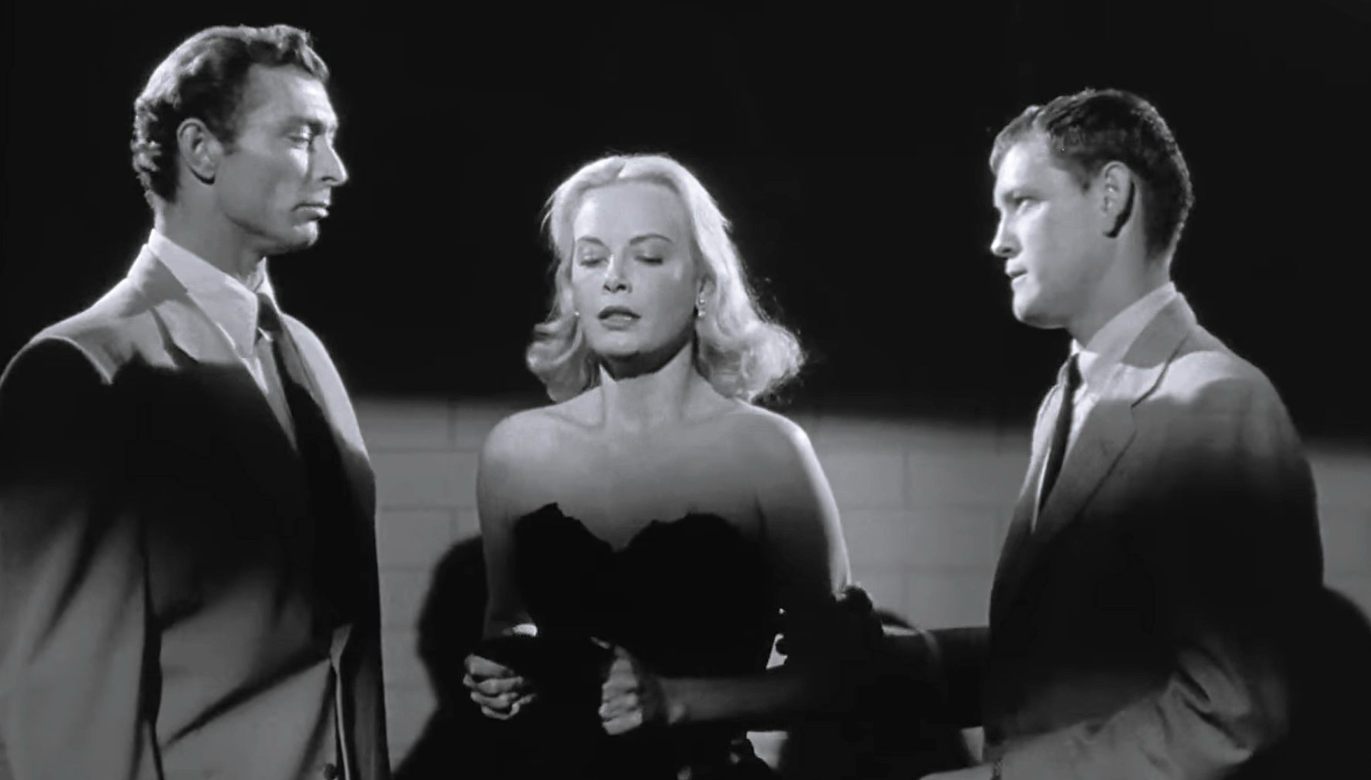
John Alton’s underworld feels tangible, without being shot on location. While fleeing from her sinister guardians Fante & Mingo at a boxing arena, Susan dashes through a series of stark spotlights that emphasize her figure and bare shoulders. When the hoodlums catch up with her in medium-shot, Alton’s selective lighting makes the breathless Susan look naked, held between them. Actors clearly had to hit their marks in this picture. In some setups a human figure moving two feet will pass into a completely different lighting setup. The result never feels ostentatious — we instead feel the dramatic effect Alton has created.
The Big Combo’s other selling point is its vivid characterizations. As in Joseph H. Lewis’ Gun Crazy, the real subject is erotic obsession, a force so powerful that it dominates everything. Lieutenant Diamond is a plainly sick man. His pursuit of the criminal villain is pathological, motivated more by jealousy than a dedication to law and order. Noir icon Richard Conte tops his previous Bad Guy characterizations, as the aggressive, hate-filled Mr. Brown, who despenses tough dialogue which commanding full compliance with his orders. Mr. Brown’s favorite motto sums up the spirit of cutthroat competition: “First is first and second is nobody!”
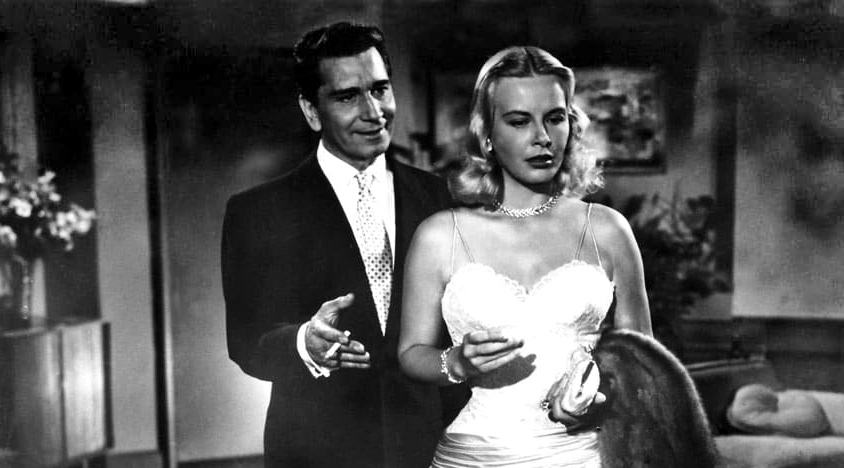
Mr. Brown browbeats everyone in the cast, yet it is clear that his love for the suicidal trophy-trollop Susan is more tender than anything detective Diamond has to offer. The cop’s insistent focus on Susan plays more like possessive harassment. After having her stalked and shadowed for six months, Diamond shows far less fondness for her than does her ‘tormentor’ Brown.
No wonder Susan takes an overdose of pills — she’s being pressured by two amorous madmen. Mr. Brown may boast about the women that are his for the taking, but Detective Diamond also has a girl on the side, Rita (Helene Stanton). The humorless Diamond is no less callous than Brown, as seen when he thoughtlessly allows the faithful Rita to walk unknowingly into danger.
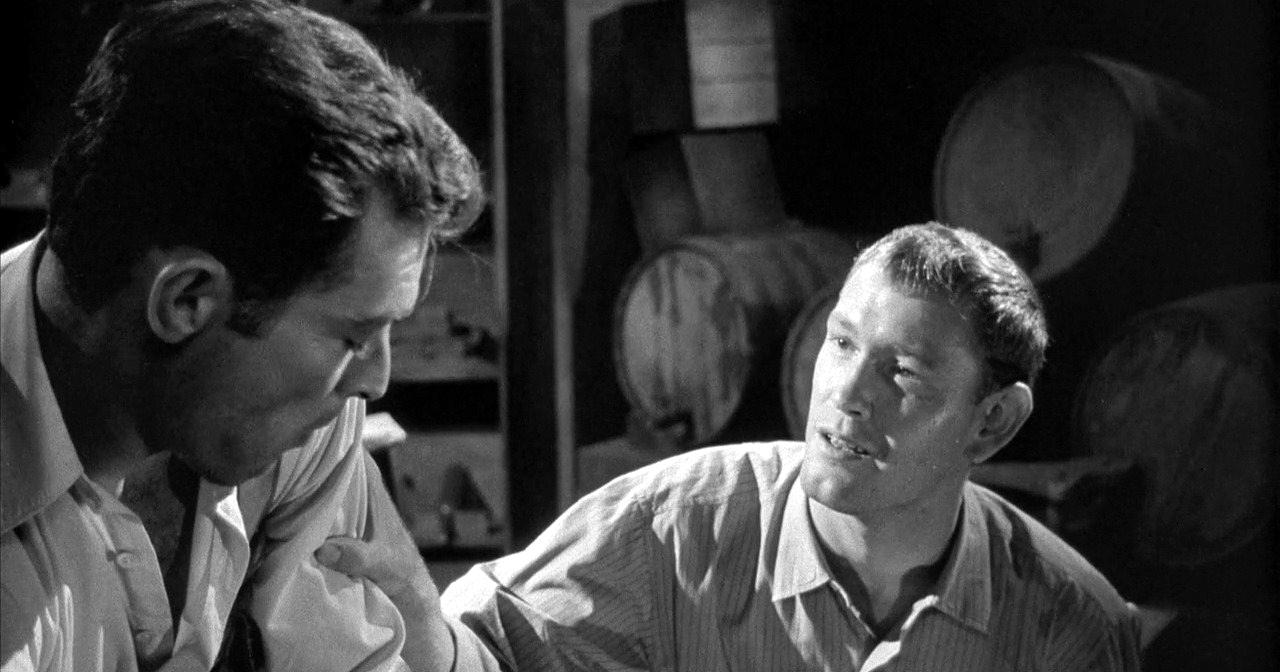
In the original Overlook Film Noir Encyclopedia, contributor Carl Macek noted that the hit men Fante and Mingo “appear to have a covert relationship as lovers.” Genre critics in search of gay elements in films have zeroed in on Combo ever since. In contrast to the perversity of the leads, Fante and Mingo share The Big Combo’s only healthy relationship. They sleep in the same room, are considerate and thoughtful toward one another and remain faithful unto death. When not serving as chaperones for the unstable Susan, they enter the action only when Brown needs another killing done. While hiding out after a killing, their dialogue couldn’t be more of a giveaway: “The cops will be looking for us in every closet!” For quite a while now, any overview of The Big Combo will be sure to mention its inspiration for Quentin Tarantino’s similar underworld ax-men Jules and Vincent.
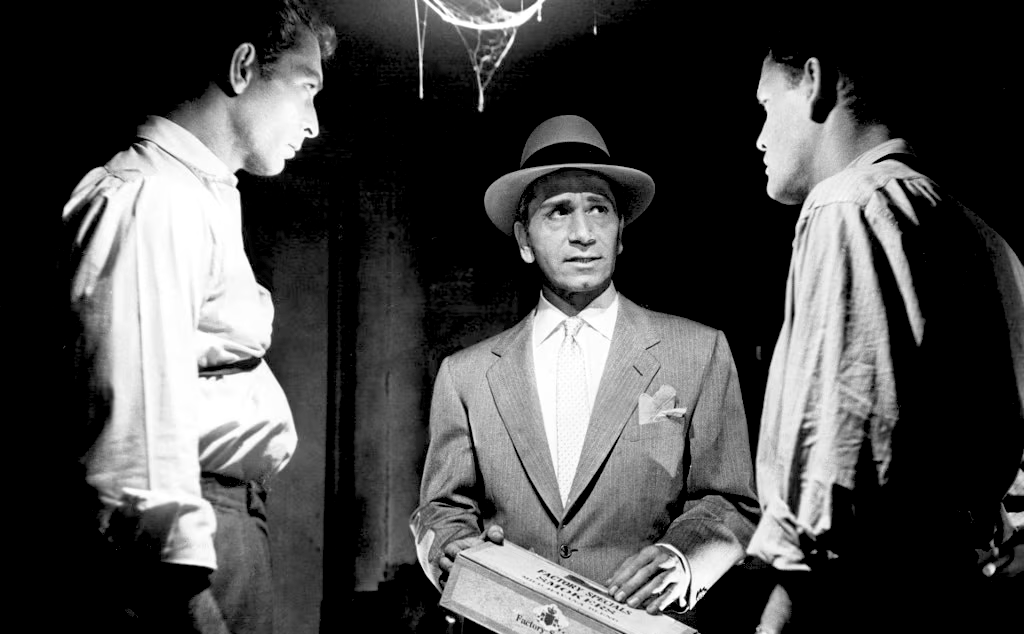
The Big Combo didn’t invent the idea of a cop-and-robber doppelgänger motif. Since neither Mr. Brown nor Detective Diamond is a straight shooter, their struggle is more a clash of conflicting lifestyles. Diamond spouts a lot of high-handed moralizing but even his boss Captain Peterson (Robert Middleton) thinks he’s a loose cannon, gone nuts over a suicidal blonde. Susan’s dilemma is that neither man will yield to her needs — all she wants is some psychological liberty.
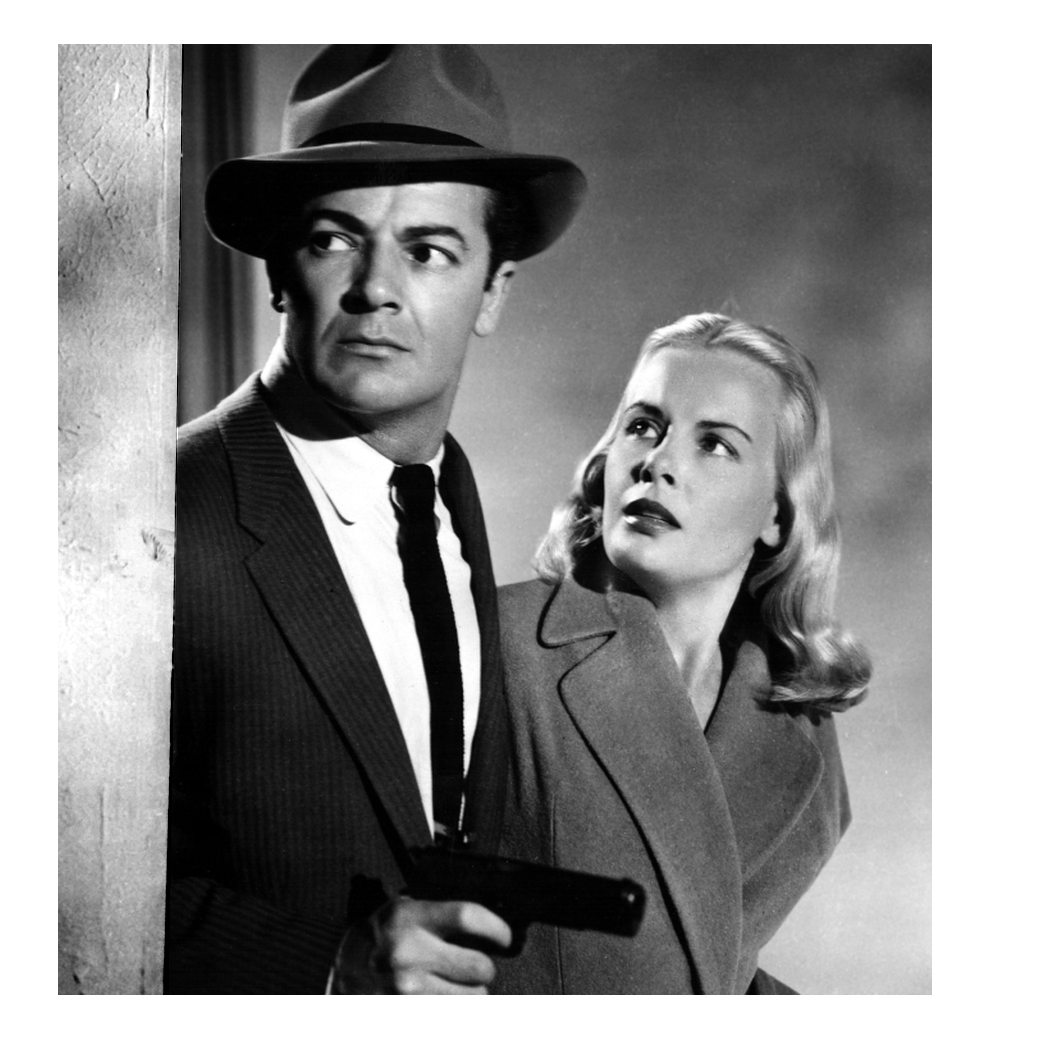
The story is an exercise in personal power, as is seen in the way the hoodlums adhere to the Big Combo’s pecking order. Fante & Mingo are loyal to Mr. Brown, wavering only when the washed-up mobster Joe McClure (Brian Donlevy) gives them conflicting orders. To be ‘First,’ Mr. Brown must ruthlessly dominate all around him. He enjoys toying with his enemy Lt. Diamond and his own underling McClure, mocking their relative impotence.
Combo is a pared-down film done on an Allied Artists non-budget, yet looks like a much more expensive, artistic project. The actors are cast to type, but considerable attention has been given to the finer points of direction — this is no Nick Ray method showcase, yet Lewis gets exactly the performances he wants. The acting honors go to Richard Conte’s’ Brown, the most dimensional character on screen. Conte’s noir successes with Robert Siodmak and Jules Dassin back in his late ’40s heyday more than prepared him for this outing. A couple of years later, Conte would excel as the virtuous but deeply compromised hero of The Brothers Rico, an existential nightmare that’s as bleak as they come. And he would be perfectly cast in Coppola’s The Godfather, as a major Mafia player who runs afoul of the new regime.
Starting as an Olympic fencer, Cornel Wilde wowed fans, gaining the reputation as a handsome leading man with a narrow acting range. He was once cruelly described as ‘cheerfully inexpressive,’ and as he turned to directing genre work his persona became grim and unyielding. The Big Combo is one of his best pictures.
The stunning Ms. Wallace projects a specific, potent blend of sexual instability. Alton’s camera objectifies her even as it concentrates on her anguished vulnerability. Her blonde Susan Lowell is a pampered prisoner of sex. In a scene that cannot possibly have gone unnoticed in 1955, Susan stands at attention, clearly aroused, as Mr. Brown ends his caresses by sliding down her body and out of frame. It’s one of the most erotic moments in ’50s noir.
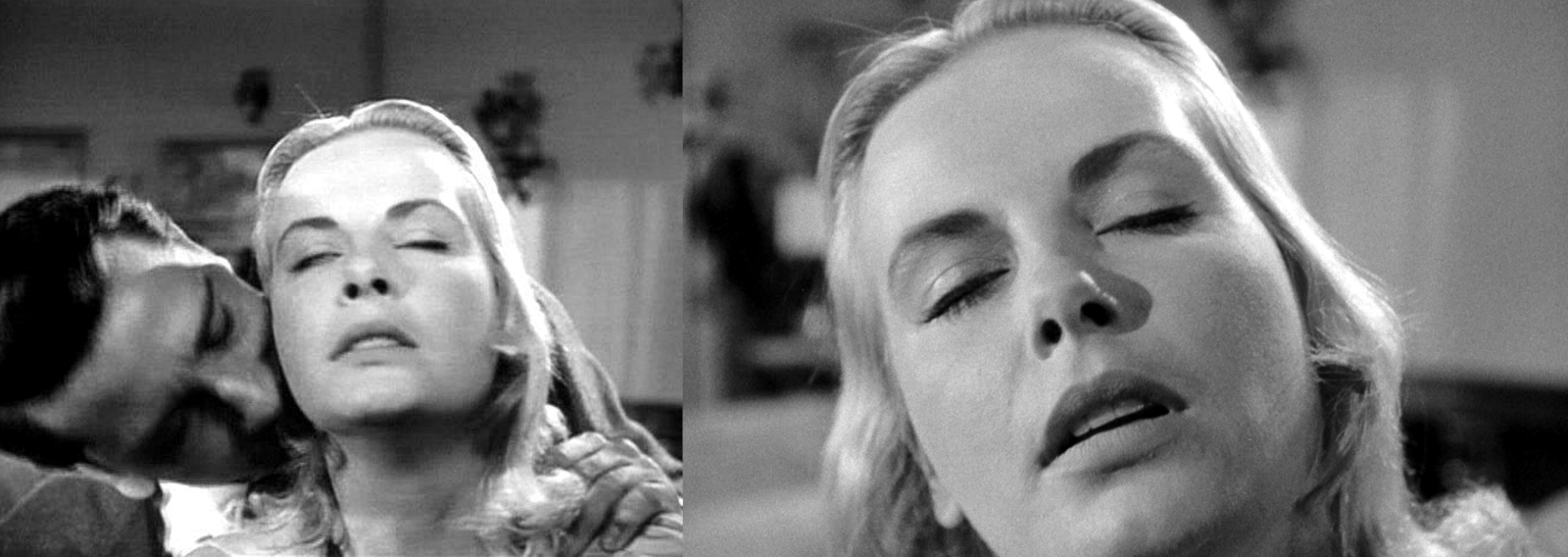
Wallace and Wilde enjoyed a long Hollywood marriage after his earlier matrimonial flops and her publicized suicide attempts. They worked together often, even playing Lancelot and Guinevere opposite one another in Sword of Lancelot. She didn’t appear in Wilde’s one masterpiece, The Naked Prey but shows up in his confused, under-funded war movie Beach Red and the unpleasant, hectoring post-apocalyptic Sci-fi No Blade of Grass.
Lee Van Cleef and a convincingly domestic Earl Holliman are standouts as the hit men; hidden in the cast are Helen Walker, previously the ice-cold vixen of Nightmare Alley, and the always-excellent Ted de Corsia, from The Naked City and The Killing. Veteran actor Brian Donlevy’s character is a colorless stock baddie, and some scenes give the impression that he’s sitting still waiting to be directed by somebody. But Donlevy is granted a now-famous farewell involving a hearing aid. The jarringly unique scene was often cited as an invention of the director, when it more likely originated in the script.
Ordered!
Great review. This is my favorite Richard Conte performance, and I can’t get enough of John Alton. I would still rate seeing his “I, The Jury” (1953) in 3D at the Alamo theater as one of my all time favorite movie experiences. The 3D was just incredible.
I knew Cornel Wilde while he was setting up Beach Red, a film with many positive attributes that still managed not to work effectively. As for The Big Combo, not bad at all, but Conte has never moved me. In fact, it wa said correctly by others who knew him well that, in person, he was electric but never quite managed to get that across on screen. Too bad. In any case, the supporting cast was fine, but Helene Stanton’s work was by far the most attractive and interesting. One other element, never mentioned, was that virtually all of the characters had a touch of the minority about them. beginning with Wilde.
Thanks Barry, I’ve learned to like Wilde a lot, but the ‘can’t act’ slurs hang on.
God bless you, Glenn.
He had a pretty successful career for someone who couldn’t act. I remember reading an interview with the kid actor that played Miles in “The Innocents” and was shocked to read him say that Deborah Kerr was really nice but couldn’t act
The sight of Jean Wallace must’ve turned a lot of boys into men.