
Over the course of ten years and some 40 odd films, Hamburg successfully disguised itself as London and no one blinked—not cartographers, not the census bureau. The shapeshifting locales are not the only peculiar thing about the playful thrillers known as “Krimis,” a treasure trove of idiosyncratic whodunnits based on the crime novels of Edgar Wallace. Krimis (derived from kriminalroman) were produced in Germany but set in Britain with German actors assuming the mannerisms of the stereotypical Brit. Add to the mix two ingenious German directors and the results are some of the most eccentric examples of cinema ever committed to film.
With Krimis in Black & White, Vinegar Syndrome has put together a seemingly random trio of these handsomely produced thrillers that are nevertheless excellent representatives of this extremely niche but oh so enjoyable genre. Alfred Vohrer helms two, The Indian Scarf (Das indische Tuch) and The Squeaker (Der Zinker), the third, Room 13 (Zimmer 13), was created under the watchful eye of Harald Reinl. The three films also represent the first significant American Blu ray releases of the Krimis (Film Masters issued Creature with the Blue Hand (Die blaue Hand) in 2024 and Kino Cult offered up a faux Krimi, 1972’s Death Packs a Suitcase (Der Todesrächer von Soho), directed by the anti-Vohrer, Jess Franco).
Vohrer was born in Stuttgart in 1914 and spent several years working at UFA (Universum-Film Aktiengesellschaft) where he produced the German-language versions of Hollywood imports. He took over the director’s chair in 1958 for Crime After School, a Blackboard Jungle-inspired melodrama which was followed in 1961 by the fountainhead of modern Krimis, The Dead Eyes of London (Die toten Augen von London). There had been krimis before—Reinl’s Face of the Frog (Der Frosch mit der Maske) kicked off the series in 1959—but Voher’s film was something new; a sinister fever dream populated by characters out of a George Grosz painting, it felt less like a sophomore effort and more like an artist’s statement. Voher would make good on his audacious debut, directing a lucky 13 more of the Krimis—each with such a personal stamp they could be referred to as Der Vohers.
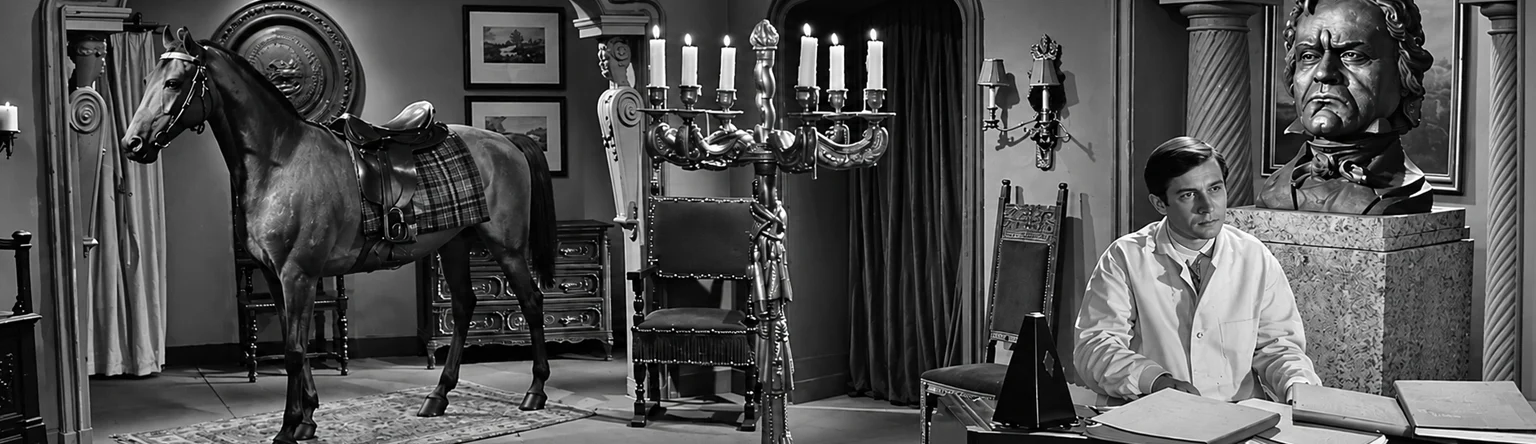
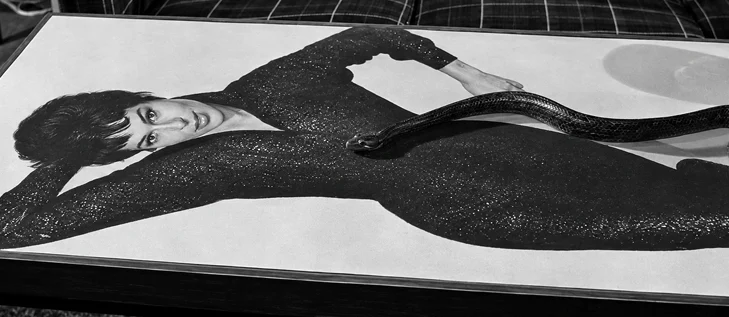
It wasn’t that Vohrer was the perfect director for these mysteries, but that these flamboyantly macabre divertissements were perfect for him— he made torture chambers fun. As a director he seemed, like so many German artists, to have expressionism baked into his DNA. Vohrer’s films on the Vinegar Syndrome set are far from his most exciting works but they are continually entertaining with typical Vohrerian flourishes: a casually surrealistic image of a stuffed horse perched by a pianist; a scene photographed from inside a character’s mouth (Frank Oz borrowed that gag for Little Shop of Horrors); a snake slithering over a life-sized photo of a pin-up model.
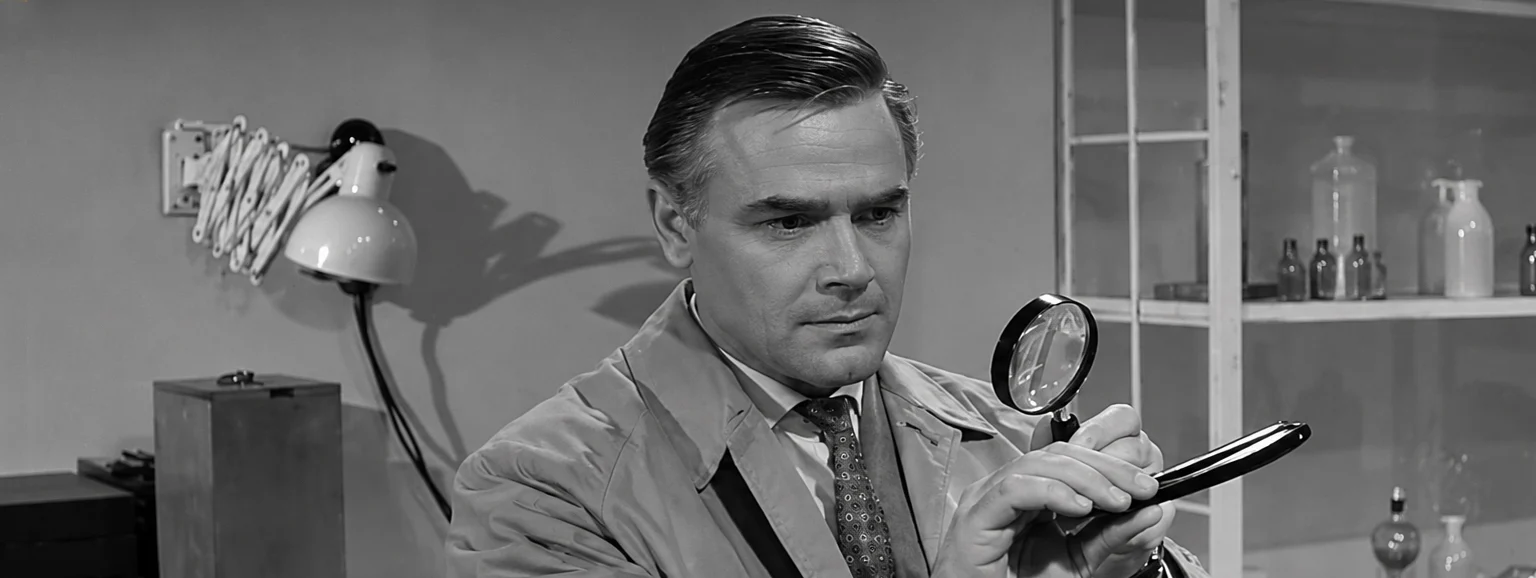
The Wallace adaptations revealed Vohrer’s fondness for dank criminal lairs, glistening laboratories, and smoky strip clubs. These exotic settings were presented in black and white “Ultra-Scope,” an elegant widescreen process favored by cinematographer Karl Löb. An essential component of the genre, Löb worked on the majority of krimis including those of Reinl and Fritz Lang (The 1,000 Eyes of Dr. Mabuse).
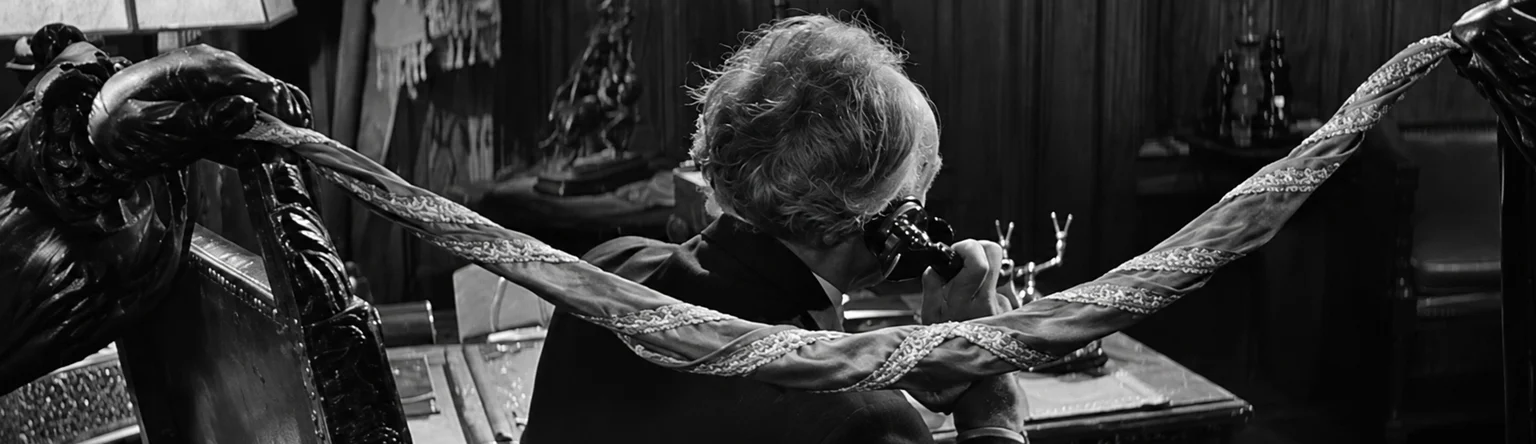
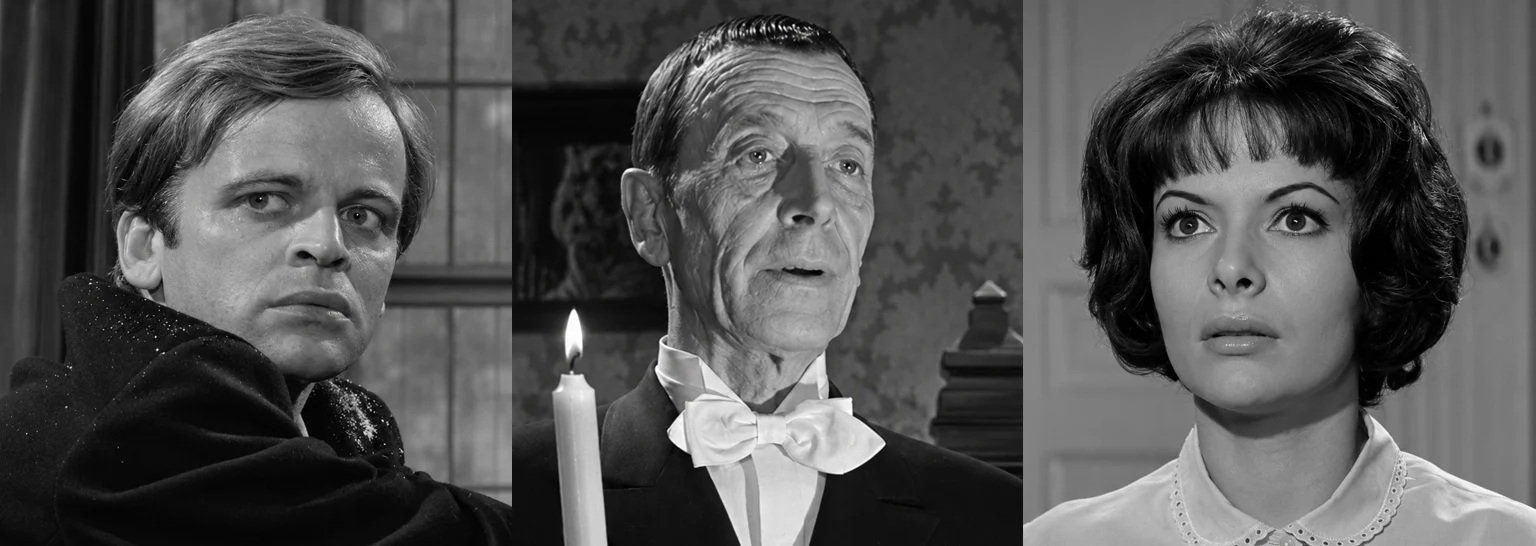
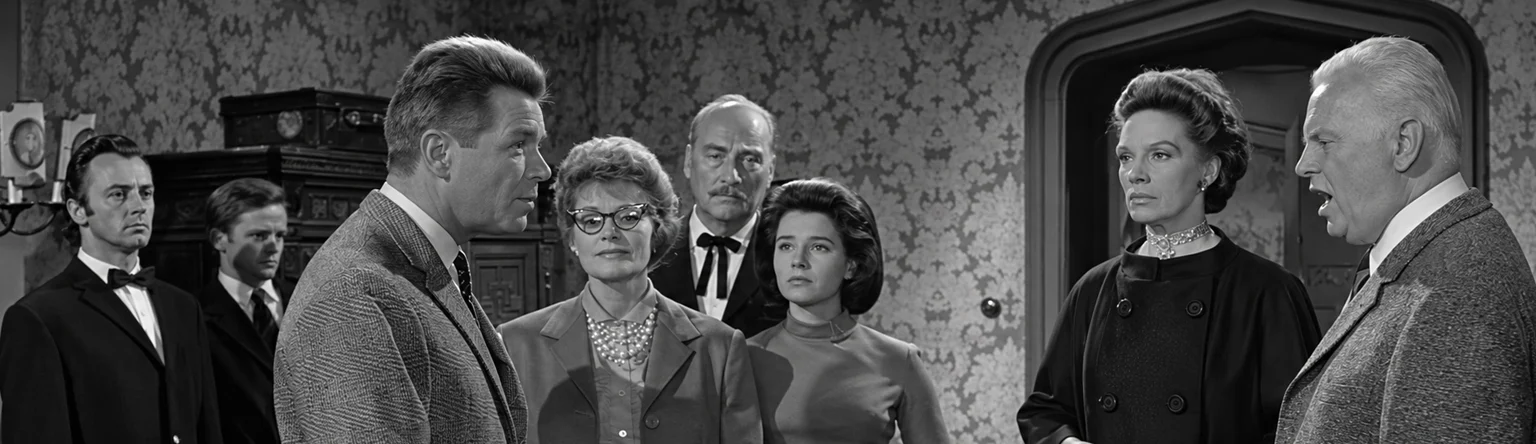
Heinz Drache headlines the The Indian Scarf and is supported by Krimi regulars Ady Berber (the towering man-beast of Dead Eyes of London), Eddy Arent (stalwart comic relief), and the always alarming Klaus Kinski. The plot is as old as time, a manor lord is found strangled, the family gathers for a reading of the will, and the murders escalate, each heir executed with the help of a stylish Indian scarf. Voher specialized in the garish death scene; in The Indian Scarf the strangulations are filmed from the point of view of the murderer as if the audience itself were creeping up on the victim. How this Hitchcockian trick was achieved is so transparent, it adds to the fun. That irreverent attitude was shared by the promotion department; German posters for The Indian Scarf reveal the identity of the killer.
Drache, Barbara Rütting, Arent, and Kinski return for 1963’s The Squeaker (“the Squealer”) in which a blackmailer threatens to reveal the identities of sundry smugglers and thieves. When met with resistance, he eliminates them with the poison of the Black Mamba.
Harald Reinl was born in 1908 in Austria, his career began in the most unexpected fashion—as the stunt double for Leni Riefenstahl—and ended in tragedy (murdered by his wife in 1986).
If the prankster Vorher seems to be constantly winking at his audience, Reinl retains his Kubrickian composure during the most outlandish proceedings. Though an icy technique is part of his cool character, he didn’t shy from actual human emotion as did Vorher, and though Room 13 has plenty of sardonic humor, this story of a mysterious series of razor-murders has a real core of tragedy. The film stars Joachim Fuchsberger (the series’ Cary Grant stand-in), Karin Dor (the lucky Reinl’s real-life wife), and Walter Rilla (figurehead of Reinl’s Mabuse films). Dor would become as omnipresent in the series as Arent, usually playing the damsel in distress—Room 13 reveals a more ambivalent leading lady, one who has her own secrets.
Vinegar Syndrome gives us superb editions of these films with richly detailed transfers and generous extras. There are commentaries for each film (provided by Samm Deighan, Alexandra Heller-Nicholas, and Jonathan Rigby and Kevin Lyons) and several short-form documentaries.
Peter Thomas, the krimis’ star composer whose kinetic music is performed strictly tongue in cheek, is celebrated in an interview with his son Philip in A New Kind of Score. Hallo, hier spricht Peter Thomas! features the musician at his most animated in a 2011 documentary directed by Oliver Schwehm.
Kim Newman and Nicholas G. Schlegel bring formidable insight to the works of Edgar Wallace with Wallace auf Deutsch: From English Paperback to German Box Office, and Heller-Nicholas contributes a video essay, Women and the Gaze: Gender, Power and the Look in Zimmer 13, about the fraught subject of the Krimis and the role women play in a world where violence against women is a selling point.
There’s plenty more to be found in this terrific set and you can find all the details on the Vinegar Syndrome site.