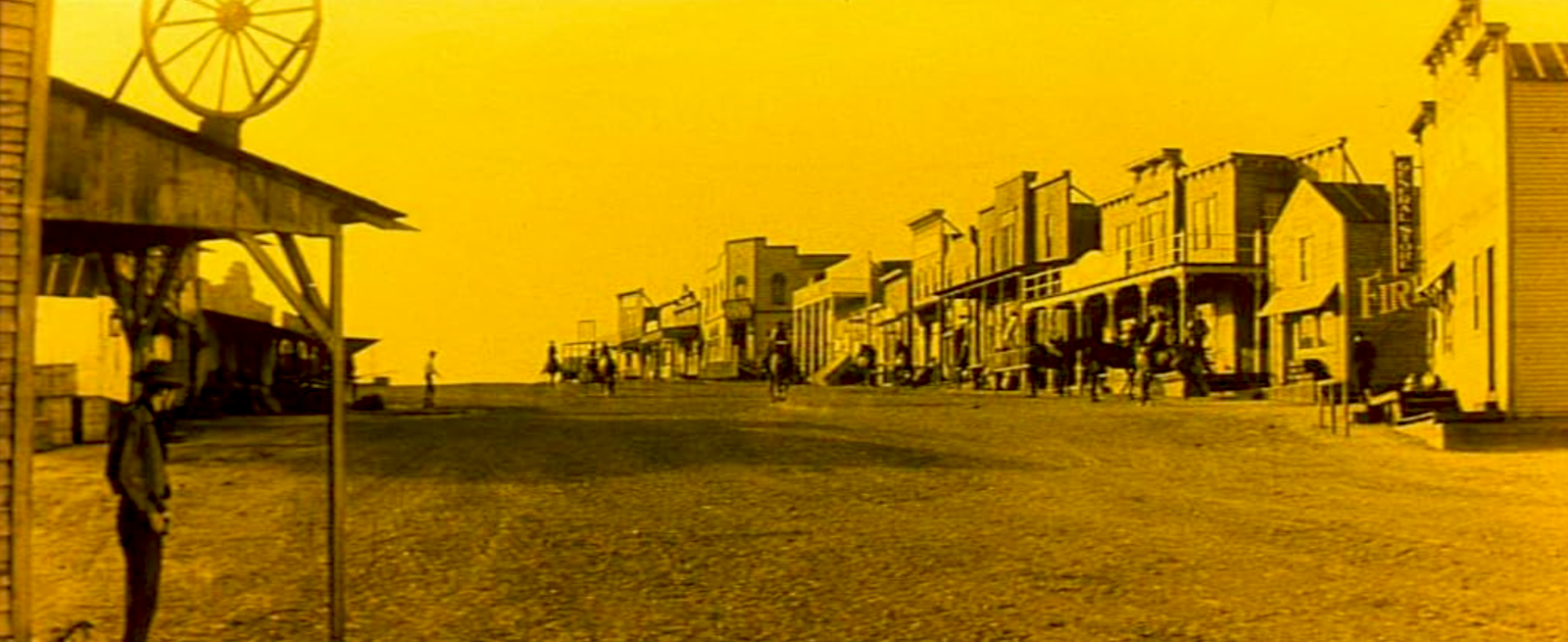
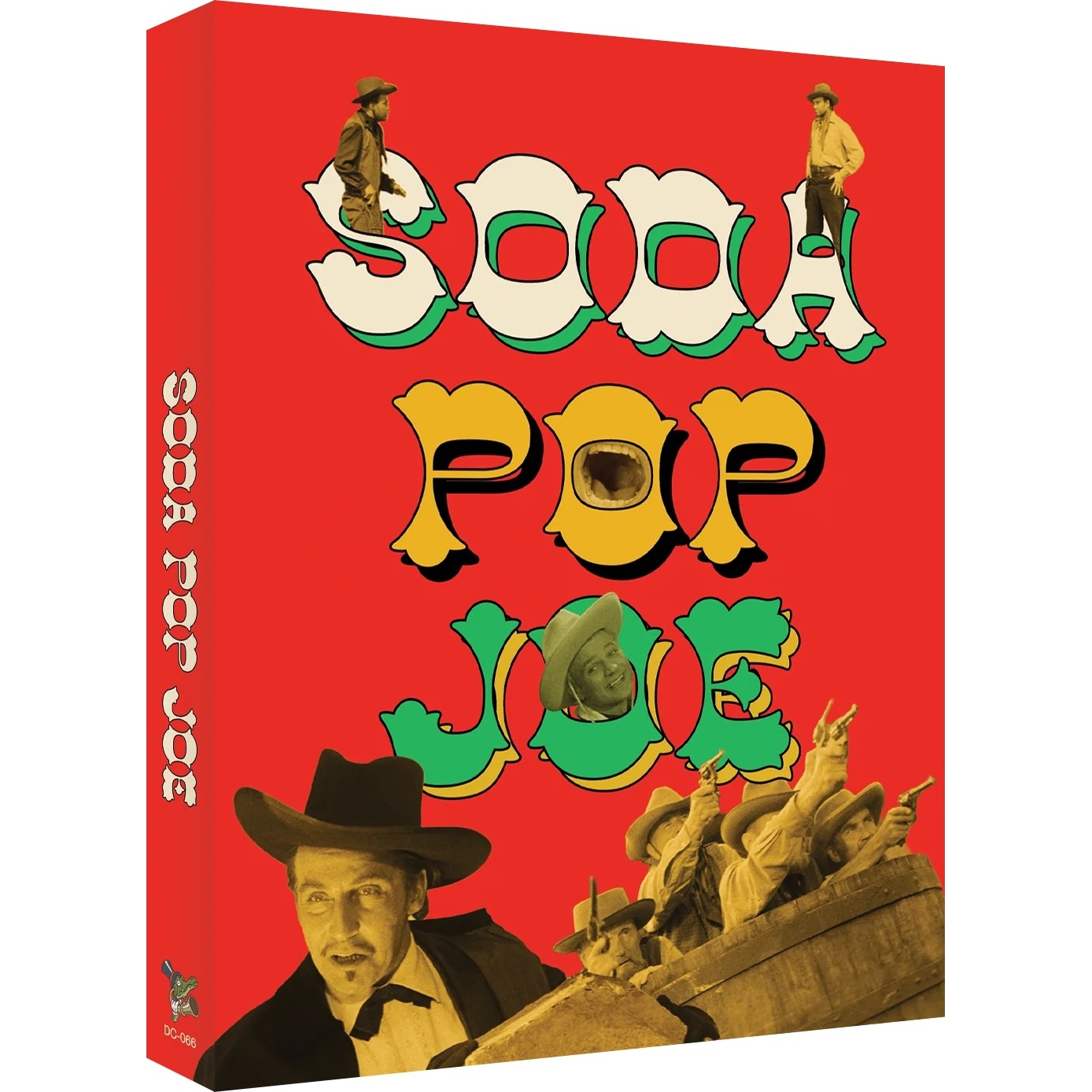

 Welcome to the funniest display yet of Czech creativity in the 1960s. According to the experts, the English title Soda Pop Joe is more accurate, but it goes against the established, more attractive ‘Lemonade Joe’ — a variation of which appears on posters for other languages, too.
Europeans loved American westerns just as much as we Yanks, as evidenced by the enthusiastic German westerns of the 1960, from both sides of the Berlin Wall. In the Eastern bloc, filmmakers often turned to fantasy or the past, to avoid the ideological oversight that would be trained on every aspect of a story in a contemporary setting. That’s why Karel Zeman’s science fiction pictures took place in a fantastic, stylized past. This show is an overtly cartoonish takeoff on naïve American westerns, on the level of 1985’s singing cowboy spoof Rustler’s Rhapsody but much wilder and faster. We are told that it is an extension of an animated Jiří Trnka short called Arie Prerie (‘Songs of the Prairie’) from 1949. It even uses the same partly- yodeled nonsense song for its hero’s main theme. Soda Pop Joe entertains and fascinates, with the madcap excesses of Tex Avery, Frank Tashlin and Al Capp, talents whose visually-oriented jokes sometimes played with the film form itself.
Cultural differences are easily overcome in this 1964 picture, as everybody knows the ground rules of American westerns, with their unambiguous heroes and villains. Everybody knows how to spoof a corny western; these Czechs invent their own world of impossible comedy gags.
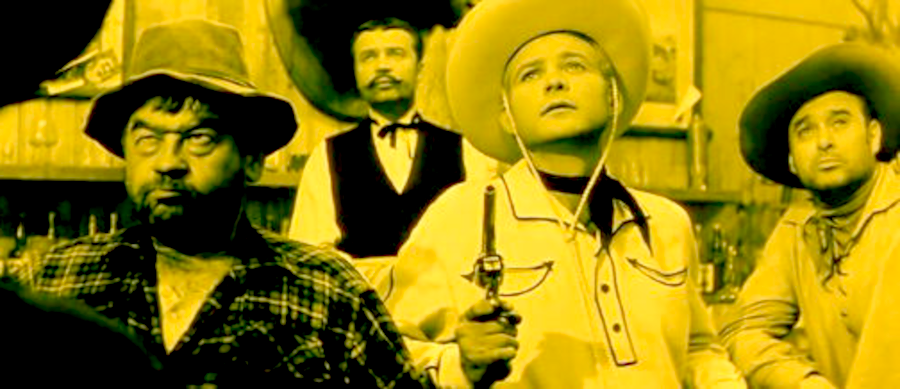
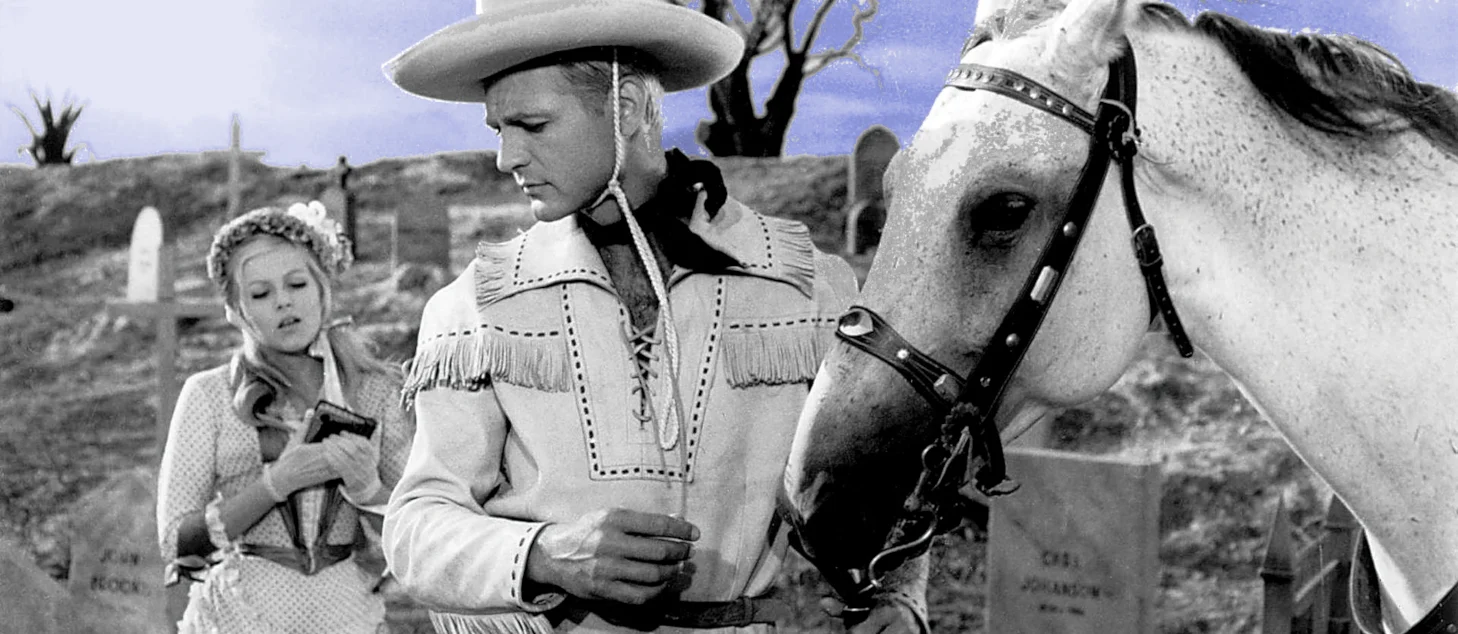
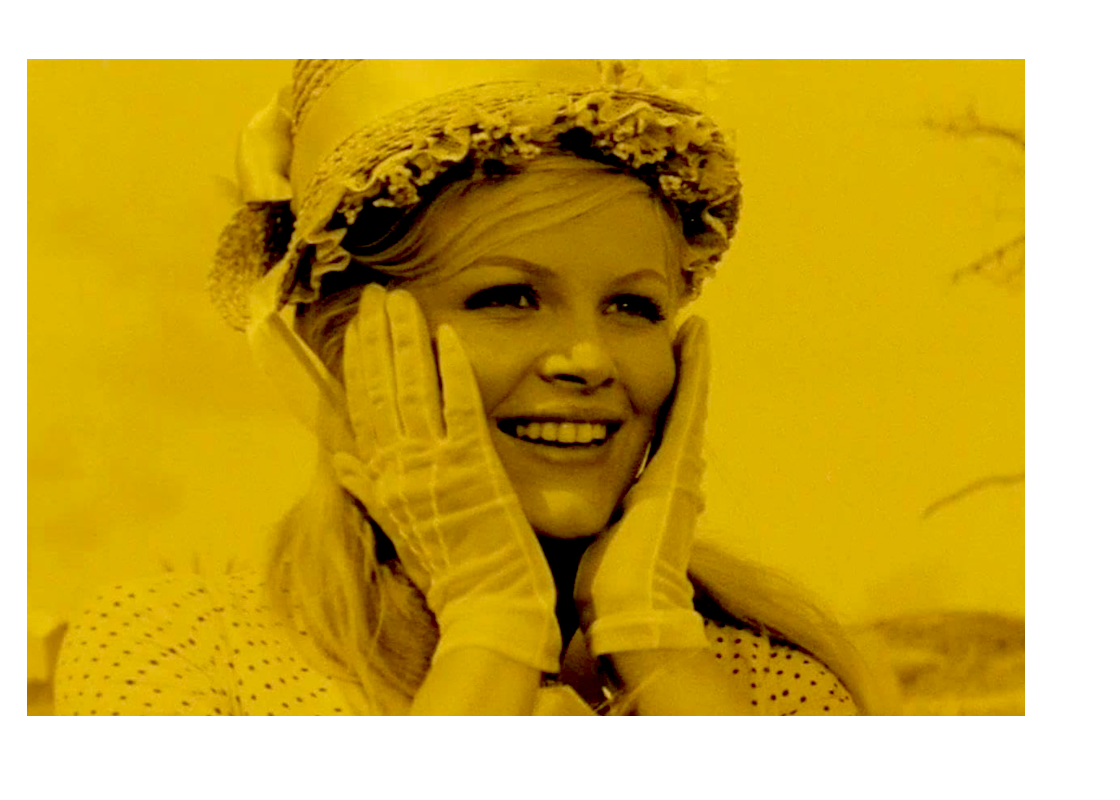
The corrupt Dough Badman (Rudolf Deyl) of the Trigger Whiskey Saloon dominates Stetson City. Dough only has eyes for his sultry torch singer Tornado Lou (Kveta Fialová), but she is waiting for a handsome hero to come and change her life. Activists Winnifred Goodman (Olga Schoberová; a.k.a. Olinka Berova) and her father Ezra (Bohuš Záhorský) call for abstinence from alcoholic beverages and are roughed up for their trouble. To their defense comes Soda Pop Joe (Karel Fiala), a white-suited, two-gun hero who never misses and drinks only a soft drink called Kolaloka. Ezra opens a Kolaloka saloon, and with Joe’s example the cowboys desert the Trigger Whiskey bar. But Dough Badman is given a second chance when his own evil brother comes to town. The notorious cheat, cardsharp and murderer Hogo Fogo (Miloš Kopecký) has plenty of dirty tricks to win Winnifred and put Soda Pop Joe in his grave.
When it comes to parody, these Prague hipsters definitely Get It.
Comedies lampooning the conventions of westerns have a way of running out of steam before they’re finished, as happens in the (still) amusing Rosemary Clooney musical Red Garters. Soda Pop Joe puts enough invention and madness into its spoofery to stay the course. It too is a part-musical, with songs appropriately styled to its characters. Tornado Lou’s big number is a takeoff on saloon chantoosies, while our hero Joe begins one yodeling song showing us his tonsils. Bad guy Hogo Fogo warbles the tune Master Criminal of the Old West,’ explaining his life of evil while we see a parade of his many disguises.
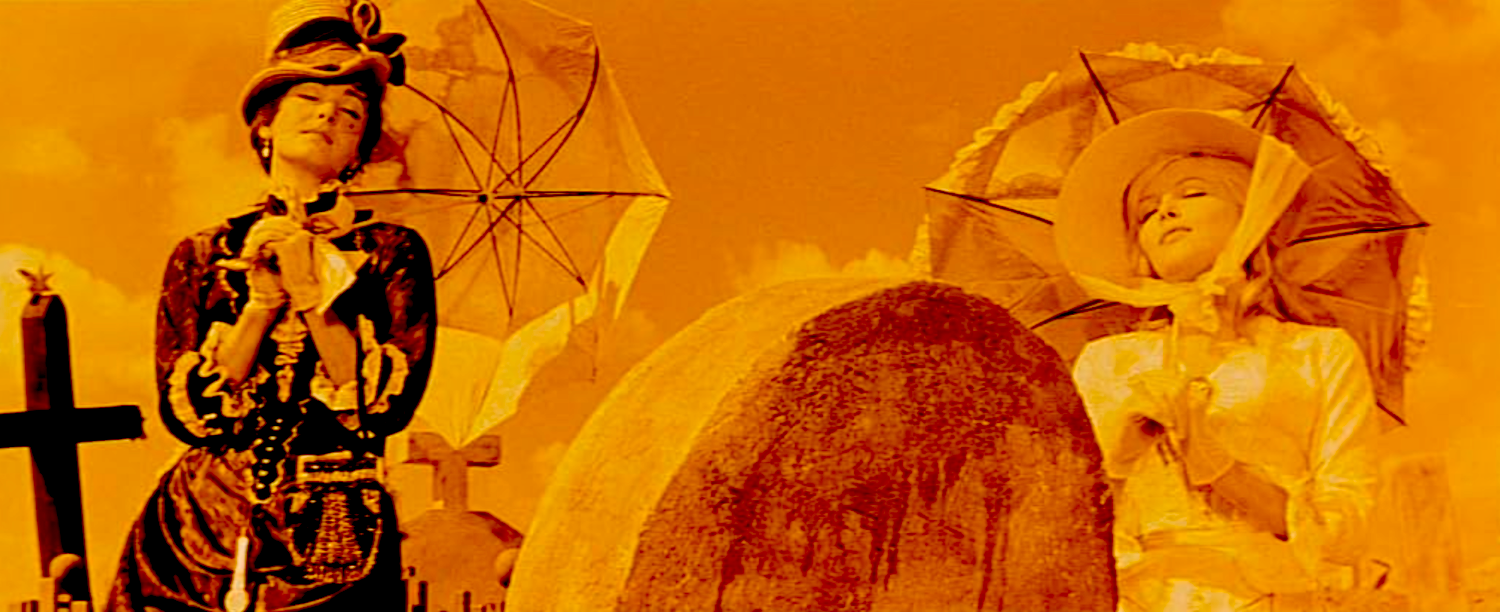
Both Tornado Lou and Winnifred naturally fall head over heels in love with Joe. They aren’t exactly true to their assigned identities as ‘fallen woman’ and ‘virtuous innocent.’ Lou’s romantic yearnings seem genuine. Winnifred’s radiant guise of purity dims as we begin to notice her focus on business concerns. Winnifred also double-crosses a trio of bad guys by shooting them with a gun hidden in a camera.
The comic invention comes up with endless sight gags, many possessed of a charm factor missing in Hollywood spoofs. A spilled ‘special-strong’ drink burns a hole in the barroom floor, like acid. When Joe ducks behind a water trough to avoid stray bullets, his horse ducks with him. Joe’s bullets are sometimes tracked with animated dotted lines, and the bad guys cheat at cards by blowing smoke rings with hidden messages. When one bad guy freezes with fear, his pal picks him up like a stiff mannequin, and carries him out slung under one arm.
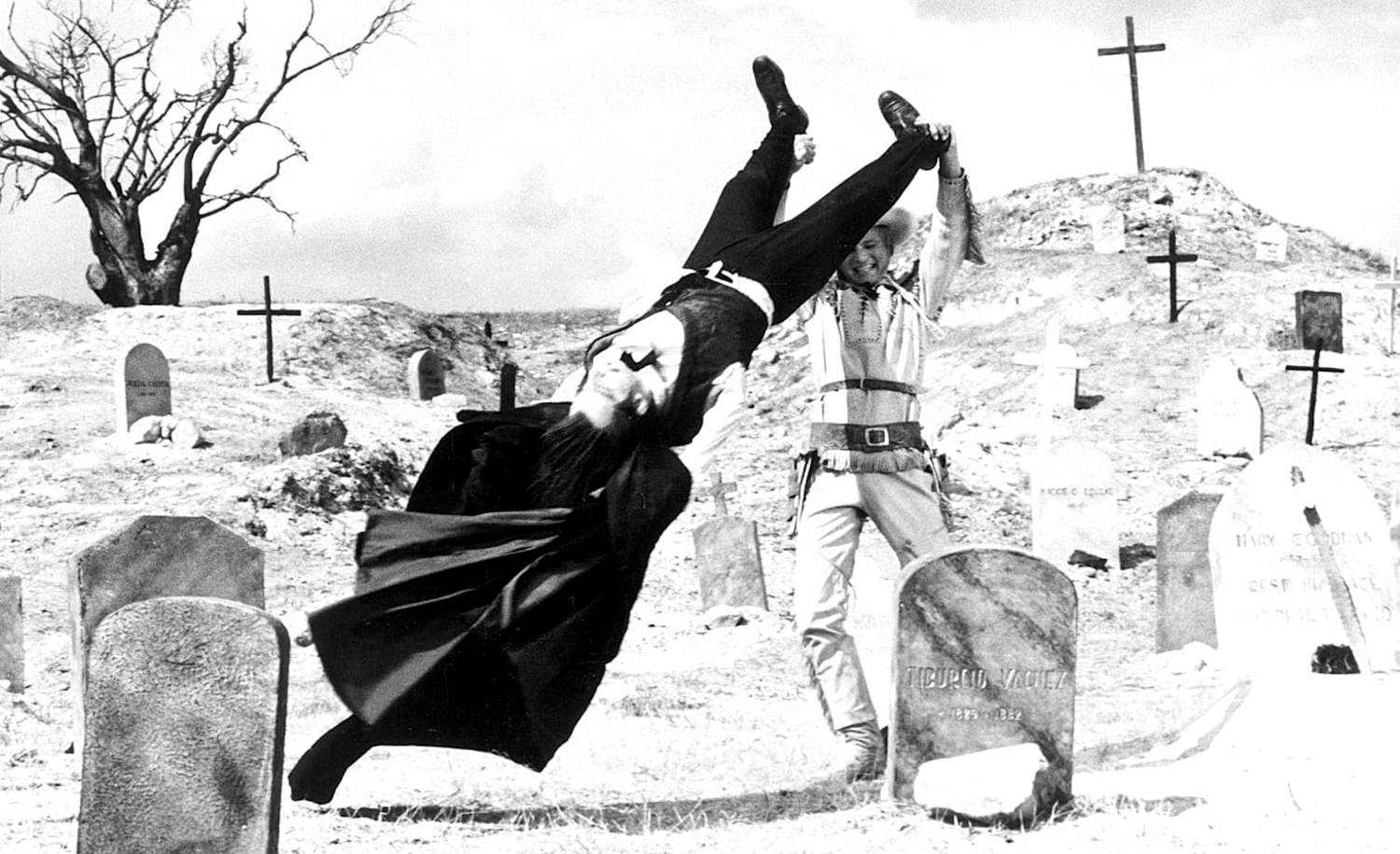
The action has great fistfight and horse stunts that we assumed were performed by circus acrobats. In Deaf Crocodile’s essential extras, director Lipský remembers that they were ‘boxers, high jumpers, judo wrestlers and other athletes.’ Pixillation, jump cuts and slow motion are used to make Joe seem like a dervish and to give variety to stunt fights. In keeping with the silent movie theatrics, scene tints change regularly — sometimes changing like a color wheel. The comedy is not ‘loose.’ Director Lipský blocks and composes his gags for maximum impact.
One of Dough Badman’s thugs ‘tortures’ Joe by burning a hole in Joe’s perfect cravat and pouring chocolate syrup over his head. With his hat brim torn off and a moustache painted on his face, Joe’s noble cowboy looks more like a demented Cossack. He eventually changes to a black outfit, more suitable for his last-act revenge. Soda Pop Joe has a few odd structural parallels with Sergio Leone’s Fistful of Dollars, filmed the same year. A gunslinger with an unclear agenda arrives in a town, in the middle of struggle for dominance.
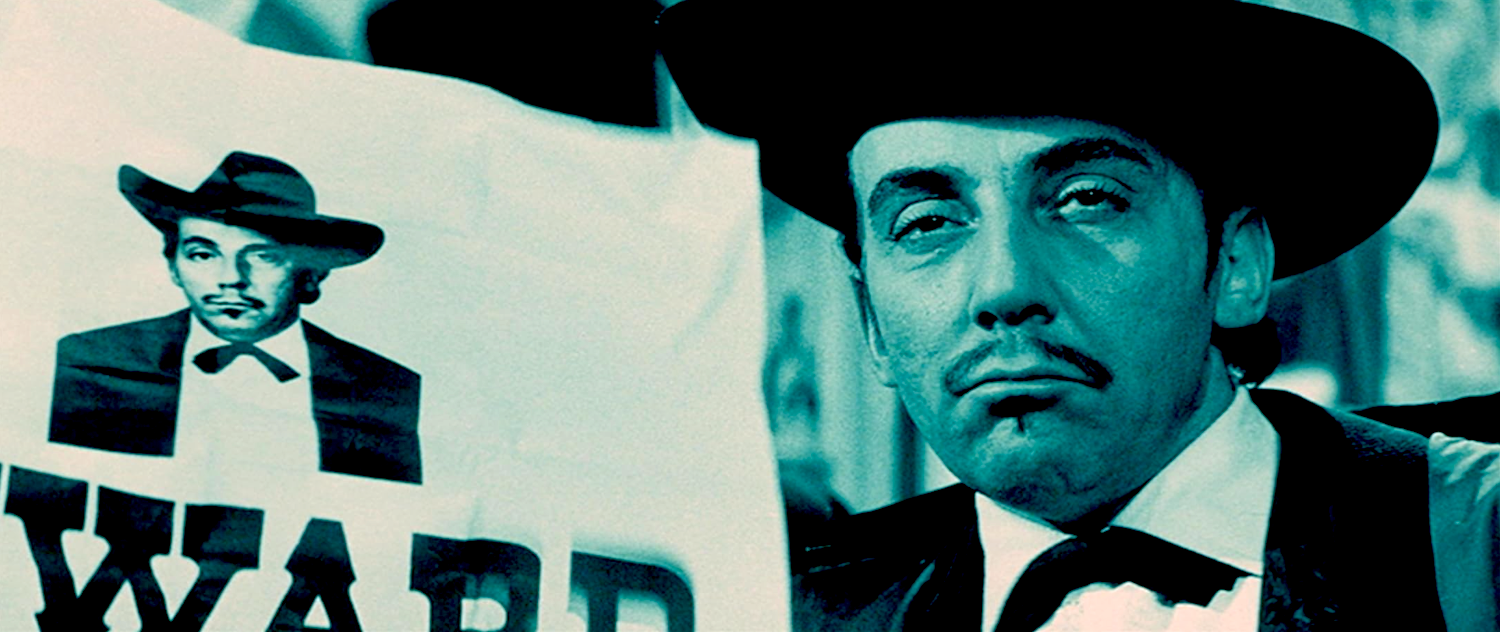
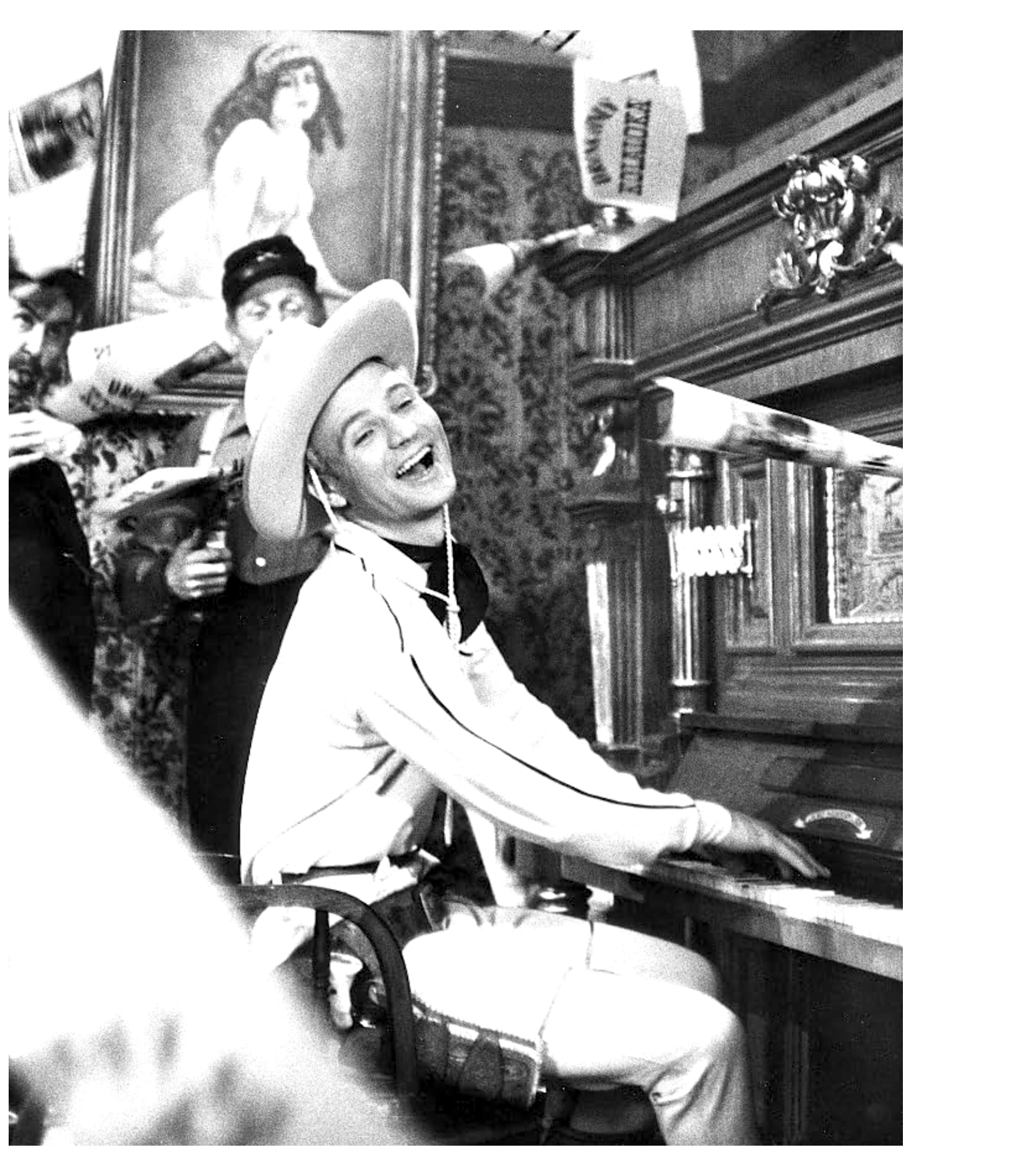
The goofy jokes never stop. The dastardly knave Hogo Fogo is a Professor Fate counterpart to Joe’s The Great Leslie. Hogo Fogo employs magic tricks to cheat at cards. He outwits the sheriff by using a false arm when being handcuffed, just as in the silent thriller Fantomas. He poses as a blind piano tuner, when telling his story of evil in song. Much like Wile E. Coyote, Hogo Fogo tries to slaughter the hero with scores of creative murder schemes. In one not-so-funny gag, Hogo Fogo appears in Blackface for several minutes. We can’t tell if the filmmakers are condemning the racist convention or using the disguise for a cheap laugh of its own.
Actor Miloš Kopecký is a fine Hogo Fogo but is best remembered as the title character in Karel Zeman’s Baron Munchausen. Fans may know the beautiful Olga Schoberová better as Olinka Berova, Playboy model and Hammer Films replacement for Ursula Andress. Her Hammer debut The Vengeance of She did nothing for her at all.

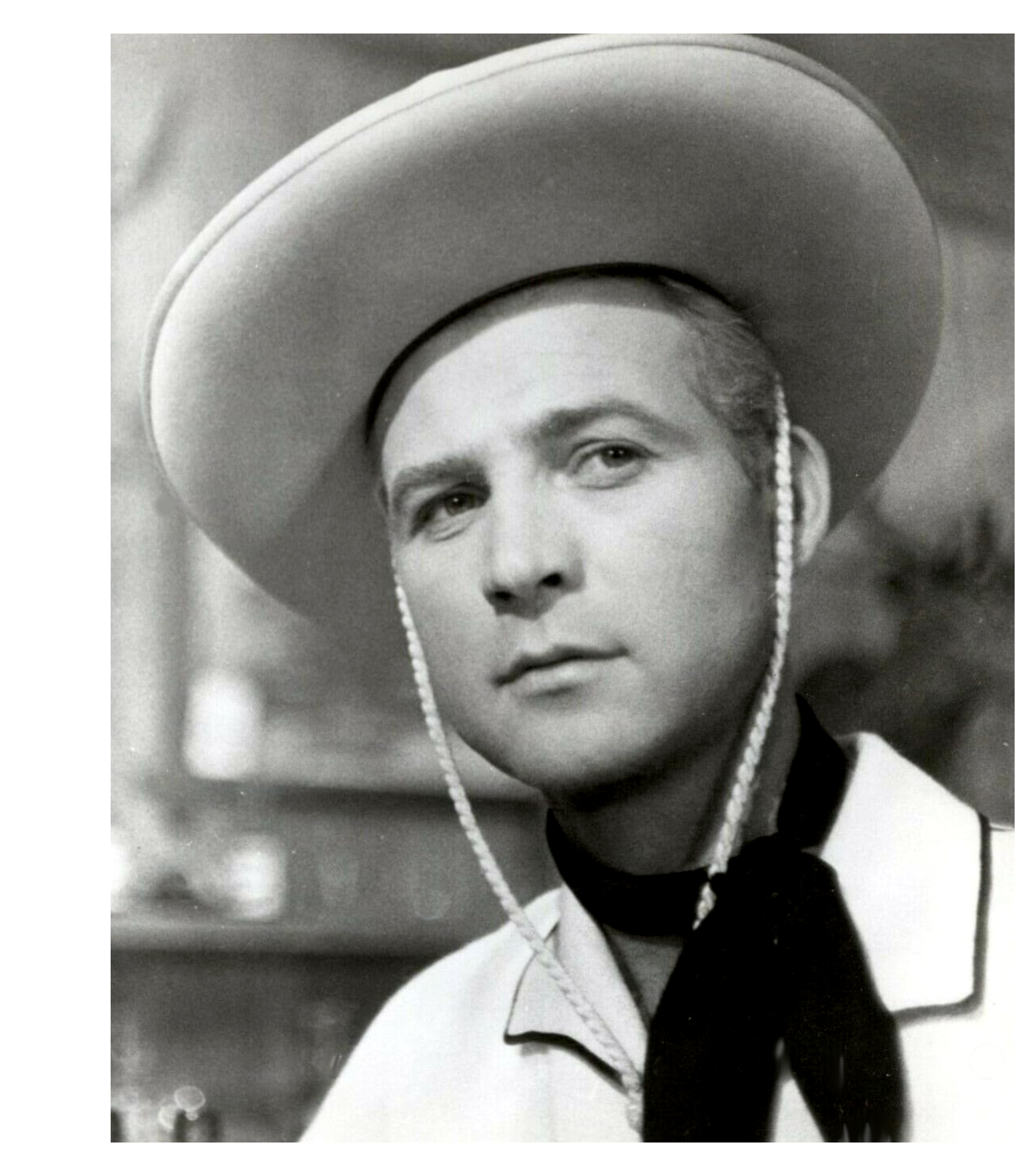
Karel Fiala is excellent as the clean-cut blond hero. Joe stands tall in his white suit, full of confidence. He ignores threats until it’s time to shoot. He never misses, even when he shoots without even looking. His smile frequently reminds us of Bill Murray, and his serene manner is a match for John Philip Law’s blissed-out angel Pygar.
We are told that the Soda Pop Joe character was created in the late 1930s and became the subject of more than one stage farce. Why did the Czech communists indulge a movie celebrating American culture? There’s an anti-capitalist theme, of course, one clever enough to be appreciated by both sides of the Iron Curtain.
In his comedy One, Two, Three Billy Wilder imagined that the biggest crisis facing the Free World is deciding whether the dominant beverage will be Coca-Cola or Pepsi-Cola. Writer Jirí Brdečka invents a Wild West that’s really a marketing battleground between Trigger Whiskey and Kolaloca. (get it?) Not only is Soda Pop Joe a walking advertisement for his preferred drink, he backs the temperance folks’ new Kolaloca saloon, which puts the Whiskey bar out of business. In one pointed joke, two drunken cowboys exit to the street for a deadly gunfight. They’re so crocked they can’t even draw their guns. So they lock arms and go back to the saloon as buddies. When Kolaloca takes over, the same two angry cowpokes exit alert and sober. They draw their guns beautifully, shooting each other stone dead. Joe rejoices: with Kolaloca, you never have to call the doctor!
Kolaloca is shown to have curative powers, including raising the dead — a side benefit seemingly reserved for the top cast. Just like Popeye, Joe is knocked out cold when someone sneaks Whiskey into his Soda Pop bottle … and only a jolt of Kolaloca can revive him. We eventually discover that Joe is an authorized district salesman for Kolaloca. His father is the owner of the company, undermining Joe’s Honest Cowboy image. He’s a complete fraud!
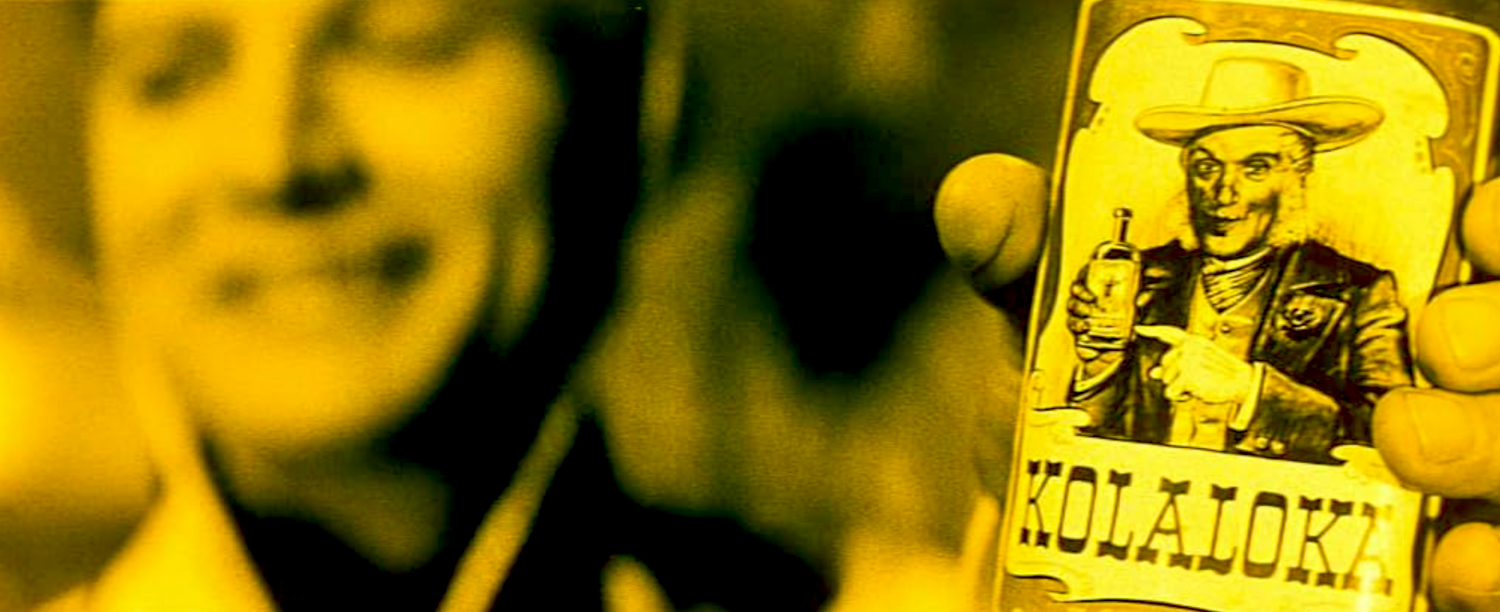
The West is won with a monopolistic merger.
Soda Pop Joe ends a little bit like Kurt Weill’s The Threepenny Opera. Trigger Whiskey and Kolaloca join forces to create a new combo beverage to satisfy drunks and temperance advocates alike: WhiskeyKola. As in the lowest of farces, it’s then discovered that most of the main cast are actually siblings, separated at birth by a prairie tornado that scattered them across the frontier.
The movie was given some theatrical and TV bookings in the U.S. as Lemonade Joe, but shortened from 100 minutes to only 86. Any chance those 16 minutes might have eliminated some of the political content? Plenty of Eastern bloc films fired off pointed criticism of the West … the sly jokes can’t help being affectionate … they clearly love westerns.