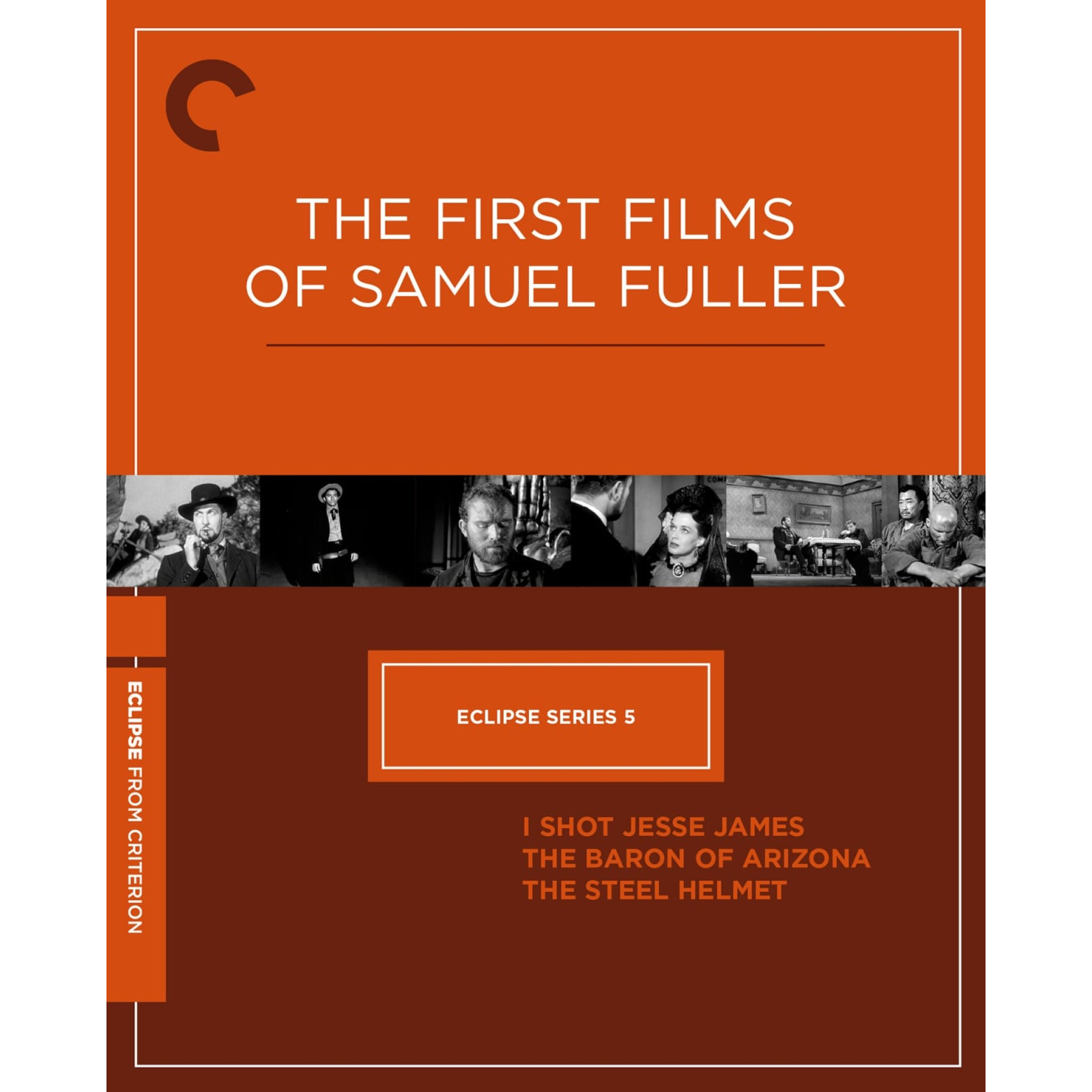

 It was 19 years ago that Criterion announced their ‘Eclipse’ line of DVD discs, giving us packs of hot titles that perhaps wouldn’t fly with a full component of extras. The company has been doubling back on its most popular series entries, boosting them to HD Blu-ray. The First Films of Samuel Fuller is a much-desired upgrade . Having conversed from time to time with the rights owner Kit Parker, I’m especially pleased to see Fuller’s trio of Robert Lippert features come at last to Blu-ray.
Samuel Fuller launched his Hollywood writing career even before he went to war, and took it up again immediately upon being demobilized. In 1949 he linked up with B-picture producer Robert Lippert, directing three fast films for ‘Lippert Pictures’ before moving on to work for Darryl Zanuck at Fox. The energetic, enormously inventive Fuller loved a bold film story the way he loved tabloid newspaper writing. He filled his screenplays with emotion, irony and his personal notions about patriotism. Eclipse’s upgrade makes a big difference, presentation-wise. All three features are in prime condition.

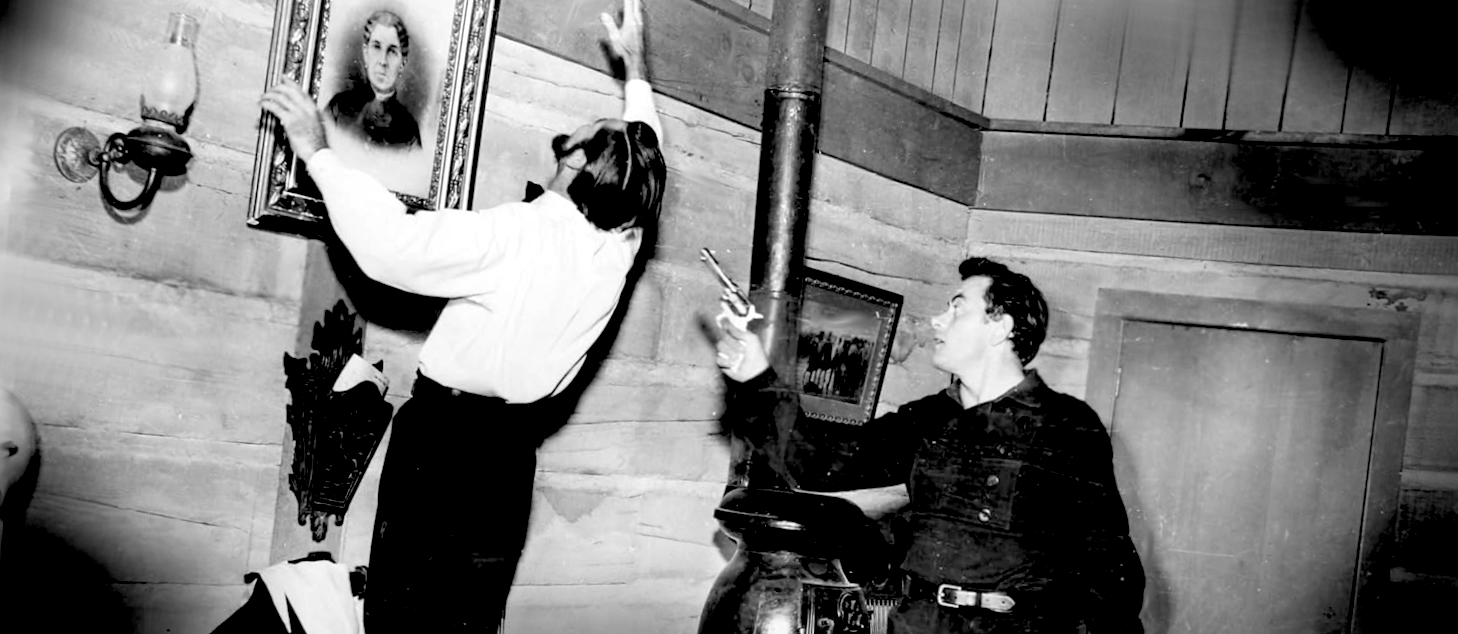
I Shot Jesse James
1949
Starring John Ireland, Preston Foster, Barbara Britton, Reed Hadley, J. Edward Bromberg, Victor Kilian, Tom Tyler, Tommy Noonan
Cinematography Ernest Miller
Art Direction Frank Hotaling
Written by Samuel Fuller from an article by Homer Croy
Produced by Carl K. Hittleman, Robert L. Lippert
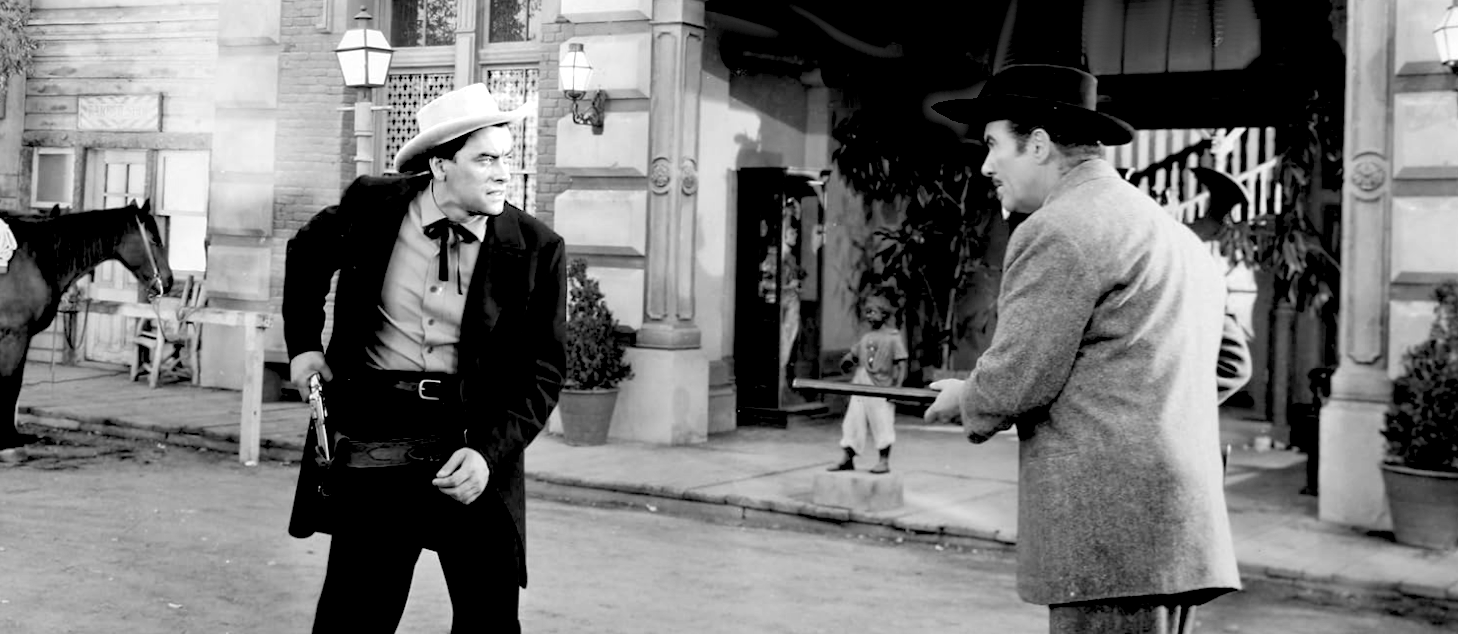
Sam Fuller turned the Hollywood western on its ear with his very first job of feature directing. The modest I Shot Jesse James comes a year before the so-called ‘adult’ western yet is more cinematically psychological than either The Gunfighter or High Noon. The movie is also daring in content, suggesting perhaps for the first time that relationships among cowboys might be stronger than their ties to their womenfolk. Inverting the moral code of Fritz Lang’s The Return of Frank James, Fuller investigates a Judas character who can’t seem to grasp the idea that people might stigmatize him for killing his outlaw mentor.
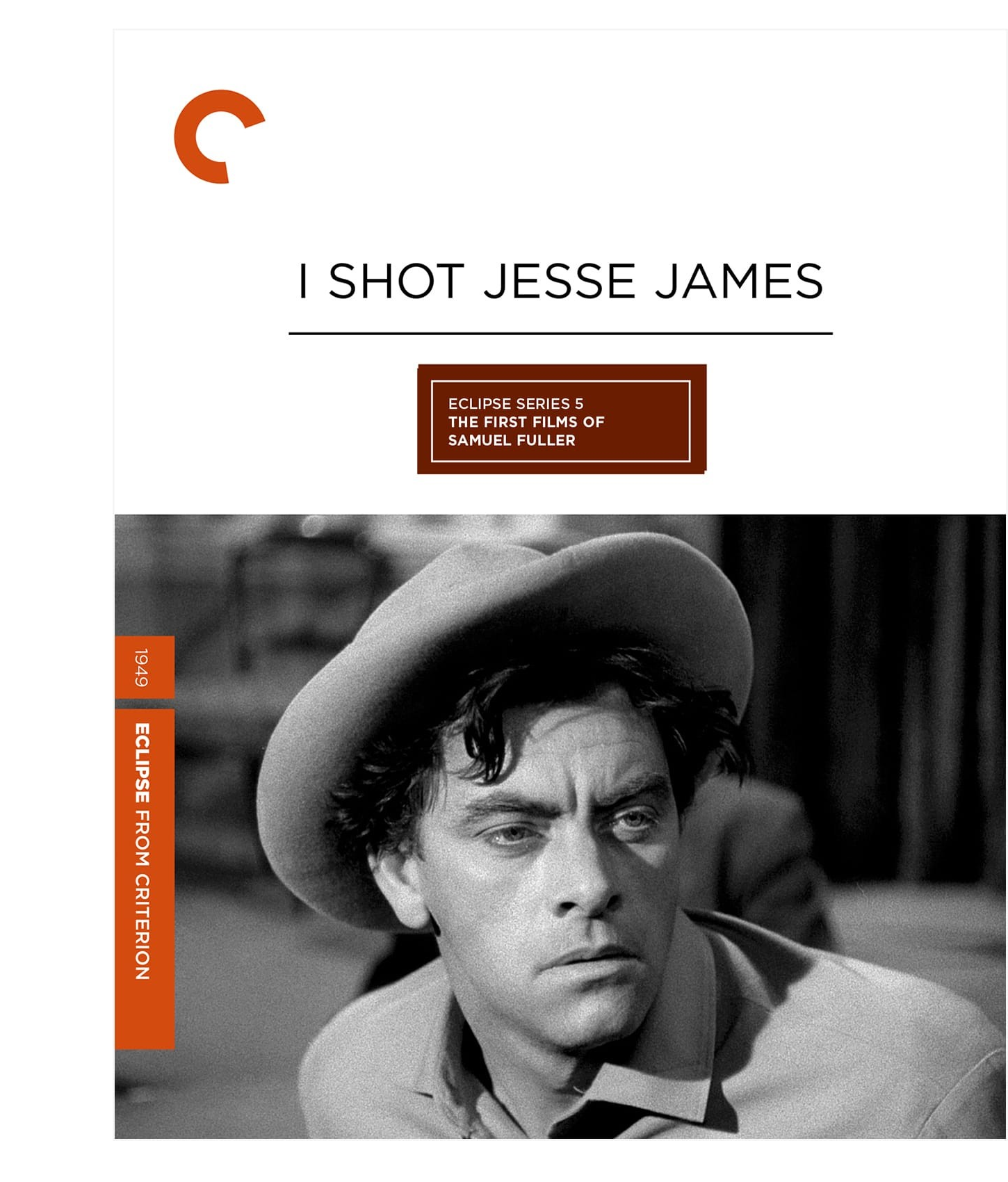
Tired of living with a price on his head, Bob Ford (John Ireland) murders his friend Jesse James (Reed Hadley) in exchange for amnesty and a reward. The state reneges on the reward but Bob only wants the freedom to marry his girlfriend, singer Cynthy Waters (Barbara Britton). She’s instead repulsed by what Bob’s betrayal, and gravitates toward the more honorable John Kelly (Preston Foster). Even though Bob’s luck turns for the better, he’s cursed by the infamy attached to his betrayal.
I Shot Jesse James was embraced by English auteur critics that noted its essential perversity. Already typed as a morally vacant gunslinger in Howard Hawks’ Red River, John Ireland gives his Bob Ford a perfect uncomprehending stare. In Sam Fuller’s view, a man choosing a lifestyle of outlawry hasn’t really thought things through. He’s dumbfounded by Cynthy’s rejection, and shocked when a punk kid tries to shoot him because whoever kills the man that killed Jesse James will be famous. Ireland stumbles away from one violent confrontation like a stunned animal, the same way his gladiator character in Spartacus stumbles from his first kill. It’s a great characterization.
Fuller orchestrates an interesting group of supporting characters. Top-billed Preston Foster probably thought he’d be the hero of the movie, as his John Kelly character is both the honorable man and the one left standing after the final showdown. What a surprise when the film’s focus turns out to be “the dirty little coward who shot Mr. Howard.” The critics that detected homoerotic undertones weren’t daft; Reed Hadley’s unusually calm Jesse James humors his long-suffering wife but seems to prefer Bob’s company. He asks Bob to scrub his back, not the missus. Unfortunately, there’s nothing to restrain Bob Ford when the law tempts him to plug his best pal. Bob even uses a fancy Colt .45 — a gift from Jesse — to do him in. I guess that’s why they call them Bad Men.
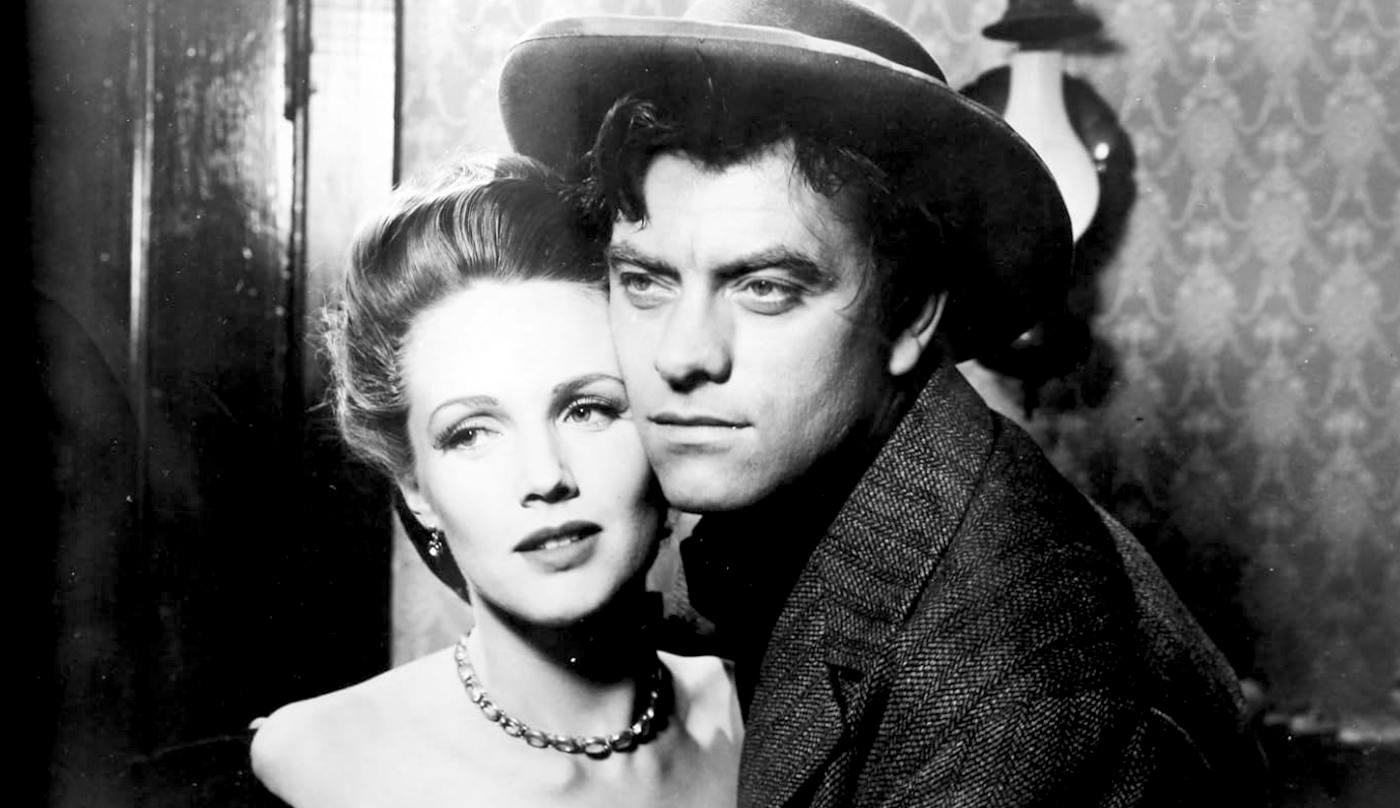
New York boy Sam Fuller shows more fidelity to real western history than many more famous western directors. At one point Bob Ford explains that the James Brothers, the Fords and the Youngers are all related through intermarriage. When a drifting folk singer plays the famous Jesse James song to Bob’s face, he finds himself the center of the 1870 equivalent of a media storm — it’s like having his name and face plastered on the 11 O’Clock crime news.
The impact of the ‘new western’ is felt most strongly when Sam Fuller revisits historical material covered by Fritz Lang in The Return of Frank James. Exploiting his newfound fame, Bob Ford starred in a tacky stage show recreating his famous/infamous deed. In Lang’s play-within-a-play, John Carradine’s malicious, unrepentant Bob Ford casts himself as a noble hero, shooting Jesse in self-defense while patriotic music plays. In I Shot Jesse James, John Ireland’s Bob Ford restages the killing more or less the way it happened. The artifice of the theater teaches Bob the truth about himself. Shooting the real Jesse in the back didn’t bother him, but he’s suddenly feels ashamed when replaying the act on a stage. Some lessons are learned way too late.
I Shot Jesse James once had the reputation of being filmed entirely in close-up, which is untrue. But a number of scenes do stay on Ireland’s face even as he walks or interacts with crowds. Fuller’s insistent close-ups succeed in maintaining a focus on Bob Ford’s interior dilemma.
Western favorite Tom Tyler is Frank James, and later burlesque comic Tommy Noonan (3 Nuts in Search of a Bolt) is Charles Ford. Saloon singer Margia Dean was producer Robert Lippert’s girlfriend, and found her way into a lot of movies that he bankrolled. She even ended up sandwiched into the Lippert / Hammer production The Quatermass Xperiment, made five years later.
The Baron of Arizona
1950
Starring Vincent Price, Ellen Drew, Vladimir Sokoloff, Beulah Bondi, Reed Hadley, Tina Rome, Karen Kester, Margia Dean, Gene Roth, Angelo Rossitto
Cinematography James Wong Howe
Production Design Jack Poplin
Art Direction F. Paul Sylos
Film Editor Arthur Hilton
Original Music Paul Dunlap
Written by Samuel Fuller from a story by Homer Croy
Produced by Carl K. Hittleman, Robert L. Lippert
Sam Fuller loved audacious tales, so the true-life story of James Addison Reavis must have tickled him to no end. Reavis was a grand-scale huckster who trumped anything Orson Welles put into his study of big-time fraud, F for Fake. The Baron of Arizona is a beautifully produced miniature epic with an impressive and ultimately sympathetic performance from Vincent Price. “Everyone loves a fraud” is not a common sentiment, but Fuller finds enough good in Reavis to merit our mercy. He’s a standard-issue Fuller hero … a complicated man who doesn’t expect favors.
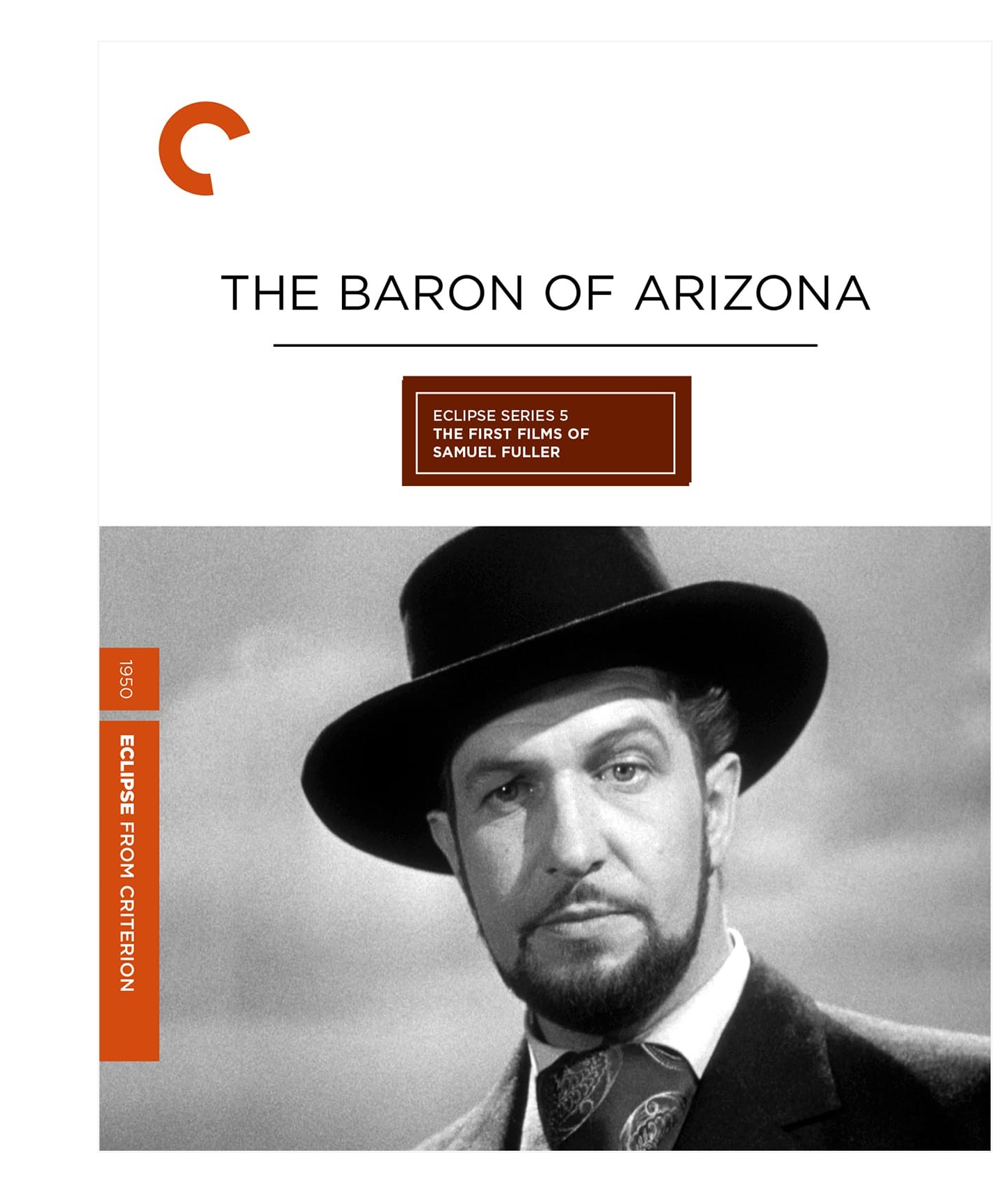
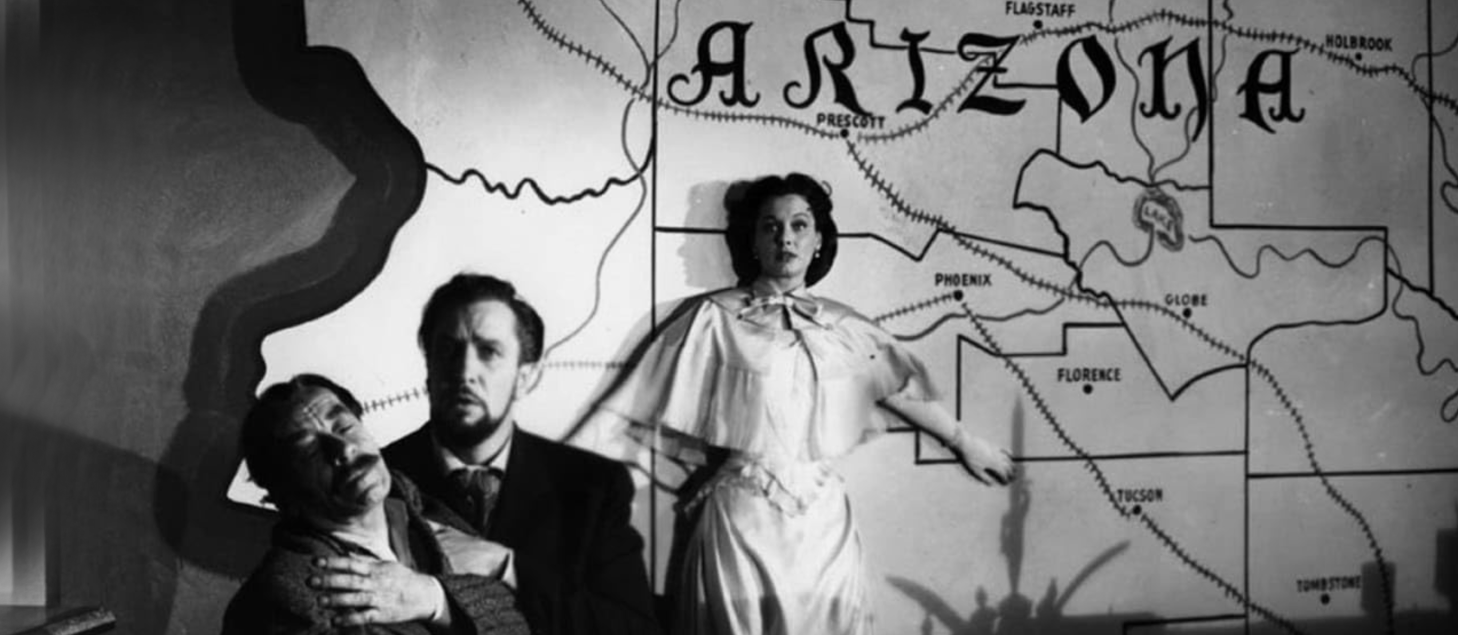
Land clerk James Addison Reavis (Vincent Price) spends years setting up the biggest swindle of the 19th century. He forges documents and records to falsely establish that the poor Sofia de Peralta (Ellen Drew) is the rightful heir to an old Spanish land grant … that just happens to encompass most of the territory of Arizona. Government agent John Griff (Reed Hadley) tries to prove fraud but no evidence can be found. Marrying Sofia, Reavis proclaims himself the Baron of Arizona. Neither Sofia nor her adoptive father Pepito Alvarez (Vladimir Sokoloff) realize exactly what Addison is doing.
Sam Fuller embellishes the historical facts to make James Reavis seem like a genius. Reavis manufactures an entire false history for the fictitious Peralta family, inventing ancestors by planting forged documents all the way back to original Land Grant records in Spain. Gaining access to one copy of the land deeds requires that Reavis spend several years in a Spanish monastery. To alter another land deed registry, he joins a group of gypsies and seduces a Marquesa (Margia Dean again, the producer’s girlfriend). Fuller stresses that the United States honored Spanish land grants under the Treaty of Guadalupe Hidalgo. Reavis’ chicanery was uncovered only through the work of a tireless federal investigator.
If the information on Wikipedia is accurate, the real James Reavis was less talented but even more conspiratorial. To push his claims through the bureaucracy, he sought partnerships with a group that included George Hearst, the father of William Randolph Hearst. With the backing of fat cats eager to ‘privatize’ an entire territory, Reavis tried the same gambit several times. He eventually married a fake Peralta heir and called himself the Baron of ‘Arizonac.’ Eventually, a Surveyor General named Royal Johnson disproved his cheap forgeries, along with claims made by several copycat fakers. Reavis eventually spent three years in prison.
Fuller shows the obsessed Reavis carefully creating false stone markers. He makes himself the guardian of Ellen Drew’s young Peralta girl, convincing her that she’s the real Baroness. When all the evidence has been salted, he returns and files his claims and starts collecting money from people who thought they already owned their property. The real Reavis is said to have sent out thugs to extort the financial settlements.
We note that Fuller has Reavis file his claims as an individual. In 1950, a Hollywood writer accusing corporate moguls of wrongdoing, might find himself labeled as a subversive, a communist.
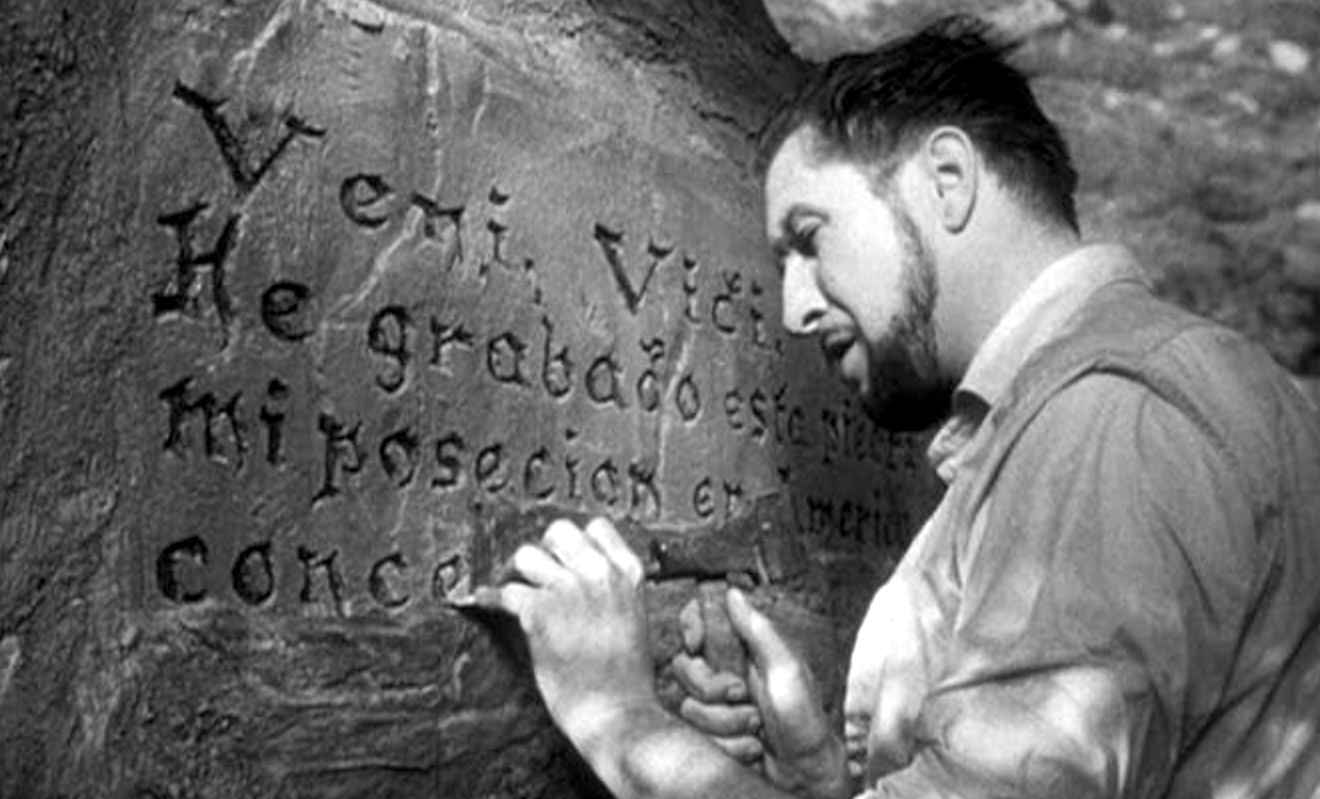
It is also interesting that Fuller’s script lionizes James Reavis as a hero, not a nuisance. We are meant to side with Reavis and Sofia against the mobs of farmers and ranchers that he dispossessed. As much as Fuller touts the fairness of the U.S. government, he loves this bold adventurer: only those who dare can change the map of the world. The measure of Fuller’s success is that Reavis’ wife and servants stand by him even when he eventually confesses. Reavis has built Sofia’s entire life on a fraud, but she still loves him. It’s a truly unique story idea, borne out in our present-day confusion of fact and fiction, truth and lies.
Two main factors make Fuller’s story work. Vincent Price’s controlled performance never loses sight of Reavis’s goal. We share his glee when his crooked plans go well. His final redemption is well played. Cameraman James Wong Howe gets the maximum from Robert Lippert’s low-end production values, and manages some dramatic visuals. The Baron of Arizona looks much more expensive than Fuller’s next effort, his self-financed Park Row.
Ellen Drew is always good, and Vladimir Sokoloff is charming as the Mexican peasant Pepito. Beulah Bondi is in a couple of scenes as Sofia’s governess. Reed Hadley returns as the government agent, this time with a lot more dialogue. Hadley is a familiar voiceover actor known for ‘voice of authority’ narrations in crime films. It is a bit unsettling to hear that voice speaking normal screen dialogue. Stock thug Gene Roth plays a gentle Spanish priest, and Angelo Rossito of Freaks enlivens the gypsy segment. Tina Rome, the gypsy girl, was also an accomplished writer under the name Tina Pine. Nineteen years later, Ms. Pine co-wrote the charming Alan Arkin film Popi.
The Steel Helmet
1951
Starring Gene Evans, Robert Hutton, Steve Brodie, James Edwards, Richard Loo, Sid Melton, William Chun
Cinematography Ernest Miller
Art Direction Theobold Holsopple
Film Editor Philip Cahn
Original Music Paul Dunlap
Written by Samuel Fuller
Produced by Sam Fuller, Robert L. Lippert
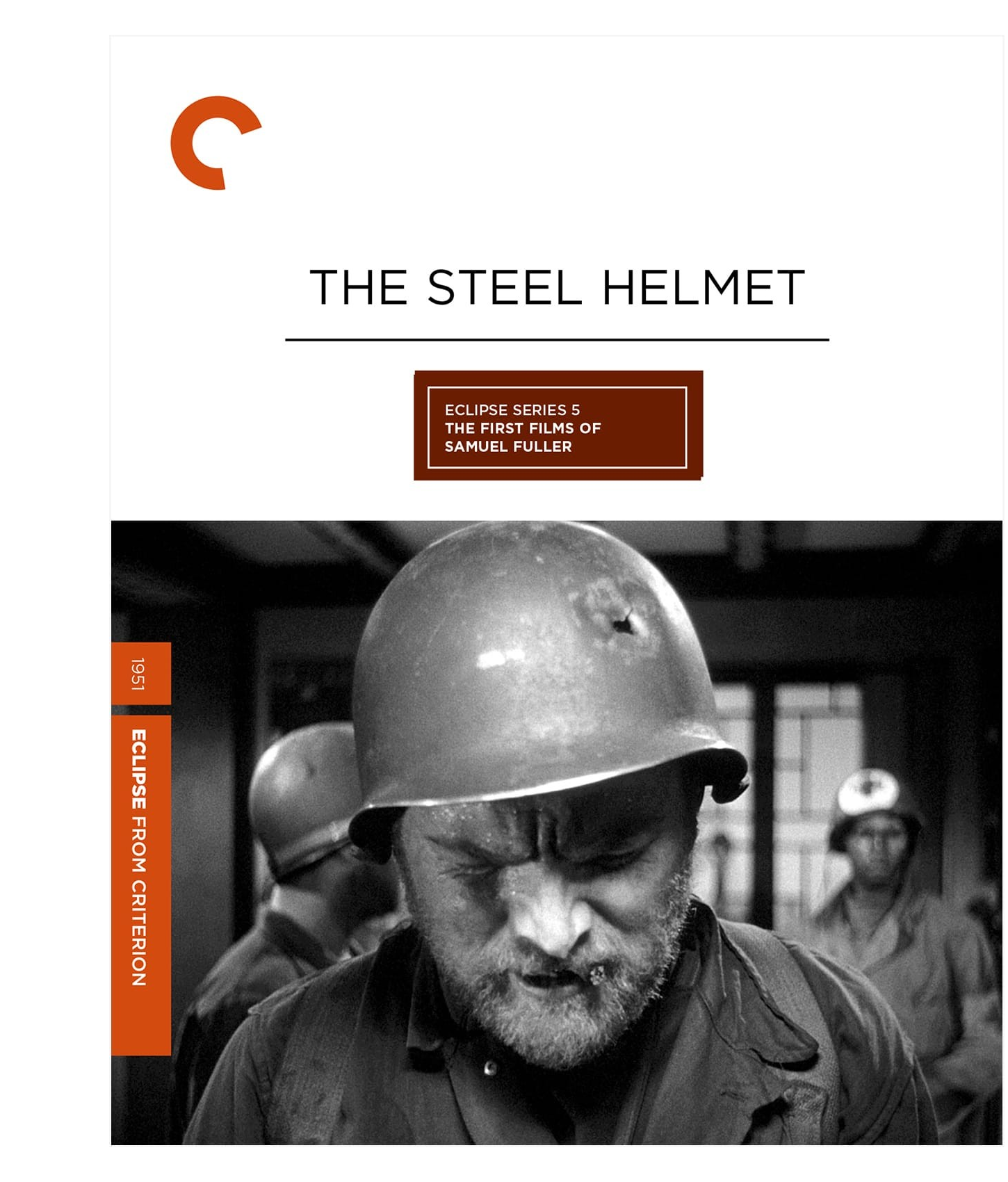
For his third outing Fuller switched from western themes to his home turf of footsoldier combat. An opening title card dedicates The Steel Helmet to ‘the infantry.’ The Korean War had just begun and Fuller’s was the first picture out of the gate to deal with it. The ads proclaimed “It’s the REAL Korean Story” but Fuller’s tale could easily have been about riflemen in France or Africa.
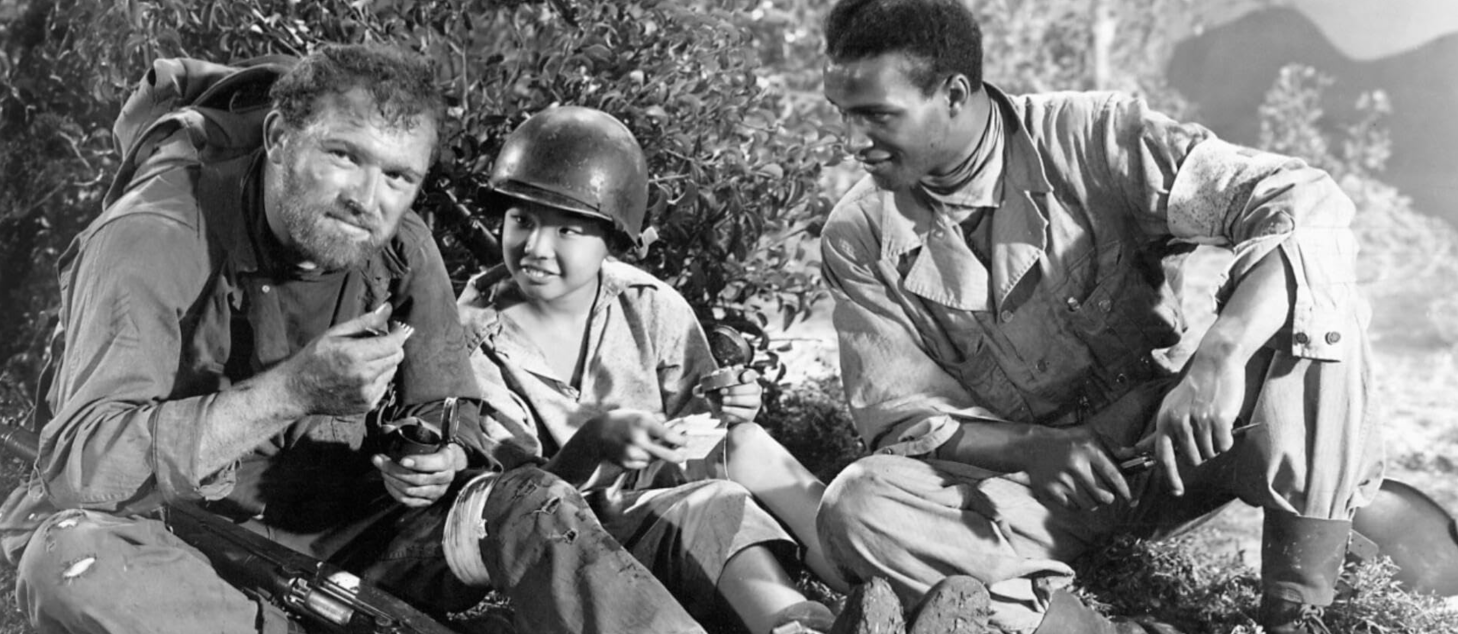
We begin in the middle of combat. Sgt. Zack (Gene Evans) escapes a massacre by North Korean soldiers, thanks to Short Round (William Chun), a Korean kid who comes along and unties him. The two of them meet up with another survivor, medic Corporal Thompson (James Edwards). They eventually become attached to a patrol headed by the inexperienced Lt. Driscoll (Steve Brodie). The patrol holes up at a Buddhist temple, but can’t send news back to their command: their radio receives, but won’t transmit.
The Steel Helmet almost feels like a riposte to the liberal-minded combat drama Home of the Brave, Stanley Kramer’s production about racism in the ranks. Fuller dispenses with several social issues one right after another. A captured communist officer taunts black medic James Edwards, who played a main role in Home of the Brave. Edwards’ Thompson answers by saying that it might be 50 years before he can ride in the front of the bus, but “some things you can’t rush.”
The commie also asks Japanese-American Sgt. Tanaka (Richard Loo) about internment camps, and Tanaka tells him to mind his own business. Did Samuel Fuller make the first mention of wartime internment camps in an American film? Fuller’s political mindset cannot be pegged as simply conservative or liberal.
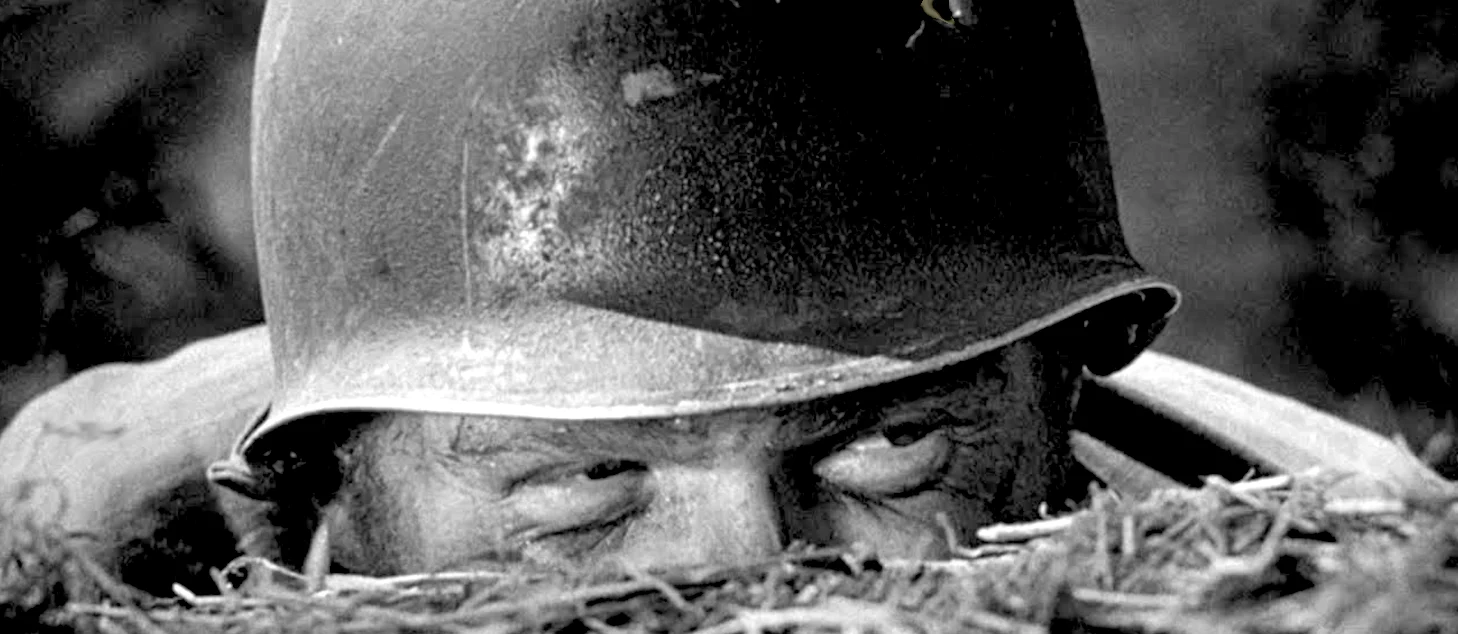
At the center of The Steel Helmet is Fuller’s ‘eternal infantryman’ Sgt. Zack, a role inhabited body and soul by Gene Evans. Zack knows that he’s a bit dinged in the head: a bullet pierced his helmet and zinged around the edge without actually hitting him. He starts the film crawling with his hands tied behind his back. Zack is also the mouthpiece for all of Fuller’s speeches on the subject of soldiering, both tough and sentimental. A ranking officer can’t get Zack to speak up, but on his own Zack will mouth off for minutes about WW2 or the glories of the common infantry rifleman.
Fuller gives Zack a soft side through his little Korean helper, Short Round. He calls him a Gook but then takes it back. Resentful of the ’90 day wonder’ Lieutenant Driscoll, Zack watches while Driscoll loses a man trying to recover dog tags from a booby-trapped corpse. Zack warned Driscoll but was ignored. From then on the men look to Zack to lead them. When Zack looks at his prisoner (Harold Fong) he sees only one thing … a ticket to a furlough!
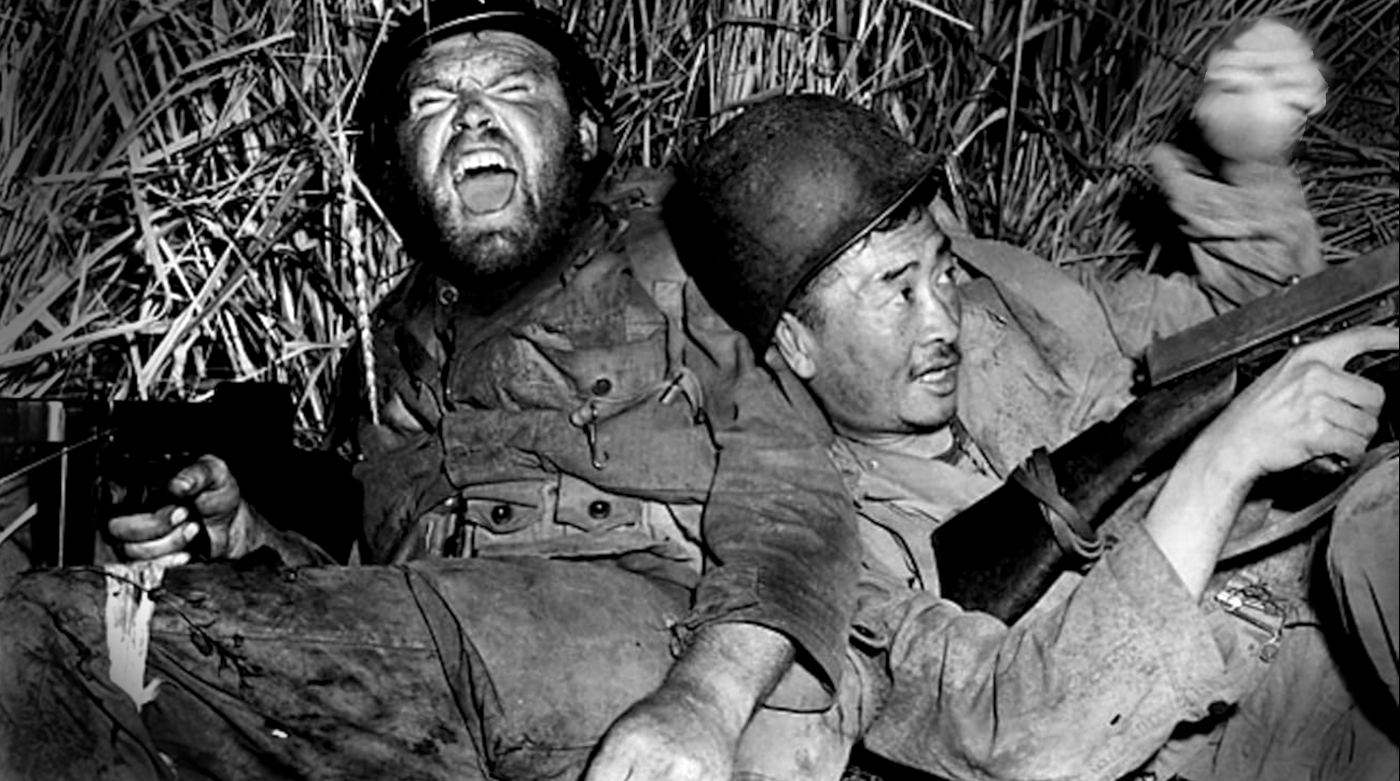
Private Bronte (Robert Hutton) was a Conscientious Objector in World War II. But Bronte has volunteered for this fight because he feels that commies in Korea are threatening the homeland. Private Baldy (Richard Monahan) is in for some comedy relief about hair loss. The normally loudmouthed comic Sid Melton is used for what must be a private joke — he is given few dialogue lines. Frequent Fuller player Neyle Morrow draws the short straw, keeping a surprise date with an I.E.D. Rounding out the patrol is Lynn Stalmaster, who later became famous as a Casting Director. Melton and Margia Dean were shoehorned into a great many Lippert films. The producer may have stuffed his girlfriend into the costume of a North Korean soldier for a shot or two, but we’ll never know.
Typical of Fuller, Zack’s brutality is neither sadistic nor cynical, only pragmatic. The enemy will booby-trap anything, so don’t rush to investigate dead bodies. We hear plenty of talk about commie atrocities, but even Sgt. Zack gets emotional and shoots down a prisoner. That leads to the famous line when Zack grabs the prisoner by his lapels and shouts, “If you die I’ll kill you!”
Much of The Steel Helmet was filmed on a smallish soundstage, with a set for a Buddhist shrine used as an observation post. The view from the top of the shrine is always misty, mainly because without a fog machine we’d be looking at a bare stage wall. There was no budget for mattes or rear projection. Exteriors were taken in Griffith Park and the final battle incorporates some mismatched stock footage. One shot is just a held still frame! Just the same, The Steel Helmet captured a special spirit of foot soldier combat, and as such was instantly popular with ex- GIs. Lewis Milestone’s A Walk in the Sun probably had too much poetry for them and the gritty Battleground was great considering that it was packed with handsome movie stars. When Sgts. Zack and Tanaka sit back to back to brace each other while firing their tommy guns at the enemy, we understand what Fuller is going after. For Fuller, real combat is as satisfying as sex.