
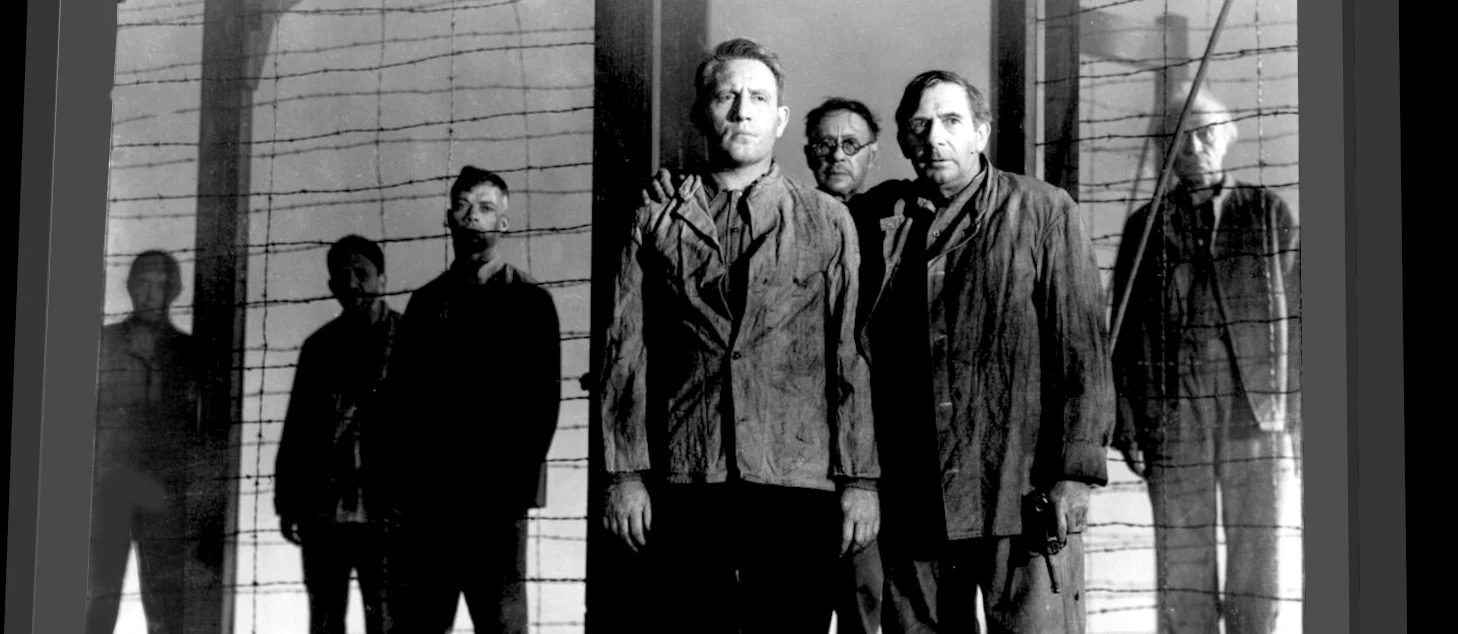

The facts about concentration camps weren’t public knowledge during the war, and few movie depictions came anywhere near the truth.Before the attack on Pearl Harbor, Hollywood was uncertain how to characterize the war in Europe. The confusion led to some fairly embarrassing movies when the subject of Hitler’s concentration camps came up. Clark Gable, John Wayne and others starred in films about reporters escaping from detention or carrying messages from the camps, often inadvertently downplaying conditions inside. Although activists had been giving accurate reports on these camps since their establishment not long after Hitler took power, much of America chose to look the other way: Germany was an important trade partner. Only after Austria was annexed did the studios begin producing anti-Nazi films, very carefully. The almost unique independent production So Ends Our Night, an excellent drama about the plight of political refugees pushed from one country to another as German influence advances, was reviewed with respect. But did not become a major hit.
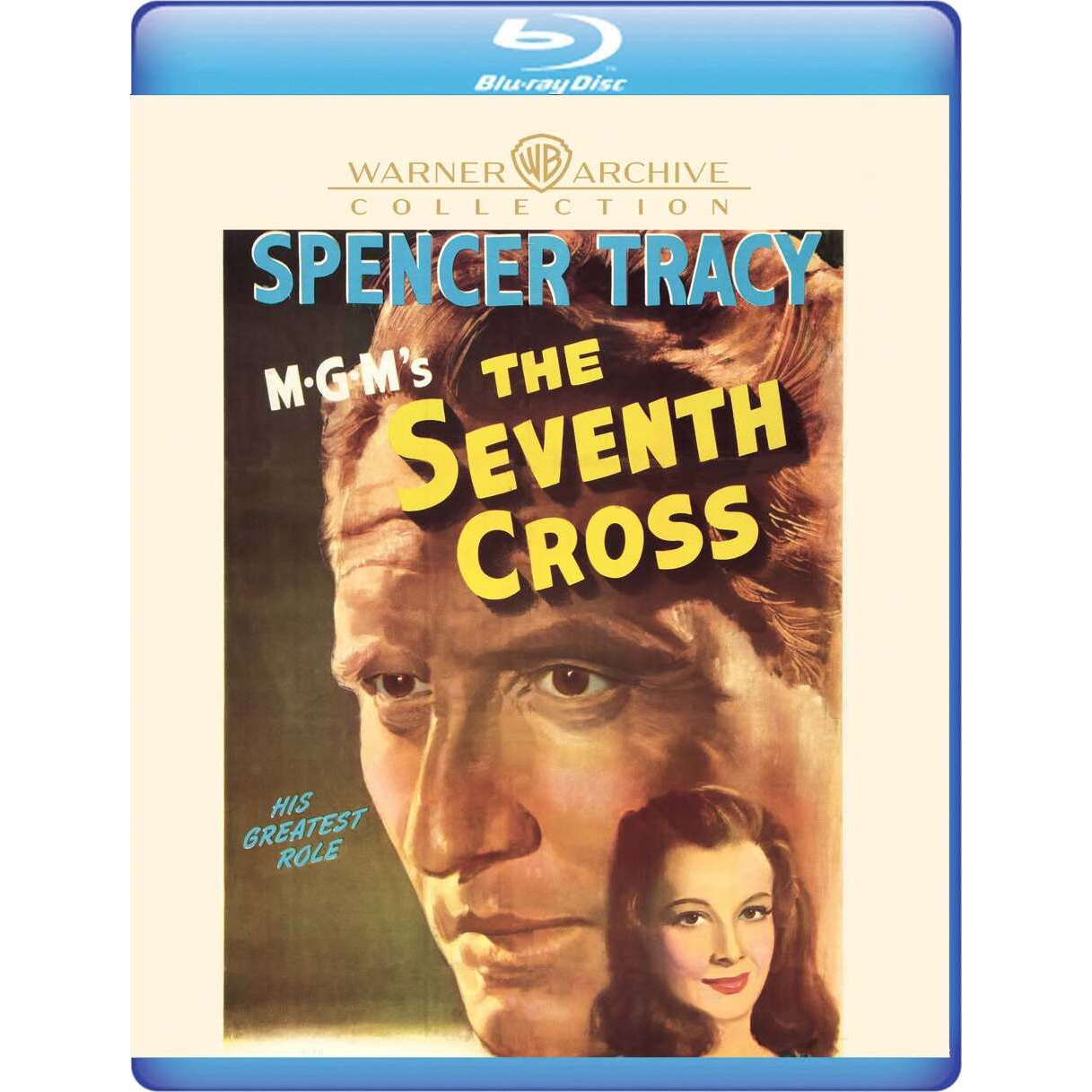
Made in 1944, MGM’s adaptation of Anna Segher’s novel The Seventh Cross was tailored as a vehicle for Spencer Tracy, the top star that ‘acted without acting.’ With expatriate German talent in several key creative positions and a cast list heavy with refugee German actors, this story of a desperate escape from a fictional German concentration camp called Westhofen is a sobering attempt to dramatize conditions in Germany. MGM’s polished production values add to the drama, even if the actors playing the desperate escapees seem too well fed. Less than a year later the American public would be shocked when horrifying news film from liberated concentration camps reached theater screens.
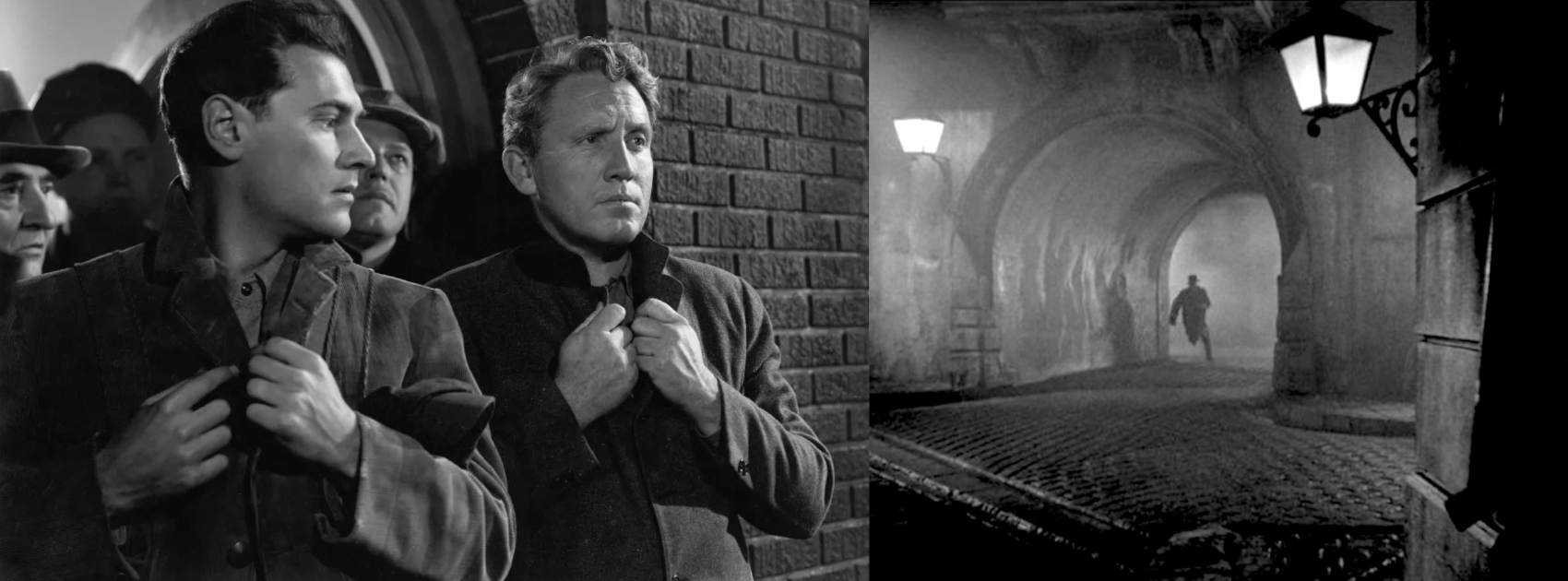
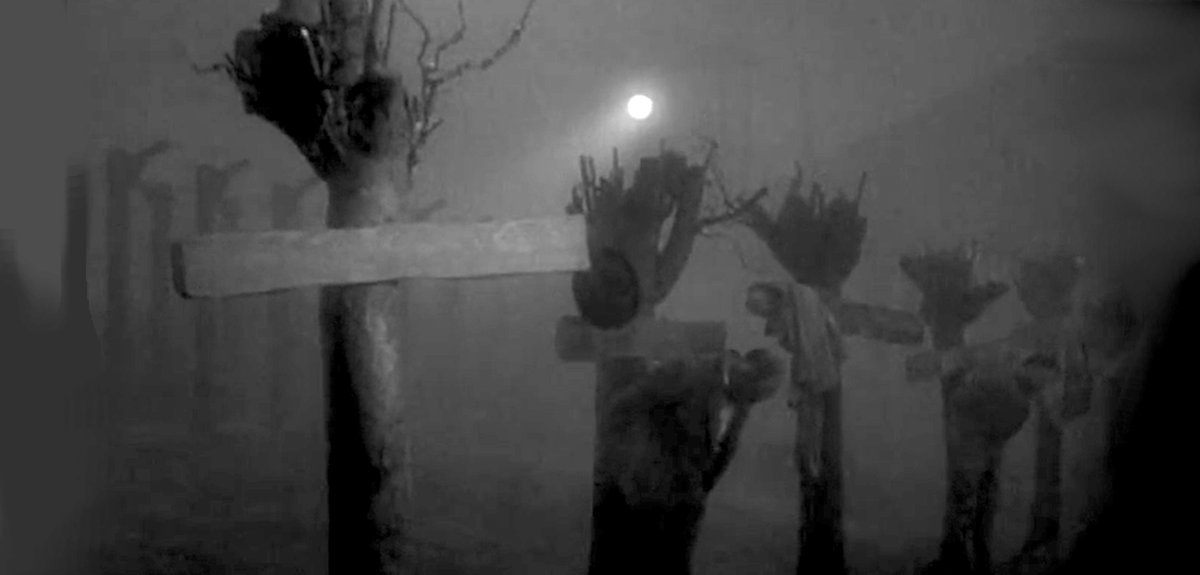
Set in 1936, The Seventh Cross deals with concentration camp escapees before Germany invaded its neighbor countries. Seven internees cut a wire fence and slip into the woods that surround the Westhofen Läger. All were imprisoned for political activism. Several are soon caught, and crucified on a row of trees outside the Commandant’s office. One of these is the escape leader Wallau (Ray Collins). Wallau’s voice narrates the bulk of the story, even after he is dead. We follow escapee George Heisler (Spencer Tracy) as he evades capture and tries to contact ‘activist’ friends in the town of Mainz. Heisler is denied shelter by an old girlfriend (Kaaren Verne) and given furtive aid by a seamstress (Agnes Moorehead). A doctor (Steven Geray) doesn’t report a cut on Heisler’s hand, but complies with the new laws by informing his patient that he is Jewish.
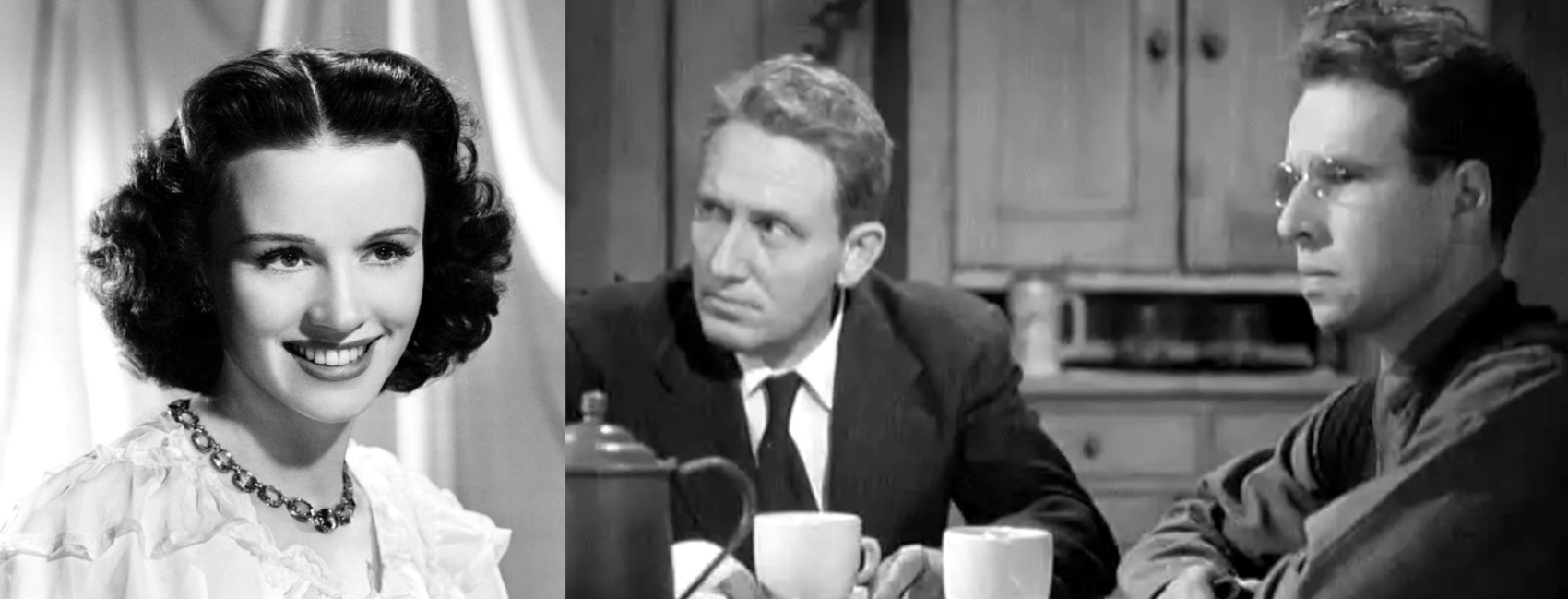
Ms. Tandy’s photo is a studio portrait.
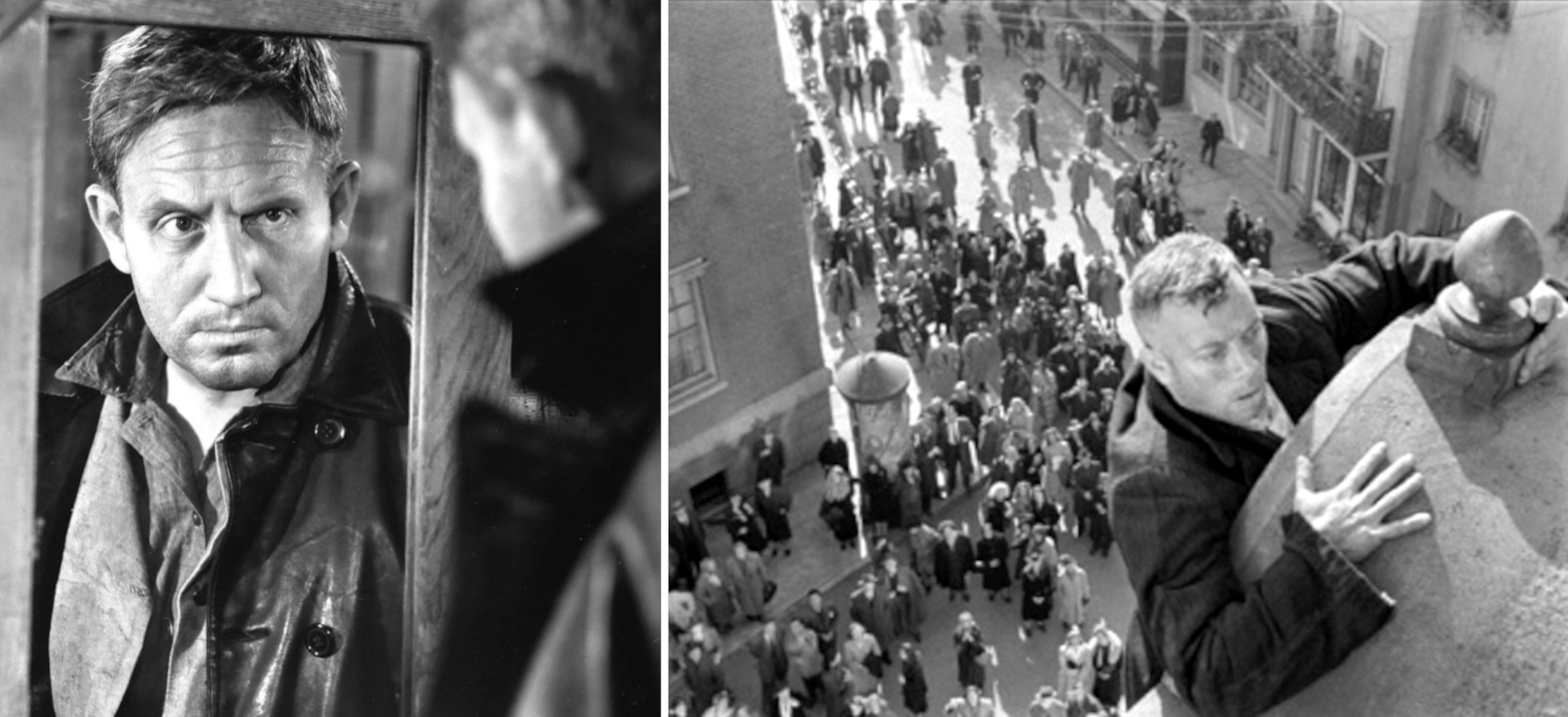
Heisler watches helplesslu as another escapee, an acrobat (George Suzanne) is cornered on the city rooftops. He encounters a colleague (Konstantin Shayne of Vertigo) who simply decides to give himself up. Heisler’s contact in Mainz has been arrested, so he drops in on his old friend Paul Roeder (Hume Cronyn), his wife Liesel (Jessica Tandy) and their brood of children. The apolitical Paul is satisfied with the economic improvements brought by the Nazis. He doesn’t understand what Heisler is saying until he is himself detained for an afternoon by the Gestapo. While waiting to contact the growing resistance movement, George is sheltered in a small room by a barmaid, Toni (Signe Hasso). They become lovers. He tells her that moving among his fellow Germans has revived his faith in human nature — he believes his country will recover.
American audiences had already been given two years’ worth of war movies featuring vile Nazi villains dispensing gross injustice. The strongest was an out-and-out exploitation item, Hitler’s Children. Expatriate Douglas Sirk became an instant bankable Hollywood director with his low-budget Hitler’s Madman. The much more sensitive The Seventh Cross must have come as something of an artistic oddity. The Austrian-American director Fred Zinnemann was one of the makers of the acclaimed People on Sunday, a Weimar-era German film that gave big career boosts to Billy Wilder, Robert Siodmak and Edgar Ulmer. On just his third feature, Zinnemann was trusted with an important show starring one of MGM’s biggest names. He applied discretion and tact: no slavering S.S. goons or preening Nazi fools are in sight.
Spencer Tracy carries his part well, but the actor who best captures the hopeless desperation of a fugitive from fascism is Ray Collins’ Wallau. He looks beaten down and exhausted, and his sacrifice is the one that hurts the most. Collins is one of the under-appreciated ‘Mercury Theater’ actors that came to Hollywood with Orson Welles. He’s always good; his may be the most sympathetic character in Welles’ Touch of Evil.
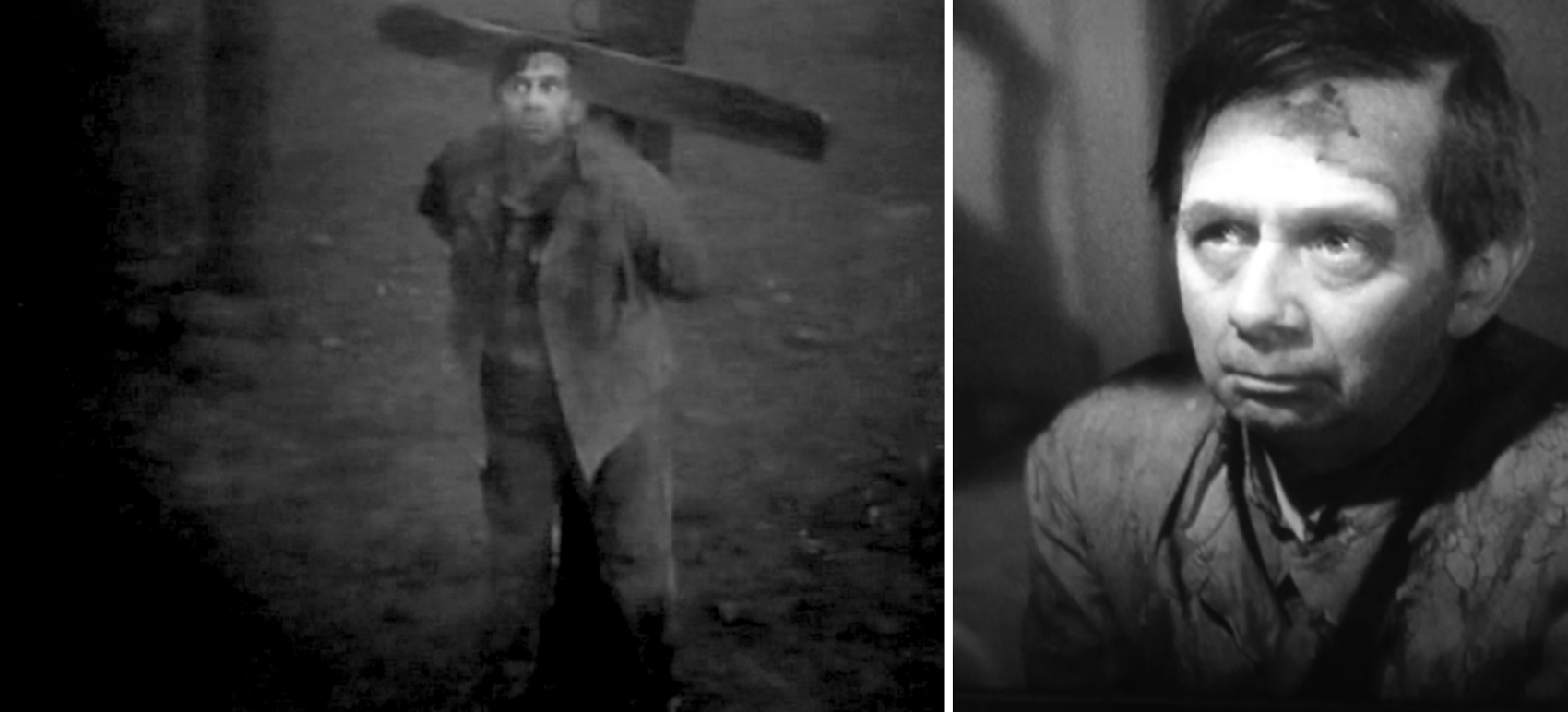
We hear Wallau’s ghostly voice-over commentary throughout the picture. Collins had also narrated part of the previous year’s The Human Comedy as a similar, if more sentimental ghost. In this case the device allows Spencer Tracy’s Heisler to wander about silently through most of the picture. At a certain point Wallau simply says that he is no longer needed and is heard no more; that’s when George Heisler begins preaching his optimism for the future of his country, to end the picture on a positive note. Heisler’s optimism must have come off as a feel-good dodge, even in 1944. Just the same, this is one of the few pictures that addresses the overwhelming human tragedy of the war so seriously.
Instead of man-on-the-run thrills, the show focuses on saying something about the human character. Naïve Paul Roeder doesn’t see beyond the false prosperity around him; as soon as Germany goes to war the Nazis will lock him into an ever-more demanding work regimen, and he’ll be prohibited by law from leaving his job. Activist Bruno Sauer (George Macready) turns Paul away, suspecting a trap; his wife Hedy (Katherine Locke, later of the doom-laden noir Try and Get Me!) shows Paul out.
Director Fred Zinnemann tries out a couple of compositions for psychological effect. A bathroom mirror creates a natural split-screen illusion that depictd Sauer talking to Paul without facing him. A few minutes later the activist leader Franz Marnet (Herbert Rudley of Decoy) tries to talk to Liesel Roeder, with a chained door splitting the screen in a similar fashion: fear is preventing good people from banding together to oppose evil.
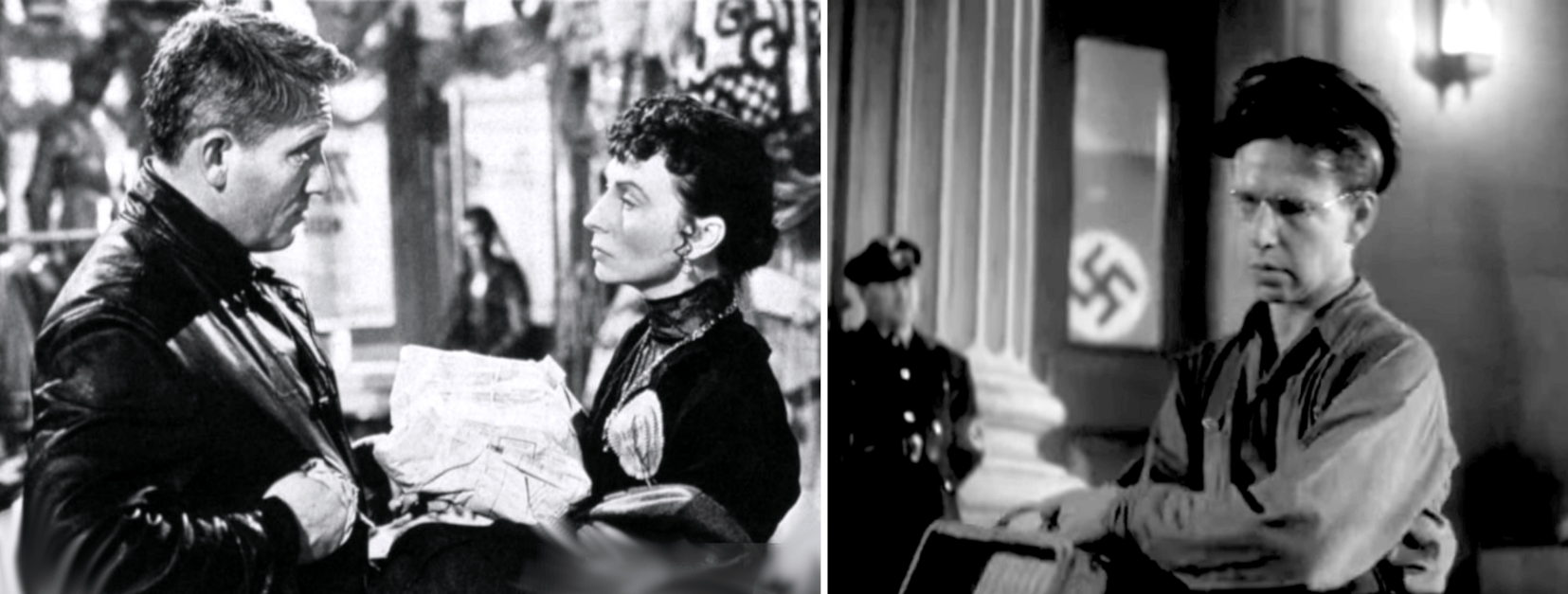
Mercury theater player Agnes Moorhead contributes a strong scene, and the film’s margins are populated with well-known European actors helping with the war effort. Bertolt Brecht’s wife Helene Weigel plays an informing janitress; twenty years earlier, she was the torch-throwing worker in Fritz Lang’s Metropolis. Max Reinhardt’s wife Helen Thimig also plays a small part, unbilled.
Director Fred Zinnemann uses the graphic imagery of men hanged on the tree-crosses as a substitute for the usual scenes of torture and barbarity. As the film does not try for realism it shouldn’t be judged against later films about the atrocities of the camps, or real conditions under Nazi rule. A major theme seems to be to assure Americans that Germans are not all monsters, and that justice and decency will eventually prevail in post-war Europe. Did any wartime movies offer the same sentiments for Japanese civilians? I can’t think of any.
In place of action or a strong dramatic resolution, The Seventh Cross concludes with a few speeches and a question mark as to George Heisler’s fate. Heisler’s endorsement of the primacy of human decency isn’t particularly compelling, which leaves this well-intentioned and tasteful picture without a powerful ending. Instead of Heisler’s low-key speeches, we would have expecte MGM to end out with something bigger and more emotional.
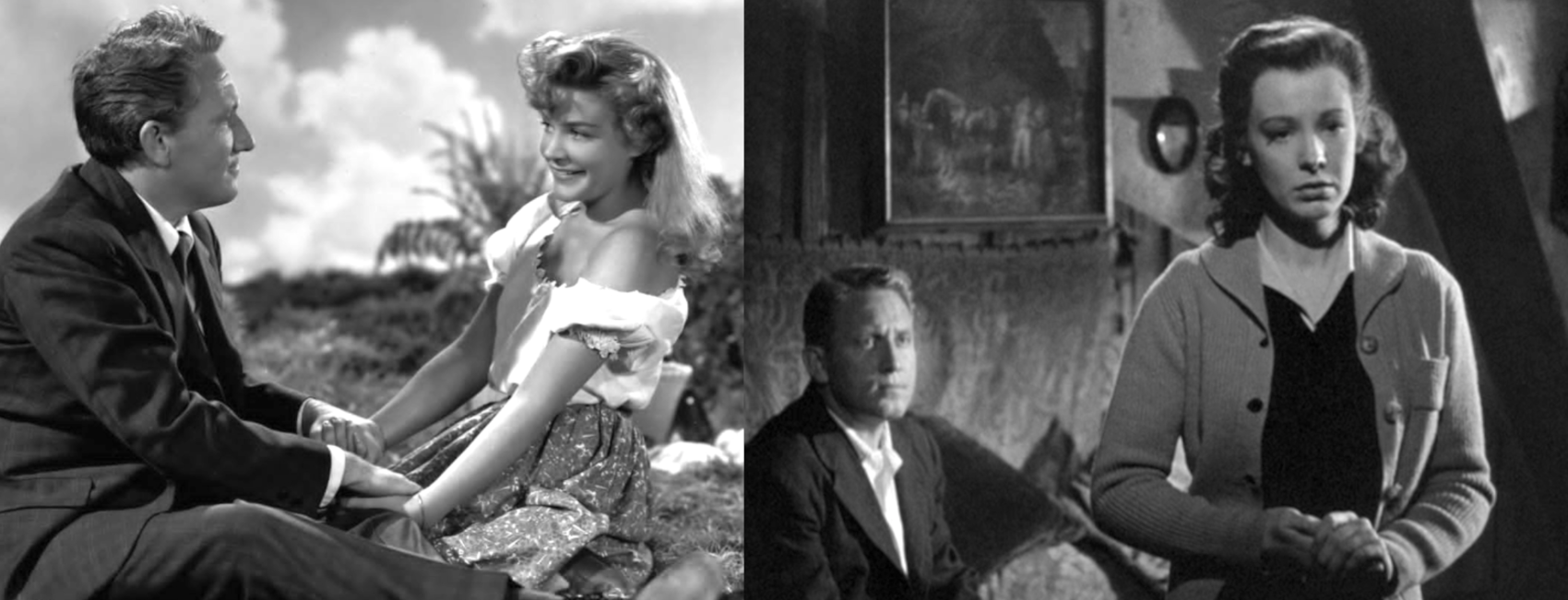
Our associations with two of the actresses is the reverse of their big roles in other movies. Kaaren Verne played a healthy Viennese love interest for Bob Cummings in Kings Row, and here she’s a terrified ex-sweetheart ready to turn Heisler in. The interesting Signe Hasso is warm and comforing here, but we know her best as a particularly ruthless Nazi agent in the next year’s House on 92 Street.
Tracy is his familiar solid presence, although watching him be so serious for two hours isn’t always a treat. It’s amusing in the end that George Heisler and Toni have ‘invisible MGM sex’ — only the fact that he has to re-tie his tie suggests that they’ve done the deed. The film’s big appeal is through the large, expert and well-directed supporting cast. This is reportedly Jessica Tandy’s first American movie and the first of several roles she played opposite her real-life husband Hume Cronyn. She is absolutely adorable.
Cronyn was nominated for Best Supporting Actor for his likeable German everyman. It seems odd now that his Paul Roeder is detained by the Gestapo, and isn’t thrown into a torture chamber. Despite suspecting that he’s a friend of a wanted camp escapee, the agents politely steer him toward their car, and let him free after just one full day of interrogations. They don’t even assign an agent to follow him. “It’s not a problem” Paul insists, “the only way the Gestapo knows anything is if you tell them.”
Here’s Joe Dante on The Seventh Cross:
1 comment