
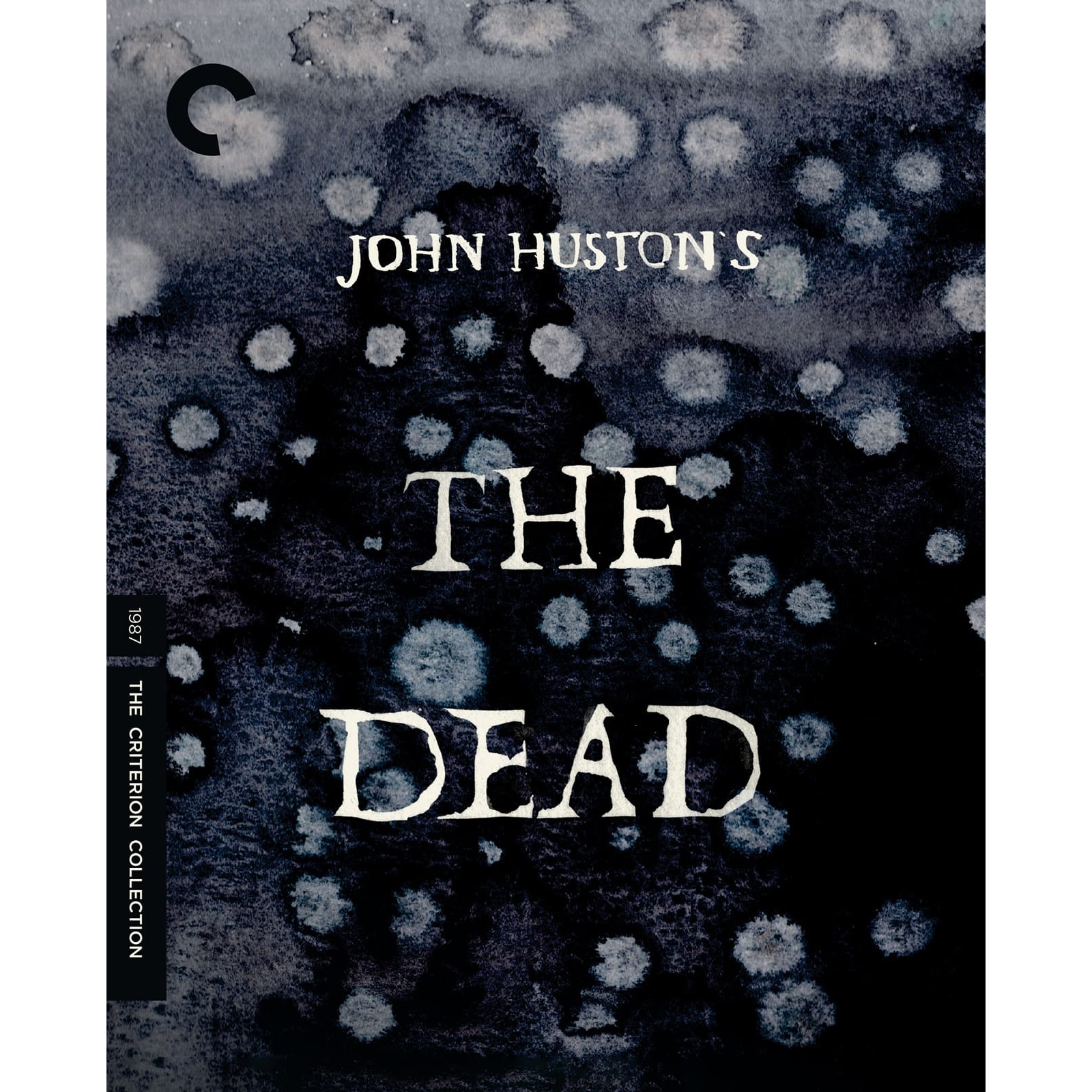

Of all the fiction I was entreated to study in college, none touched me quite as much as James Joyce’s Dubliners, with its melancholy and often cruel stories of Irish folk in depressed times. The most affecting and profound is the final story The Dead, which is longer than some novellas. It feels short because its scope is so small — with a brief time frame and a handful of characters in a confined space.
Director John Huston enjoyed a burst of bankability in the 1980s, just as his health began to fail. * Prizzi’s Honor did so well for both himself and his daughter Anjelica Huston, that his very small but very carefully planned passion project The Dead found financing and got underway.
The movie feels like a valentine to Huston’s adopted country. He had moved to Ireland and become a citizen years before, but The Dead is a Hollywood production. A second unit filmed night exteriors in Dublin, with snow and horse-drawn coaches, but the interiors were all filmed in a studio in Valencia, California, with a choice cast of Irish and Irish-American players. Huston and his son / scenarist Tony Huston didn’t open up the play to add locations or scenes. The one major addition is the inclusion of a poetry reading, by a new character called Mr. Grace.
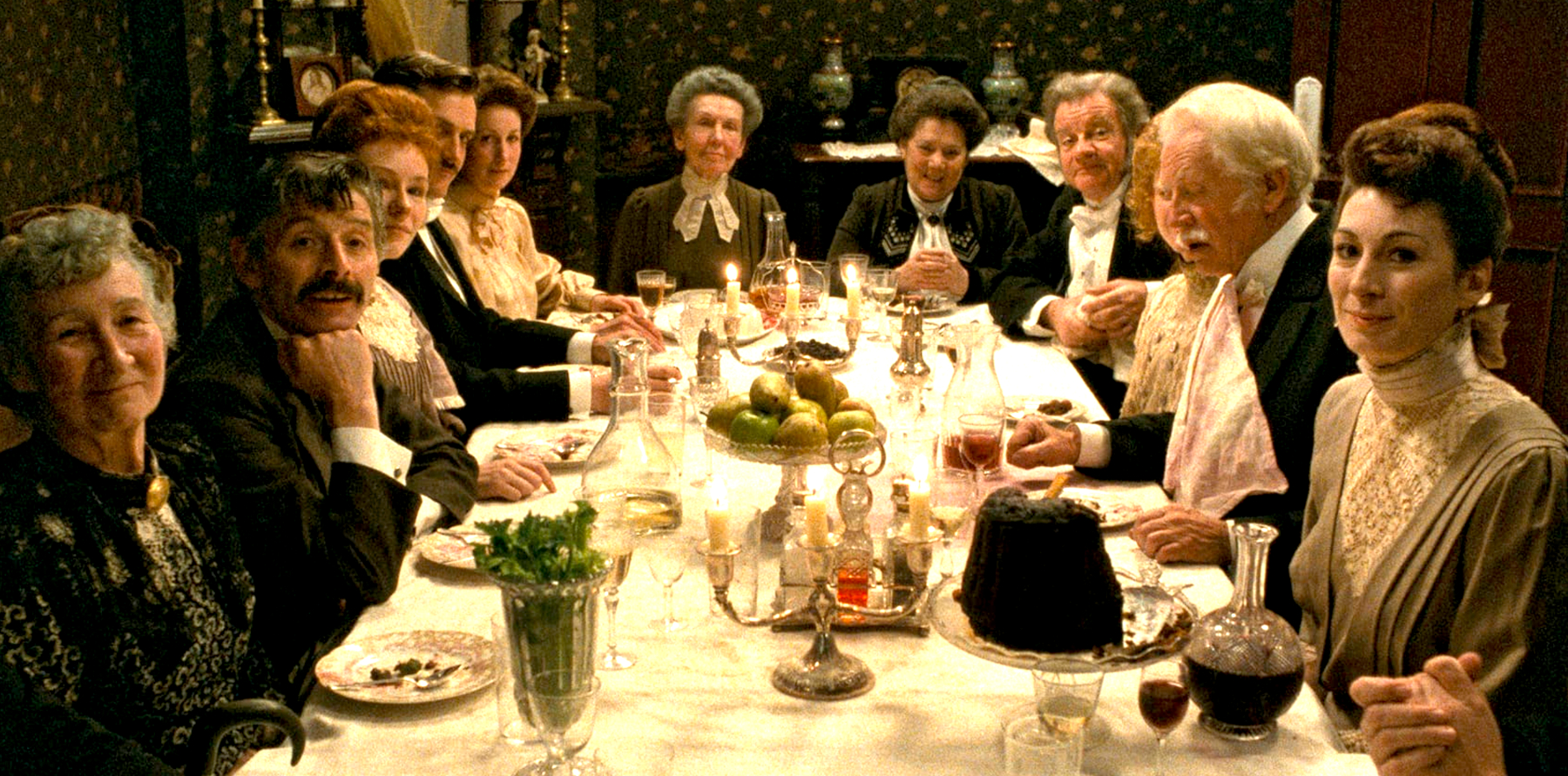
It is 1904 in Dublin. Guests arrive for a yearly Epiphany party at the home of the spinsters Kate and Julia Morkan (Helena Carroll & Cathleen Delaney) and their unmarried niece, Mary Jane (Ingrid Craigie). Their music students Miss Furlong, Miss O’Callaghan, and Miss Higgins arrive (Katherine O’Toole, Maria Hayden, Bairbre Dowling), accompanied by the young bachelors Raymond Bergin and Joseph Kerrigan (Colm Meaney & Cormac O’Herlihy). More guests offer their hearty greetings, the married couple Gabriel and Gretta Conroy (Donal McCann & Anjelica Huston) and the only Protestant in the group, Dan Brown (Dan O’Herlihy). Gabriel is a teacher. He’s been asked to give a speech for the hosts and is a bit nervous about it. He’s also something of a peacemaker. The habitual drunk Freddy Malins (Donal Donnelly) shows up in his usual state; Gabriel tidies up Freddy’s dishevelment and smooths the way for his elderly, somewhat cranky mother Mrs. Malins (Marie Kean), who makes a yearly trip from Glasgow to attend the party.
All the events of the book’s uneven but fairly successful party unspool. Gabriel and Gretta radiate stability, but we sense Gabriel’s feelings of isolation from his wife. Already uneasy about his speech, Gabriel is accosted by Miss Molly Ivors (Maria McDermottroe), who wants to pigeonhole him to take part in Republican political events, calling him insufficiently patriotic, a ‘West Briton.’ Practically accusing Gabriel of being dull, Molly leaves the party to go to a Union meeting.
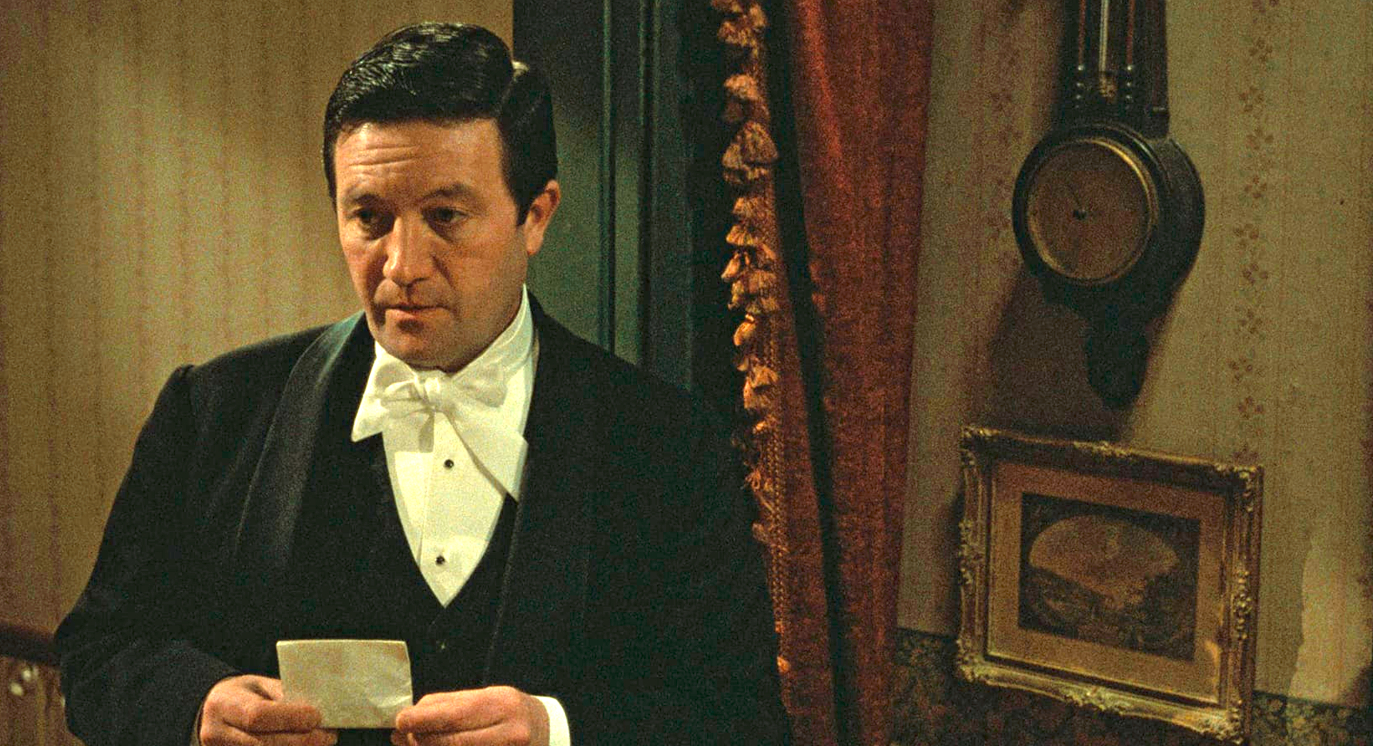
The mood is one of warmth and fellowship. When the elderly Aunt Julia sings a song, all insist that her failing voice is better than ever. Julia is much loved as a music teacher and may not make it through many more Epiphany gatherings. The hosts and most of the guests are big fans of concert singers and opera, and the guest of honor is opera tenor Bartell D’Arcy (Frank Patterson). He finds diplomatic ways to beg off singing for the party.
The dinner goes well. Freddy continues to praise Julia’s singing. For a while it looks as if he might make a spectacle of himself, but his boorish questions about music are mostly ignored. By this time Dan Brown is getting tight as well. He strikes up his own note of discontent, mainly because Freddy irks him. Gabriel makes his speech, which turns out so heartwarming that his hosts are moved to tears. We understand why this group of friends, with their individual regrets, disappointments, and muted hopes, gathers in the cold every year.
Huston follows the flow of the story fairly closely. The movie feels as if it is transpiring in real time, but the 65 minutes or so at the party cover 5 or 6 hours, until it’s time for guests to go home. At this point it is proper to direct readers to seek out the book. The Dead is one of those ‘unadaptable’ classics in which ‘nothing happens but everything happens.’ Joyce’s concluding scenes are both profound and personally affecting. The film cannot possibly convey its full power. But it does not try to co-opt the story, or to have the last word on its interpretation.
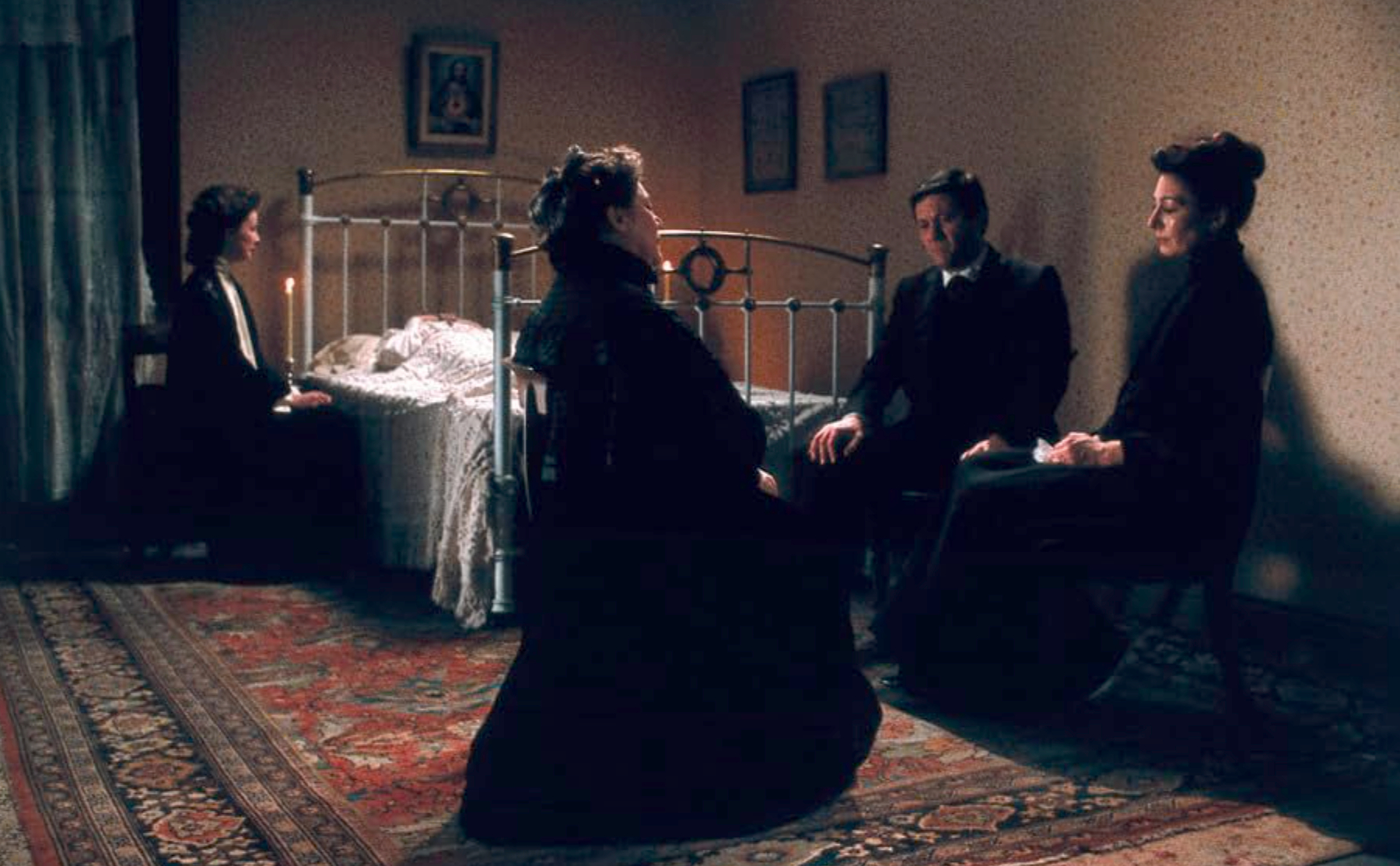
John Huston does take a few small, expressive detours. While Julia sings, the camera explores the Morkon’s upstairs rooms, examining photos and embroideries framed on the walls. Toward the end we’re also give a handful of flash-forward thought-images of the future, as envisioned by Gabriel. The most noticeable addition is the recitation of the poem that Mr. Grace (Sean McClory) calls ‘Broken Vows.’ The disc extras identify it as ‘Donal Óg’, an anonymous old Irish poem translated by Lady Augusta Gregory. The mysterious poem is both a lament of heartbreak and an oath of everlasting love. It amplifies the private anguish felt by Gretta, when she pauses in a stairwell to listen to a song called ‘The Lass of Aughrim’.
Could Huston’s acting ensemble be bettered? There are no big personalities among the guests, as even the celebrity tenor is just another friend of the Morkans. We’re in the company of beloved relatives, the kind that pass away making us wish we had known them better. The only invitee not sharing the warm spirit is the politically-minded Molly. She seems to have come just to poke at Gabriel, and leaves before dinner.
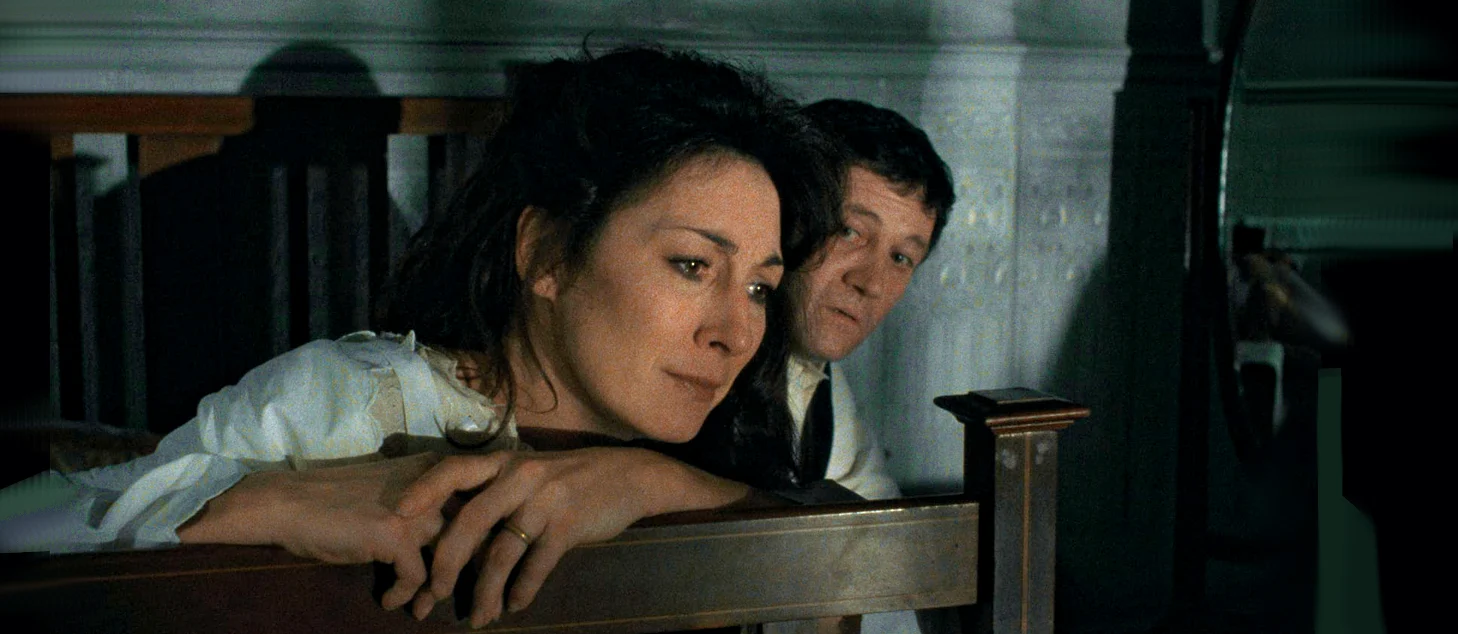
The Dead completes Anjelica Huston’s career arc working with her father. She made her debut 18 years before in his A Walk With Love and Death, gathering mostly unflattering reviews. Her Gretta Conroy is a delicate characterization, pleasant with all at the party, but not particularly affectionate toward her husband Gabriel.

In older films, it always seemed as if accomplished Irish actors were taking a break from their stage careers. Most of the talent seen here were born in Ireland, but many were busy performers in films and TV in California. We casual U.S. fans know Dan O’Herlihy well; his Dan Brown makes a strong contrast with ‘The Old Man,’ the powerful C.E.O he played in the same year’s RoboCop. O’Herlihy’s classic casting goes back as far as Carol Reed’s Odd Man Out. Next comes Donal Donnelly, another noted Irish player that we might know best from his comic role in Richard Lester’s The Knack… and How to Get It. Donnelly can be seen as far back as John Ford’s The Rising of the Moon and Michael Anderson’s Shake Hands with the Devil.
The characterizations have little in common with traditional Irish ‘types’ in American movies. There’s a real ‘your friends and neighbors’ quality. Colm Meaney is today a familiar face, what with character roles in scores of action thrillers, and his presence in the series Star Trek: Deep Space Nine. Sean McClory was a workhorse Hollywood supporting player; Huston gave him the plum showcase of reciting that expressive poem.
Actress Marie Kean would seem to have made the trip from Dublin to appear in the film. Fans will immediately recognize her as the harridan storekeeper in David Lean’s 70mm Ryan’s Daughter. All Ms. Kean need do here is curl her lip, and we know her well. She’s also in Stanley Kubrick’s Barry Lyndon, as Barry’s mother.

Huston is clearly respectful of his source material. We’ve never understood claims that his book adaptations were weak. His greatest films communicate some of the essence of good writers — Dashiell Hammett, B. Traven, W.R. Burnett, even Rudyard Kipling. We admire Huston’s willingness to take on books deemed difficult or un-filmable — the morbid We Were Strangers, Moby Dick. The Red Badge of Courage looks to have been as much a casualty of studio interference as was The Magnificent Ambersons. Who else would have rolled the dice on favorites Beat the Devil and The Roots of Heaven?
With The Dead Huston is beyond the need to sustain his career with constant performing work and openly commercial directing assignments. The theme of mortality is present at all times, but never in a morbid way. Personal obliteration is a function of the universe and the human condition, as certain as the changing seasons. The real pain is getting by in the here and now without a meaningful personal connection, without love. It’s a precious thing, in any form.
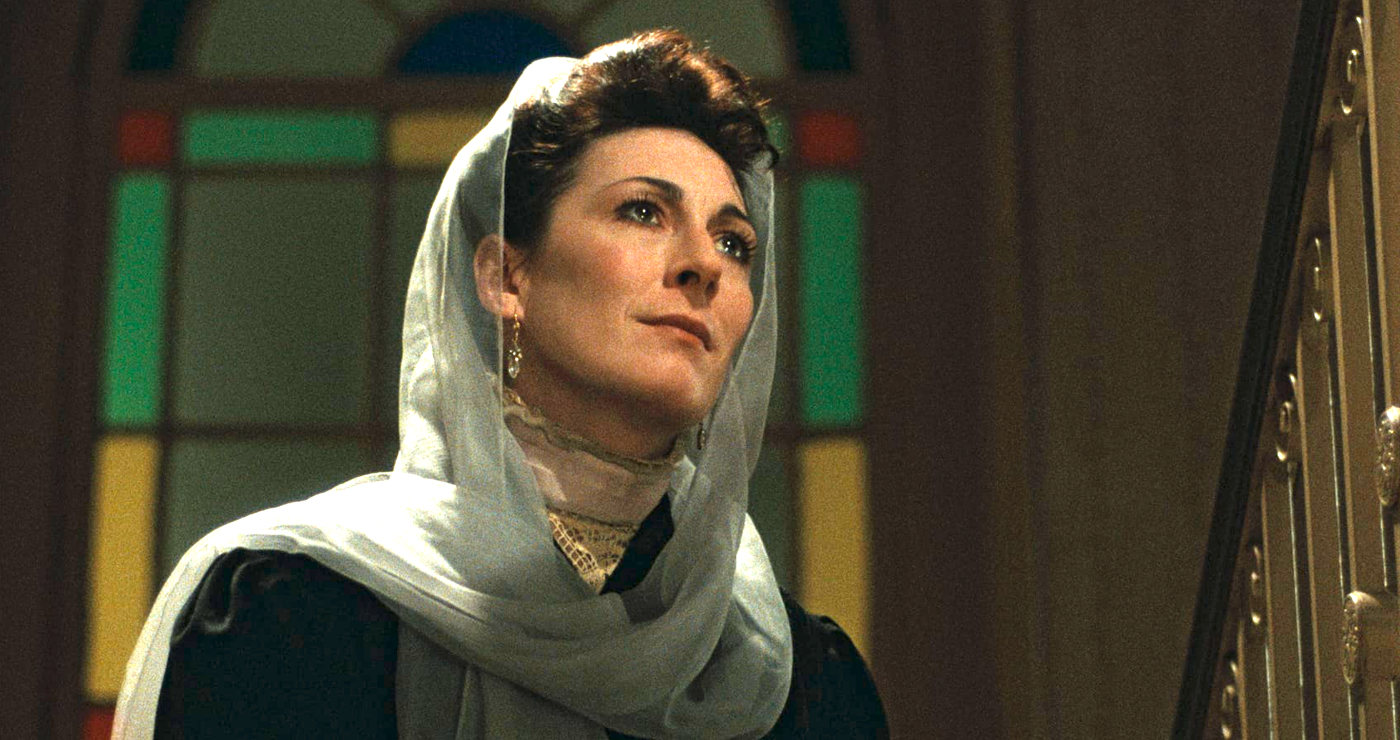

James Joyce is usually unfilmable, but this is a beautiful adaptation, and a marvellous swan song to an incredible career.
Joseph Losey had planned to film
“Dubliners ” , the book from which ” The Dead” short story comes, in the early 70’s, with Robert Shaw and Trevor Howard, but we are certainly grateful that John Huston approached it with just the right touch.
Here in Dublin , every Christmas for the last few years, the Museum of Irish Literature stages a ” The Dead ” evening, where the evening and the meal are re-staged for an enthusiastic audience.
It runs for about a month beginning in early December, and the tickets have usually sold out by the end of the summer!!