
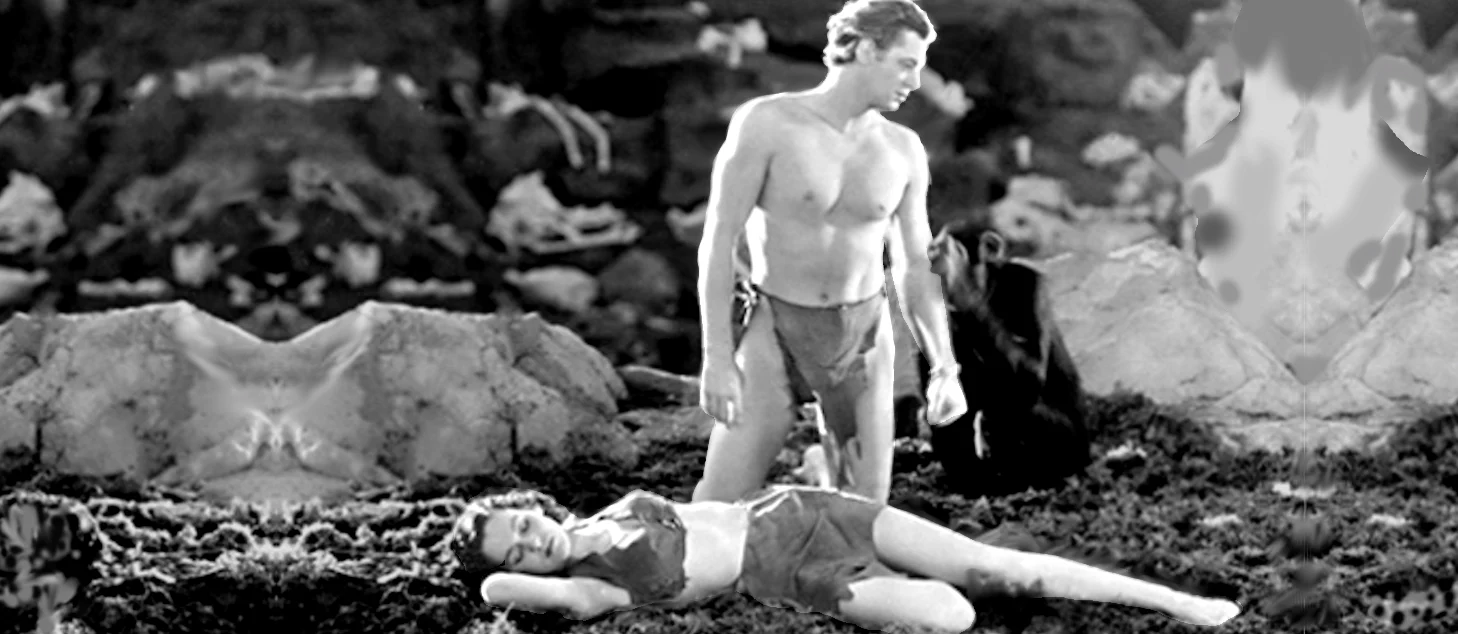
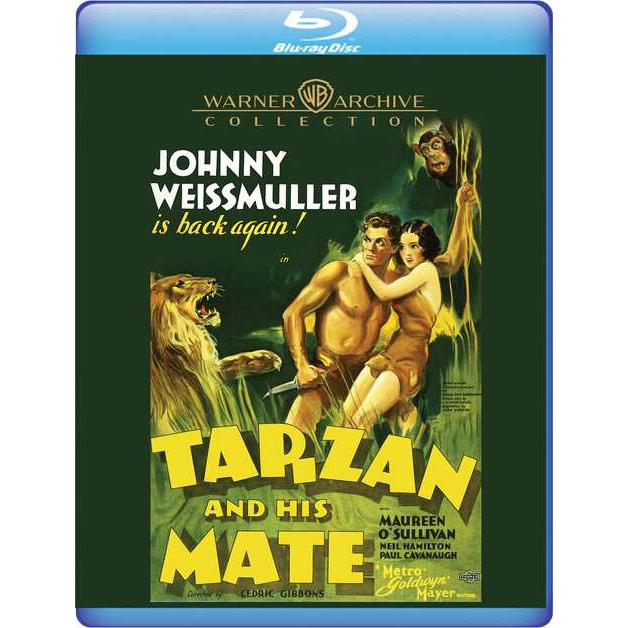

Just two years ago we applauded the WAC’s remastered release of Tarzan the Ape Man. With the impatience of a typical disc collector, we immediately whined for more:
“If this is indeed just the beginning of a WAC Tarzan series, we can’t wait for a restoration of the second in the original MGM-Johnny Weissmuller franchise, a scandalous pre-Code sequel that pushes both the violence and eroticism to Depression-era extremes.”
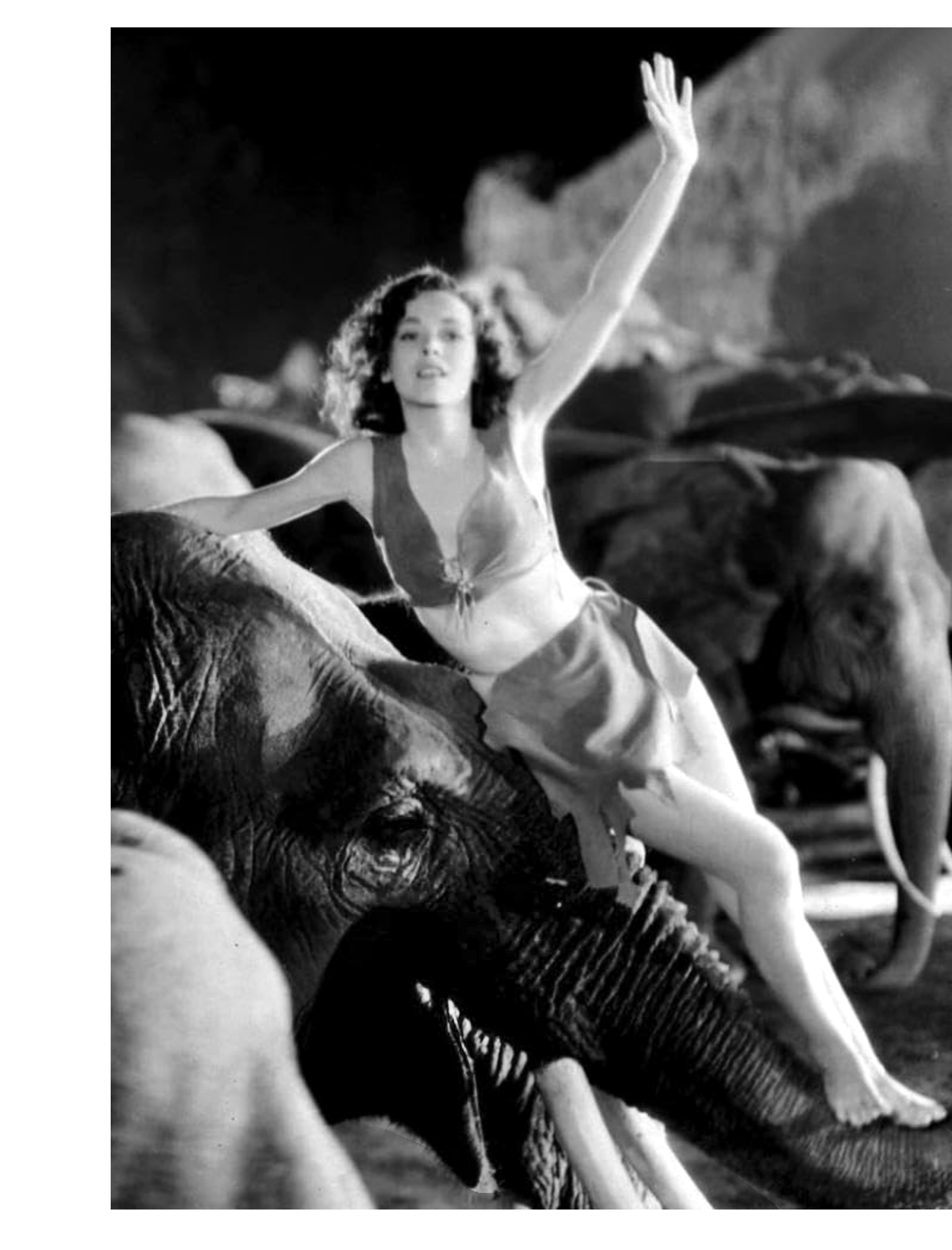
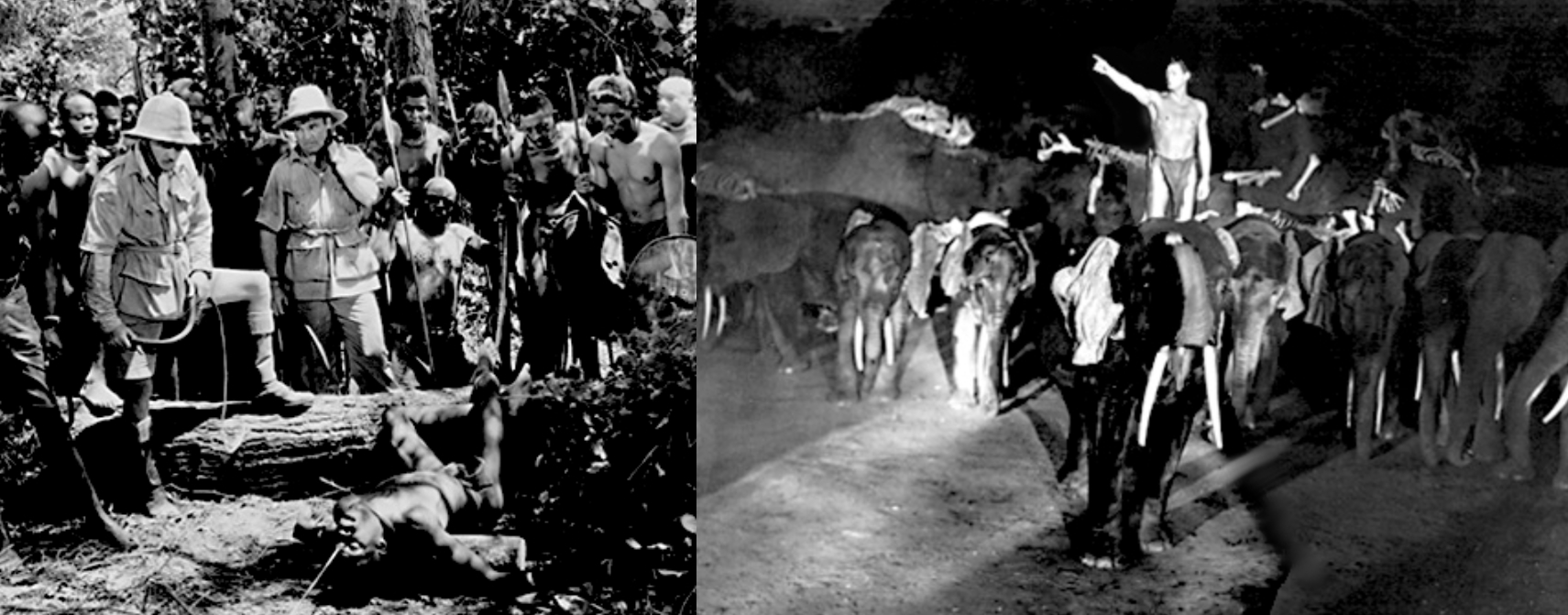
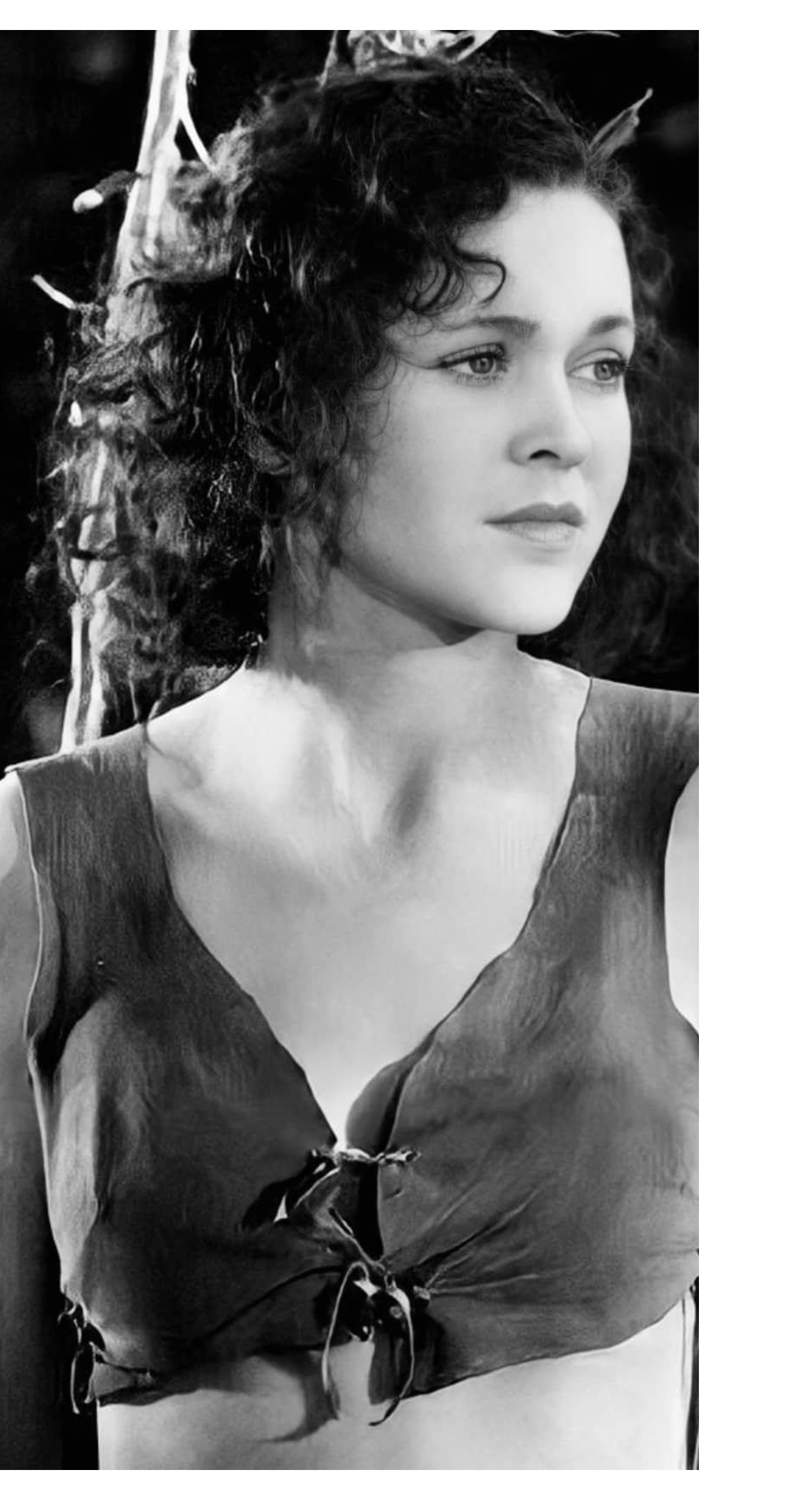
The new Warner Archive Collection disc makes that description seem inadequate. Remastered and restored, MGM’s first Tarzan sequel Tarzan and His Mate now plays like a provocative exploitation picture. Its white explorers are lecherous sexists. Maureen O’Sullivan’s spunky jungle heroine wears a surprisingly abbreviated leather loincloth, and spends one of her safari nights trying on peek-a-boo fashions. The jungle violence is unrelentingly sadistic. The native bearers are childlike, jabbering idiots; treated like slaves, they cower from every new threat. The action depicts black men being killed by the bushel, slaughtered by cannibal foes and tossed off cliffs by monstrous ape men. The English Bwanas shoot bearers that balk at obeying suicidal orders.
If you’ve never seen this show, get ready for some surprises. The safari is a non-stop non-PC cavalcade of racist, sexist lust and murderous savagery on the ‘dark continent.’
Two years after his girlfriend Jane Parker (Maureen O’Sullivan) disappeared into the African jungle with her new beau Tarzan (Johnny Weissmuller), the heartbroken Harry Holt (Neil Hamilton) readies a big-scale safari with two aims. Harry hopes to woo Jane back to civilization, and to get rich by collecting the mountain of ivory at the legendary Lost Elephants Burial Ground. Helping Harry is adventurer / playboy / slimy lecher Martin Arlington (Paul Cavanaugh), who uses his time on the upriver boat to seduce a married woman passenger. When Harry discovers that the unscrupulous competitors Van Ness and Pierce (Desmond Roberts & William Stack) have stolen his map to the ‘Mutia Escarpment,’ the safari must depart on short notice.
Harry and Martin catch up with the crooks, only to find them wiped out by a cannibal tribe that kills with arrows to the head. More carnage ensues until Harry & Martin’s bearers reach the foot of the escarpment cliffs, sacred ground that the cannibals won’t violate. But the killing doesn’t pause. On the big climb, ape monsters hurl big rocks at the safari. Screaming native bearers plunge into a thousand-foot drop.
One (Animal) Battle After Another
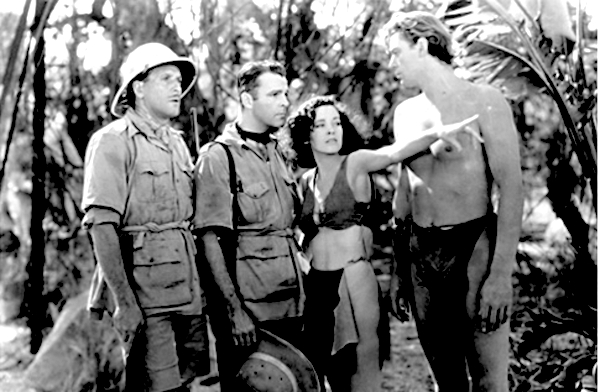
All is saved when contact is made with Jane and Tarzan, who are cohabiting in a natural paradise, albeit one with constant attacks by vicious wild animals. Tarzan is his same uncomplicated, monosyllabic good guy possessed of a natural nobility. Jane does what she can to help Harry, but Tarzan says that the remains at the elephants’ bone yard are sacred … he won’t show them the way. Jane has fun donning the sheer dress and stockings Harry has brought, while Martin leers at her and offers suggestive come-ons.
The somewhat thick-headed Harry fails to sweep Jane off her feet: she wants to live in the wild with Tarzan forever. In between animal attacks, the female ‘old Cheeta’ dies, and young Cheeta (chimpanzee talent ‘Jiggs’) becomes the Tarzan family’s new surrogate child. With Tarzan refusing to cooperate, that dastard Martin wounds an elephant, knowing that it will instinctively go to the Burial Ground to die. He and Harry find the Elephants Graveyard, but Jane and Tarzan stop the ivory raid with a march of hundreds of elephants. That prompts Martin to ambush the Lord of the Jungle with his high-powered rifle. When a search for Tarzan comes up with nothing, Jane starts to believe that she has no choice but to return to civilization!
Movie attendance dropped precipitously in the Depression of the early 1930s, Hollywood’s Production Code softened to help the studios attract audiences. The censor boards chose to look the other way as some pictures exhibited more adult content. Dialogue flirted with sex talk, nudity found its way into comedies and musicals, and screen violence was more graphic and sadistic.
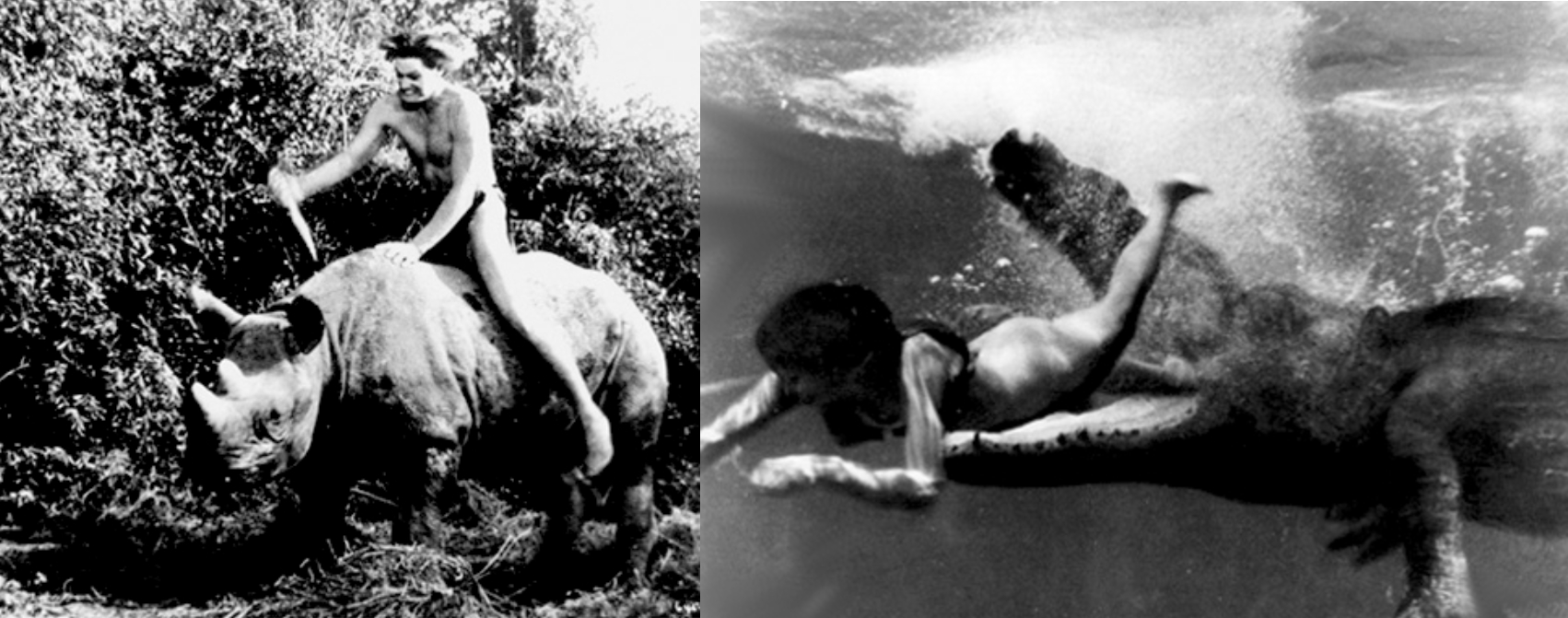
We’re not kidding about the film’s violent excesses — impressive animal performers and good special effects show Tarzan fighting lions, a rubber crocodile and even a trained rhinoceros — he rides on its back. He comes out of more than one lion wrestling match without a scratch. The ambitious action climax sees the criminal whites attacked by a group of lions. A battalion of cooperative elephants counterattacks in an orgy of effects work. Editing helps with the illusion of lions being hefted aloft and crushed; complex traveling mattes show lions climbing on elephants and biting their faces.
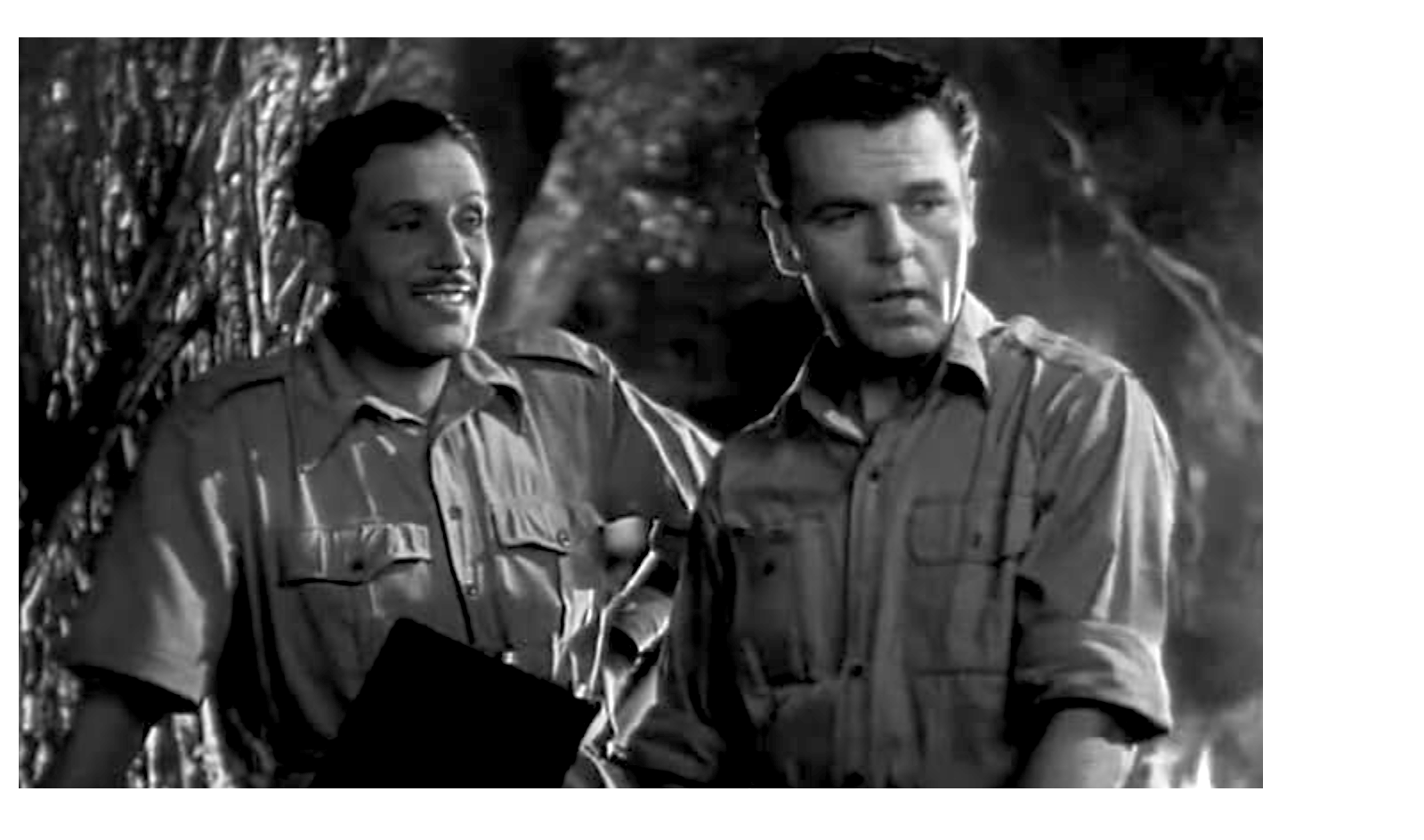
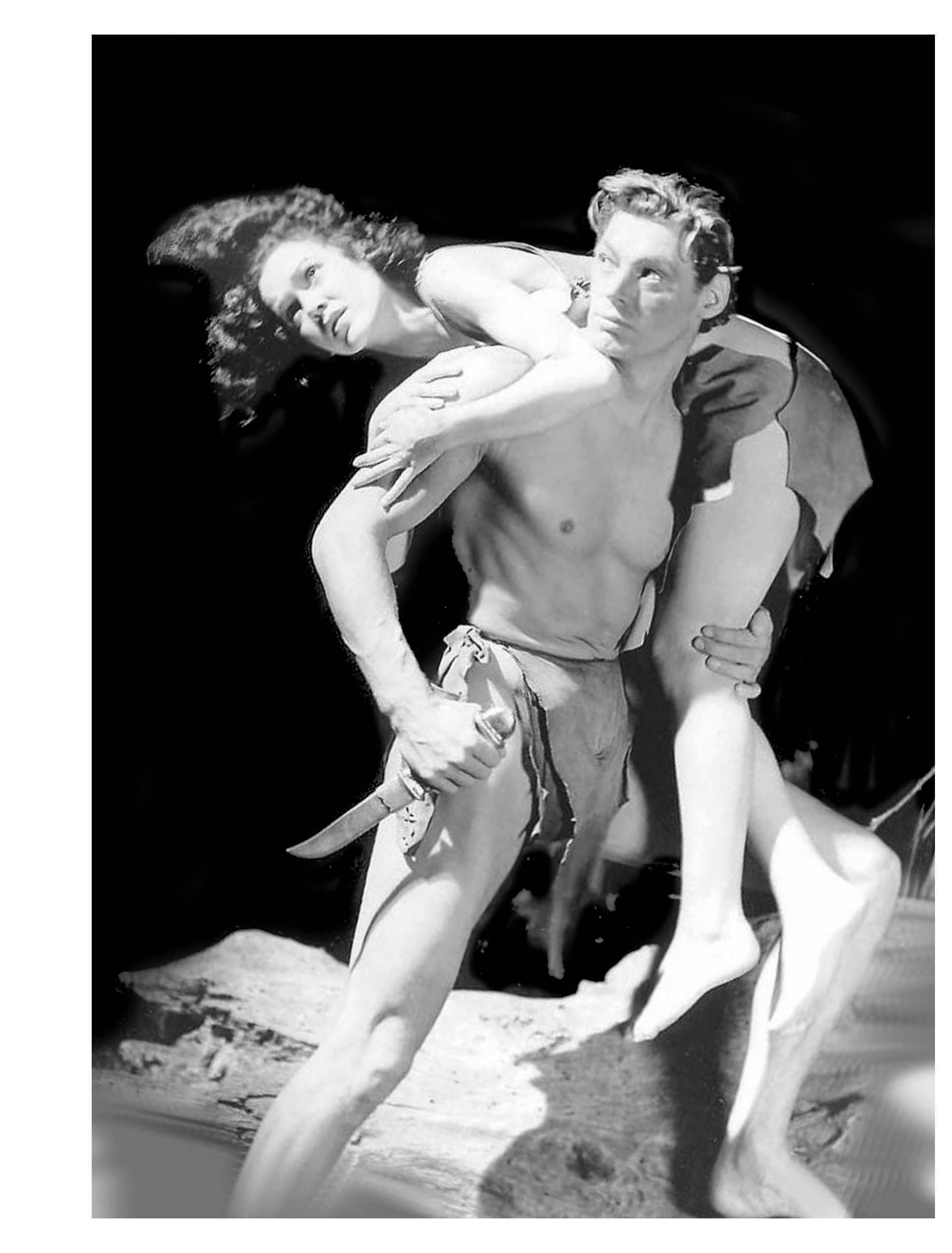
We’re a little surprised when the thoroughly reprehensible Harry and Martin are allowed to make self-sacrificing, noble exits. We’ve seen Martin put his slimy moves on Jane, shoot a bearer dead just to assert his authority, and treacherously pump a bullet into Tarzan. Harry is a walking moral marshmallow who never questions Martin’s actions. At least Tarzan is not compromised. All of us 10 year-olds love it when he comes to the rescue, knife in hand.
The movie reportedly cost about a million-four, even with shots repeated from the first film and (apparently) more generic footage taken from the old Trader Horn African shoot. Historian Tracy Scott Griffin tells us that designer – turned director Cedric Gibbons had his megaphone taken away early on. Jack Conway filmed most of the movie, but Gibbons kept sole screen credit.
Several cast members were replaced, perhaps when the first unit shut down so Maureen O’Sullivan could recover from appendicitis. Animal trainers and special units concentrated on the animal action — between the elephants, the rhino and Jiggs the chimp, the ‘animal performances’ are superb. Billed as Production Designer, Arnold Gillespie would later help MGM’s effects department, so was likely responsible for the film’s excellent matte work. The design of the cliffs, with dummies and stuntmen plummeting to their doom, is pretty exciting in itself. Some shots in the mass elephant stampede use dozens of elephant dolls, with excellent results.
It’s savage stuff, what do you expect?
The film’s sheer excess still makes an impact. Maureen O’Sullivan’s basic leather outfit is borderline NSFW. It is obviously her in the revealing silhouette shots slipping on Harry’s negligee-like ‘gown.’ Excellent doubles perform the underwater swim and hairy stunts like a 20-foot acrobatic swan dive into Tarzan’s arms. Most of the ‘swinging on vines’ shots look like repeats from the first movie.
The nudity and violence push the limit of good taste, while the uncomfortable racial attitudes are off the chart. Obviously, the sexuality on today’s average streaming shows is rougher …. but Tarzan and His Mate comes from a time when such erotic fantasies were truly daring. Ms. O’Sullivan really gets into the spirit of Sex in the Jungle. No coward she.
According to Scott Tracy Griffin’s research, MGM amplified the sequel’s sex & violence to keep pace with RKO’s previous ‘savage jungle’ tales King Kong and The Most Dangerous Game. The giant ape stomped on natives, chewed them up in its jaws, and stripped Fay Wray of her dress as if peeling a banana. The Most Dangerous Game offered the spectacle of a sadistic aristocrat showing off the severed heads of his victims, mounted like hunting trophies in a grisly display.
MGM had to keep up with RKO’s erotic content as well. In 1932’s Bird of Paradise, Tahitian siren Dolores del Rio performed an erotic nude swim. The actress spent much of the movie topless save for strategic flower leis. That prompted Tarzan and his Mate to go all-out with a no-blinking underwater nude swimming scene, with no discreet cutaways.
When Production Code enforcement took over Hollywood in mid-1934, the curtain fell on all this naughty content (and the general freedom of expression). Nudity was strictly banned, on-screen violence was toned down, horror movies were strongly discouraged and gangster movies were banned outright. When some pre-Code pictures were reissued, offending scenes or dialogue was simply cut out. Bits are still missing from the Marx Brothers’ Horsefeathers, John Ford’s Arrowsmith and Rouben Mamoulian’s Love Me Tonight. Some movies were deemed too objectionable for reissue, and were simply shelved: Island of Lost Souls and The Story of Temple Drake. Ironically, being locked away prevented some pictures from being mutilated. Lost Souls and Temple Drake can now be seen intact.
Historian Griffin says that MGM was instructed to remove the nude swim, but they left it in for a few engagements. It definitely came out when the Code was enforced, and wasn’t reinstated until 1985.
We weren’t all that aware of 1934’s Tarzan and His Mate until the late 1980s, when Ted Turner began screening the MGM library on the TBS and AMC cable stations. And it wasn’t until the 1990s, editing video promos for George Feltenstein’s VHS and laserdisc releases, that I discovered just how wildly extreme a pre-Code action thriller could get. Feltenstein inaugurated a branded line called Forbidden Hollywood.
This second jungle romp continues Jane and Tarzan’s deliriously romantic love relationship. We really believe that Jane is sold on her ‘pet’ jungle man, and that their relationship is based on good sex alone. The other indelible impressions are of the dozens of gruesome killings, mostly of screaming black natives. The strongest image is a close-up of a dead face with an arrow through its forehead, crawling with ants. Some of the action is too bloodthirsty to be serious. We feel the pain but also laugh out loud — it’s just too outrageous.
My favorite Tarzan movie. I can’t wait to see this!
Ahem. If you don’t mind a scuffed cover or a shopworn reference book, here there be (Tarzan) bargains…
https://www.hamiltonbook.com/products/search?q=tarzan+on+film&cat_id=
The historical research was superb, enriching my understanding of the film.