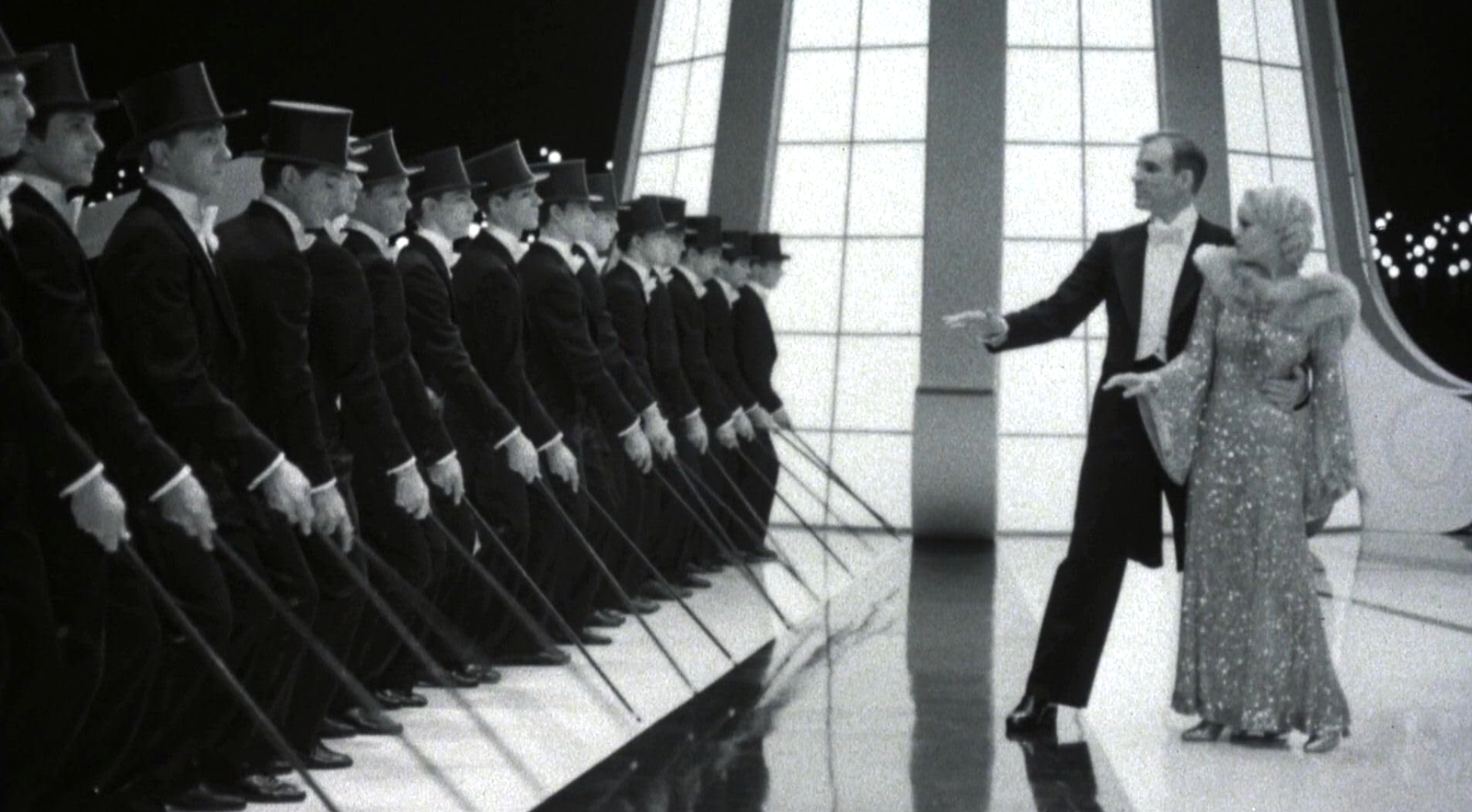


 America’s Public Broadcasting Service provided an America venue for popular BBC productions. One of the most creative was 1978’s Pennies from Heaven, Dennis Potter’s six-part tragedy about a salesman for whom popular romantic music is a curse. Arthur Parker is a fantasist depressed by his unexciting home life. But when he plays a 78rpm record of a Tin Pan Alley pop song and lip-synchs to its lyrics, he’s off and away. Arthur’s dreary surroundings are magically transformed into a radio dreamland — fancy costumes, brighter colors, happier faces.
Arthur escapes from his dull reality by indulging in carefree fantasies of these hit pop songs. The BBC miniseries had several fantasy musical numbers in each episode, all using original vintage pop tunes with titles like “Roll Along, Prairie Moon,” and “Down Sunnyside Lane.” We know his delusions will not turn out well. Immersed in daydreams of melody and glamour, Arthur becomes involved with a lonely teacher. When things go bad, the consequences are comparable to those suffered by the Losers of film noir dramas. Sweetness and light, it seems, exists only in those beloved songs.
The BBC production made the fine actor Bob Hoskins into an instant star; big-screen stardom followed with Hoskins’ landmark gangland thriller The Long Good Friday. Then Hollywood came calling on Dennis Potter. Producer Nora Kaye wanted to remake the miniseries with her husband, director Herbert Ross. In due time MGM invested in a huge theatrical remake, adapted by original author Dennis Potter himself. The BBC miniseries had been much smaller-scale. MGM’s big-screen remake enlarges the canvas to spectacle dimensions. Ken Adam designed the expressive sets, although he apparently could not take an apporopriate credit. Top cinematographer Gordon Willis applied his skills to widening the contrast between the story’s glossy musical fantasies and Arthur’s inner frustration.
The English TV miniseries was set in London. The MGM movie transposes the action to Chicago in 1934, adding a Depression-era aspect. But the ‘bad times’ faced by Arthur Parker are mostly of his own doing.
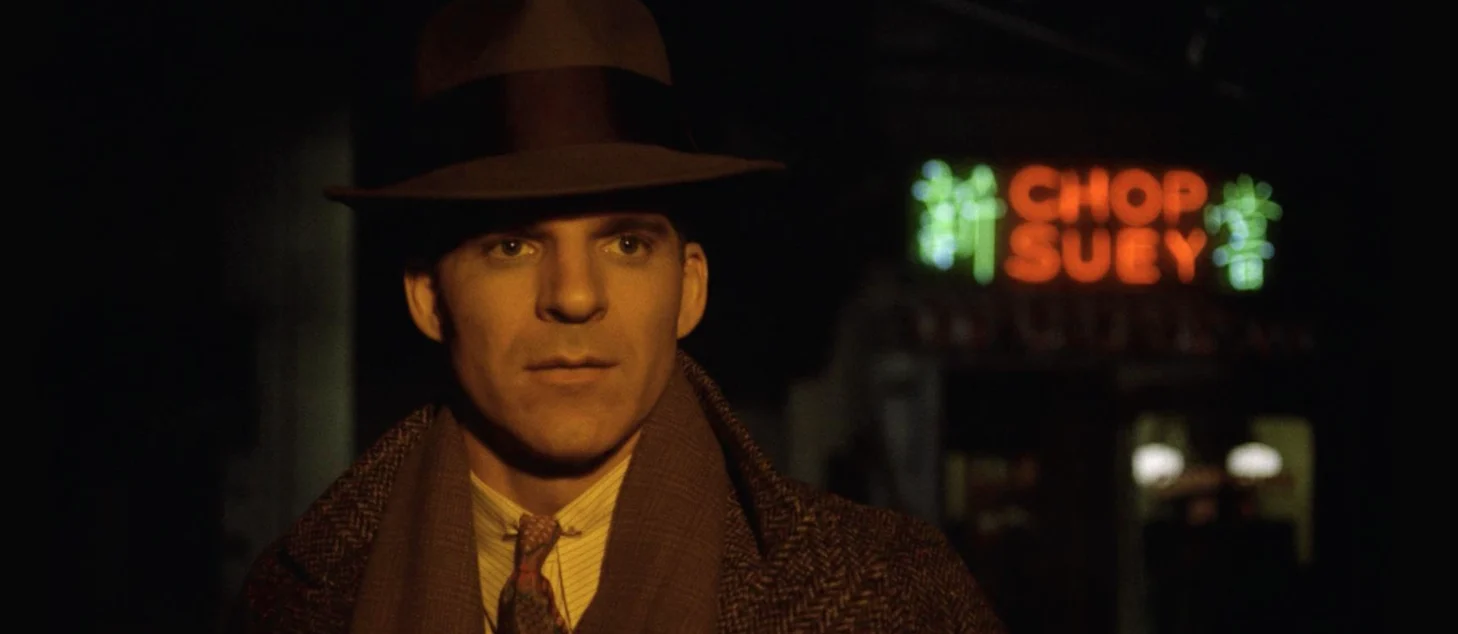
Pennies from Heaven was only Steve Martin’s second starring film. As the funniest recurring guest star on Saturday Night Live we recognized him as a powerhouse talent, even if the ‘stoopid’ humor of The Jerk didn’t appeal to us personally. Martin wasn’t the originator of the Pennies from Heavenproject but he loved the TV miniseries and thought Parker was a dream role.
Is Steve Martin simply miscast as this sad sack music salesman? Arthur Parker is a complicated character, and not really a deserving one. His lies and evasions ruin the lives of the women that love him. Bob Hoskins’ Arthur was just as pathetic, but we never ceased to care for him, no matter what happened. Steve Martin’s Arthur is less a victim than just a selfish lying fool. We eventually see him as the problem. The world is unfair to Arthur, but his abuse of others negates our sympathy.
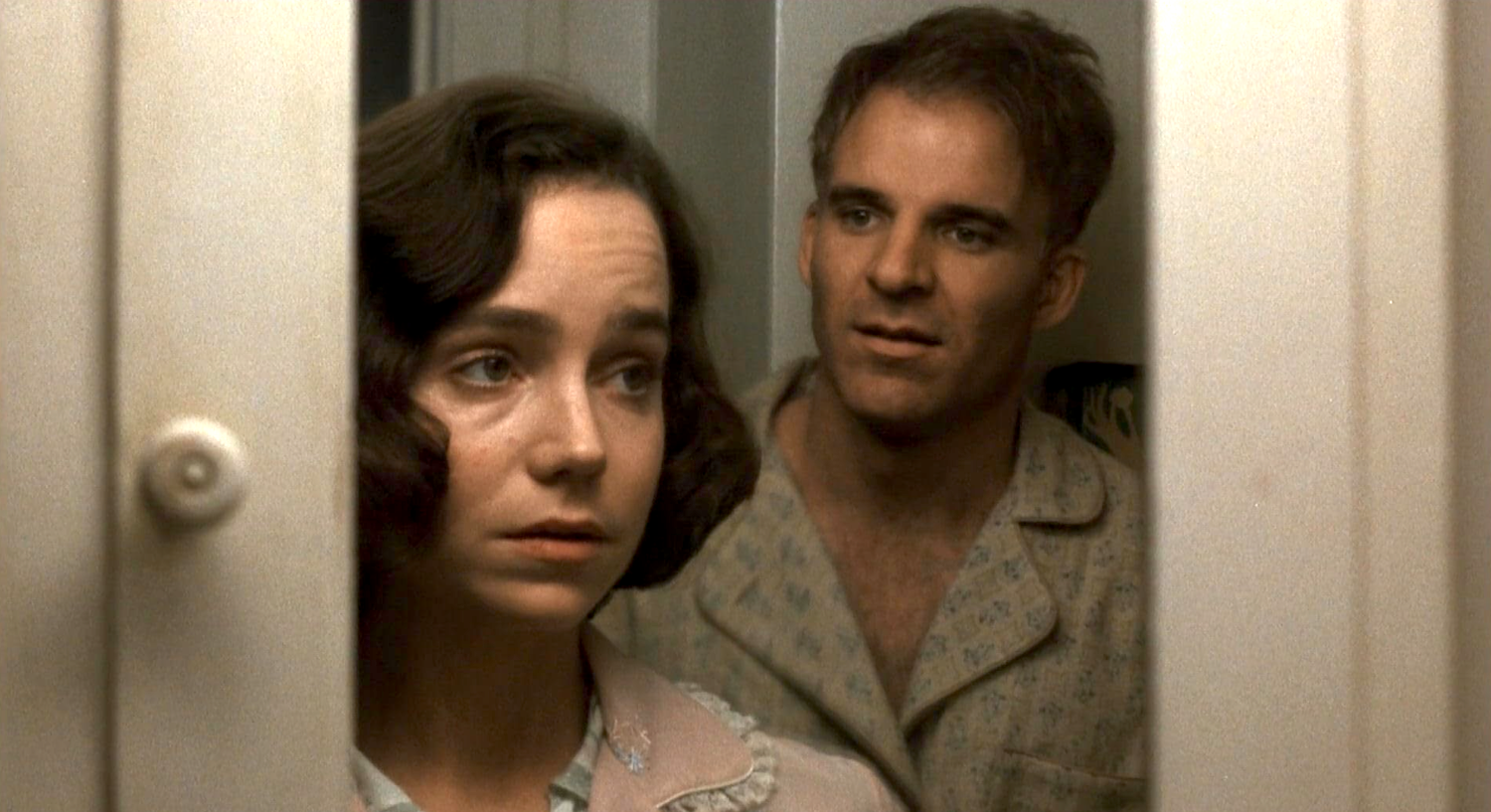
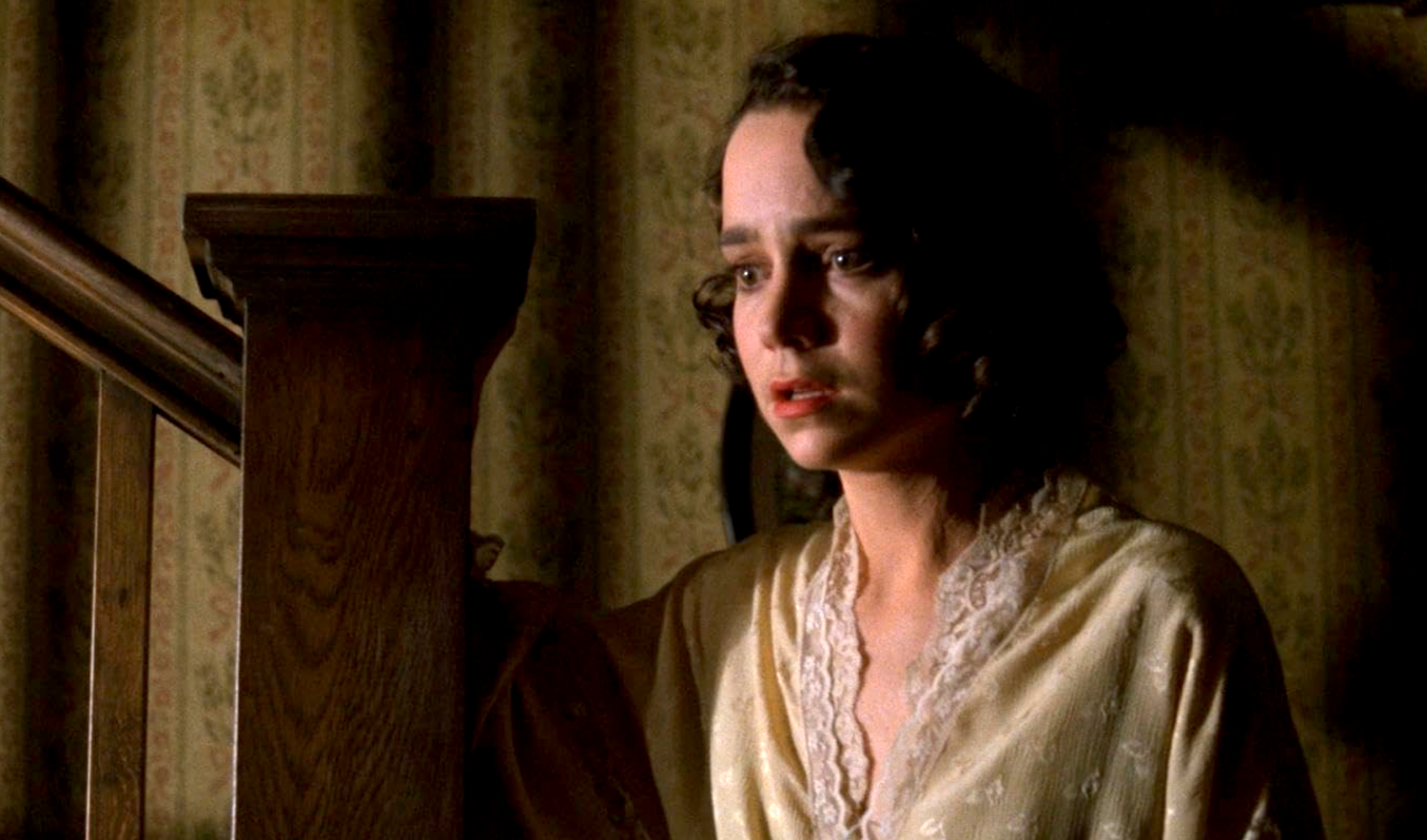
Helpless-looking Jessica Harper (Suspiria, Phantom of the Paradise) is depressingly right as Joan, the wife that has difficulty accepting Arthur’s ideas for a more exciting sex life. She balks at investing her life savings in his flaky business idea. The real problem is a lack of basic trust — Joan loves him, but senses that he’s lying to her.
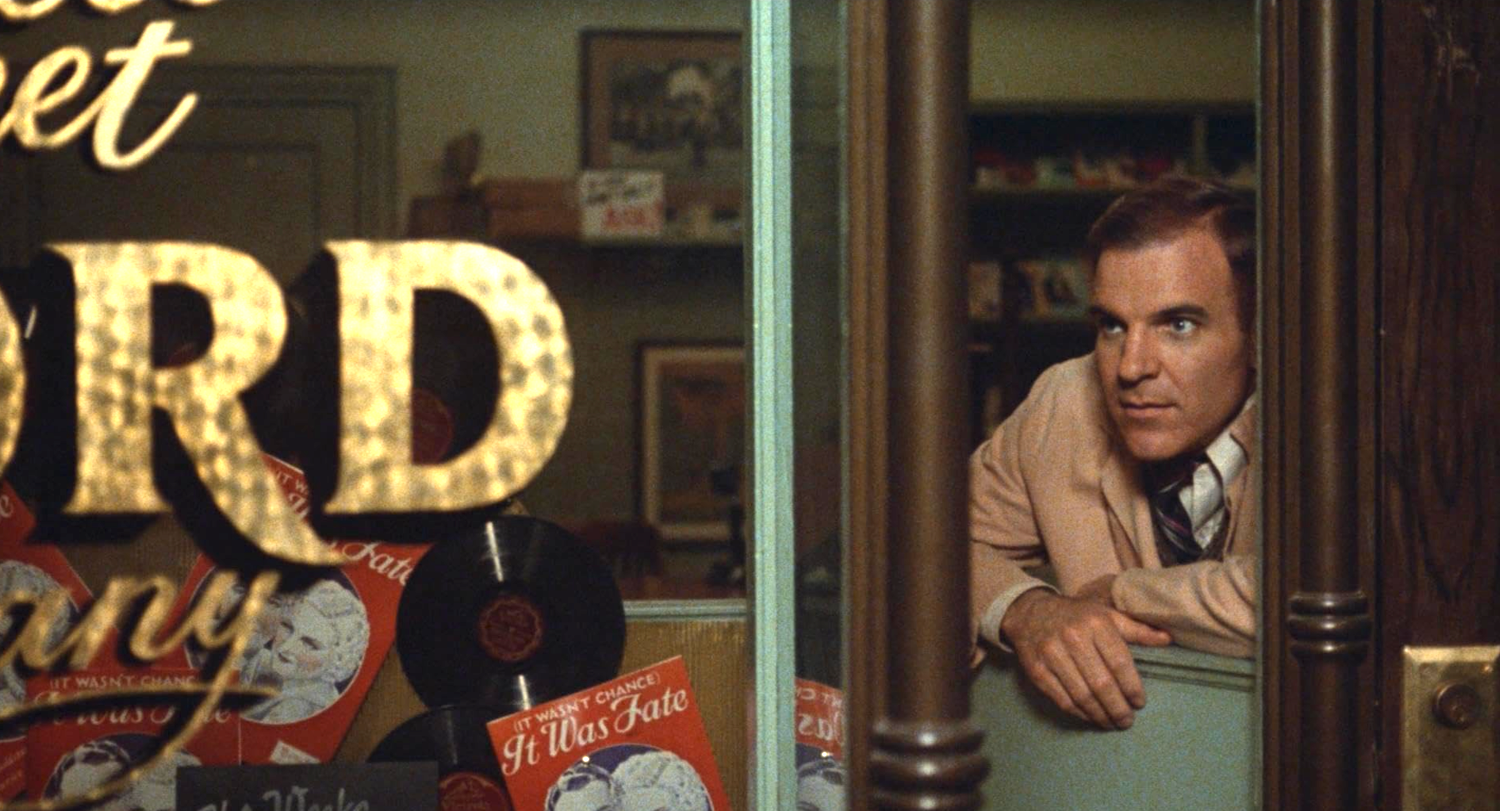
Joan eventually lets Arthur use her money to open a music store that does no business. By then he’s already seduced the meek schoolteacher Eileen (Bernadette Peters), telling her that he is single. Eileen becomes pregnant and loses her job. She then falls prey to Tom, a pimp (Christopher Walken). Much later, Arthur and Eileen connect again, and consider making an unlikely escape from their situations. By then fate has laid its trap. Arthur becomes the prime suspect in the murder of a blind girl (Eliska Krupka), actually committed by a homeless ‘Accordion Man’ (Vernel Bagneris) to whom Arthur had given a free meal.

Interrupting this awful series of events at regular intervals are more than a dozen musical fantasies, the kind with feel-good melodies written to lift people out of everyday misery. Their titles tell the tale:
The Clouds Will Soon Roll By (Woods/Brown) Elsie Carlisle w/ Ambrose & His Orchestra
Yes, Yes! (Conrad/Friend) Sam Browne & The Carlyle Cousins
I’ll Never Have to Dream Again (Jones/Newman) Connie Boswell
Did You Ever See a Dream Walking? (Revel/Gordon) Bing Crosby
Love Is Good for Anything That Ails You (Malneck/Friend) Ida Sue McCune
Life Is Just a Bowl of Cherries (Henderson/Brown) Walt Harrah, Gene Merlino, Vern Rowe & Robert Tebow
The Glory of Love (Hill) Lew Stone And His Band
Typical is the banker who wants to eject Arthur from his bank, until a song interrupts, and he instead hands out bags of money with a smile. True to media styles of the 1930s, the fantasy detours burst with glamour and energy until the inevitable return to reality. Every ‘exit’ from radio-fantasy land is a big let-down.

Many of the fantasies incorporate dance moves. Several use choreography that recalls the ’30s extravaganzas of Busby Berkeley. Choreographer Danny Daniels rehearsed both stars for months. Bernadette Peters had dance experience in her background. Steve Martin had none, and went into heavy training to learn tap. He became so good that the camera didn’t need to cut around him; Herbert Ross decided to expand his tap-dance presence. To sign Christopher Walken, the filmmakers had Dennis Potter invent a showcase dance number especially for him.
Helping out with specialty dancing are Broadway veteran Robert Fitch and Hollywood survivor Tommy Rall. Mr. Rall had broken into films as a member of a wartime jitterbug troupe called ‘the Jivin’ Jacks and Jills.’ He later gained attention as a featured dancer in MGM’s classic ’50s musicals Seven Brides for Seven Brothers and Kiss Me, Kate.
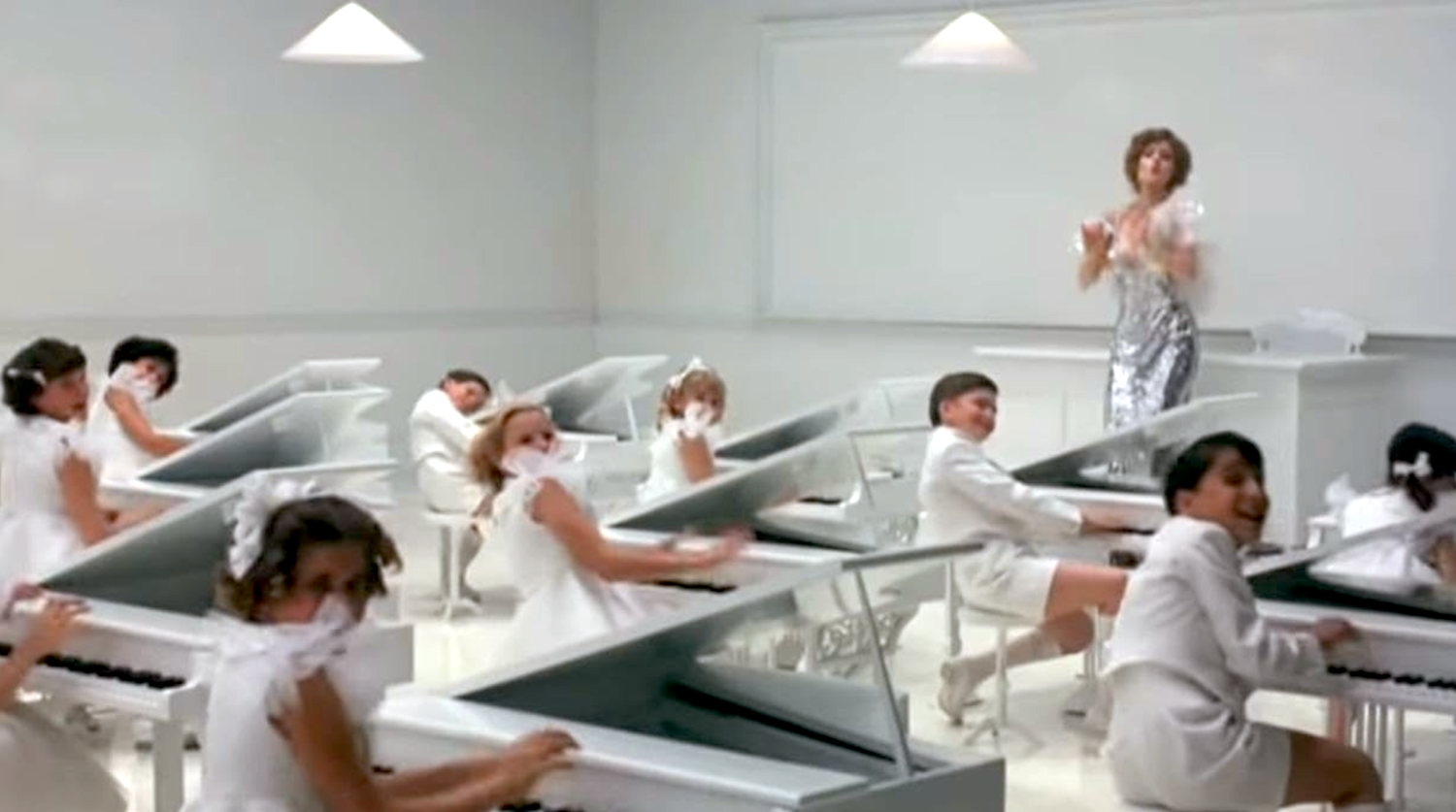
Especially arresting is a song in which at least 25 children dance in perfect tap-unison … much of it on the tops of smallish schoolroom desks. The kids project a joyful ‘giving it our all’ punch. It looks terrific — and dangerous.
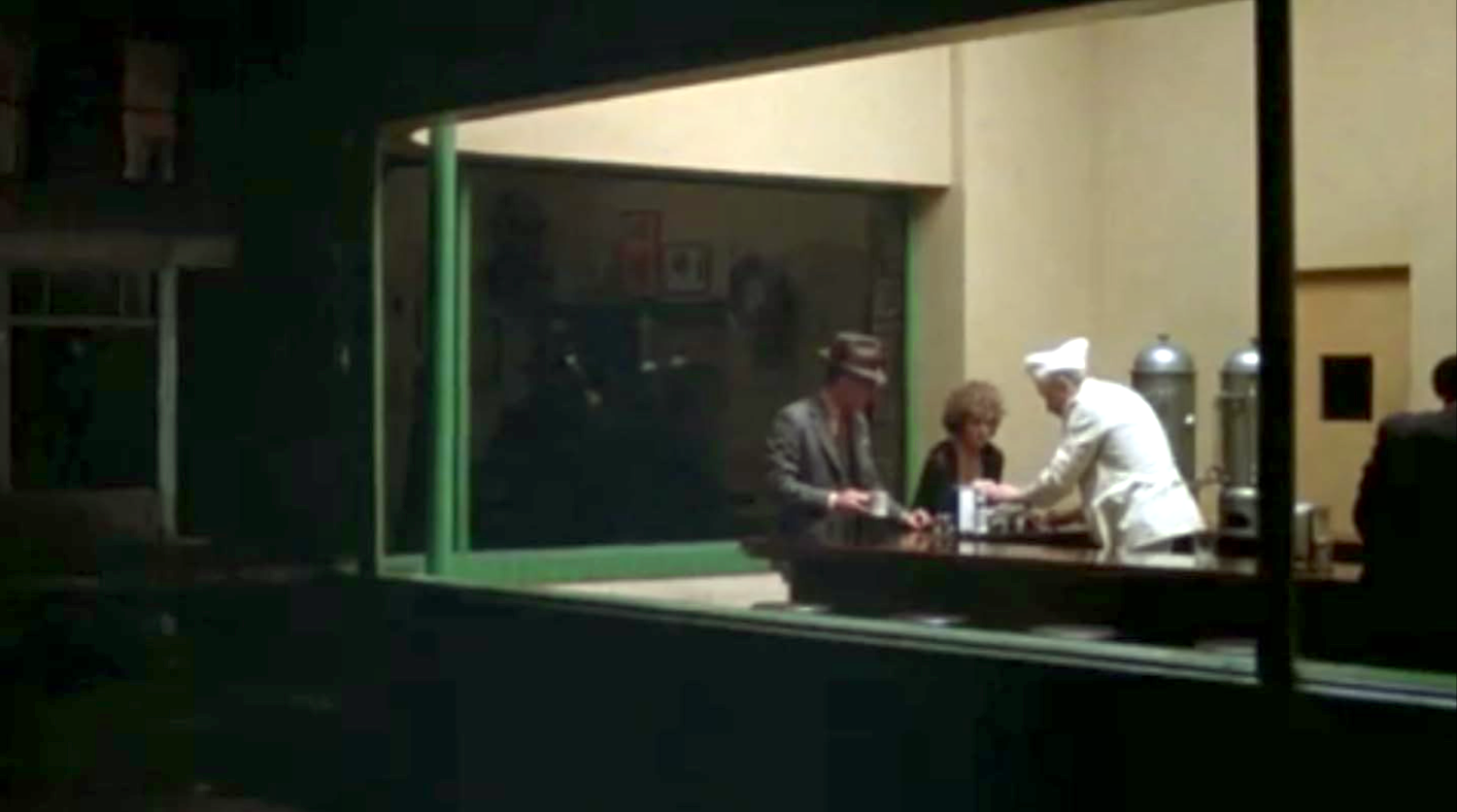
Amid all the gloom and doom, the designers can’t resist inserting trendy homages to Depression-era artworks that evoke the period, notably Edward Hopper’s ‘Nighthawks.’ The title and credit sequences take place in the clouds, reminding us of the similar ‘escape from grim reality’ motif of Terry Gilliam’s later Brazil.
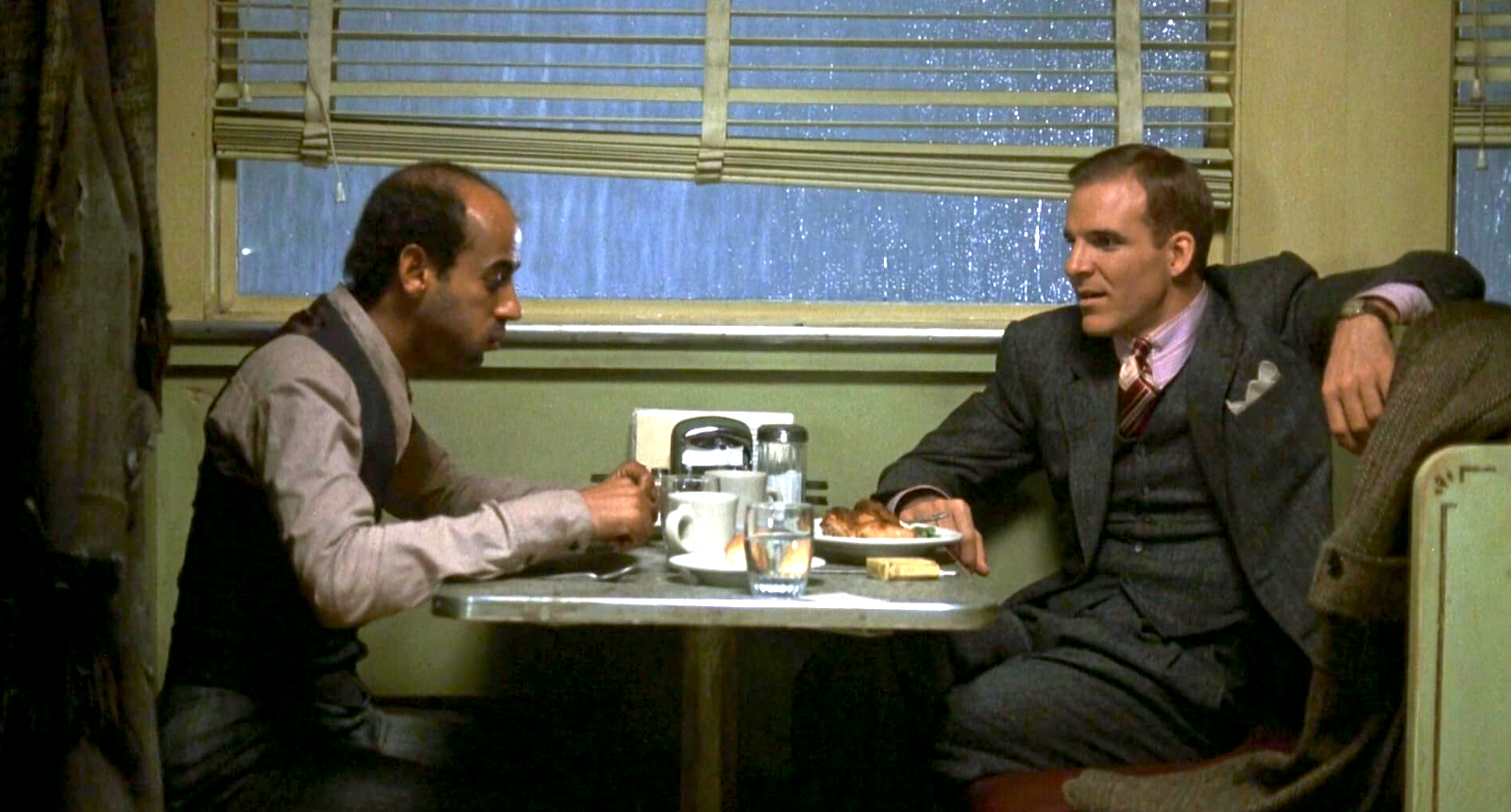
Take away the music, and Potter’s story would be an especially downbeat drama of the kind made in England in the late ’40s — Grim Brit noirs about infidelity, misguided ambiti on and tawdry crimes: It Always Rains on Sunday, Night and the City. This storyline was sufficiently sordid to earn the film an ‘R’ rating. Our ‘nice’ hero is a well-meaning louse, who lies to his women and causes an unwanted pregnancy that leads one of them into prostitution. In general, the mood of misery wins out. The melodic daydreams always give way to grim reality.
The main poster image conveyed the false impression thatPennies from Heaven was a glittering musical. Audiences expecting a Steve Martin comedy would have felt betrayed. We cringe at poor Joan’s miserable attempts to cooperate with Arthur’s feeble sex fantasies. Then comes prostitution, the murder of an innocent, and the terrible coincidences that frame Arthur for murder. Not exactly feel-good entertainment.
Even given the adage ‘who knows what the public will like?’, Pennies from Heaven earned back less than half of its cost. But it has no lack of fans today. We like that Steve Martin took on something so different, but we don’t care about what happens to his selfish, destructive Arthur Parker.
But the individual fantasy scenes — pretty impressive.
For us, the ‘Accordion Man’ musical number makes it all worthwhile. Even on a blank stage, dancer – producer – choreographer Vernel Bagneris’ downtrodden face would evoke the truth of the Depression. Bagneris lip-synchs and dances to the title tune ‘Pennies from Heaven’ as sung on a famed 1937 recording by Arthur Tracy. The original song has intro lyrics that were dropped for most cover versions, especially not as sung by Bing Crosby in the vintage Columbia musical.

The original intro relates a frightening parable, about Original Sin (?) or at least some rule of the cosmos that has it in for humans that don’t appreciate the gift of life. A storm can take away blue skies or a view of the moon … but what’s this ominous business about ‘having to pay to get them back again?’ Vernel Bagneris brings out the accusatory edge in Tracy’s vocal performance, in the most effective bit of lip-synching I’ve yet heard. his mime cuts through our defenses, giving substance to Dennis Potter’s fatalistic premise.
It turns out that the singer Arthur Tracy was himself a Ukranian immigrant. When he became a hit on vaudeville and on the radio as ‘The Street Singer,’ he sometimes posed in photos playing an accordion-like concertina.