


The majority of Hollywood’s 1950s Sci-fi thrillers couldn’t afford to replicate the ‘far-out’ visions routinely found in Sci-Fi literature. Universal’s This Island Earth captured the pulp excitement of colorful pocketbook covers, but only one studio really gambled on big-budget off-world Science Fiction. Even as MGM’s movie lot was shutting down, Forbidden Planet focused its full technical resources on a lavish 25th-century spaceship, the landscape of a distant planet and a house of the future. It was the first film to take place entirely within a fantastic futuristic world, all of which had to be conceived and constructed from the stage floor up.
The film’s achievement is such that no Science Fiction effort surpassed it until Kubrick’s 2001: A Space Odyssey. It provided a technical template for the makers of TV’s Star Trek and it was a touchstone Sci-fi fantasy for the next-generation special effects talents that made Star Wars. Forbidden Planet dazzles on home video, yet it really thrives on a giant screen. An okay Blu-ray arrived near the beginning of the format, but diehard fans are keen to know if Arrow’s new remaster is an improvement. We offer our standard take on the genre favorite, followed by an assessment of this new 4K 70th anniversary limited edition.
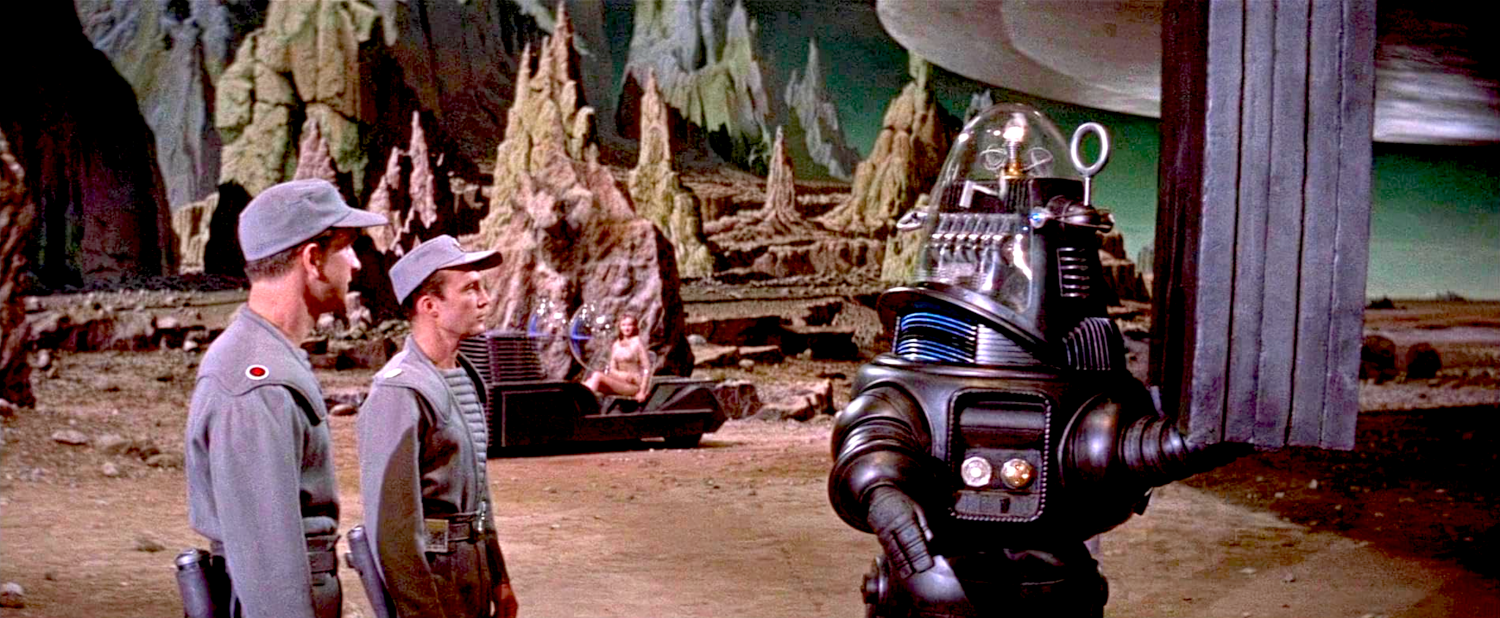
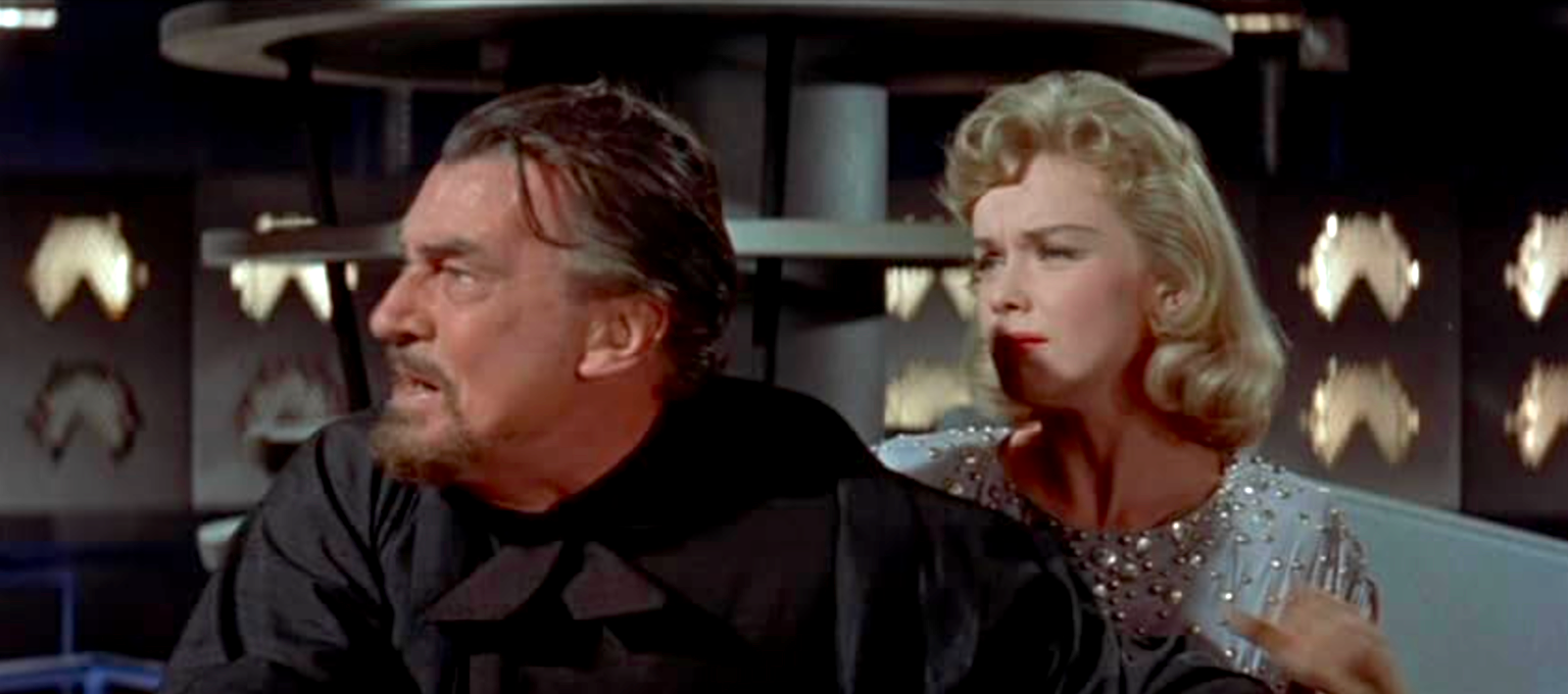
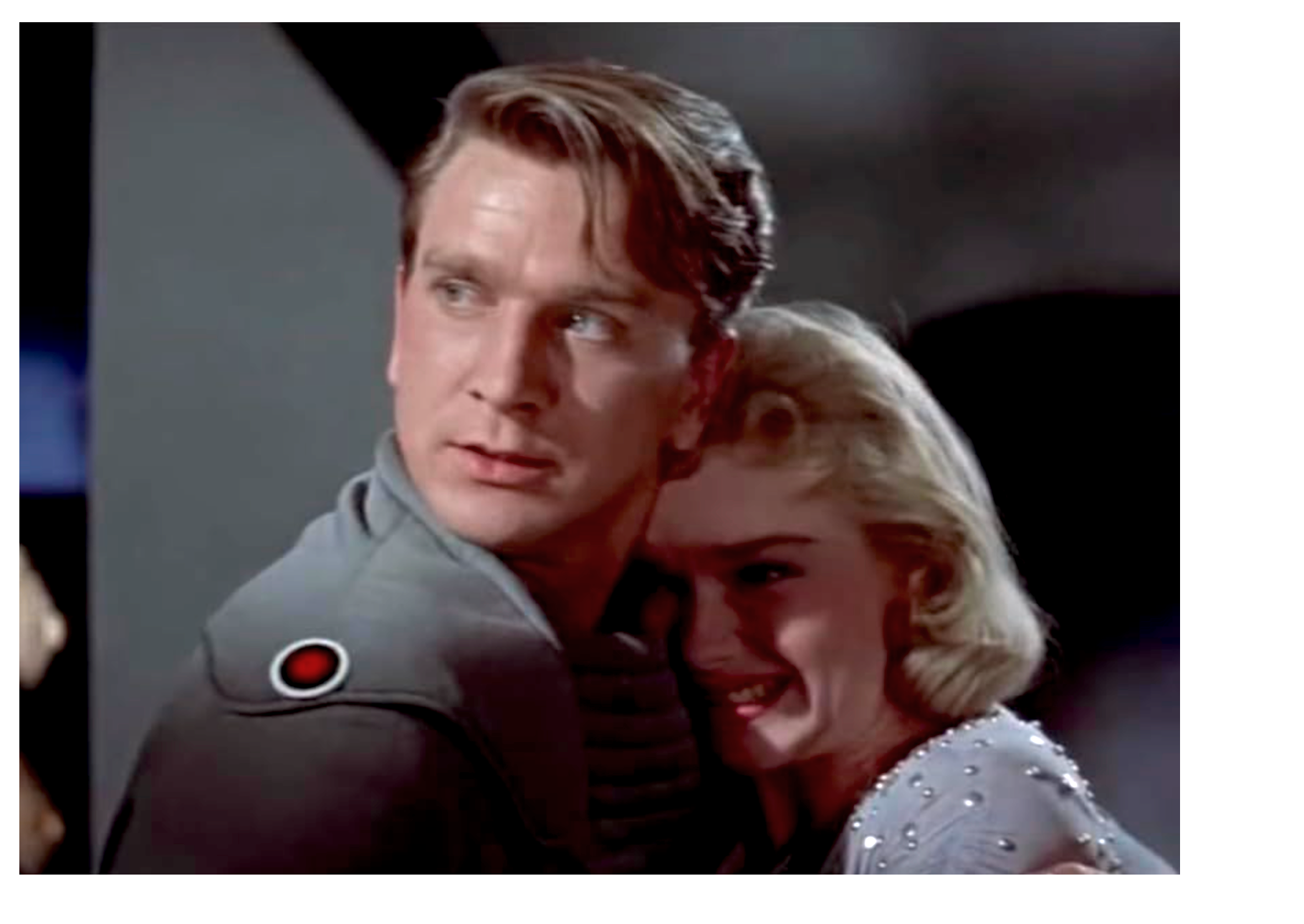
Forbidden Planet drops us into the middle of an intergalactic adventure. Star cruiser C-57D stops off at the planet Altair-4 to see what became of the spaceship Bellerophon, and an expedition that disappeared there ten years before. They find only scientist Edward Morbius (Walter Pidgeon) and his daughter Altaira (Anne Francis), living alone in a futuristic house with an amazing robot named Robby. Displeased by Morbius’s insistence that they leave, Commander John Adams (Leslie Nielsen) presses for more information on the fate of the other Bellerophon colonists, and an explanation for Morbius’ possession of scientific knowledge far in advance of Earth’s. Morbius’ secrecy and an awareness of a strange ghostlike presence on Altair-4 convince Adams that further investigation is required … even when Morbius alludes to dire consequences.
Not the runaway hit it should have been.
With all the nostalgia devoted to Sci-fi fantasies of the 1950s, one would think that the beautifully crafted Forbidden Planet would have been a roaring success. It has an intelligent script, romance, and never-before-seen special effect marvels to interest a wider audience than space-crazy kids. The film’s middling box office receipts paint a rather depressing picture of the economics of movie Sci-fi. Our favorite ‘A-picture’ classics were healthy hits, but only one or two racked up blockbuster attendance figures. MGM’s space movie performed better than most, but not enough to justify its enormous cost: Earth vs. the Flying Saucers earned almost as much but was a low-risk proposition made for relative peanuts. The economics were clear. Tiny productions by Sam Katzman and Roger Corman flourished, while MGM’s ‘tradition of quality’ efforts couldn’t keep that giant movie factory running. The genre would be dominated by independents that threw together just enough production value for a movie matinee.
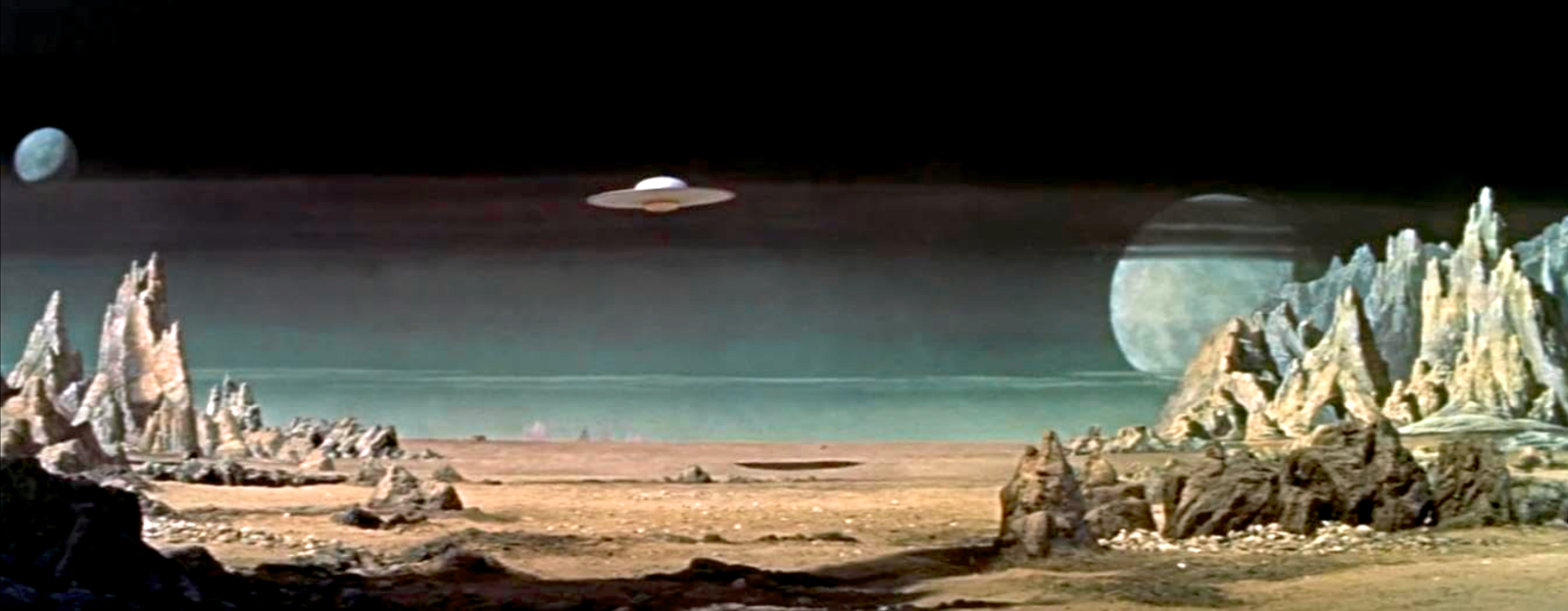
But Forbidden Planet has persisted as the wonder film of its era. All the way until Star Wars, it was the movie that delivered space ships, special effects and futuristic hardware. Most Sci-fi thrillers had 60 minutes of talk and maybe 10 of ‘the good stuff.’ This movie delivers a beautiful space cruiser gliding through the frame in its very first shot. It is followed by one amazing visual after another: a planet turning in space, a glowing eclipse, a saucer landing in an eerie desert under a green sky. The characters are professional military spacemen. And that’s only the beginning of the wonders to be found on Altair-4.
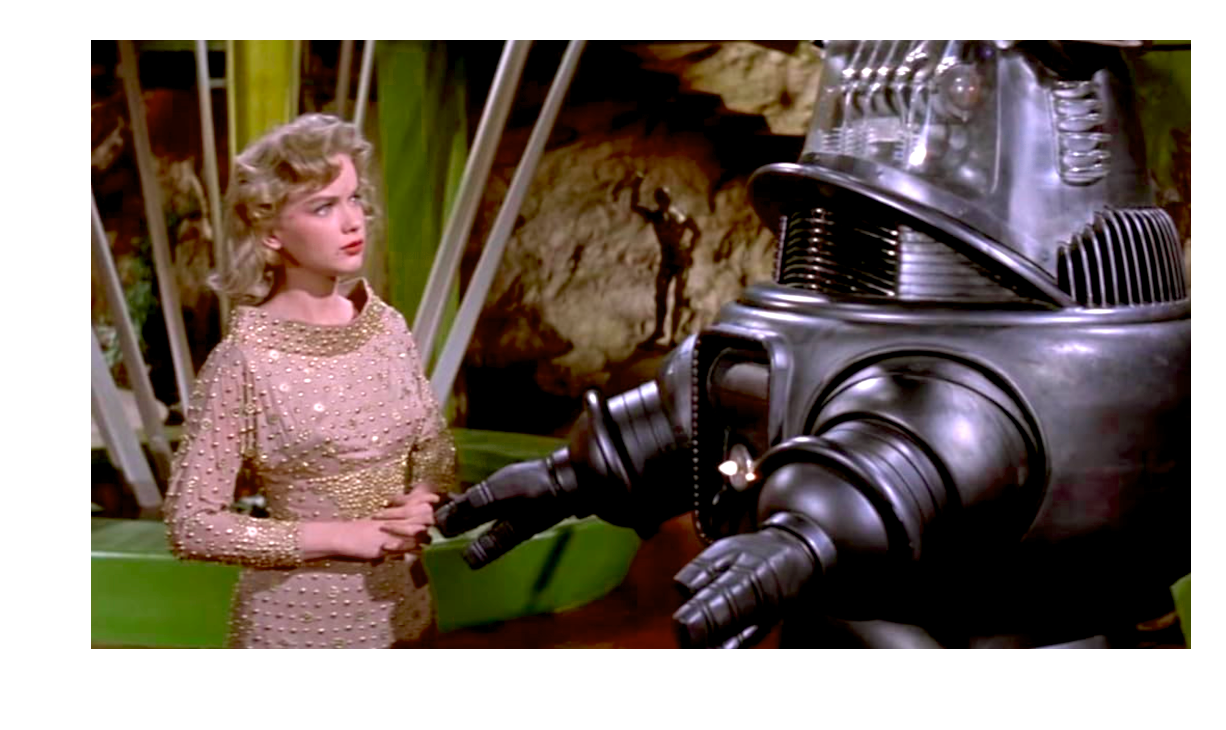
Forbidden Planet’s vision is like Disney’s Monsanto House of the Future, but with a little sex. Anne Francis’ virginal Altaira communes telepathically with a deer and a tiger, providing a thematic harmony with things mythological. Altaira’s miniskirt and coquettish ignorance of ‘space wolves’ only makes her more attractive to the space troopers, who might as well be Yankee sailors in an unfamiliar port. Altaira’s appeal has elements of Brigitte Bardot (she’s definitely curious) and even Tuesday Weld (that Lolita smile).
Critic Pauline Kael noted Forbidden Planet’s clever adaptation of Shakespeare’s The Tempest and also expressed disappointment at the film’s conception of a militaristic space-age future. Our brave spacemen tote ray guns, and force is a first option. Outer space is an extension of the Wild West, where one anticipates violence and aggression in every encounter. Although Forbidden Planet’s ideas run deep, its surface is pegged to a vigilant Cold War posture.
MGM’s Dore Schary liked Allen Adler and Irving Block’s original story “Fatal Planet” — its main conflict is psychological and its mythological allusions fit in with legit Sci-fi literature. We are impressed when the storyline halts, to make room for a 15-minute archeological rumination about an extinct civilization. The planet was once ruled by an alien civilization called The Krell. The race is long gone but their technology lives on. An amazing twenty-square mile power plant still functions under the surface of the planet. Morbius says that he’s tapped a tiny portion of the Krell knowledge. With his brain power doubled, he has used more Krell science to ‘cobble together’ his robot manservant Robby, the movie’s version of the Bard’s character Ariel.
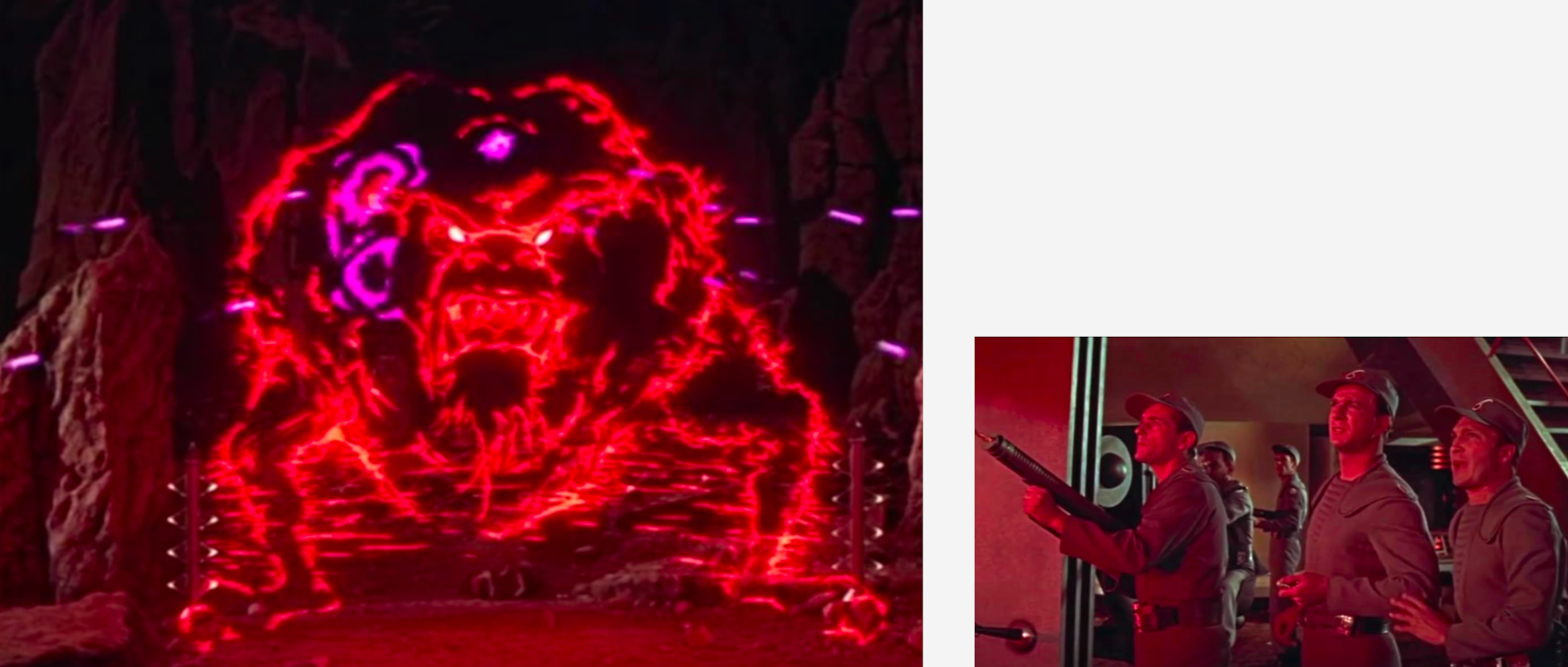
I’m being torn limb from limb by an abstract ‘thought force.’
Readers of Science Fiction were pleased to learn that Robby is programmed with Isaac Asimov’s Laws of Robotics, the ethical rules that govern the Robot’s behavior. Also given emphasis in Forbidden Planet are some basic Freudian principles. Morbius reveals that the extinct civilization’s giant underground complex was built to convert desires into physical realities ‘without instrumentalities,’ by thought alone. Set free of the physical limitations of their bodies, each Krell citizen essentially became a Demigod. They did not realize that this power would be tapped by both their conscious minds and their secret subconscious selves. Soon after the activation of the massive thought-projection machine, the Krell perished in an orgy of destruction and murder.
Morbius found the Krell machine still-running. He tapped its functions, unaware that the same Psych 101 pitfalls awaited him as well. When his fellow colonists disagreed with his ‘enlightened’ decisions, Morbius’s subconscious manifested an Id Monster to destroy them.
Our review from 2010 discussed the Freud business with Morbius and his daughter, content that audiences of 1956 may have missed while waiting for more space-age thrills. As a holdover of the magic aspect of The Tempest, Altaira charms wild animals because she’s still a pre-sexual child. Dr. Morbius is supposed to be the genius, but Leslie Nielsen’s supposedly unenlightened Commander Adams is the one to recognize the ‘magic’ of Altaira’s loss of innocence. At the finale, Adams is the one to school Morbius with the lowdown on the Id and the ‘primitive savage lurking within us all.’ The church wing of the Production Code office gets its way throughout the picture. Morbius is damned for knocking on the door of God-hood, a taboo in any shape or form.
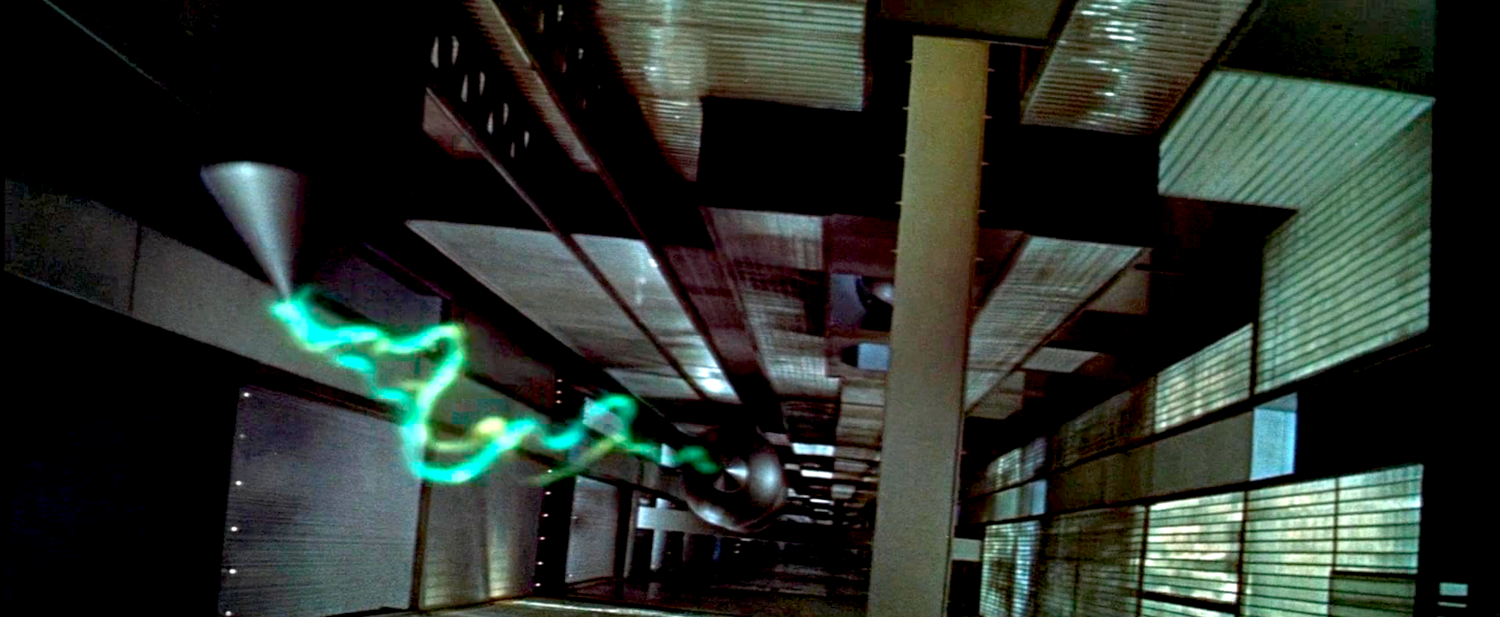
It’s obvious: The Krell must have started with AI farms.
Other Sci-fi pictures warned about nuclear annihilation, but this epic points the finger at runaway technology. A sentient alien race destroyed itself by creating machine-computers that became self-sufficient. When the Internet came along, Forbidden Planet fans recognized its similarity to the telepathic linkage that inter-connected every Krell citizen on Altair-4. We’ve seen enormous cultural and social changes with our own World Wide Web. The dangers are different but related just the same. The ideas of a crank minority can sway millions, creating a mob. The ‘Krell Internet’ didn’t need the excuse of Id Monsters to dramatize the danger … our conscious selves are fully capable of supporting actions that are BAD for society at large.
The other deep-thought Science Fiction movie that foretold the Social Media transformation of mankind is Wim Wenders’ Until the End of the World. Wenders made the picture in 1990, so his world of 1999 has no Internet … yet the inventions he does propose express perfectly the way people how thoroughly relate to their smart phones and social media accounts. Adding AI to the mix undercuts everything written and every image we see, and the ‘reality’ we can perceive is becoming a synthetic creation. The world needs to change, but it also needs to retain a social order that works for more than a minority with the ability to control our sources of information.
Back to the precocious Sci-fi charms of Forbidden Planet. When we were younger were were duly impressed to learn that Joshua Meador, a Walt Disney animator, had created the Monster from the Id. What seemed a genuine miracle in 1956 now look like conventional animation, with the Monster from the Id coming off as a morph between Morbius and Leo the Lion of MGM’s logo. The spacemen mangled by the Monster are a refinement of the excellent rotoscope work seen twenty years before in MGM’s Tarzan movies, where lions were made to climb on elephants, etc. The most effective animations are the long lines of ‘tracer’ rays fired by the troopers’ ray gun cannon. The guns shoot into a canyon, trying to hit an invisible target. Multiple camera angles, all complex composites, were terrific on a big screen. The rays do seem to move too slowly. Did they do that so they would less like the bullet tracers familiar from wartime combat footage?
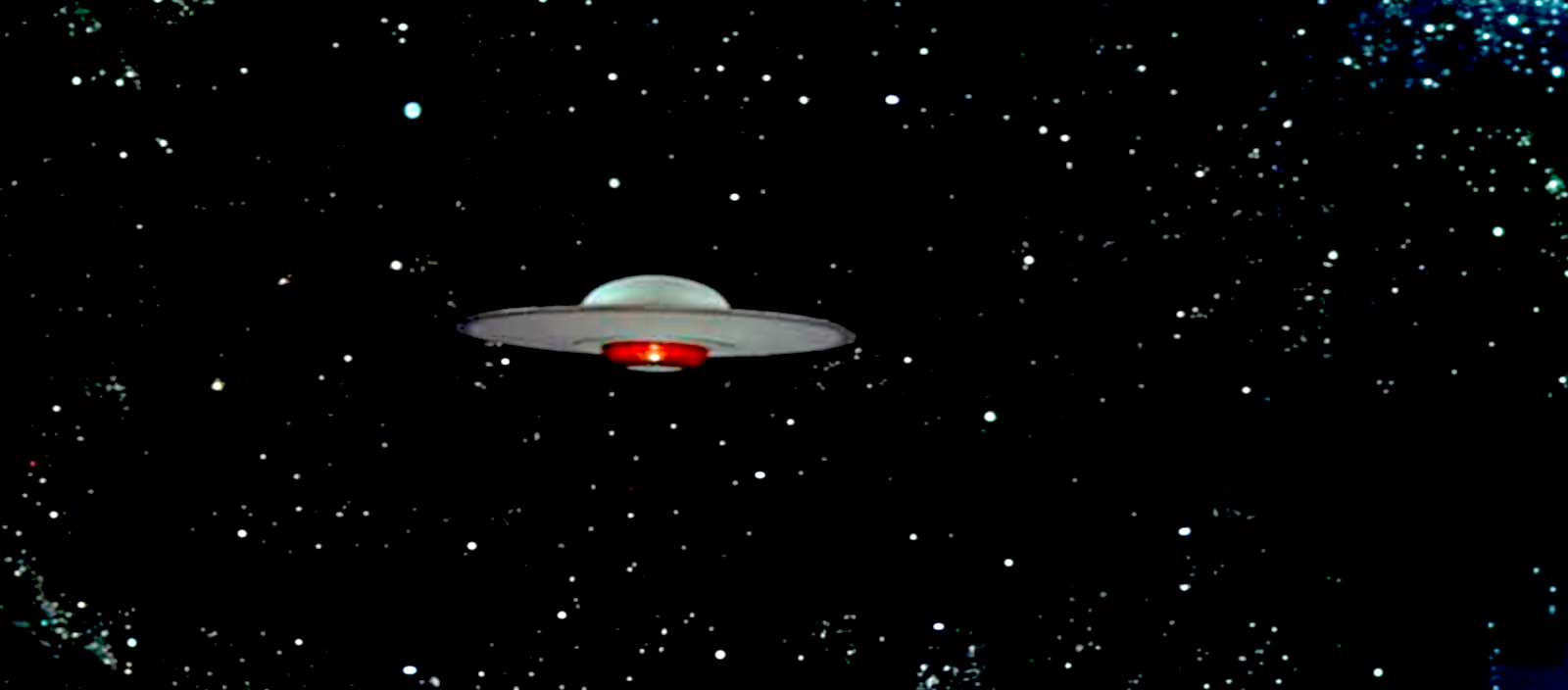
Some of the flying saucer shots were created with old-fashioned wire rigs similar to those used by MGM to fly airplanes in World War II movies. Effect veteran A.D. Flowers helped with those original rigs, and described seeing very heavy saucer models being filmed live-action for Forbidden Planet. Giant cyclorama backdrops were painted in MGM’s special scenic arts dock. Elsewhere standard matte paintings were used, often in conjuction with animation and live-action added through mattes, or rear-projected into holes in the paintings. [ We see some bits of this, albeit pan-scanned, on one of the disc’s outtake extras. ]
A shot that impresses us in Forbidden Planet might not be obvious to some. In the Id attack sequence, the camera pans from a live-action shot of ray gun cannons firing to the left, to a view of the canyon rocks being bombarded. The shot could conceivably use the cyclorama, but it also might be an optical pan connecting the static shot of the guns with a matte painting on the left. What sells the shot are the tracer rays, that shift in perspective as the camera pans. It’s a truly refined bit of effects animation.
Does the editing seem slow to you?
It was reported that Dore Schary ended a rough cut screening with the instruction to immediately begin the post-production process. Before it was pulled from his cutting room, editor Ferris Webster only had time to do a few minor adjustments, when he thought it needed another ‘tightening’ pass.We don’t think the movie would be improved much by an editorial tightening up. The pace needs to be even to let us soak up everything Morbius is explaining. As kids, we wanted more time to think about all those ideas.
Frankly, general film audiences of 1956 were not asked to think so much about abstract concepts. Guessing that much of his audience wasn’t paying full attention, Alfred Hitchcock would pause his thrillers to insert plot re-caps, to retain their interest. How many audiences exited this show asking, ‘what was it all about?’ Most of the movie is directed in simple master scenes, with wide shots that show off the impressive sets. I can see shortening a few reaction shots, but it’s nice not to feel rushed while contemplating Klystron Relays and a creature ‘that can renew its molecular structure from microsecond to microsecond.’
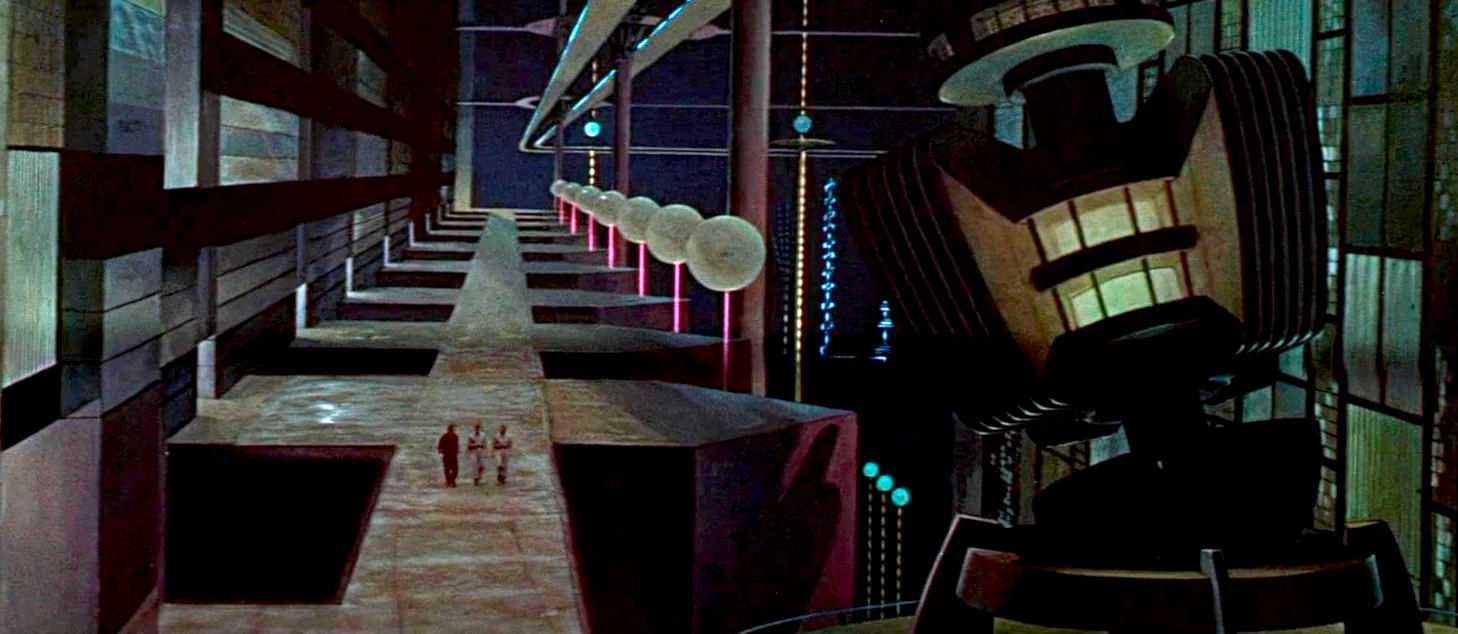
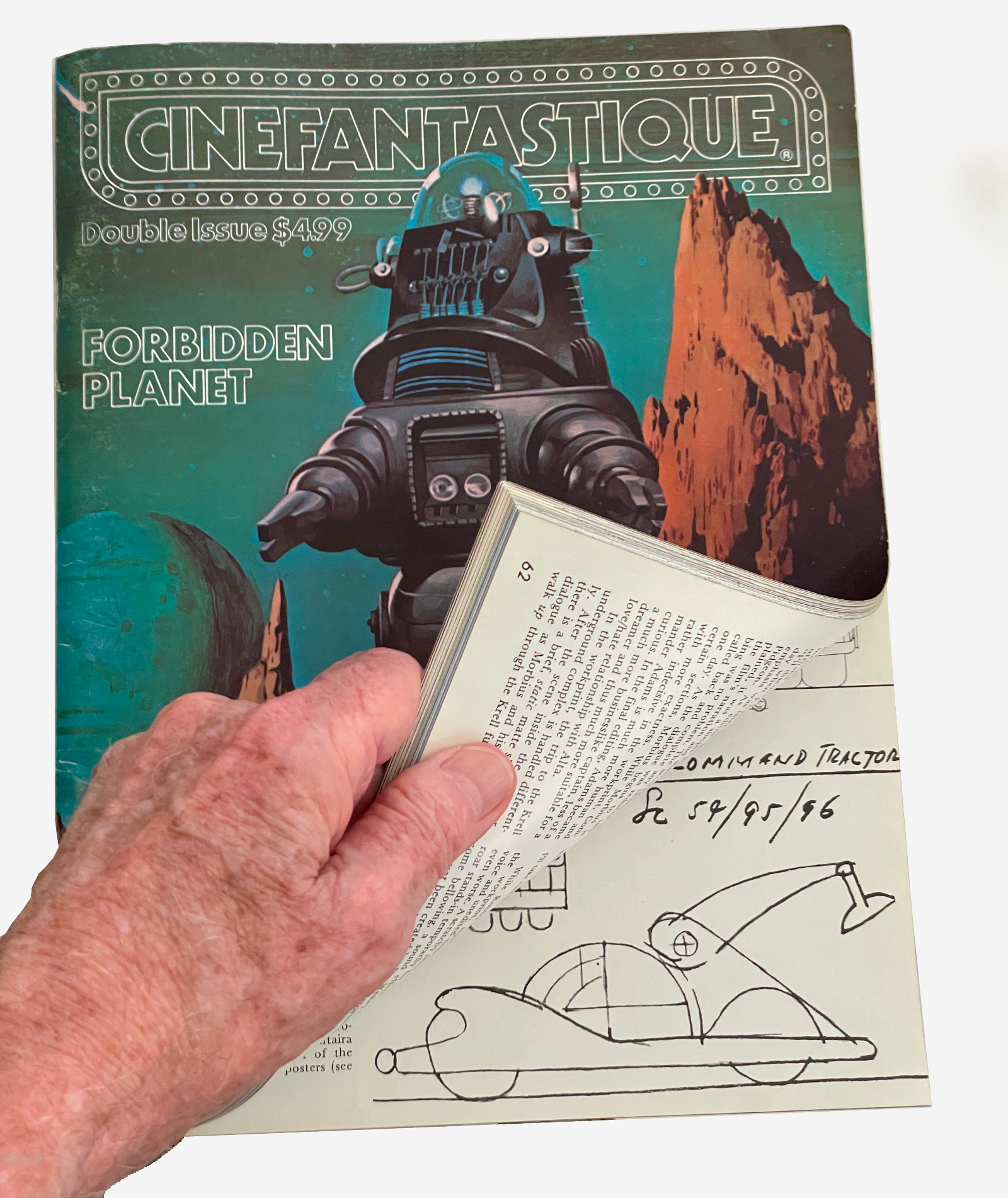
← The pioneering magazine Cinefantastique published several double issues devoted to individual classic pictures, like The War of the Worlds. For a 1979 issue, publisher Clarke and writer Steve Rubin collaborated on an 84-page making-of article that is still recommended reading. It’s exhaustively researched and illustrated. It’s where I learned that the extreme high angle of the three tiny figures walking in the subterranean super-machine was photographed from the top of a Bekins Storage building, on North Highland Avenue about a mile from CineSavant Central.
Forbidden Planet waited about five years to show up syndicated on TV. It arrived in Los Angeles on our KTTV Channel 11, probably in color but pan-scanned. Some 16mm prints from Films Incorporated were given a compromise scan of maybe 1:78, cutting of the sides of the image. We didn’t see the show in color until we screened MGM’s studio print for a Sci-fi series at UCLA; even with a slightly faded image, it looked incredible on the big Melnitz 1409 screen. Filmex showed it the next year, for their weekend-long Sci-fi marathon. ‘New’ 35mm repertory prints showed up early in the 1970s as well. I was told that MGM had printed them for a children’s matinee series. The surprise was that they weren’t intact … the Adams / Altaira ‘kissing scene’ had been deleted.

I first saw it in B&W on Million Dollar Movie when I was 8 years old. At that age, I didn’t understand the concept of the subconscious, but still enjoyed it. When I saw it in color years later, I didn’t understand that Cinemascope was a widescreen process. It wasn’t until I attended a showing at a repertory theater in NYC that there was much detail to see on the screen. It’s the only way to watch it and we now have the opportunity with flat-screen monitors (almost, if not quite, as impressive as in a theater with an audience).
Yep, it was a B&W, pan-scanned mystery to me too … until college days!
I literally had no idea that movies came in different widths until I saw this in college. This movie was showing as a double-feature in some auditorium/lecture hall and after the first movie ended, the blackboards next to the screen started sliding to the left and right, making the screen wider, and wider…
I wonder if Eastmancolor ever had the same saturated look as Technicolor. Not being an expert on this, but Technicolor films from the same era, e.g., War Of The Worlds and This Island Earth, really seem to “pop” with color compared to Forbidden Planet. I guess it could also be that Technicolor is more stable and doesn’t fade as quickly.
Hi Mikete … when new, Eastmancolor prints could look great too. Color by Deluxe was really rich. It’s just that they faded. By 1972 or so, many of the 1950s studio prints from Columbia and Fox that we showed at UCLA already had at least some fading, and in many cases a lot. And the negatives often faded as well. The Technicolor prints stayed pretty much the same. Thanks.
No doubt people nowadays will watch it and wonder why Leslie Nielsen isn’t being silly.
Yeah, I can definately see that! It’s interesting how most people these days associate Leslie Nielsen with being in “Airplane!” and “The Naked Gun” trilogy, as well as later direct-to-video comedy fare that utilized Nielsen to replicate the humor from those other films. In as much as I, too, have enjoyed Nielsen’s worthy comedy work, his earlier non-comedic films also showed Nielsen displayed excellent serious performances. “Forbidden Planet” is one, but I’ll also mention “Creepshow” as another. Ditto his TV work, both early and later (in one early 1950s New York-based TV program, he acted alongside none other than future 42nd Street exploitation filmmaker Andy Milligan!). But good ol’ Leslie also knew when to bring over-the-top psychotic in stuff like “Day of the Animals” (1977), in which he gets to fight a bear at the near end of the movie!
The irony is that the Krell, like humanity, were so smart yet so naive not realizing that the machine would use anything to power it. That brings up the question never addressed-is the machine self aware and using THEM?