
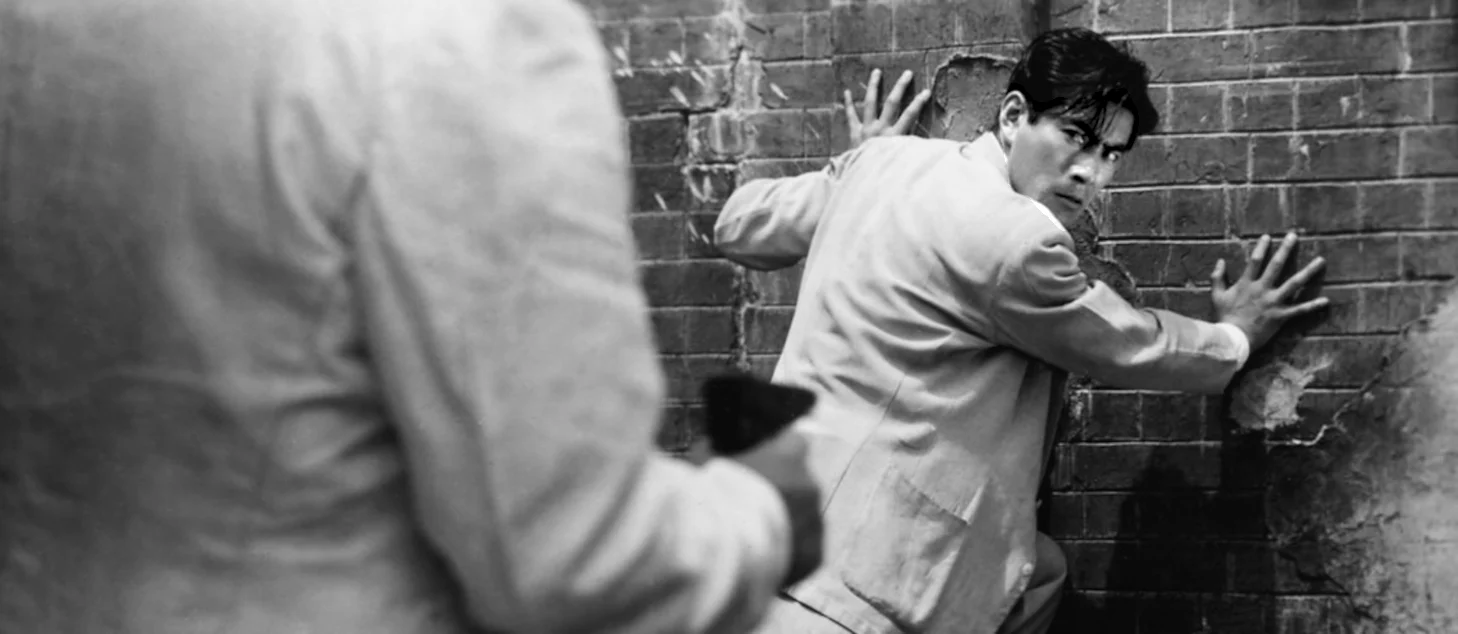
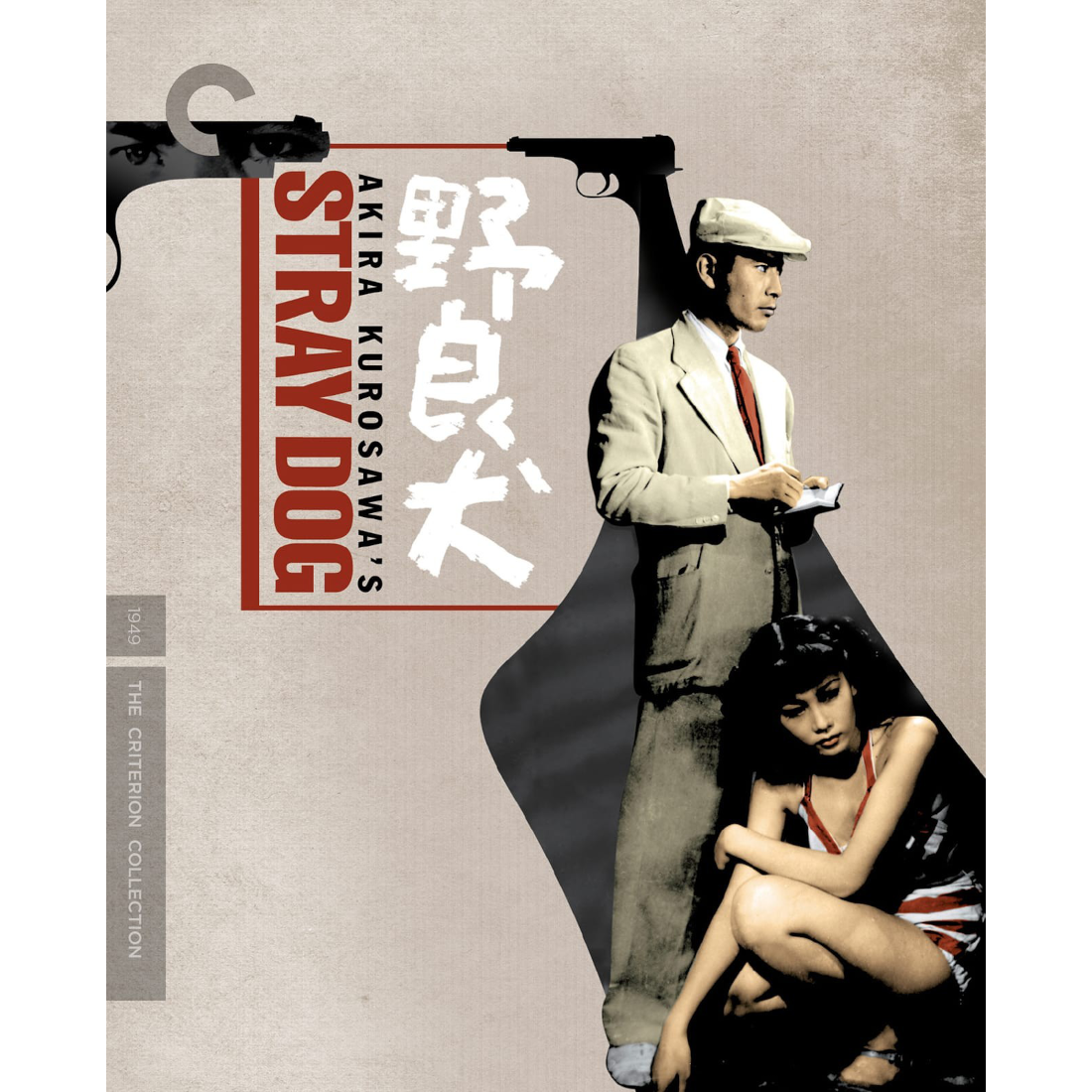

The basic advice for a movie as good as Stray Dog is always to stop reading and catch it at your next opportunity. The depth and breadth of Akira Kurosawa’s film legacy has something for everyone. I’ve seen fans that cared only about his swordplay adventure films become highly involved with his lesser seen saga about a doctor, Red Beard. Almost everything Kurosawa did from 1949 forward is the best or near the top in its category, and even his movies that few people know can emerge as indelible experiences. He was always a genuine self-assured film artist, who earned every bit of critical praise.
Through its older Eclipse branded line, the Criterion people released a number of Kurosawa’s wartime movies, all very good shows. But we agree that his cinematic personality emerged a bit later, with a pair of collaborations with the young actor Toshiro Mifune. This on-the-street police story is the less prestigious, but still a stone classic. It’s the tale of a cop’s dilemma, told straight and without a single ironic touch. The story apparently attracted Kurosawa because it presented the opportunity to record a portrait of the social realities in Japan’s Tokyo, just four years after the end of hostilities. It was a tricky problem for Japanese filmmakers, with the country still under the 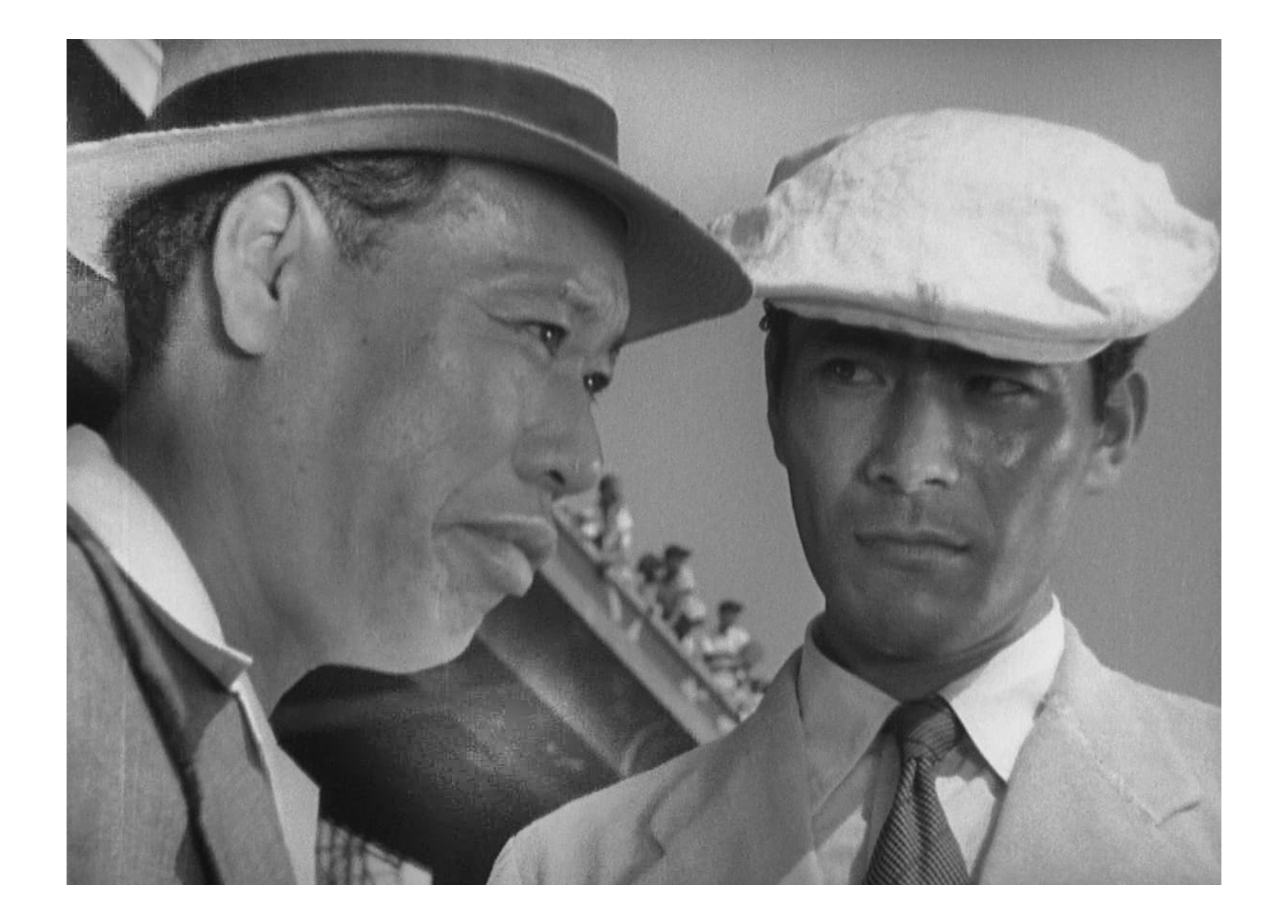 MacArthur occupation. Kurosawa didn’t want to censor or sanitize the reality of the situation.
Critic Stuart Galbraith IV says that plenty of Japanese directors were making films showing life on the street, with big parts of Tokyo still in ruins and the people so poor that some ex-soldiers were still wearing parts of their old army uniforms. Kurosawa dispatched his director friend Ishiro Honda to shoot street scene background material, sometimes using hidden cameras. Honda wore pants and shoes like the story’s leading character, to tie this second unit footage in with Kurosawa’s.
To that extent Stray Dog is an invaluable document, a non-documentary vision of postwar conditions. It’s actually flattering to the Japanese spirit. Much of the working class is in rags, scraping by in jobs requiring a lot of physical labor. But the whole city seems engaged in positive work, digging their nation out of its rut.
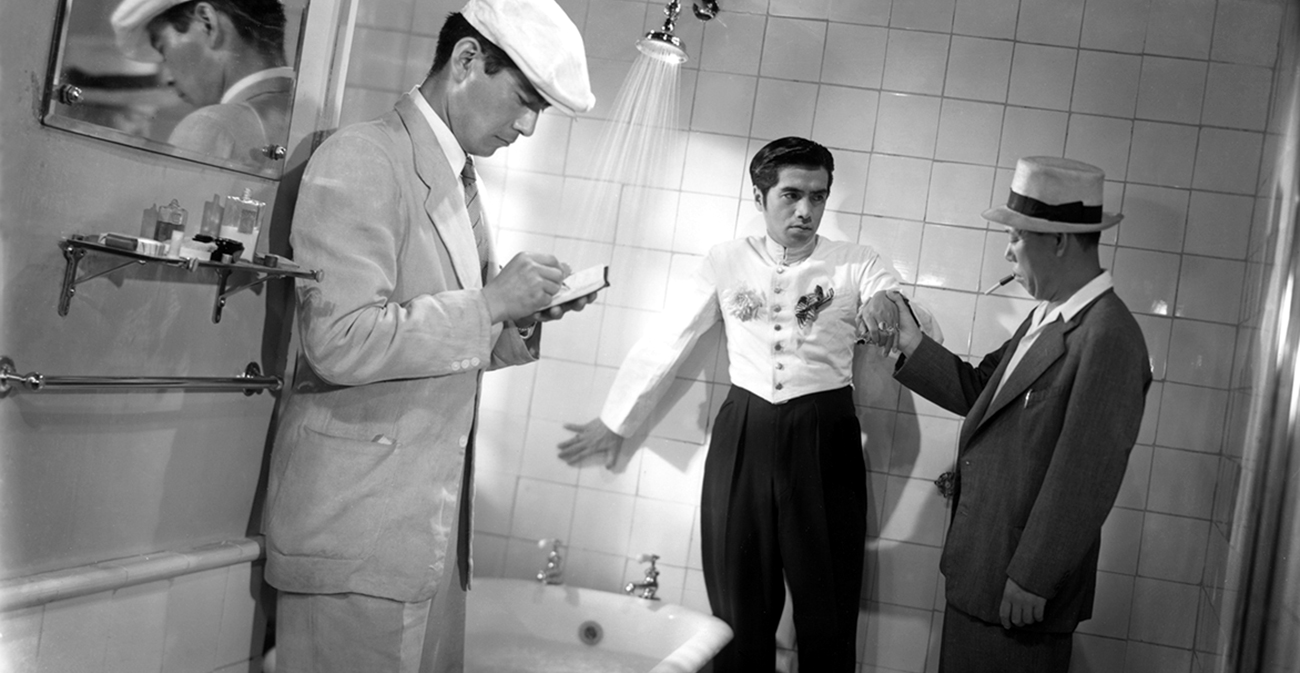
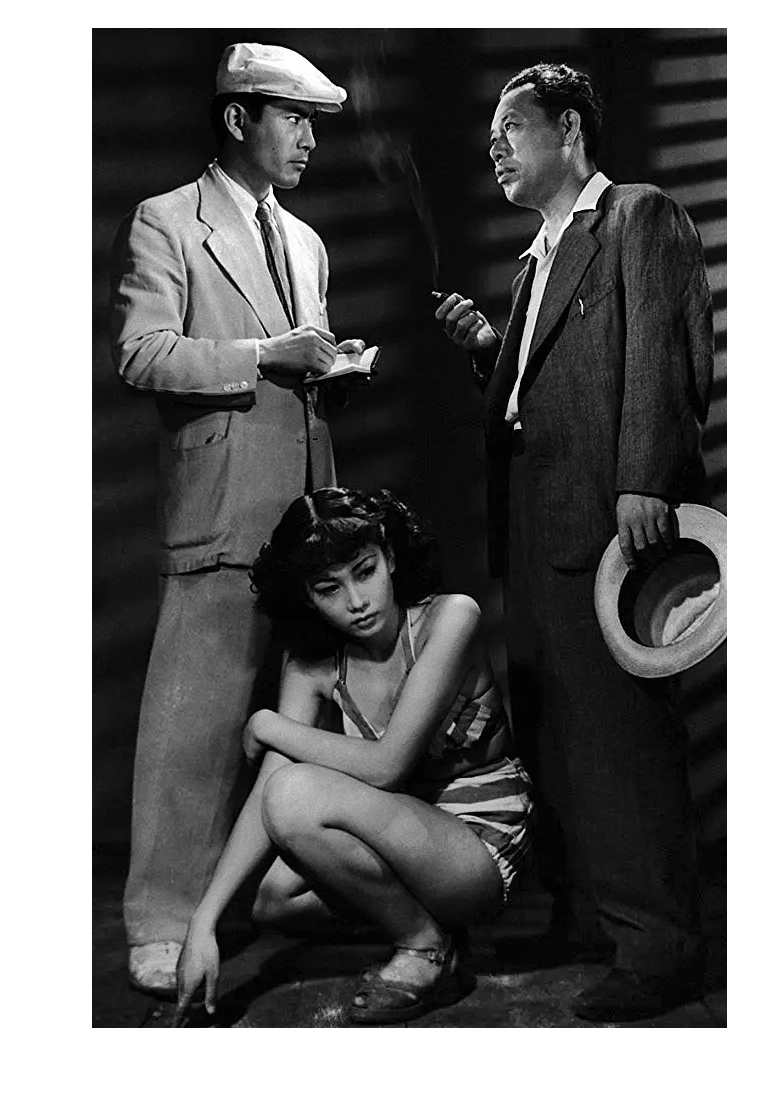
The story stays simple. As in Don Siegel’s much later Madigan, a cop loses his gun, and begins a desperate effort to recover it. Fledging detective Murakami (Toshiro Mifune) is barely on the job when his pocket is picked in a crowded tram car. He receives a punishment, but tortures himself over the humiliation, especially when he discovers that a robber is using his gun to commit more crimes. Murakami traces the gun to a woman who works for criminal gun-sellers, only to find that by arresting her he’s missed an opportunity to nab the gun’s new owner. Our troubled detective is assigned to Chief Detective Sato (Takashi Shimura), who guides the investigation. The old pro tries to help Murakami adjust to police work, and to stop taking everything so personally.
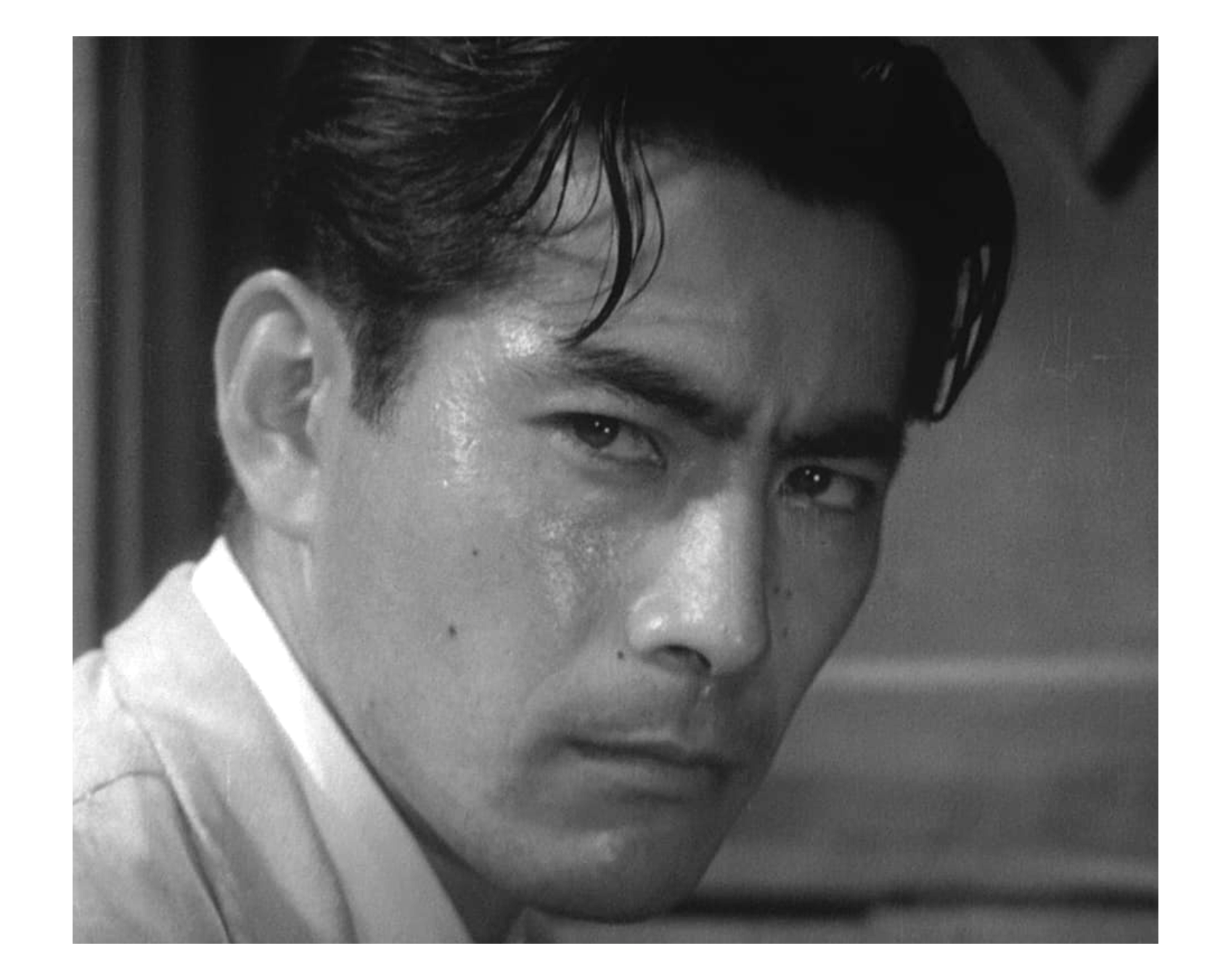
Instead of a street-wise tough guy, Toshiro Mifune’s Murakami is an idealist who wants to give criminals a fair shake. In a white linen suit with a cap and white shoes he looks handsome and dapper, almost like a Japanese Alain Delon. Actor Takashi Shimura is of course the beloved star of numerous Kurosawa classics — Ikiru, Seven Samurai — as well as Ishiro Honda’s own Sci-fi fantasies.
For us Western gaijin half the interest in Stray Dog is comparing Tokyo’s cops & robbers situation to the American norm — and to our filmic depictions of crime. Privately owned guns in Tokyo were so strongly controlled that gun-related crime was the exception even among criminal gangs. Tokyo’s metropolitan police has dedicated experts who have memorized the faces and names of thousand of known pickpockets and small-time racketeers. It does seem possible for Murakami to recover his gun, if he and Sato can make the right connections. We meet the gun trader’s moll (Noriku Sengoku), who eventually responds to Murakami’s sincerity.
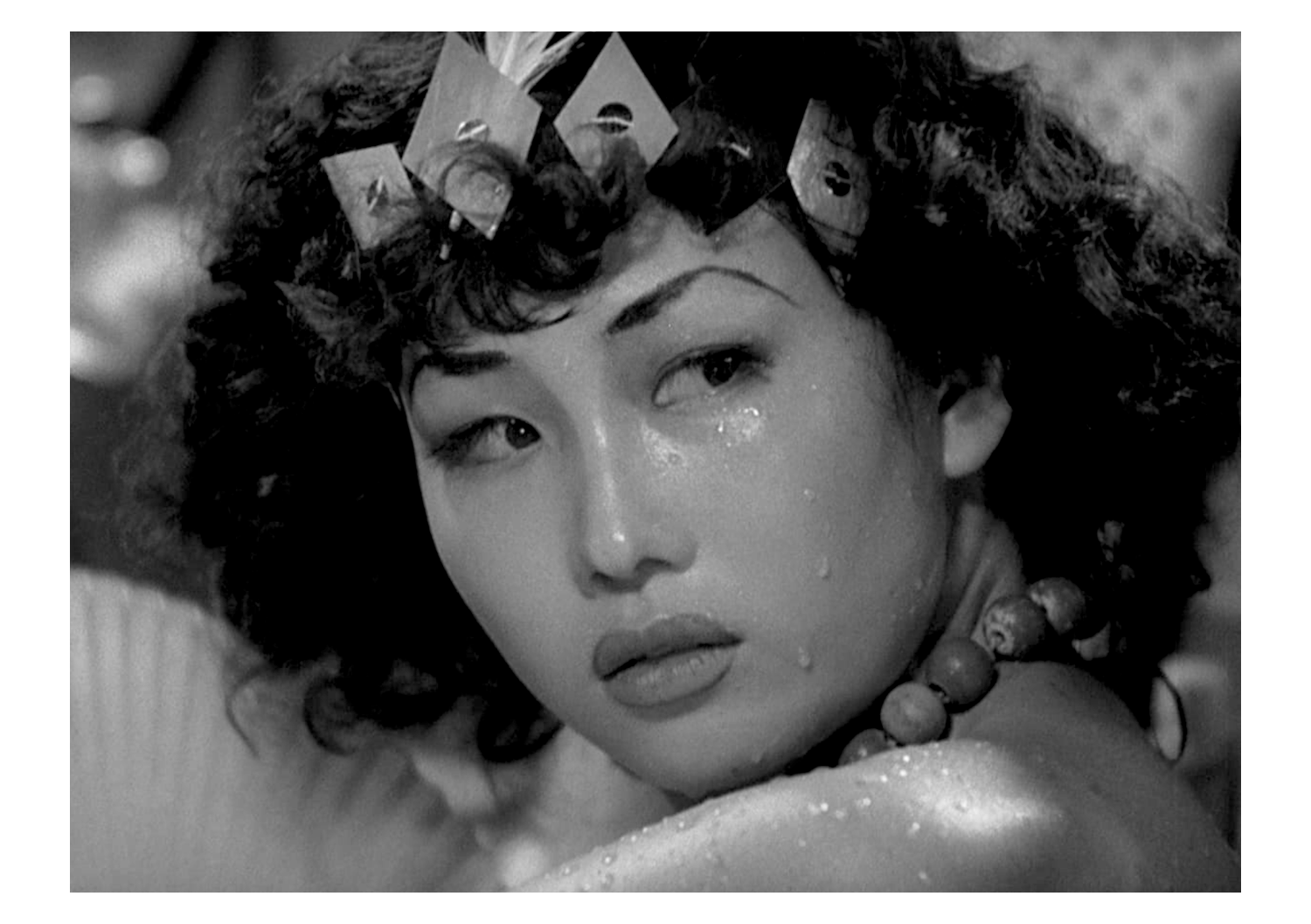
But the needed break can only come through a cabaret chorus girl, the kind easily tempted by criminals promising scarce, expensive comforts. Harumi Nakimi (Keiko Awaji) is uncooperative in helping locate their unseen suspect Shinjiro Yusa (Isao Kimura), as she has little faith in the system — what benefit will she get from being law-abiding? Her conflict is objectified in a sparkling dress, a gift from that Yusa. In the postwar economy, that dress might set someone back a full year’s salary. That misery is reflected most strongly on Haruki’s long-suffering mother, played by Eiko Miyoshi. She can be found in Kurosawa movies from 1946’s No Regrets for Our Youth to 1958’s The Hidden Fortress.
Stray Dog presents an occupation-safe theme in some of Sato’s advice spoken at his modest but decent house. He believes that Murakami’s sympathy for the criminal miscreant Yusa is misplaced. Both young men returned from the war with nothing, but they’ve taken opposite paths. As the future of Sato’s precious children depends on civil security, Sato wants thieves and killers removed from society, with no leniency.
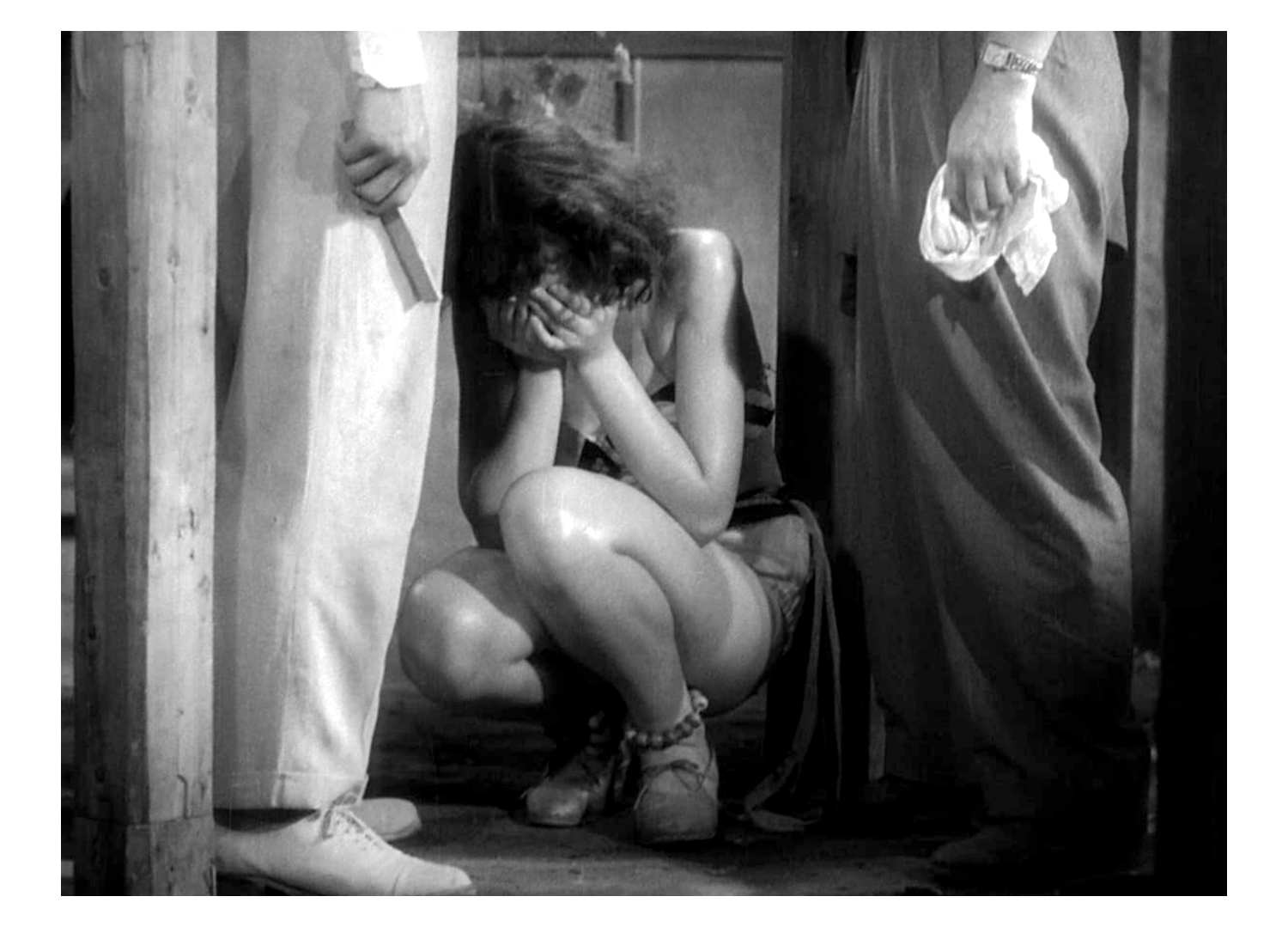
Kurosawa and his screenwriter Ryuzo Kikushima push their storyline to create a couple of nail-biting suspense scenes. The older detective Sato unknowingly ventures into harm’s way, and Harumi’s hesitancy prevents Murakami from racing to the rescue. The drama is clear, direct, and very affecting.
As we say, Sato rejects Murakami’s notion that the criminal Yusa is his mirror image, an unfortunate who deserves humane treatment. Kurosawa’s later masterpiece High and Low does much more with the ‘mirroring’ idea, going to elaborate lengths to compare and contrast its vicious killer, a disadvantaged medical student, with a successful shoemaker whose wealth was all hard-earned. High and Low is a genuine cinematic masterpiece, yet both films present their arguments in compelling, highly cinematic terms.
Stray Dog does not leave us in a state of anxiety. We’re more likely to remember a moment of domestic harmony, when Murakami joins Sato and his wife in smiling down at their sleeping children, that Sato likens to pumpkins in a pumpkin patch. Fight the good fight against crime, and society will hold together.
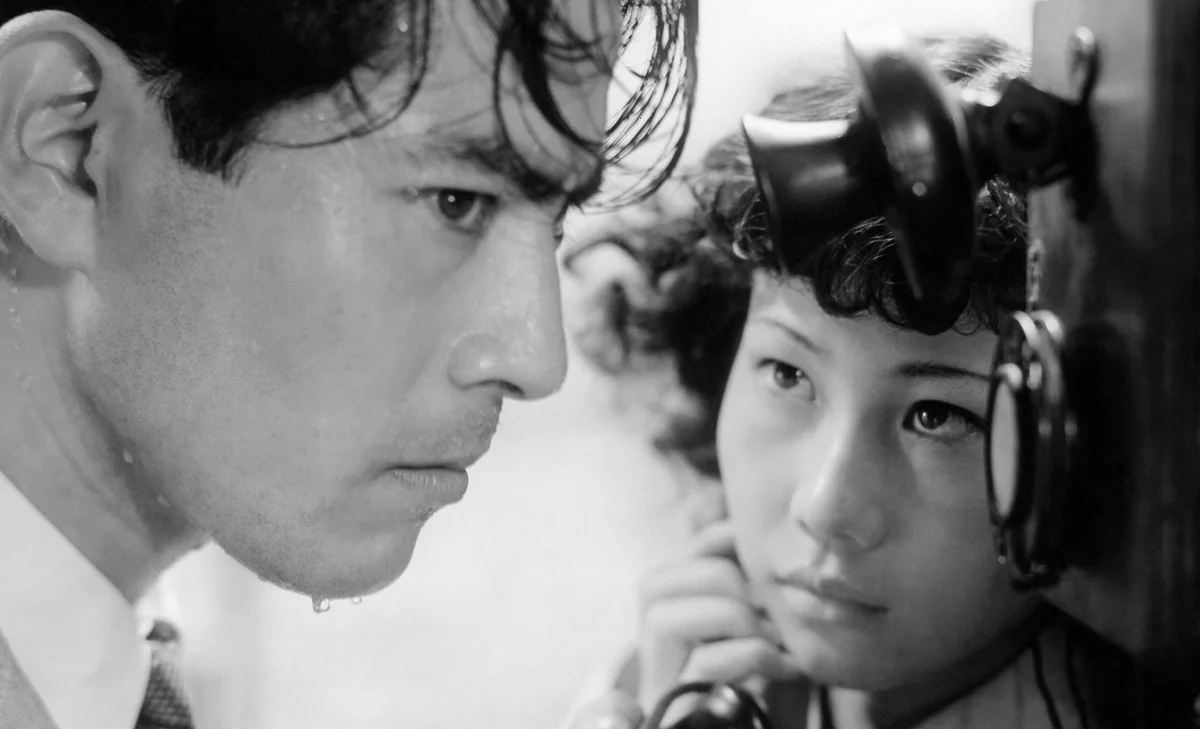
 intact and consistently graded for contrast. The old shots that show wear are still present but look far better, and the image is more stable overall. Murakami spends the better part of a reel wandering the Tokyo back alleys, dressed as a de-mobbed soldier, waiting for someone to offer to sell him a gun. The episode uses many dissolves and superimpositions, and now looks much improved.
I am so reticent to pick up any Kurosawa 4K discs, because I have a bad feeling that Criterion will come up with a Kurosawa box akin to the one they did for Bergman. I know that Toho is notoriously difficult to work with, and we should probaby take what we can get, but still…..