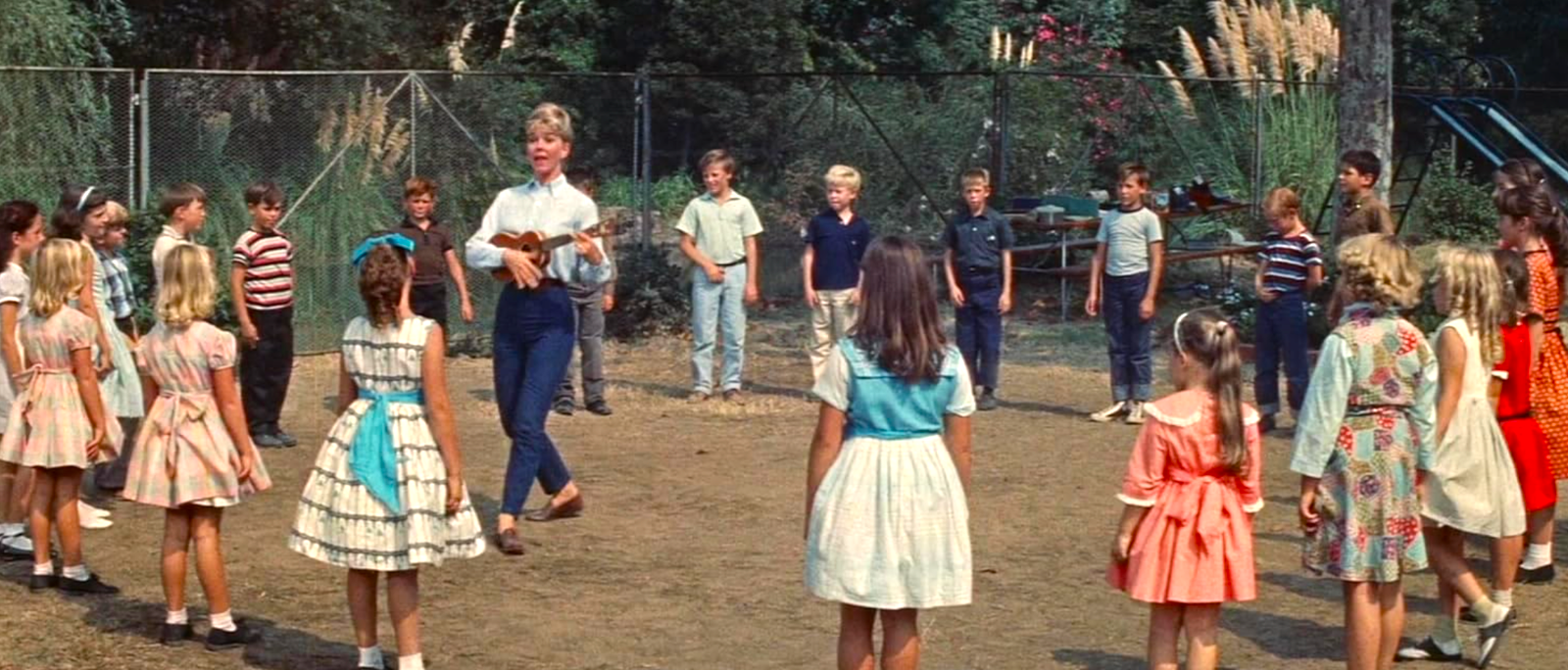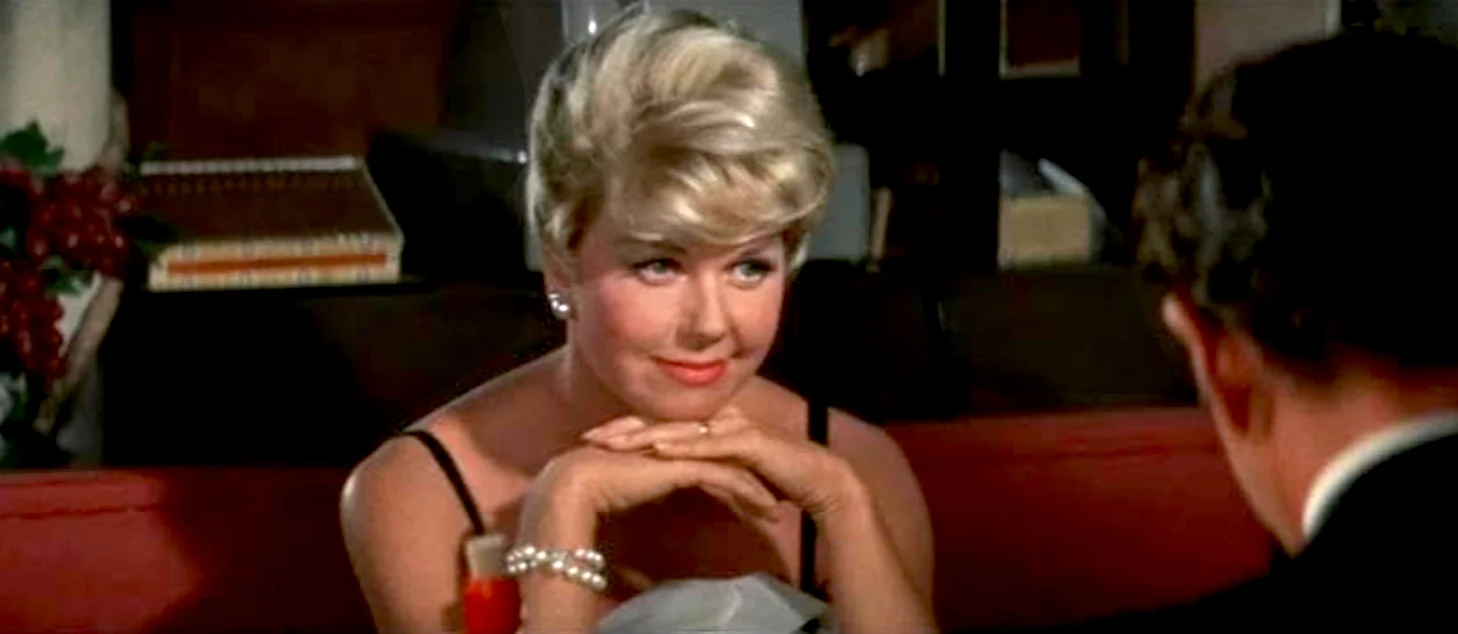


 We love Doris Day enough to want to seek out every one of her pictures; the only disappointment is that for every exemplary show in her late career there is one that fails to best display her talent and personality. Ms. Day was big and bright and apparently honest and sincere. The standard line is that she was given poor counsel by her husband, Martin Melcher, who was posthumously accused of mismanagement.
Day came into movies as an established singing star, and became a top movie attraction through solid dramas and several giant comedy hits. The Pajama Game is an all-time classic musical, and her career-bending smash Pillow Talk is a finely crafted comedy that maximized her screen appeal. It set up a viable formula for a string of romantic comedies that used her winning personality to excuse their family-oriented Production Code limitations. They didn’t sidestep the possibility of sex. Ms. Day’s romantic partners weren’t sexless, like Tommy Noonan opposite Marilyn Monroe … in the winning DD formula, a second banana comic performs that function, most notably Tony Randall. Rock Hudson, James Garner and Rod Taylor have the testosterone, leaving it up to the scenarists to concoct the story strategies we call ‘Sexus interruptus’ and ‘Sexus Delayus.’ This worked well for a few years, until changing mores made the virginal / semi-virginal / married but frustrated Doris Day characters seem increasingly disconnected.
Labeling a Doris Day character as a prude is pretty lame. 1920 isn’t 1960 which isn’t 2026 — there was never any ‘norm’ in sex, just a norm that made it into public media. Just the same, The Pill did initiate a behavorial revolution for a big part of the female population … freedom is freedom.
Square? We think Doris Day is tops. What’s it to you?
Doris Day’s first post- Pillow Talk hit Please Don’t Eat the Daisies is a smart concoction for its year. Instead of a random romance fantasy (It Happened to Jane) or another anxiety thriller (Midnight Lace), it adapts a best-selling book. The reasonably deft script by Isoble Lennart (The Inn of the Sixth Happiness), (Funny Girl) comes from a book by Jean Kerr, wife and collaborator of noted theater critic Walter Kerr. The autobiographical connections are fairly interesting. Back in the day a theatrical critic had a lot of power, and could become too enamored of their own cynical jokes. The cure in this case is humility. As he passes judgment on the plays of others, David Niven’s critic remembers that he himself was an unsuccessful playwright.
Day embodies her character with her usual positive spirit. At one point her character talks happily of being a homemaker. She’s not enamored of ‘important’ people that don’t want to know or talk to homemakers. It’s not a conservative message — we can tell that she means it. On the other hand, when Day’s housewife is angered by her husband’s pig-headedness, her own solution is to surrender unconditionally to his needs in the marriage — he’s got a tough job, and her duty is to support him. That’s the dilemma of wife-hood in an unequal system. The movie was partly produced by Day’s husband Martin Melcher, and
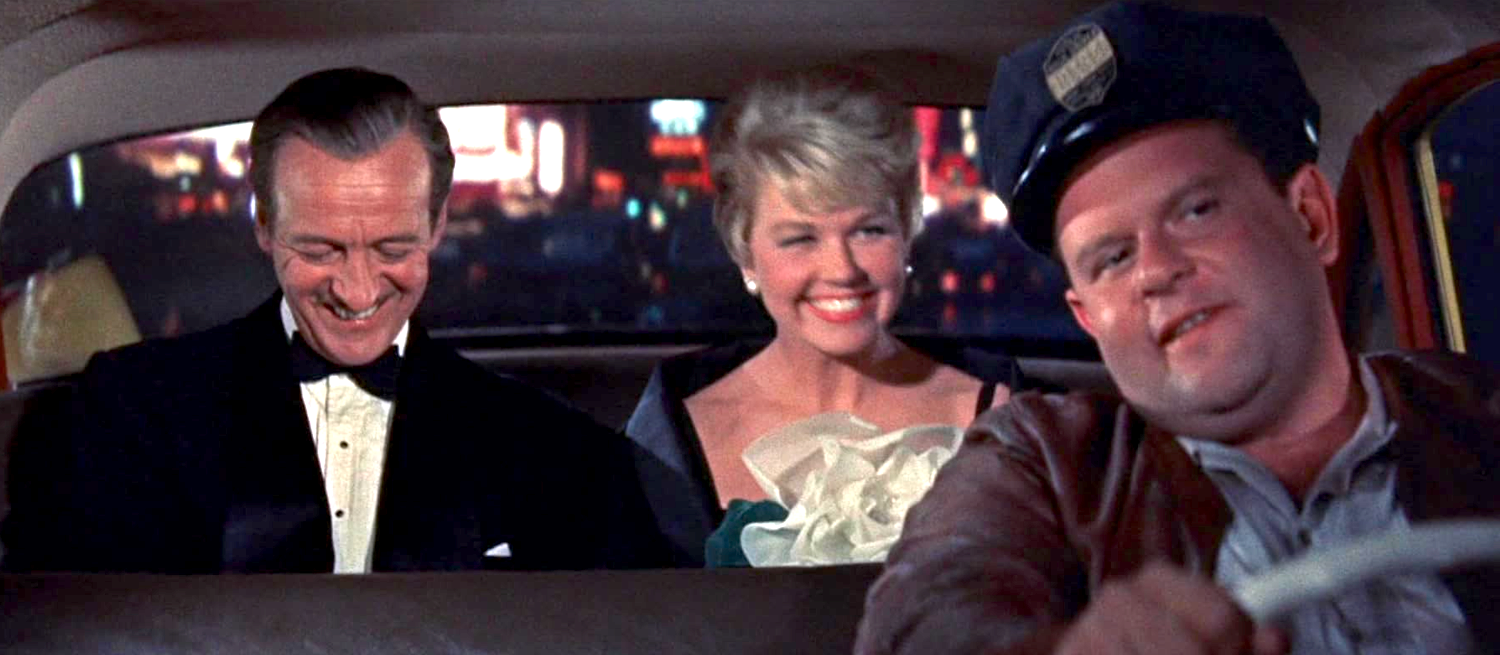
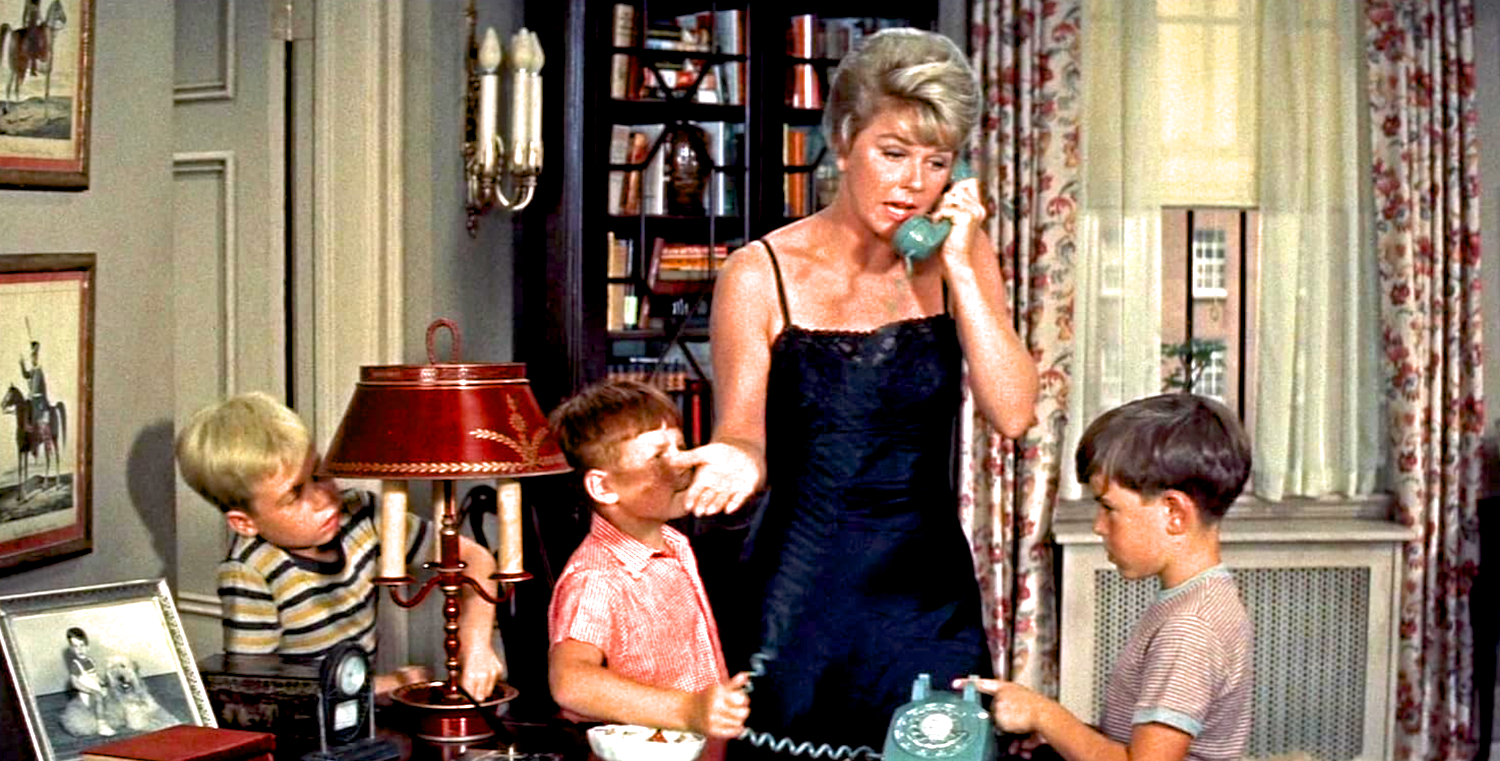
College professor Lawrence MacKay (David Niven) becomes one of the seven top theater critics in New York, a career move that makes him an overnight celebrity, changes his lifestyle and affects his judgment. His wife Kate (Day), a mother of four, does her best to keep their home together while worrying about changes in her husband’s behavior. He now mingles directly with big personalities, like the sexy Broadway actress Deborah Vaughn (Janis Page). To rescue a play that Lawrence has panned, Vaughn creates a publicity scandal by slapping him in public. She then gets a notion to seduce him. She’s attracted to him, but may also see it as another smart career move.
It’s a battle of personal values. Kate fights the good fight. She hates her husband’s new cocktail party millieu, and sees the attention as a bad influence — when everybody laughs at his jokes, Lawrence decides that he’s entertaining and puts more of them in his reviews. Kate makes counter-moves to help Lawrence keep his balance. She encourages him to can help a taxi driver who wants to be a playwright (Jack Weston). When they lose their apartment, she relocates the family seventy miles up the Hudson, away from the glitz of Broadway. The script has its share of broad domestic jokes (a neurotic dog, a preschooler whose playpen is a cage * ). Kate MacKay impresses as someone who might live next door. Day anchors the character in honest feelings.
Print ads billed Kate’s four boys as The Monsters, and they’re a nicely-chosen group. Charles Herbert (The Fly) and Stanley Livingston (TV’s My Three Sons) are joined by Flip Mark and a toddler who smiles a lot. Spring Byington is well-judged as Grandma and Patsy Kelly (Rosemary’s Baby) figures in as a spry babysitter. What with a cage for the youngest and a pet store figuring in the plot, there’s a lot of child-animal comparison going on here. Viewers with children may well be chilled by a shot of the toddler perched on a fourth-floor balcony, sitting behind bars he could easily slip right through. Nowadays, everything seems a threat; 1959-60 seemed a much less anxious era for child-rearing. Seat belts for kids, who needs ’em?
David Niven didn’t have the broadest acting range yet his personality lends itself to thinking men in light comedies. Lawrence McKay is never too pompous, but he does become enamored of his lofty position as a judge and executioner for the New York stage. His best friend Alfred North (Richared Haydn) is a producer who happens to suffer the fallout from a negative, somewhat dismissive Lawrence MacKay review. These scenes are more delicate than we expect — finding the right tone between Manhattan sophistication and down-to-earth emotions. It plays well opposite Doris Day’s plain-spoken sincerity. One well-written scene makes Lawrence assess his feelings after Deborah Vaughn’s public slap-o-thon.
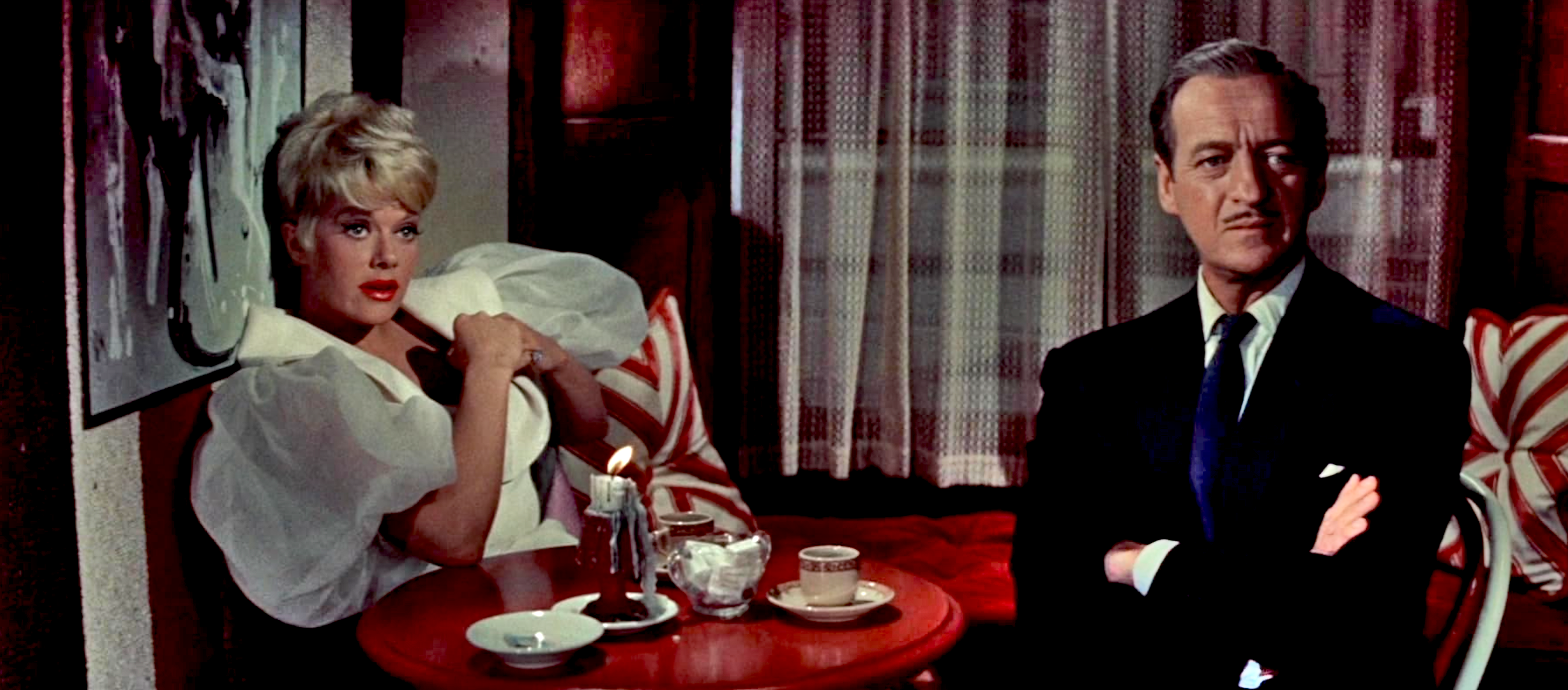
In just a couple of years Niven would star in The Pink Panther, and make such a positive impression that (publicity blurbs claimed) he had been considered as a possible James Bond. It may have just been fallout from Ian Fleming’s cockeyed idea of who should play 007. Niven ended up as a retired Sir James Bond in the farcical 1967 adaptation of Casino Royale.
Angel Dust Niven.
David Niven is given borderline slapstick activity in this picture, too. He maintains a modicum of dignity even while catching a sheep dog or falling through a rotten floorboard in the new house. Unlike most urban comedies of the time, no emphasis is given heavy drinking — but at one point David Niven does pop an animal tranquilizer! Vincent Price took the first movie L.S.D. trip just the year before in William Castle’s The Tingler. But David Niven on PCP? … get out the tazer guns and billy clubs.
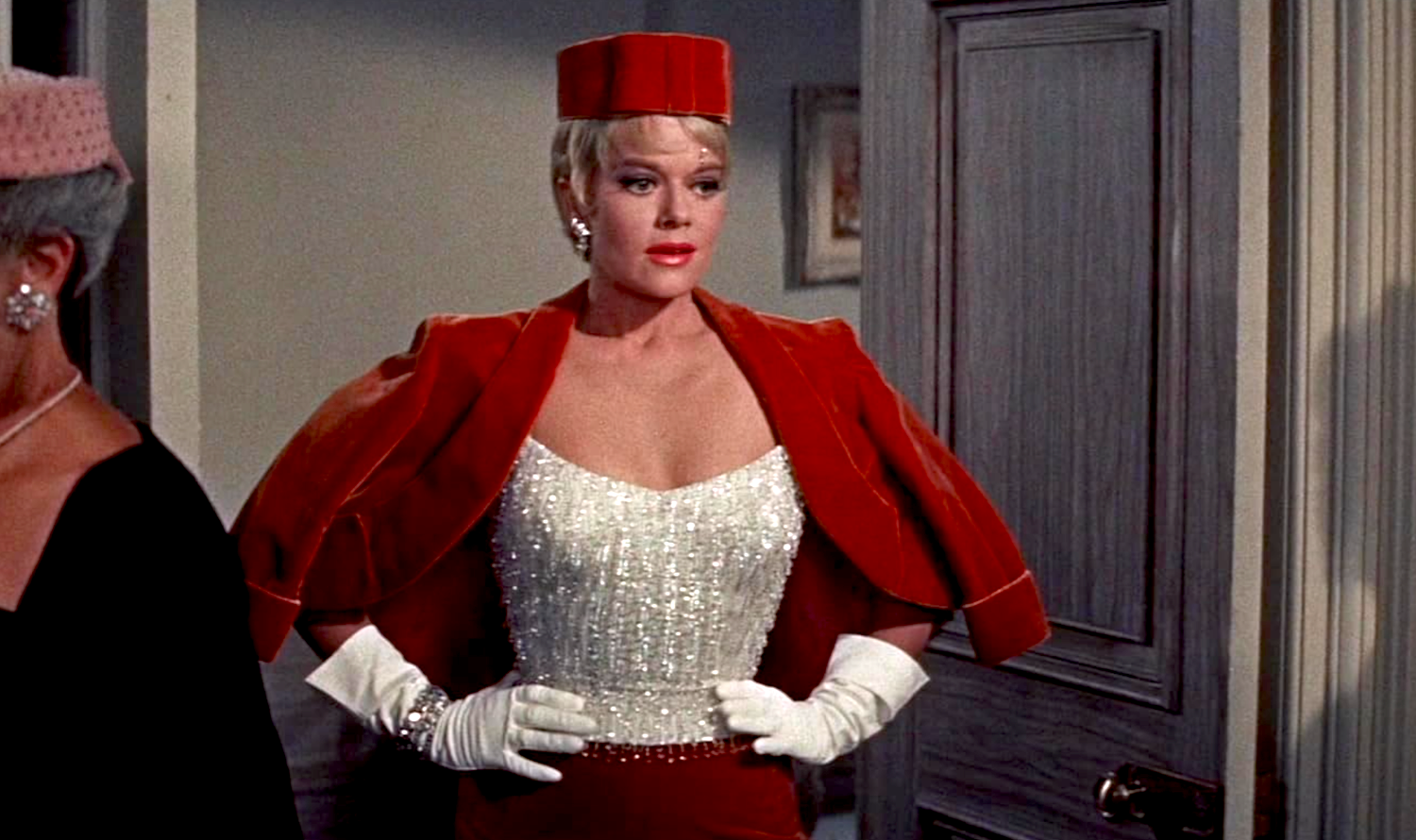
We are told that Doris Day and Janis Page were close pals; they had co-starred in Day’s first feature, Romance on the High Seas. Ms. Page’s portrait of a troublemaking media star is both slick and thoughtful … her Deborah recognizes Lawrence as a one-woman man, but can’t help herself. Doris may have secretly wished to play a true bad girl herself someday. After the heavy drama Love Me or Leave Me she may have given in to advice that her best bet was to stick fairly close to variations on her good girl character. Thus the frisky twinkle in Day’s eye remained just a twinkle. She would retire from films only eight years later. She had earned enough to kiss all the grief goodbye, only to find that her husband had mismanaged her finances.
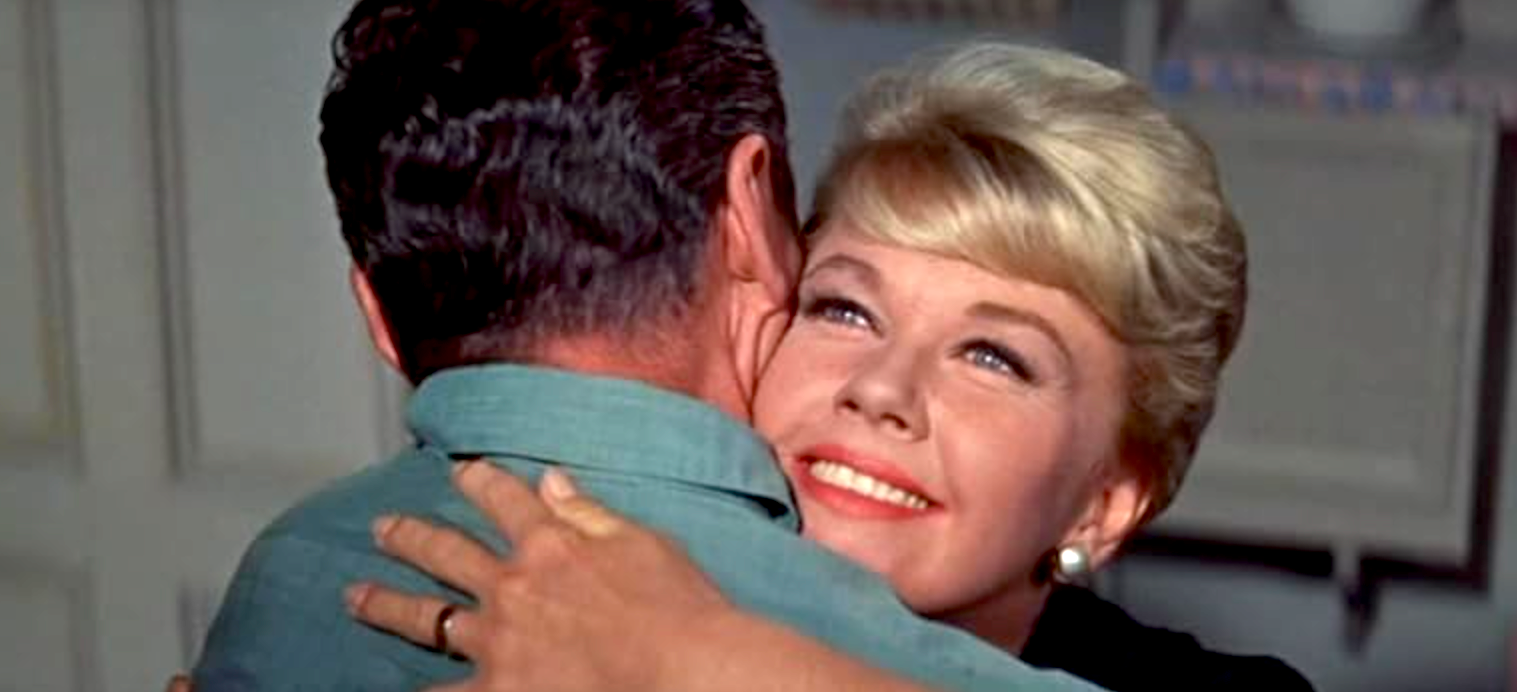
Director Charles Walters keeps the whole thing moving, especially in the difficult early scenes when Doris has so many child actors to wrangle. When Day asks her boys for a kiss, they keel over in a coordinated cadence that Walters could have timed to dance counts. As always, her performance shows a real commitment. She never phoned it in, not in The Glass-Bottom Boat, Caprice, or Where Were You when the Lights Went Out?
Doris Day’s popularity never faltered, even when comedy writers made easy jokes from her wholesome screen persona as an ‘eternal virgin.’ She remained a positive, open personality in a culture that favored faux-cynical ‘cool’ attitudes. In 1966, the comic spy spoof Our Man Flint invented a harem of four beautiful, adoring women for its superspy hero, a sexist lineup of ethnic choices. The fourth was Doris Day lookalike Sigrid Valdis, dressed in yellow with an oversized daisy on her head.