
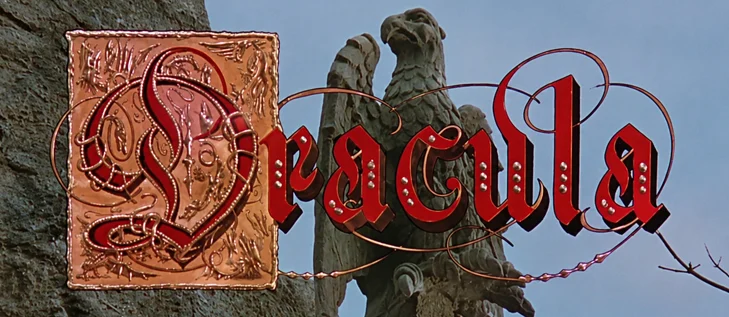
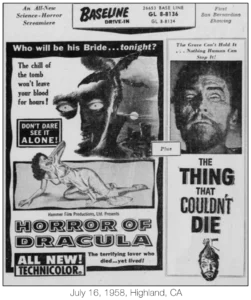
Hammer’s Dracula was built for speed. Propelled by Peter Cushing’s acrobatic vampire hunter and Christopher Lee’s ravenous bloodsucker, the film was released in 1958 at the zenith of J.D. cinema and quickly outpaced typical teensploitaton like Hot Rod Gang and Dragstrip Riot. Terence Fisher’s high octane shocker would galvanize not just the drive-ins, but the film industry writ large.
Jack Asher was the cinematographer and James Bernard composed the blood and thunder score. Bernard Robinson’s vibrant production design, with echoes of the Romantic Gothic period, was a radical departure from Lugosi’s monochrome castle and cobwebs. Screenwriter Jimmy Sangster’s emphasis on sex and violence felt raw and liberating. Fisher did not entirely reject the old guard, some aspects of Dracula are culled from Britain’s past; you can see Donald Wolfit’s overtly theatrical mannerisms in Cushing’s grandstanding, and the psychologically charged lighting of Black Narcissus as one of Asher’s touchstones.
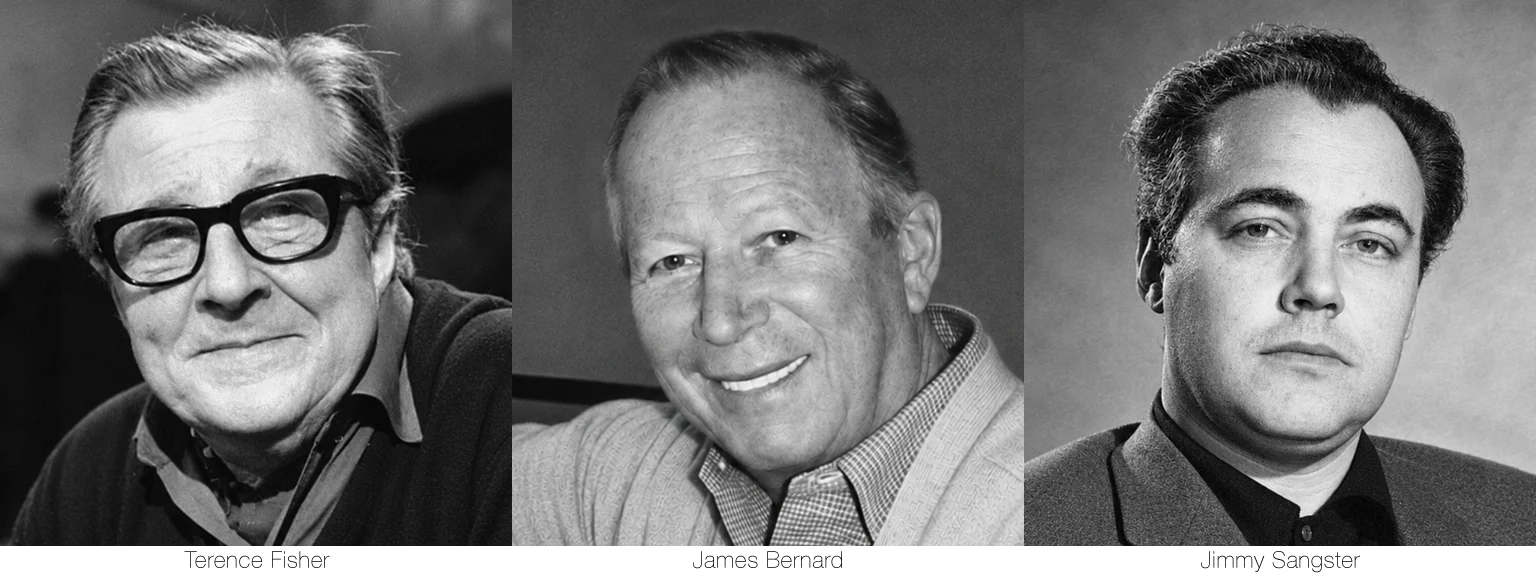 The 31 year-old Sangster, who began his career as a clapper at age 16, seemed to have few illusions about his screenplays, yet he was determinedly innovative with a brash rebellious streak; Hammer’s lawyers labored months to secure the rights to Dracula but after the dust had settled, Sangster would give the undead star of the show just 7 minutes of screen time and only 16 lines of dialogue. His instincts were correct: Lee’s villain looms over the film in the way that Brando could command The Godfather 2 without showing his face.
Thanks to screenwriter Garrett Fort, Bela Lugosi was able to express sentiments usually reserved for existentialists like Bogart—“There are far worse things awaiting man than death” could describe the fatalistic philosophy of Dracula or Sam Spade. But unlike Lugosi, Lee’s ice-cold Dracula has no laments—he is an almost entirely physical presence (16 lines go only so far). With his floor-length cape and monumental silhouette, Lee is a pure and unknowable art object—he glides into the picture as an instant icon, a recruitment poster for the undead. His is a strictly primal performance, the mask he wears to fool his prey is part of his beast’s instinct, like a desert rattlesnake hiding in plain sight before it strikes.
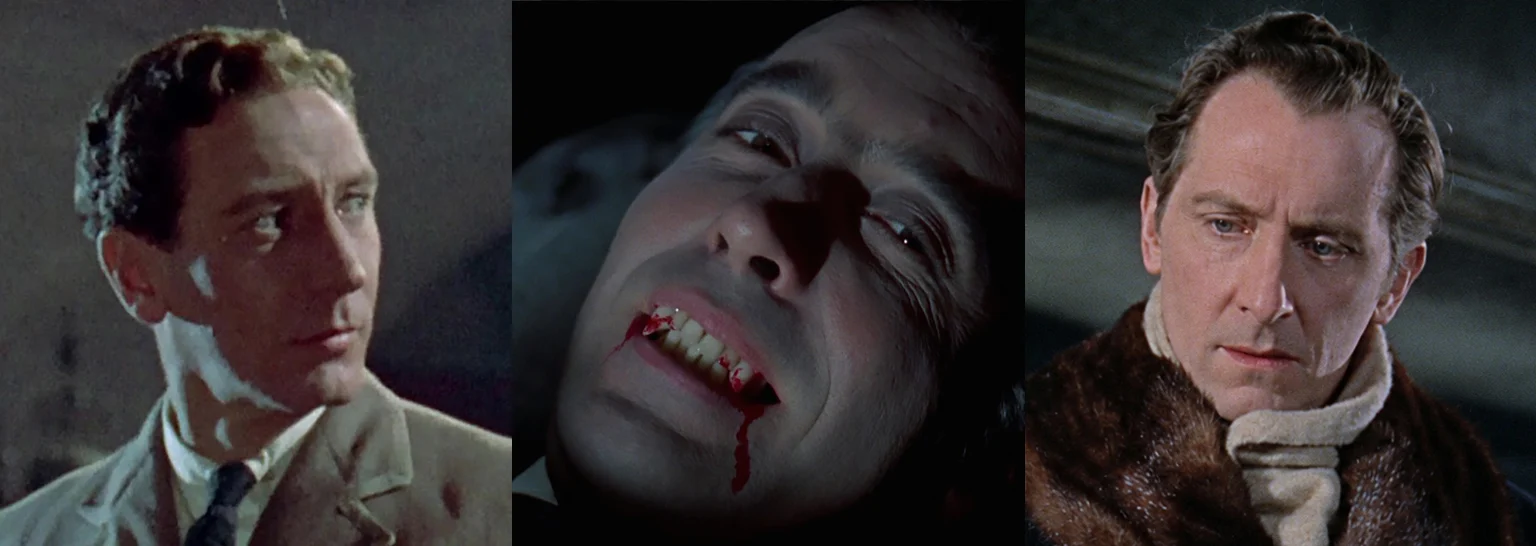
Into that viper’s lair comes a solitary traveler named Jonathan Harker, and he’s wearing his own disguise; employed to catalog Dracula’s library, he is in fact there to destroy the count and “… forever end this man’s reign of terror.” A grand scheme but Harker underestimates the monster, this would-be hero is reduced to just another victim. Played by the South African actor John Van Eyssen, Harker is a sober scholar, who, with his hawkish profile and fearless nature, shares a poignant resemblance to Peter Cushing who plays Abraham Van Helsing, the man who will replace him in his mission. Van Helsing’s immediate concern is Harker’s fiancee, Lucy Holmwood—a fragile and imminently dangerous young woman played by Carol Marsh.
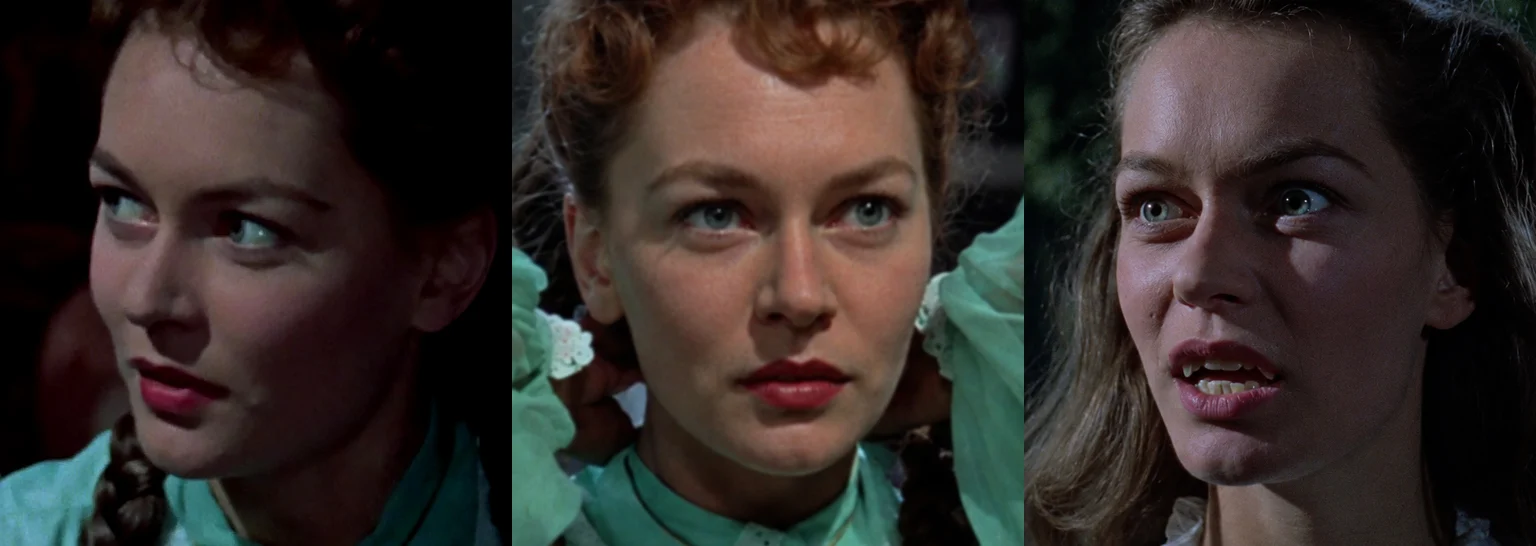
Marsh was born Norma Lilian Simpson in 1926 in Southgate, North London. Even as a child her presence was haunting—or haunted—she gave the impression of being cursed while at the same time perfectly capable of casting a spell. Those qualities elevate 1947’s Brighton Rock (her film debut, she was 20 when she played the badly used heroine) and 1951’s Scrooge in which she plays Fan (“a delicate creature, whom a breath might have withered”). Those characters unite in the tragic Lucy, a hothouse flower who, having been seduced by Dracula, now prowls the countryside in search of her own prey. Van Helsing will liberate her with a stake to the heart and a geyser of blood, a harrowing scene that would be considered the finale of most films. For now, it’s merely the movie’s centerpiece.
Dracula has been legally dead for over 400 years but his sense of entitlement is very much alive. The spiteful nobleman took the loss of Lucy as a personal affront and he means to destroy the rest of her family; Mina Holmwood (played by Melissa Stribling) and Arthur Holmwood (played by Michael Gough, one of cinema’s great scenery-chewers though relatively restrained here). One begins to wonder how this vampire made it through four centuries—he takes up residence in the Holmwood’s cellar, an open invitation for Van Helsing to finish the job Harker set out to do.
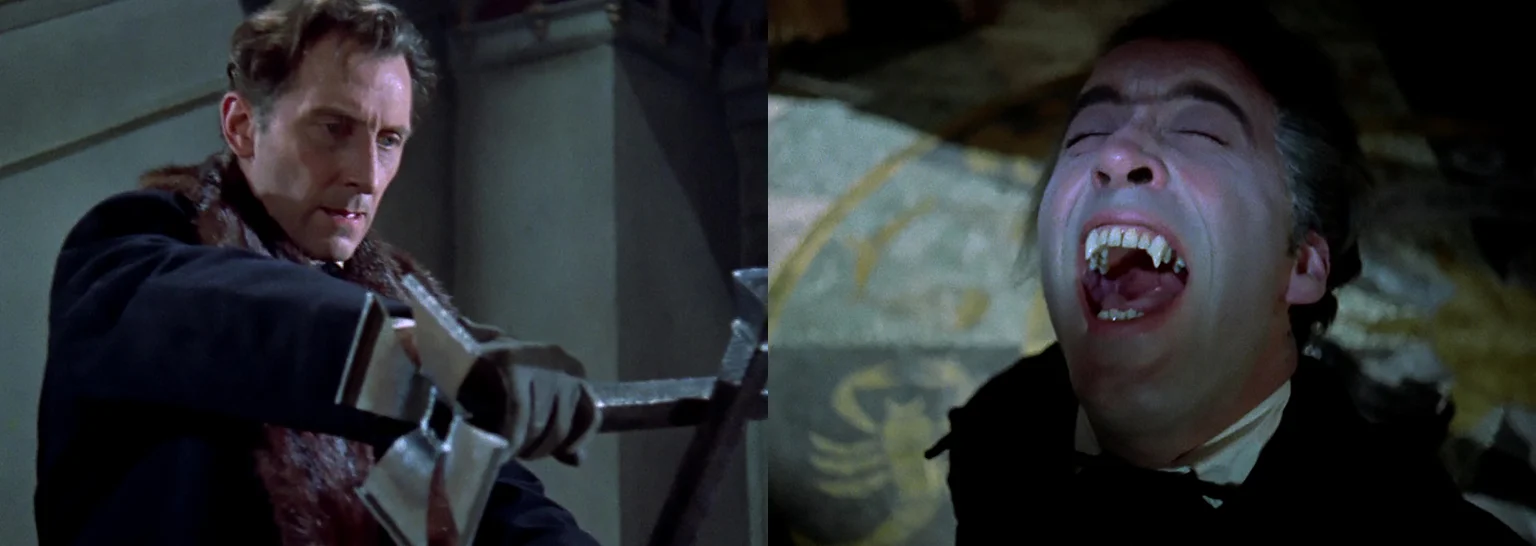
Bela Lugosi’s Dracula was the gentleman’s vampire, once he smells defeat he retires to his coffin and politely dies off-screen—a solitary moan signals his end. Fisher frames Dracula’s demise as the battle of the century, Grand Guignol on an operatic level. It begins with a carriage race between man and monster so frenetic that ticket-buyers in 1958 might have felt as whipped as the horses. Once inside the castle the horserace becomes a footrace with Lee and Cushing engaged in the horror movie version of a barroom brawl—the vampire is trapped on his own turf but who has caught who? James Bernard’s relentless score, conducted by a no-doubt exhausted John Hollingsworth, slows to a dirge as Dracula succumbs to Van Helsing and the sunrise; the vampire’s skin dissolves like so much crepe and falls from his frame. The only thing left is his ring, an empty frock coat, and dust. In the distance, you might hear the sound of Margaret Hamilton applauding.
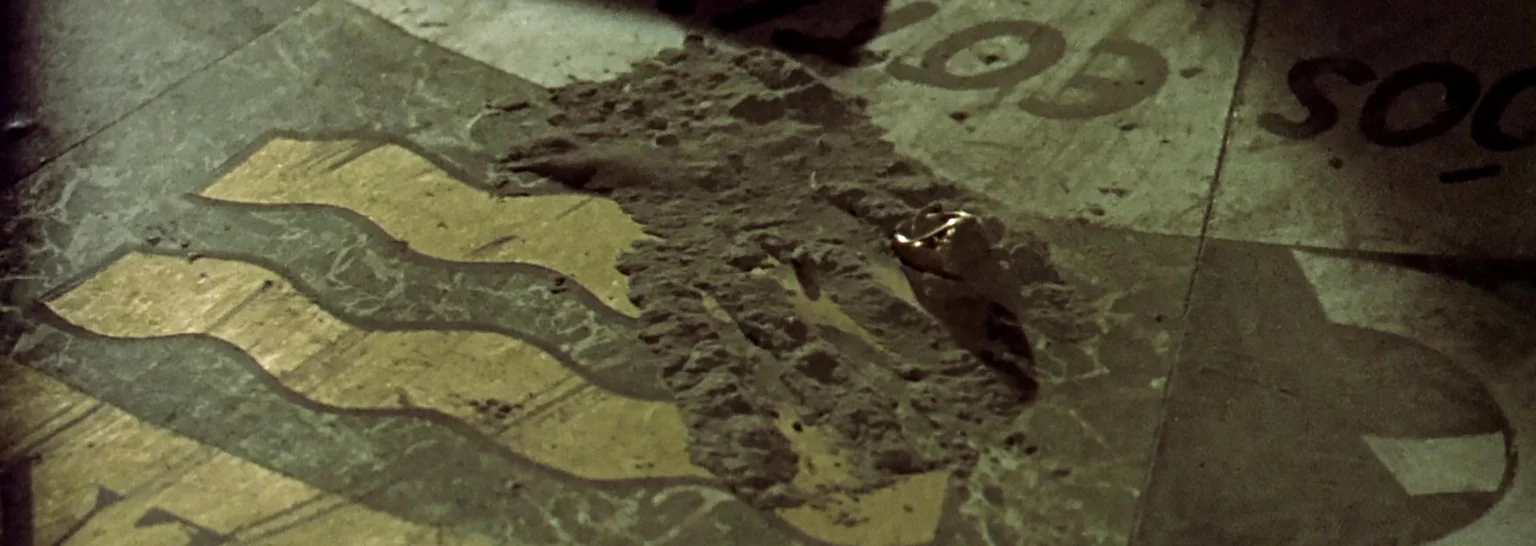
That grisly death scene—a gore-fest that surely rocked the balcony and set off dozens of car horns at the drive-in—created a new stir a few years ago when a Japanese print was discovered with brief but revealing new footage of Dracula’s meltdown. That find was supplanted by yet another discovery of the same footage but in pristine condition. These elements were reinserted by Anolis Entertainment who released a German Blu-ray edition of Horror of Dracula in 2017. Now Warner Archive has released this fairly spectacular new 4K release of Dracula (or Horror of Dracula). The two-disc version is a banquet of extras and will satisfy the most hungry Hammer fan but it pales in comparison to the forthcoming limited edition, a real Thanksgiving feast: Horror of Dracula Limited Collector’s Edition.
All eyes are on the 4K restoration and it is ravishing (Jonathan Harker’s smoking jacket is positively iridescent and close-ups are, as they say in art school, tactile). The two-disc release contains four variations of the film, an uncensored UK version, the UK original theatrical version, the uncensored US version, and the US theatrical version. The extras are plentiful—highlights include new audio commentaries from Lucy Bolton, Jonathan Rigby, Lizbeth Myles, Paul Cornell, Dr. Steve Haberman, Constantine Nasr, Toby Roan, and Trailers From Hell! guru Heidi Honeycutt.
There are several specially-produced short documentaries: Proving Them Wrong in which Dame Harriet Walter discusses Christopher Lee with biographer Jonathan Rigby. The Road to Dracula with Tony Dalton, Stephen Laws, Wayne Kinsey and Dick Klemensen discussing Terence Fisher’s career. And Gothic for Christians, a video essay narrated by Doug Bradley on Fisher’s techniques.
There are trailers, 8mm condensed versions, and much, much more. Here’s a complete rundown of the extra features.