


Have attitudes about screen violence changed since 1974? Back then we dissed Death Wish was upscale exploitation trash, a rigged story that catered to the right-wingers that had previously applauded Joe and Dirty Harry. Worse, the director of Death Wish was Michael Winner, who even then had a low reputation among film students. A typical comment about Winner’s recent string of limp, zoom-ridden cinema was that he had an unerring knack for always putting the camera in the wrong place.
Almost fifty years later, we’re still not taking back the charge that Death Wish exploits urban fears and glamorizes unacceptable remedies, like encouraging people to carry guns. But it’s an accomplished picture, and Winner’s direction is not at all bad. Screenwriter Wendell Mayes’ work is even better. His credit appears on some great entertainments including CineSavant favorites The Hanging Tree, Anatomy of a Murder and Von Ryan’s Express. Mayes finds a different role for Charles Bronson to play, a gifted architect. Bronson must have believed in the script, for he makes an extra effort to portray an upscale everyman. He can’t change his gravel voice but he’s more expressive than in his Golem-faced action movies.
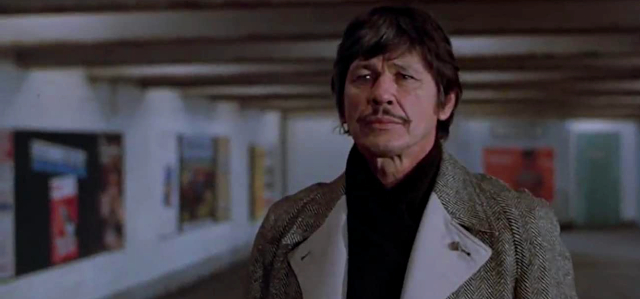
The first reel punishes the audience with an appalling rape-murder more disturbing than Kubrick’s A Clockwork Orange. It was likely the most extreme scene to date in a film released by Paramount Pictures. According to disc commentator Paul Talbot, the attack was originally supposed to take place off-camera. Michael Winner instead billboarded the brutality, to invest every viewer in the vigilante storyline. Audiences looked to the heroic Charles Bronson to exact retribution for the outrage. Bronson’s character is initially described as a Bleeding Heart Liberal. Death Wish has him act out the fantasies of Americans convinced that criminal scum is out of control.
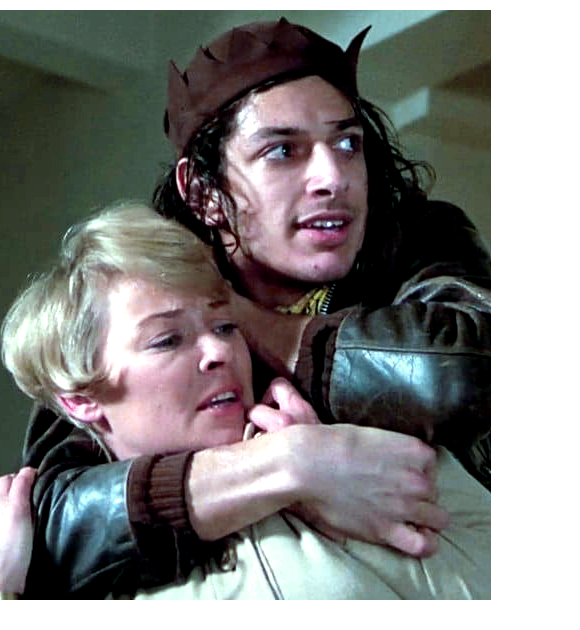
New York architect Paul Kersey (Bronson) is very happily married. But after returning from a Hawaiian vacation, his wife Joanna (Hope Lange) and his married daughter Carol (Kathleen Tolan) are attacked by three sick toughs. Carol alone survives, but has lost her mind and must be cared for in an institution. Paul can’t cope with the tragedy any more than can his son-in-law Jack Toby (Steven Keats of The Friends of Eddie Coyle). On a work trip to Arizona Paul sees a wild west show for tourists and is lectured in gun-culture philosophy by his client Aimes Jainchill (Stuart Margolin). When he returns to Manhattan, Kersey discovers that the parting gift Aimes gave him is a .32 caliber pistol. The highly illegal weapon is just what Paul needs to begin a reign of vigilante terror.
Paul Kersey is soon staking himself out as bait in parks and on the subway, and killing the muggers that see him as easy prey. His trail of corpses throws the town into a spin. Detective Frank Ochoa (Vincent Gardenia of Moonstruck) plays some intelligent hunches and soon has the respected citizen Kersey on his list of suspects. National media attention takes the investigation in a political direction: the Police Commissioner and the D.A. (Stephen Elliott & Fred Scollay) don’t mind if Ochoa stops the vigilante, but they’d prefer that it be hushed up — thanks to ‘the vigilante,’ violent muggings in NYC have been cut in half.

Audiences in 1974 didn’t expect a violent revenge story to take place in such a realistic domestic context: even Clint Eastwood’s thriller Coogan’s Bluff was skewed in the direction of a Law & Order wish-fulfillment fantasy. What happens to Death Wish’s Joanna and Carol is so disturbing that our emotional response is to cheer on Paul Kersey’s murderous response. Surprisingly, even as we cheer Paul Kersey, Death Wish does not give vigilantism a blanket endorsement — Kersey’s actions only add to the urban chaos. The movie doesn’t make the reactionary statement of 1971’s Dirty Harry. That influential hit preaches that we’re threatened by a plague of civil rights. With its wall of police martyrs, it all but calls for the enactment of a police state.
The wave of vigilante films that followed simplified the emotional equation even further: ‘good’ Americans should be free to use whatever means necessary to protect themselves, right?
The initial Death Wish does show some intelligent restraint. At first sickened by killing, Paul Kersey gets his kicks from it. He’s soon transformed into a Manhattan Clint Eastwood, murdering dangerous criminals right and left. Even when wounded, Paul can’t resist returning to the streets to nail some more street scum. They’re like potato chips.
The screenplay is careful to depict Kersey as peace-loving. He served in the Medical Corps in Korea as a conscientious objector. He swore off guns after his father was killed in a hunting accident, mistaken for a deer. This ‘motivation whitewash’ invites sarcasm, as some of us immediately think of Tex Avery’s cartoon Field and Scream.

The picture is handsomely produced and well cast. We immediately recognize several bit-part actors. A New York policewoman is an unbilled Olympia Dukakis, who 14 years later would charm us as Vincent Gardenia’s wife in Moonstruck. Jeff Goldblum is one of the initial horror-attackers, working hard to be utterly depraved. A patrolman who helps Detective Ochoa cover up an arrest is played by Christopher Guest of The Princess Bride.
The screenplay repeats the conservative argument of Coogan’s Bluff, that anyplace in America is preferable to the insane liberal nightmare of New York City. The Arizona businessman calls NYC ‘a toilet’ and explains that Tucson is a peaceful paradise because everyone carries a gun. [Disc commentator Paul Talbot reports that in 1974, Tucson’s crime rate was no better than that of New York.] The show argues that it’s no time for liberal blather that the crime problem is too complex for direct action. Death Wish has no misgivings about whipping audiences into a bloodlust frenzy. Paul Kersey happily adopts a righteous Marshall Dillon attitude. Taunting a victim with a promise of a fair fight, he quotes dialogue he’s heard from a John Wayne movie: “Fill your hand!”

Death Wish has it both ways — it admires Paul Kersey’s actions but does not openly endorse them. The media turn the mystery vigilante into a celebrity, and promote the notion that civilians are being inspired to arm themselves against street crime. Paul overhears some upscale party goers whining that suggests that liberals haven’t a clue as to how to fix things. The elected authorities are corrupted into quietly supporting the vigilante — if Detective Ochoa plays things correctly they can ride the improved crime statistics into the next election.
Even with its loaded argument, Death Wish has enough tact to not allow Kersey’s crusade to come full circle — a really cheap finale would have him confront the exact same killers that destroyed his family. Obscenely obvious knee-jerk revenge ‘closure’ is now the norm on most TV crime shows. Remember, it’s always Personal.

There’s not doubt that Death Wish expressed what Americans were thinking. An elderly lady inspired by the vigilante’s exploits boasts to the newscamera about defending herself on the street with a hat pin: “I’ve been robbed too many times, and I’ve had enough.” Her sentiment pre-echoes the broader mantra of Network two years later: I’m mad as hell and I’m not going to take it anymore!
Death Wish may no longer seem shocking in 2023, now that gun crime is an all-consuming American epidemic, a favored conduit of self-expression for the disillusioned. Heinous rape-murders and mass shootings are fodder for news shows marketed primarily as entertainment. If we sell the video game Grand Theft Auto to children, is there any point to fretting over an old Charles Bronson movie?
A sidebar thought: Death Wish held a firm spot in the public consciousness for maybe twenty years, when Charles Bronson’s Paul Kersey was the poster boy for self-righteous lone wolf vigilantism. Remember Bernhard Goetz? Practically a Paul Kersey clone come to life, Goetz’s actions read like a scene right out of the movie.

Could Paul Kersey have taken on more symbolic status? Perhaps the film’s title should have been just his name, ‘Kersey.’ Thereby a cult could have formed around a fictional character that the public feels is very real. Over in Philadelphia, they erected a statue to Rocky Balboa, a fictional boxer that people seriously believe represents an American ideal. In today’s blurred-reality culture, Rocky might as well BE a real person. Why isn’t there a statue of Paul Kersey somewhere in the NYC Subway System, holding his little pistol and smirking in anticipation of bagging his next victim? → Bronson’s face already looks like a bronze art sculpture. The artwork could include a couple of wounded muggers on the ground nearby. Multi-ethnic, of course.
