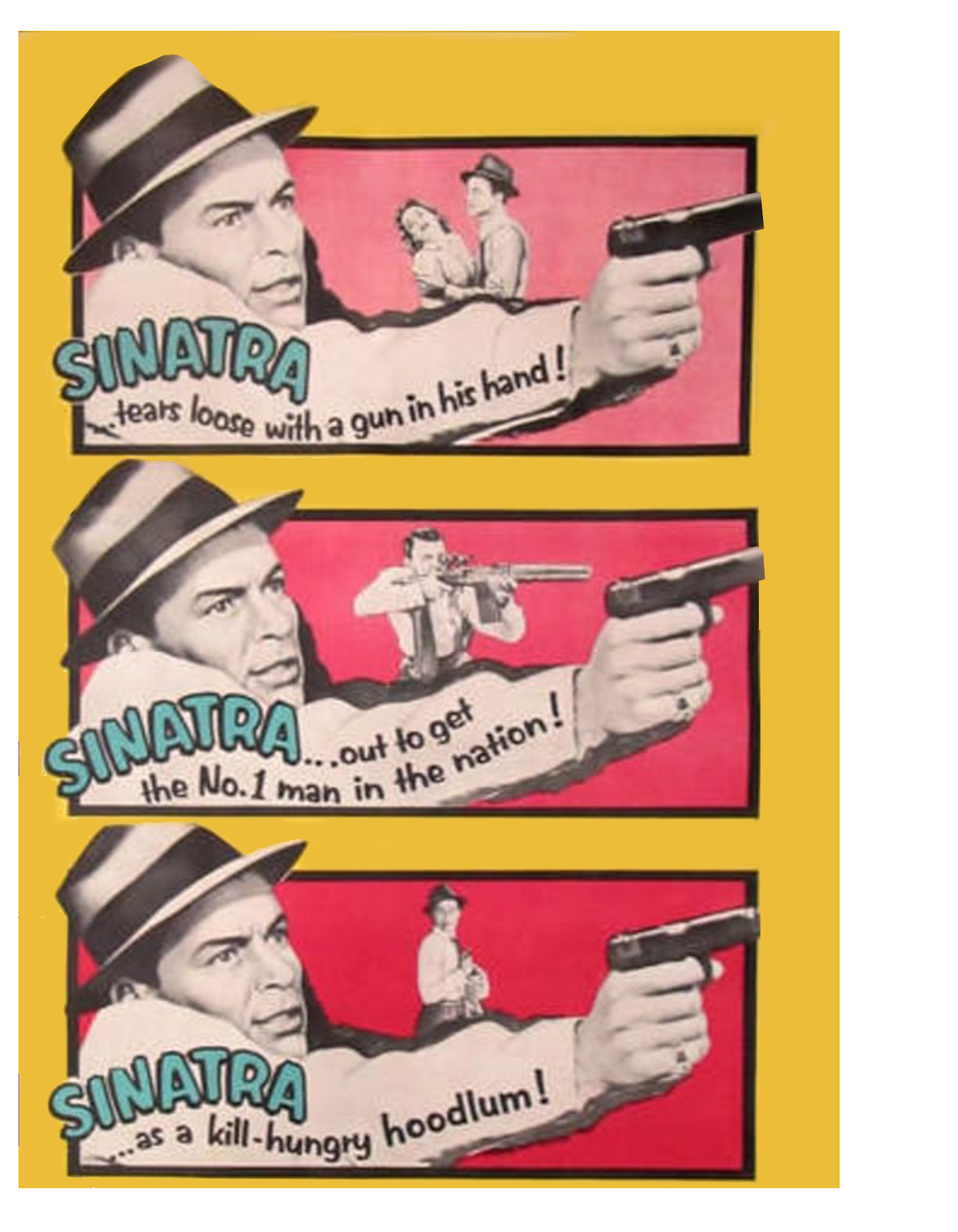
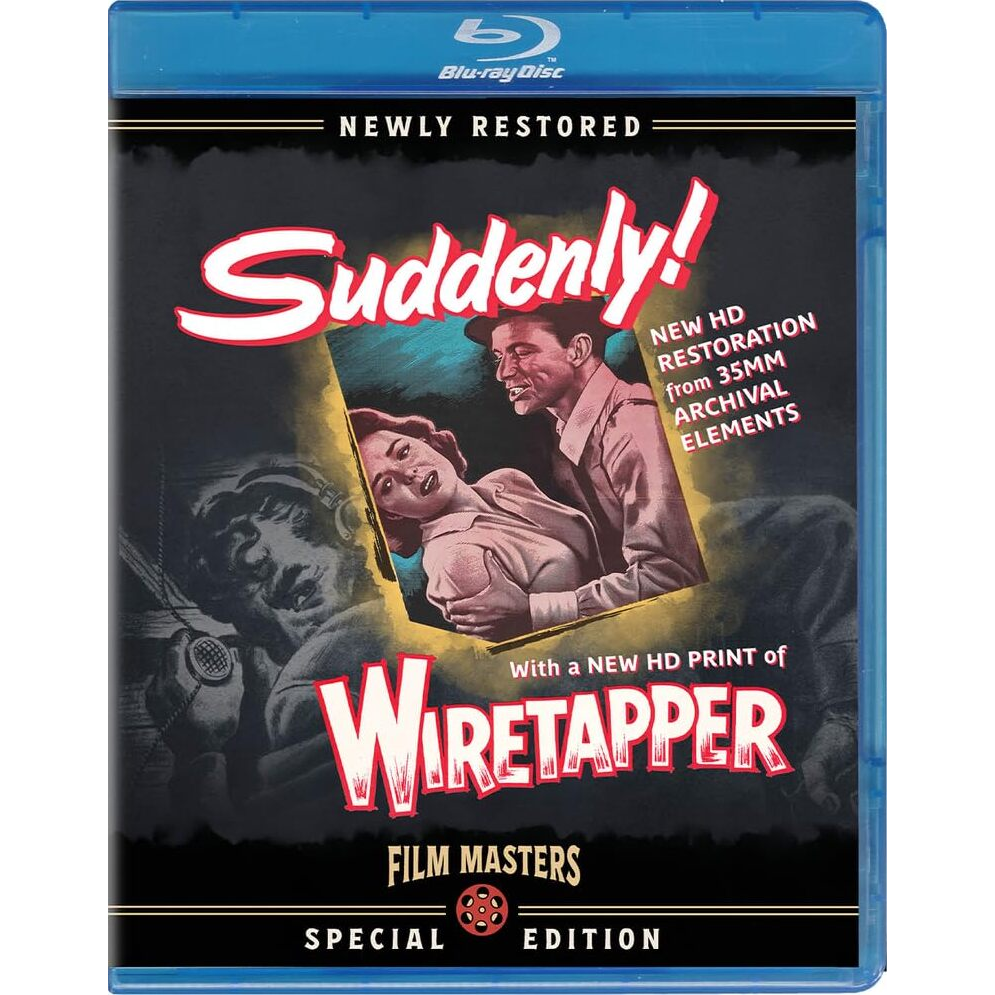

 A brisk brush-up job finally does right for the very good Public Domain thriller Suddenly, starring Frank Sinatra as a hoodlum-assassin who “sears the screen …as a snarling mad-dog killer!” It’s an acting showcase for the newly-minted Oscar winner, through and through.
Most Public Domain releases stopped looking miserable years ago, although there are enough companies around making real junk, sometimes of movies not confirmed as PD. A good example is a terrific drama by Rod Serling. It’s not perfect, but it’s awfully good. MGM shows no sign of utilizing its original film elements for a disc release; the movie doesn’t even look very good on TCM cable.
A proto-paranoid Cold War assassination thriller! … and a warm family story, too.
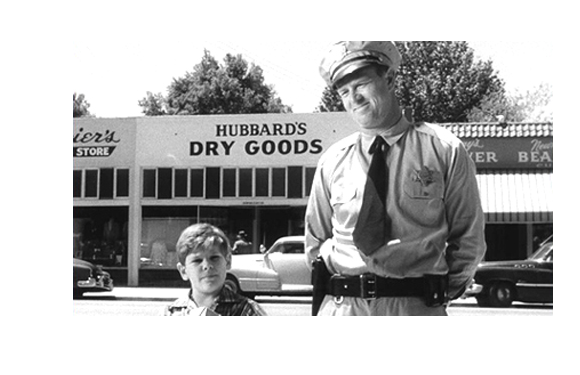
1954’s Suddenly doesn’t offer hidden messages or subtext: its political argument is right on the surface. Some very strange ideas were floating around in ‘fifties America. We’re told that Hollywood’s anti-commie films Big Jim McClain and I Married a Communist were ineffectual as propaganda and flopped at the box office. Suddenly registers the Cold War backlash a little differently. A small rural family is terrorized by a maniac intent on murdering the President of the United States. The film preaches that we all ought to be on wartime alert for anti-American terror, From any direction, at any time. Murderous traitors are everywhere; we need to be cold warriors in our own living rooms.
The next year’s The Desperate Hours is a similar home hostage ordeal. Athough not overtly political, it is also critical of our culture of permissiveness and complacency.
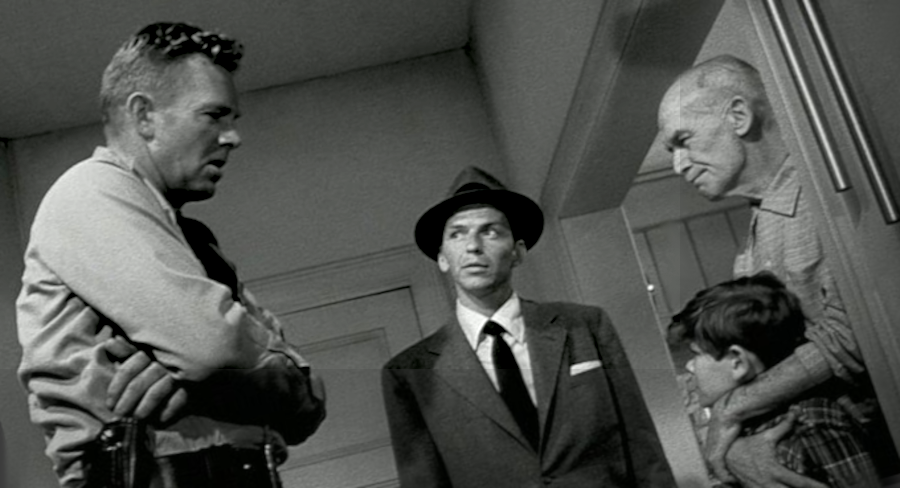
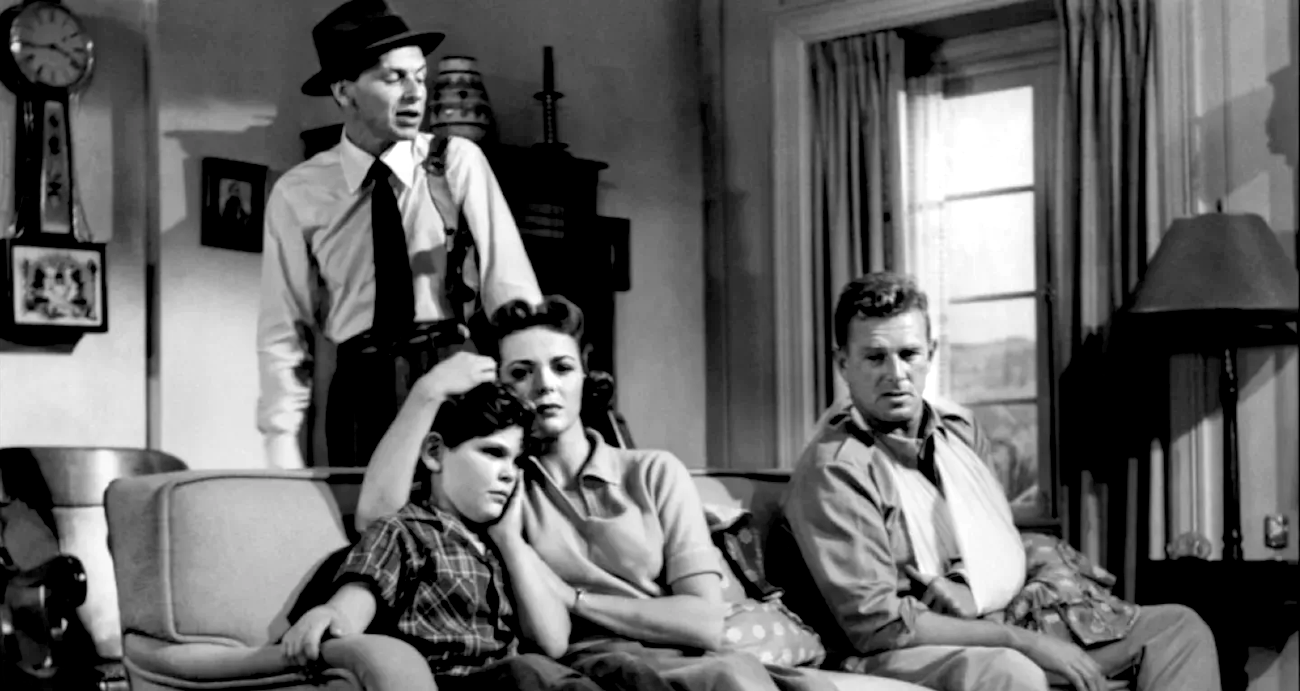
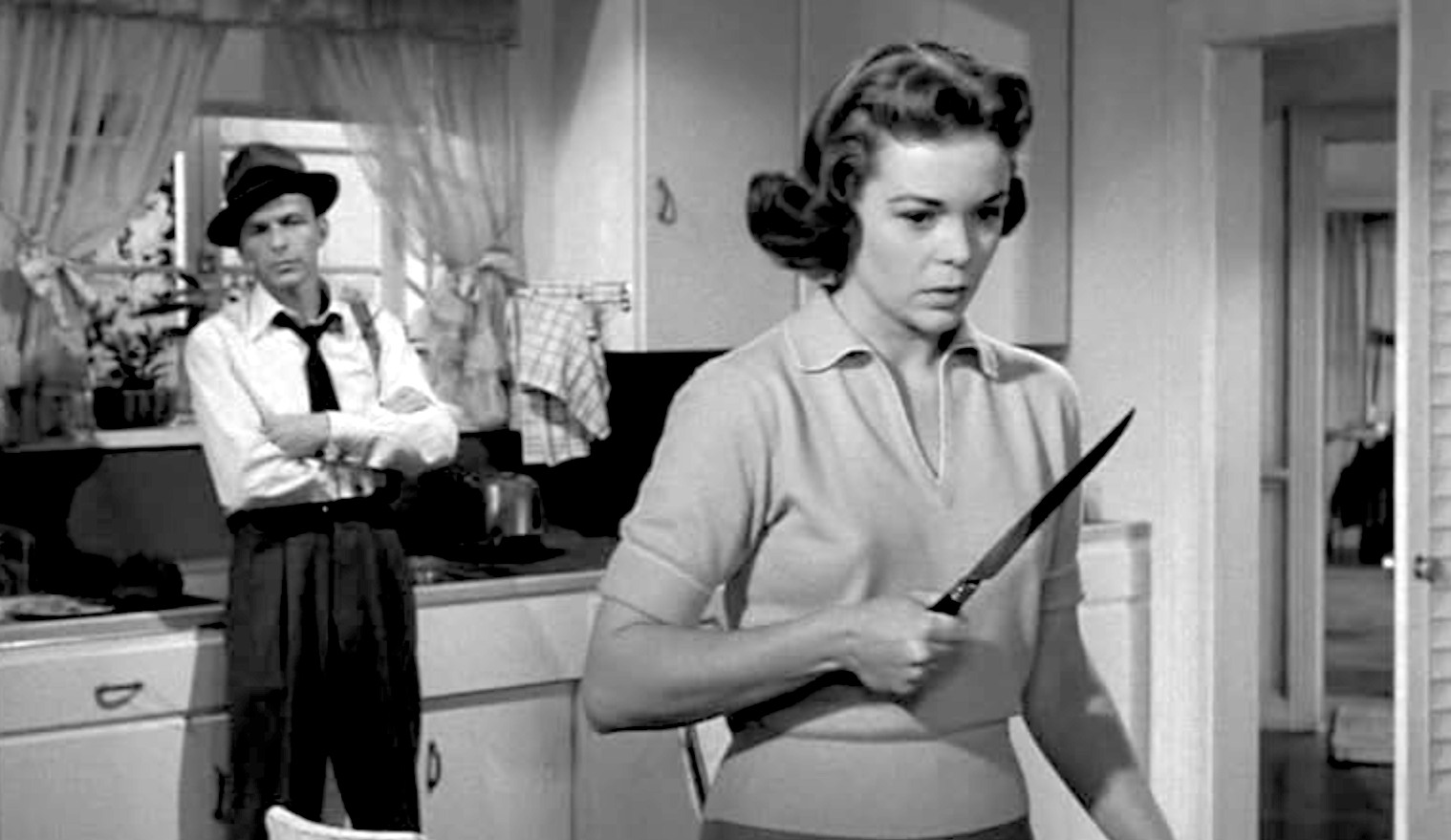
The story plays out almost in real time. “Suddenly” is the name of a rural town in Central California. With two confederates, psychotic assassin John Baron (Frank Sinatra) invades the household of retired T-Man Pop Benson (James Gleason), forcing his daughter Ellen (Nancy Gates) and her son Pidge (Kim Charney) to witness their preparations to ambush the President of the United States at the whistle-stop railroad station, visible from the Bensons’ living-room window. Sheriff Tod Shaw (Sterling Hayden) is Ellen’s patient suitor: she is a war widow and not yet ready to remarry. Unaware of the drama playing out just up the hill, Sheriff Tod is busy helping the secret service prepare for the visit. He brings agent Dan Carney (Willis Bouchey) to Ellen’s door to visit his old pal Pop. They fall right into the lap of the determined, brutal killers.
Writer Richard Sale had an affinity for twisted thrillers. He wrote the original book for the odd religious allegory Strange Cargo. His seagoing thrillers Abandon Ship! and Torpedo Run force people to make cruel decisions of life & death. The only religion in this show is the gospel that every American needs to be battle-ready, now, to stave off communist killers and their hired-gun allies.
NRA types will love this.
Suddenly has a real chip on its shoulder against pacifists and soft-hearted women. Young mother Ellen Benson lost her husband in Korea fighting Reds; the movie condemns her decision to forbid her son Pidge to play with toy guns. Father-in-law Pop undermines Ellen’s judgment with the argument that his grandson must be raised to be a fighter, in life in general if not in future wars. America doesn’t need ‘sensitive’ sons, and progressive mothers are making them into sissies. Nobody respects Ellen’s child-rearing decisions. Sheriff Tod calmly ignores her explicit wishes, and buys Pidge a cap gun behind her back. Mom just doesn’t get it — she doesn’t understand that boys need to be raised tough. The freedoms we enjoy require constant vigilance and struggle, you know.
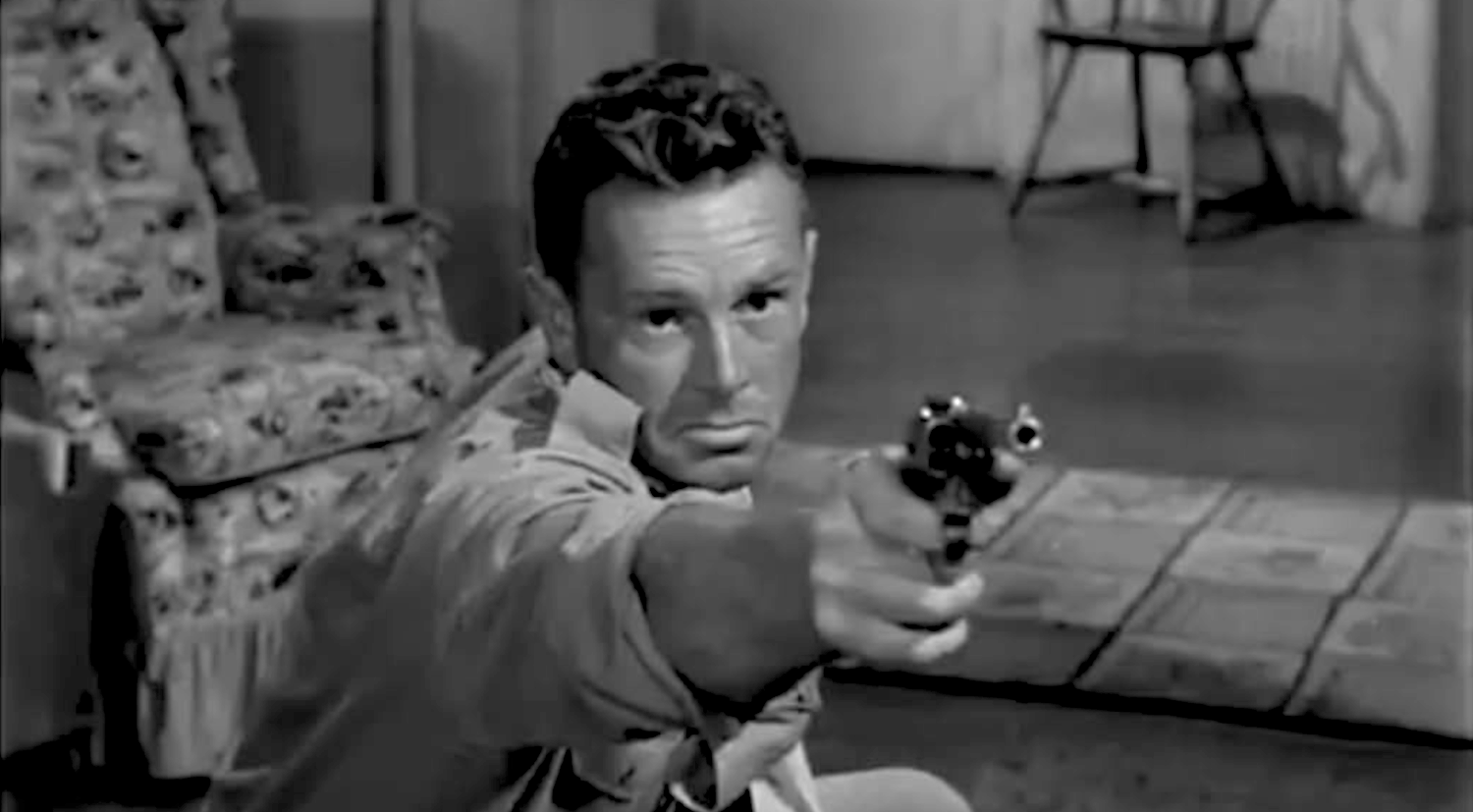
Pop certainly did his bit for the nation. He was forced to retire early after taking a bullet while guarding the President. All of the Bensons are put on the spot when the deranged John Baron commandeers their picture window to plug the President long distance. The President in mind is presumably Eisenhower. Pop and Tod conspire to stop the swaggering Baron while Ellen mostly wrings her hands unhelpfully. The immature Pidge clearly has The Right Stuff when he ‘threatens’ Baron with his cap gun. The kid later proves himself to be genuine Junior T-Man material.
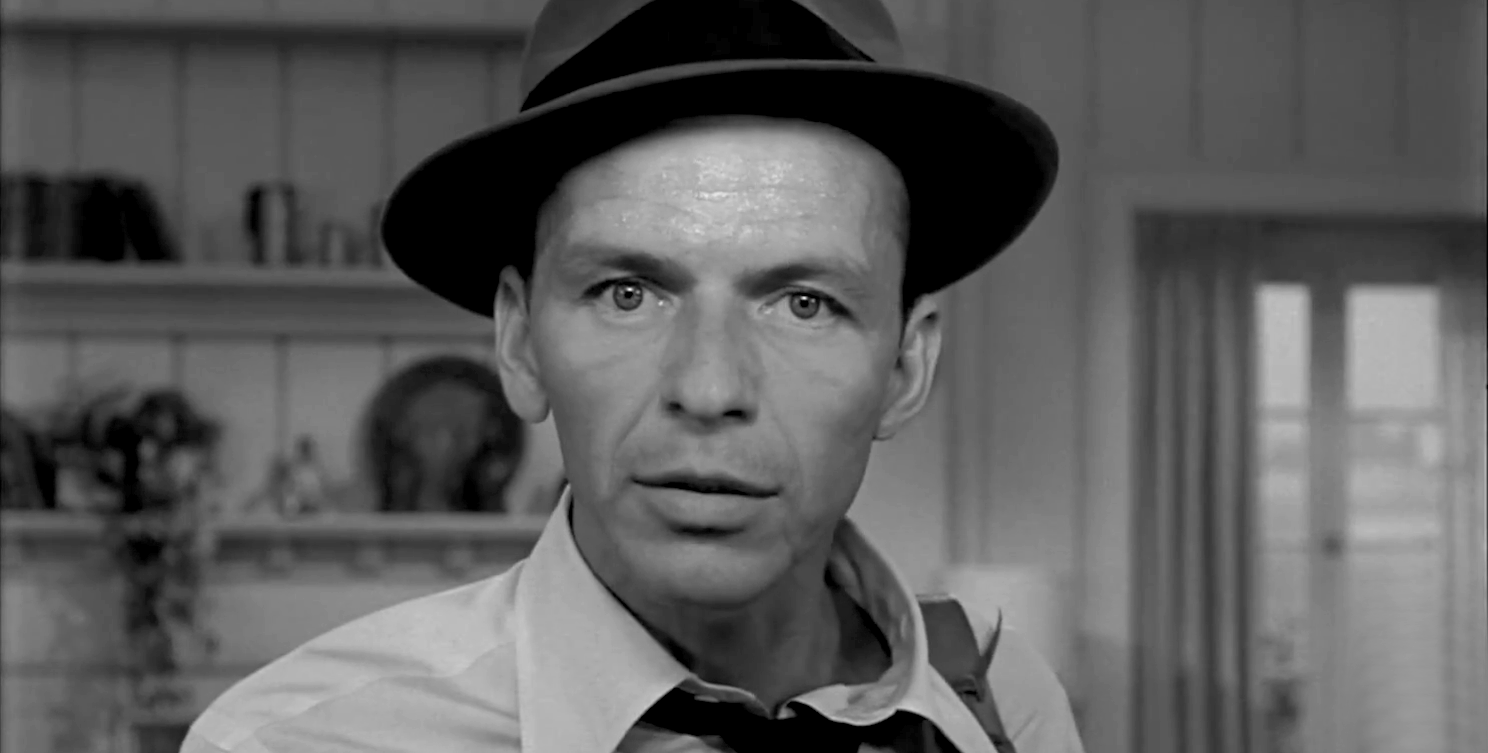
Sinatra’s John Baron is the kind of psychologized killer that needs to talk. A lot. He doesn’t gag or hog-tie his hostages, or more logically, kill them. He instead allows them to roam freely and chitchat. Baron brags that he’s the best in his business, but the moment Sheriff Tod gets him talking, his neuroses and complexes spill out in time-proven ‘fifties psychodrama style. A thug who gets his kicks from pushing people around, Baron is hired muscle doing the job of an assassin-spy, for presumed Commies that want our president killed. We know this is so because Baron tells Tod how cautious he will need to be when the job is done — his foreign puppet masters will be anxious to cover their tracks.
Suddenly is fairly well directed. The built-in suspense factor makes it hard to resist, which is why I won’t go into the wild shenanigans that occur in the last few minutes before the President’s train arrives. The tension hits a plateau when story settles into what a one-act TV play format. Dialogue is prioritized over visual storytelling. John Baron foolishly tells his entire plan to the Bensons, potential witnesses all. He allows a trained Secret Service agent and a tough (albeit wounded) ex- G.I. to sit just a few feet away while he prepares his assassination plan.
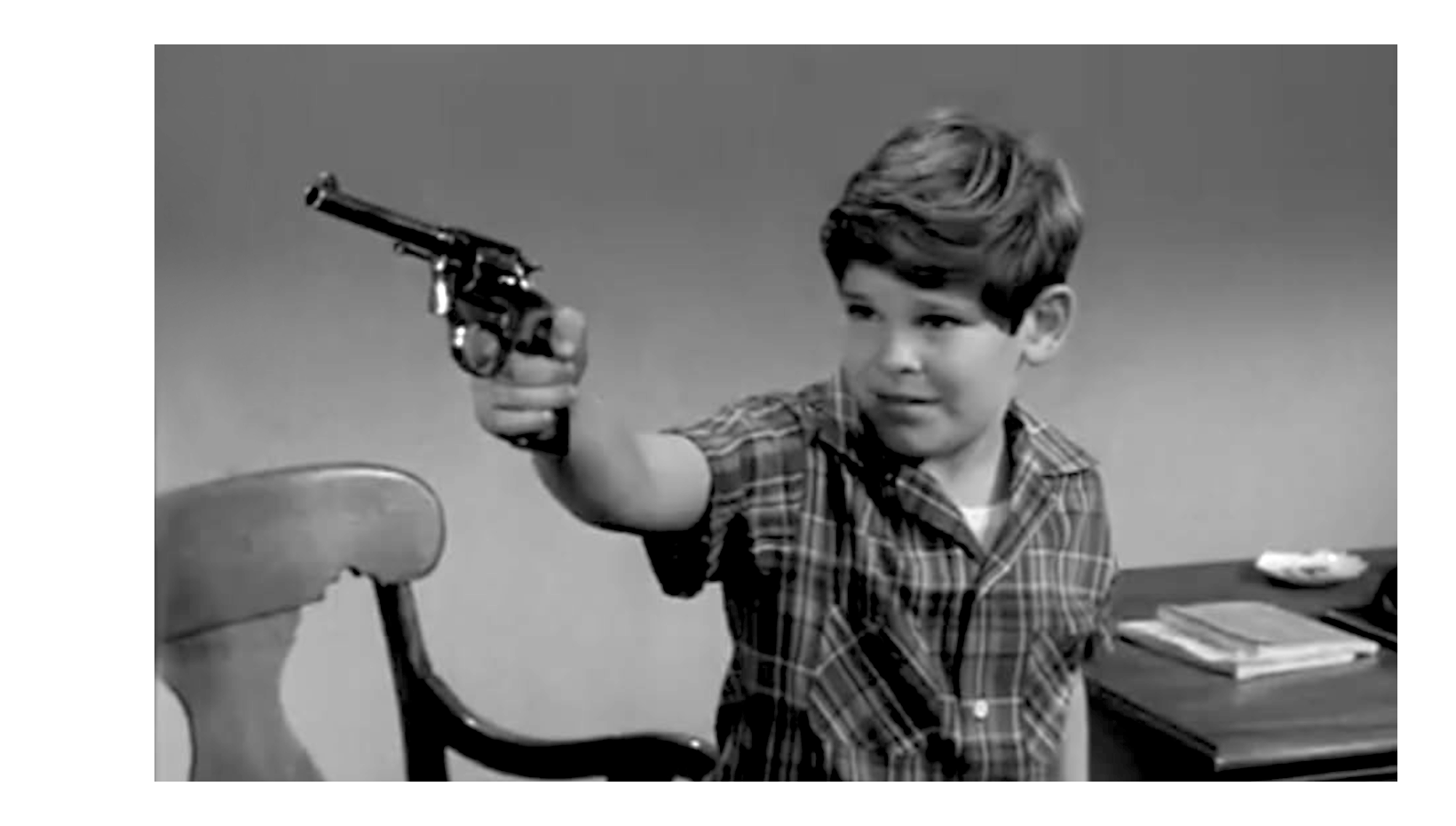
When it looks like Baron’s scheme is going to work, Pop and Tod gird themselves to make a suicidal gesture, the kind that Real Men Must Make. As for Ellen, the screenplay continues to see her as a liability. Pacifist mothers are a big problem. Will a generation of boys be prevented from growing up macho? Who will fight the battle against Communist Evil?
A more liberal viewpoint might see the film’s argument as a subdued, benign version of what the Hitler Youth are shown going through in the animated wartime Disney short subject Education for Death. Pidge is being indoctrinated as a warrior, along with every patriotic little boy in the audience.
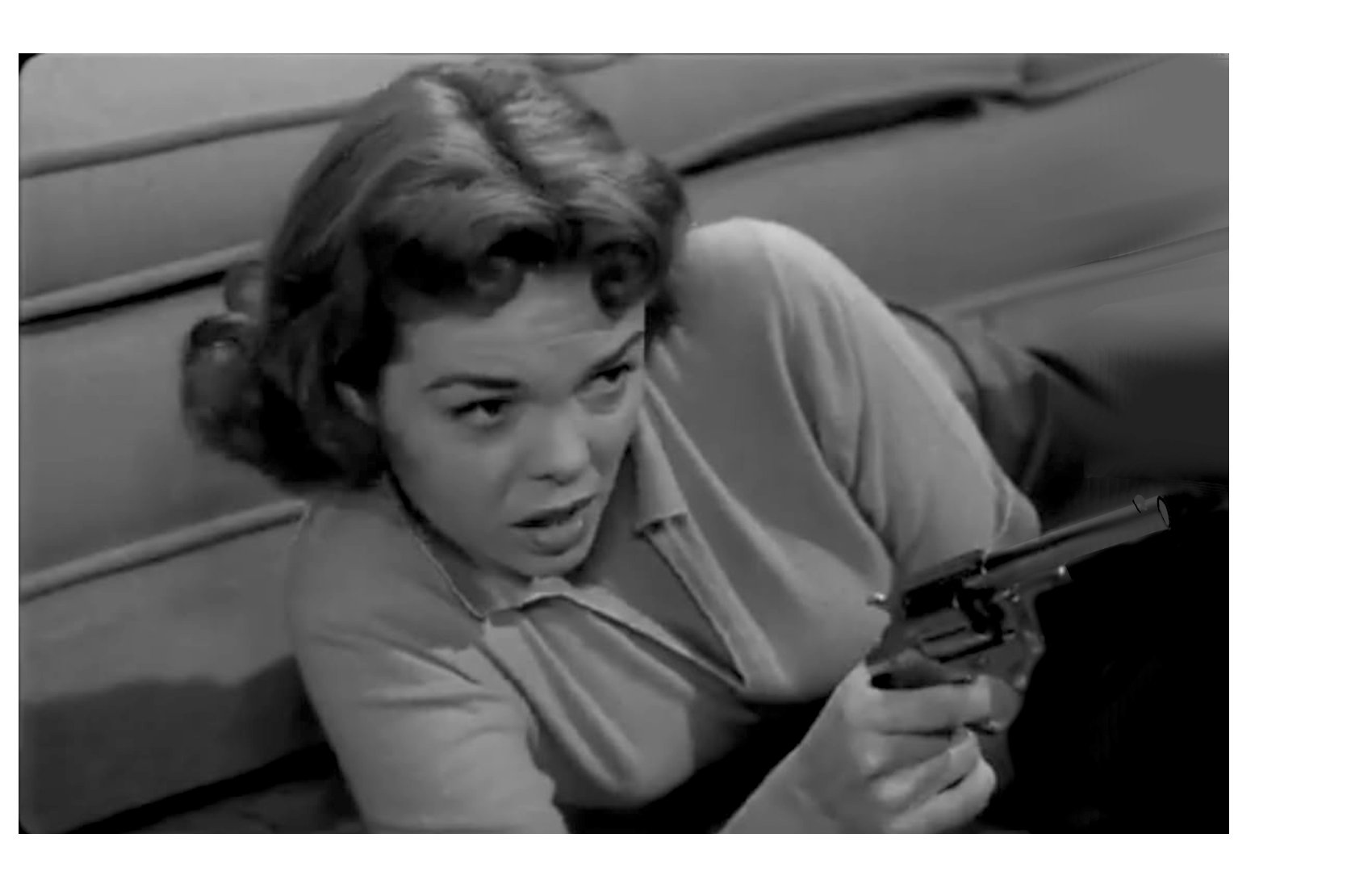
“And we’ll have Guns! Guns! Guns! ’til your daddy takes the Uzi a-way!”
Just like Grace Kelly’s Amish bride in High Noon, Ellen eventually picks up a gun. “Your dead husband would want you to,” lectures fast-talking Tod when he insists that Pidge be allowed to play with guns. The message is that Ellen ought to start conforming, fighting Commies and sleeping with Tod right away. Don’t worry, the Bensons are good people — everybody but Grandpa gets their moment behind a gun trigger. The ending makes use of a newfangled piece of ’50s household technology … a TV set!
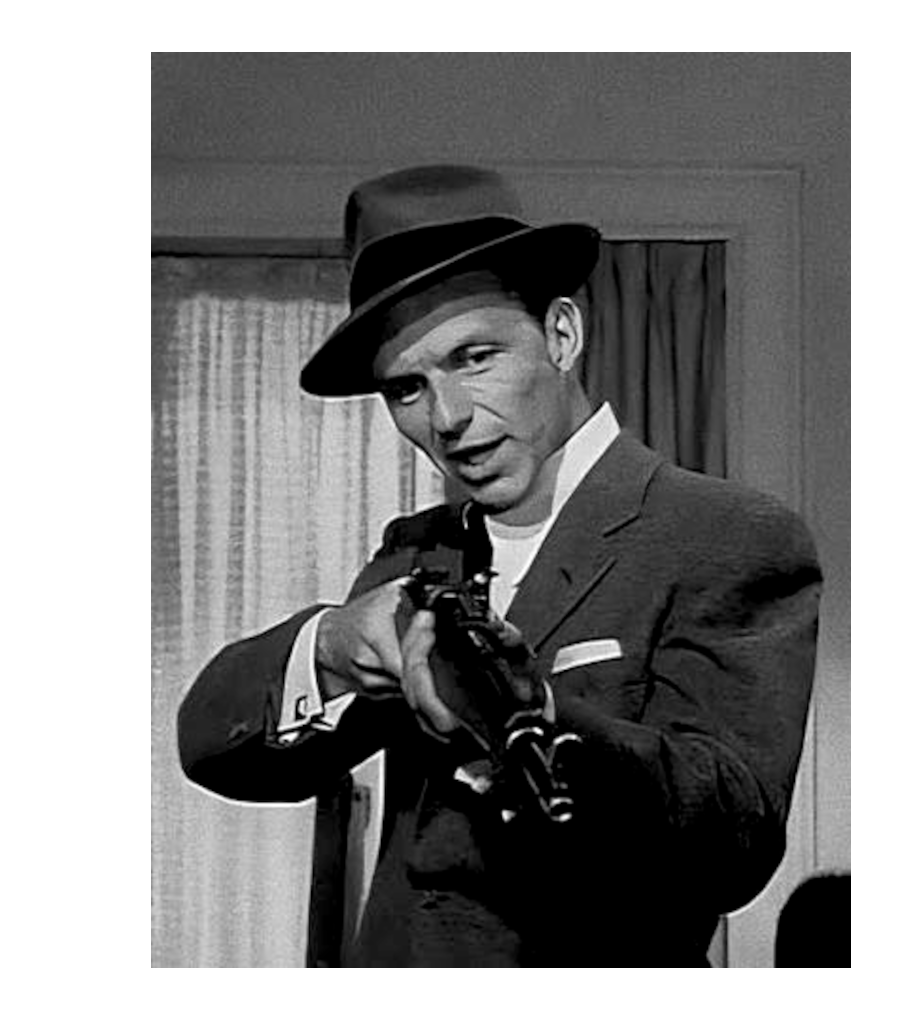
This is a good picture for Frank Sinatra, who still has the lean, hungry look of his earlier career days. The short haircut reveals the scars behind his ears, reportedly from a rough birth delivery. Put together as a follow-up to Sinatra’s career breakthrough From Here to Eternity, by today’s standard Suddenly allows John Baron to chew the scenery too much. Baron repeatedly walks into big close-ups to deliver ponderous speeches directly to the camera. The relatively inexpensive show opens up what is really a one-set stage drama. Pages of dialogue could have been dropped from the screenplay.
The rest of the casting is fine, if a little obvious. Dependable pro Sterling Hayden has a way with lines that would be wooden in less charismatic hands. Nancy Gates (Comanche Station, Some Came Running) is always excellent, and almost sells the author’s thesis about females with ‘unhelpful’ ideas. James Gleason (Here Comes Mr. Jordan) and Willis Bouchey are true blue agents. John Baron’s number one henchman is Paul Frees, the king of the narrators.
Once upon a time, Presidential assassination was a touchy subject for the movies, almost unhealthy.
Was Suddenly the first Hollywood feature about a present-day attempt on the life of a serving President? Anthony Mann’s The Tall Target starred Dick Powell as an 1860s G-Man trying to protect Lincoln, but that had ninety years of history as a buffer. Suddenly imagines a conservative Republican president under threat by unnamed foreign enemies. The all-too-real 1960s Kennedy assassinations were of the opposite persuasion — domestic killers hitting liberal Democrats.
The weird thing is that Frank Sinatra made two more thrillers about killings committed with high-powered rifles. In 1962’s paranoid conspiracy tale The Manchurian Candidate, foreign Commies attempt to put their own operative in the White House. (Hmmm.) Urban legend has it that Sinatra, feeling somehow responsible for his friend Kennedy’s assassination, voluntarily removed Candidate from circulation. It was rumored that Suddenly was pulled as well. To set the record straight, Manchurian Candidate was withheld by producer Sinatra over financial differences with United Artists. Suddenly never really went away, it was just semi-abandoned to infrequent TV airings.
As further evidence against the ‘contrite Sinatra’ theory, in 1967 he starred in yet another movie about an assassin with a high-powered rifle, Sidney J. Furie’s The Naked Runner. When spies kidnap his son, Sinatra’s businessman is forced to carry out a killing on the German autobahn (shades of Fritz Lang’s Dr. Mabuse). The point is that Sinatra wasn’t morally opposed to stories exploiting deadly snipers, before or after the JFK assassination.
All the ad art for Suddenly uses an exclamation point on the main title, but the film itself does not. The film’s message is that we’d better watch out, as a subversive conspiracy could ‘suddenly’ pop up anywhere, even in the smallest of small towns. Bring back toy guns for kids!