

 Galatea Film’s 1958 Le fatiche di Ercole was such an immediate hit that a sequel was put into production almost immediately. The new star Steve Reeves launched himself into a flurry of features, five titles in 1959 alone. Galatea’s second followup backed Steve Reeves with a cast of Italian, French and German actors, and retained Mario Bava to contribute his rich lighting and clever visual effects. Co-produced by the big studio Titanus, the resulting mini-epic was released in the U.S. by MGM.
The big surprise was the hiring of the name director Jacques Tourneur, a major Hollywood talent. Despite his masterpieces Cat People, Out of the Past and Night of the Demon, the always-good Tourneur had by the late 1950s been working on cheaper program features and in TV.
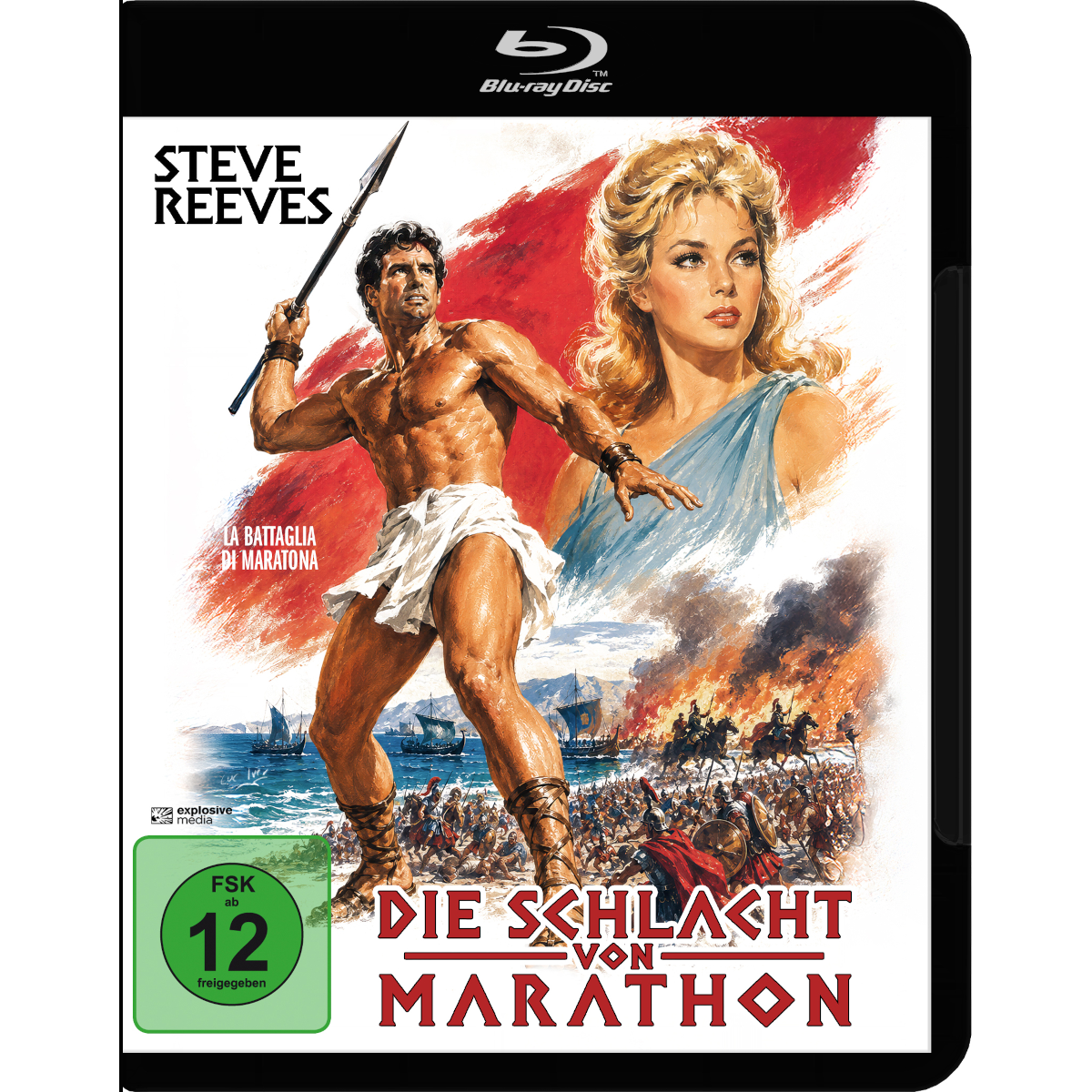
With Bava and Tourneur involved we couldn’t resist. The picture is The Giant of Marathon, aka La battaglia di Maratona, a peplum about Greeks fighting off Persians. It delivers everything that Steve Reeves fans want to see. It is a prominent title in a subgenre that until recently has been sorely neglected on video disc. Explosive Media’s Blu-ray is a fine restoration and encoding. It appears to be uncut. It comes with language choices of German, English and the original Italian. It is also Region Free.
The main screenwriter Ennio de Concini had terrific credits on his filmography… the Kirk Douglas Ulysses, King Vidor’s War and Peace, Antonioni’s Il grido and Pietro Germi’s The Facts of Murder. This picture is not particularly sophisticated.
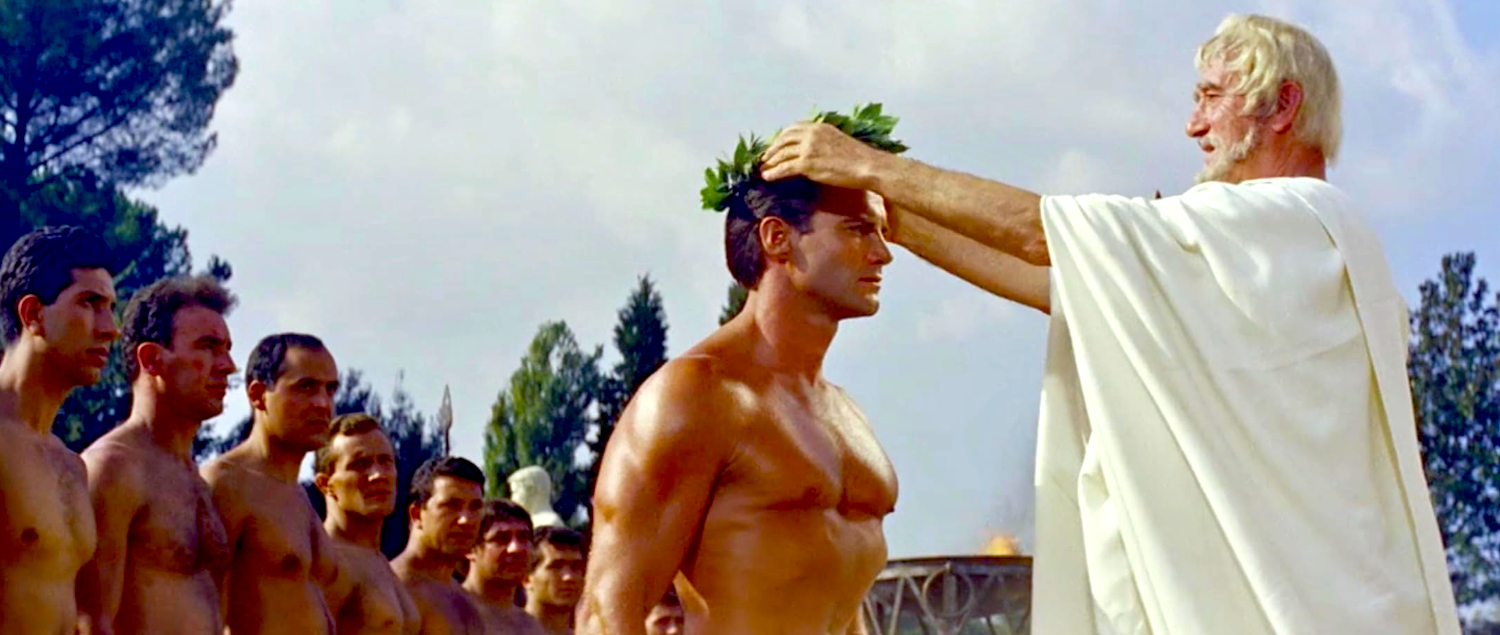
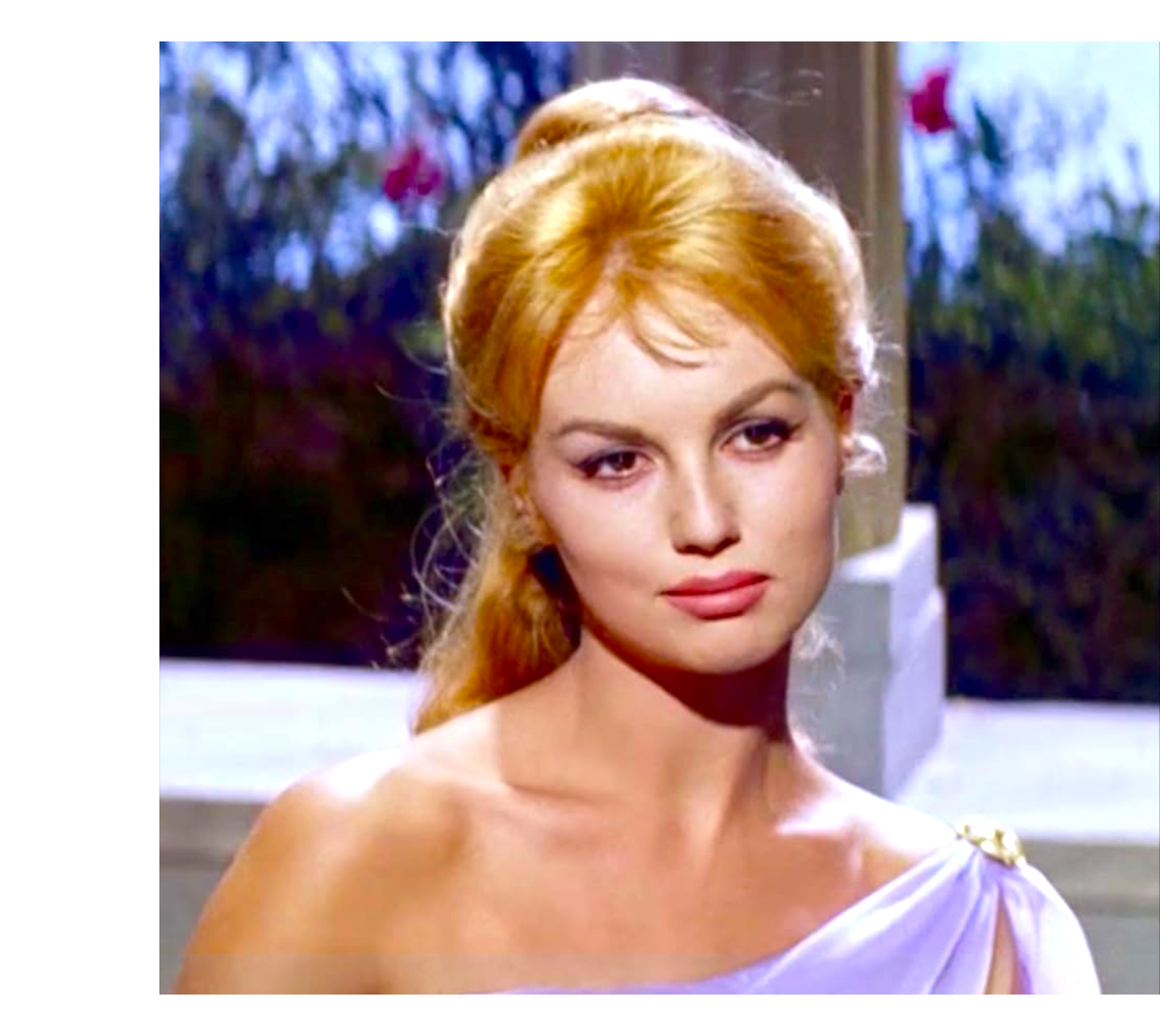
Steve Reeves is Philippides, an Athenian athlete who wins most of the prizes at the Olympics competition. As part of the royal guard, he is now so popular that he’s proclaimed its leader. Philippides bumps into the nubile young blonde Andromeda (Mylène Demongeot), who sends mixed signals — she likes him, but says they have no future together.
The ‘Phil and Andi’ romance dominates the first couple of reels. They don’t know that they are at the center of a diabolical plot to overthrow Athens, and with it, all of Greece. Andi’s father Creuses (Ivo Garrani) is part of a political faction with the unscrupulous Theocrates (Sergio Fantoni). Theo is also betrothed to Andi, which is why she’s acting so fickle with Phil. Unknown to all, Theo is a traitor through and through, working to help King Darius of Persia (Daniele Vargas) take Athens with no opposition. Theo plots to sucker Phil into supporting his conspiracy. He strong-arms the lovely temptress Karis (Daniela Rocca) into seducing the celebrity athlete on a late-night date. Phil resists Karis’s overtures, so Theo slaps and threatens her.
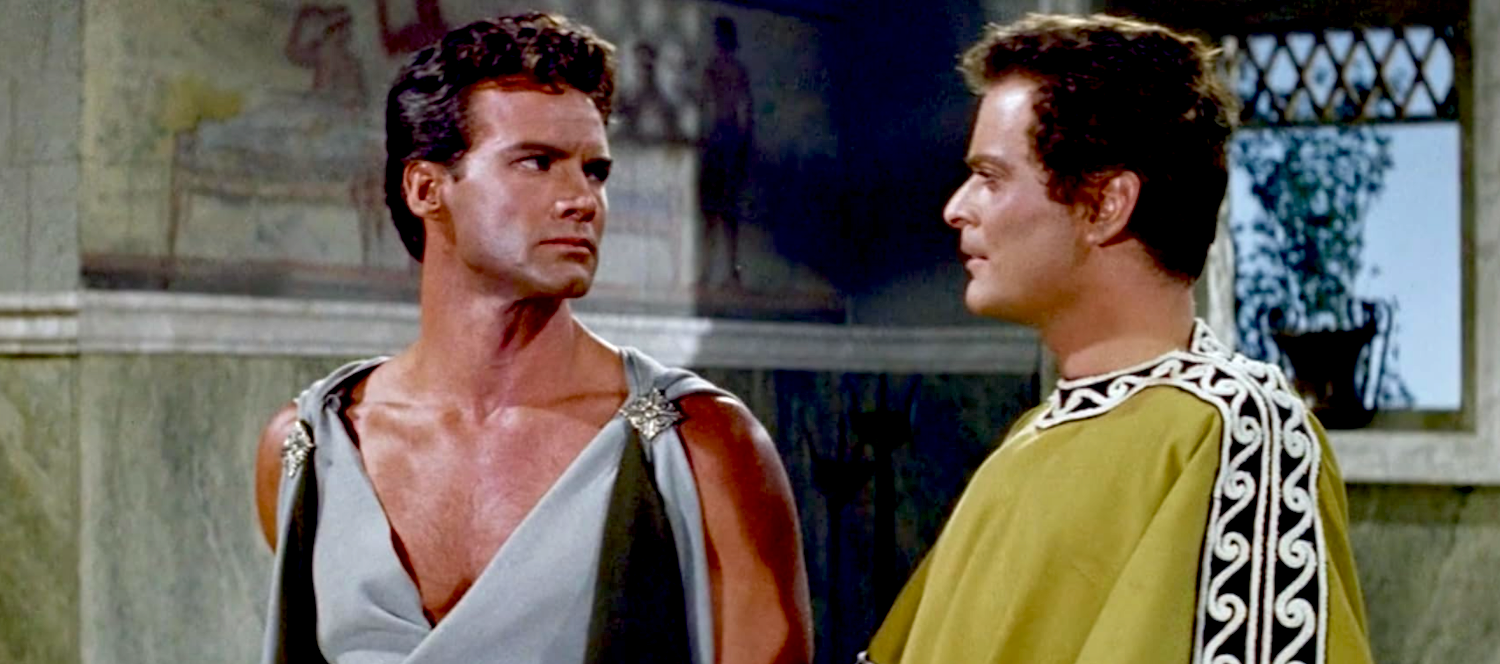
Yes, we’re beginning to suspect that Theocrates is not a very nice guy.
Theo then offers Phil a sick deal — if he supports Theo’s politics, he’ll step aside and let Phil have Andi. Phil smells a rat and concludes that Andi was part of the deception. He walks out on everything, returning to his farm.
All of this is of course a preamble to a Persian invasion. Phil’s best bud in the royal guard is Militades (Alberto Lupo). With the Persians advancing on Greece, Militades calls Phil back to full service as an emissary to Sparta, to persuade the neighbor city-state to align with Athens to repulse the attack. Meanwhile, Theo gives up on trying to assassinate Phil and changes sides, joining Darius’s approaching forces. When the battle is engaged at Marathon, Phil becomes the designated messenger to run the 26 miles back to Santa Catalina Athens to deliver a crucial message. History is made. It’s nothing like the legend of Marathon, which reportedly named its hero runner ‘Pheidippides.’
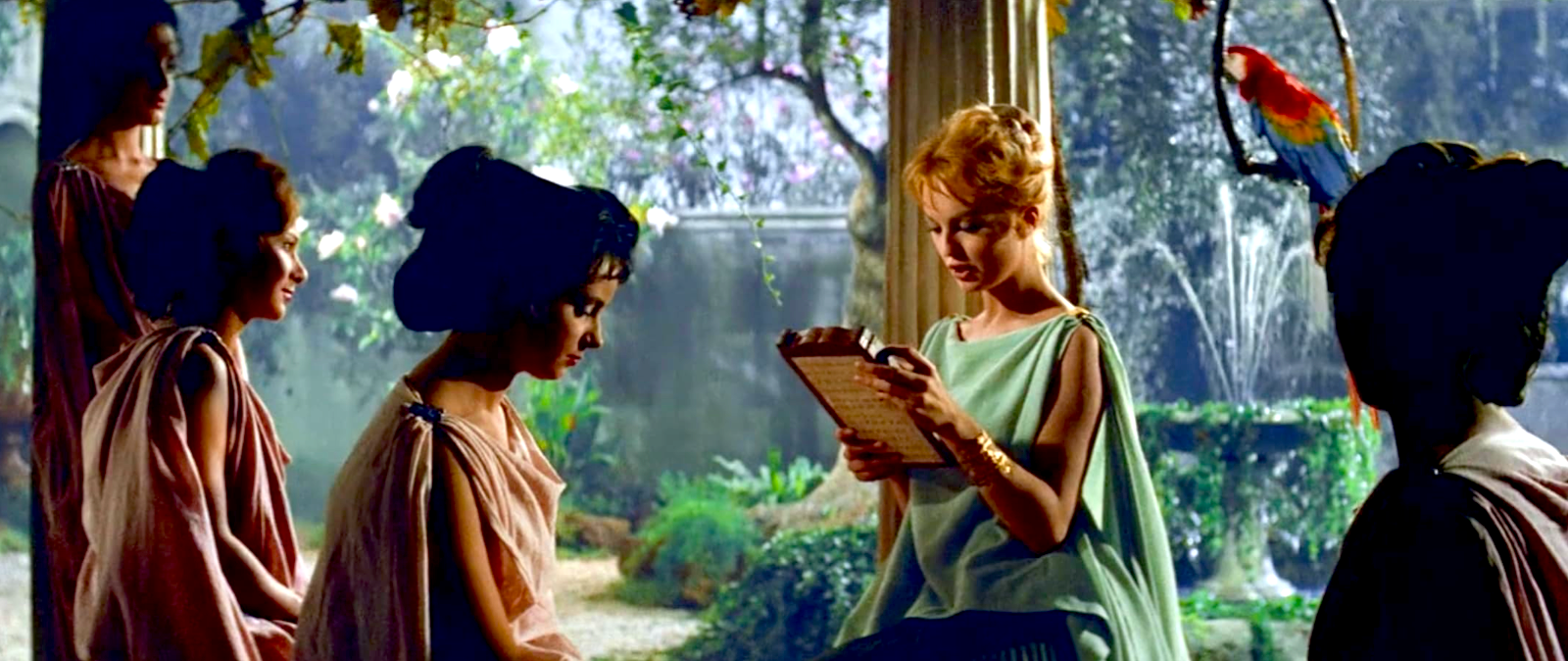
The Giant of Marathon has a clear-enough narrative throughline. The soap opera antics of the first half just dissolve in the second half. Mylène Demongeot’s Andromeda is a pouty but sweet heroine and makes a good match for Reeves’ Philippides. The straight-arrow patriot takes all he sees at face value and has little patience for Theocrates’ scheming or even Andromeda’s evasions.
From whence came the love for Steve Reeves?
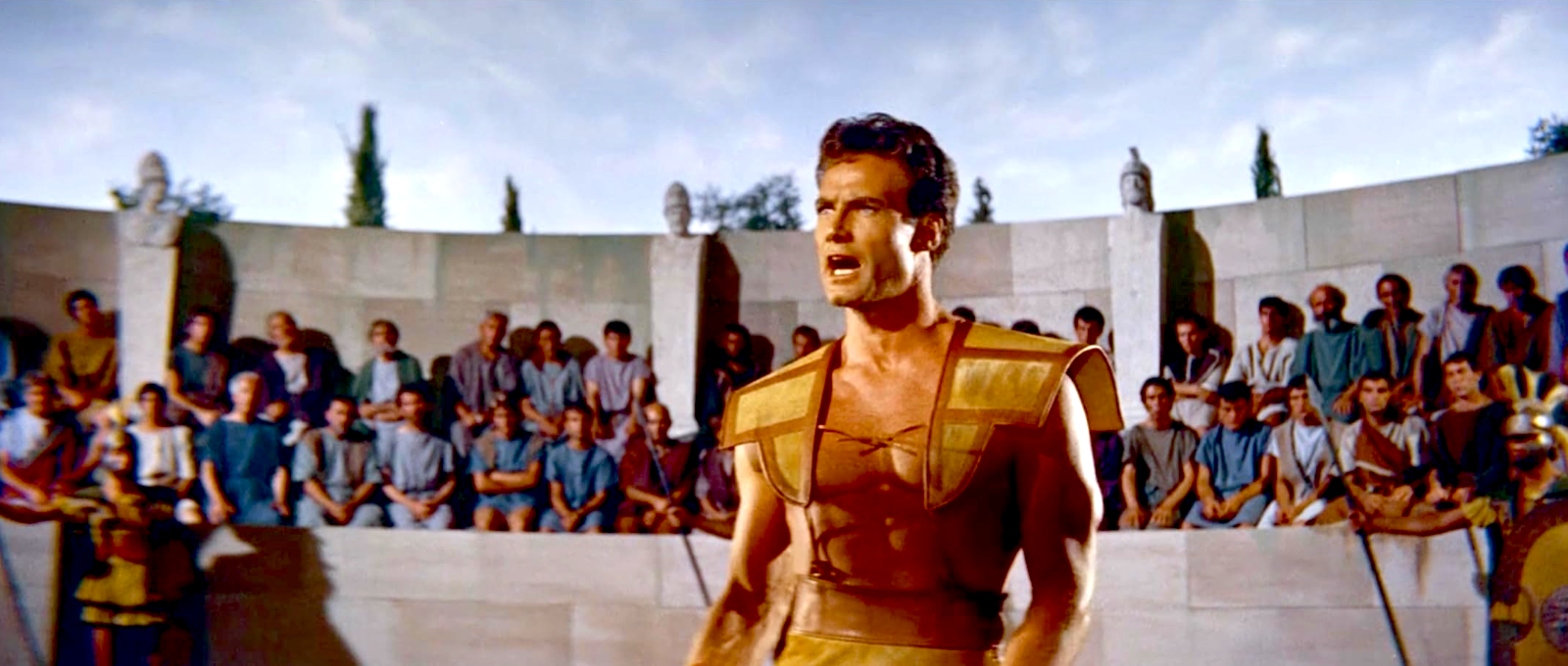
Star Steve Reeves is the movie’s reason to be. As he’s technically a stiff actor, it needs to be explained how important he was to us sheltered ’50s brats. Faced with a complicated adult world, we gravitated toward the naïve ethical clarity of entertainments like TV’s The Adventures of Superman. Hercules, Tarzan and The Lone Ranger were all movie matinee favorites. When they made their heroic moves kid audiences cheered in unison — we all felt united on the side of right and might. No matter what the character, Reeves walked with the same pace and interacted the same way, smiling at the good guys and frowning at the villains. He posed with Sylva Koscina and Sylvia Lopez, who hung on his arm (or leg) as if his muscles were the source of all security and happiness. Reeves’ Hercules followed a simple pattern: the bad guys could drug him, but when he came back to full consciousness, watch out. The whole point of powerful natural heroes like this is that they made us insecure young boys FEEL INVINCIBLE. We can dream, can’t we?
In this tale Reeves is just an honorable athlete, patriot and good citizen who does his duty. Well done, Phil dude.
Giant of Marathon has a renewed appeal for fans of Italian fantasy. The combo of director Jacques Tourneur and director-cameraman Mario Bava gets us ready for a masterpiece, but the show remains an attractive sword ‘n’ sandal attraction and little more. The supreme stylist Tourneur apparently walked into a cookie-cutter production that gave him no room to shape anything. Either that, or he took the Italian job for the paycheck and wasn’t heavily engaged. A second director is not actually credited on the Italian print on this disc. We’re told that Mario Bava took over the direction when Tourneur’s contract deadline ran out. Bava’s incredible efficiency may have been what put him in good stead with Galatea … where he made his own official directorial debut the next year.
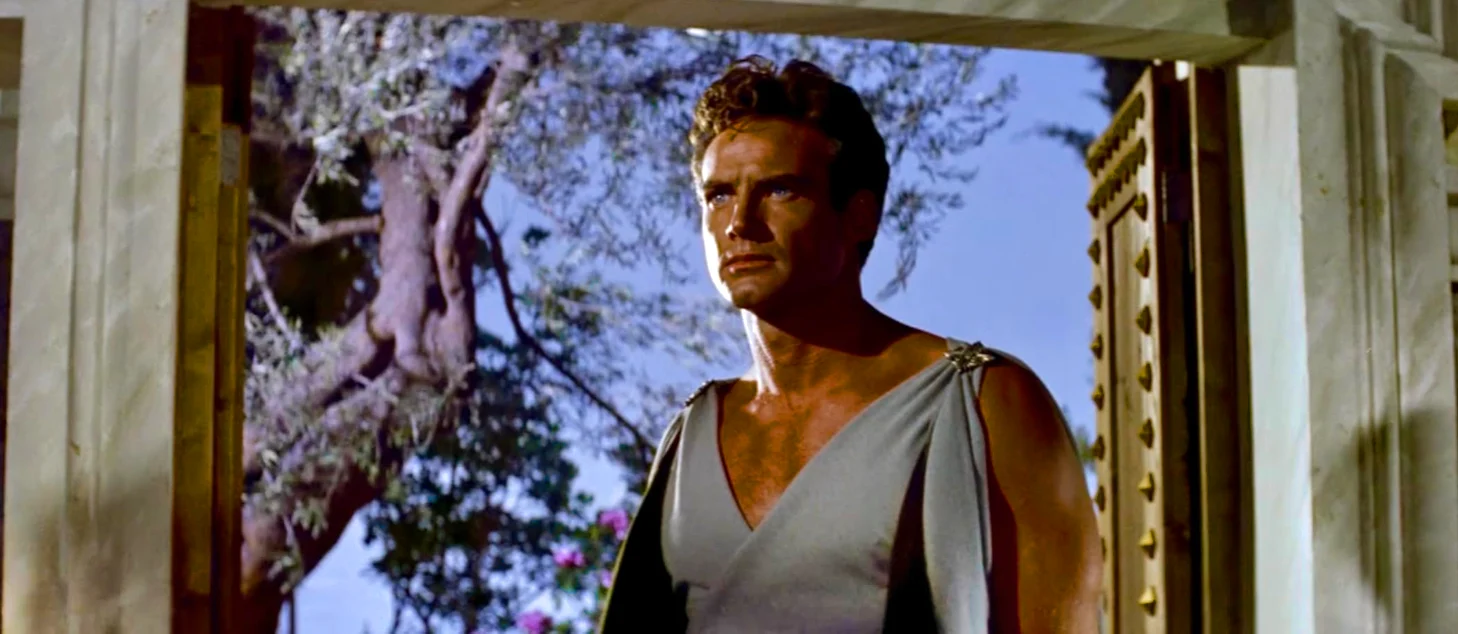
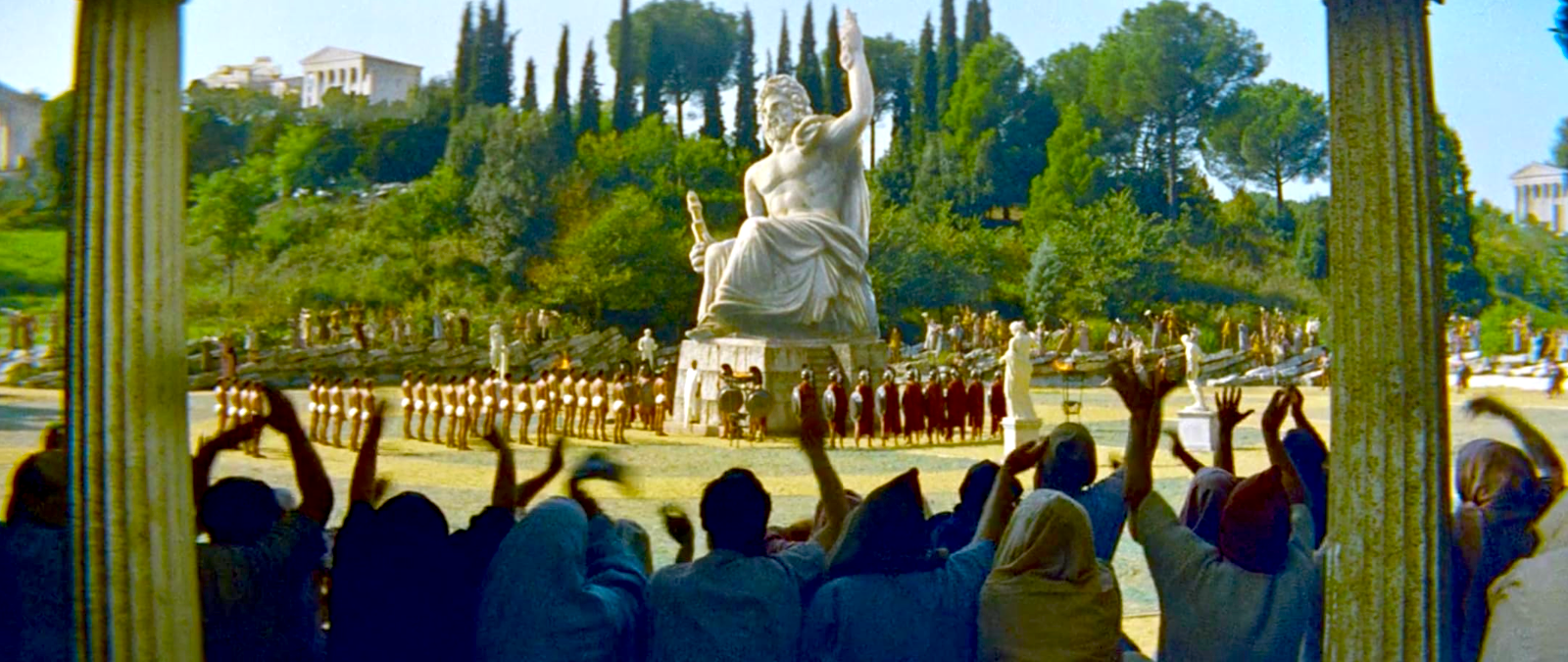
The direction is simple and elegant, fully exploiting the film’s sets, or in this case, partial sets made to look like full constructions through judicious camera angles. Bava adds Greek buildings to shots by hanging glass paintings (or maybe photographs on the glass) that blend perfectly with the background. One amazing shot stands Daniele Vargas’s Darius in front of a massed army, backed by a long line of war towers. It’s a really good illusion, given away by a slight reflection of Vargas’s helmet in the glass.
Far simpler is a trick that allows Philippides to make an impressive jump up on a rock, when fighting off several assassins. Bava runs the camera in reverse and has Reeves jump down. (Actually, if his Dyaliscope camera exposed the entire space between both sets of film sprockets, Bava could have achieved the same effect by mounting the camera upside down and then cutting the shot into the workprint backwards.) No reverse motor, no optical duping.
The most ambitious effect is a multi-pass split screen. The production looks to have had perhaps 100-150 costumed extras for the battle scenes. Bava multiplies one army column into 3 or 4 with an illusion that barely holds up. The camera used isn’t pin-registered, and the various panels weave atop one another. A light ‘squiggle’ in the sky could be where two mattes overlapped, overexposing the ‘join.’ This kind of shaky composite explains why Bava stayed away from optical lab work when he could. The only way to control camera tricks is to do everything yourself.
The production uses too many tricks to make a limited number of extras look like thousands. Breaking up the conflict into details only goes so far, after audiences have seen ‘casts of thousands’ in bigger epics. The action blocking is not bad, although animal rights activists will not be happy to see horses being tripped mid-battle. The battle of Marathon is a fairly decent effort, unlike Roger Corman’s joke of a battle scene in his later Atlas. Fifteen guys with spears can’t become an army no matter what one does.
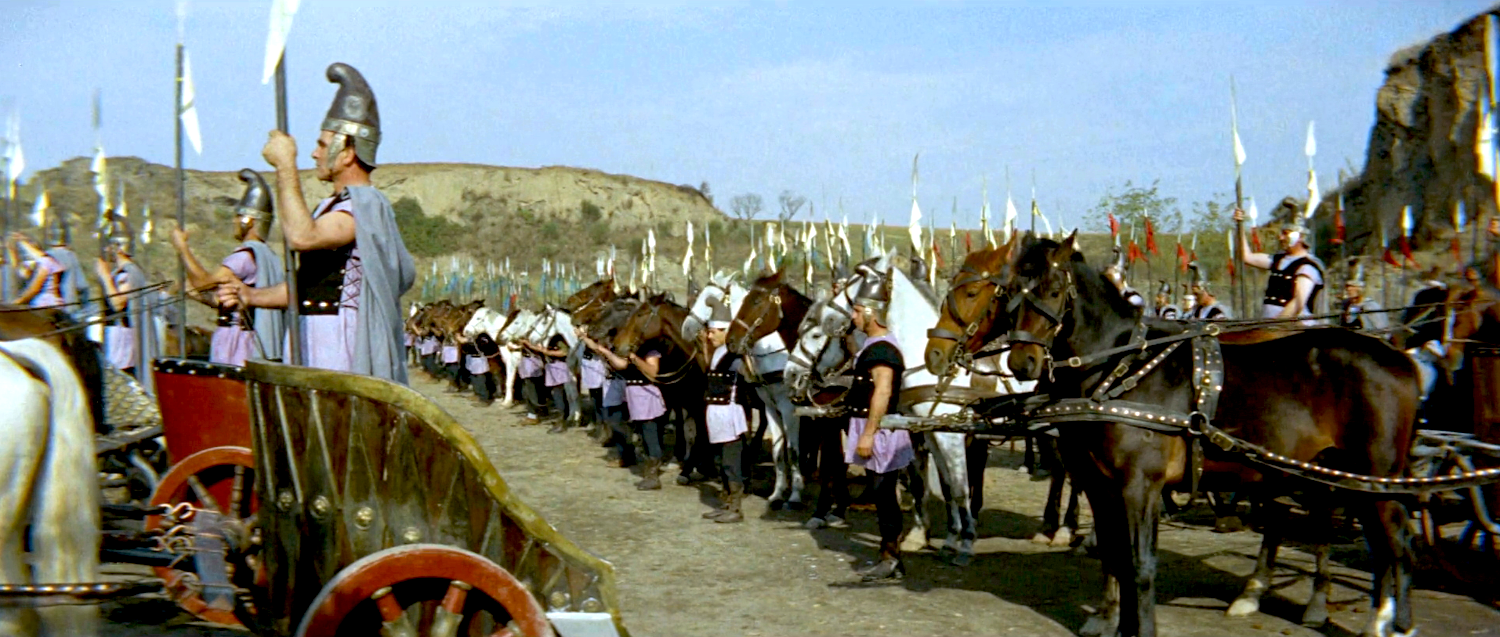
What we don’t see is the kind of sensitive character interactions that made most everything by Jacques Tourneur seem special. This story is a straight-on pageant, with characters that are vivid, yet still cut-outs.
Steve Reeves has charisma. Mylène Demongeot’s career had received a boost from her smallish supporting part in Otto Preminger’s Bonjour Tristesse. Her perky presence reminds us a bit of Brigitte Bardot.
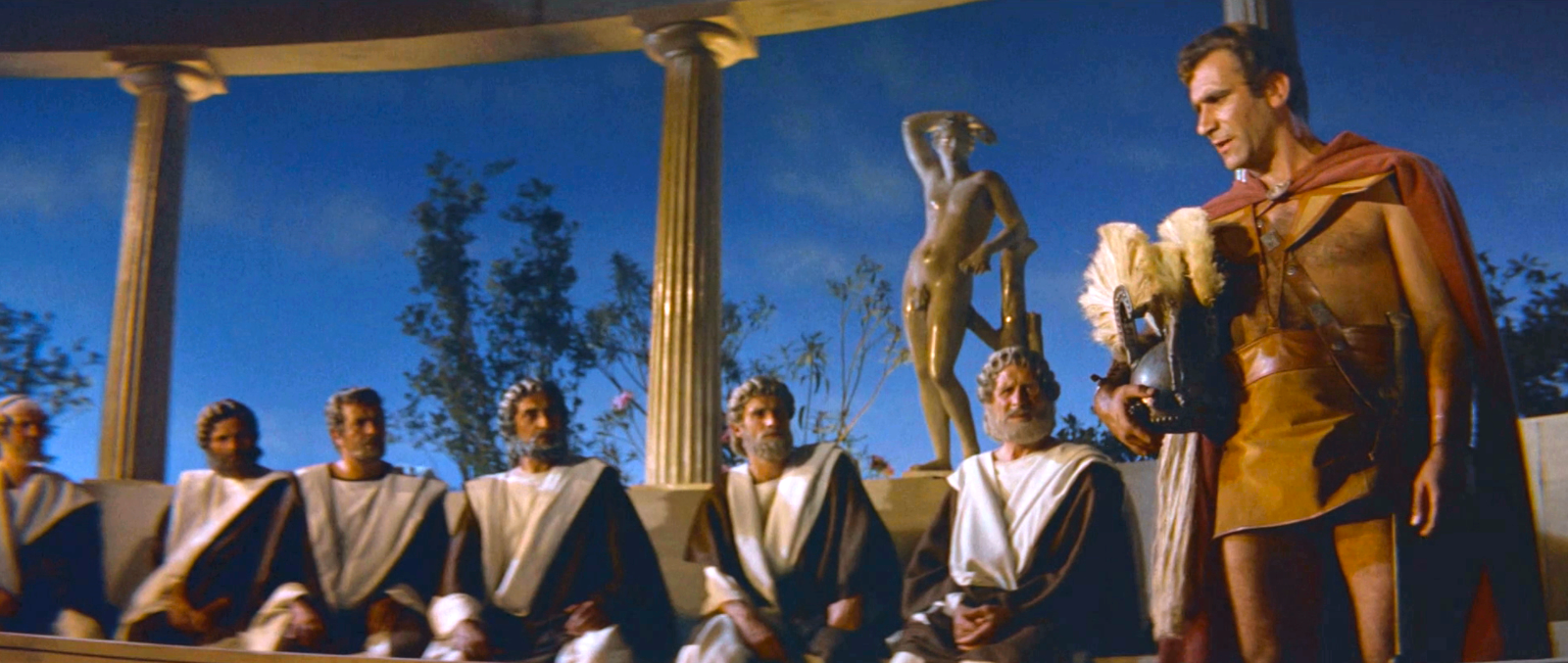
Several other players will be familiar to fans of Euro-fantastique: Sergio Fantoni and Alberto Lupo would proceed to the bizarre Seddok,l’erede di Satana. Ivo Garrani went directly to Bava’s La maschera del demonio. Daniele Vargas and Daniela Rocca starred the same year in Bava/Freda’s Caltiki il mostro immortale, as did Gérard Herter, who has only a couple of brief moments as King Darius’s aide de camp.
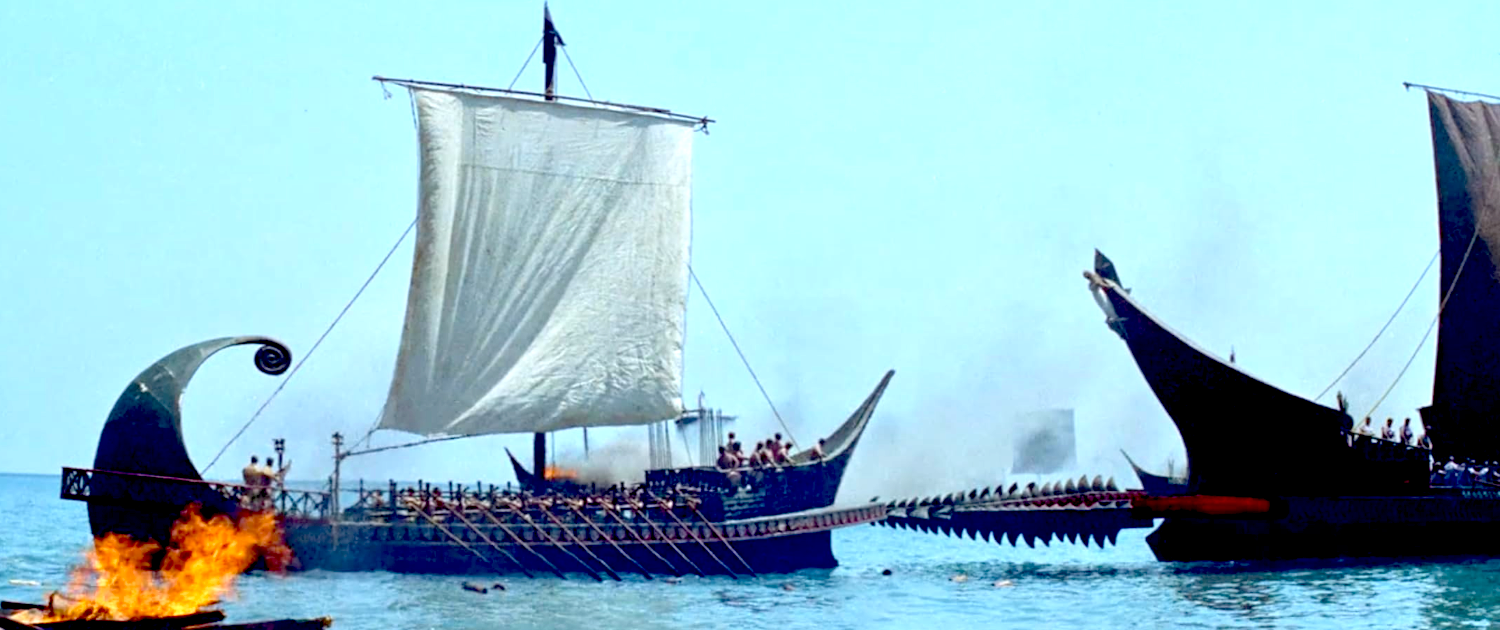
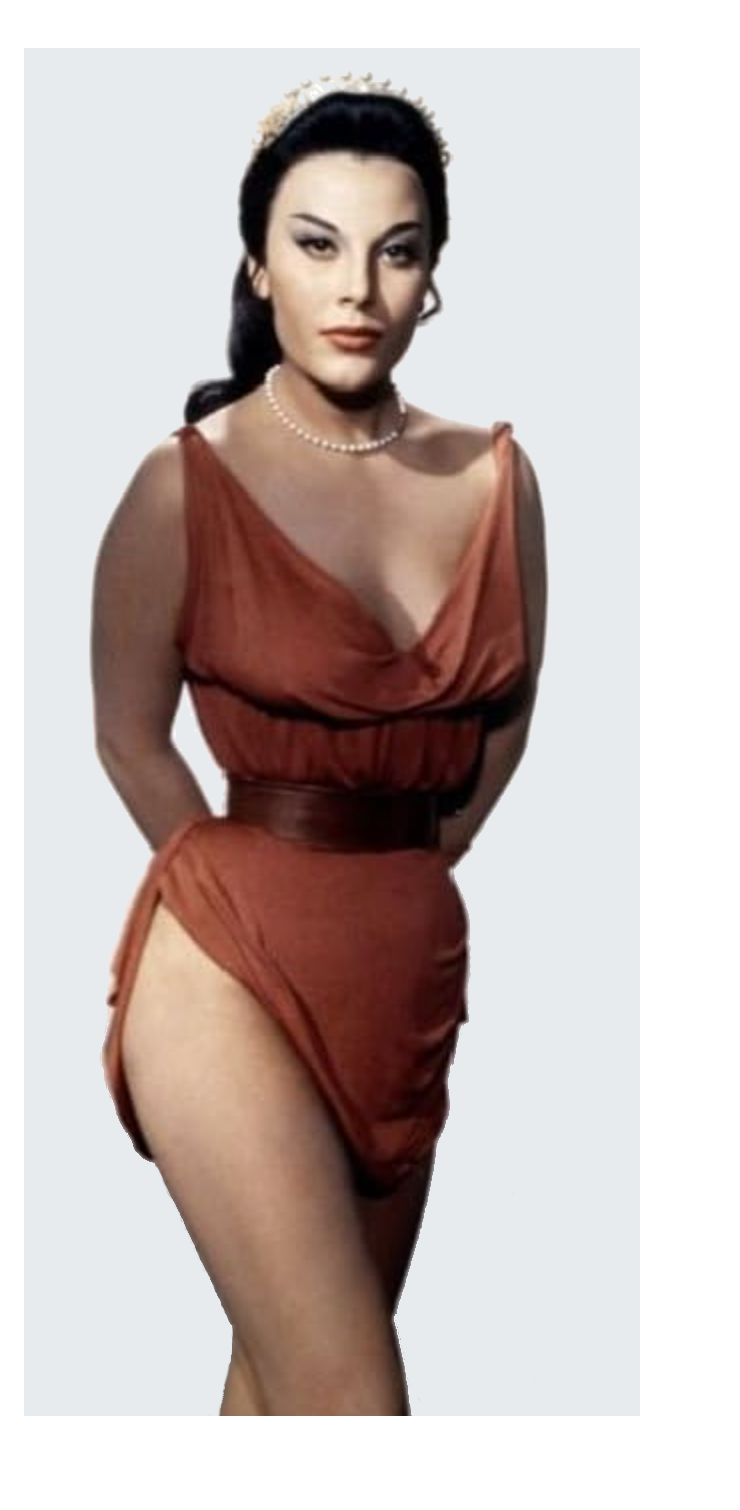 But the picture looks stunning overall. Bava's clever foreground-painting tricks are remarkable, even if all of them don't hold up. In one symmetrical setup with two pillars (several images above) the pillar on the right keeps wiggling.
 by most Italian sword 'n' sandal features. Techniscope was also used for most of Sergio Leone's westerns, but not his own Peplum epic

These don’t hit as hard as the Euro-westerns, but as a warm-up to them they’re fascinating and good fun.