
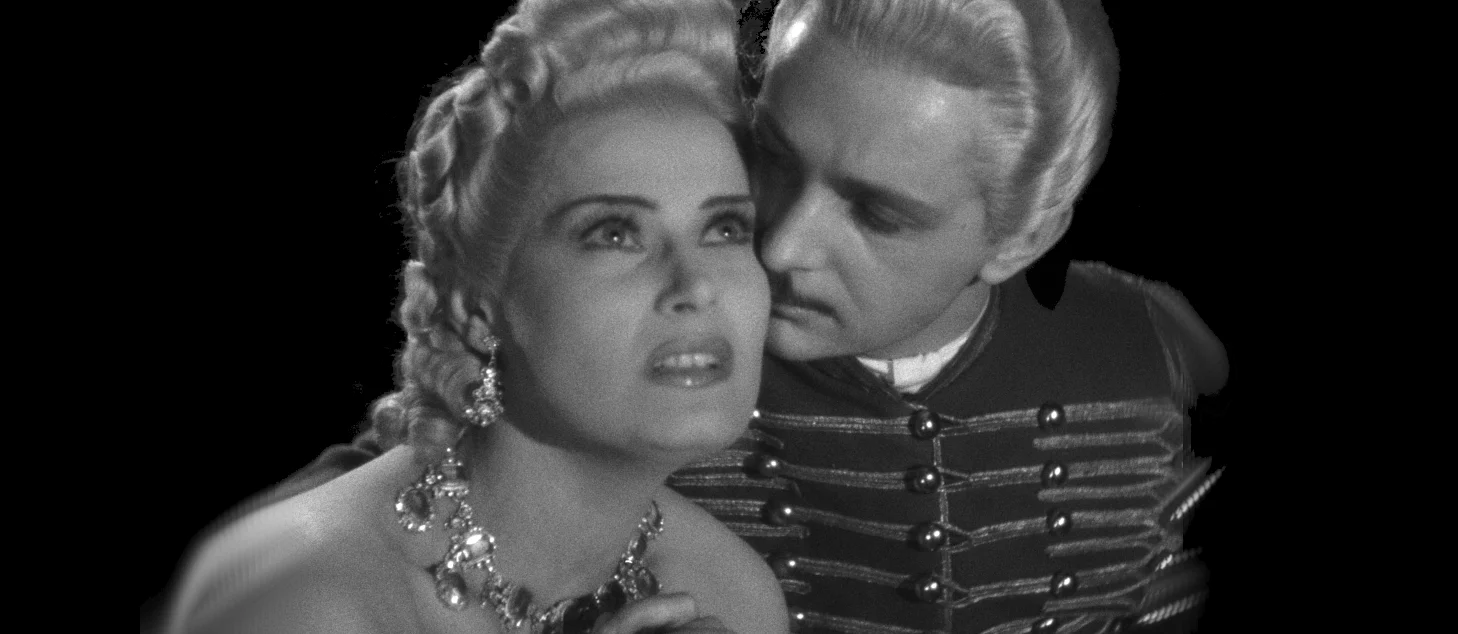
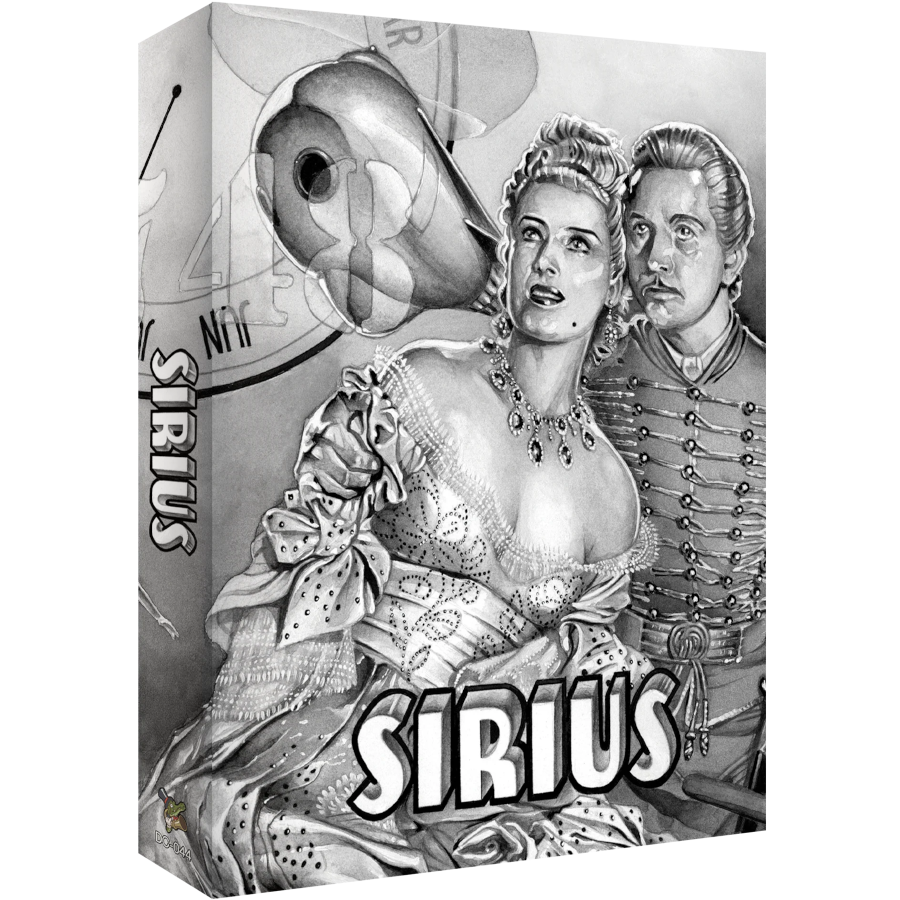

This show would have been big news to a Sci-fi historian like the late Bill Warren, who liked to debate ‘firsts’ in science-fiction films. It’s a Nazi-era Hungarian fantasy with a plot more or less like A Connecticut Yankee in King Arthur’s Court, except that the time travel aspect isn’t neccessarily explained as a dream. In the first reel we meet a professor who has invented a flying time machine, a Sci-fi concoction with controls very much like those of the famous George Pal movie made almost 20 years later. Wait a minute …. wasn’t producer-director George Pal of Hungarian origin … ?
And we call ourselves Sci-fi experts.
Fanciful time travel / time displacement stories have been around forever, and they didn’t start with Rip Van Winkle. Most of us Hollywood-centric Sci-fi fans know zilch about the healthy tradition of fantastic films from other countries. The experts that inform us about the weird happenings in Dezső Ákos Hamza’s Sirius assign great import to the presence of a scientific invention to go back in time. The film references sophisticated Time Travel conundrums much earlier than we expect them, such as the grandfather paradox and even the butterfly effect. And it was made in 1942 Hungary, in the middle of a war.
“Don’t speak in anachronisms!” is the only advice given our time traveler. The experts tell us that Ferenc Herczeg’s source book was published a year before H.G. Wells’ The Time Machine. Does the original book also include a mechanical time machine with all the Wellsian bells and whistles?
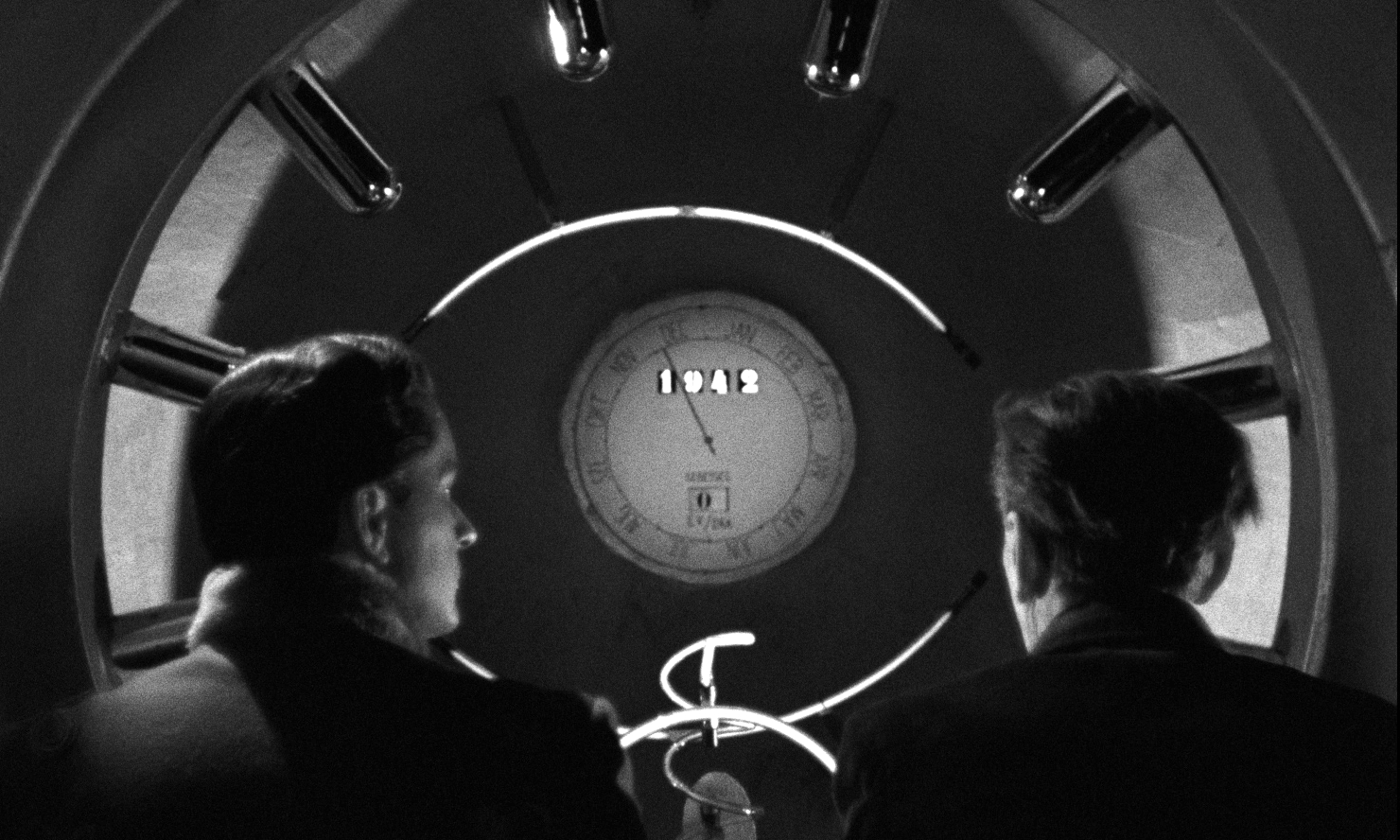
We aren’t surprised to discover that the ‘technical’ time machine occupies only a few minutes of screen time. It services a featherweight romantic-historical tale that must have been intended to give Hungarian audiences a break from wartime tensions. For all the impact on the story, our hero could have traveled back to the 1700s through a non-technical means. The real focus of the story is our 1942 hero’s reactions to the customs and politics of 1748 … the theme applauds Hungarian nationalism apart from Austro-Hungarian empirical control. Essayist Rolf Giesen compares Sirius to the German Baron Munchausen — both escape thorny contemporary issues (and censor scrutiny) with a retreat to the quaint, safe past.
This is a story?
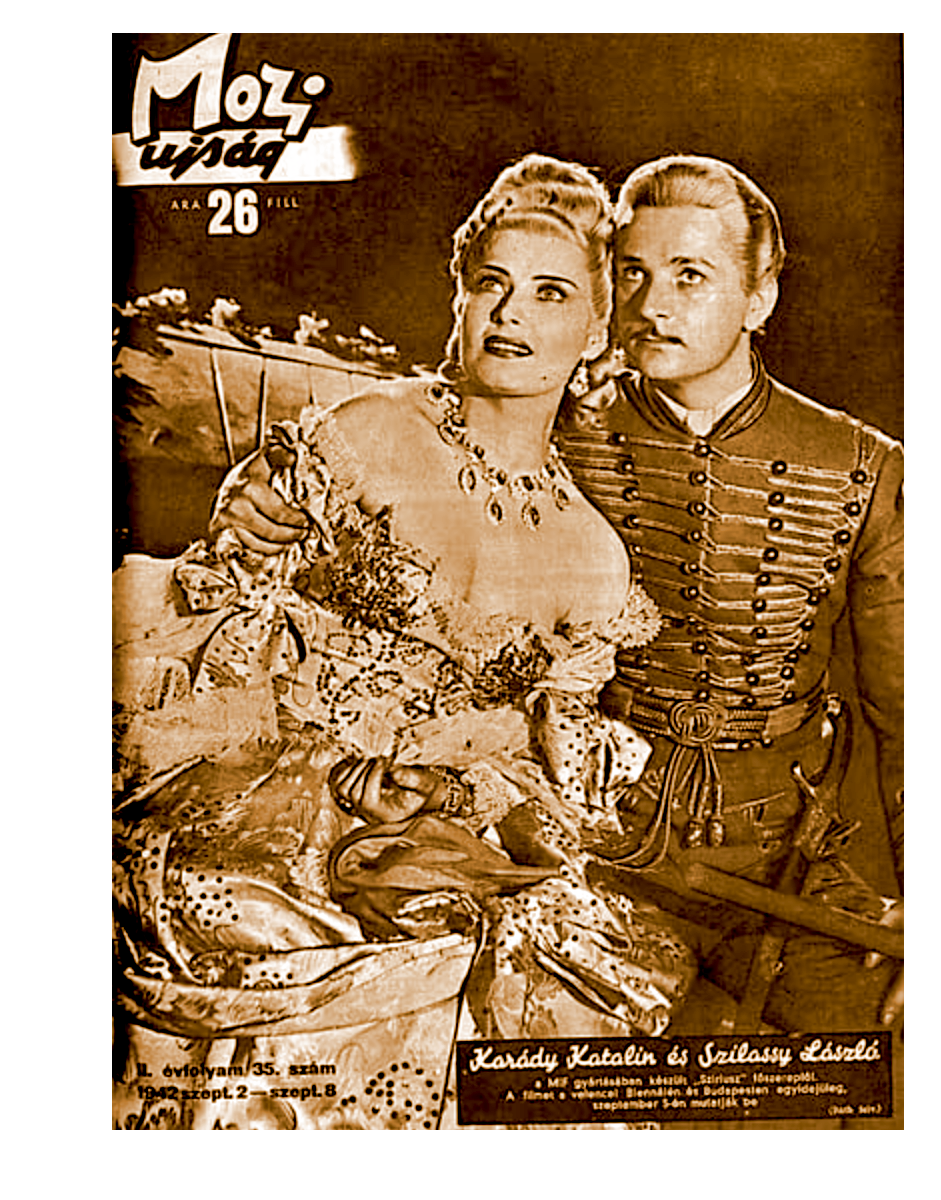
It’s a conspicuously normal 1942 in Budapest, where the playboy adventurer Count Akos Tibor (László Szilassy) shows up at an elite fancy costume party. Like the Famous Captain Spaulding, he’s just back from bagging Tigers (in Vietnam?) and spends the night chatting up the prettiest woman at the party. As he’s got some serious debt issues, Akos stays in costume to answer a newspaper ad for a rich woman looking for a husband. He doesn’t meet her, and only hears her singing. The woman’s father, a Professor Sergius (Elemér Baló), who guarantees that his daughter is both rich and beautiful. Realizing that he’s talking to the wild adventurer Akos Tibor, the Professor talks Akos into taking a spin on his new time travel vehicle.
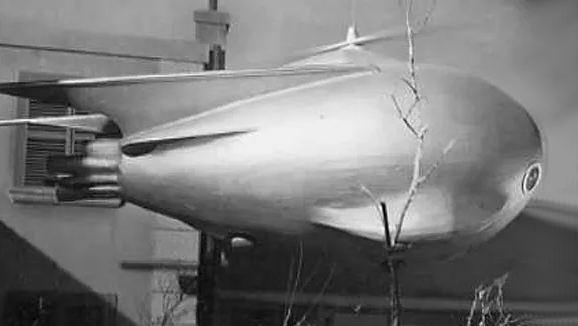
The Professor’s time machine is actually a flying craft that looks very much alike a rocket from a Buck Rogers or Flash Gordon serial. Akos gives it a name, Sirius. It attains an extremely fast speed — the speed of light? The Professor could go anywhere he wants, but instead plans to orbit the Earth opposite the direction of its rotation, crossing time zones at high speed. A mouthful of Hungarian technobabble says that doing so will propel the craft into the past. It’s the same irrational means by which Superman turns back time to resurrect Lois Lane in the first Christopher Reeve epic.
Sirius performs perfectly, and the Professor drops Akos off in 1748, with a reminder to rendezvous for the return trip rendezvous in just a few hours. Akos hitches a ride with some Viennese performers on their way to entertain the Empress Theresa. He’s instantly attracted to singer Rosina Beppo (star Katalin Karády), and she takes a shine to him as well. She wears a powdered wig, something Akos must borrow when he reaches the palace. The preposterous coincidences continue as part of the story’s active satire of court conventions. Akos has already seen a big portrait of Rosina, in the Professor’s home. How convenient that he’s still in period dress from that costume party!
In the after-dinner show Rosina performs among some scantily-clad ballet dancers. The star of the troupe is the male soprano Cafarelli (Sándor Pethes), whose voice is dubbed by a female singer. More light comedy relief is supplied by Rosina’s lusty maid, who makes an amorous after-hours appointment with a coach driver.
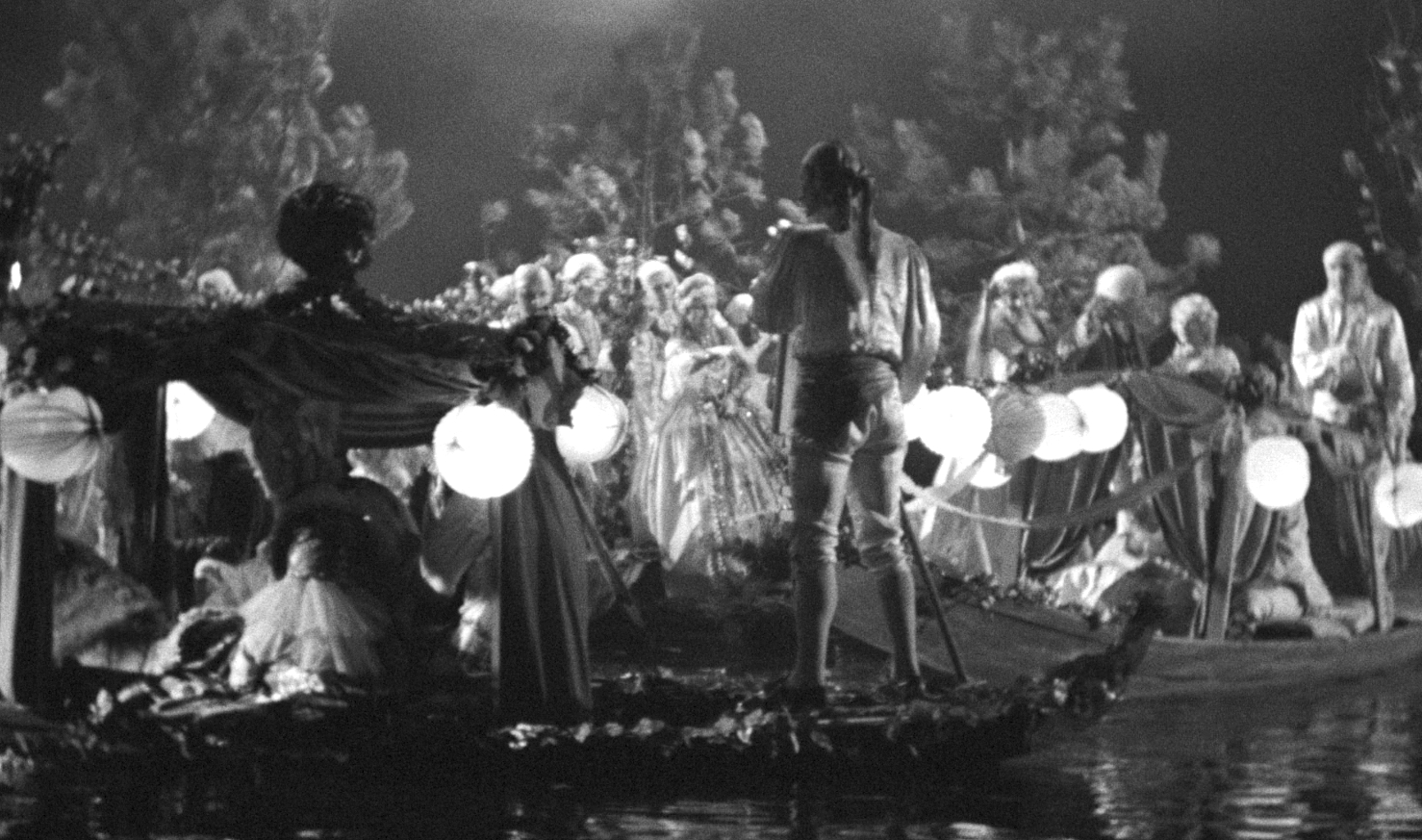
Akos blends right in with the snobby aristos of 1748, that include a couple of famous poets. He critiques their looks, their attitudes and their scandals, as he knows all about their failings from the history books. Akos is particularly critical of his own great-great grandfather, Gergely Tibor (Lajos Rajczy), who he feels ‘let the family down.’ The other guests admire Akos’ outspoken bravado, and mostly ignore his insults. When he wants to put somebody down, he quotes Balzac and others, texts not yet written or published. He seems protected by a kind of Hungarian charisma.
Akos ignores the Professor’s warnings to avoid anachronistic speech, but it doesn’t make much of a difference. Rosina ignores his talk about the 20th century, and the snooty nobles write him off as a braggart from an uncouth corner of Hungary. Neither does Akos worry about getting back to the landing area in time to rendezvous with Sirius. He several times announces his intentions of staying in the past, to live happily ever after with Rosina. Akos really tempts fate when he allows people to see him light a cigarette with a friction matchstick. Mass-produced cigarettes and matchsticks didn’t show up until well into the 19th century.
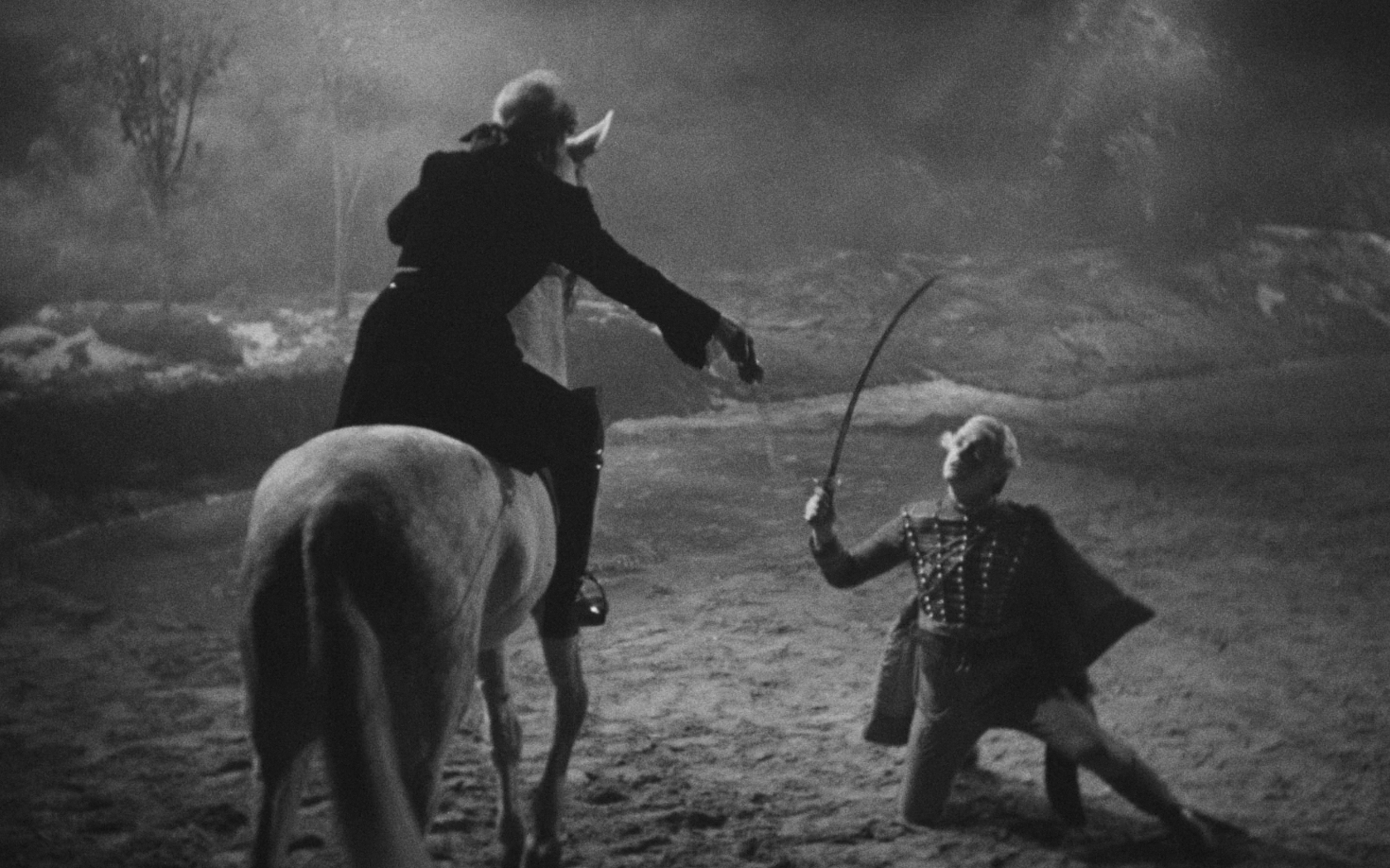
The personal conflict comes when Akos clashes with his uncouth ancestor Gergely. The mustachioed Magyar has gambled away the family fortune. He is also harassing Rosina, promising to help her career in exchange for sexual favors. When that fails, Gergely resorts to a direct rape attempt. This leads to the finale, a duel with swords.
As it turns out, the inconsistencies and absurdities of Akos’ adventure are partly explained by a rather drawn-out epilogue, which contains the expected ‘film blanc’ harmonies across the centuries. Akos’ romantic problem is resolved with a kiss.
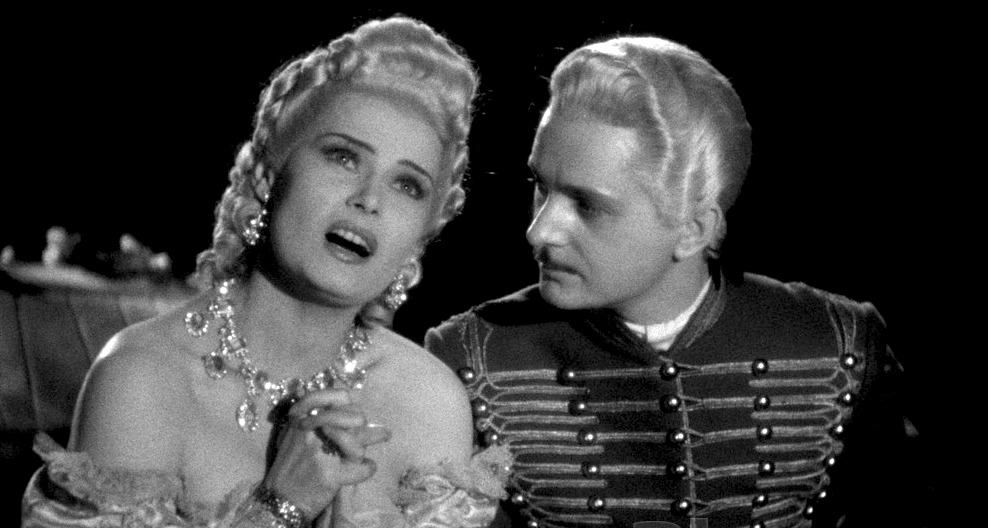
It’s hard to believe that Sirius was filmed in the middle of a war, when Hungary was producing war materiel for the Nazis and sending thousands of soldiers to the Russian front. The lavish production was clearly positioned to project a sense of national stability. A couple of scenes were filmed on city streets, but everything else uses large studio sets, with a formal ball, two or three ornate ballet numbers, and a grand dinner with 50 place settings. The handsome László Szilassy is a somewhat arrogant hero, which we guess was taken as a positive Hungarian quality. Katalin Karády is a statuesque chanteuse, an honorable woman in a somewhat decadent society. The direction of Dezső Ákos Hamza is stately but imaginative. The only disappointing scene is the weak sword duel, which looks a little disorganized — the editor can’t quite make it work.
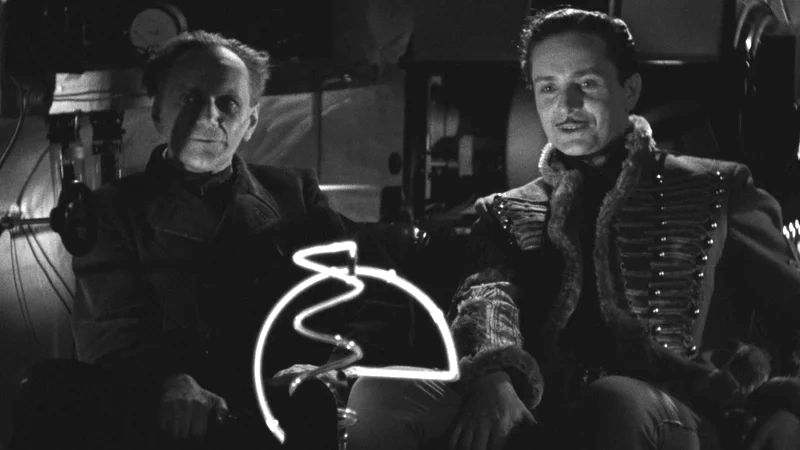
The special effects enlist a full-scale mockup of the airship Sirius, which lands like a helicopter using a funny rotor up top. Its nicely-designed interior features a lighted control panel with a helpful chronometer to spell out the present date. To guide the ship, the Professor puts his right hand on what looks like a plumbing spigot, and his left on a piece of glowing neon tubing. We see very little of the flight beyond the initial takeoff and landing.
As a romantic fantasy Sirius is slight but sincere, a bit of escapist fantasy fluff filmed in the middle of what must have been considerable national tension. To get our bearings on this ultra-rare movie, we wasted no time studying Deaf Crocodile’s essential extras. The lesson is that interesting film history goes far beyond the established pantheon of art film classics.
Fantastic to see that the film has finally got a proper release! Great write-up, as usual, and thanks for the shout-out!
You’re very welcome Janne. I read everything at your Scifist page. Only you had anything in print on Sirius.