
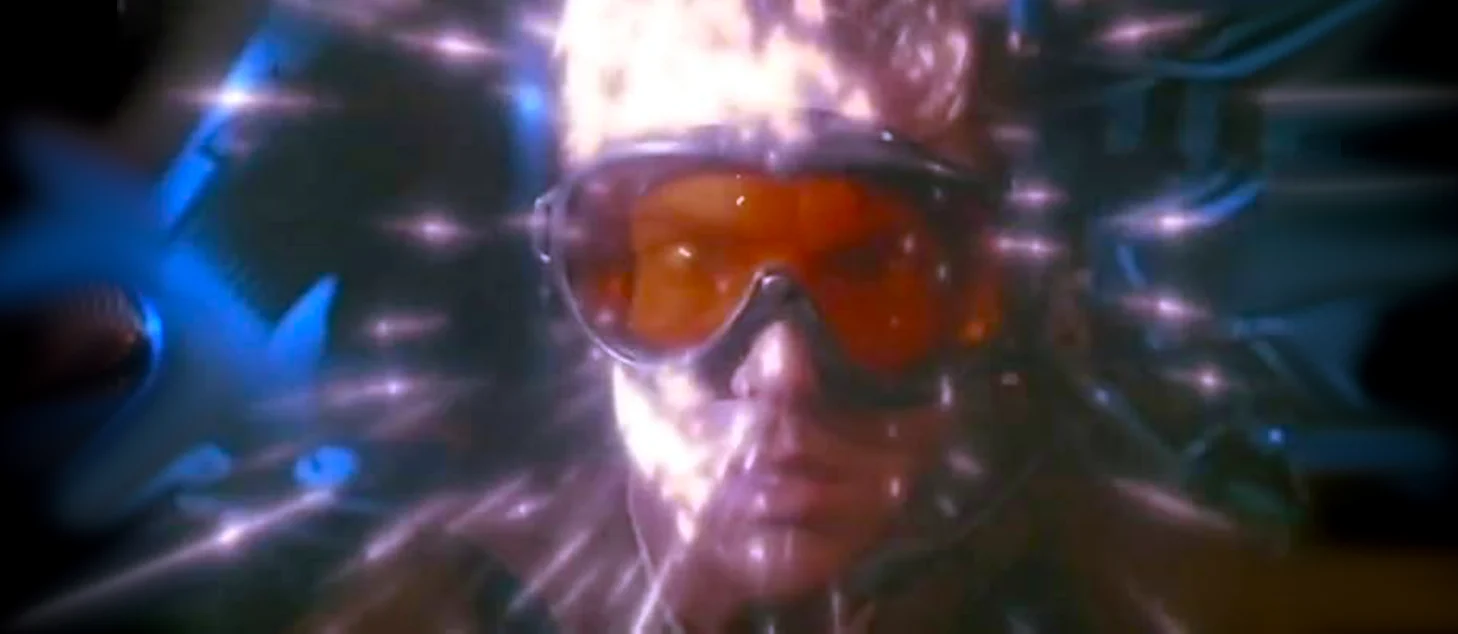
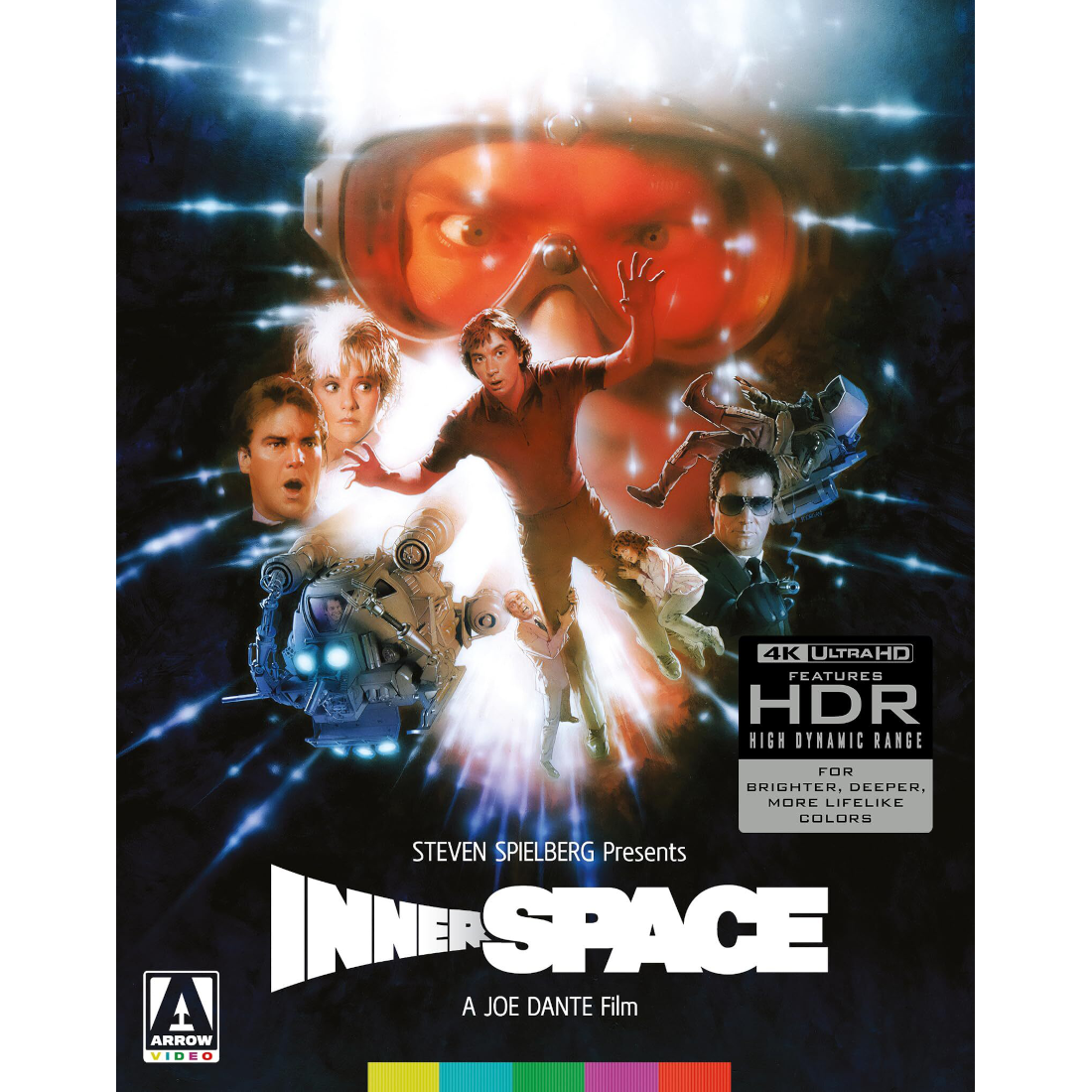

Joe Dante’s Innerspace is a highly entertaining and consistently funny Sci-fi comedy, that is also a showcase of what optical special effects could achieve immediately before the computers took over. In the filmmakers’ commentary track, director Dante describes his movie as being like a Jerry Lewis & Dean Martin comedy, “if you shrunk Dino to the size of a germ and injected him into Jerry’s bloodstream.” The result is funnier than any Martin-Lewis picture. Frank Tashlin would surely approve.
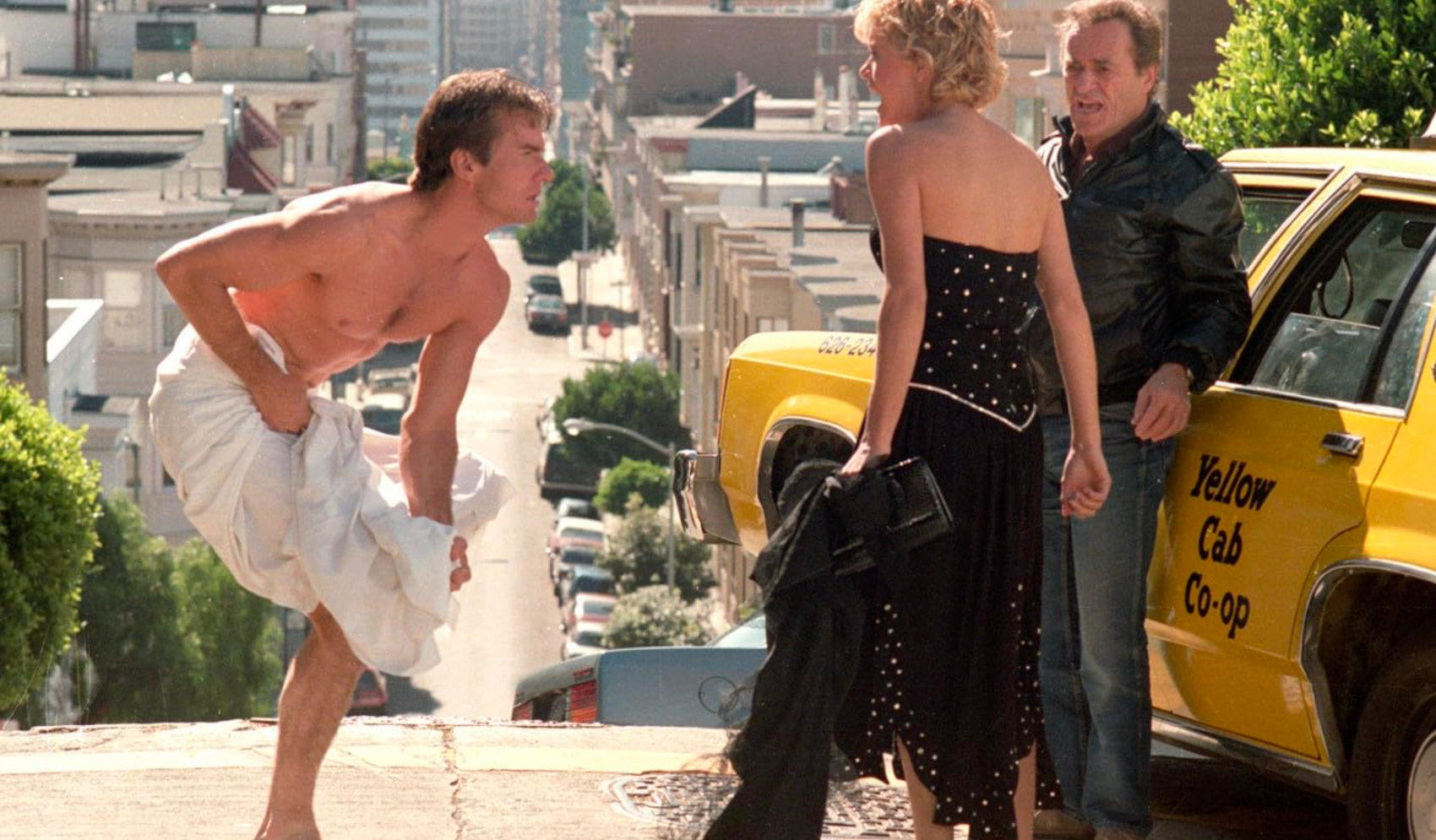
One big surprise is that Innerspace also plays like an old-fashioned ’30s screwball romance, with meet-cute scenes, witty dialogue and romantic relationships that depend on the charm of star personalities. Chip Proser and Jeffrey Boam’s screenplay comes up with some genuine star-making material. Troublemaking ex- astronaut Tuck Pendleton (Dennis Quaid) is the volunteer for an incredible, unbelievable, pretty-darn-impossible experiment. Along with a mini-submarine, he’s to be miniaturized and injected into the bloodstream of a lab rabbit. Unfortunately, when treacherous spies intervene, Tuck is hypo’ed into the reluctant rear of hypochondriac supermarket cashier Jack Putter (Martin Short). When Tuck initiates communications with Jack from inside, Jack interprets the disembodied voice as proof that he’s going crazy. With the spies in hot pursuit, Tuck must talk Jack into becoming a sci-fi secret agent, to set things right and get Tuck out in time to be reunited with his fiancée, Lydia Maxwell (Meg Ryan).
The raw concept might not sound very promising: Richard Fleischer’s Fantastic Voyage (1966) was a glossy, thoroughly-hyped Fox spectacle that all of us Junior High School kids thought was sophisticated until we grew up and saw it again. When filmmakers revisit old material like this, it’s frequently in the form of clunky remakes that miss the whole point of the original, like 1988’s The Blob, or 1986’s Invaders from Mars. Innerspace uses its incredible shrinking concept as a springboard, stretching its Sci-fi premise into a comedy hybrid with unlimited appeal.
Dante, Boam & Proser reinvent Fantastic Voyage as a wacky chase comedy. Dennis Quaid spends about nine-tenths of the film alone in the tiny submarine, floating inside the perfectly-cast Martin Short. Never was a comedian given a better showcase. Jack is a neurotic schlemiel who’s helpless in a crunch and hopeless with the woman he’d like in his life, his co-worker Wendy (the amusing Wendy Schaal). The bizarre things that happen to Jack Putter permit Short to retain audience allegiance no matter how silly he behaves. If the direction wasn’t so strong, the show might seem an excuse for Short’s comedy bits, such as a ridiculous dance he does for one scene. It is a GREAT ridiculous dance. Due to Short’s innate charm and lack of pretension, what could be gratuitous mugging is instead high comedy.
Joe Dante excels at investing beloved genres with a quirky eccentricity, as in The ‘Burbs. He can also make gleeful cynicism feel liberating (Gremlins). Dante is one of few filmmakers in the ’80s to get seriously sentimental with teenage characters, in Explorers and the later Matinee. Here he’s got adults that behave like children. Tuck Pendleton’s apartment with its robots and Warner cartoon toys is a little odd, but the fresh smile of his girlfriend, charmer Meg Ryan, tides us over. We’re told that this was Meg Ryan’s first big leading movie role: I believe this is also where actors Ryan and Quaid came together as a couple.
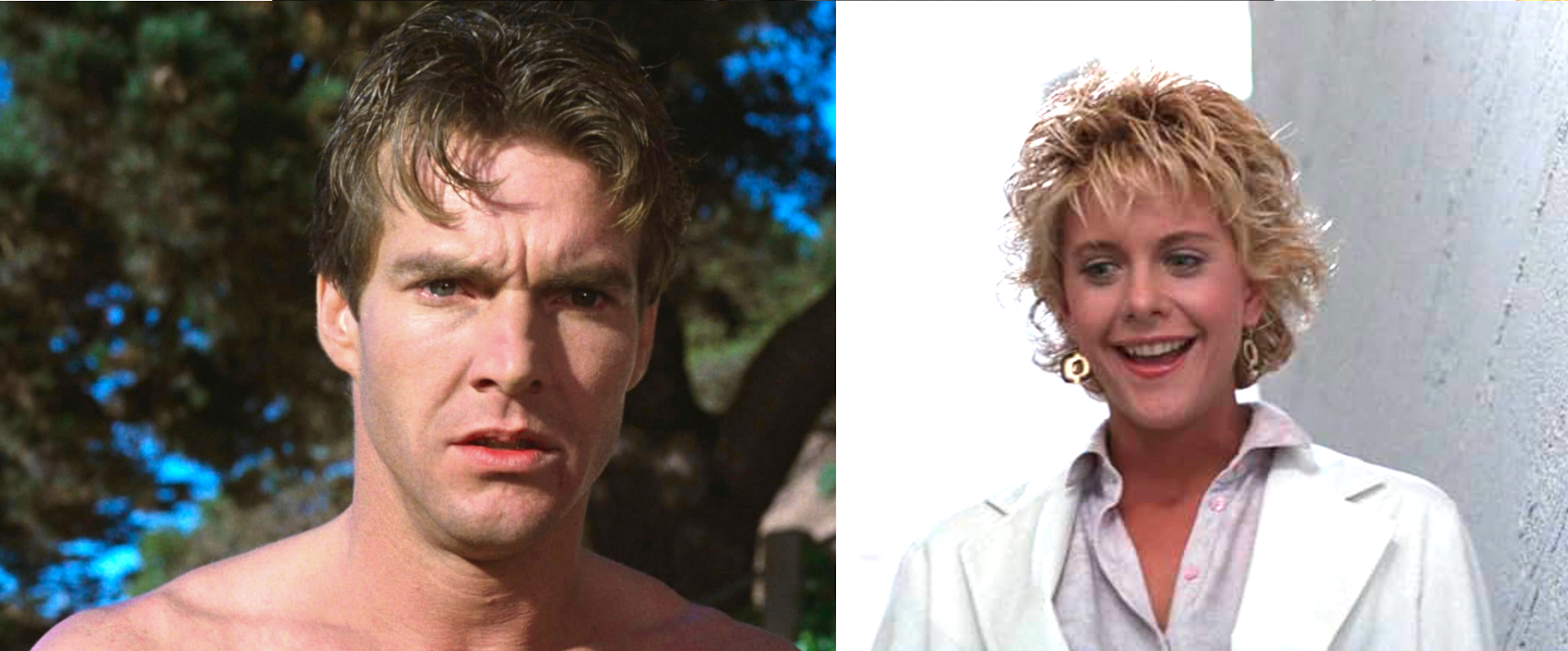
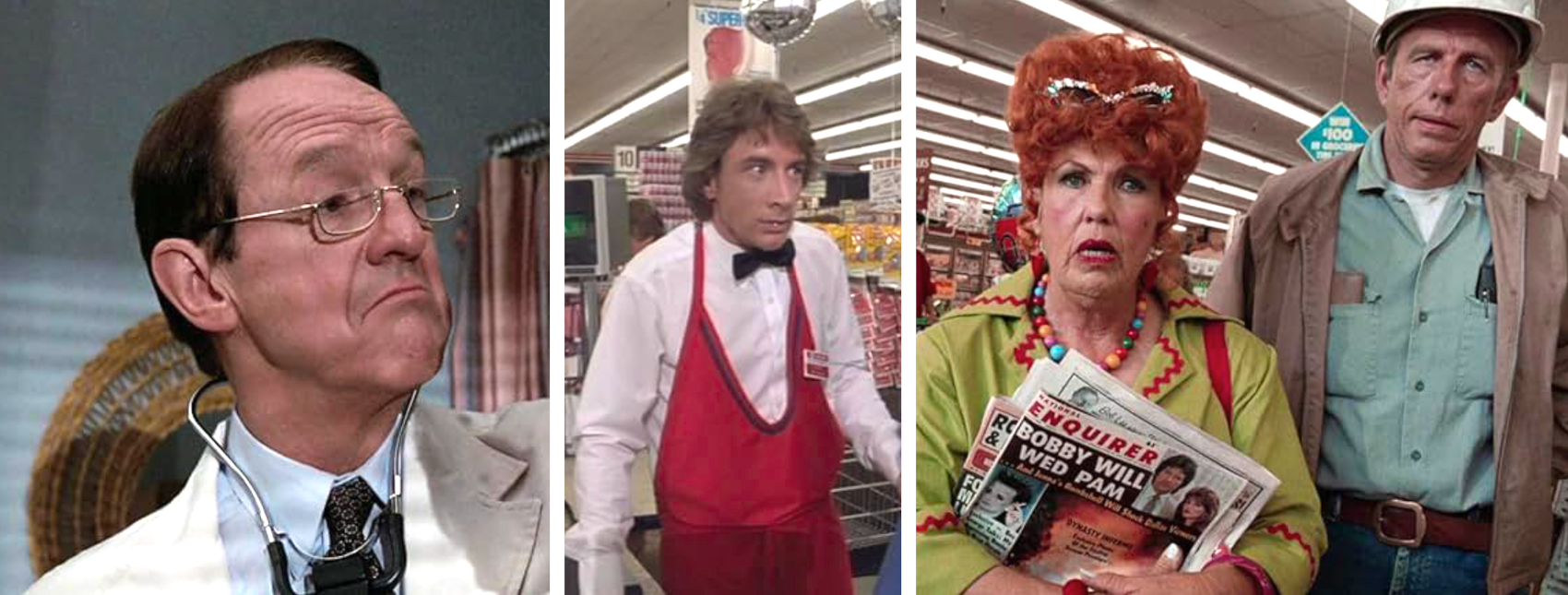
Dante’s storytelling skills get a real workout. Tuck thinks he’s tooling around the bloodstream of a rabbit, according to the hilarious road map graphic on his control panel. He instead finds himself in a symbiotic relationship with his very nervous host, Jack. Tuck taps into Putter’s inner ear to be able to hear what Jack hears, and finds he can talk to him as well. Jack at first thinks he’s possessed, but his doctor (William Schallert) patiently explains that infernal demons talk through the people they possess, not to them. When Tuck clamps a video receiver onto the optic nerve, Jack’s pantomimed reaction is so good that we wince with pain as well.
The spy chase nonsense is mined for every bit of comedy potential. Hypodermic-wielding mad doctors Kevin McCarthy and Fiona Lewis are aided by stoic Vernon Wells and Mid-Eastern ‘cowboy’ Robert Picardo. Joe Dante mixes actors from his favorite old monster movies with more contemporary faces in his stock company: Dick Miller, Orson Bean, Archie Hahn, Henry Gibson, Kenneth Tobey, the wonderful Kathleen Freeman, Joe Flaherty and Andrea Martin. Frequent Dante DP John Hora does very well as a straight-man scientist. Robert Picardo is of course a standout, making an unpromising-sounding character into a riot. In one gratuitous yet very successful gag, some excuse is made to make Jack look just like Picardo’s cowboy character. For a few minutes, Picardo is playing Martin Short’s role. The screwball antics remain at a high pitch.

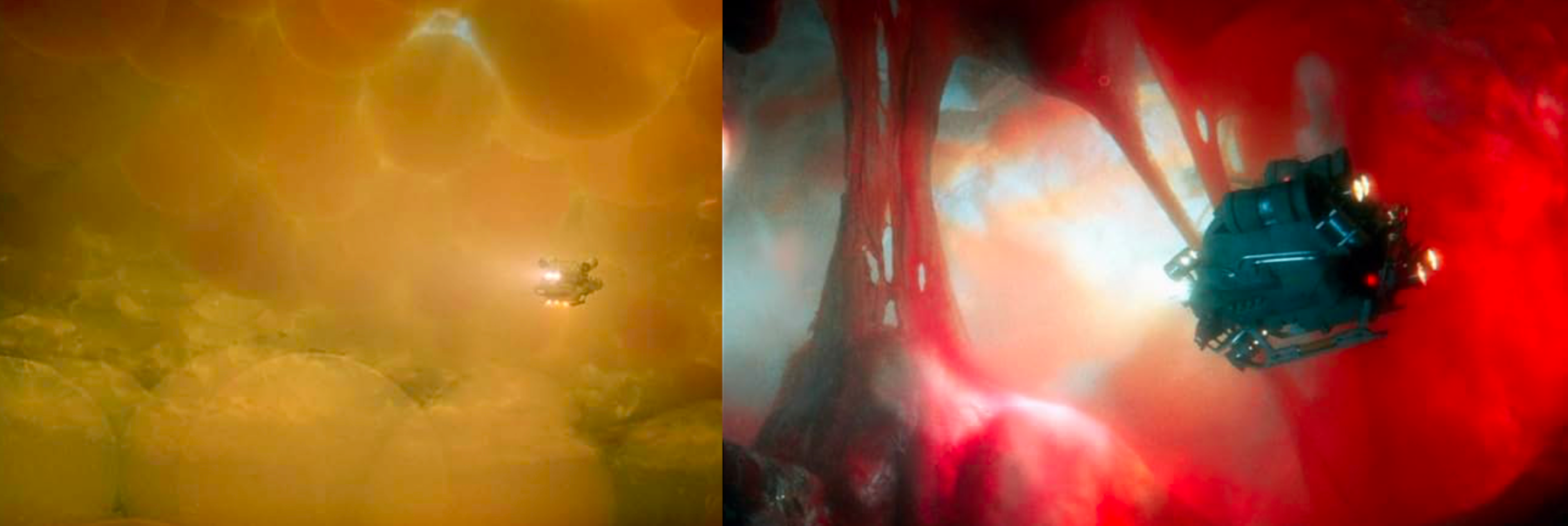
Clever technical inventions augment the fancy optical trickery. The interior shots of Short’s blood vessels are allowed to look rough and blurry, like something truly organic. Wonderful tricks are accomplished with forced perspective, and by things as simple as blowing compressed air in the actors’ faces.
Innerspace is longer than the average comedy. It has to be — taking anything out would wreck the continuity. I envy audiences that got to see Innerspace theatrically. Everybody loves this movie. I introduced it to my kids when they were young teenagers, and it was a memorable family experience, a riot of fun.
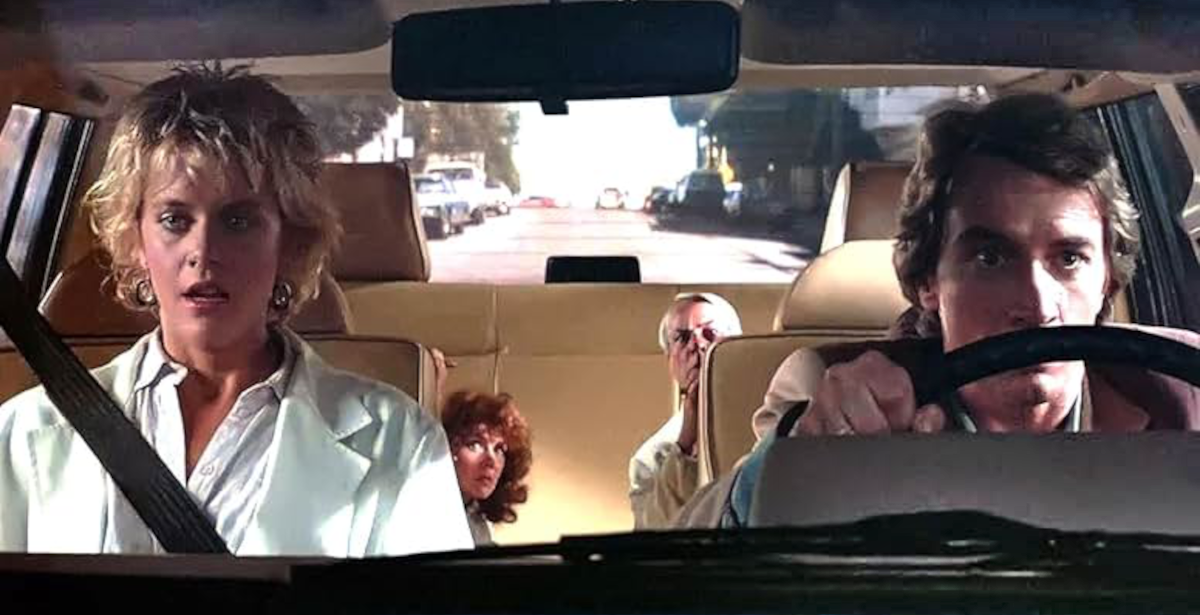
Thank you for the review, Glenn. “Innerspace” has been a favorite since I caught it during its (very) brief release in 1987. (Unlike “The Burbs” and “Matinee”, which both came and disappeared almost before I knew they existed.) Comparing it to a Martin & Lewis is most apt. Although, except for “Hollywood or Bust” and “Artists and Models,” I can’t think of one of their vehicles I thought of actually good, except for isolated parts. Frank Tashlin, of course, directed both of them. I think Martin Short, despite several major misfires (e.g., “Clifford”), is an undervalued comedic genius. Anyway. Thank you for the review.
Hello Glenn, I was one of the few that caught Innerspace theatrically, immediately falling in love with it. I also saw The ‘Burbs theatrically too, it was an era when I caught lots of movies that everyone else seemed to ignore- others would be Big Trouble in Little China and Lifeforce. Good times. It’s lovely to see these great old flicks again on Blu-ray and 4K UHD, like visiting old friends.
Innerspace is wonderful, such a perfect genre film, funny, spectacular, full of great casting for geeks to point at. The irony that such great films can somehow fail at the box office ( Big Trouble in Little China being another) really opened my eyes to how risky and nonsensical the movie business could be.
I don’t think films today are as great as those films were. Really looking forward to revisiting Innerspace in 4K- thanks for the exciting review.
It is a shame Kerwin Mathews was not in Innerspace since he lived in San Francisco; he also should have played Bruce Campbell’s boss in the S-Mart ending of Army of Darkness. It is also a shame Kerwin Mathews did not get a chance at directing at least one of the low budget stop-motion films like Planet of the Dinosaurs or The Day Time Ended, as his Harryhausen experience could have aided others acting to nothing in post-Star Wars Hollywood.
I rented Innerspace unaware of what it was. It took me a few minutes to figure it out. The best line was “I’m possessed!”
That dig on The Blob (1988) is way off base, but whatever. Anyway, I saw this on opening day and loved it. Shoulda been a massive hit.
INNERSPACE has always been one of my favorite Joe Dante movies. I’ve enjoyed every one of them, MATINEE especially because I grew up in the 60’s and remember all the stuff the studios used to do to make coming to the movies a special event. I remember seeing TWO ON A GUILLOTINE and they had a guillotine set up in the lobby! Another thing I truly appreciated was that when this film was released on VHS, it was letterboxed!