

If you build your own imaginary world, how soon will real people move in? (Sorry, was that a description of Bitcoin?) Potential filmmakers reared on Star Trek: The Next Generation’s Holodeck must have thought, ‘oooh, what if I could make a whole fake world?’ Sci-fi writers love to re-imagine reality using their own made-up rules, but filming such fantasies was usually cost-prohibitive. Then came Computer Generated Imagery, which can allow a director to make arbitrary changes EASY. Just shoot off a text to the poor artist hired for visual effects:
“Please double the size of the crowd storming the
citadel. And can you give them all funny hats?”
Several projects of this kind were green-lit in the years around the millennium. Alex Proyas’ ambitious thriller Dark City was overlooked in the stampede to praise the next year’s The Matrix, a somewhat similar story of a Sci-Fi universe existing as an alternate reality. Such things weren’t unusual in literary science fiction, but there are a few pioneering precedents. Most prominent is one screwy gem from the ’70s, a German TV miniseries by Rainer Werner Fassbinder called World on a Wire. It looks like it was made with a minimum of resources, but the ideas are all there, combined with the regulation paranoid thriller elements.

For its theatrical release in 1998, director Proyas was entreated to shorten Dark City by more than a reel. A voiceover was added to the opening, to ‘pre-explain’ the story’s complex setup. Those cuts and changes went away when Proyas released his Director’s Cut on disc a few years later. The twisted narrative is still a Frankenstein assemblage of parts of older movies. A 2008 New Line Blu-ray presented both versions, and Arrow has done the same for their new 4K disc set.
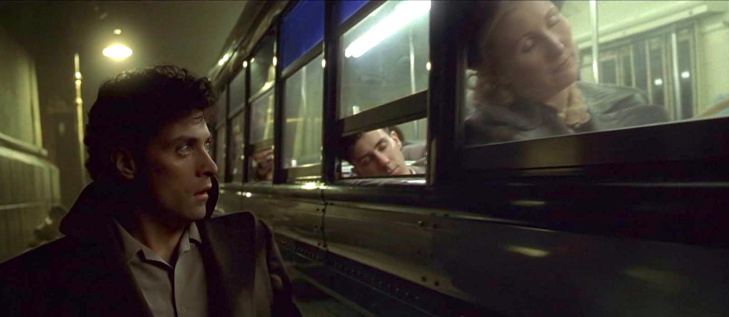
John Murdoch (Rufus Sewell) awakens one day without a memory. He learns that detective Inspector Frank Bumstead (William Hurt) is hunting him for a murder he doesn’t think he committed. John is told that his beautiful wife Emma (Jennifer Connelly) sings in a nightclub. A mysterious Doctor Daniel Schreber (Kiefer Sutherland) promises to solve John’s problems by giving him an injection from a weird-looking syringe. But John can tell that some very basic things are wrong, starting with the fact that it always seems to be night in this strange city. People talk about their memories of a sunny place called Shell Beach, but nobody knows how to get there.

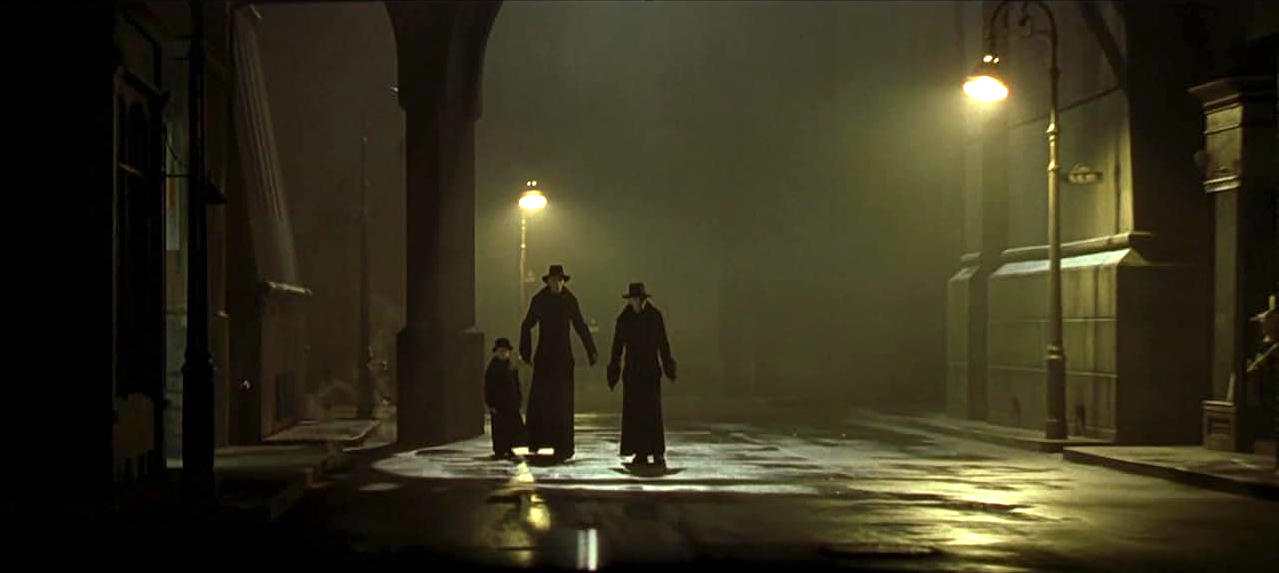
Even weirder is the fact that John shares advanced mental powers with ‘The Strangers,’ sinister pale men in dark coats and hats — who are trying to kill him. The Strangers normally emerge only at the stroke of midnight, when the anonymous citizens of this dark city all fall asleep, as if on cue … so that the city and selected inhabitants can be ‘tuned.’
Alfred Hitchcock said that some filmmakers are complicators and others are simplifiers. Alex Proyas is a complicator and his show is one of the first Sci-Fi spectaculars to make liberal use of Hollywood’s then- new CGI effects. Like a Sim City game gone mad, the city shuts down every night at midnight. Acting as weird overseers, The Strangers then use their mental powers to ‘tune’ the city with adjustments. They move buildings and ‘grow’ new ones. Selected citizens are given new identities and living situations. Hitchcock might have criticized Proyas’ filmic clutter, but we think he’d be intrigued by the film’s paranoid vision of a reality being constantly tweaked by humorless super-beings. This city of eternal night is like a writer’s sketch pad, constantly being re-thought and revised.
The filmic clutter of Dark City is its mass of ideas adapted from previous Sci-fi films and literature. The basic amnesia story is a standard launch point for scores of films noir, such as Joe Mankiewicz’s old Somewhere in the Night. The overall visual aspects of Dark City owe a heavy debt to Fritz Lang’s Metropolis.
Readers of Philip K. Dick (especially his mind-warping 1969 book Ubik) will find familiar ground in this virtual world, that can be altered by the thoughts of the super-minds that maintain it. Proyas’ visual scheme compresses expressionist clocks, nocturnal Noir cityscapes and David Lynchian nightclubs into a stew that may at times seem too familiar, after the high concept Create-A-World tales The Truman Show and Pleasantville.
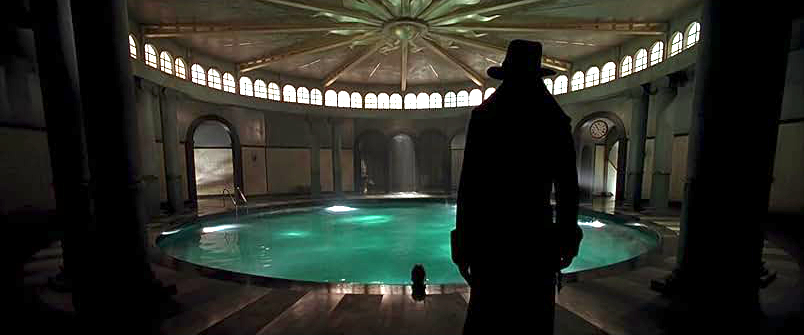
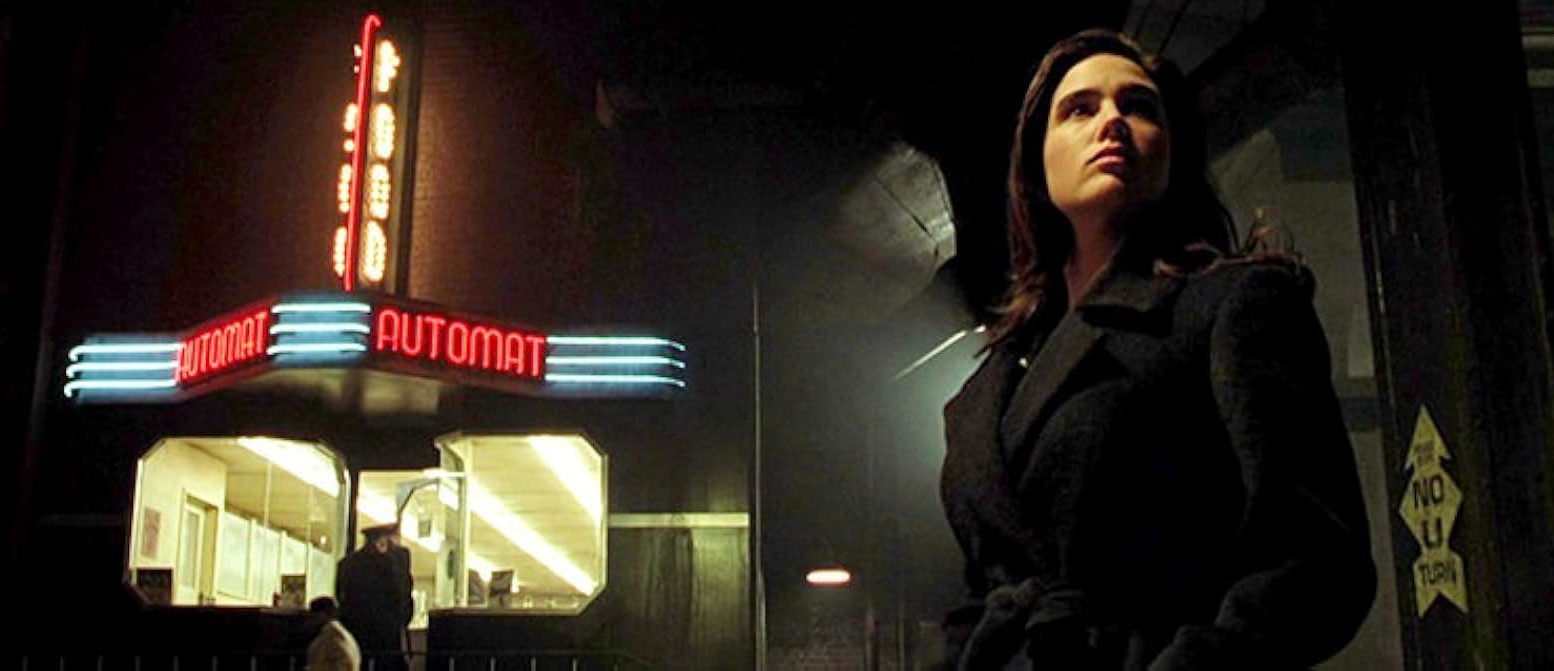
Dark City sometimes feels a bit thick for art direction. Alex Proyas was quoted as wanting something fairly realistic, but his designers have run wild with expressionist imagery — uninterrupted film-noirish spaces washed down with splashes of color. We soak up a constant flow of detail. A goldfish swims in a bathtub, seen from an underwater POV. We get an eccentric angle of a policeman tying his shoelaces. Ubik- like clues abound, such as a personal diary that only has blank pages: The Strangers must have thought it would not be opened. The margins of this dark city are like the backstage areas of a Disneyland theme park, a jumble of random spaces behind the fake facades of Main Street.

Some reviewers have said that Brandon Lee would have starred in Dark City if he hadn’t accidentally died on the set of Proyas’ The Crow. Actor Rufus Sewell makes a solid noir protagonist. His Murdoch broods but doesn’t collapse into despair. He doesn’t realize that he shares the ‘superpowers’ of the city’s sinister custodians, The Strangers. Ian Richardson (Brazil), Richard O’Brien (The Rocky Horror Picture Show) and Bruce Spence (The Road Warrior) are the most prominent Strangers, who go by odd names like Mr. Hand, Mr. Book and Mr. Wall. They creep about in floor-length leather coats, like Max Shreck’s Nosferatu. *
Talk about borrowed ideas (spoilers): more exposition speeches reveal that The Strangers are aliens envious of our humans souls, just like the Overlords of Arthur C. Clarke’s Childhood’s End. They look human because they’ve commandeered the bodies of our dead, the operating principle of the lowly Sci-fi turnips Invisible Invaders and Plan 9 from Outer Space.
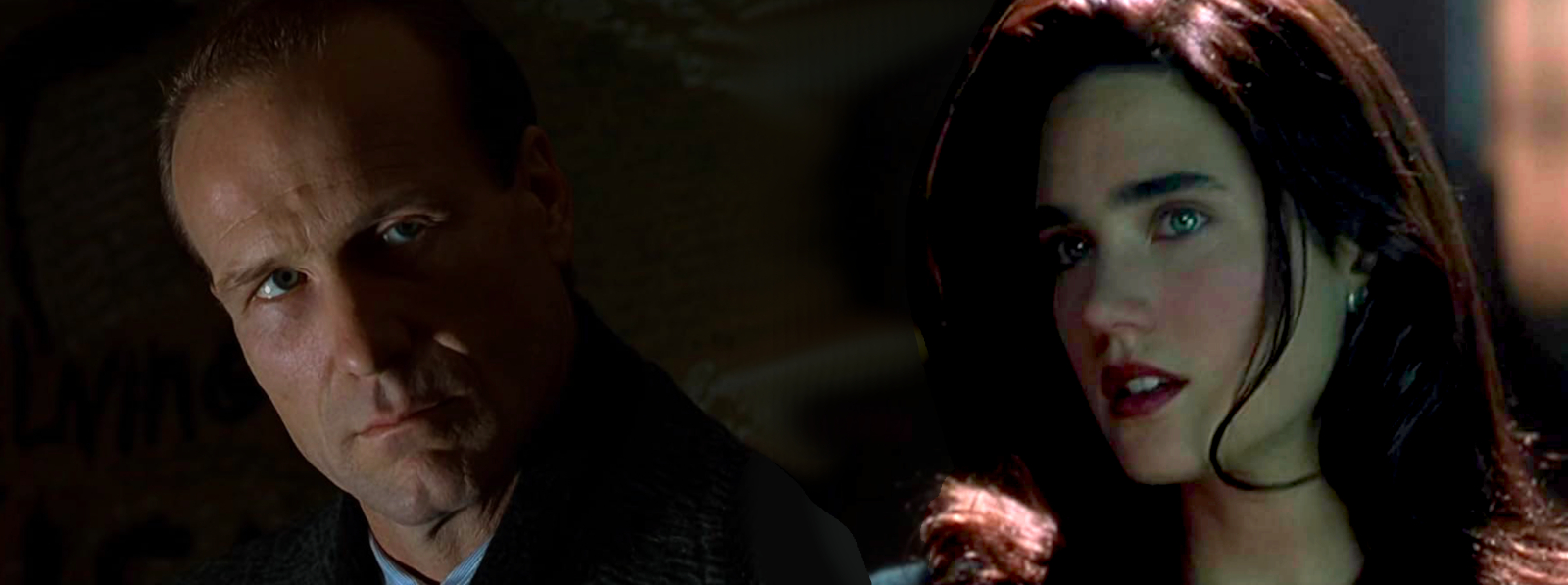
It isn’t just John Murdoch who wants to solve the puzzle of the dark city. Star William Hurt is the show’s borrowed film noir detective, who intuits that John Murdoch is innocent of murder. Jennifer Connelly is used for conventional decoration. Her marriage to Murdoch might be an illusion, but we can guess that they’ll be a couple by the fade-out.

We first see Kiefer Sutherland’s Dr. Schreber scuttling about and checking his pocket watch, like the White Rabbit in Alice in Wonderland. He is yet another eccentric character, and a difficult fit within the framework of the fantasy. Schreber serves The Strangers by implanting false memories into the brains of selected humans. He’s quick on the trigger with a syringe that pierces human skulls … although the cinematic hypodermic champ is still sexy Fiona Lewis, from Michael Laughlin’s 1981 Dead Kids. Ms. Lewis very convincingly needles teenage victims right in the corner of the eye.
Making the dramatics function in this blend of film noir and fantasy themes can’t have been easy. Rufus Sewell finds a good groove of determined confusion for Murdoch, while William Hurt hones his detective to perfection, projecting an air of intelligent calm. The surprise is Richard O’Brien’s Mr. Hand. Surrounded by dozens of comrade Strangers that behave like a zombie lynch mob, O’Brien plays his alien with a curious depth. Even in the bizarre costume, he remains in control, giving Mr. Hand a personality that’s almost sympathetic.
Computer Generated Imagery was just finding its feet in 1998, and director Proyas makes excellent use of its possibilities. We assume that New Line constructed many big sets in its Australian studios, but one has to refer to BTS video footage to see what was in front of the camera and what was later added digitally. Some of the visual effects on the Director’s cut are not from 1998 — Proyas had many of them recomposited when he got the go-ahead to reconstruct his longer personal version. Looking different is the distortion that occurs when John uses his mental stare to move objects and strike people down.
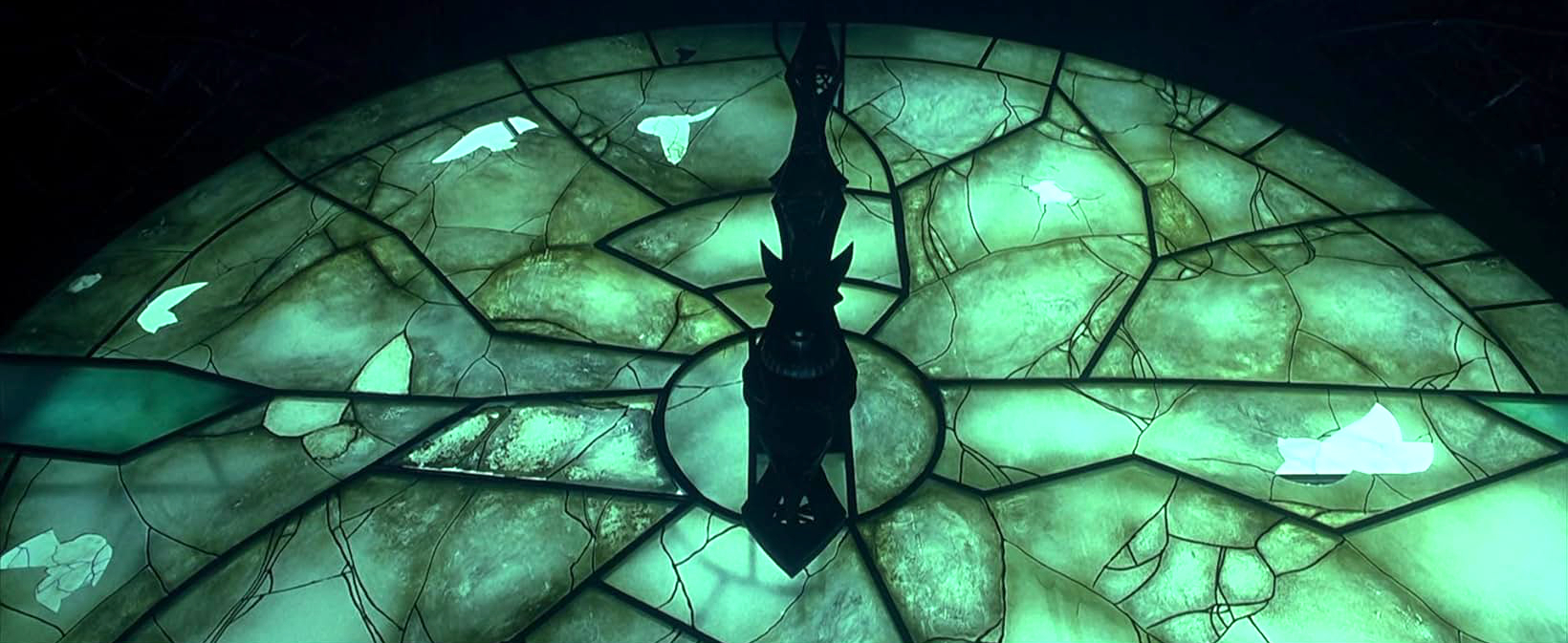
This dark city looks fairly normal until we see magic doors appear at will, and everyone goes to sleep at the stroke of midnight. The city is both fake and real, which makes it a tough assignment for Alex Proyas’ designers. In the effort to attain a ‘not quite right’ artificial quality, the streets have a tendency to look too much like overdone movie sets. The clock that stops time every night may have reminded 1998 moviegoers of the exaggerated clock in the Coen brothers’ highly stylized comedy The Hudsucker Proxy.
The Director’s cut adds two or three scenes that slow the pace just enough to allow Dark City to breathe a bit. Some of the changes improve the tone considerably. When Jennifer Connelly sings The Night Has a Thousand Eyes in the cabaret, we now hear the actress’s own voice, which connects much better with the audience. It convinces us that she’s a real human too, not an alien clone.
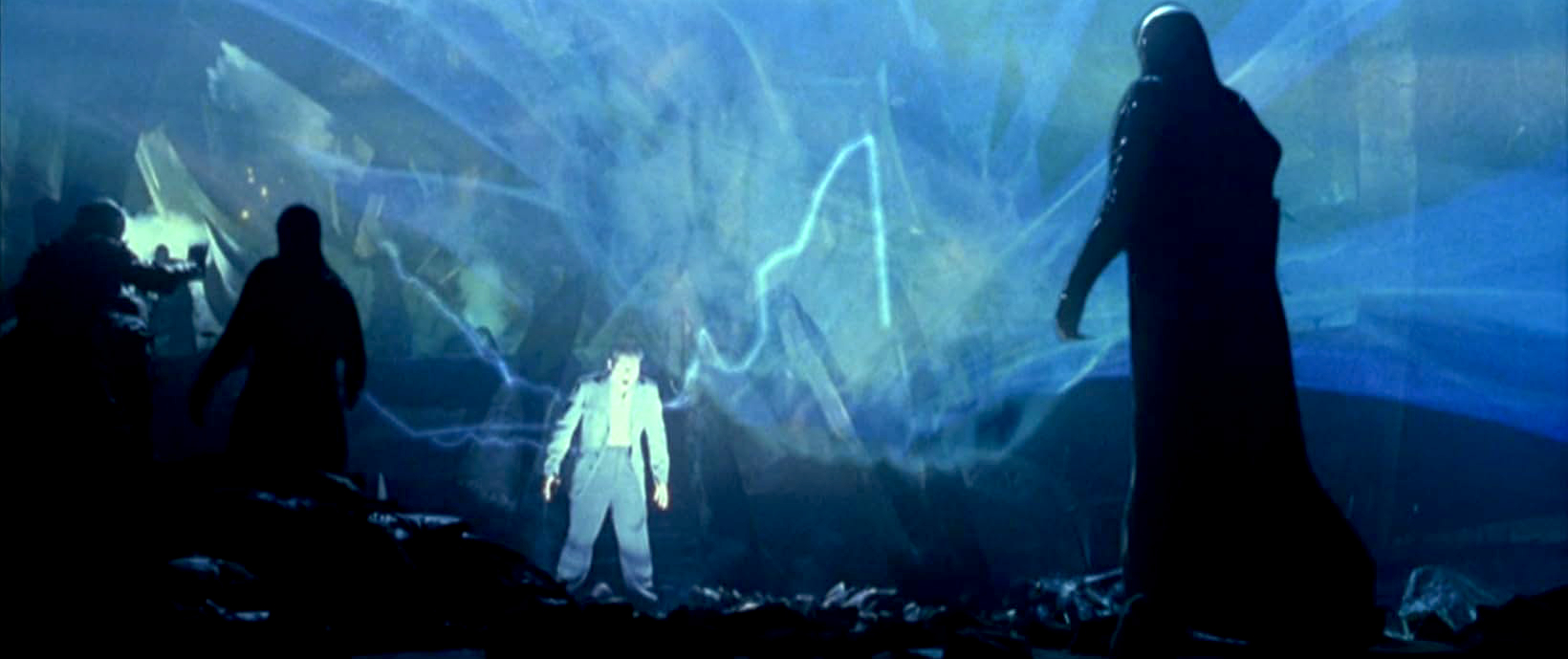
Alex Proyas’ overall concept eventually distills down to the not-so-deep message that ‘reality is what we make it.’ Well, if you have super-powers that can alter reality, maybe. Our final impression is of a nicely tuned sampling of classic Sci-fi themes. The true form of The Strangers is revealed as a spindly, transparent spider-thing operating like Robert Heinlein’s Puppet Masters. The real humans being used as experimental subjects have been reprogrammed with fake memories, like P.K. Dick characters in Blade Runner and Total Recall. And John Murdoch conveniently finds that he’s acquired new super-powers, like one of David Cronenberg’s Scanners. The Murdoch-aliens conflict is resolved in a Scanners- like ‘battle of the telepaths’ showdown.
That may just be too many hand-me-down ideas, a situation shared by Richard Kelly’s equally eclectic Southland Tales. Dark City may not be a pinnacle of Sci-fi filmmaking, but neither is it hollow eye candy propped up with explosions and slo-mo gunfights. Proyas doesn’t bore us with lazy nihilism, the first refuge of dystopians with nothing to say. His finale tries for a slightly whimsical irony, emulating the finish of the old Film Blanc Here Comes Mr. Jordan. It’s not hard to swallow — we like Rufus Sewell and Jennifer Connelly.
This is one of my favorite movies. To see it mentioned in the same sentence as Southland Tales made me sick.
I recall Proyas saying he was looking for someone like Richard O’Brien to play Mr. Hand, and after a fruitless search they hit on the brilliant idea of…casting Richard O’Brien!