
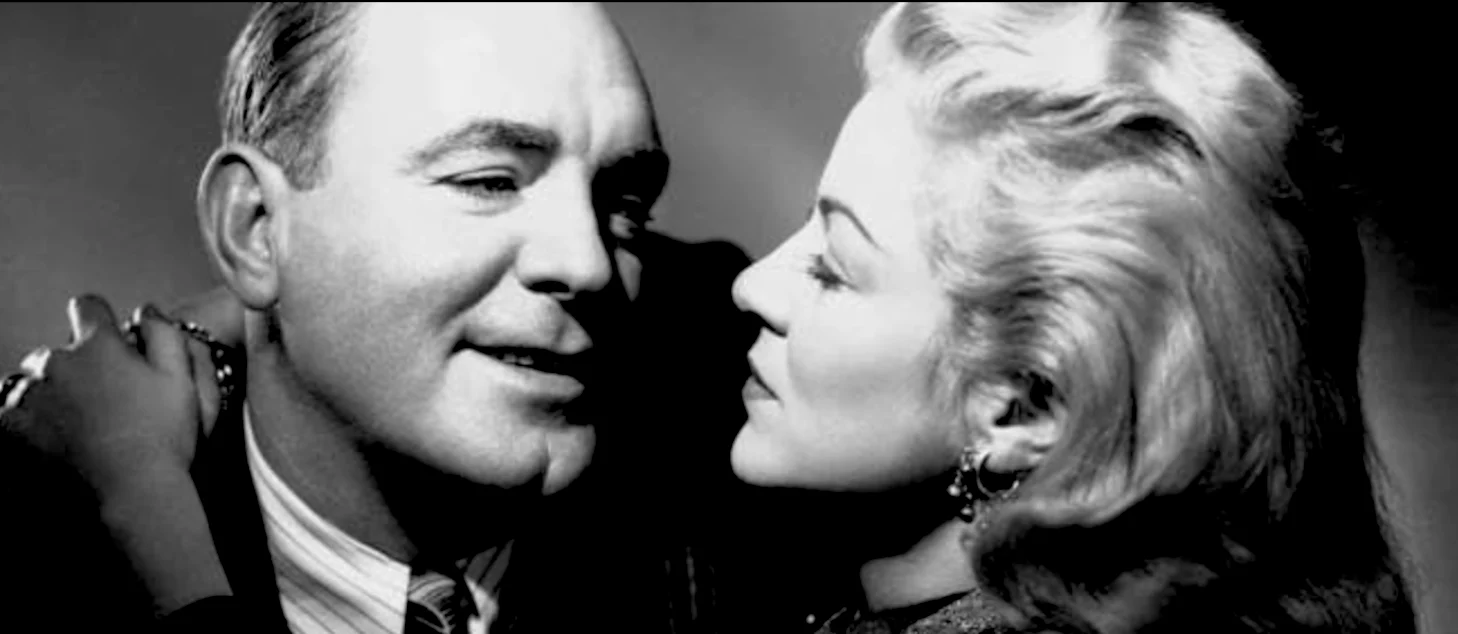

In film noir, High Art is where you find the sociopaths.
Even before World War II, Washington reactionaries were accusing Hollywood of making anti-Capitalist propaganda, blaming the wealthy and particularly bankers for America’s ills. Always aware which way the wind blew, film writers looking to please execs sometimes sought safety with more conservative choices. Slimy villains were often rich, but by the mid-40s many were also cultured professionals, intellectuals and elitists like Waldo Lydecker, the mad radio personality in Otto Preminger’s Laura. The association of high art with slimy noir villains made for a strange equation. An ‘honest’ man has no need for Ming vases, priceless antiques or classic paintings. Those that covet and appreciate them tend to be eccentric, a little ‘off’ — you know, not like Us.
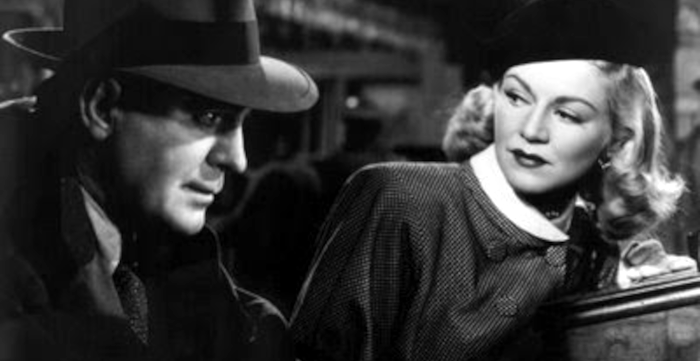
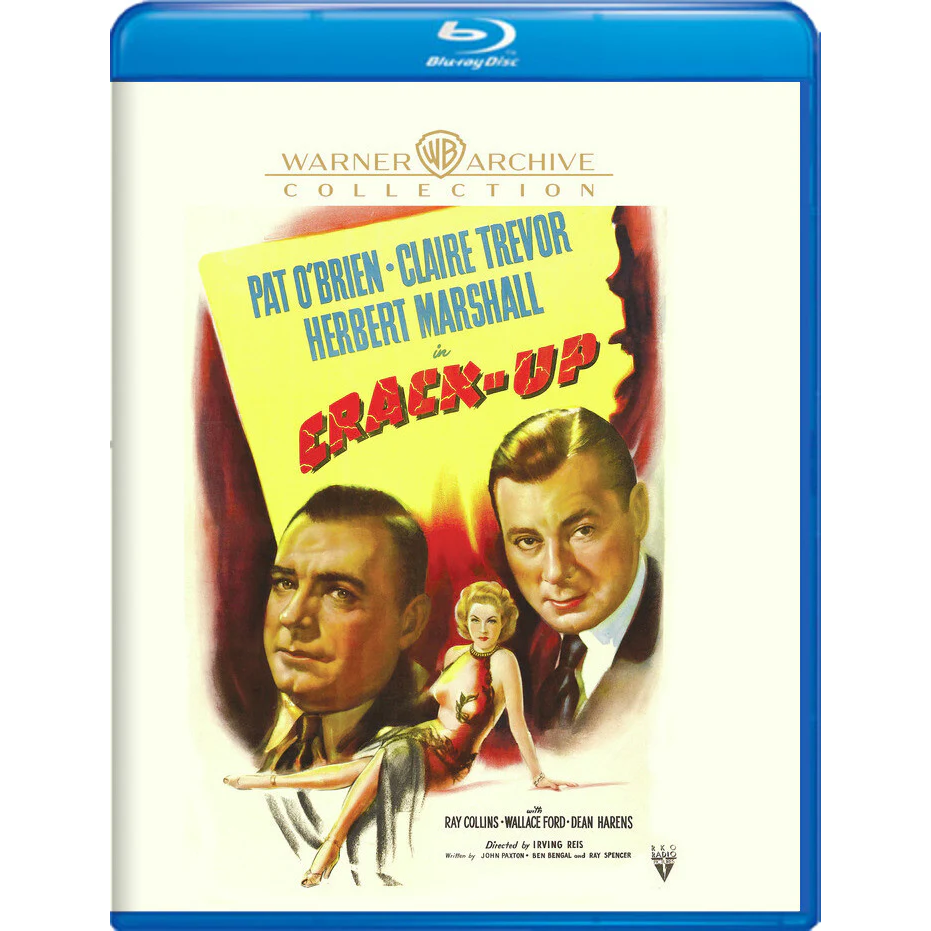
Nowhere is this equation so clearly stated as it is in RKO’s Crack-Up, a well-directed adult-oriented thriller. We didn’t appreciate it as much as we should when we reviewed a DVD in 2010. What we dismissed as ‘narrative confusion’ is a smart conspiracy tale that doesn’t insult our intelligence. It’s basically about a guy unraveling a mystery, but with an extra level of believability.
The film’s surprise is former Warners star Pat O’Brien, part of that studio’s Irish Mafia of talent led by star James Cagney. At age 47 the hard-drinking O’Brien looks older, and very much middle aged, yet he gives a fine, sympathetic performance. Forget his various priests and his corny Knut Rockne, this is a new kind of subdued characterization.
Not so surprising is the screenplay’s use of modern art as a populist punching bag. A Manhattan museum is not pleased by the lectures being given by George Steele (Pat O’Brien), an art curator and lecturer who charms museum crowds with his folksy culture talks. George’s main message is that people shouldn’t feel intimidated by great art, or be in awe of the phony snobs that use art events to augment their social status. The directors take exception to Steele’s populist attitude and consider closing off his lecture series. That decision becomes final when Steele, apparently roaring drunk, smashes his way into the museum one night and must be restrained by the police. Steele babbles a story about being in a train wreck, but no such accident has occurred.
The institution’s decision makers include the nervous, publicity-minded director Barton (Erskine Sanford) and wealthy patrons Dr. Lowell (Ray Collins) and Reynolds (Dean Harens). Another board member Stevenson (Damian O’Flynn) is George Steele’s one staunch ally, although all the others express serious concern about his wellbeing.
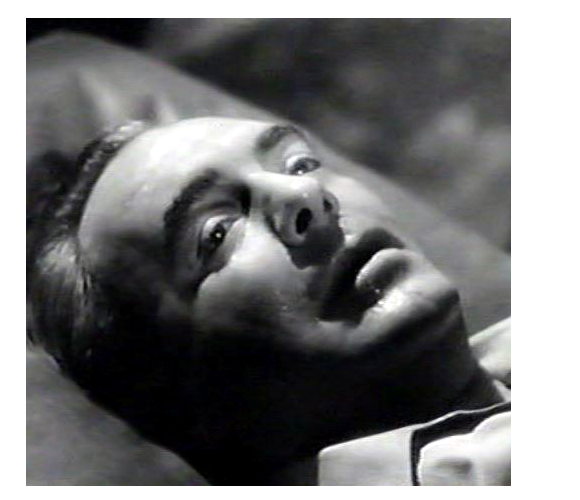
Terrified at the thought of losing his mind, Steele doesn’t know who he can trust, not even his girl friend Terry Cordell (Claire Trevor). She waited for him through the war, while he served as an art expert helping to recover European masterpieces stolen by the Nazis. Adding to George’s worry, Terry is seeing the handsome Englishman Traybin (Herbert Marshall), who claims to have done the same kind of wartime work for the British authorities. Steele can’t explain his weird memory of being in a train wreck, but he’s convinced that it all has something to do with the museum’s nervousness when it comes to the subject of art forgery. Why don’t they want to invest in X-ray technology to help identify forgeries?
An art critic as a noir detective?
Crack-Up starts with a fist smashing through a glass door. Crashing in like a madman, George Steele initiates a fight that results in the destruction of one of the museum’s statues. There are plenty of puzzle pieces to ponder, what with the board suddenly wanting Steele out, complaining that his lectures are bringing a rowdy crowd into the museum. He loses his museum job, and soon finds himself framed for murder and on the run. George knows that big-time art forgery is involved somehow, and focuses on the loss of a famous Gainsborough painting a few years before … it was supposedly burned up while in transit to England.
In addition to the museum’s board members, other potential villains come into the picture. That handsome foreigner Traybin bothers George, because he seems to know too much about what’s going on, right from the beginning. Worse, he’s shaping up as romantic competition for Terry. There’s also Cochrane (Wallace Ford), a police detective who speaks in a pleasingly pulpy monotone. The only player we’re sure is a villain is a thug hanging around the periphery. He’s played by the tough guy Robert Bray, who we recognize from his aborted attempt ten years later to embody Mickey Spillane’s Mike Hammer.
The only thing George can do is retrace his steps on his ill-fated train trip the night before, to see if it actually happened … his memory is all jumbled. A visit to a penny arcade provides a contrast with the snooty environs of the museum. The attention given the casting and direction of the many extras is excellent. When people in restaurants and on the train stand out, Steele wonders if they’re part of the conspiracy. Director Irving Reis had made three ‘Falcon’ mysteries with George Sanders, but this picture plays on a different level. Nothing is for laughs, as in RKO’s noir hit Murder, My Sweet, also with Claire Trevor. Another impressively-directed Irving Reis movie is the Arthur Miller adaptation All My Sons.
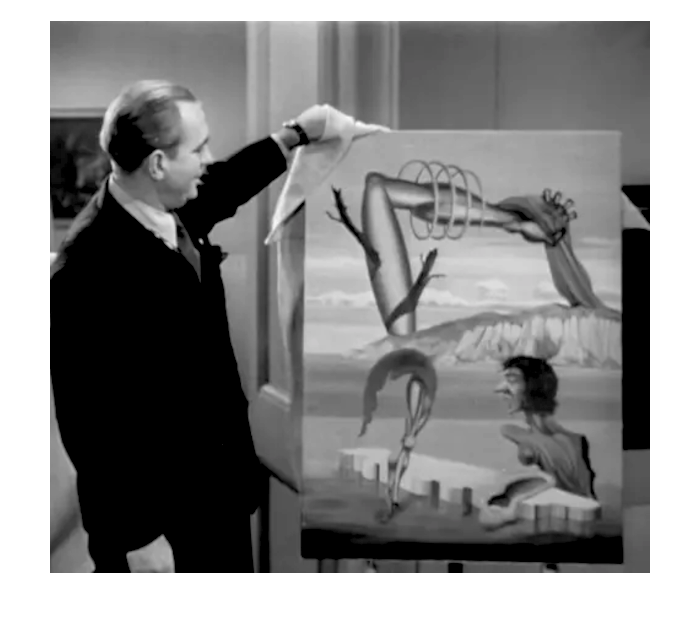
The script isn’t exactly flattering to the Art World. Critic George Steele favors the condescending Populist Outreach approach. He assures his audience that there’s nothing wrong with liking what you want and rejecting what you don’t like, and the heck with what the hoity-toity art community says you are supposed to like. Steele unveils a Dali-esque surreal painting, and smiles when the crowd laughs at it. ↗ Even in an art gallery, populism encourages a mob mentality. One modern art lover in attendance is a (coded) foreign intellectual. He objects loudly to Steele’s levity, as might happen in a Parisian art gathering with fiery opinions. For his trouble, he’s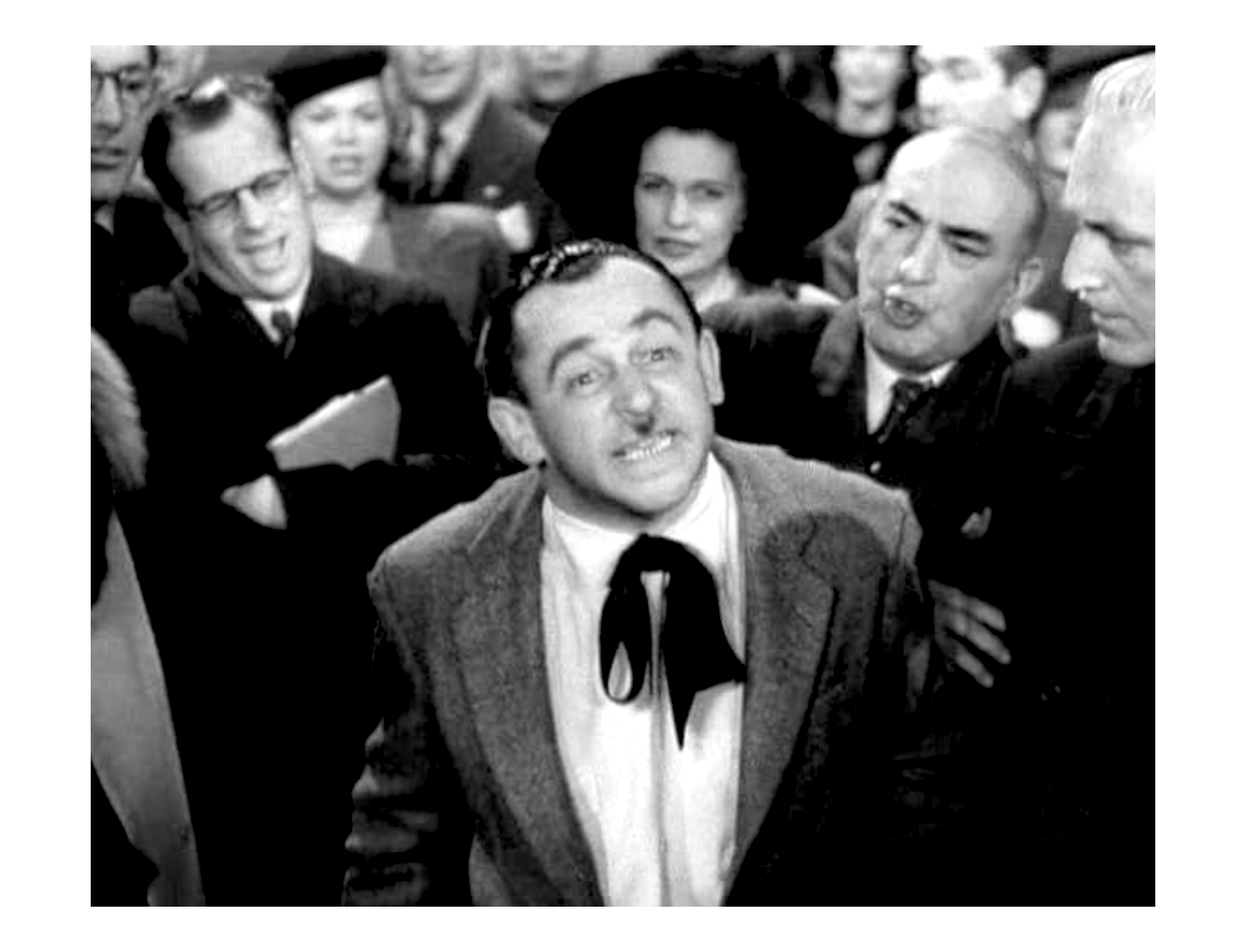 ejected bodily from the hall. ←
Steele quips that at the next week’s lecture, Surrealists will be searched for weapons! In his reach for a popular consensus, Steele’s lecture would seem to promote a know-nothing prejudice against anything with which ‘the people’ are not already comfortable.
That’s interesting, because Crack-Up illustrates George Steele’s ‘train wreck’ hallucination with alarming, arty imagery that reminds us of surrealist filmmaking. Steele’s psychic trauma is expressed through a montage in which the headlight of an approaching train appears to be exploding in Steele’s face through his passenger train window. The passage of time is shown by superimposing a clock over pounding train wheels, another strange image.
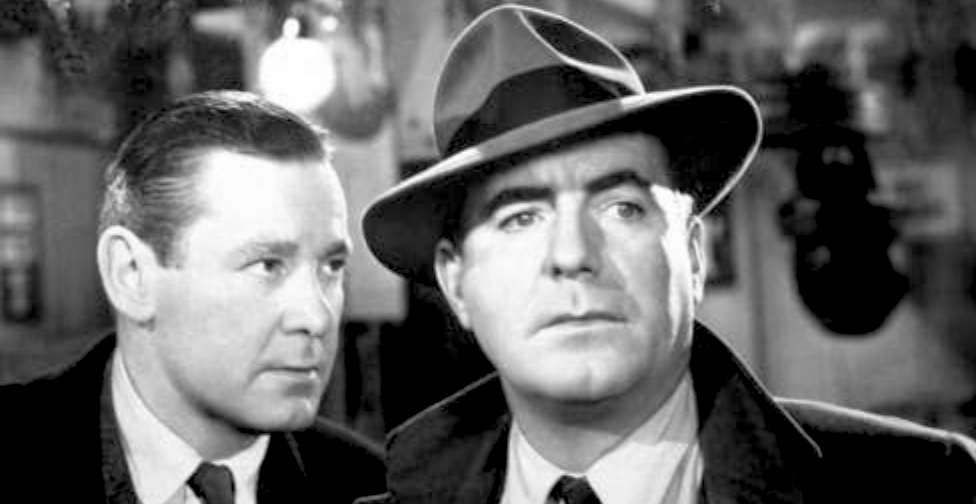
Art connoisseurs and museum personnel as noir villains?
Next they’ll be demonizing librarians.
Crack-Up mentions more than once that technology perfected during wartime is now being used for peaceful — and criminal — purposes. Steele employs a modern X-Ray machine, and the villains use new drugs as a way of discrediting people that get too close to the truth. What we’re more likely to notice is George Steele’s alarming act of recklessly slicing a priceless artwork out of its frame and roughly rolling it up. He then jams it into his coat and climbs roughly down a ship’s ratline. How will anybody reframe that masterpiece now?
On the other hand, Irving Reis smoothly stages actions limited by actor Herbert Marshall’s difficulty with his wooden leg. This has to be Marshall’s leg’s best performance — he does many walking bits and we can barely tell. Also, when Pat O’Brien climbs a wall, the substitution of a stuntman is flawlessly performed. It’s a really clever bit of action.
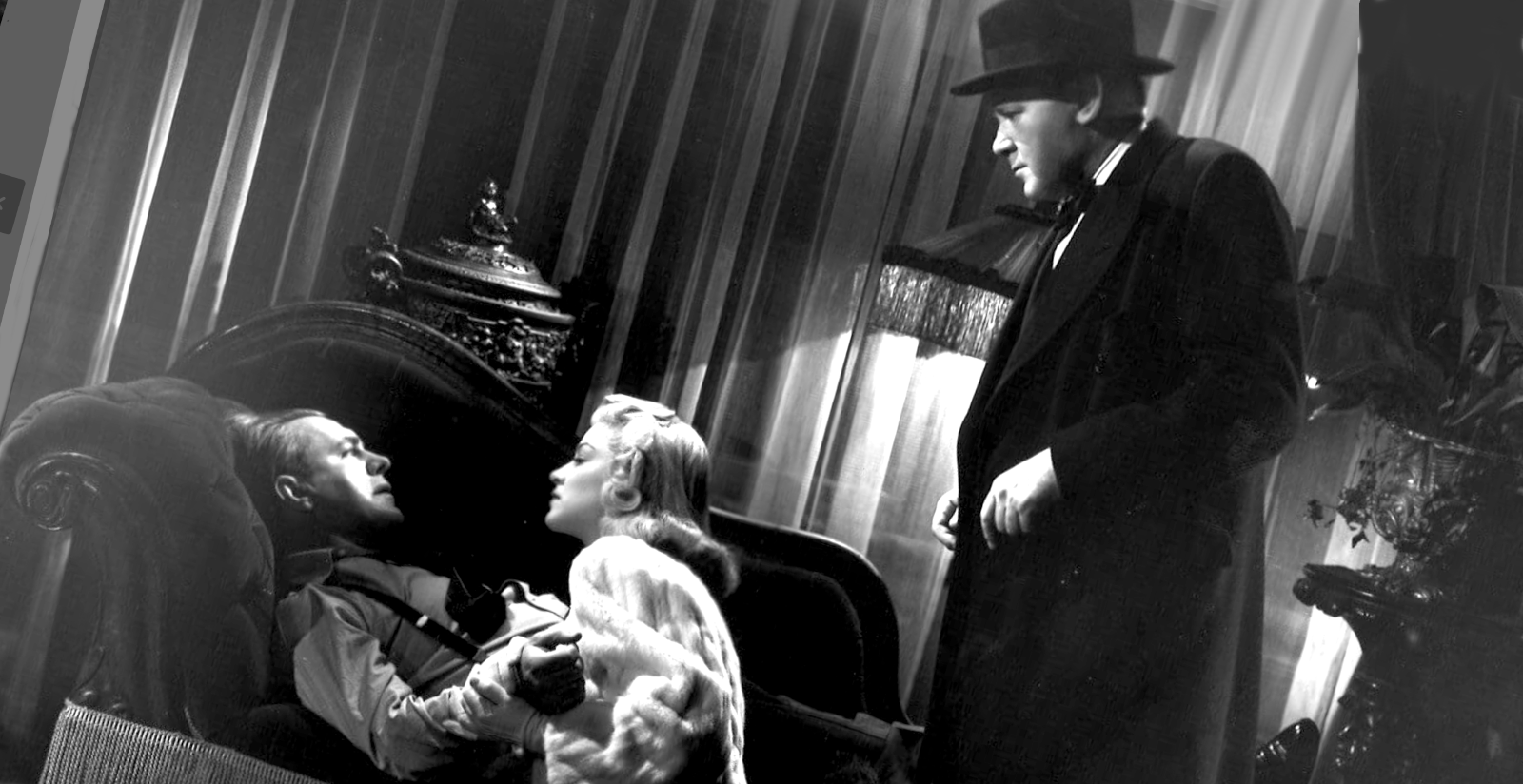
(spoiler) As it turns out, the plot hinges on a crime that is not about money or politics: artistic appreciation is itself accused as being dangerous activity, a Root of Evil. A mad collector is so addicted to great art that he’s willing to commit heinous crimes to possess it. I doubt that Crack-Up was a popular title among archivists and museum curators, as it characterizes them as cowards, perverts and megalomaniacs. Talk about a film packed with strange sociological messages.
Burlesque comic turned actor Tommy Noonan appears un-billed as a candy salesman on George Steele’s nightmare train ride; he’d become a familiar player in the 1950s, opposite Marilyn Monroe and Judy Garland. Orson Welles’ former Mercury Players Erskine Sanford and Ray Collins acquit themselves well — Collins in particular delivers an excellent variation on a familiar character type.
On this viewing, several aspects of Crack-Up made us think that Irving Reis or somebody was a big fan of Val Lewton’s movies. The movie is pitched at a Lewton-like realistic level, and even minor walk-on characters feel like flesh & blood people. An incident with one train passenger helping another drunken train passenger seems inspired by an iconic sequence in Lewton’s The Seventh Victim. And when Herbert Marshall’s Traybin enters a room to use the phone, we are surprised to see the ‘black panther’ dressing screen that’s a featured part of the décor in Val Lewton’s Cat People.
Thanks, Warner Archive, for prompting a revisit of this worthy thriller.
I watched the first half of Crack-up in SD on Fawesome BUT it’s now been taken down. Why the first half? Because I couldn’t tolerate the ads! With WA Blu-rays in the mid $20s & DVDs in the high teens I’ll have to wait for a sale. Too bad as I liked everything about Crack-up. The SD would be acceptable because, if I remember correctly, the toy train sequences will stick out like a sore thumb in HD. Cheers!
Thank you for your review, Comrade.
Great review. I also got Lewton vibes. There’s even 2 Lewton Busses. I especially like the time capsule of the Penny Arcade scene. Just one thing I disagree with you. “George Steele’s alarming act of recklessly slicing a priceless artwork out of its frame and roughly rolling it up”. Steele was already fully confident that it was a forgery, so his recklessness is understandable.
Thanks ZakDriztt ! I guess Steele was very sure of himself.
Any film photographed by Robert de Grasse is of interest to me.
Too bad Pat O’Brien was a reactionary – one might say fascist – ideologue in real life. No kidding, he sent aid to Franco during the Spanish Civil War.
If I worried about the politics of stars 80 years ago, there’d be a lot of movies difficult to enjoy! I try not to get too worked up about newer movies with troublesome stars or directors.