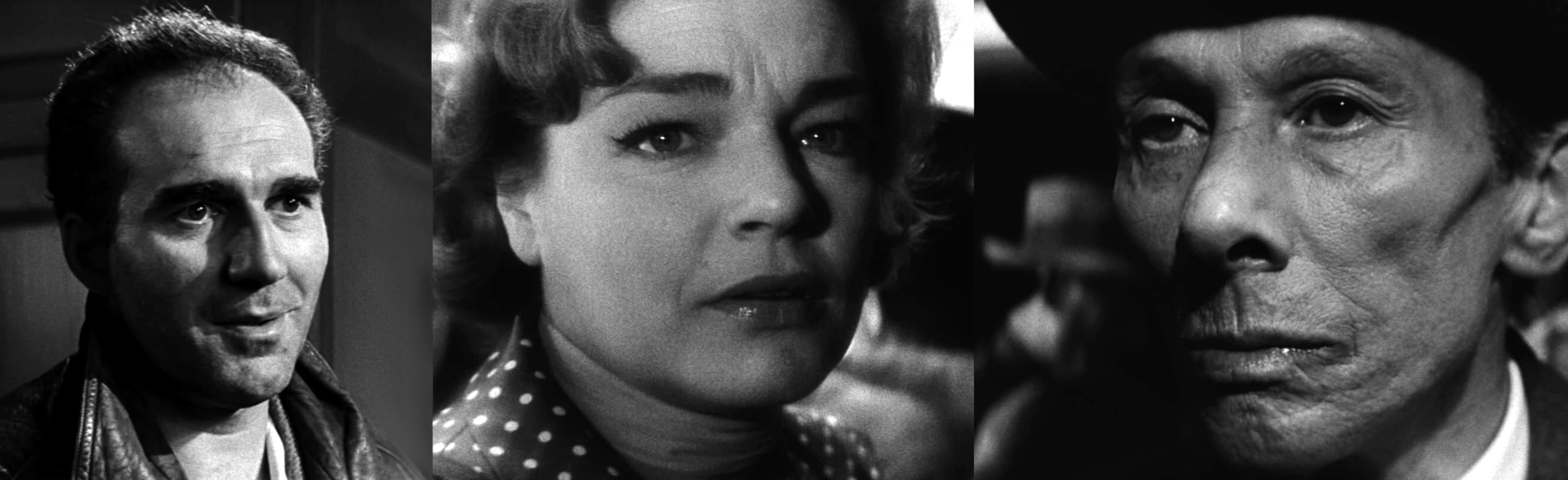


Film fans familiar with morale-boosting WW2 fare have seen at least one of those movies about American and British fliers, shot down over France, being sheltered by patriotic members of the resistance. The handsome airmen invariably make love to the beautiful mademoiselles that hide them in attics and barns. Everybody promises to meet up later after the grand victory, with fatherless children apparently not a problem.
The respected old-school director René Clément is best known for the superb Forbidden Games, Gervaise and Purple Noon. The first film is about orphans of the German blitzkrieg, but Clément’s first show was a 1946 semi-documentary about the resistance of French railroad workers, The Battle of the Rails. His 1947 Les maudits is a masterpiece about axis villains fleeing to South America, filmed on a real German U-Boat. Clément later made an effort to establish himself as an international director, a plan stopped by the commercial failure of his 1966 super-epic that told the entire story of the liberation of the capital, Is Paris Burning?.
Three years earlier, René Clément directed a more modest look set in Occupied France, just before D-Day. Fifty years ago many of us American kids knew what the title The Day and the Hour meant … in 1944, much of the world and all of France waited nervously for the expected invasion of France.

If anything, Le Jour et L’Heure is almost too low-key. It plays out mostly in a workaday Paris, where people do their best to subsist and avoid the political chaos around them. The world is upside down, the future is a question mark, yet most people ‘go about their business.’ (Hmmm.) The movie certainly isn’t cheap. Scenes in railroad stations use hundreds of extras.
Thérèse Dutheil (Simone Signoret) lives in a nice flat with her two children and her sister-in-law Agathe (Geneviève Page). Her return from a visit to the country is slowed by a manhunt for three Allied fliers that have been shot down. Thérèse asks for a truck ride back with old friend Antoine (Michel Piccoli) — who doesn’t mind getting her tangled up in his risky mission: he’s transporting the airmen to Paris in a truck full of sheep.
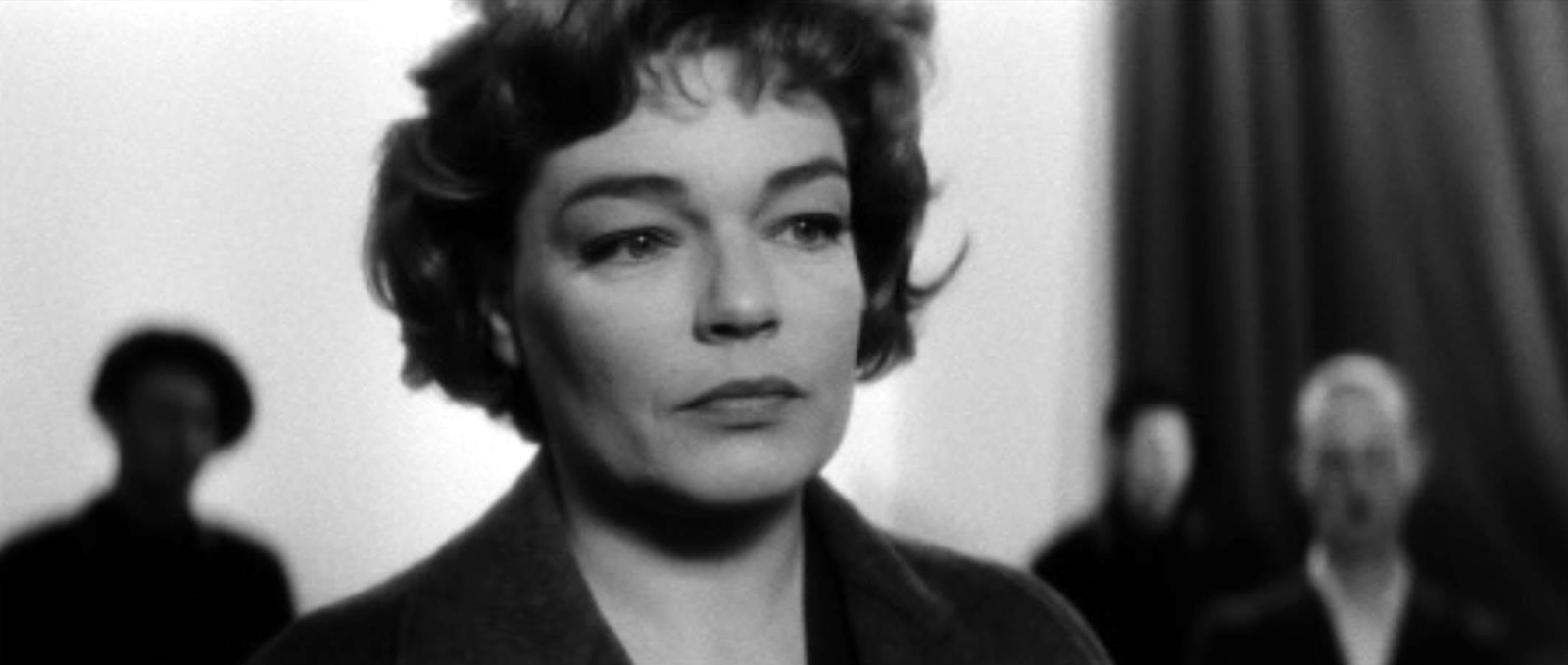
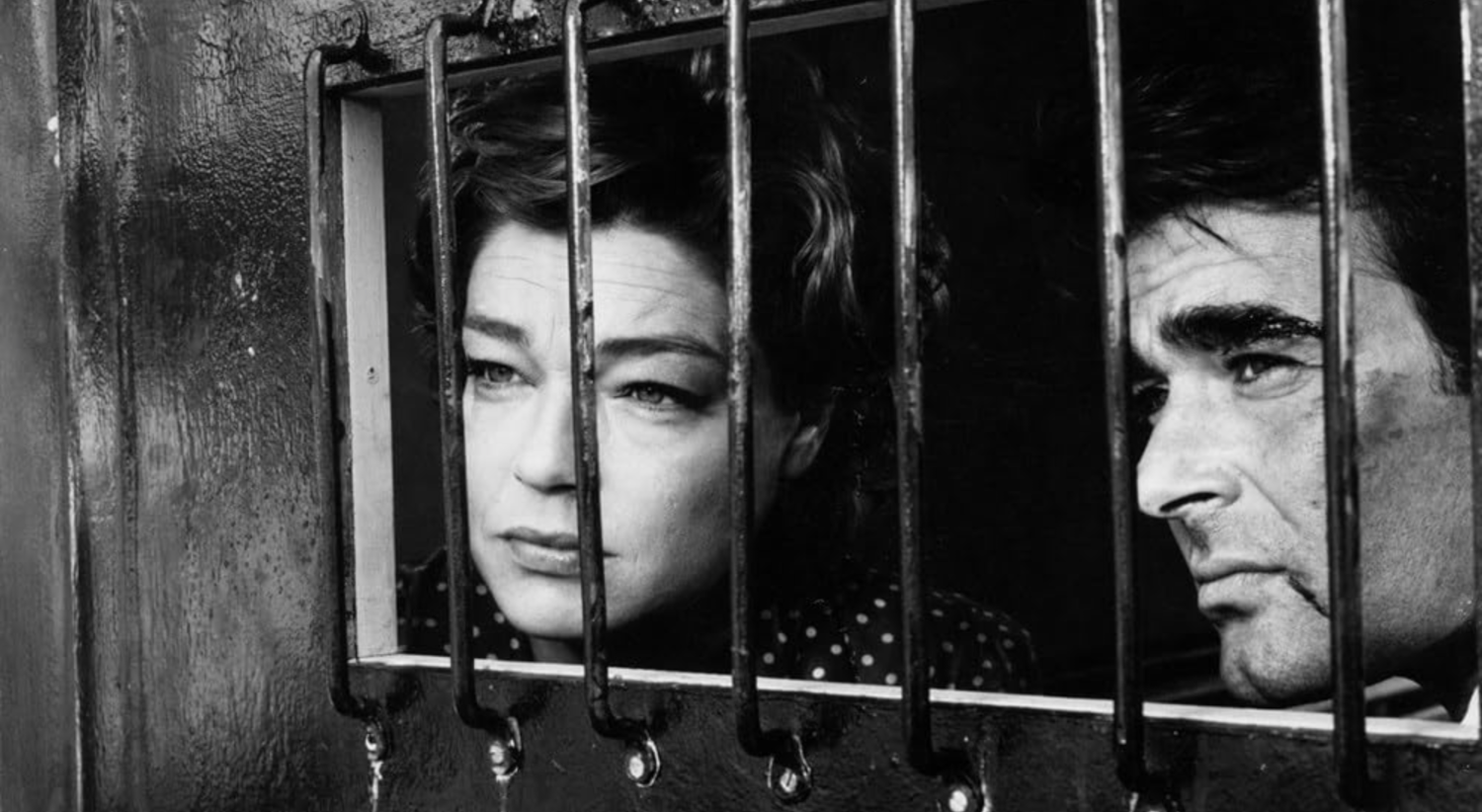
When the fliers are hidden in a neighborhood pharmacie Thérèse begs off further involvement. Then she sees one of the fugitives, U.S.A.A.C. Captain Allan Morley (Stuart Whitman) on the street, trying to figure out the Métro system. He eventually gets drunk and crashes the night at her place. Thérèse endeavors to help Morley and his fellow U.S. airman Pat Riley (Billy Kearns of Purple Noon) catch a rail connection to Toulouse. That begins a harrowing ordeal on a packed Southbound train. The trio know they’re in trouble when she recognizes a man she saw back at the pharmacy: he must be a Gestapo agent (Reggie Nalder).
After the ultra-detailed realism of Le maudits, we don’t know what to make of many details in The Day and the Hour. Clément and his co-writer Roger Vailland ( Blood and Roses) don’t offer a full study of the Occupation. With store shelves in Paris often bare, Thérèse’s trip to the country was likely to buy fresh food. Thérèse’s children attend school normally, it seems. We expect a possible betrayal by Agathe, but that doesn’t happen. The populace is split between those trying to remain apolitical (Thérèse), outright ‘collabos’ that do the Germans’ bidding, and people that passively collaborate out of a desire for security — like Agathe. The Dutheil family owns a lot of property, and Agathe doesn’t want it taken away.
The story hasn’t the shape of a typical thriller. We see Thérèse and Agathe send their younger sister off to serve as a nun, where she’ll at least be somewhere safe. Later on, a cutaway in a railroad station sees a resistance woman being taken away by the cops. Most of the resistance people Thérèse met have already been arrested.
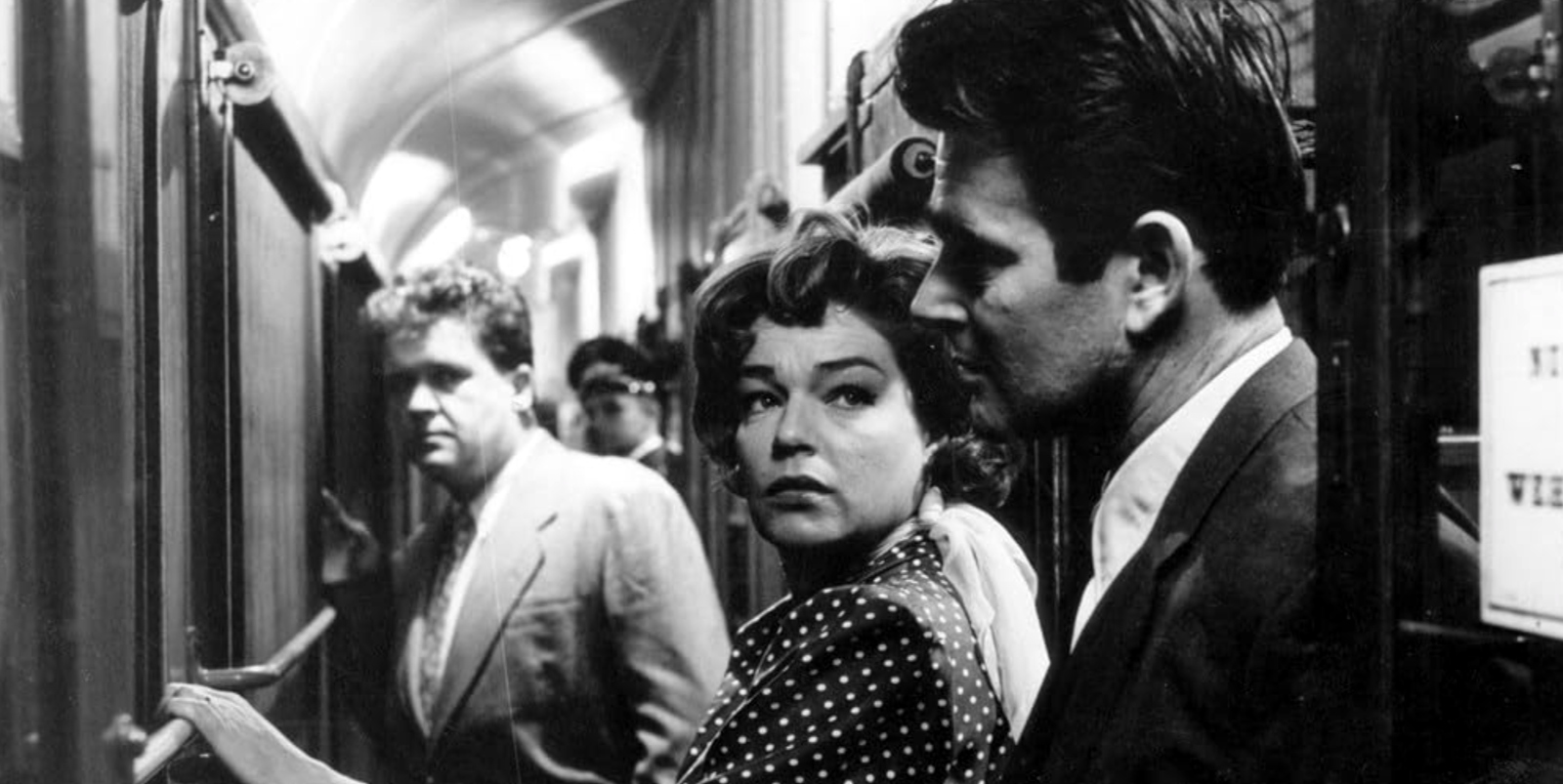
The Day and the Hour is written for a French audience, so it helps if one knows a little about the Occupation. The black-uniformed men wearing berets are ‘collaborationist’ Frenchmen working for the Germans, lower-level ‘French Gestapo.’ Antoine all but announces his mission at a roadside stop, where the locals jokingly (?) accuse him of being collabo. We’re more attuned to escapist thrillers in which Gestapo agents are everywhere, ready to round up twenty people at a time. Use the wrong hand gesture and you’re a goner. When Captain Morley goes wandering in public, he sticks out like a sore thumb. He also speaks out-loud with Thérèse on the sidewalk, broadcasting his Montana accent. We wonder why he isn’t immediately picked up. Could someone who looks so ‘Yankee’ stroll through occupied Paris and not immediately attract suspicion?
In terms of “movie-sense” it also feels illogical that the resistance activists in the pharmacy aren’t more careful. Any customer might realize what’s going on inside. Reggie Nalder’s Nazi agent had the pharmacy staked out before the flyers arrived. He doesn’t scoop up Morley, Thérèse and Pat because he wants to follow them to catch others in the (presumed) underground railroad to Spain. Reggie Nalder’s presence screams ‘villain.’ His casting is not the film’s most creative choice.
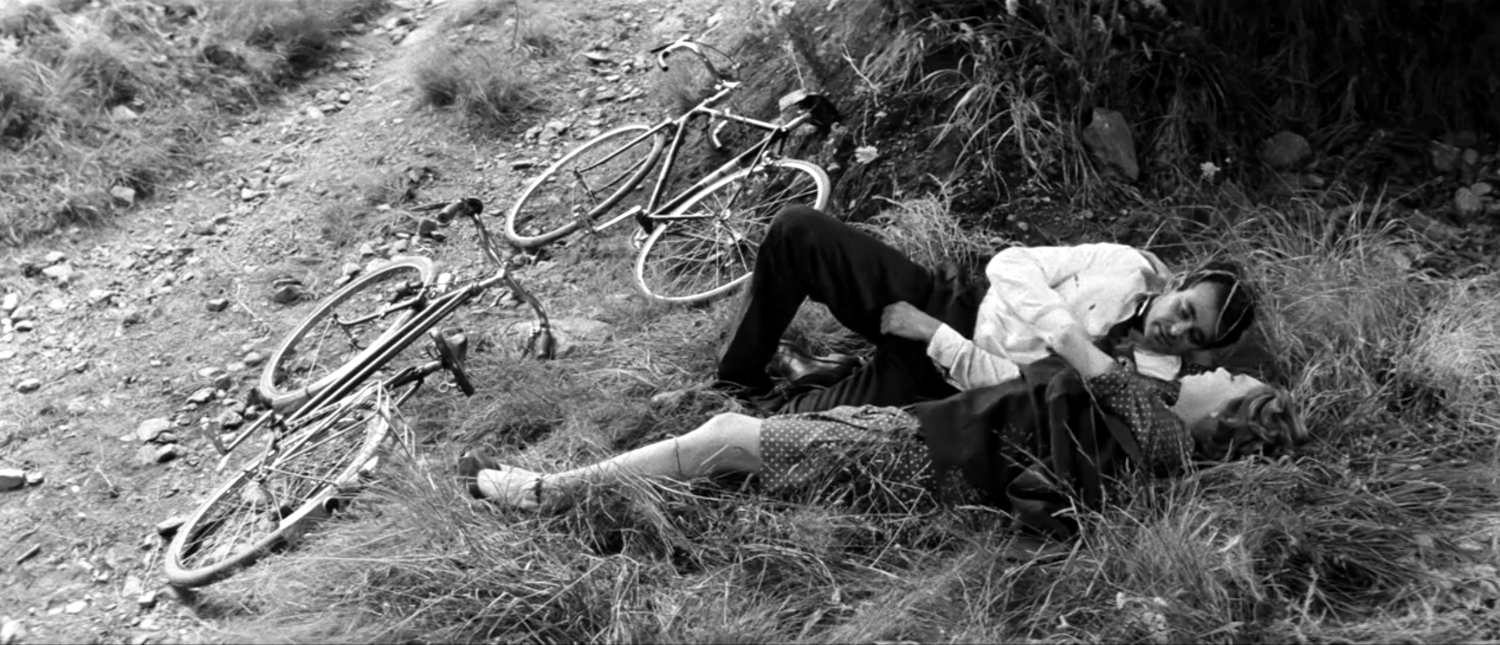
True accounts of the Occupation speak of sophisticated subterfuge as well as hopelessly amateurish resistance efforts … and it wasn’t always the amateurs who were caught. Are Clément and Co. making a statement about that, or are they just more interested in the development of the personal relationship?
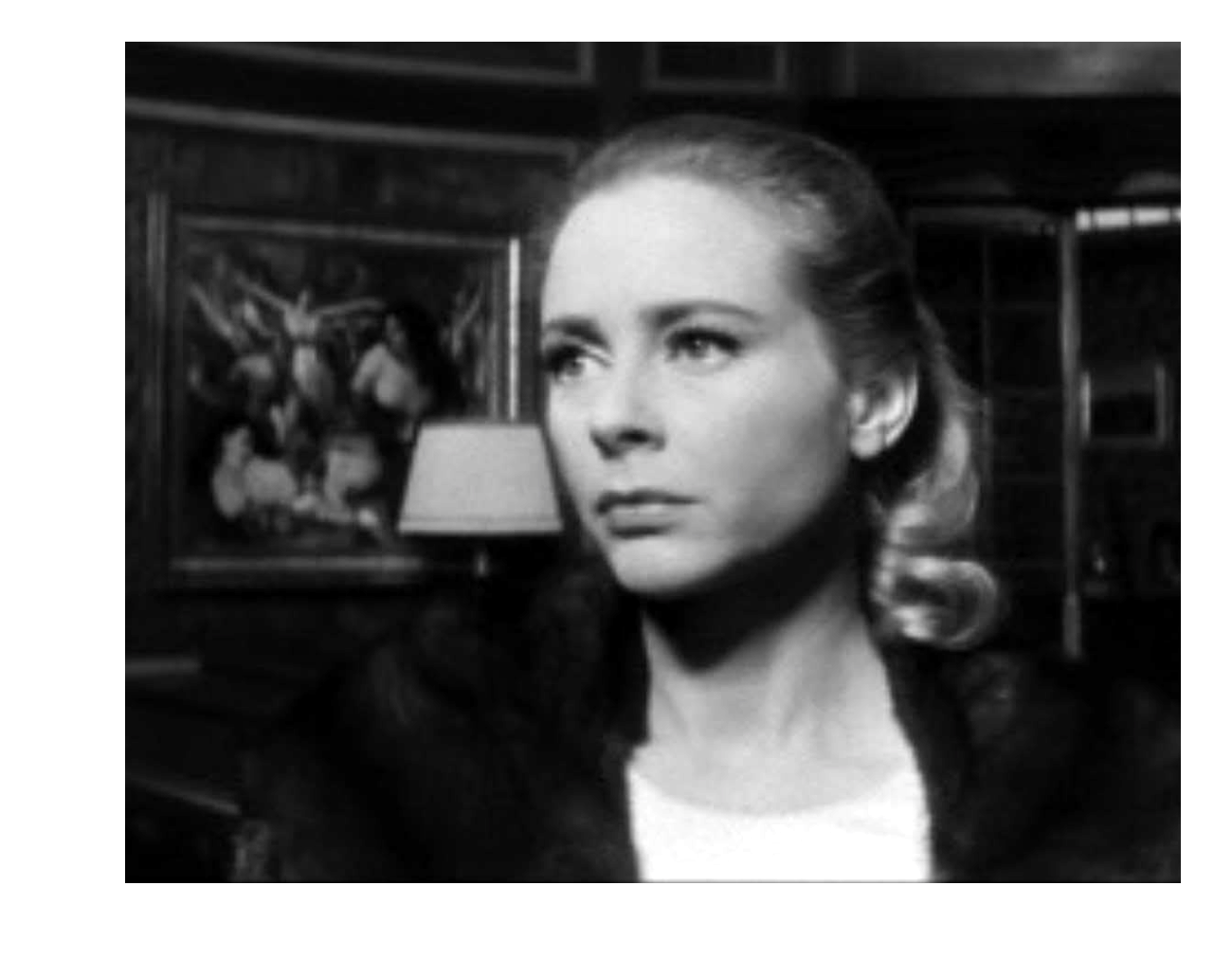
In that the film is very successful. Thérèse does no soul-searching before she risks life and limb to help the Captain. It’s just a natural thing that happens, even if it means (we should think) putting her kids and Agathe at risk too. It’s an emotional choice, as if she were moved to help a stray dog. Blind luck plays a major role. When braced by German ID-checkers on the train, Captain Morley’s forged papers pass. When she can’t find her own ID Thérèse expects the worst. But she’s spared by an unexpected twist of fate.
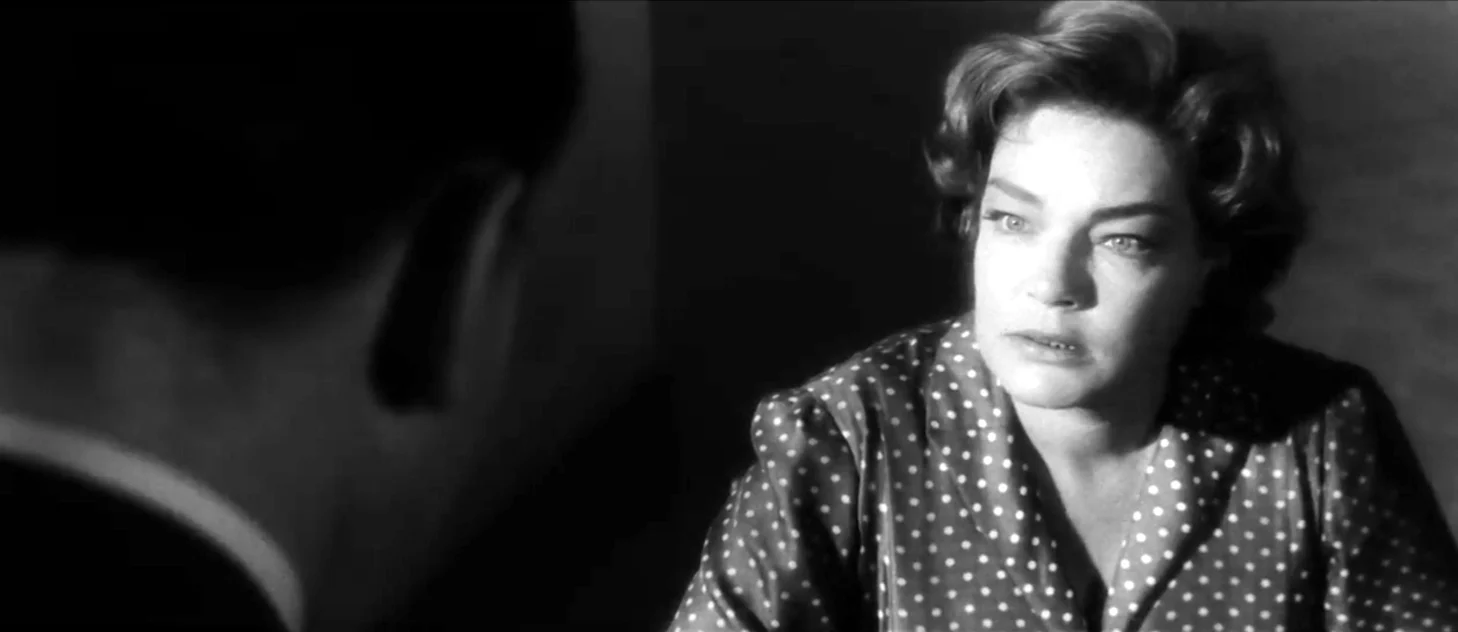
The show defuses some expectations of a lovers-on-the-run story. The attraction feels real, even though most of it comes from Thérèse Dutheil’s side of the equation. Simone Signore is superb. Her Thérèse deals with events as they occur, and never loses her head. She and Morley are eventually captured and interrogated by a collaborating Inspector and magistrate. Insp. Lerat (Marcel Bozzuffi of The French Connection) proves that the fugitives know each other by molesting Thérèse to see Morley’s reaction. The Captain is a flier, not a commando fighter; he’s already been decked on the train and is no match for the back-room torturers.
Ms. Signoret convinces when her Thérèse pulls off a highly unlikely dodge. She intuits that Commissioner Marboz (Pierre Dux of Is Paris Burning?) is also concerned about ‘the day and the hour,’ and worried about potential reprisals when the Allied liberators arrive — will there mass hangings of the collabo police and judiciary? Thérèse and Morley’s luck is awfully good, especially after Lerat and Marboz confuse her with a high-level resistance target known only as ‘Louise.’
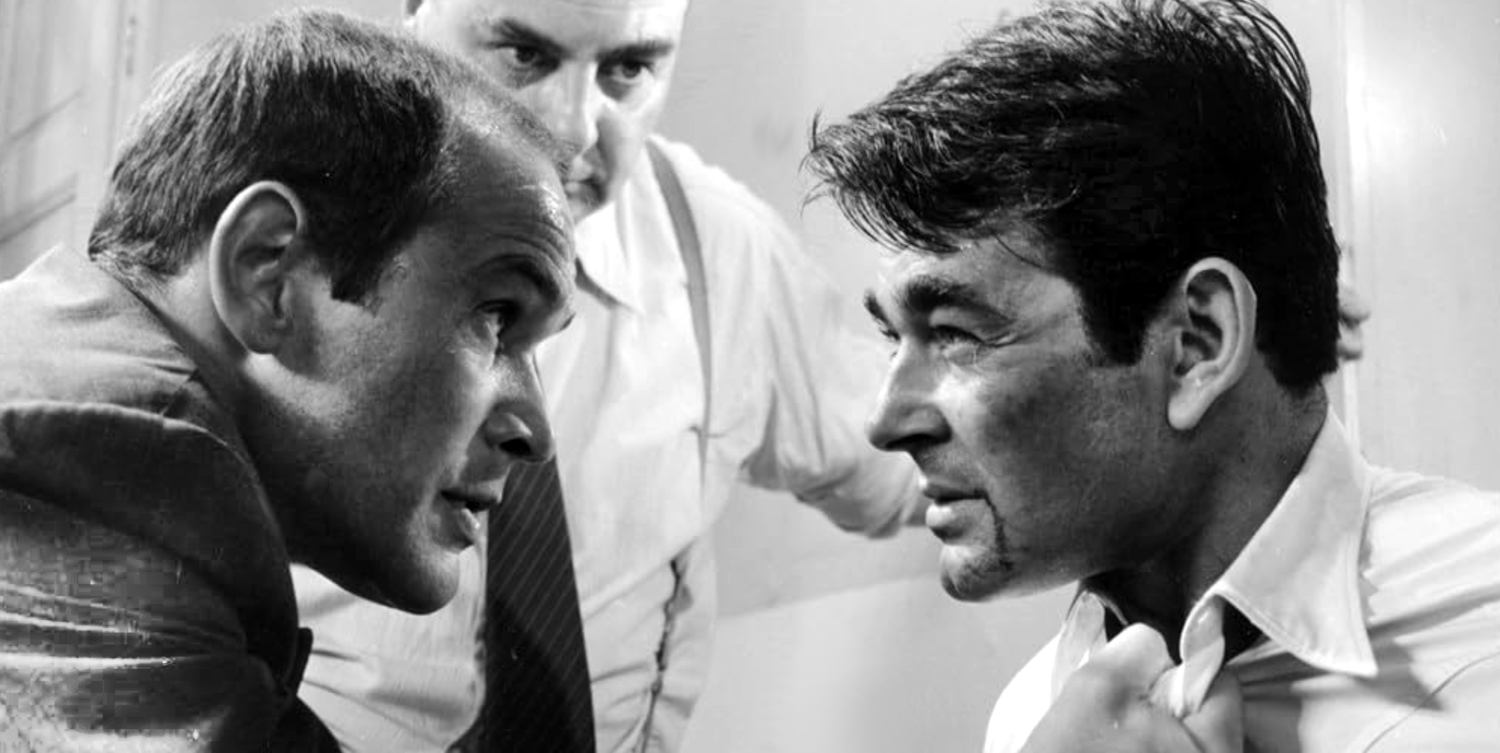
The finale goes for emotional realism, not spellbinding suspense. * When they’re picked up by the Maquis (pro-DeGaulle militia), Morley gets a good grilling before an OSS agent declares him trustworthy. He’ll be smuggled back so he can fly again, but God knows what will become of Thérèse or her loved ones back in Paris. It doesn’t matter, as Clément and Vaillard arrange for a hopeful farewell that may or may not result in a future reunion. Again, Signoret does most of the heavy lifting in the thespic department.
Henri Decaë’s cinematography is excellent. Clément was known for surmounting difficult technical problems, and the claustrophobic scenes in the jammed train stations are 100% convincing, even in anamorphic Franscope. We feel as if we’re jammed into those over-crowded train coaches along with the actors. As most of the border between France and Spain is mountainous, this show would seem more accurate than John Sturges’ classic The Great Escape, wherein James Coburn has only to cross an idyllic field to reach the haven of ‘España.’
A question that I wish the commentary had addressed: Antoine’s truck has some kind of pipe in its side from which live flames come out. If he’s got some kind of gasoline substitute fuel working, what is it? We see other vehicles carrying propane tanks …