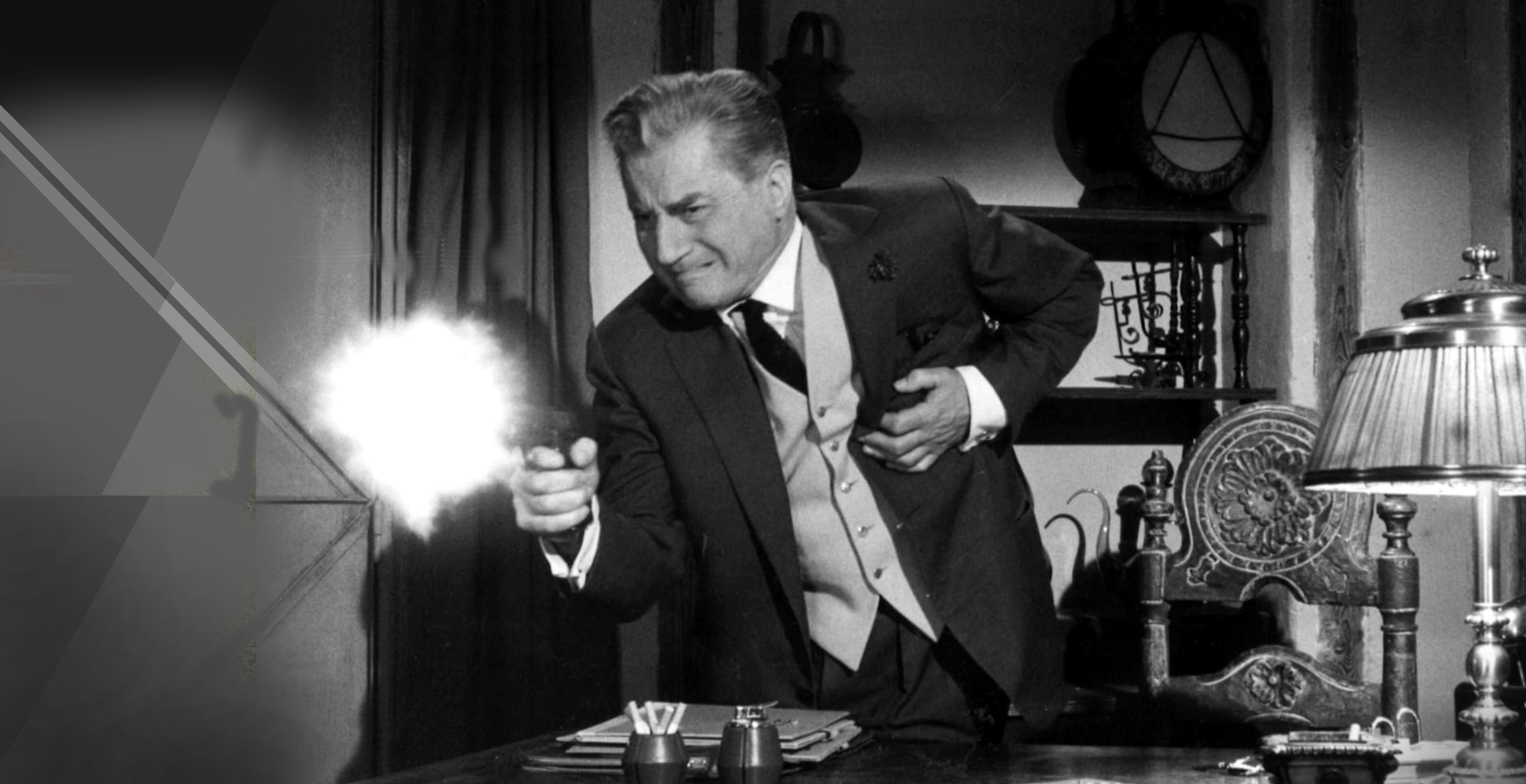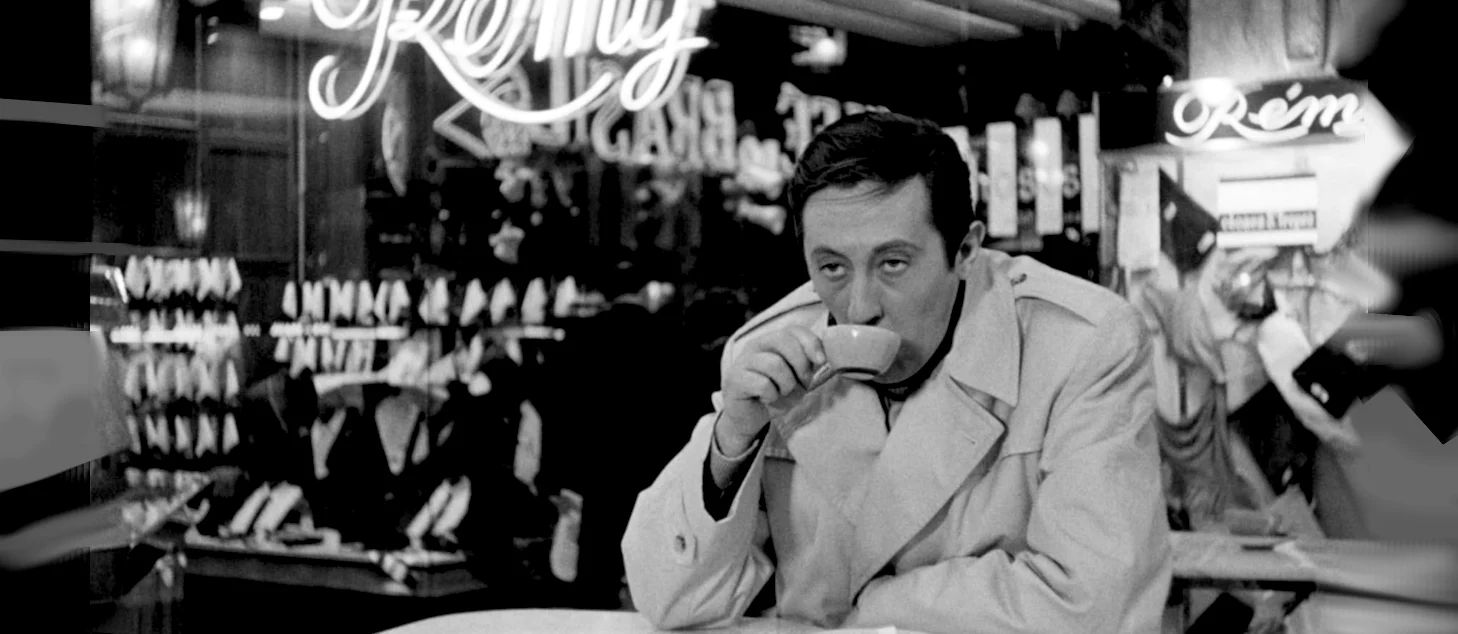

The thieves in a typical heist picture, are a cross-section of gents and thugs, lowbrows and masterminds. What trips ’em up can be a stupid mistake or something as simple as a kid writing down licence plates. In reality, any collection of crooks is bound to have its share of untrustworthy liars. It’s no wonder that so many cynical crime stories end up in a bloodbath — a truly enterprising and unprincipled crook will understand the advantages of double-crossing partners before they can double-cross you.
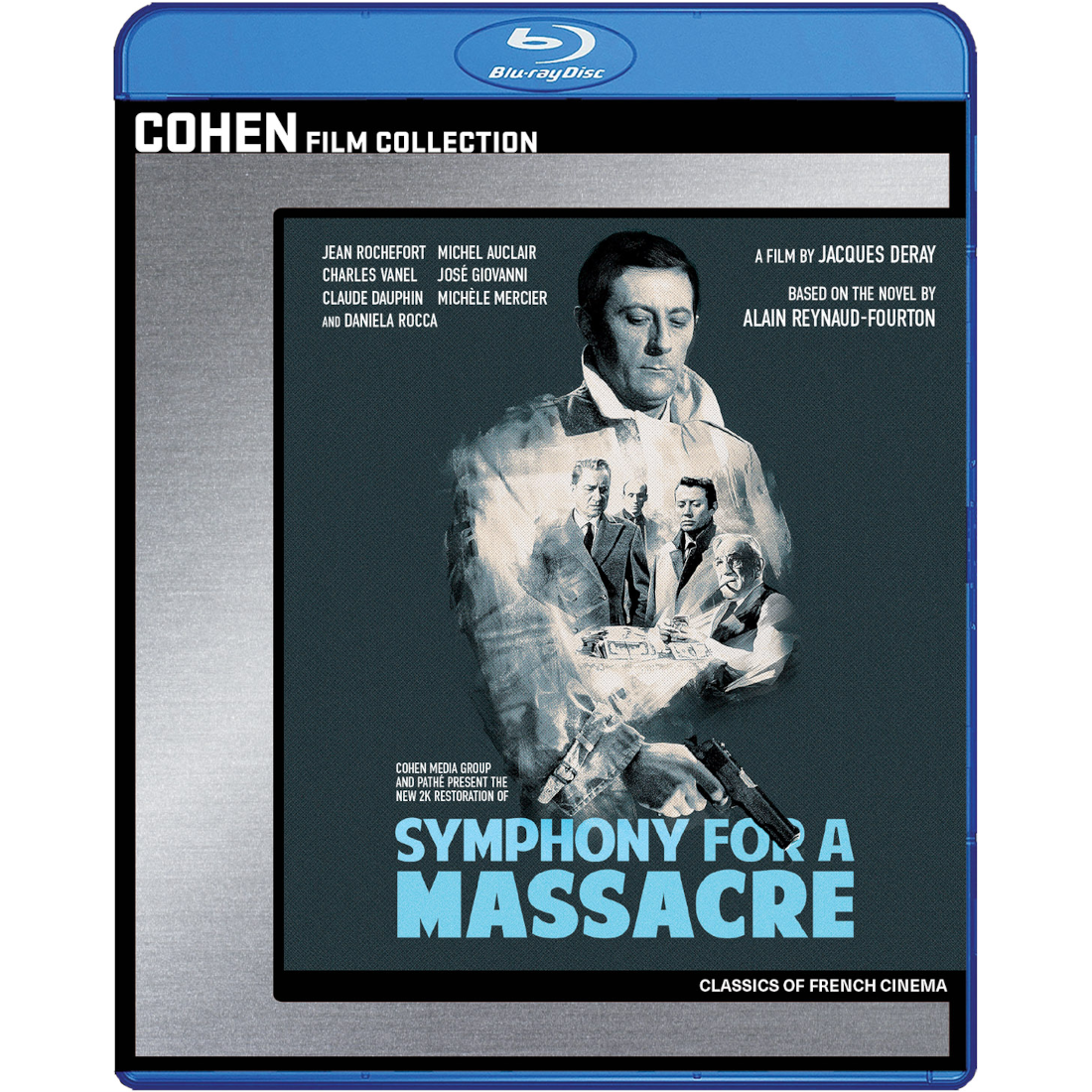
The cleverly scripted and tightly directed Symphony for a Massacre thriller begins as a standard smuggling scheme and almost immediately veers into a high tension tale of betrayal. Producer Julien Derode brought together terrific talent that included cinematographer Claude Renoir and art director Leon Barsacq. Followers of French film will know the film’s notable stars.
Director Jacques Deray (La piscine, Borsalino, The Outside Man) collaborated with co-writers Claude Sautet (Eyes without a Face, Le Choses de la vie) and José Giovanni, a former criminal. Giovanni had used his long prison term to write fiction, and when his book Le trou was made into a film, he specialized in writing authentic dialogue for crime films, as with Henri Verneuil’s The Sicilian Clan. Jean-Pierre Melville’s Le deuxième souffle began as a novel by José Giovanni.
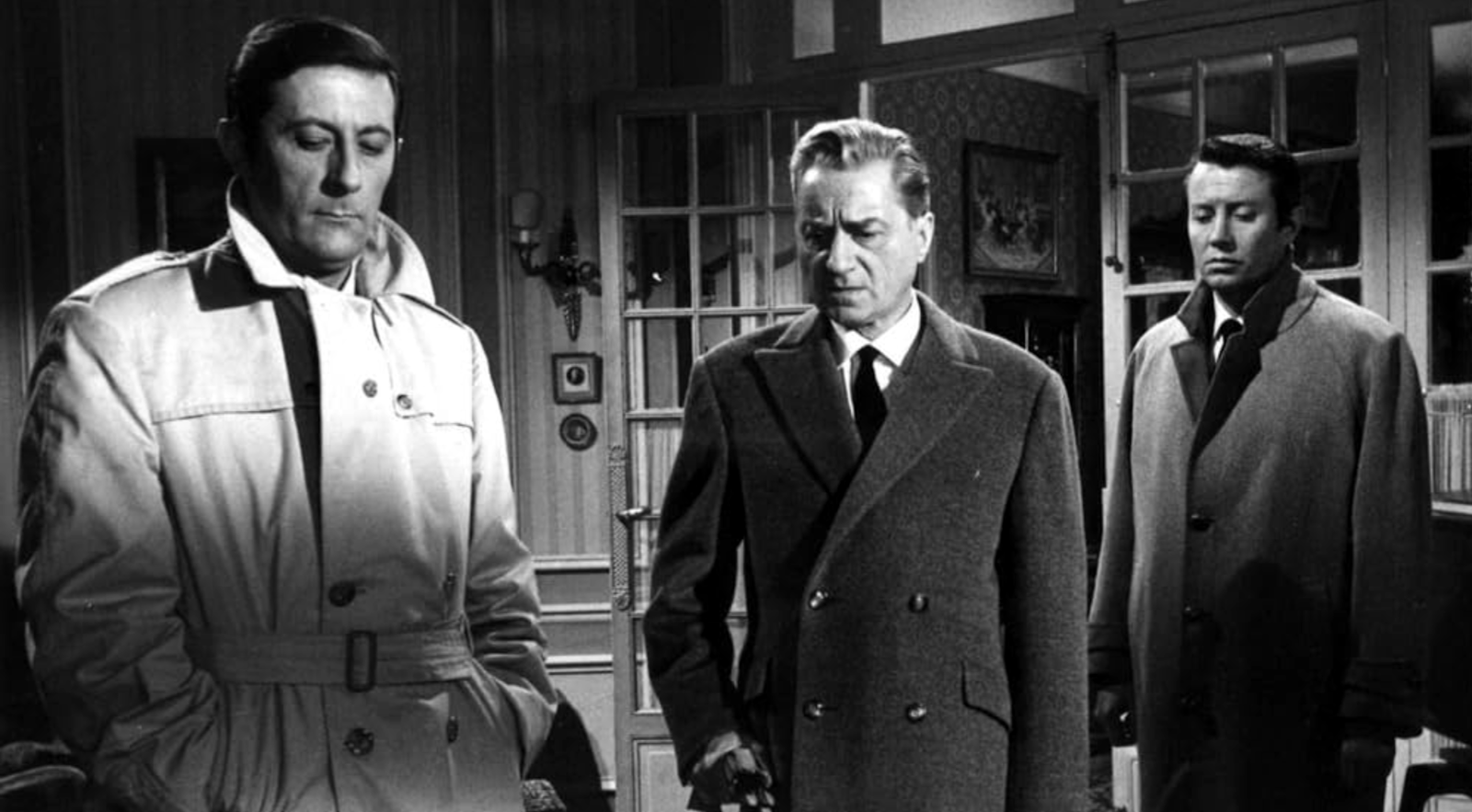
Four less-than-honest Paris businessmen have more than once pooled their finances to buy into crooked smuggling deals. Some do it for adventure and some don’t admit that they need the money. The kingpin is the older Paoli (Charles Vanel of The Wages of Fear and Death in the Garden). He has the prime connection with the Marseille-based drug smuggler Cerruti (Marcello Pagliero of Rome, Open City).
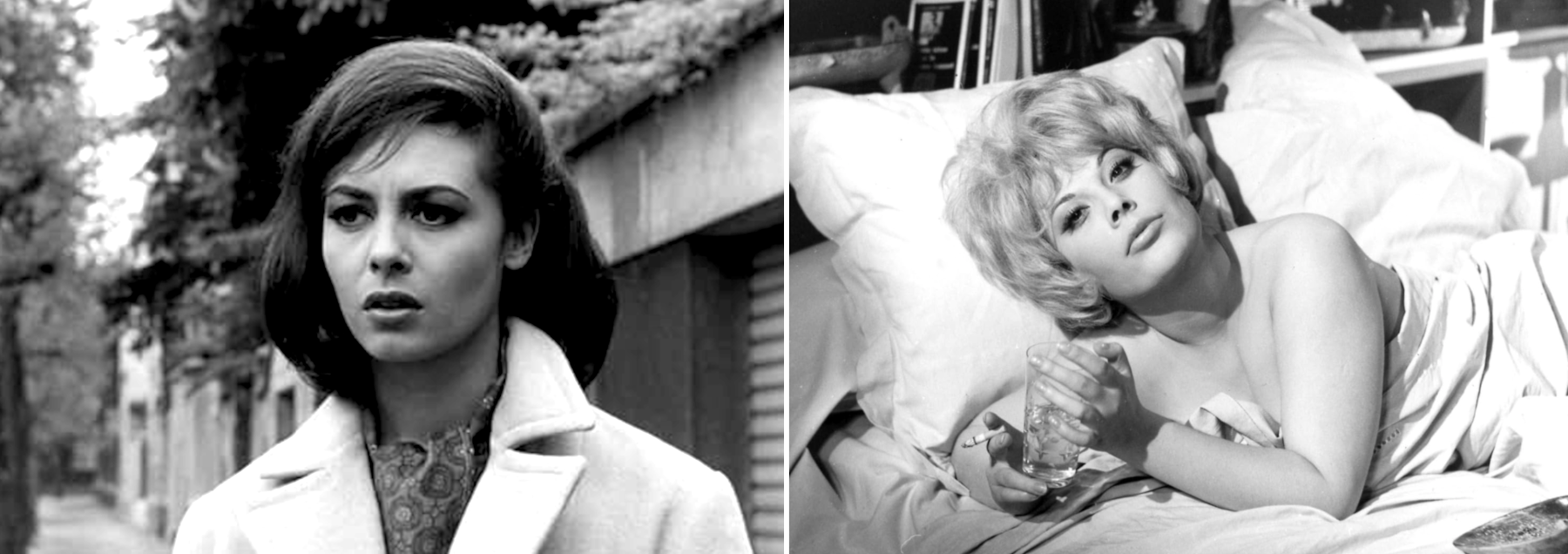
Two of the ‘investors’ are married. Clavet (Michel Auclair of Manon and Les maudits) runs a gambling casino that’s always short of cash; his wife Madeleine Clavet (Michèle Mercier of Black Sabbath and Shoot the Piano Player) is convinced that their luck will run out. Nightclub proprietor Valoti (Claude Dauphin) is more secure in his finances, but he doesn’t realize that his younger wife Helene (Daniela Rocca of Caltiki and Divorce Italian Style) is seeing a lover on the side. The fourth partner is bachelor Jabeke (Jean Rochefort of The Phantom of Liberty and Who Are You, Polly Maggoo?), a loner who keeps most of his dealings private.
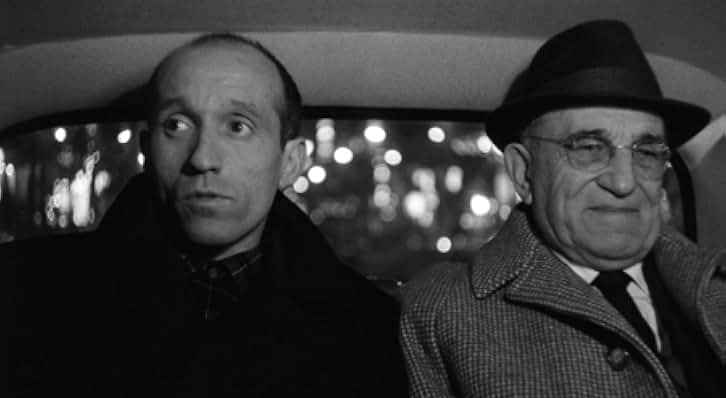
This smuggling deal is much bigger than usual, big enough to ‘retire on.’ All must come up with a lot of buy-in cash, but not the fifth partner. Moreau (co-scripter José Giovanni) ↖ earns his share by taking most of the risk. He’s the mule who will transport the cash to Marseilles and bring back the illicit drugs.
That’s all Standard Operating Procedure for a heist, but Symphony for a Massacre very soon reveals that two partners are not playing straight. Clavet’s mini-casino is in debt and running cash-short. Rather than admit his money troubles, he buys a batch of counterfeit bills ‘that even the experts won’t recognize.’ The partner we see the most is the easy-going, unflappable Jabeke. Not only is Jabeke sleeping with Valoti’s wife Helene, he’s worked out a wickedly clever scheme to steal the cash everyone has ante’d up, in a way that will keep his treachery undetected.
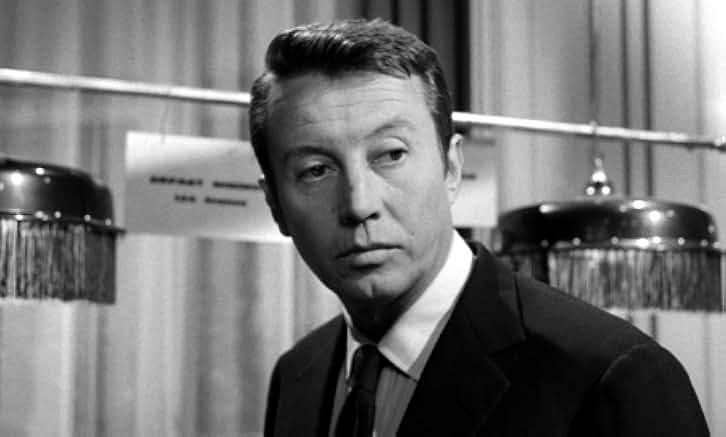
Counterfeit money floating around … an unfaithful woman involved … and a daring crook who thinks he can beat the odds. The suspenseful storyline’s turns of logic include several surprise twists, all of which a watchful viewer might be able to see coming. We follow Jabeke as he carries out his plan. It requires a highway dash down to Lyon in his Jaguar, followed by a hasty train dash to Brussels, one in which he can’t miss a connection. It’s all to establish an unbreakable alibi. One of the coolest customers in French noir, Jabeke at one point uses a disguise. His heavy-lidded eyes never betray his inner tension.
Going against the broader conventions of heist genre, these partners don’t panic when Moreau disappears without a trace, and all that seed money with him. Their only chance to recoup the small fortunes they’ve invested is to take a secondary ‘buy’ from Cerruti, for a much smaller stake. But now all must really stretch to scrape up the cash. All but Jabeke, of course.
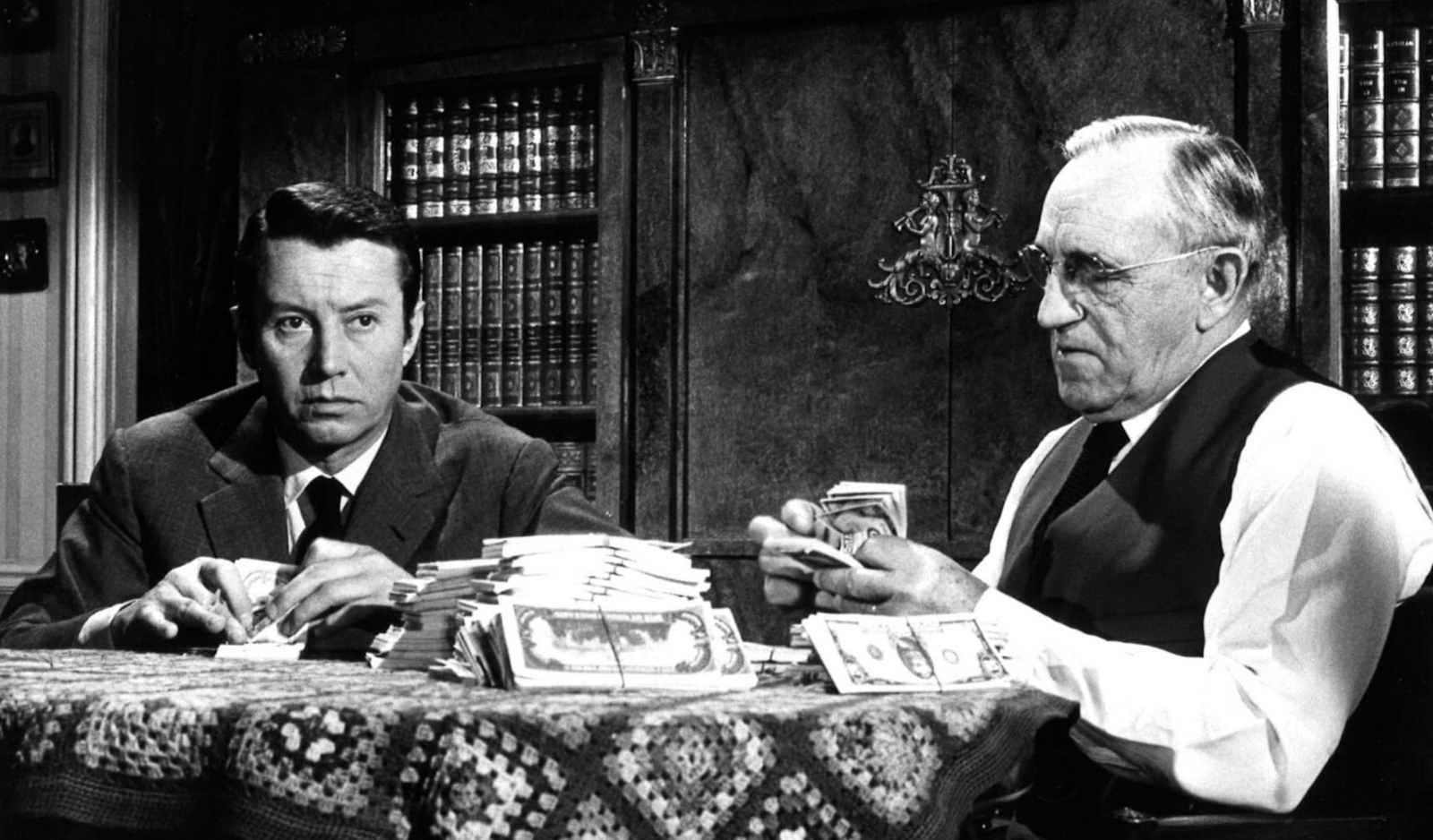
The context and atmosphere of Symphony for a Massacre is exactly what we want to see in a Paris-set crime tale. Just looking at the city is a dream: Paris can’t possibly be the same as it was in ’63. Helene drives a fancy 1961 Chrysler New Yorker (with fins!). How the hell does she get that big sedan through the narrow French streets? Jabeke must race across France in his 1957 Jaguar XK 150.
With two double-crosses happening at once, attentive viewers will be wondering How and Where the cheating of Clavet and the betrayal of Jabeke will trip each of them up. Look again at the title, which points to the possibility of a classic annihilating drama. With a minium of coincidences and pure-chance events, a domino-like progression takes us from one crazy scene to the next, with a logic that always feels ‘correct.’ We all secretly want movie crooks to get away with their crimes … and we simultaneously want them to fail in the most spectacular way possible.
The jazz score by Michel Magne is a delight; linking every dark scene is a bright transitional cue. The music might as well be laughing at these greedy cheats, thinking they can trick fate and still come out with a full skin.
Designer Leon Barsacq puts together some nice interior spaces. Clavet’s little casino is clean and bright, while Valoti’s restaurant-club is decorated in a trendy rustic style. The partner’s homes and apartments are all particularized places in recognizable neighborhoods. Jabeke knows how to make an exit from Paoli’s place without being seen — we see him do it.
A welcome face is that of actor Billy Kearns, an American who got a lot of play in French films whenever a Yankee was needed. He has a small part in John Huston’s The Roots of Heaven and bigger roles in films for Jean-Pierre Melville, and especially René Clément. He’s also got a fat role in Jacques Tati’s Playtime. Here Billy is an American who wins more at Clavet’s baccarat table than Clavet has in his coffers — and contributes to one of the film’s better twists.