
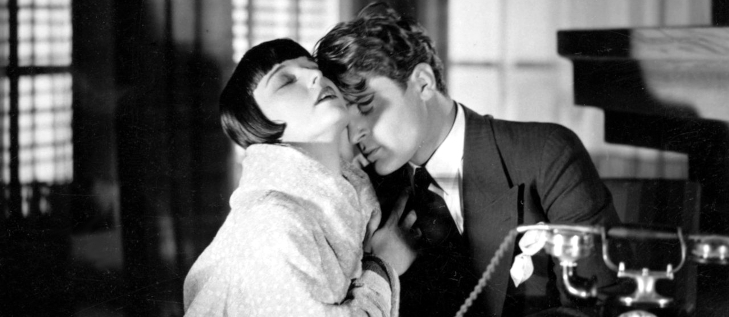
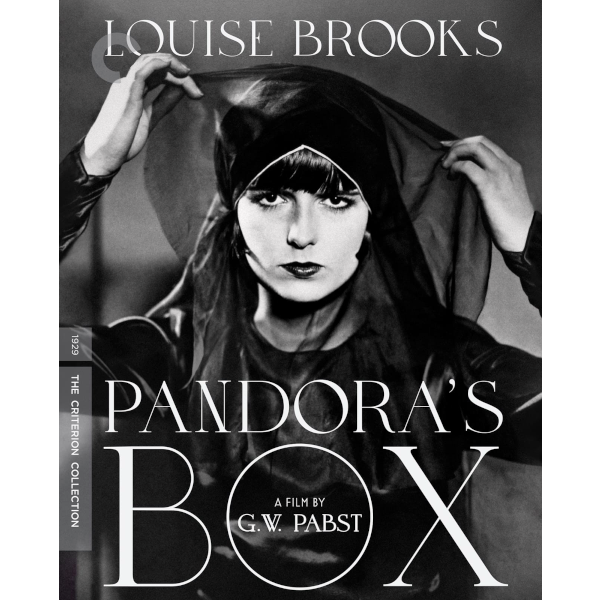

G.W. Pabst’s 1929 film Pandora’s Box is a true movie legend. An effort by German producers to break into the American market, it arrived in New York just as the earliest talkies were making silent film art commercially obsolete. It was also rejected in Wiemar Berlin, with various reasons given. A few critics did see something special in director Pabst’s choice to play Lulu. A pair of Victorian-era plays proposed the character Lulu to represent an Original Erotic Sin, a woman seemingly created to destroy men and foment chaos.
That not-so-obscure object of desire.
Pabst and his co-scenarist Ladislaus Vajda had a different idea: their Lulu is an innocent, and the destructive energy is sourced in the men who throw their lives away because they cannot resist her. Lulu has a considerable power that she cannot control.
G.W. Pabst was already a celebrated director of silent films. His biggest hit had been The Joyless Street, a naturalistic and socially conscious drama that helped make a star of Greta Garbo. Pandora’s Box is now known as one of the last and greatest silent pictures, but it was not a success when new. It was all but lost until the 1950s, when ragged copies were revived for museum screenings. Even in in that poor condition one could see what entranced critics like Andrew Sarris. Louise Brooks’ Lulu is a vision of sex appeal disconnected from acting styles, fashion or the morality of any particular period. Everything about Lulu is instinctive, even her childish tantrums. Critic Raymond Durgnat described a basic appeal of movies as a ‘harem game,’ onto which audiences can project their own desires. Durgnat talked up Kim Novak, Marilyn Monroe and even Barbara Steele, but his theory certainly applies to Louise Brooks. She’s an unattainable sex object at an even higher level of mystery.
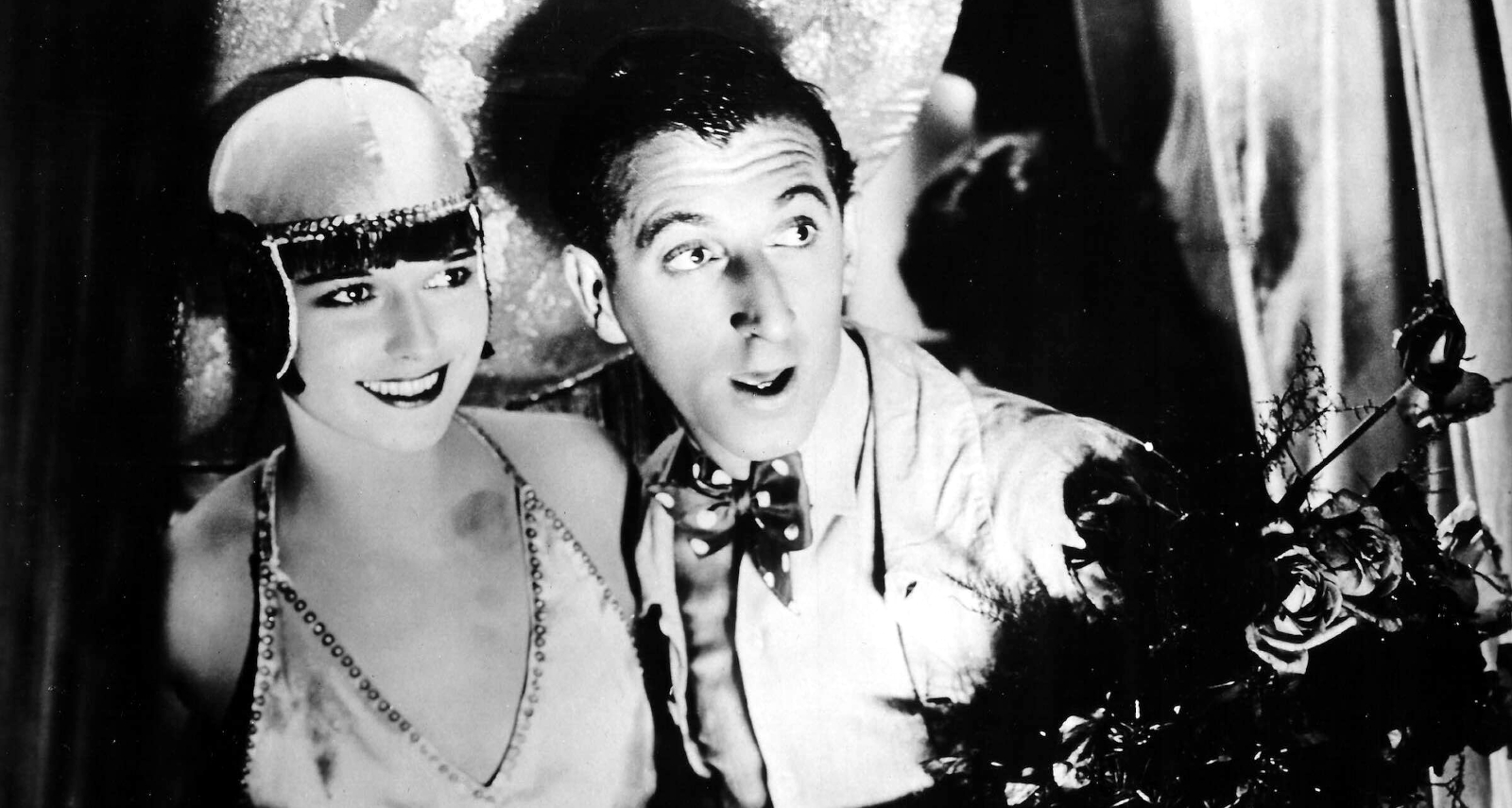
The story of Lulu begins light, adds disturbing elements and ends on a note of near-unfathomable doom. The original plays held Lulu culpable for her own sex attraction, but Pandora’s Box has much more to say about sexuality and the Way of All Flesh.
Lulu is a kept woman living in a fancy apartment maintained by the respected publisher Dr. Peter Schön (Fritz Kortner). She’s gaining attention as a star peformer in stage extravaganzas. Schön arrives to tell her that they must part because he’s engaged to marry the daughter of a politician. Schön is not the only person infatuated with Lulu. Schön’s own son Alwa (Franz Lederer) is the producer of Lulu’s show. Countess Anna Geschwitz (Alice Roberts) designs Lulu’s costumes. She cannot fully express her same-sex attraction.

Lulu is affectionate with a strange, ragged little man named Schigolch (Carl Goetz), who may have been her first pimp. He is at present trying to team her up for a variety act with acrobat Rodrigo Quast (Krafft-Raschig). The actual relationship remains unsettled. Lulu refers to Schigolch as her ‘first patron,’ but later shouts that he is her father.
Dr. Schön brings his fiancée to the premiere of Alwa and Lulu’s big show, and fireworks ensue when Lulu throws a fit and causes a big scene. His respectable marriage plans ruined, Schön has little choice but to go ahead with a wedding to Lulu. The reception becomes a nightmare. Alwa sulks because Lulu won’t run away with him. Lulu’s uncouth theatrical associates throw their own party in the bridal bedroom, and when Dr. Schön discovers them, he becomes unhinged.
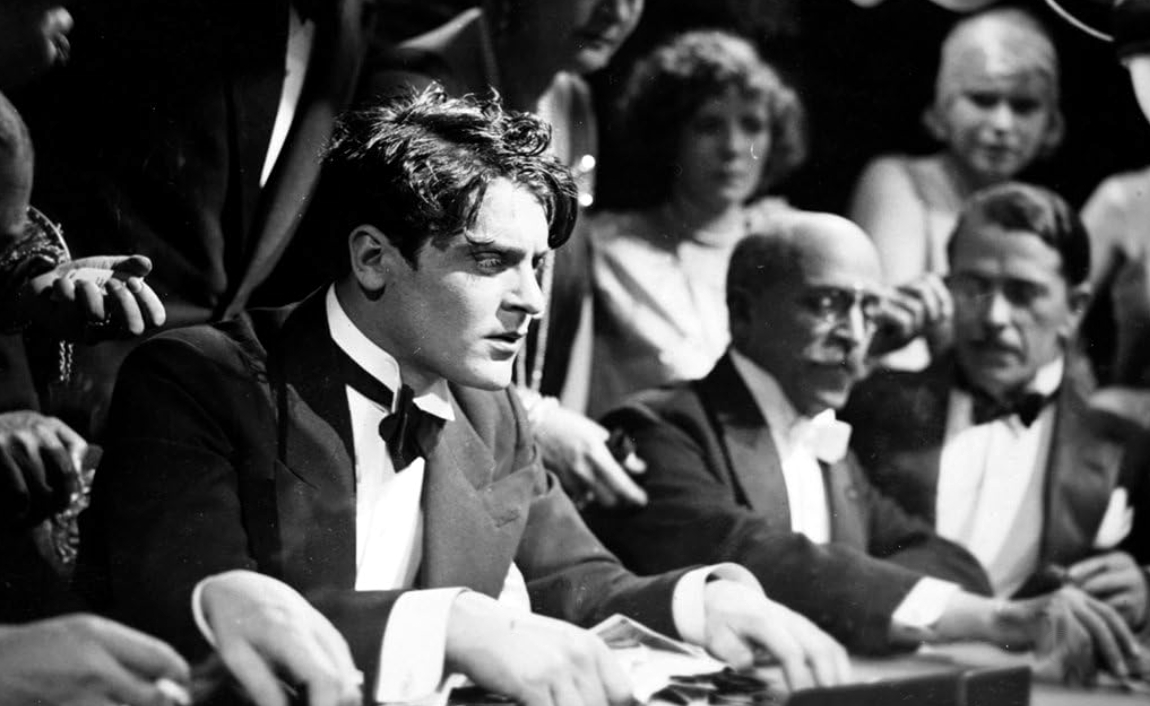
From that point on a number of lives become chaos. A murder trial ends with several characters becoming fugitives. Lulu attracts blackmailers and opportunists. Lulu proves easy prey for a charming schemer (Michaelvon Newlinsky). Not much later, she’s been maneuvered into a debt situation that may end with her being sold to an Egyptian brothel-keeper. A major set piece plays out on a floating casino, where the demoralized Alwa tries to save Lulu by cheating at cards.
Lulu’s fortunes bottom out, but an even worse fate awaits when she, Shigolch and Alwa end up together in London, at Christmastime.
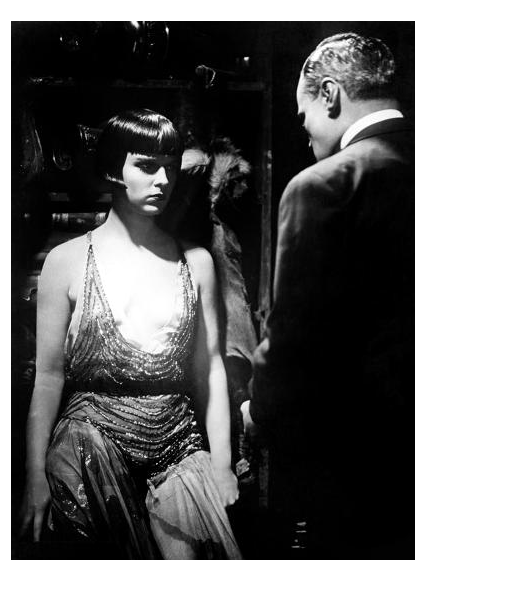
No synopsis can communicate the range of emotions that come with Pandora’s Box. A teasingly sexy story about a universally desired showgirl transforms into a dark, unsparing look at the lower depths of human desire. Conventional movie sirens mainly weave spells of silver-screen glamour, but Lulu embodies a more elemental flesh-and-blood allure, an appeal inseparable from her personality. She isn’t explained as a ‘type,’ she just is.
Louise Brooks was apparently one of those women that present a chemical challenge to every male they encounter. Her devil-may-care private life wasn’t at all private. The actress was of course not like the fictional Lulu, but they share a basic quality — they like men, enjoy being happy, and aren’t interested in what anyone else thinks of it. She doesn’t give a damn that the meter reader might think she’s socially unacceptable. She sees nothing wrong with consorting with both the high-toned Peter Schön and the decrepit beggar Schigolch.
Lulu is unpredictable. When a fugitive from justice, she pauses at the scene of the crime to read a fashion magazine. Fleeing on a train, she returns the overtures of a suspicious gentleman who recognizes her photo from a newspaper announcing a big reward for her capture.
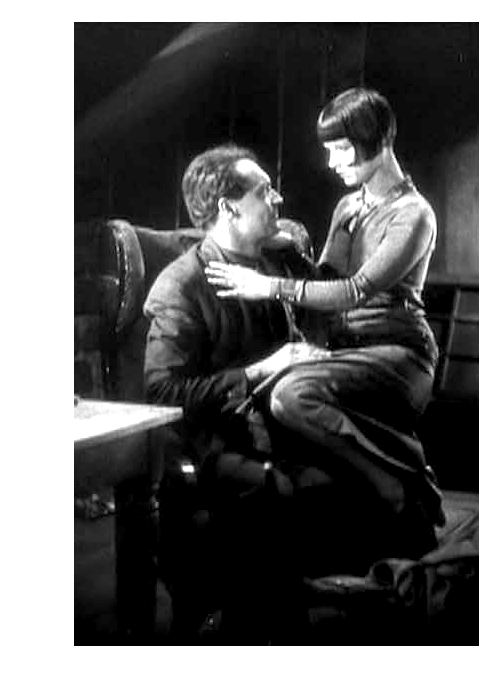
Pandora’s Box focuses on the amorous relationships ‘inspired’ by the innocent Lulu. Peter Schön foolishly thinks he can possess and control her. His son Alwa sees in Lulu his ticket to manhood. The Countess Geschwitz wants her as well. Only the filthy old man Schigolch seems to understand and accept Lulu for what she is. Society would blame Lulu for everything that happens, but Pandora’s Box repeatedly shows her to be a victim of the desires of others.
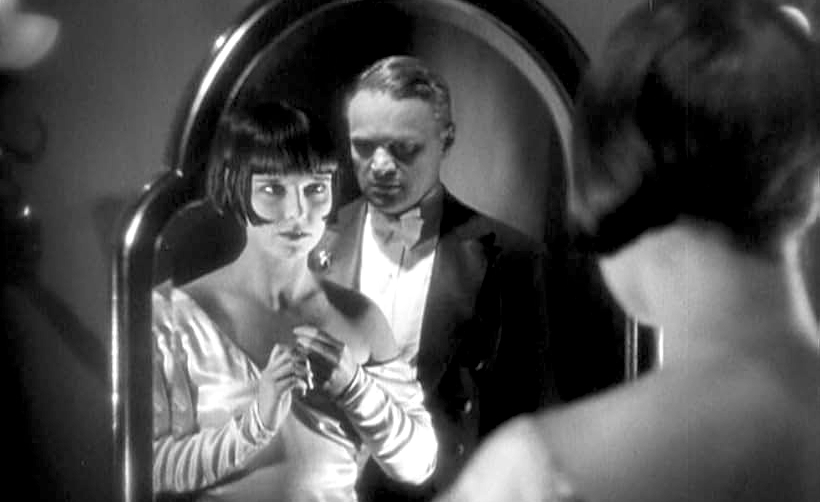
Director Pabst concentrates on intense performances, using a minimum of dialogue inter-titles. Character blocking and telling compositions express the relationships of the players. A quick pan follows Lulu as she flies excitedly into a room. In the bridal bedroom after the disastrous wedding reception, Lulu seems unaware of Dr. Schön’s psychic distress. He crowds out Lulu’s image in her own mirror and then corners her against a wall, blotting out most of the frame.
Pabst’s film is mostly post-expressionistic. The scenery and lighting are moody but realistic, and there are no distorted sets. Some sequences quicken the tempo, but most scenes stress atmosphere, pausing to isolate significant details. Each chapter ends with a scene of chaos — the backstage premiere, the trial, the violence on the gambling boat. Then the next chapter opens with the characters stuck in yet another no-solution debacle.
For its final act Pandora’s Box returns to visual storytelling as pure as anything in silent cinema. We don’t know how much time has passed, but it is now winter and Alwa, Lulu and Schigolch are holed up in London, in a freezing attic room. It is Christmas. Lulu is a ragged mess but prepares herself to go out and earn some money. Down in the street, an angelic Salvation Army volunteer offers kind words and a sprig of mistletoe to a tall, forlorn stranger (Gustav Diessel) that we’ve seen glaring at a poster warning about a savage sex killer. The stranger is touched to be shown so much kindness. While Alwa cries in utter humiliation and defeat, Lulu steps outdoors to look for a customer…
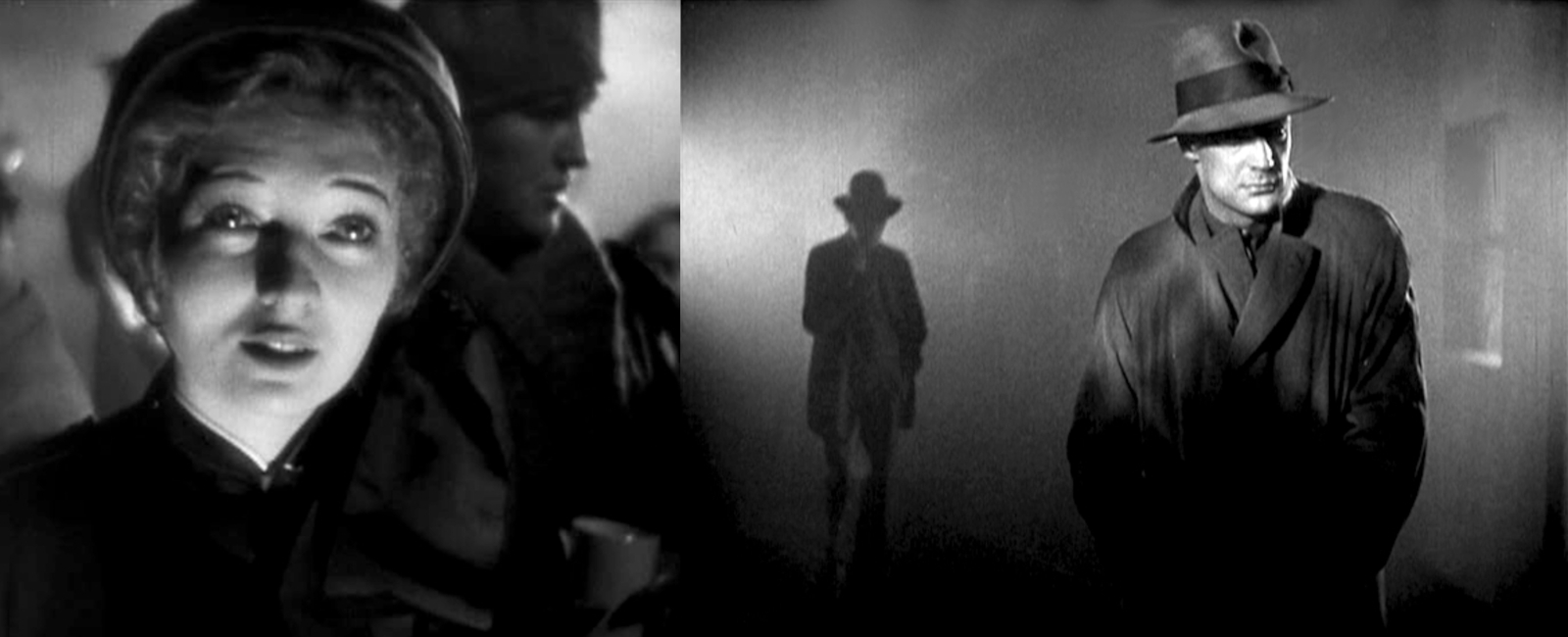
Pandora’s Box finishes with a profound statement about mercy, goodwill and kindness — while also embracing total horror. Lulu accepts the lonely stranger with an open heart; he experiences a few minutes of blessed warmth and affection.
Even in less than optimum condition Pandora’s Box weaves an undeniable spell. As a silent film, its effects don’t rely on conventional star appeal. Louise Brooks’ Lulu has a timeless quality. Director Pabst didn’t have her reach for a characterization, but simply react naturally, using her own personality. The effect is haunting. Louise Brooks wrote that Lulu’s attraction to the actor in the final London looks real because it was real — she was strongly attracted to Gustav Diessl.
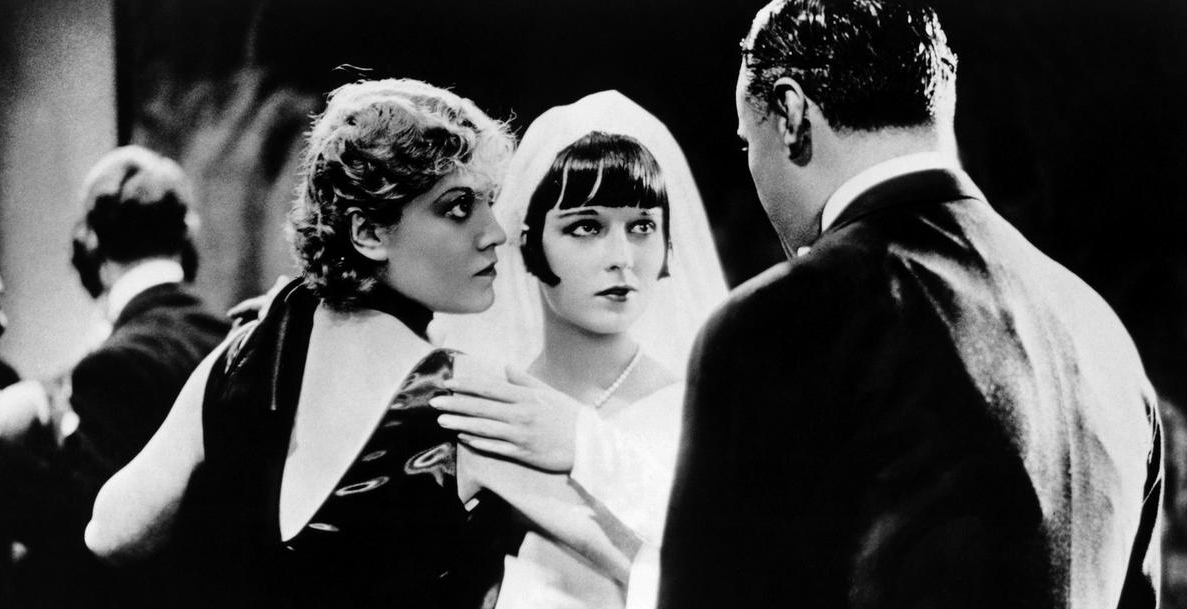
Pabst depicts the honest lesbian attraction between Lulu and Countess Geshwitz without visual allusions or coded behaviors — Countess Anna is clearly moved to be with Lulu, especially when they dance. Geschwitz has been noted as the ‘first’ recognized lesbian character in a movie. In 1929 … can that possibly be true?
The stage assistant Siegfried Arno shows up in a number of classic German films — but also has a great bit in Preston Sturges 1942 comedy The Palm Beach Story. Francis Lederer had a notable Hollywood career, with good roles in classics like Mitchell Leisen’s Midnight. Noted stage actor Fritz Kortner was a genuine star in German film. He spent the war years in Hollywood playing secondary parts, some of them in notable films noir.
Lulu’s fate remains an almost mystical question. She’s still a challenging character for audiences: more than an innocent, yet a contradiction of moral conventions. Lulu doesn’t need a philosophy to justify her existence. She fears and suffers but endures, and still has the ability to give. Yet, women like her take the blame for ‘corrupting’ the world.


4 comments