
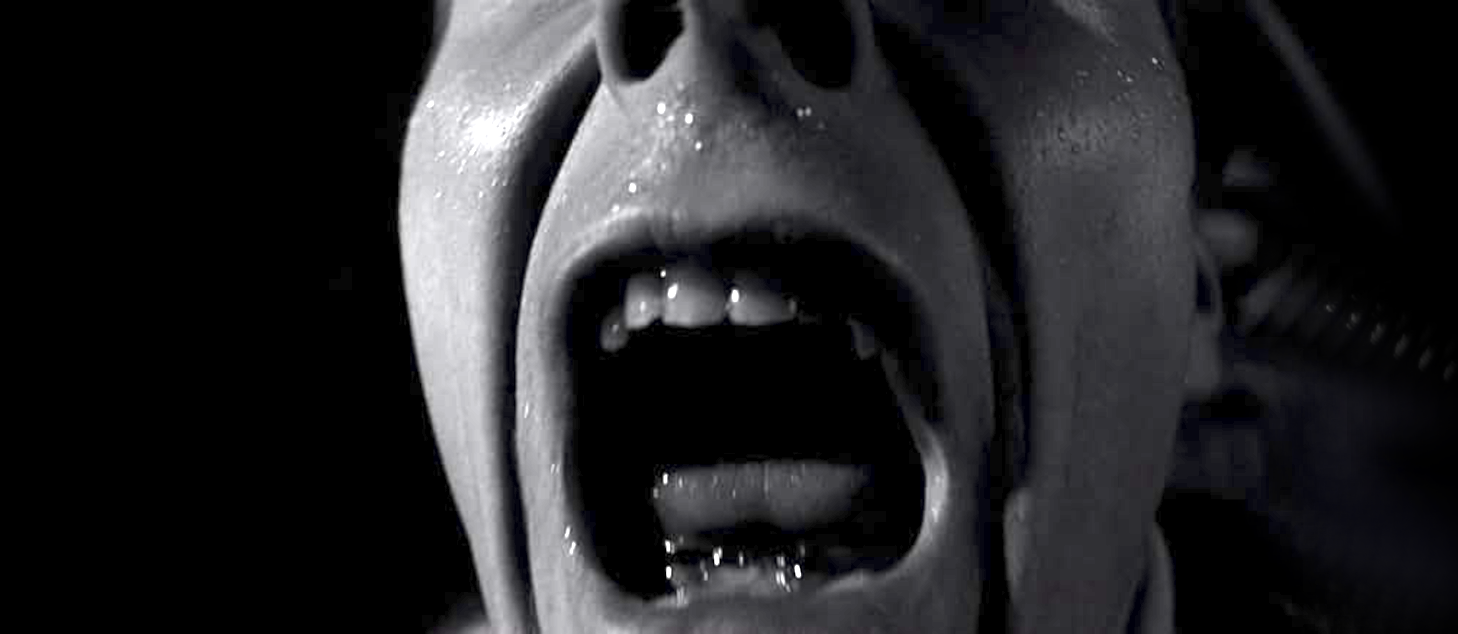
Unearthly Stranger — Region A
1963’s critics favored this ‘cerebral’ Sci-fi offering but the main draw was its mysterious heroine, a new bride who may be an invader from beyond the stars. Fave actor John Neville is the Think Tank boffin who doesn’t understand why his wife isn’t like other women … just for starters, she doesn’t have a pulse. Serious intentions have maintained the show’s high reputation, and it still deserves points for being different. Kino gives it two separate audio commentaries.

Unearthly Stranger
Blu-ray
KL Studio Classics
1963 / B&W / 1:66 widescreen / 79 min. / Street Date June 16, 2026 / available through Kino Lorber / 29.95
Starring: John Neville, Philip Stone, Patrick Newell, Gabriella Licudi, Warren Mitchell, Jean Marsh.
Cinematography: Reg Wyer
Art Director: Harry Pottle
Film Editor: Tom Priestley
Original Music: Edward Williams
Written by Rex Carlton based on an idea by Jeffrey Stone
Produced by Albert Fennell
Executive producers Leslie Parkyn, Julian Wyntle
Directed by John Krish
 The high reputation afforded British Sci-fi is based upon a number of classic titles, but the country also produced modest program pictures to match America’s matinee output, with sensational titles and an occasional monster. Several shows that dealt with small-scale invasions from outer space began as un-produced plays, or were adapted from TV teleplays. The common factor in several is a small cast in a limited setting: five or six ‘ordinary people’ in a country pub or inn must confront visitors from outer space.
In the 1950s producers Leslie Parkyn and Julian Wyntle had each made popular titles on their own; in 1958 they teamed up with a company called Independent Artists. Their output included some celebrated titles (This Sporting Life, Tiger Bay) and fantastic fare we know well: Circus of Horrors, Night of the Eagle. In 1963 Independent Artists backed producer Albert Fennell’s Unearthly Stranger, yet another Brit Sci-fi filmed on a tiny scale, with just a few actors.

A cast of quality performers guaranteed attention in the English film scene; the show was reasonably well reviewed in ’63 with some critics praising the fact that it had has no monster. American-International quickly picked it up for U.S. distribution, although 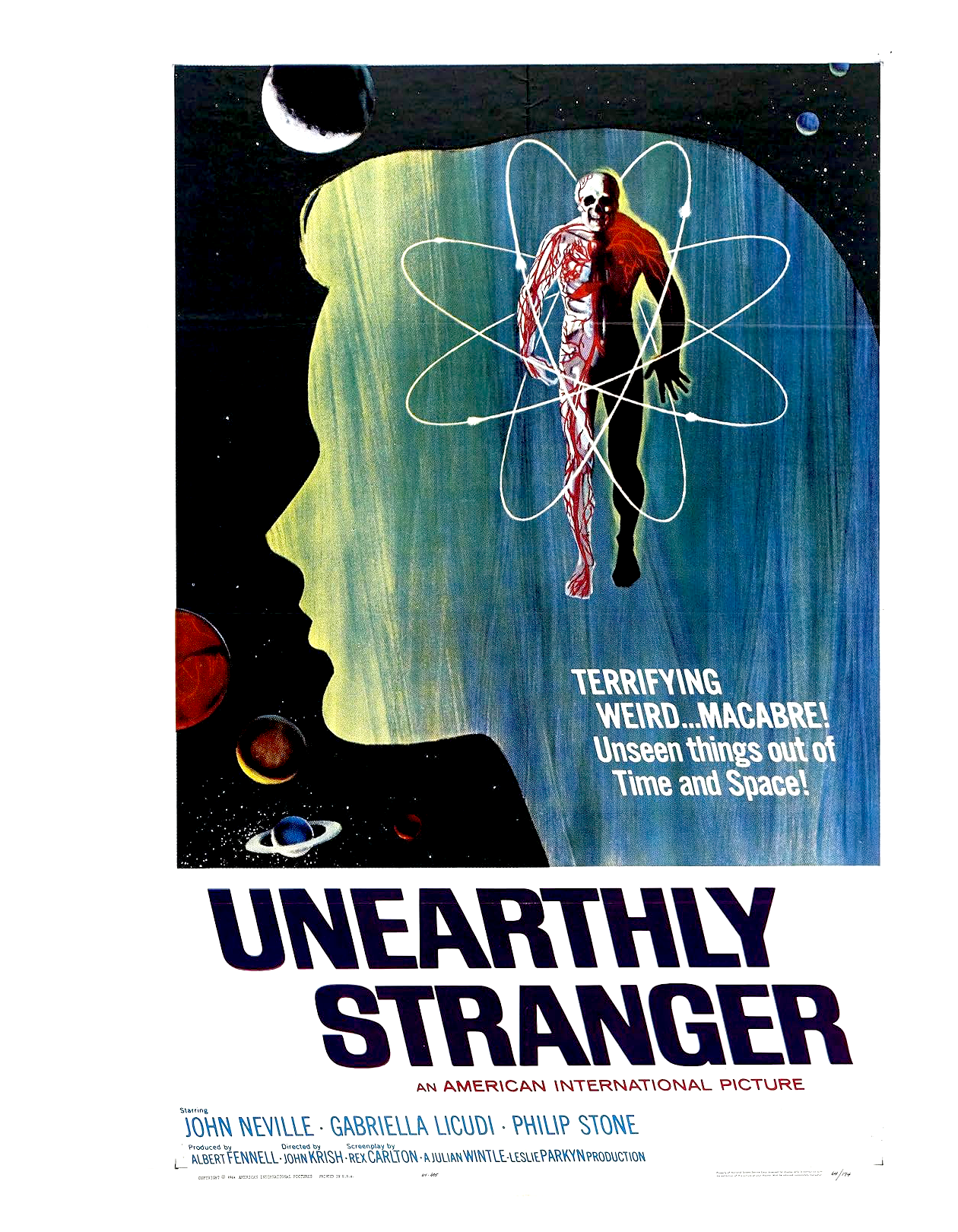 Variety didn’t review it until 1965, when it made its debut on American television. A.I.P. handled Unearthly Stranger differently than most of their aquisitions — they didn’t re-edit it, change the title or alter the music score. They did cook up some effective poster art, using imagery more appropriate for Creature with the Atom Brain. →
The story involves a stealth invasion from outer space, a scheme to stall Earth’s technological progress. Most of the action takes place in a small office and a country cottage. There are a couple of moments of conflict and a few interesting weird touches, but no real violence. Sound effects take the place of visual effects, which pleased the reviewers. The show impressed us teenagers; it now comes off as a well-acted but minor effort, the kind of think-piece that ends just as it’s beginning to get really interesting.

Professor Munroe (Warren Mitchell) returns to his office at the Royal Institute for Space Research, tells his colleague Prof. John Lancaster (Philip Stone) that he’s solved the problem they’ve been working on, and promptly dies in agony from an unknown cause. All of Munroe’s work notes have disappeared, which leaves the Institute’s Dr. Mark Davidson (John Neville) to work alone on their secret project, a scientific breakthrough that could make space travel unnecessary:
“We’re trying to find a way of projecting ourselves into another world through the power of thought.”
The London think tank’s idea is that space travel could be accomplished via something akin to astral projection. We could visit other planets even if atmospheric conditions made physical survival there impossible. These must be some pretty intelligent scientists: Mark Davidson carries around some schematic drawings and occasionally plays with a slide rule, as if he were working on a basic engineering problem.
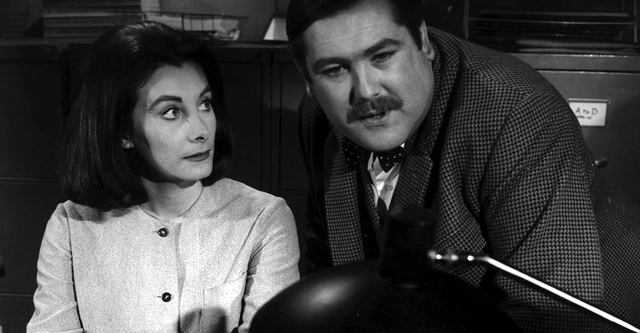
Security Major Clarke (Patrick Newell) joins the group, annoying the office secretary Miss Ballard (Jean Marsh) to no end. Clarke informs only John Lancaster that key scientists working on similar projects in other countries have been disappearing, too. John protests, but Major Clarke insists that Mark not be told about the apparent danger to his person.
Mark returns from a holiday in Switzerland with a new bride, Julie (Gabriella Licudi), who remains quietly at his home. She loves England and at first seems content. When Major Clarke cannot find any record of Julie anywhere, he insists that Mark be taken off the project. Mark continues to work at home, where he can also spend more time with his new bride. He observes that Julie sleeps with her eyes open, that she doesn’t blink and that she doesn’t have a pulse (!).
The ‘unusual observations’ continue. Mark invites John to dinner. Julie already knows who he is before they are introduced. John then sees Julie remove a casserole from a hot oven without burning her hands. But she does become emotionally disturbed. A walk to the stores affects her deeply, when her mere presence alarms a baby and elicits a strange, frightened reaction from a group of schoolchildren. When Julie cries, her tears leave burn marks on her face.
John and Mark recite reams of glib exposition about the project, discussing their theories in ridiculously basic terms. Yet they do touch on concepts that we recognize from books by Philip K. Dick: creating real things by a concentration of thought. The speeches telegraph dangers to come, giving us viewers an advantage over John and Mark, geniuses that can’t see the obvious:
“While we work on the problem of mental projection, what if someone out there in space is doing the same thing and coming here? Ha, ha, how silly.” (Paraphrase.)
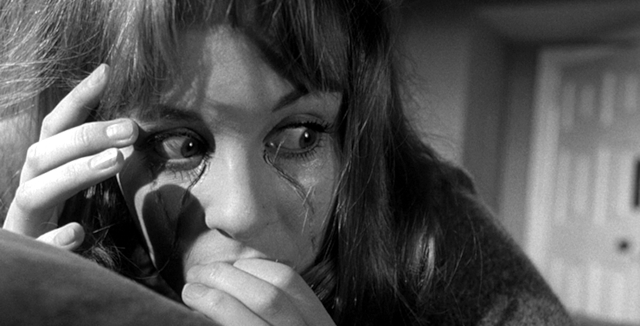
Unearthly Stranger’s screenplay is not very clearly thought out. If the project is secret, why is its presence announced on a plaque outside the building? The work doesn’t seem to require a laboratory, a staff or any special resources; Mark has only his slide rule and a photo of the moon on his wall. Is this how a think tank operates? We all want a job like that … I’ll go to the office, drink coffee all day and hobnob with my fellow wizards, thinking deep thoughts.
The security angle is equally dodgy. Mark is allowed to work at home on this top-top secret project. His secret notes go in a safe, but no copies are made. Scientists abroad are said to be dropping like flies. Prof. Munroe croaks in the exact same manner, yet no big-time security alert goes up. Why is his corpse being kept in a room downstairs? At one point John and Mark discover that Munroe’s coffin is empty, which ought to make them suspect Major Clarke or Miss Ballard. Or maybe they should search the building for suspicious seed pods? No, nothing to report here!
If we don’t become too concerned about those lapses of logic, it might be because neither Mark nor John think Julie’s unnatural physical qualities are worth following up on, especially that trivial ‘no pulse’ thing. Well, nobody’s perfect.
The strange thing is that the good performances makes this play as if it all made sense. The one consistent angle is the screenplay’s strange ideas about married life, and women in general. John and Mark accept Julie as a woman but not a person, seeing her only as an attractive female, a ‘good catch’ to make Mark happy. It doesn’t matter that she has no identity, that her past in Switzerland is a clean slate. Mark apparently has no interest in knowing more about her. The film’s telling sub-theme is that men and women are different, opposed beings. The sexes don’t understand each other because men don’t see women as sentient, independent entities. Apparently Men are Men but Women might as well be Thought Projections from Alpha Centauri. We’ll pick up this thread again, a little further down.
The story idea for Unearthly Stranger is by Jeffrey Stone, who spent most of his time as an actor. The credited screenwriter would seem an odd choice for a British film: Rex Carlton, a writer and producer of odd fare like The Brain That Wouldn’t Die, and a couple of pictures with the independent schlockmeister Al Adamson. When performed by fine actors like John Neville, the dialogues flow well until all the unlikelihoods and loose ends get in the way.
The story is told in flashback by a man ‘recording the facts while he still can,’ reminding us of the predicaments faced by Peter Stenning, Miles Bennell and even Walter Neff. The lean budget stays close-in with our five main characters. We hear about Julie long before we meet her, and she only has one scene to herself. One scene is a flashback within a flashback, that shows John and Julie together in Switzerland. Their initial talks avoids the expected ‘getting to know you’ chit-chat. John shows no curiosity whatsoever about who Julie is, about her family, about anything. Mark’s lack of curiosity ought to be insulting — he doesn’t even care to sit down and say, ‘tell me about your life.’ Or much better, ‘who the hell are you?’
The movie asks us to accept Mark and Julie’s relationship as a given. Mark is a proper gent who doesn’t go overboard with affection, even in private. The men talk about Julie, but nobody ever really talks to her. Julie has no footprint in anybody’s records, not in Switzerland or or anywhere else. But instead of pulling her in for an investigation, Major Clarke only offers some weak verbal complaints.
Julie wouldn’t need a connection to Project TP 91 to attract official curiosity. How did she come to England without a passport? Don’t arrivals need to register locally, and divulge a minimum of information about themselves? We would ask how the filmmakers could think that none of this matters … except that no critics appear to have complained about the film’s lack of basic logic.
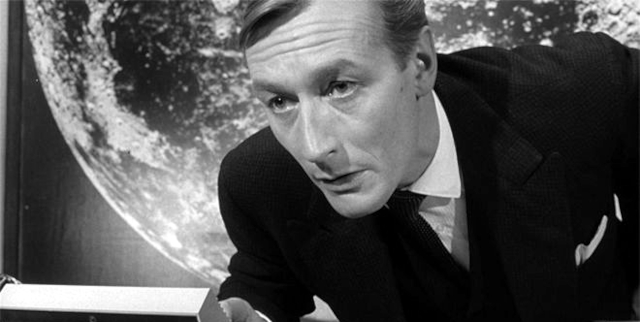
John Neville was a celebrated Shakespearean actor who knows how to make his presence felt in front of a camera. We love him from Terry Gilliam’s The Adventures of Baron Munchausen, made 25 years later. Both Neville and co-star Philip Stone deliver their ‘business as usual’ dialogue feel credible despite the Swiss-cheese storyline. The most natural screen presence belongs to Jean Marsh’s secretary Miss Ballard. For most of the picture Ballard has little or nothing to do, yet she conveys a consistent air of intelligence.
Pretty Gabriella Licudi may have been re-dubbed with a different voice. She racked up quite a few credits, but I’ve only seen her bit part in the 1967 Casino Royale. That this prominent role didn’t lead to stardom must have been disappointing. Two years before, a BBC science fiction teleseries called A for Andromeda had introduced England to a future star: Julie Christie.
Unearthly Stranger now seems less a Sci-fi story than a twisted fable about gender politics. The filmmakers tiptoe carefully around their espionage-suspense story, oblivious to the fact that their casual misogyny is showing. Jean Marsh’s Miss Ballard is introduced with the remark that she “doesn’t rely on facts, but only on the unknown, what she can fear deep down.” Where that ‘fear’ remark comes from isn’t explained. When Mark and John finally decide to proactively determine Julie’s planetary origin, they never consider just talking to her. They instead prepare to anaesthetize Julie against her will, like a lab animal. The two are just as reprehensible as the awful scientists in the ultimate sexist Sci-fi, Kurt Neumann’s She Devil.
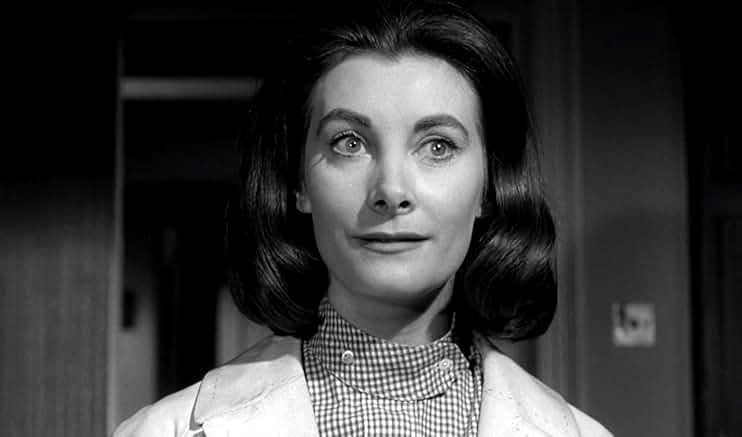
Again, females are treated as an alien species with a suspect agenda. Gabriella Licudi’s Julie seems as much a threat for being a woman, as she is a ‘thought being’ projected from outer space. Her situation suggests a kinship with Gene Fowler Jr.’s thoughtful Sci-fi drama I Married a Monster from Outer Space. Just like that movie’s alien Tom Tryon, Julie decides she likes living as a human among humans and goes ‘off mission.’ But she’s somehow incompatible with her new home. Babies and children perceive her as evil. The playground kids back away to their school building, like little robots. The misogyny is complete: a woman that repels innocent children is unnatural. You know, burn the witch and all that.
First-time director John Krish had a great deal of TV experience. Much of his direction is admirable, especially considering the production’s limitations. He occasionally blocks his scenes in the fashion of Live TV soap operas — characters will take turns facing the camera to deliver key dialogue. One exchange ends with the construction later lampooned in the comedy Airplane!: reacting to frightening news, John swivels to stare at the camera in close-up, with a stunned look on his face.
Director Krish accents Mark’s midnight panic with tilted camera angles and decorative shots of circular stairwells, etc.. The film’s limited exteriors and action bits feel like a second-unit effort. When two men try to restrain a struggling woman Krish cuts to several shaky hand-held short cuts of the three of them grappling. It feels too prolonged, as do those opening shots of Mark running in panic from unseen assassins.
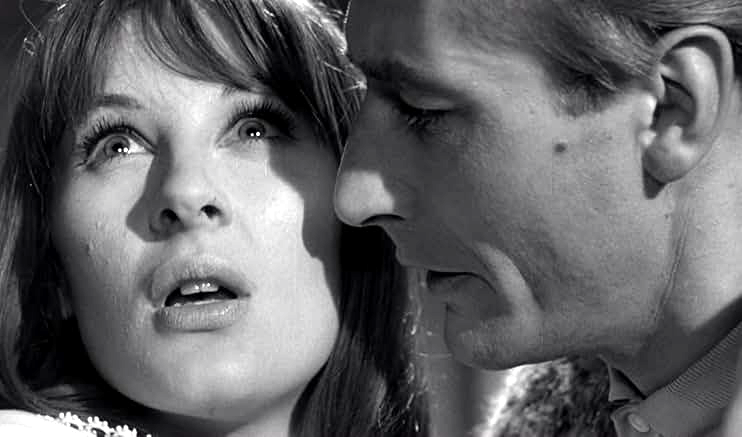
(Spoiler) The finale pulls off an unexpected surprise twist, that in a newer movie would be one of several such twists, allowing the ‘invasion’ to develop further. John and Mark learn that ‘projected’ alien phantoms have been among us for twenty years, tasked with a specific mission. The well-directed finale is a non-sequitur that teases the ‘women can’t be trusted’ angle, without resolving anything. We’re left hanging with an intriguing bit of Sci-fi paranoia.
Executive producer Julian Wyntle and this film’s Albert Fennell would proceed to become co-producers of the extremely successful TV series The Avengers. The next biggest success story from Unearthly Stranger has to be Jean Marsh. In addition to a long and fruitful acting career, Marsh would become the creator behind the long-running TV series Upstairs Downstairs.

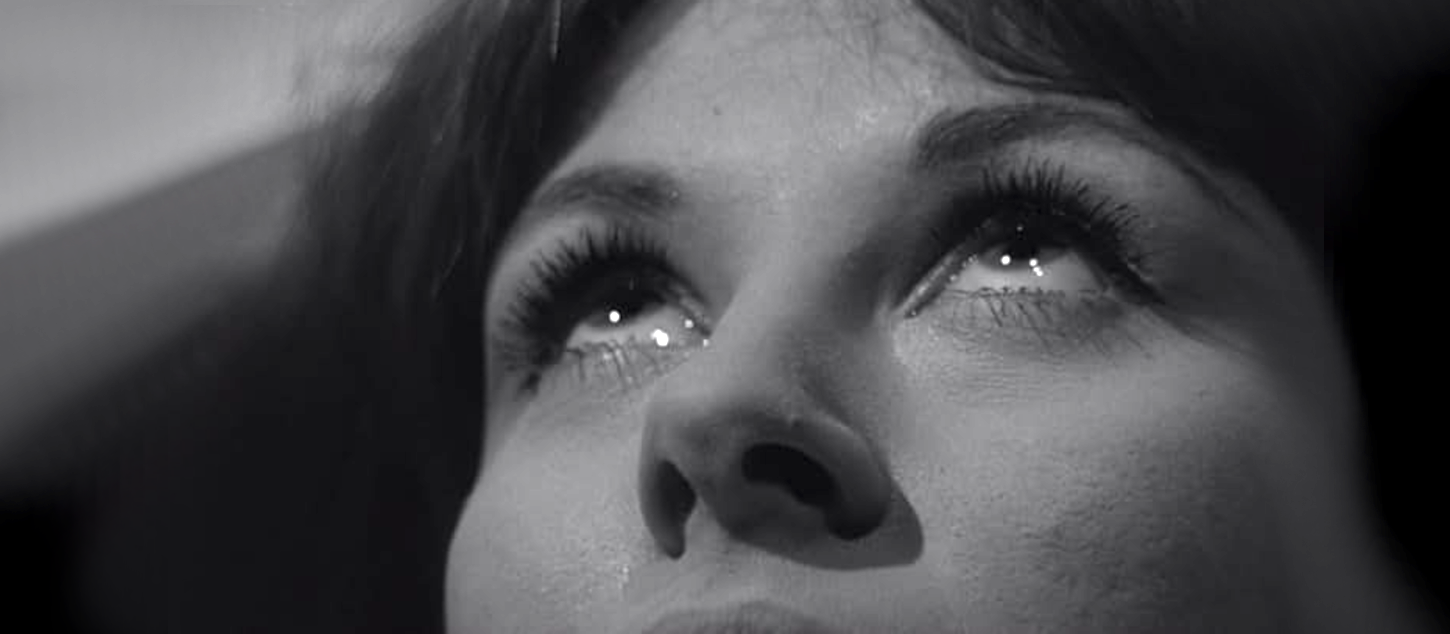
The KL Studio Classics Blu-ray of Unearthly Stranger is a U.S.- friendly release that follows a Region B – blocked English disc from 12 years ago. It appears to be the same flawless StudioCanal transfer, very clean and clear for both video and audio. There are no ray guns, flying saucers or disintegrated corpses, but the sound mix for the ‘alien mental attacks’ are well done. Refrain from demanding that the story details make sense, and viewers may really get into the sad tale of poor Julie, the physical ‘projection’ from beyond the stars.
Kino adds a couple of audio commentaries to the mix. In this case we aren’t sure why, as both tracks are similar conversational ‘movie host’ offerings, semi-casual and frequently jokey. I listened to most of Gary Gerani’s track and found nothing to complain about, but after that, the second offering with Bryan Reesman and Max Every offered the same kind of experience.
Looking at vintage critical responses, Unearthly Stranger seems to have been given a pass mainly for avoiding the Sci-fi clichés of killer robots, death rays and mass destruction. The very generous Daily Variety reviewer ‘Robe.’ called it ‘well-written’ and praised its dramatics. The Hardy Encyclopedia of Sci-Fi reviewer described it as ‘chilling,’ ‘haunting’ and ‘unusually thoughtful.’
Genre critic John Brosnan was dismissive of a lot of Sci-fi, yet thought Unearthly Stranger ‘low-key and unpretentious.’ Like most others, he responded positively to the plight of Julie, a deep-cover alien agent who becomes emotional and defects to the human cause. At age 13 I remember being deeply concerned for Julie as well, so obviously the film was working for a lot of viewers. (Spoiler) Nowhere did reviewers discuss the film’s final, none-too-coherent suggestion that many, perhaps all women are aliens, or at least, alien-controlled.
Kino’s disc cover repurposes the original A.I.P. art. The slip cover is a new commissioned piece that gives us images of sucker-fingered alien hands and a octopus tentacle with eyes where the suckers belong. That’s the movie in a nutshell, of course.

Unearthly Stranger
Blu-ray rates:
Movie: Good
Video: Excellent
Sound: Excellent
Supplements:
Two audio commentaries
with Gary Gerani
with Bryan Reesman and Max Evry
English Trailer.
Deaf and Hearing-impaired Friendly? YES; Subtitles: English (feature only)
Packaging: One Blu-ray in Keep case
Reviewed: May 30, 2026
(7523unea)
Visit CineSavant’s Main Column Page
Glenn Erickson answers most reader mail: cinesavant@gmail.com

Text © Copyright 2026 Glenn Erickson
About Glenn Erickson

Glenn Erickson left a small town for UCLA film school, where his spooky student movie about a haunted window landed him a job on the CLOSE ENCOUNTERS effects crew. He’s a writer and a film editor experienced in features, TV commercials, Cannon movie trailers, special montages and disc docus. But he’s most proud of finding the lost ending for a famous film noir, that few people knew was missing. Glenn is grateful for Trailers From Hell’s generous offer of a guest reviewing haven for CineSavant.
Great and plausible review, as ever. All that I would add, aside from having suddenly realized while reading why this film landed so well with me as a preteen just awakening to the strange allure of women, is that the story idea is lifted wholesale from William Sloane’s short novel To Walk the Night. Unearthly Stranger substitutes its university setting for the scientific thinktank and adds an objective narrator, but otherwise it similarly begins with a death and proceeds to involve a professor’s wife with likewise qualities to Julie, on a similar mission in response to a scientist’s attempt to effect space travel by thought. (Sloane also wrote the source text for the forties Boris Karloff thriller The Devil Commands; the connections are obvious.) To Walk also has that “chamber drama” interior effect. It’s been a year since I read the Sloane and longer since I’ve seen Stranger, but that’s what I can put together from memory.
That should be significant info for the film historians, Steve … interesting stuff. Thank you.
John Neville would of course go on to play Baron Munchausen, and also the Well-Manicured Man on The X Files.