
So much of film history is now accessible on video disc. We older horror enthusiasts spent ages pining to see Riccardo Freda’s The Horrible Dr. Hichcock restored to its original luster, so as to justify its place of honor among classics of Gothic Eurohorror. That came to pass two years ago, with twin releases by Radiance Films and Vinegar Syndrome. The ‘breakthrough’ may have been a simple negotiation for a licensing fee.
Luigi Carpentier and Ermanno Donati’s quickie follow-up to Horrible was another story. Nobody could locate the original printing elements for The Ghost (Lo Spettro). It was considered lost until a recent search found the original printing elements — in Spain, according to expert Roberto Curti. Previously, all we had were limp copies of the English-dubbed version.
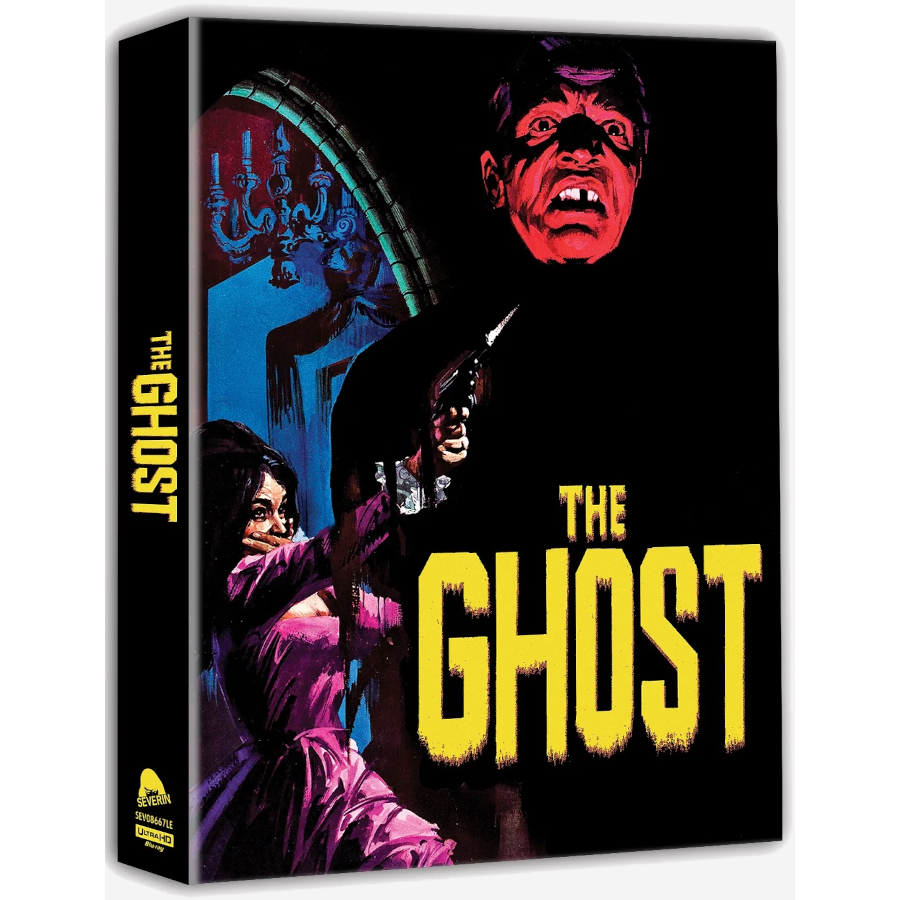
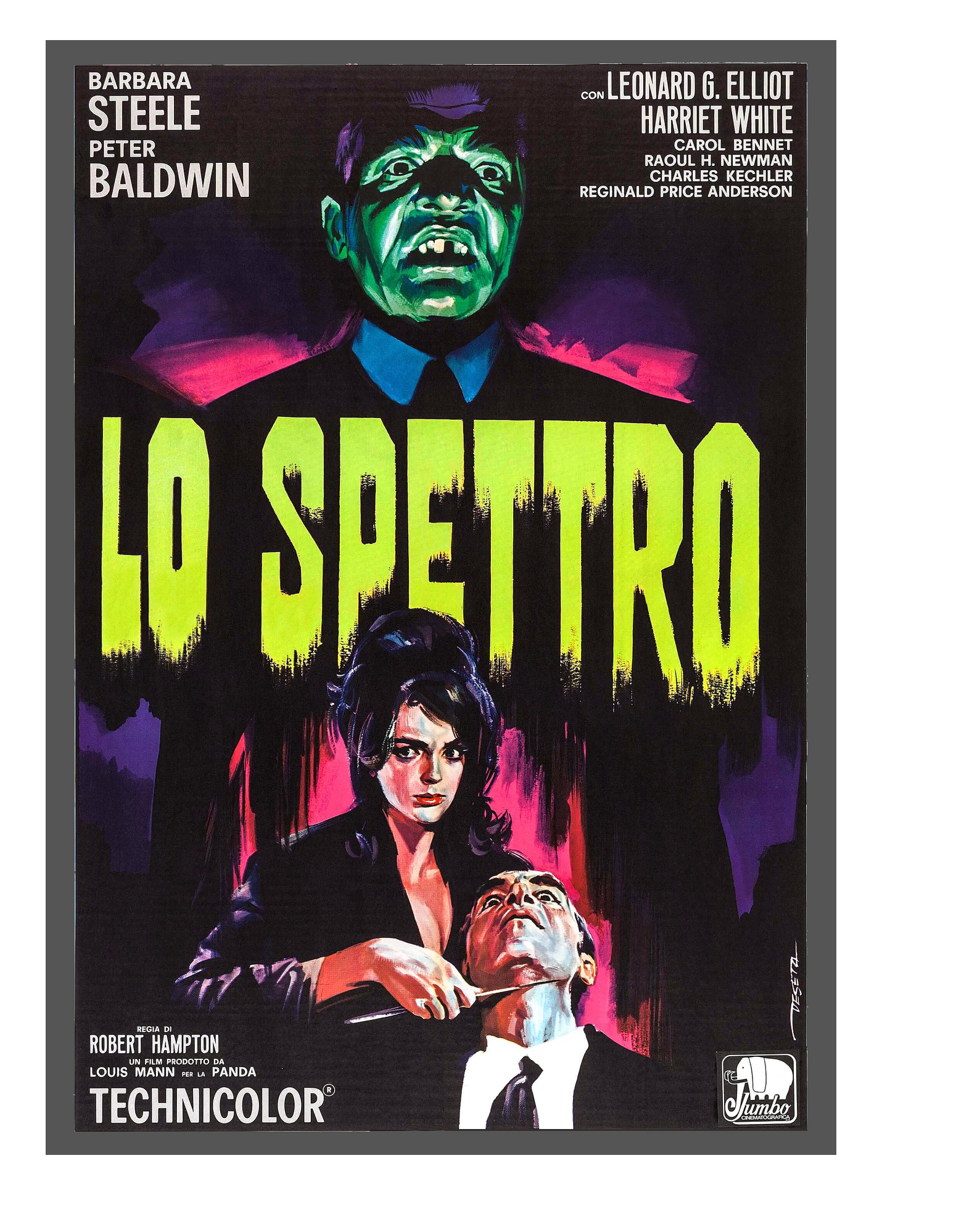
Severin’s 4K Ultra HD presentation makes the most of the Eurohorror rediscovery. The label’s earlier resuscitation of Antonio Margheriti’s Castle of Blood was a welcome release given a good marketing push. The Ghost has been given a much bigger re-launch. It comes in a deluxe 4K multi-disc package, with a documentary on Eurohorror pictures and an extra music CD. Severin’s publicity push enlisted Barbara Steele herself. Late in 2025 the restored movie made a twin ‘re-premiere’ at film festivals in Venice and Paris. That earned big media exposure for a Home Video company specializing in genre films.
Finally seen in a near picture-perfect restoration, The Ghost is nowhere near as sublime as the first ‘Hichcock’ saga. Its narrative is more coherent, but much slower going.
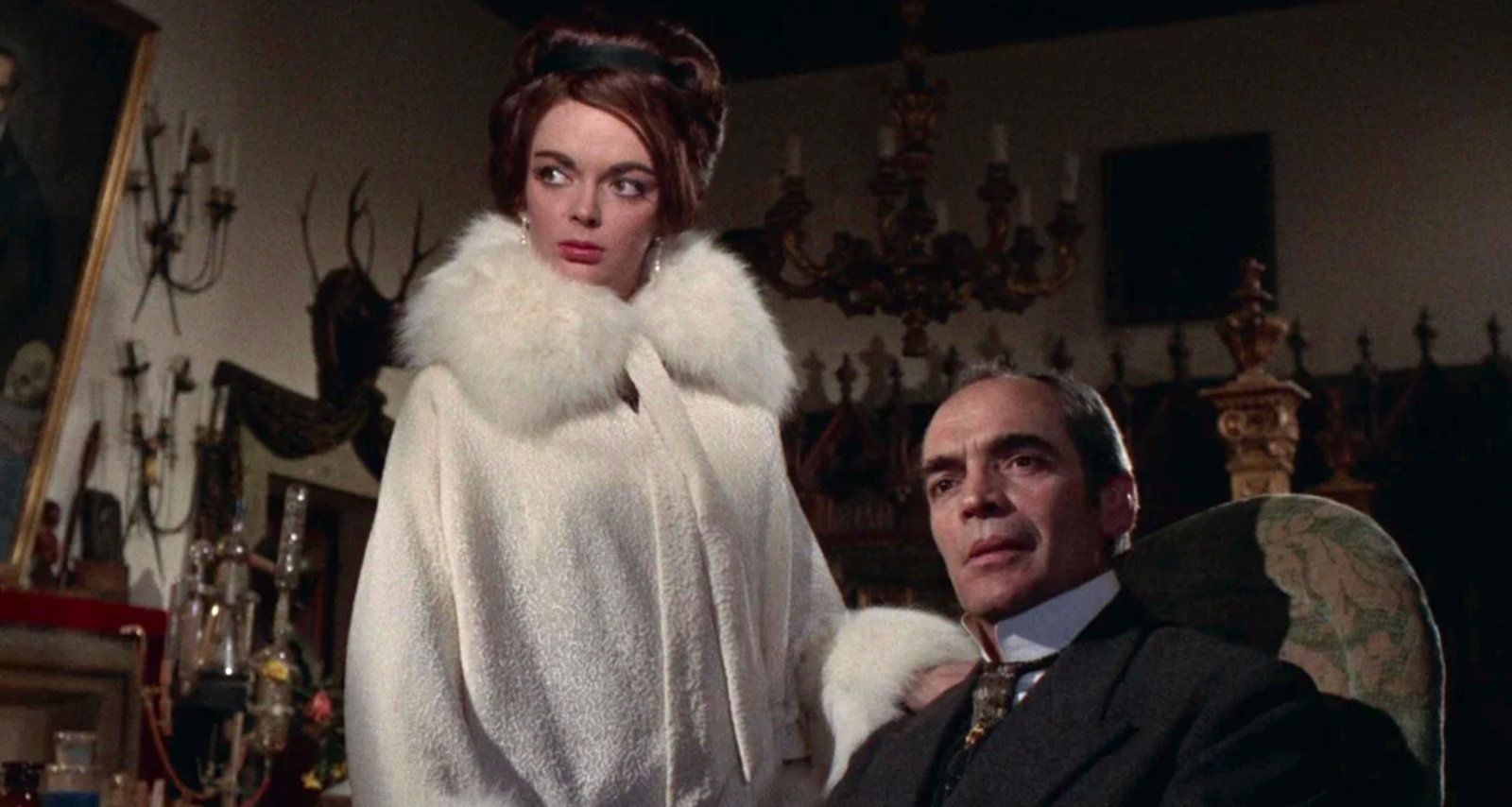
This Gothic outing has no narrative connection to The Horrible Dr. Hichcock, unless Cynthia changed her name to Margaret, moved to Scotland and married another Dr. Hichcock, one who also dabbles in questionable medical science. The time period has moved up to 1910. Dr. John Hichcock (Elio Jotta) conducts spiritualist séances in his stately mansion. Put in a trance, his housekeeper Catherine (Harriet White Medin) ‘speaks in voices’ not her own. John is suffering from an undefined creeping paralysis, and has chosen to undergo his own unorthodox therapy. Dr. Charles Livingstone (Peter Baldwin) performs the risky treatment, which involves shocking with an injection of the poison curare, followed quickly by an antidote. But Livingstone and Hitchcock’s wife Margaret (Barbara Steele) connive to kill John with an overdose, in an overt bid to inherit his fortune. All goes well until John is buried and his will is read. The key to the dead man’s safe turns up missing, and Charles and Margaret begin to see and hear frightening phantom phenomena. They now witness Catherine in another trance state, speaking with John’s voice. The spectral voice warns Margaret that Charles will betray her. Margaret also learns that she can retrieve John’s fortune from its hiding place … in the family crypt.
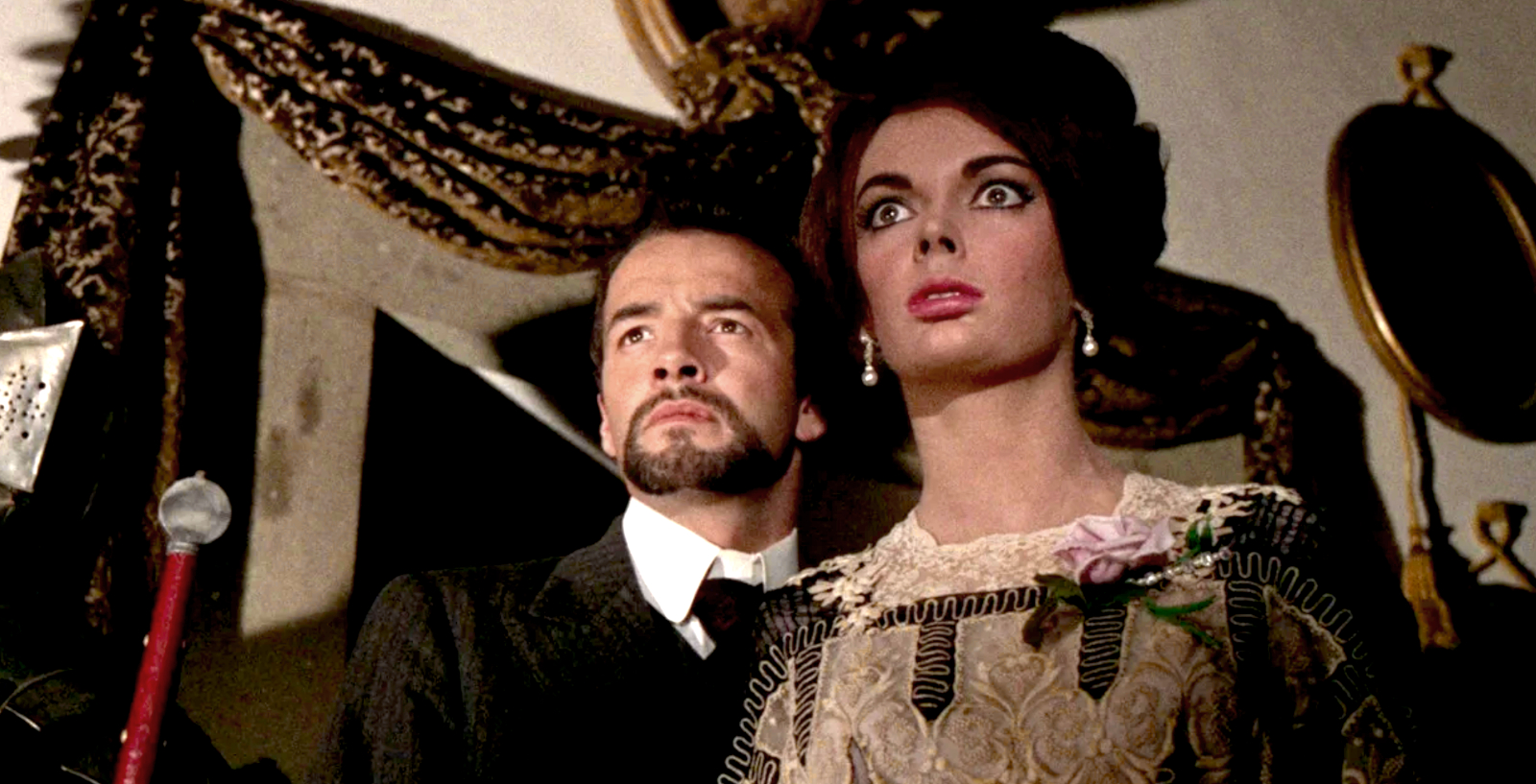
Back in 1963, The Ghost was received in Europe as the work of a master director of Horror. Roberto Curti reports that his reappraisal was the result of articles in the magazine Midi Minuit Fantastique. The cult status of Eurohorror films increased greatly, especially for titles that were unavailable. The cinema canonization of Riccardo Freda became complete in the listings of his films in the 1985 Hardy/Overlook Encyclopedia of Horror Movies. The entry for Lo spettro isn’t stingy with the adulation:
“Free reign is given to a delirious, black romanticism as the camera roams through eerily lit corridors,orchestrating astonishing color compositions, creating a fantasy texture in which lyrical excess clashes with formal classicism and making narrative and spatial coherence fragment under pressure.”
The critics that wrote the Hardy Encyclopedia may not have had access to the movie, as the entry also fumbles a couple of plot points.

U.S. distributors of the 1960s shied away from European horror films with content deemed too strong for America’s ‘family’ screens. The show has no truly extreme content, although a razor slashing may have been trimmed somewhat, and a shot of a rotting corpse in a crypt may have been too graphic as well. There are no innocents in this annihilating Gothic, so there is nobody to root for. Neither does the story feel particularly fresh. Lovers plot to kill an inconvenient husband, which leads to events we’ve all seen before — ‘haunting phenomena,’ grave robbing, secret passages and diabolical illusions. The conspirators turn on one another the moment things go wrong. Add to that a crazy cure for an undefined illness accomplished through chemical shock. The ‘Magna Film Corporation’ eventually distributed The Ghost on a double bill with a German acquisition, Dead Eyes of London, more than a year after its European debut.
The film’s finale is a series of morbid reversals that dispense crude justice and a wicked comeuppance. Robert Curti tells us that both Hichcock pictures were rush jobs aiming to cash in on the popularity of Barbara Steele in Roger Corman’s The Pit and the Pendulum. This picture tries but can’t equal the grisly, highly satisfying finish of Corman’s film. A few gaping plot holes are left open: near the end of the show, we’re told that some corpse-swapping was performed, but we never find out how the unlucky second cadaver was obtained.
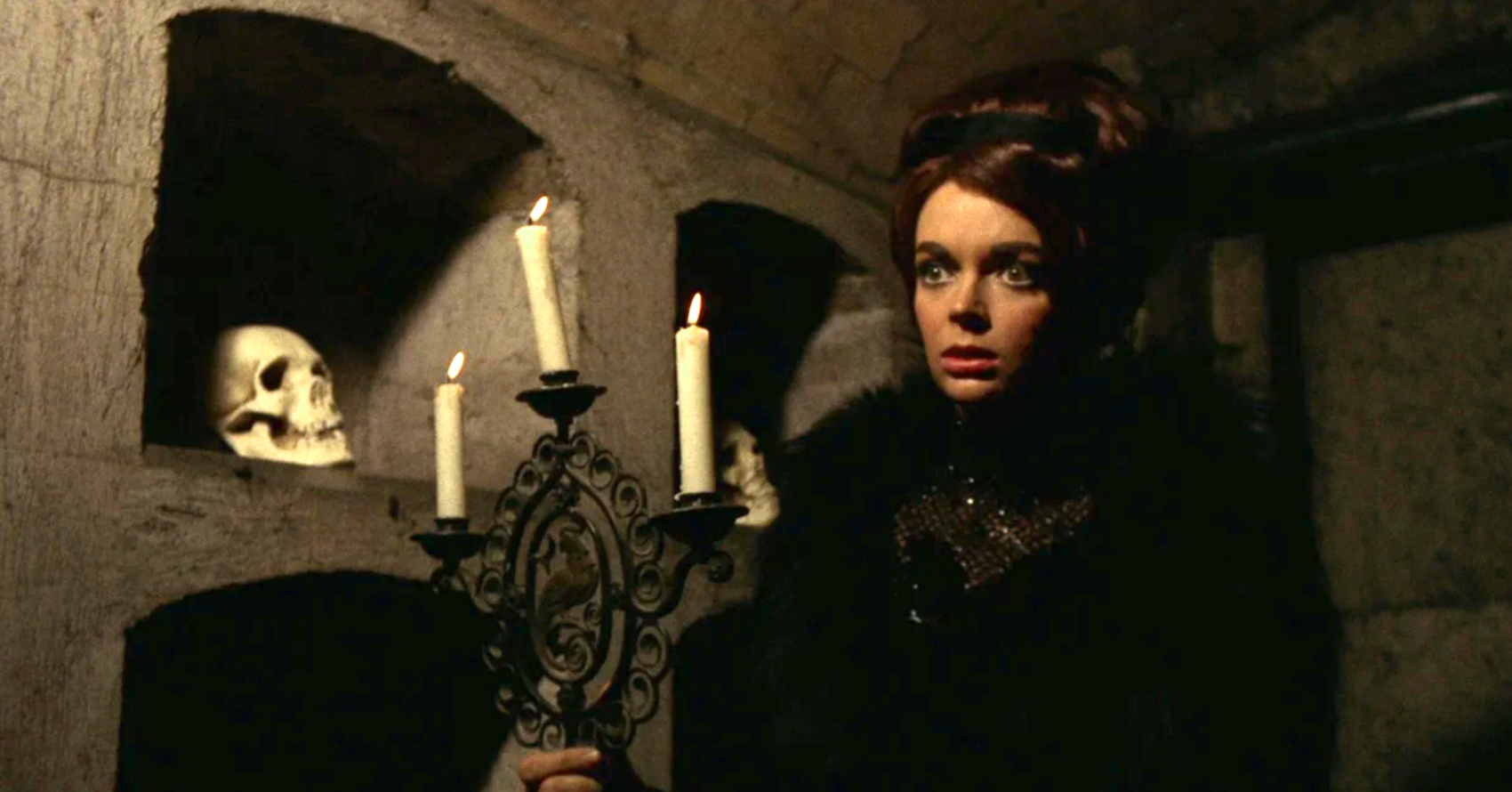
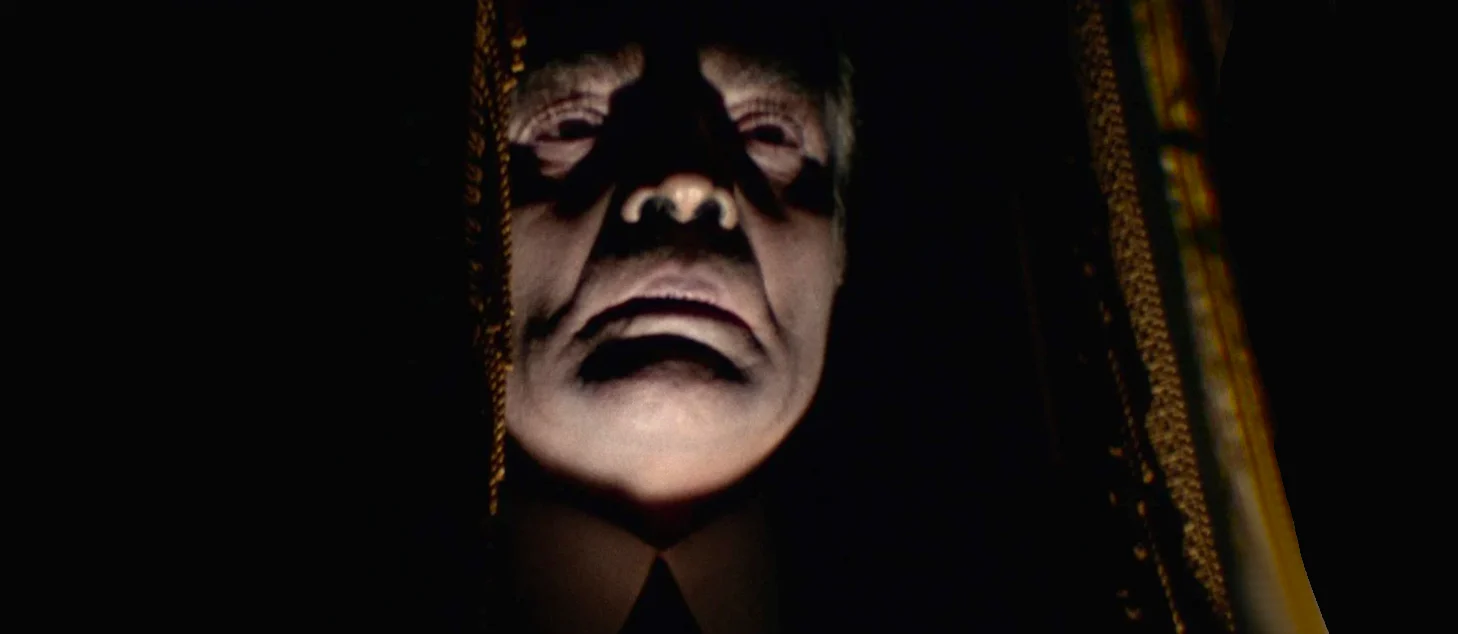
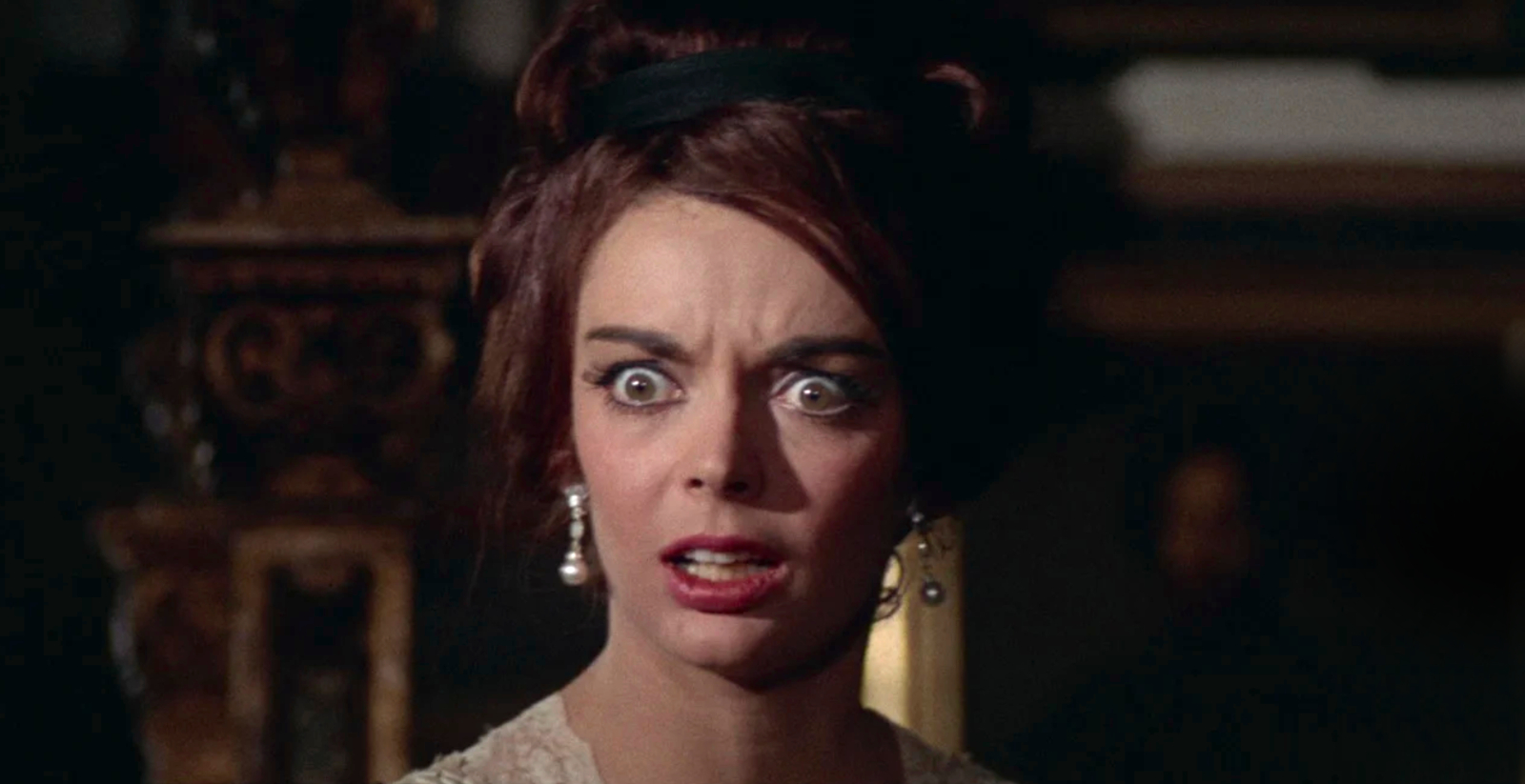
None of that will matter to the fans of Barbara Steele, who is given a coherent character to play — her Cynthia in the previous film mostly wrung her hands and fretted, probably without Barbara knowing why. This time around Ms. Steele has more to do in front of the camera, but she doesn’t get much help from her partner in murder. Peter Baldwin had a more rewarding career as a TV director. His Dr. Livingstone is colorless; all we remember is his handsome ‘Steve Reeves’ beard and mustache. The film’s best performer is Elio Jotta, who manages to look appropriately afflicted when injected with the curare serum. His face is the one seen in the most-published photo from The Ghost, standing in the dark with an expression that makes him look like a ghoul with weird teeth.
The cinematography is attractive, and a couple of Ms. Steele’s costumes are quite good, especially when rendered in warmly-colored 4K definition. Riccardo Freda’s camera blocking is not bad, but the feeling of a slower pace may be because most of the story never leaves a few rooms in the Hichcock mansion. We have an okay funeral scene and a few views outside the window, and otherwise are confined to the well-appointed interiors. Could it be the same villa in which the first Hichcock picture was filmed? The only space that looks similar is a narrow staircase.
The disc set appears to resolve a controvery over who composed the music heard in the movie, Franco Mannino or Francesco De Masi. But the movie’s actual soundtrack also incorporates several cues taken directly from The Horrible Dr. Hichcock, credited to Roman Vlad.
Severin’s package is really generous with the extras, as detailed below.

I like watching Barbara Steele in movies… but, I’m not all that thrilled listening to her audio commentaries in which she seems Hell-bent on belittling people that she worked with that provided an “opinion” about Babs. Granted, old age and all that jazz, but her rather foul attitude is really off putting and she doesn’t come off as graceful, or even grateful for her cult status. I’m glad I want to watch her movies, but I’m also glad that I don’t ever want to meet her: she just sounds like a shrill person to deal with.
I met her at a convention in Toronto several years ago and she was gracious and charming!
Whenever I’ve listened to Steele on her audio commentaries and video interviews, she comes off as if she woke up on the wrong side of the bed with a heaping dose of cantankerous on the side. Sounds like you, and I’m sure others, met her on a really good day. But, for myself, you couldn’t pay me to meet Barbara Steele: she gives off ‘Diva vibes’. I’m still looking forward to seeing “The Ghost” when my copy arrives from Severin.
Barbara Steele is my kind of actress. A movie could be just two hours of her standing around blinking and I’d watch it!