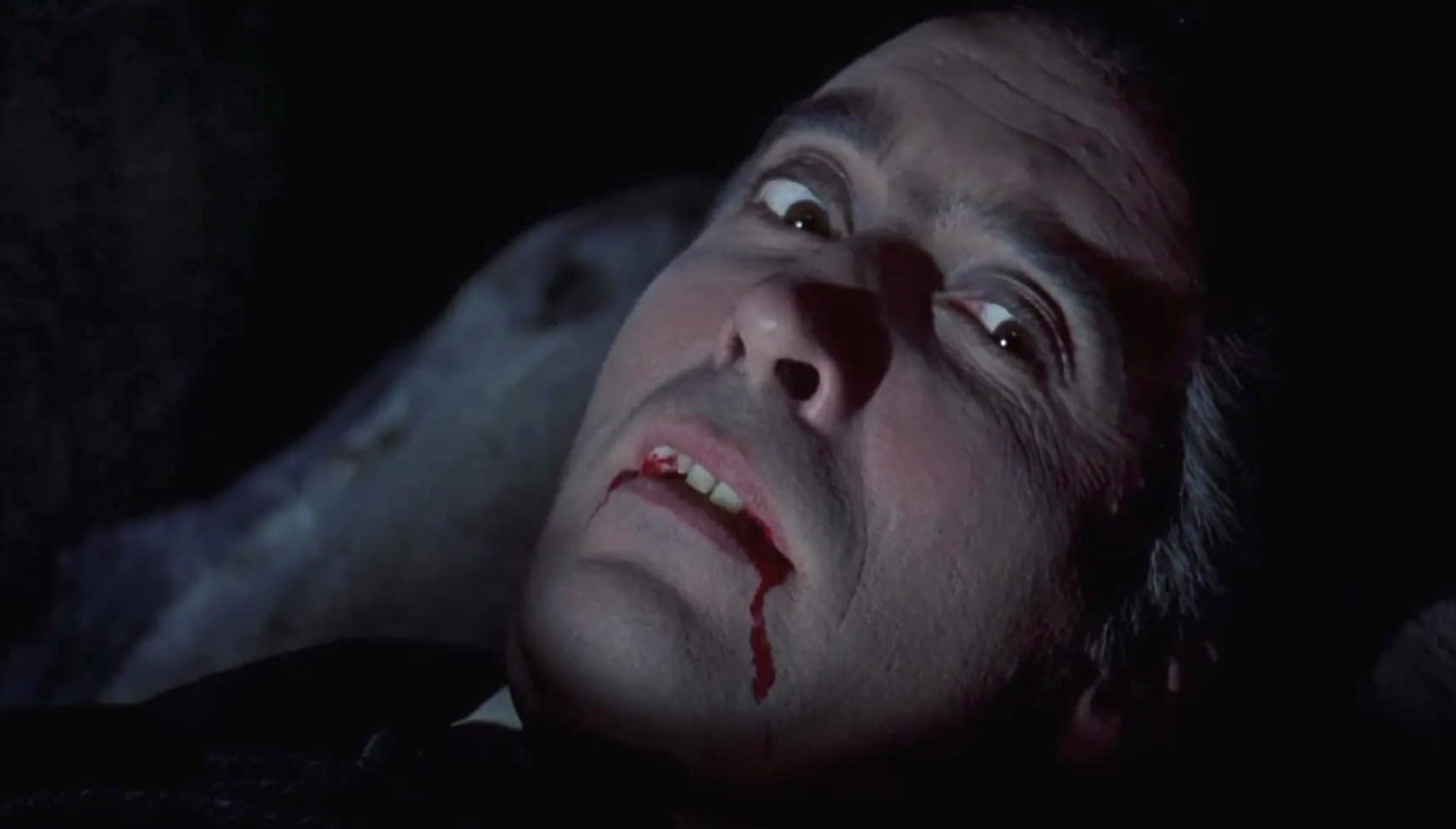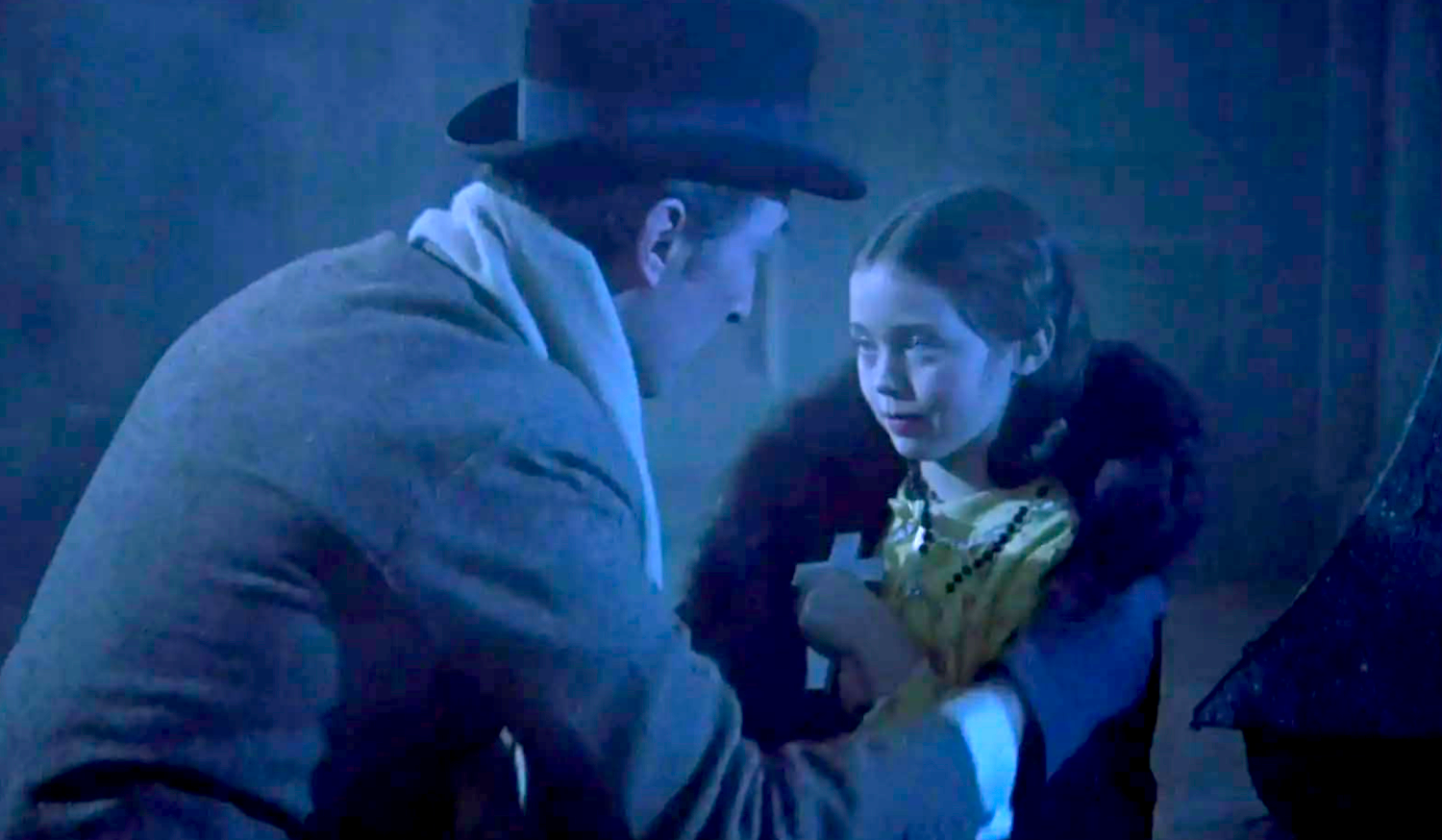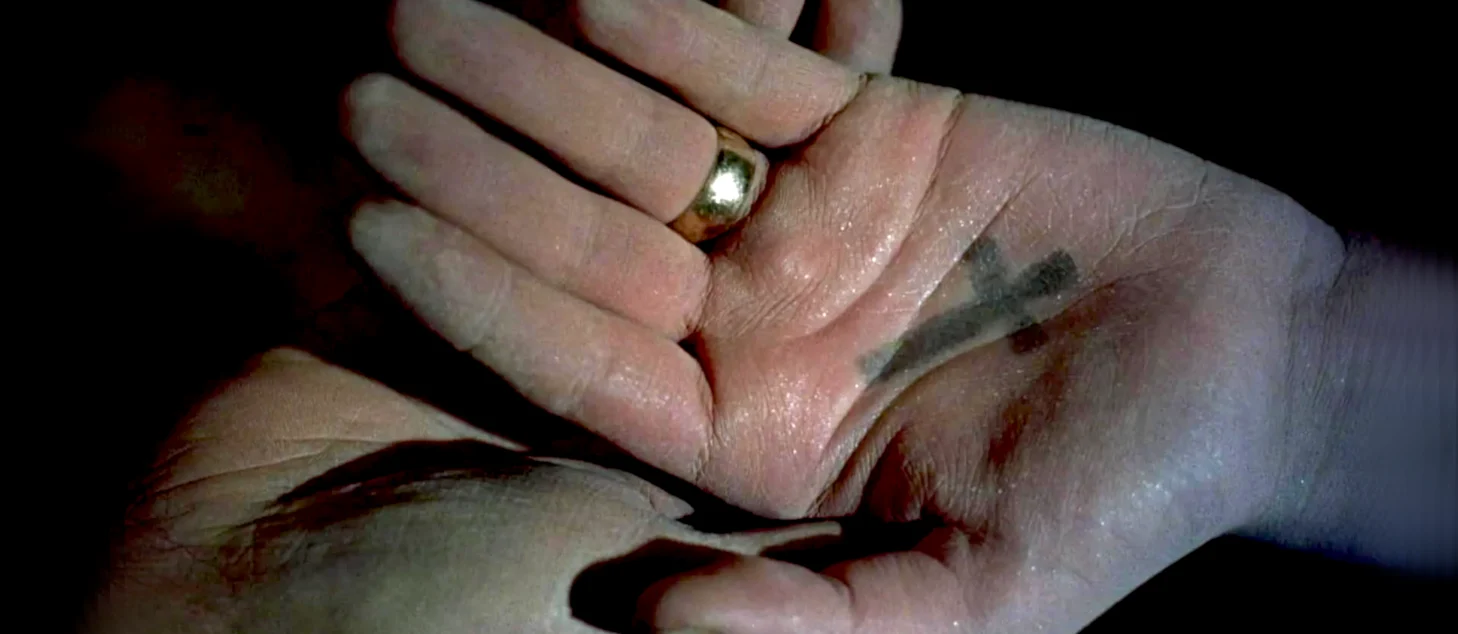

 Hammer’s mega-disc set must give us 50 film historians to pontificate on the greatest, bloodiest vampire classic of them all. Since so many of the experts seem intent on recounting their personal first encounter with Horror of Dracula, I’m asserting my rights to do the same … I mean, what good is an opportunity if you can’t abuse it?
The tragedy of being too young to see most 1950s science fiction classics applies to selected horror titles as well. I caught up with the socko reissue double bill of Horror of Dracula and Curse of Frankenstein early in 1965. The color was intoxicating. My audience of kids went nuts when confronted with the pasty-faced monster and the frightening vampire; moments of violence and gore convinced us that anything might happen. This was adult stuff — but presented in a way we could cheer. Dr. Van Helsing turned out to be an inspired Vampire Killer, always ready to improvise if ‘Plan A’ went awry. Here was a battle of good against evil with no gray margins. There are a lot of crucifixes on display in HOD, but the tone differed from Bible movies about noble martyrs … Van Helsing was on the offensive, with weapons that could box vampires in a corner, or wipe them out entirely.
The ‘good vs. evil’ equation was certainly effective; for those of us kids puzzled by church matters, Hammer’s fantasy momentarily put the cosmos in order. If Dracula is a Satanic force, than we should expect positive Christian miracles as well. The peace of a post-Dracula world, with James Bernard’s sweet music playing over the symbol of Aquarius, brought us back from the brink of terror.
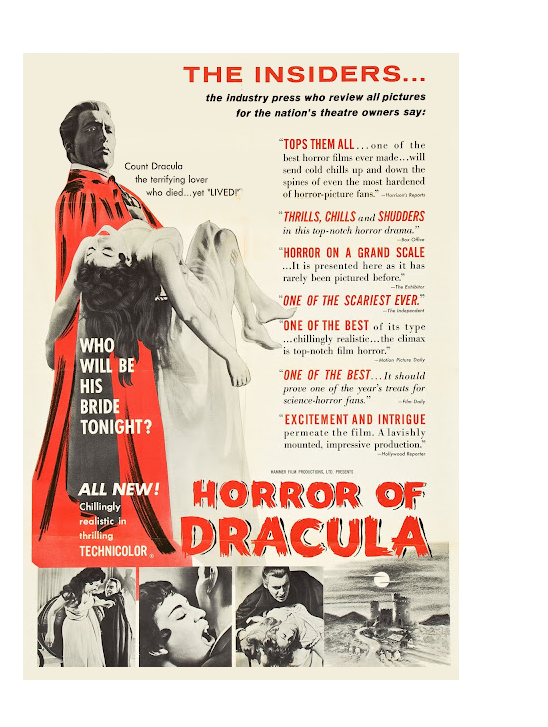
With that nostalgia out of my system, we can continue. Horror of Dracula has been a holy grail ever since those fab 35mm Technicolor prints stopped circulating as second features. I saw a great print in 1971, accompanying the forgettable House that Dripped Blood. Old TV broadcasts with commercials removed a lot of the film’s appeal, but those theatrical prints didn’t fade. At an L.A. County Museum of Art screening around 1977 or so, even Hoyt Yeatman agreed that the movie needed a ‘big’ presentation to make its proper impact. *
A Strange History on Video
Home video iterations of this classic always seemed to have problems. A 1991 WB laserdisc censored one of the staking scenes. It also cropped the sides, ruining a shot in the Dracula library in which the closing of a door revealed the hiding place of Valerie Gaunt’s vampire bride. Only now, in the tech notes for the new remaster, do we understand why — Horror of Dracula’s negative was matted to 1:66 in the camera. Extracting a 1:33 TV scan cropped the sides by quite a bit.
Our 2002 review described the first DVD release as ‘not quite the delirious Technicolor experience.’ It at least restored a couple of cuts to the staking of Carol Marsh’s Lucy, that were annoyingly missing from the laserdisc. Again, only now are we informed that those violent snippets we saw in U.S. prints, had been censored in England.
After that came a decade’s worth of nothing. A regular gripe at the old DVD Savant page was the big studios’ overall neglect of the library horror, Sci-fi and fantasy so badly craved by us (entitled, for sure) disc collectors. The next breakthrough came in 2012, with a Region B disc that turned heads. It was from a 2007 BFI remaster. The image was sharper and more detailed than ever before, but the color was all off: somebody in the color timing session decided that the movie needed improving, with a ‘better’ look, a colder and less ‘Technicolor-y’ color palette.
The revision was not at all appreciated. The film’s saturated colors and full range of flesh tones had been burned into our memories. Non-theatrical film libraries circulated excellent 16mm Technicolor prints of HOD, that screened on college campuses every Halloween, way into the 1970s.
The 2012 Lionsgate release had that objectionable color cast, but it compensated with a major revelation: it incorporated shots from the long-rumored uncensored cut that had circulated in Japan. Seen in a badly faded and scratched projection print — apparently not in Technicolor — was a slightly longer, more explicit angle of Dracula’s attack-seduction of Melissa Stribling’s Mina. Chris Lee’s Dracula may be after Mina’s blood, but he’s also ‘really getting it on.’ Forget the concept of Dracula as an obscene ghoul, as in Murnau’s Nosferatu. This Dracula is an all-seducing sex fiend.
The new shots in the disintegration finale knocked us out. The Japanese mini-sequence of shots showing Dracula destroyed by sunlight was several seconds longer, and included shots of special make-up we had seen only in B&W still photos. The revised BFI disc couldn’t use all of the ‘new’ shots because no soundtrack element had survived for the longer cut. Listen to the old version: the end of the sequence has a slight audio jump… where the music score had been trimmed.
The longest disintegration sequence could only be viewed on a second encoding of the last reel of the ragged Japanese remnant. Its most important shot was first reported by Tim Lucas … before Dracula’s face starts to burn, he flashes a profoundly agonized, sad look for a split second. This emotional flash of defeat was dubbed the ‘sympathy for the Devil’ shot. Christopher Lee had said he tried to impart a pitiable quality in the character, which we previously interpreted as ‘actor-speak,’ The restored ‘look of woe’ backs up Lee’s statement.
The first Region A Blu-ray arrived in 2018. It was the complete American cut, with no Japanese extras; the WAC brought back the original color values, but in comparison to the R2 Lionsgate disc, it was soft and less detailed. We confess that for re-viewings of Horror of Dracula, we’d pull out the UK disc.
Yes, yes, but get to the new Limited Edition Box.
Earlier this year, Hammer’s super-deluxe 4K UHD remaster was announced, but with its details left fuzzy. The exact nature of the ‘restored version’ was kept under wraps. It was eventually touted as the full version of Horror of Dracula before censor cuts. In the UK, the censors had mandated the excision of shots from the staking of Lucy, Mina’s seduction and the disintegration finale. The U.S. version was like the UK’s, with the reinstatement of the extra blood shots in the Lucy-staking scene. As noted in an article from 1958, Japan received a ‘special cut’ now identified as complete and uncensored.
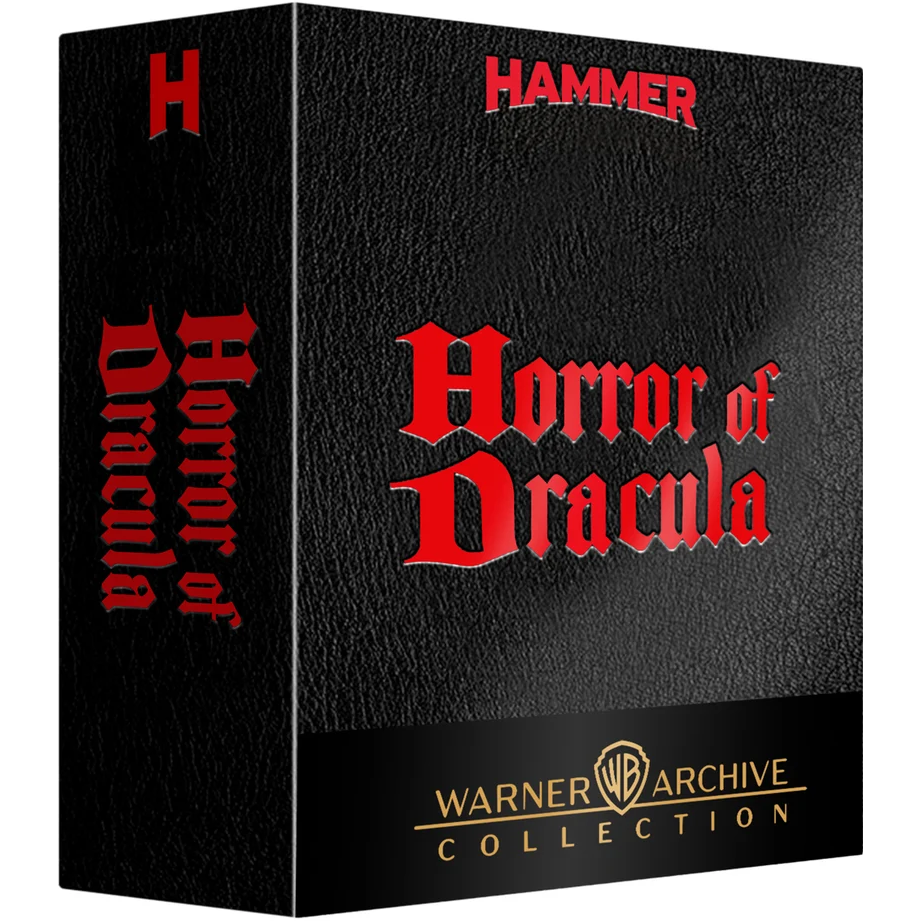
Hammer’s new release is a cooperative deal with the Warner Archive Collection, that began with the earlier ‘super box’ release for The Curse of Frankenstein. The hardcore Hammer fans went for the expensive UK-only ‘big box’ product — which was only released by Hammer. For HOD, the U.S. and UK releases are identical in both territories: one 2-disc package and one 7-disc box. The WAC will get its share of the more expensive release.
The ‘new Hammer’ is dedicated to indulging the fanatic collectors. I wonder how many purchaed both the UK and U.S. versions, just to be ‘complete.’ The only difference (I think) is the embossed title on the outside box, ‘Horror of’ or just plain ‘Dracula.’ Advisor Gary Teetzel reminds us that there was also a ‘blood red’ edition offered, only through Hammer.
We’re still getting over our gripe over the release’s publicity rollout.
The publicity for this fab restoration was either just poorly handled or purposely misleading. Hammer’s new chief John Gore has his name all over his products. Early on in the promotions, he was quoted as saying that the restoration had 3 minutes of new scenes. The effect was immediate. Every fan with the cash pre-ordered the Limited Collector’s box, for fear that it would sell out.
It wasn’t long before that 3-minutes claim was being doubted. In my contact with the web, I picked up a post by the trusted writer and home video producer Constantine Nasr. Being privvy to inside information, he came out with a carefully worded statement that the new remaster was the full and uncut pre-censorship version. No mention of any Three Minutes.
We were left in doubt until the always-credible Warner Archive officer George Feltenstein put the issue back on the rails: the new remaster will indeed be a pre-censorship cut with all the material seen in the 2012 remaster. Feltenstein stated encouraging facts about the film source: reels of separation masters had been located in cans called the ‘Japanese cut.’ They had been coaxed to match the quality of the standard version and then digitally re-integrated. The equally good news: the negatives for the standard version were in very good shape, color-wise.
I think that’s more or less how we got here … the standard disc evaluation is below; I can’t imagine fans complaining about the final product.
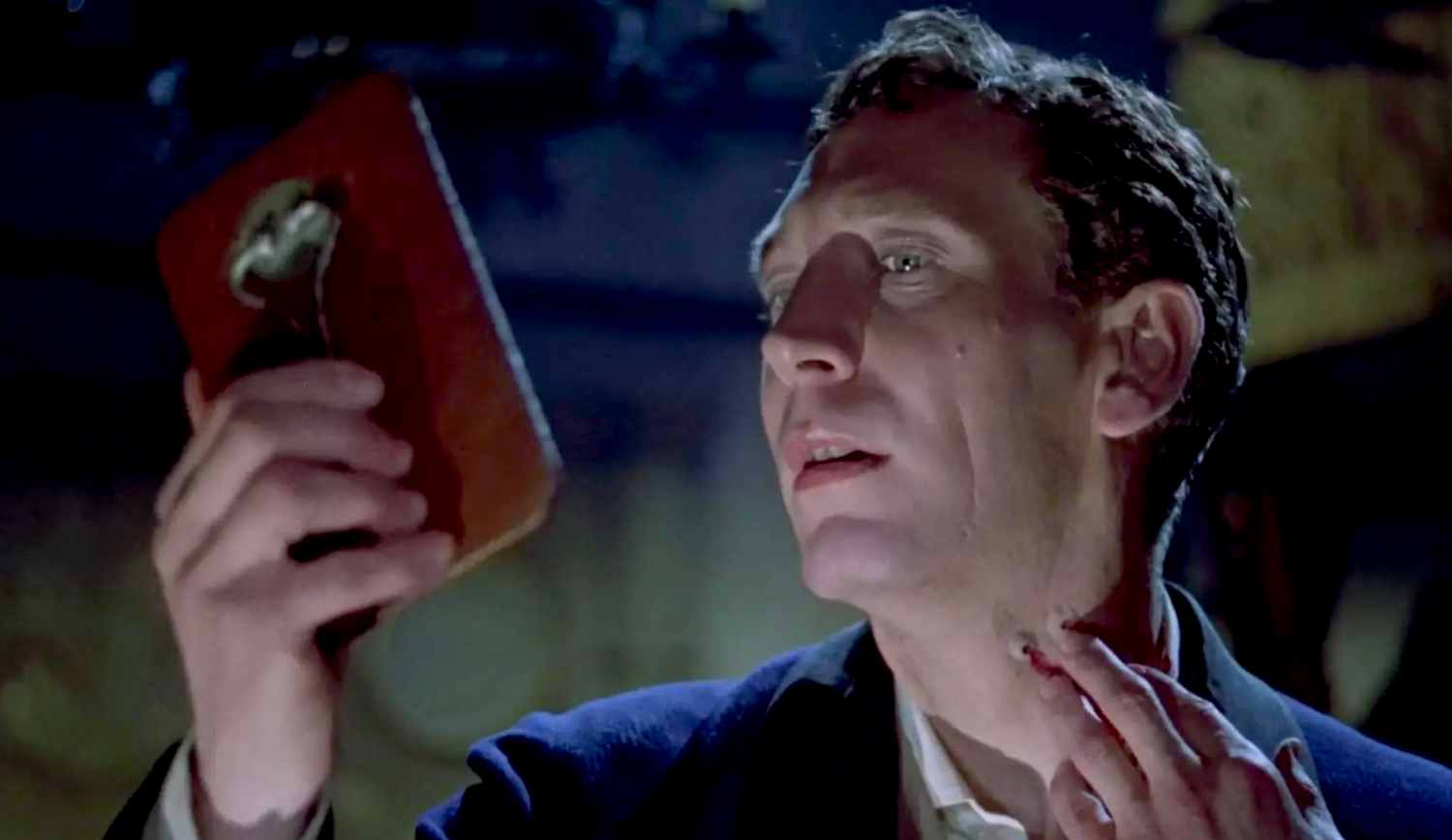
New reactions to this ‘new’ restoration?
Several thoughts sunk in from our umpteenth viewing of Horror of Dracula in this exceptional new form. First, Hammer really went all out with the movie. The cinematography is more attractive than that of Curse of Frankenstein, with Jack Asher in full control of the atmospheres in Dracula’s dusty castle, and in the courtyard confrontation with the possessed Lucy. Nothing in the production looks rushed, especially not the ambitious disintegration scene. The extended, restored demise of Dracula showcases the creativity of Syd Pearson, Philip Leakey, Roy Ashton, etc. The big finale is really bold, a super-dynamic set piece. Dracula loses an entire leg on the first blast of window light, and when forced back into the beam, collapses backwards onto his own boot. No horror film in color had ever been this graphic, this explicit.
What villainous comeuppance could compare to being cremated by God’s glorious sunlight? We could feel the wrath of justice and rightness being fulfilled. It made some of us sheltered American kids think. We were just beginning to learn about the world’s evils. Why can’t this kind of thing happen to the world’s real demons and devils? Why do the Bad Sleep Well?
The other exceptional observation doubles down on our awareness of the film’s sex content. Classic American ’30s horror indulged taboo ideas about sex, procreation, and godlike miracles. The outraged ‘Sinfinders General’ of our Production Code considered the whole genre to be blasphemous, obscene. Hollywood’s previous vampires had been mostly toothless. Nobody bit anybody. Any mention of tuxedo-clad Hungarians creeping into ladies’ boudoirs took place in the past tense, after the fact.
The censorship in England was rigid on some issues. They were fanatically against any mention of vivisection, whereas most of the American public, censors included, were probably unfamiliar with the word. Dracula can toss his vampire bride around like a rag doll, but the bitings are abbreviated. Censor John Trevelyan’s biggest bugaboo was always the combination of horror + sex or violence + sex. His memos to Hammer over the years repeatedly warn about this ‘dangerous combination.’
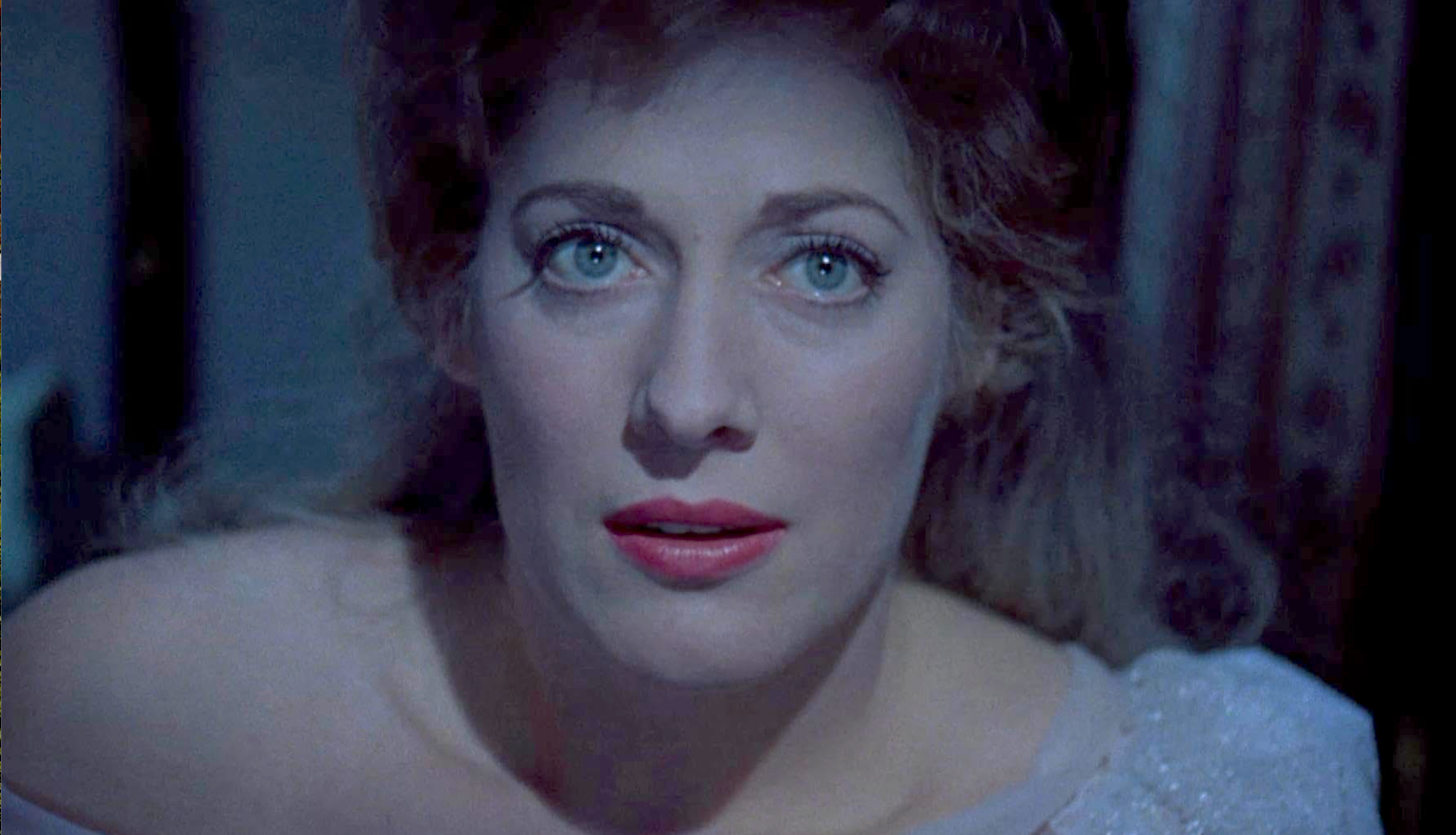
Wham, Bam, Two Pints Ma’am.
The sex content of HOD was really advanced for 1958. We’re thinking that Hammer got away with its incredibly sexy bedroom scenes by claiming that vampires aren’t after sex, just a thirst for blood. It’s really a dodge … every audience knew exactly what was going on. Neither Lucy nor Mina is actually bitten … but the scenes do depict Dracula’s physical domination, and his victims’ obvious desire to be dominated. Very clearly aroused, Lucy lays out the welcome mat for her midnight lover. Her sister-in-law Mina is shocked into in a state of sexual paralysis. As David Cairns recently wrote, Melissa Stribling displays an “amazing ability to portray fear, revulsion and lust simultaneously.” Female viewers knew the score. Returning Dracula’s downward stare, Mina is clearly thinking, “What the hell am I in for now?” I’d think that would have to be a universal predicament for women.
If these bedroom scenes were about ordinary sex, I believe they would never have passed the censors. One woman welcoming her rapist? Another backed through a door, past bedpost and onto her back while her rapist closes in on her? The whole world reacted to HOD because it was new and radical. Were the couple of seconds showing Dracula actually pushing Mina down atop the bed retained, they would have been the hottest thing on 1958 screens.