

Some reviewers in 1981 thought John Boorman’s Excalibur was confusing, but we found its epic narrative easy to read and highly rewarding. We remember being irked when the movie’s legacy was damaged by screenwriter William Goldman, who wrote in a high-profile book that the movie’s conclusion was unforgivably incompetent. * This telling of the Round Table story is not the kind of abbreviated epic that lost many viewers from the start, as with the David Lynch Dune. But neither is it a simplified musical or action spectacle. We remembered actor Nigel Terry only as the least ‘kingly’ potential heir to a crown in The Lion in Winter — yet he wholeheartedly embodies the spirit of King Arthur. Boorman’s film could very well inspire young readers to become more interested in classic literature.
Having been mentally absent when English lit was taught in high school, this writer expected Excalibur to be something completely different. The dark and mythologically oriented tale didn’t jibe with ignorant preconceptions formed by Disney’s King Arthur-lite animated cartoon, that was based on T.H. White and gave the young Arthur a cute nickname, ‘Wart.’ Disney made little distinction between young Arthur and Kipling’s Mowgli — both spent adolescence communing with nature, and accepting the cast of Bambi as Life Lesson teachers. Arthur was mentored and coddled by Merlin, who was essentially Santa Claus, Houdini and Obi-Wan Kenobi rolled into one.
The movie musical Camelot placed the emphasis on the romantic triangle, not the mystical formation of a nation. It touched briefly on the ‘Wart’ childhood fantasy — its enchanting song Follow Me gave the show its one burst of magic. Richard Harris’s Arthur suffered as if yearning to restore the Kennedy White House. When things got too tough he retreated into infantilism. Was Battersea Park melting in the dark?
Excalibur opens so differently, that at we at first wonder if John Boorman and his co-screenwriter Rospo Pallenberg have pasted a DC Comics origin story onto the tale of the Knights of the Round Table. Little did I suspect that Boorman’s film is fairly faithful to the magical-mythical vision of Sir Thomas Mallory’s book Le Morte d’Arthur, written in the late 1400s. (!) Thinking that Excalibur tries to make the Arthur legend into Star Wars gets everything backwards — Le Morte d’Arthur is the seminal force behind a big slice of our culture’s legends.
There is a Tolkien connection, of a kind. We’re told that John Boorman was one of the frustrated filmmakers unable to get a film version of The Lord of the Rings off the ground. Apparently Excalibur was the next best thing. If the initial back-story with Uther Pendragon and the origin of the magic sword sounds a lot like the forging of Tolkien’s ring of power, it’s because Tolkien was inspired by the same mythical source material.
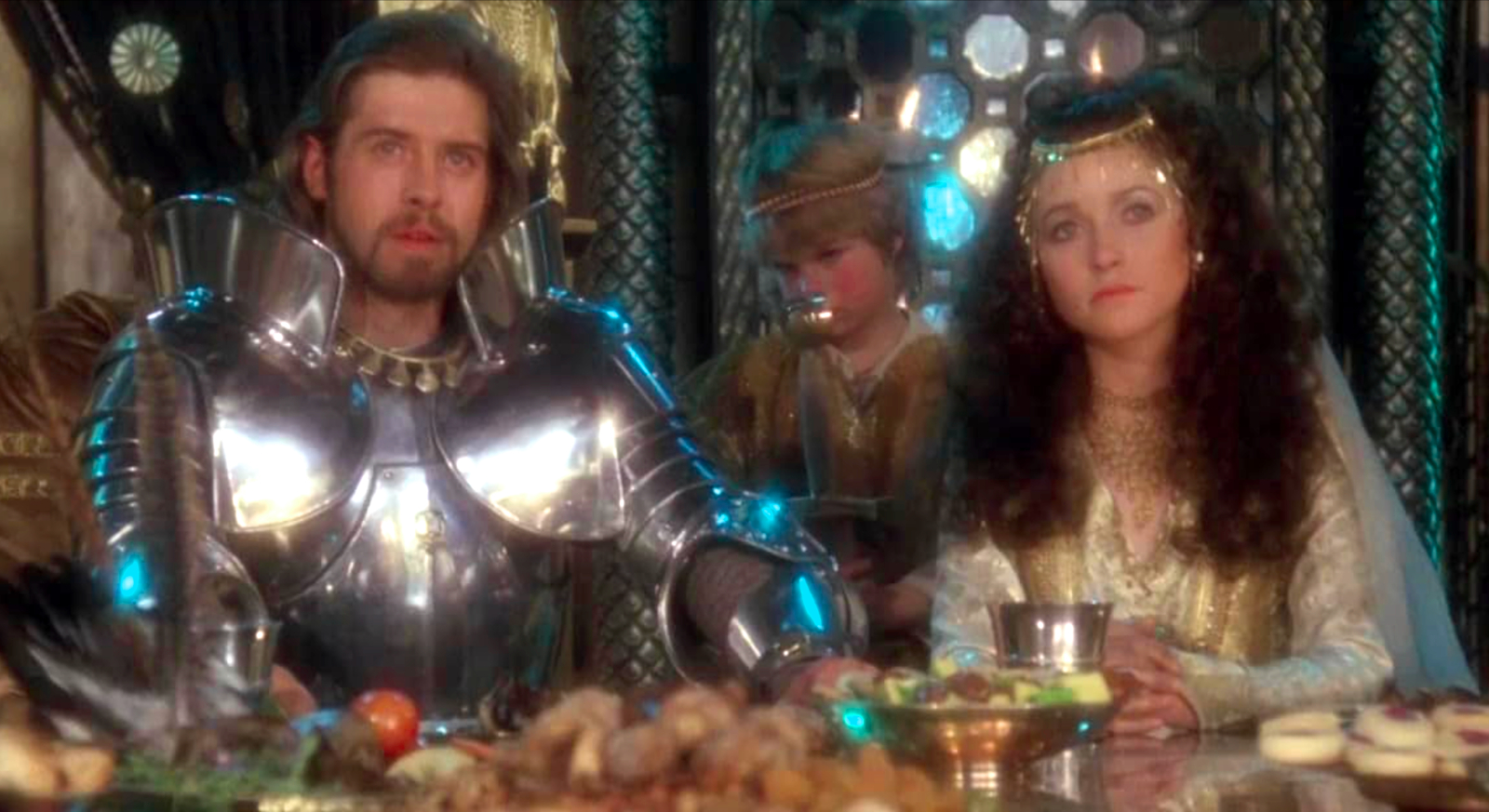
Always trying something different, the ambitious John Boorman made brilliant pictures (Point Blank, Deliverance) and good but slightly pretentious ones (Hell in the Pacific). He overreached disastrously with his underfunded Sci-fi fantasy Zardoz, an attempt at a futuristic mythos. Like all of Boorman’s pictures, Zardoz had the courage to be bold and different … and a little crazy. Who else would dare to costume Sean Connery in a red diaper?
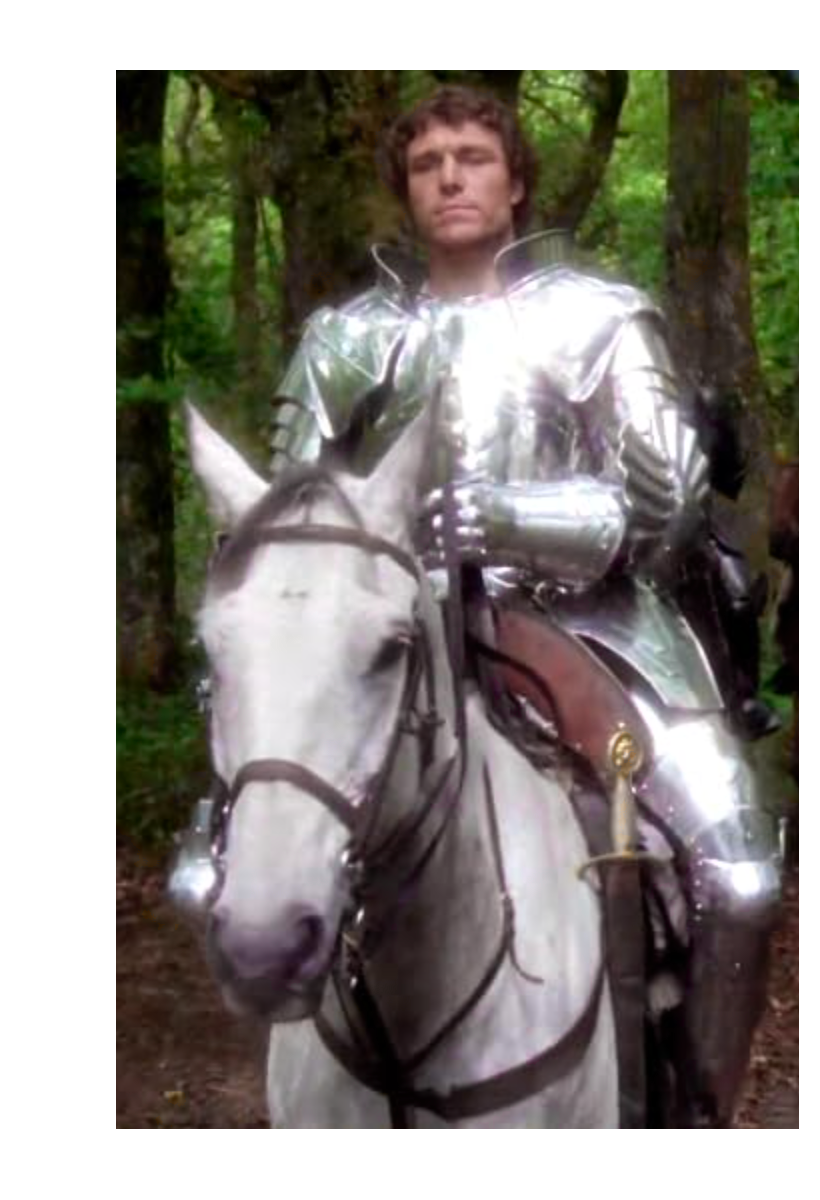
Excalibur has everything going for it. Boorman cast its roles for acting ability, not star appeal. Although the film can now boast a number of marquee names, in 1981 only Nicol Williamson and Helen Mirren were internationally known quantities. Boorman also makes the story paramount — the Arthur / Guinevere / Lancelot triangle does not dominate. Most importantly, Boorman returns the sense of magic and wonder to a saga that was always supposed to exist on the level of idealized legend.
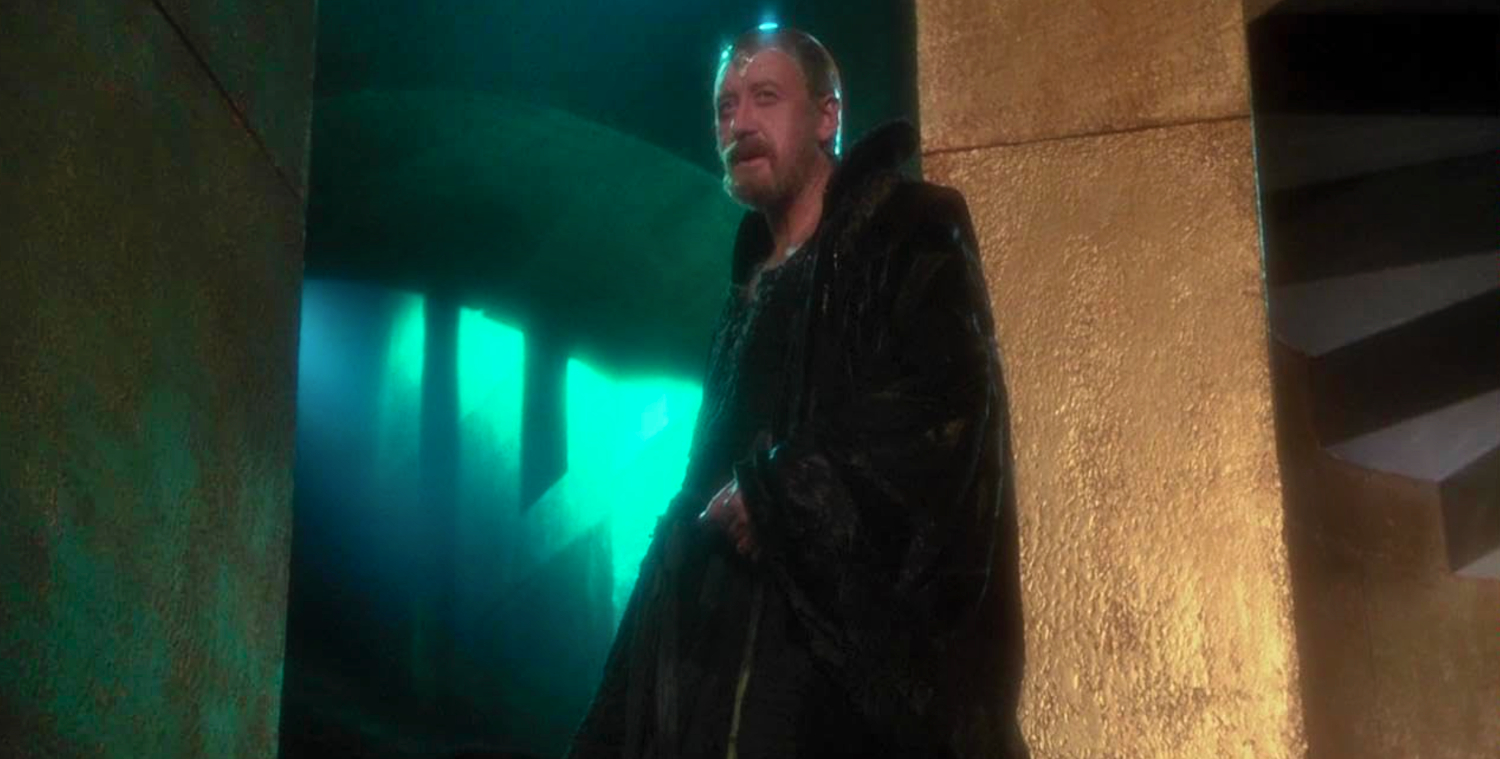
This interpretation takes the form of a multi-generational epic. Druid wizard Merlin (Nicol Williamson) helps warlord Uther Pendragon (Gabriel Byrne, in nearly his first movie) obtain the sword of power Excalibur, which he uses to unite a pre-England island of tribes. But Uther ruins everything by using Merlin’s magic to seduce another man’s wife. The magical sword ends up plunged into a stone. Many knights try and fail to pull it out, and none become the new King. Against all reason, young squire Arthur (Nigel Terry) pulls the sword out — he is the Chosen One. After a pep talk from Merlin, Arthur accepts his destiny, using both might and mercy to unite the tribes once again. He now “is” England, as the king’s health and the welfare of the land are one. He assembles a group of virtuous knights to found a glorious new rule of honor and justice. He weds Guinevere (Cherie Lunghi), the daughter of the loyal noble Leondegrance (Patrick Stewart). But Arthur’s idyllic reign begins to crumble. Guinevere and Lancelot (Nicholas Clay), Arthur’s champion of the Round Table, become irresistibly attracted to one another. Their betrayal of Arthur is as fated as the other ‘human’ weaknesses that ruin Merlin’s hopes.
Uther Pendragon’s bloodline reasserts itself when Arthur’s half-sister, the would-be sorceress Morgana (Helen Mirren), takes revenge with a lifelong campaign to steal the throne. Morgana cajoles Merlin into sharing some of his secret necromancy, and tricks Arthur into fathering an incestuous bastard son. With Arthur dispirited by his wife’s infidelity, the land suffers as well. He dispatches his knights in a hopeless search for The Holy Grail, allowing Morgana to crush them one at a time through her evil son Mordred (Robert Addie). Arthur waits far too long to rally to save his kingdom: Guinevere is in a nunnery and Lancelot is living with a wild tribe, nursing a ‘wound that has never healed.’ All Merlin has to offer Arthur is a last measure of spiritual guidance: his magic is on the wane because a newer faith is replacing the old pagan gods.
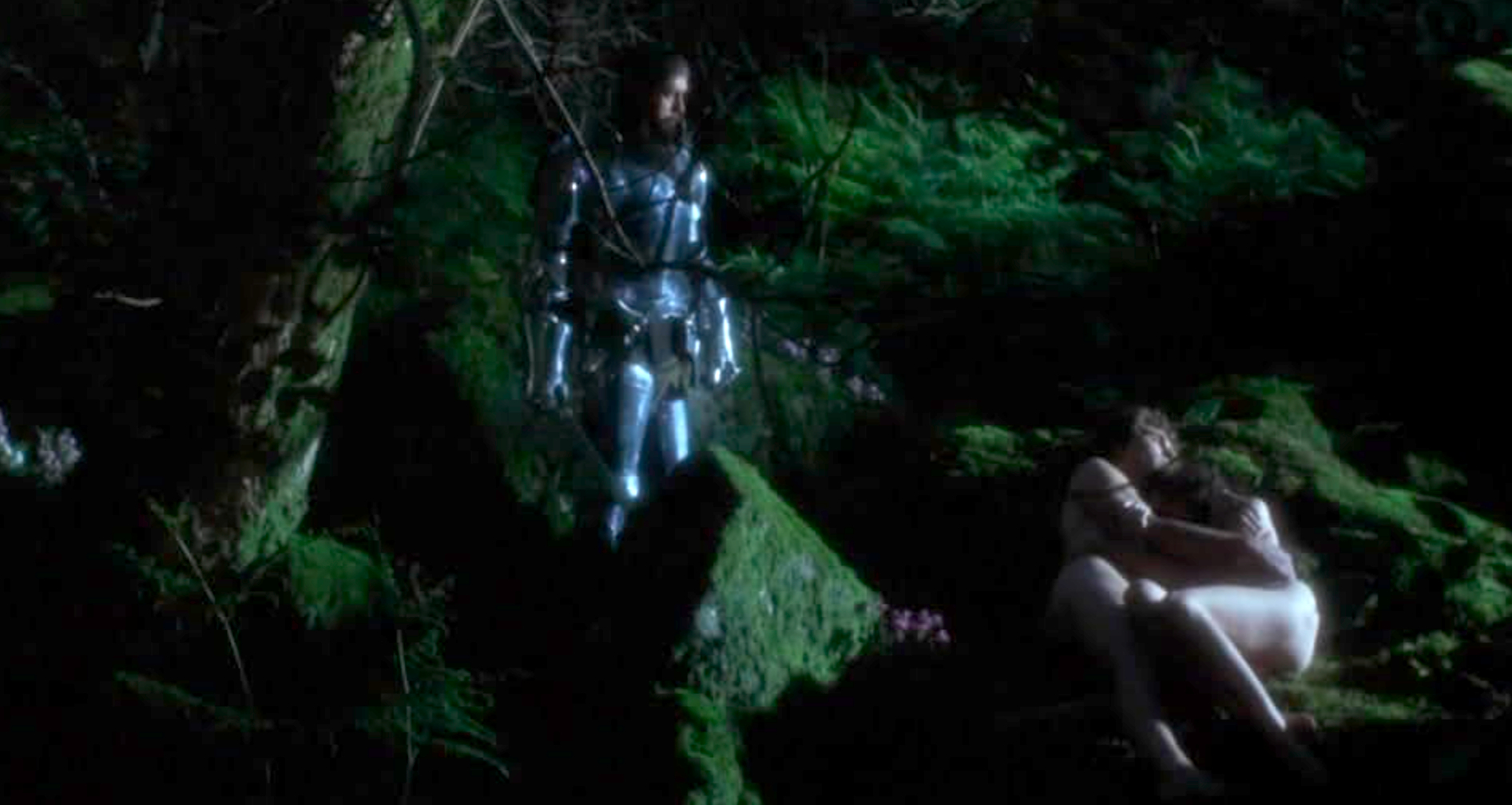
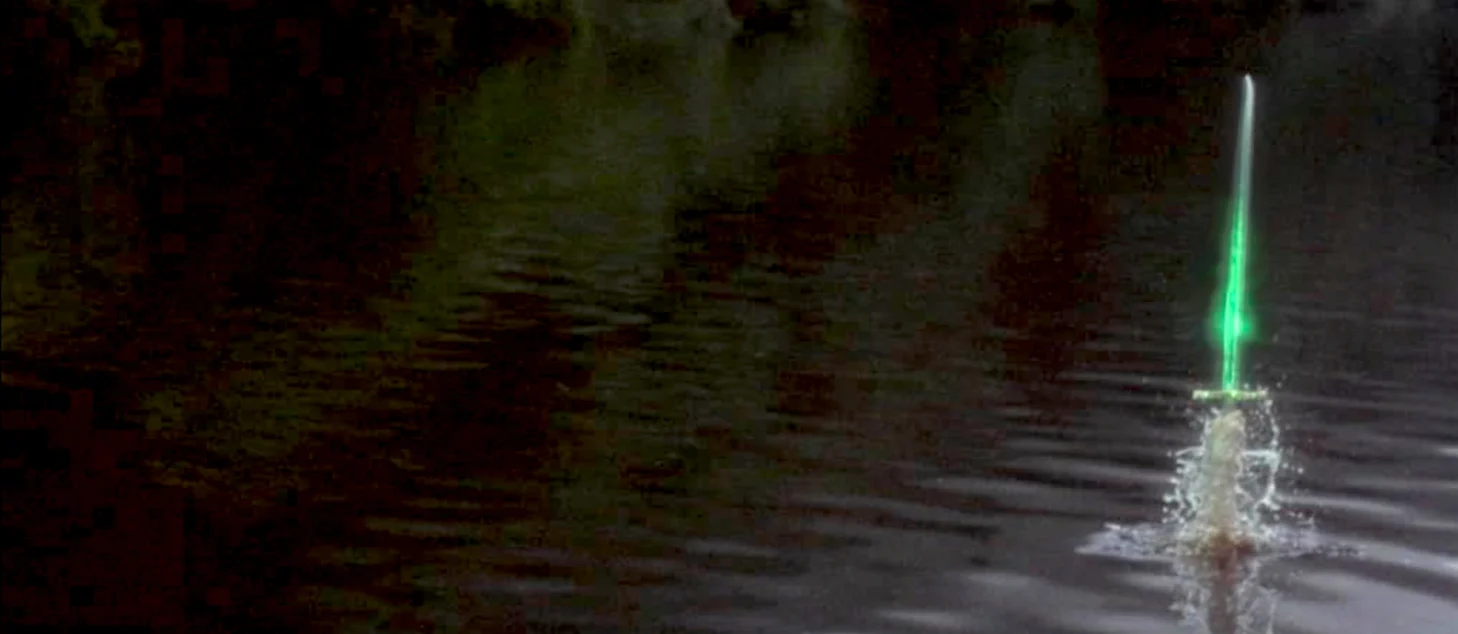
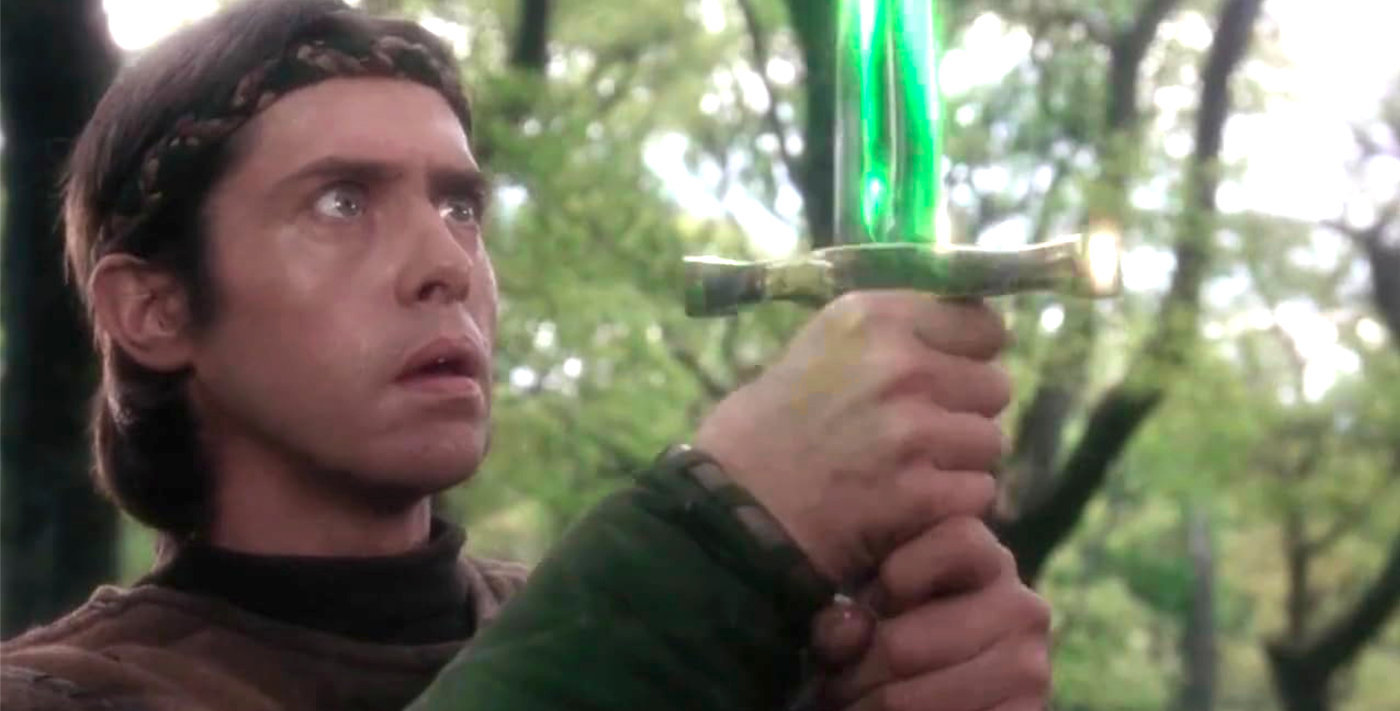
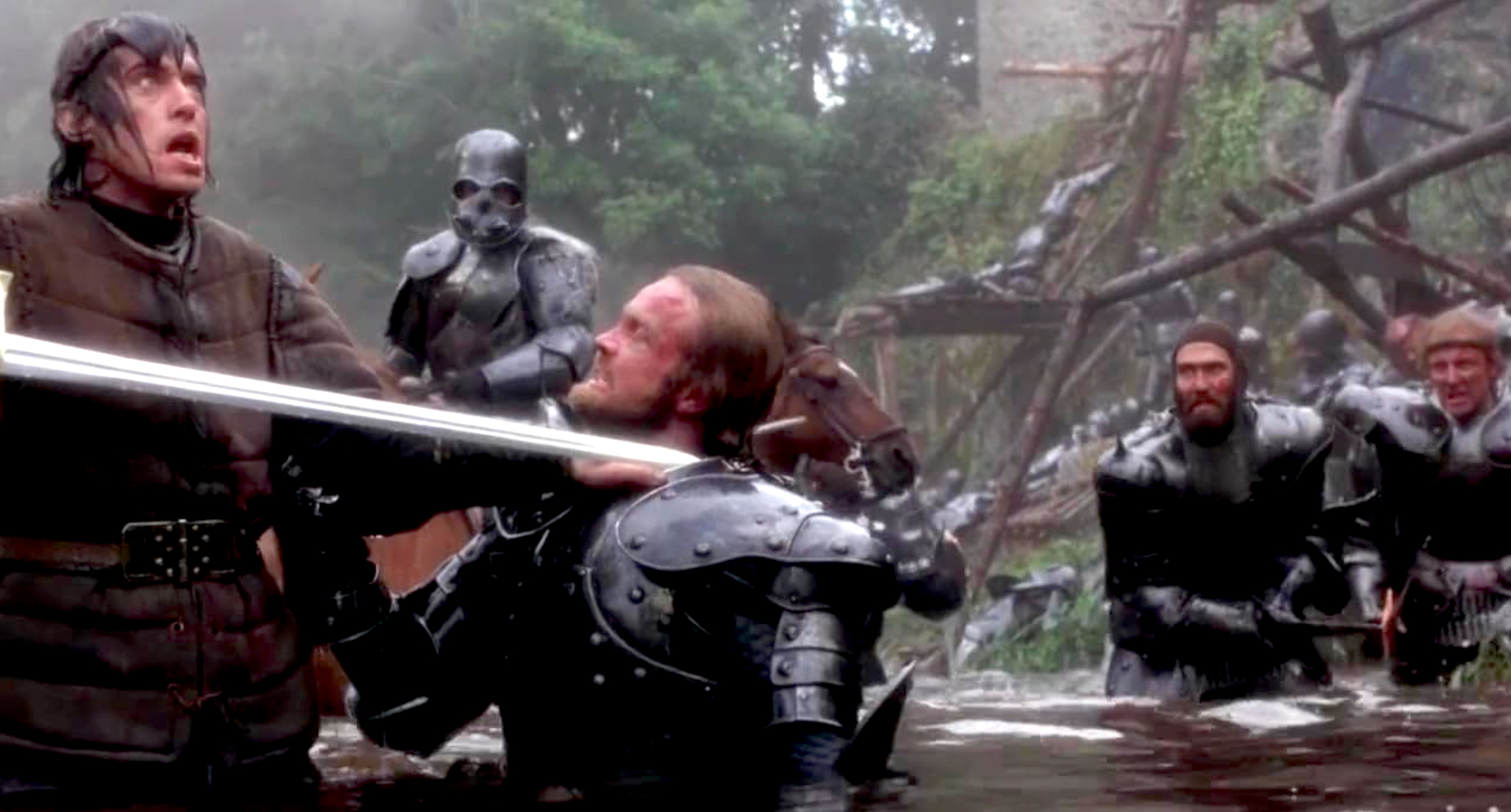
Excalibur ignores revisionist trends that attempted to strip cultural heroes of their legendary status: Wyatt Earp, Robin Hood. Boorman instead invests fully in the mysticism of the Arthurian legend, dropping the romantic clichés attached to previous Hollywood efforts. Clever effects and beautiful sets, all created on a budget and without CGI, return a sense of magic to the tale. The sword Excalibur glows green, and Uther rides across the ocean on a fog of ‘dragon’s breath.’ Boorman establishes a fantasy in which The Lady of the Lake can rest calmly under the water, brandishing Excalibur aloft as if it were the most significant object in the history of man. The image might as well be from the curiously similar myth of Siegfried, with his ring and his Niebelungs and so forth. We’re also reminded of similar imagery used to nightmarish effect in Boorman’s earlier Deliverance.
Boorman’s actors take on their roles without a hint of irony. Arthur is a great king not because he’s handsome or clever, but because he possesses the spirit of fairness and compromise. Nicholas Clay’s Lancelot embodies an unimpeachable ideal, so much so that when he states his code of chivalry to Guenevere, we respond with the same tingle of recognition that we gave Christopher Reeve’s Superman. The mood is so ‘right’ that the soundtrack can pause for a few musical notes from Tristan and Isolde. It works! Compared to Clay’s clear-eyed noble warrior, Franco Nero’s Lancelot was just another pretty boy who lacked control over his hormones.
Excalibur slows down only when the story takes a depressing turn, with brave knights crucified like Christmas tree ornaments and the nasty Mordred and (brilliantly acted by Mirren) Morgana waxing victorious. But I loved the logical resolution to the Lancelot and Guenevere sidebar. Although Arthur’s loving life companions are unable to return again to his side, they raise his spirits and contribute to his noble cause.

If Arthur, Guinevere and Lancelot had considered Open Marriage, Camelot might still exist.
It’s great to see Patrick Stewart, Gabriel Byrne, Liam Neeson and Nigel Terry ‘back in the day,’ hale and hearty. Nicholas Clay’s Lancelot is a nice career progression from his British officer in Zulu Dawn, 30 years after his radiation-mutated schoolboy in These are the Damned. Nicol Williamson gets the best lines, even if he takes one too many pratfalls attempting comedy relief. As Merlin is a character unstuck in time, he has the necessary distance to react with sarcasm to the foibles of the heroes he tries to inspire. Nigel Terry’s Arthur always looks a little stressed out, what with the responsibility weighing on his shoulders. We love him because he’s always open to the impossible and ready to break the rules.
We’ve always liked the character of Perceval (Paul Geoffrey), a nobody who becomes a knight by spirit alone. Starting as a squire like Arthur, Percival steps into the breach when it looks as if Lancelot will be a no-show to uphold Guenevere’s honor. He ends up proving he has the Right Stuff in the chivalry department. In other words, there’s hope for all of us. Lesson: study harder for that test.
We don’t see a lot of attention given to the women of these Middle Ages … the characterizations are not rushed but neither are they more than sketches. Helen Mirren is a choice villainess as Morgana, and Katrine Boorman makes her mark as a woman scorned as Igrayne. They are no less beautiful than Cheri Lunghi, who carries the role of Guinevere with grace, but without any great sense of agency. The attraction to Lancelot is such that she doesn’t fight it; she is hurt by the idea that Arthur could have loyalties and responsibilities with a higher priority than she. She’s marrying a King whose body and soul are already married to the land … what more can she expect?
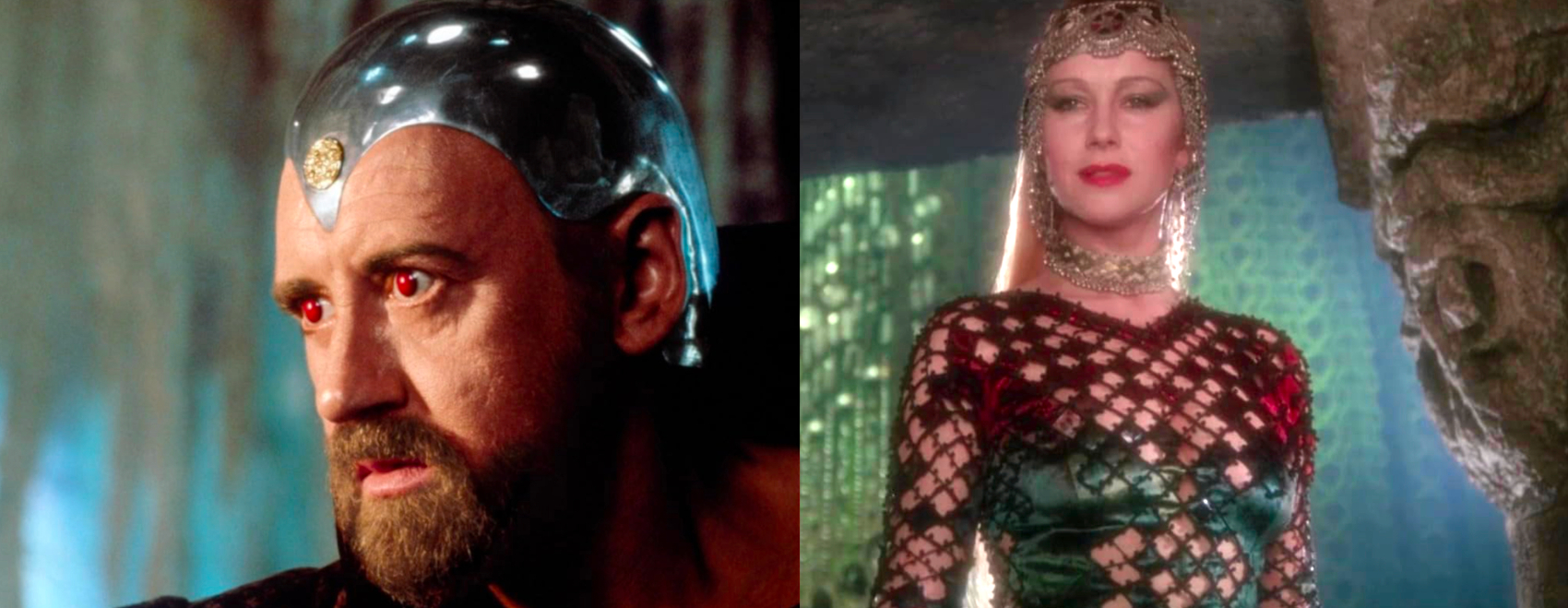
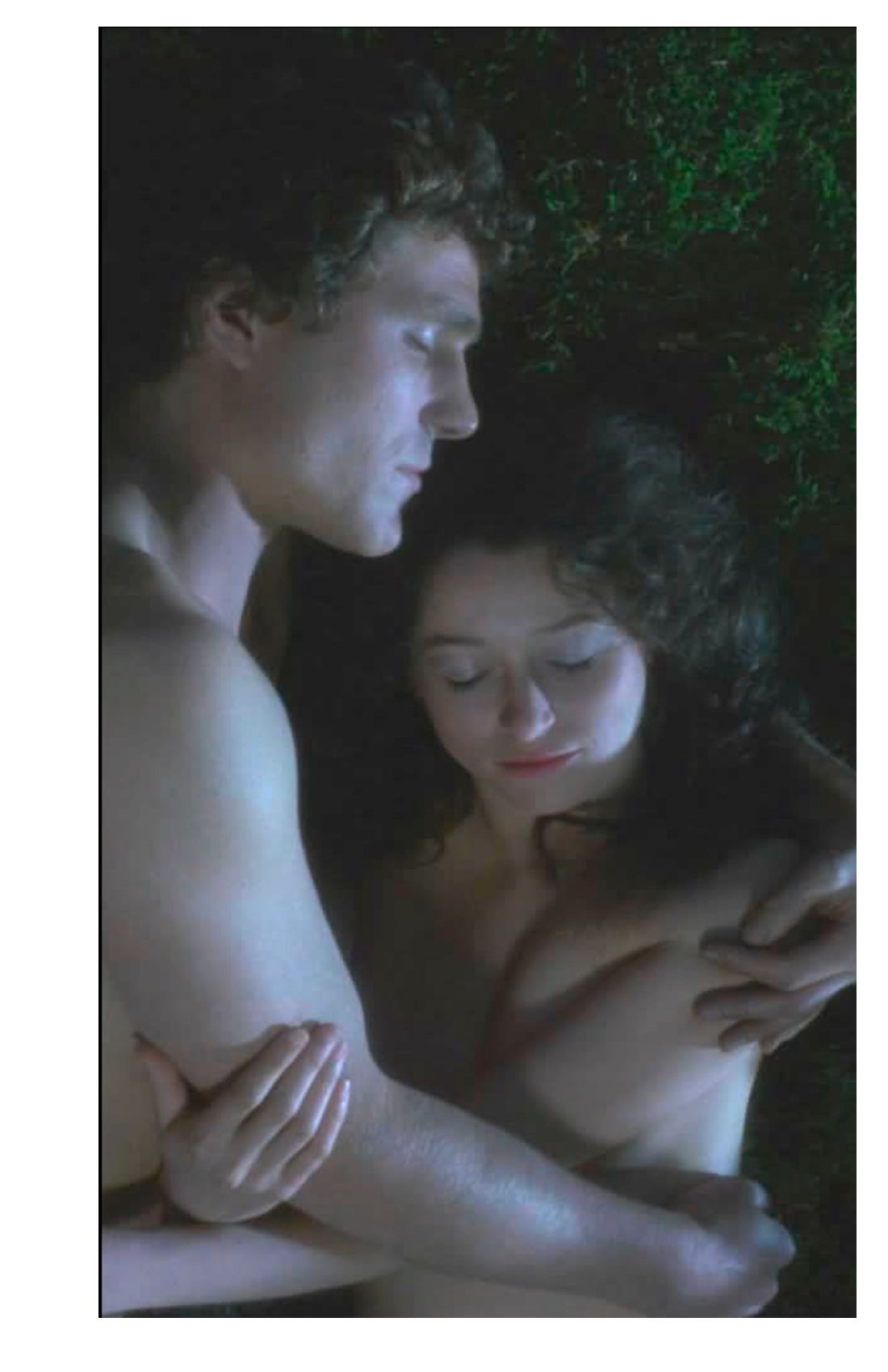
The film’s cinematography and design celebrate the magical spirit, as does an Olde England conceived as one big green forest. The film overflows with artificial yet applaud-worthy visual designs, like the impossibly perfect polished armor. The only embarrassing art direction arrives when Merlin shows Morgana his wizardry hideout. It unfortunately looks (and operates) just like Chris Reeve’s Fortress of Solitude, with all the magic of an over-designed department store window. Wizards can be imprisoned in glass or amber, just like Superman’s ‘Super Villains.’ Everything else in the movie is more than satisfying — intelligent, sensual, magical, and emotionally compelling.
Things didn’t look good for John Boorman’s career after the debacle of Exorcist II: The Heretic. On Excalibur he bounced back at full strength. He’d continue with great pictures like 1987’s Hope and Glory and 2001’s The Tailor of Panama.

Arthur must be a star; Nigel is the wrong guy.
Thanks for another great review! Although I wish you had also mentioned the sensational use of Orff’s “O Fortuna”, which in my mind is now eternally connected to this movie (as “Ride Of The Valkeries° is to “Apocalypse Now”, no matter how many other movies have included it before).
And sure, “The Sword & The Sorcerer” is far from the best telling of the story, but there’s a funny and touching romantic interlude in it that I will defend to my death. Yes, it feels like it’s from another movie, and in a way it’s its own little short, but to me it alone is worth the price of admission.
Another later Boorman feature worth mentioning is “The General” (for me the best of the bunch), which he did after the titular character robbed his house. It’s perfect. And I also have a soft spot for “Where The Heart Is” – a charming urban fairytale with a wonderful cast.
In The Once and Future King, Tennyson’s Le Morte D’Arthur and Mallory’s MorteD’Arthur it was Sir Bedivere who returned Excalbur to The Lady of the Lake but I’ll forgive Borman, Excalibur is tremendous!
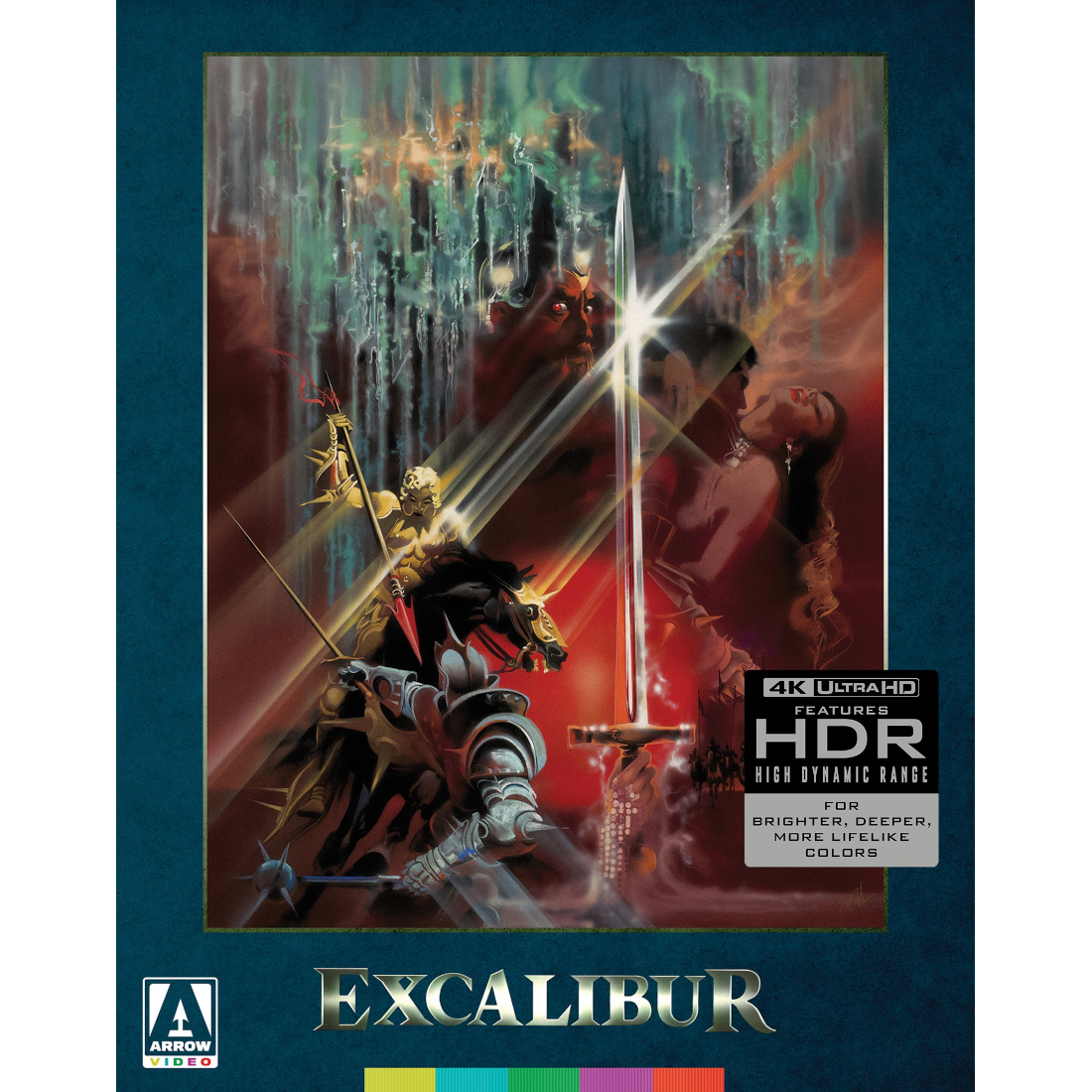
Thanks, Glenn! Great review of one of my favorite films. When I first saw it on the big screen during its original release, I was enthralled by Boorman’s visionary take on the Arthurian legends. By the way, there is a standard Blu-ray version available from Arrow with all the same content and extras, for those of us who haven’t gone 4K yet.
I love Excalibur. It’s always been under appreciated. To me, it is closer to the legend than any other motion picture. I really want to get this 4K, but I have seen some comments about audio issues. Did you notice any sync problems?
I thought some of the dialogue was rubbery, but to me it looked like dicey old fashioned looping. It was not early or late. But I’m not claiming to be an audio expert.