


The king of all things fantastic in Hollywood is at present none other than writer-producer-director Guillermo Del Toro. His abiding interest (read: fanaticism) about all things horror surpasses that of Forrest J. Ackerman, at least at the academic level. Hollywood success has allowed Del Toro to create his own mini-museum, a ‘cabinet’ of precious literary editions, fanta-film collectables, props and artworks. Del Toro always impresses in interviews. His base of knowledge and experience is daunting, and he speaks with friendly authority. He’s the most articulate and thoughtful ‘monster fan’ imaginable.
Often grouped together with his countryman Alfonso Cuarón, whose first film successes were also produced in Mexico. Del Toro is a more prolific writer-producer than a director, but his directing filmography has plenty of highlights. His crowning achievement to date is 2017’s The Shape of Water, which was nominated for 13 Academy Awards and won 4. That’s not bad for a lowly monster movie; Criterion brought it out on 4K not long ago.

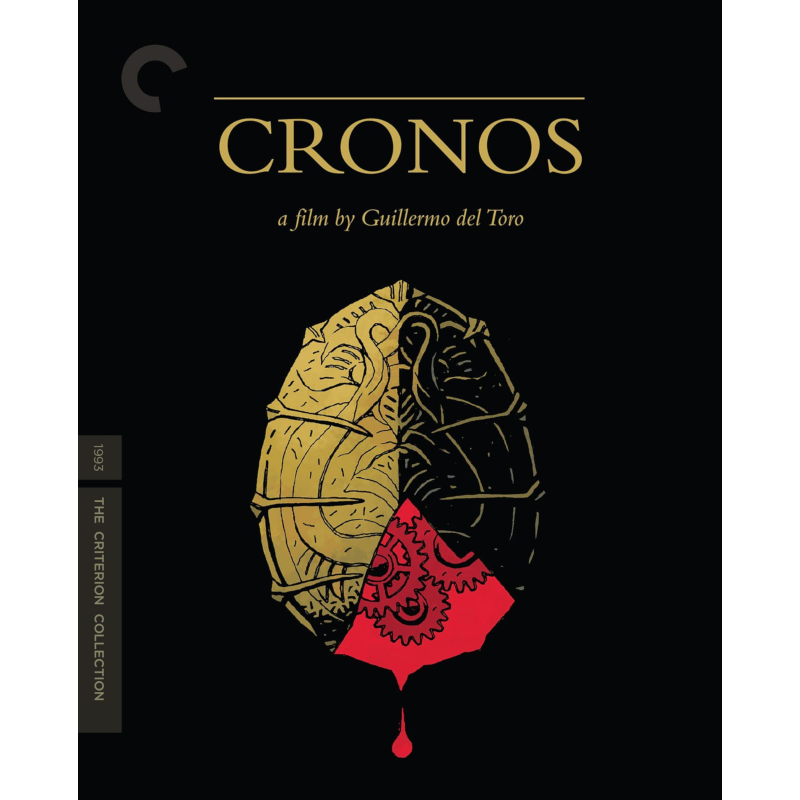
The Shape of Water has a lot in common with Del Toro’s first feature film Cronos, from 1993. Each resurrects a sub-genre of the fantastic, creating its own background mythology. This mythmaking feat recalls the classic-era screenwriter Curt Siodmak, who condensed superstitions about shape-shifing phantoms into a very popular and still-prevailing werewolf mythology.
Ever since 1998’s reboot of The Mummy, Hollywood has been trying to repackage horror as a franchise, like Harry Potter or the Marvel universe of superheroes. But nobody knows what upscale horror should be any more. There’s still a big market for all-torture, all-Sadism extravaganzas, but old-fashioned thrills are in short supply. Universal’s The Mummy became an adventure epic, that might have been more accurately titled “Indiana Jones and the Indestructible Pixel Guy You Can See Through.” A new take on Curt Siodmak’s wolf man mythos has been attempted every few years, but nobody so far has equalled the last truly creative lycanthrope thriller, Joe Dante’s The Howling … from 45 years ago.

Cronos is now considered the first part of a three-film Guillermo Del Toro trilogy, with two films set in Spain and given a thematic background of la guerra civil española. But Cronos stands alone, a horror fable without an immediate political connection. It is an exemplary mini-classic that channels aspects of the old Universal formulas into a modern Mexican setting, and never seems old-fashioned.
In stories like The Man in Half-Moon Street, foolish men go to extremes in search of immortality, and eventually pay a terrible price for their transgressions. Guillermo del Toro’s creepshow is a variant on this formula. It has aspects of the flawed but interesting The Asphyx but relies for most of its visual motifs on vintage Universal thrillers like The Mad Ghoul. The hero of Cronos is more of a victim than a monster. When he is compelled to fall to his hands and knees to lap up blood from the floor of a public restroom, he evokes Kharis from The Mummy’s Hand, prostrating himself to recover spilled Tana Leaf fluid.
But Cronos also departs from conventions both old and new. There are no youthful lovers or sexually precocious teens in the story. The hero is an antiques dealer more than a few years into middle age. He’s played with authority and sensitivity by the Argentinian actor Federico Luppi, of Men With Guns and The Stone Raft as well as other films by del Toro.

Antiques merchant Jesús Gris (Luppi) finds a beautifully-crafted scarab-like metallic artifact hidden in the base of a statue. Soon thereafter, a belligerent customer named Ángel de la Guardia (Ron Perlman) arrives and purchases the statue for more than it is worth. Ángel’s sickly uncle Dieter de la Guardia (Claudio Brook) convalesces in an elaborate upstairs loft in his large factory. He has been collecting matching statues in the hope of finding the one with the jeweled scarab. Realizing that the artifact must have a special value, Jesús tries to determine its function. He is shocked when the scarab’s mechanical claws grab his hand. Some kind of needle pierces his skin. Jesús is even more surprised when the device revitalizes his metabolism and rejuvenates his appearance.
Jesús refuses to cooperate with Dieter’s demands that he relinquish the artifact, and must discover its full story on his own. The dying Dieter wants the scarab because it makes the bearer immortal — but it also turns any user into a functioning vampire, who must drink blood to survive. Jesús finds it impossible to hide his strange new condition from his wife and adorable granddaughter (Margarita Isabel & Tamara Shanath). When Ángel ‘kills’ him, Jesús doesn’t die. He instead becomes a disfigured ghoul. His flesh begins to fall away, revealing a new layer of white skin.

The art direction in Cronos is as ornate and complex as Jesús’ colorful antiques. Writer-director del Toro creates a fascinating, strangely credible horror icon in the fancy metallic scarab. Huge macro close-ups show its interior gears turning — and reveal some kind of organic, uncanny grub-thing living in its interior. The antique memorabilia in Jesús’ shop contrasts strongly with Dieter de la Guardia’s antiseptic apartment, a clinical waiting room for the terminal tyrant. For the record, actor Claudio Brook’s amazing career took in films by many directors: Robert Parrish, Louis Malle, Joseph Losey, Juan López Moctezuma, Arturo Ripstein, John Glen. He played his several films by Luis Buñuel, and starred in the director’s Simon of the Desert.
Del Toro has invented his own horror legend, from whole cloth as it were. An elaborate prologue reveals that the maker of the Cronos scarab was a 16th century alchemist, who lived until 1937 when he was crushed by the collapse of a building. The ancient man had pearly white skin, described as the ‘color of marble in the moonlight.’ The authorities covered up the fact that an exsanguinated corpse was also found in the wreckage of the fallen building.
Jesús is a wholly reluctant ‘monster.’ Cronos puts him through the classic paces of a tragic victim, forcing him to creep about to hide his secret and its attendant appetites. Following a tradition that stretches from Florey’s Murders in the Rue Morgue to Cronenberg’s The Fly, Jesús final conflict with Ángel takes place on a rooftop high over the city. The vampiric theme edges into zombie territory when Jesús realizes that, so long as he follows the ‘rules’ of the Cronos scarab, he’ll continue living. This holds true even if his body is mangled, as was the case with one unfortunate victim in the classic W.W. Jacobs story The Monkey’s Paw. As in Jorge Grau’s No profanar el sueño de los muertos, a mortician tacks Jesús’s face back together with staples, leaving him with a rotting Frankenstein-like appearance. Formerly a rather handsome man, Jesús can’t possibly return to his wife now. And how can he face his loving granddaughter, Aurora?
Unpretentious, suspenseful, and visually fascinating, Cronos is a wholly original genre gem.


I wonder what ever became of Tamara Shanath.