

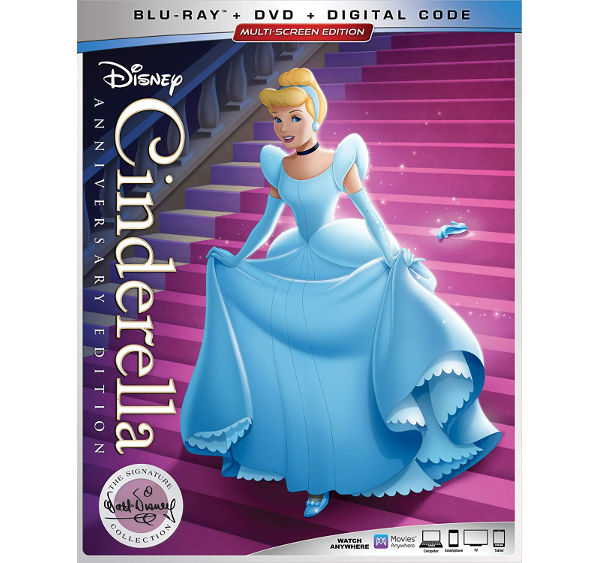
After revolutionizing animation, the movies, and entertainment in general with his 1937 mega-hit Snow White and the Seven Dwarfs Walt Disney discovered that producing marvelous, intricate, uncompromised works of animation art was so expensive, it’s not easy to make them profitable. Walt stuck to his high art principles through Fantasia, and couldn’t earn back his costs. And even when he made the less expensive Dumbo, the war kept him from distributing it almost anywhere outside the U.S. except for South America.

The second whammy of the 1940s was the unionization of his animators, who didn’t like working at the prices he set. Disney eventually caved in but drove away some of his most talented collaborators. By the late ’40s he was experimenting with part-animated films and strings of short subjects grouped into musical-themed features. According to the experts, what saved the budding Disney empire and set it on the road to cultural domination was the unqualified, highly profitable 1950 hit Cinderella. Disney’s corps of writers and gagmen hit upon a great idea to freshen the universally known fairy tale plotline: the standard narrative is embellished with the comic antics of Cinderella’s animal friends: mice. And a few birds. And the family dog and horse.
And what’s wrong with that? I can imagine Disney charging his animation story geniuses to discover a fantastic adaption idea for the unbreakable tale that came to us through the Brothers Grimm from Perrault and earlier (14th century) storytellers:
‘Just make it amazing and heartbreaking and delightful — no chopping off toes ’cause of little kids — smooth out the rough edges for modern consumption. BUT DON’T CHANGE A THING because everyone knows the story by heart, and it better have a coach made of a pumpkin, mice turned into horses and a glass slipper. Good luck!’
Disney elected to tell the basic story extremely straight, and to embellish it with a bundle of cute, adorable animals.

The more modern animation style employed abandons the full-dimensional figures of Snow White and Pinocchio but not the delicacy of Disney’s master character animators; The Prince may be a little stiff and unexpressive, but Cinderella, her imperious stepmother & bratty sisters, and the fairy godmother are wonderfully rendered. All of those lovable mice are equally expressive, especially Gus, the chubby new rodent in the house. Taking top animal honors is Lucifer the cat, a fussy, spiteful and fully contented rotten villain, always one claw swipe away from nailing himself a mouse meal. The various mouse-cat confrontations owe little to the Guignol mayhem of Tom & Jerry cartoons. To be honest, without the charming mouse scenes Cinderella might be a bore.
The designs are pure Original Princess Vintage, and quite stylish. The animation background art is in the modern mode, with skewed perspectives and limited detail, yet they lend scope and texture to the various episodes. Special effects animation adds mists, stardust and sparkly magic as required. When Cinderella’s sisters destroy her ball gown, she runs to cry beneath a weeping willow tree that looks like it belongs on the banks of the Isle of the Dead. The Prince’s castle is not merely enormous, it’s gigantic beyond all reason.

Bringing the story even more fully to life — and making the movie a pleasant repeat experience for adults — is the marvelous music score. Disney’s animated hits now emulate Broadway shows, with musical numbers every few minutes; this makes it easier when the cartoons are adapted into Broadway musicals, and then back into live action carbon copies of the cartoons. How soon will someone look at the new CGI effects feast The Lion King and say, ‘you know, this would look good animated.’ For me, none of the modern sub-Sondheim efforts can touch the freshness and magic of the music that Disney put into his work when he was alive. The orchestrations and character touches for “Bibbidi-Bobbidi-Boo” and “The Work Song/Cinderelly Cinderelly” are fascinating — I can still hear those sped-up mouse voices harmonizing.
In the story Cinderella’s step-relatives are cruel and heartless without further explanation. Disney doesn’t invest psychological complexity in his villainous Stepmother Lady Tremaine, so she doesn’t show up in the roster of later, absolutely fabulous bad beauties, like Maleficent and Cruella De Vil. She’s just a rotten b____ through and through, keeping Cindy in her place through bullying, false promises and whatever other haughty humiliations she can think of. Come to think of it, what’s Lady Tremaine’s big problem? Did she murder the late Mr. Tremaine’s first wife, and therefore hates Cinderella because she looks like her ma? It seems to me that if Cinderella should be so lucky as to become a princess or a queen or whatever, Lady Tremaine should just play along, ride her stepdaughter’s bridal train into the palace, and enjoy life. What a maroon.
Feminist (humanist?) critics of the story and Disney’s movie see Cinderella presented as a victim pure and simple, forgetting that Cinderella’s plight aligns with untold millions of women that have no choice but to accept the lives that cruel fate deals them. She’s no dummy to get her hopes up, as Lady Tremaine has promised her that she can go to the Ball. She has every reason to despair because nobody (human) seems to be on her side. The Fairy Godmother-ex-machina is more than welcome. We know that Cinderella is working when we feel for our heroine, and fall in with the suspenseful business on the stairs when she’s been locked in her room, and her mouse friends are trying to save the day. Cinderella is great light entertainment, perhaps not Disney’s artistic high point, but a movie well deserving of its exalted status.

