

Alfred Hitchcock muffed his wartime production of Suspicion. He wanted audiences to guess whether or not Cary Grant really intends to murder his new wife, Joan Fontaine. Not only did the Production Code not accept the murder angle, Hitchcock’s grim storytelling made finding a satisfying resolution very difficult.
Nearing retirement twenty years later Cary Grant was no longer certain he was right for any role except very light comedies. He also no longer felt comfortable playing opposite actresses a quarter-century younger than himself. Audrey Hepburn was a major exception, in that her presence seemed to rejuvenate her older co-stars. Critics noted her age difference with Humphrey Bogart and Fred Astaire but audiences didn’t mind a bit. Pairing Hepburn with the more visibly aging Gary Cooper in Love in the Afternoon didn’t go over as well, perhaps because Billy Wilder’s screenplay directly addressed the cradle-robbing issue.
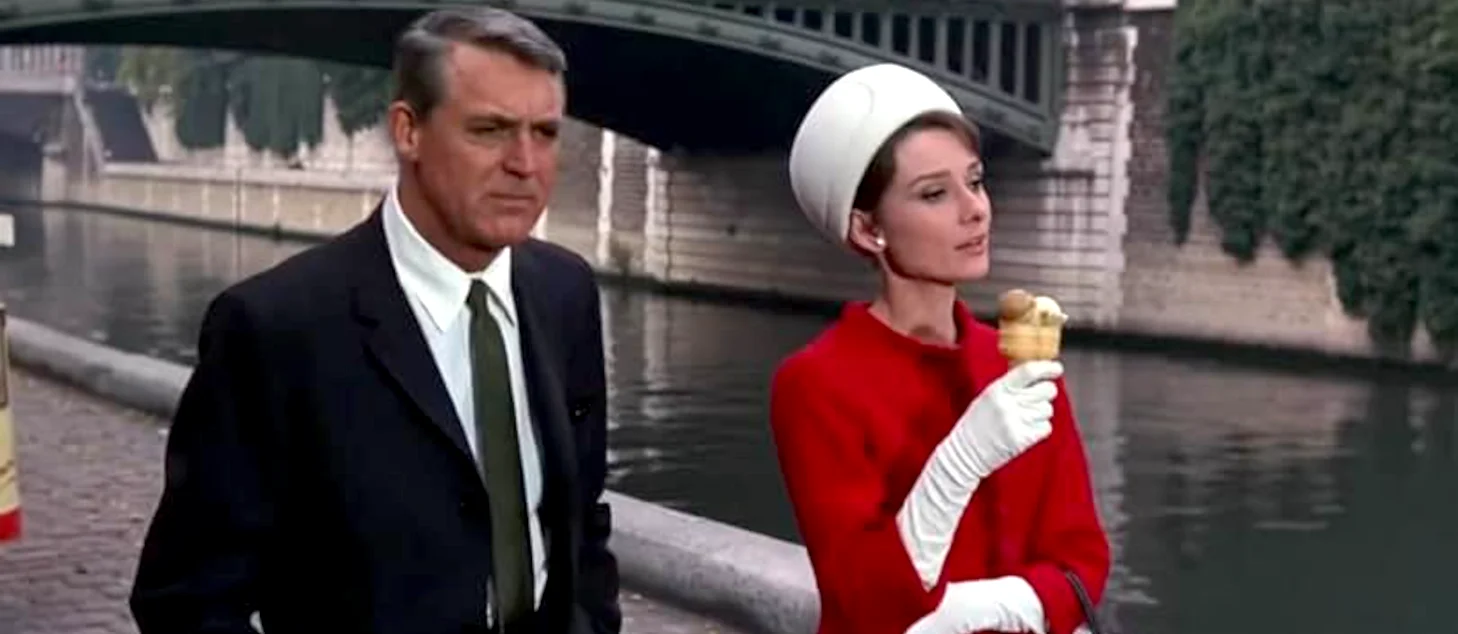
Charade’s only issue was to make audiences happy. It’s not as outrageous as North by Northwest, Cary Grant’s previous triumph, but its thriller machinations work up a great deal of fun, especially the shifting game of trust and suspicion between the Hepburn and Grant characters. This was 1963, when a movie might make light of murder. The very clever screenplay gets very close to making us think Grant’s character might be a killer.
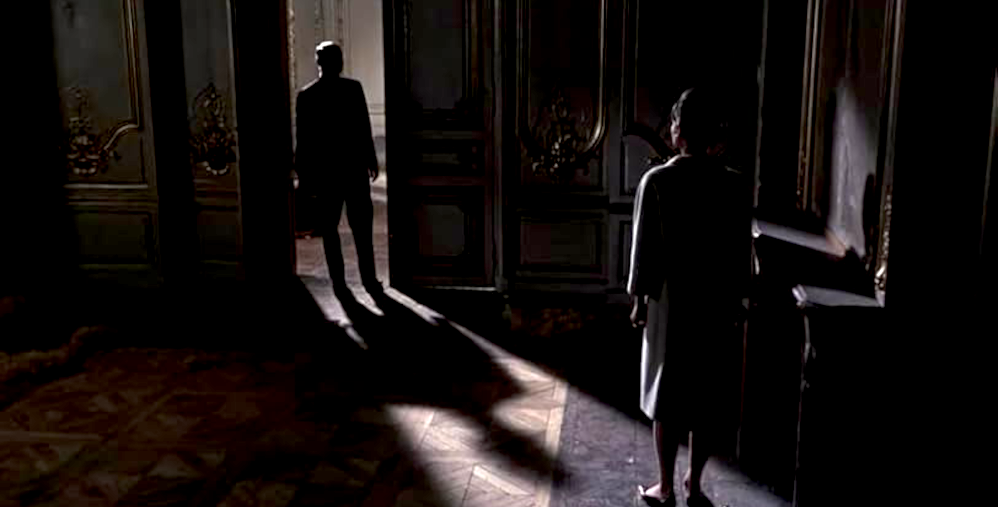
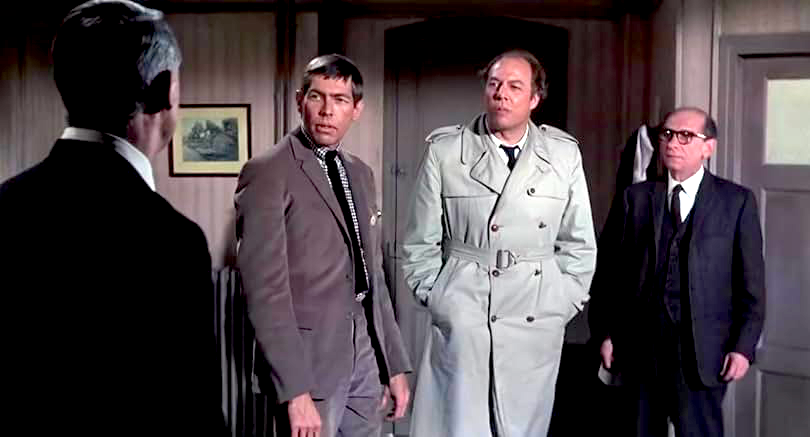
Wealthy Regina Lampert (Audrey Hepburn) returns to Paris to find that she’s now penniless. Her apartment has been cleaned to the floorboards, leaving her only the clothing she traveled with. French Inspector Grandpierre (Jacques Marin) informs her that her already mysterious husband has been murdered. She knew little about him except that she wanted a divorce. Regina is contacted by U.S. customs official (and CIA operative) Hamilton Bartholomew (Walter Matthau), who warns her to be cautious, because her husband was killed by several of his old OSS buddies. They stole $250,000 during WW2, and will surely presume that she has it. They’re a rough bunch — lanky Tex Panthollow (James Coburn), thuggish Herman Scobie (George Kennedy) and the small but nasty Leopold Gideon (Ned Glass). Regina has made a new friend in Peter Joshua (Cary Grant), a coy but charming man who comes to her aid. She begins to fall in love with Peter, a process made difficult when admits that he’s operating under a false name. Regina can’t be sure that he’s not another of her potential murderers.
Charade has pretty much everything needed for movie success in ’63: huge stars, a gloriously colorful location shoot in Paris, and a witty screenplay that keeps the audience guessing. Add to that the glamour of Henry Mancini’s percussive music score, with its Oscar-nominated title song. Director Stanley Donen worked closely with Hepburn and Grant to improvise multiple bits of comic business, to keep the characters’ personalities fresh. The Peter Stone screenplay is packed with little asides and observations. Regina Lampert and Peter Joshua’s dialogues feel unscripted; even the in-jokes referencing other movies seem unforced. The stars really look like they’re having the time of their lives.
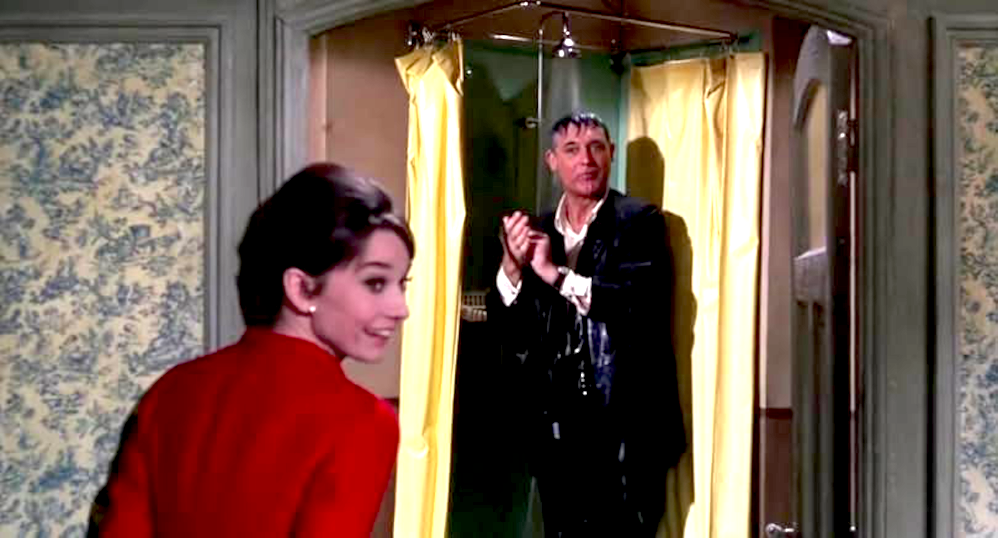
Hepburn’s character is supposed to be delighted by Peter’s little jokes and constant teasing, which sometimes verges on slapstick. Often discussed is a shower scene in which Grant’s charmer showers with his suit on, just to raise Regina’s spirits. Most of these moments still work well, even the frequent mugging and double-take facial reactions.
The first reel or so is a little superficial, with too many ‘clever’ director’s touches, like a corpse falling from a train, and a deadly pistol that turns out to be a child’s toy. Our stars work too hard on their meet-cute dialogue openers — cute pick-up lines, etc. Many wannabe ‘sophisticated’ romantic comedies from this time collapse with a Bad Case of the Cutes * , as defined by editor friend Steven Nielson. But as soon as the danger-intrigue identity games begin, Charade hits a near perfect tone of ‘charming insecurity.’
Is this screenwriter Peter Stone’s best work? His somewhat similar follow-ups Mirage and Arabesque aren’t as satisfying — is it just because the chemistry between Gregory Peck and Diane Baker or Sophia Loren isn’t as good? Back in film school, writing professor William Froug had us read Richard Corliss’s book Talking Pictures, which advanced the idea that many writers 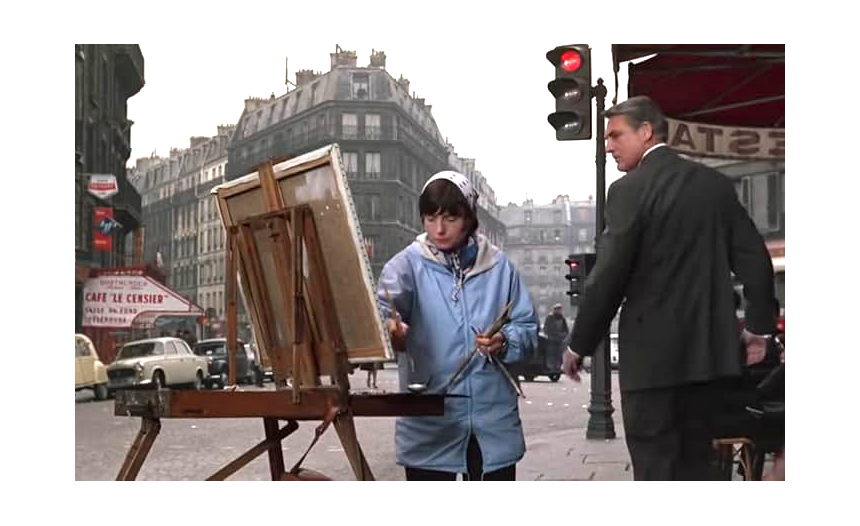
qualify as cinema auteurs, and that some deserved the praise automatically bestowed on the director.
Corliss’s chapter on Peter Stone marvels at Charade’s adept handling of an impossibly complicated plot. It’s hard enough to get an audience to follow simple relationships, but Cary Grant’s identity in Charade keeps changing. Regina finds out that ‘Peter Joshua’ is really ‘Carson Dyle.’ Or is he Alexander Dyle, or Adam Canfield, or Brian Cruikshank? Grant admits every change of identity and still asks Regina to trust him. The surprise is that both Regina and the audience keep trusting Peter/Carson/Alexander/Adam, beyond all reason. Well, we take it on faith that Cary must be the hero … even when the opposite seems proven.
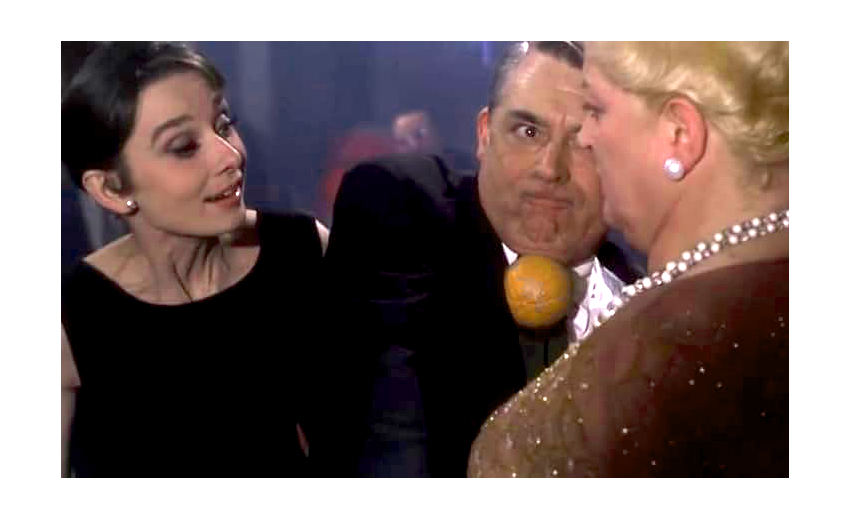
Peter Stone and Stanley Donen keep the twists and reversals going without ever having to get too serious. Alfred Hitchcock might have thought them to be poaching on his territory, were he not making late-career ‘serious’ films, inspired by his canonization by the French critic-directors Truffaut, Rohmer and Chabrol. In away, Charade is poaching. Besides revisiting and sometimes bettering bits from North by Northwest — Grant’s scary climb on the outside of a building, a rooftop fight — Stone’s maze of shifting names and identities far outdistances Hitchcock’s ruse with the non-existent George Kaplan. Audrey Hepburn repeatedly has the rug pulled out from under her assumptions about Cary Grant, until confusion reigns. It’s like a big party game, akin to the silly pass-the-grapefruit business in the nightclub scene.
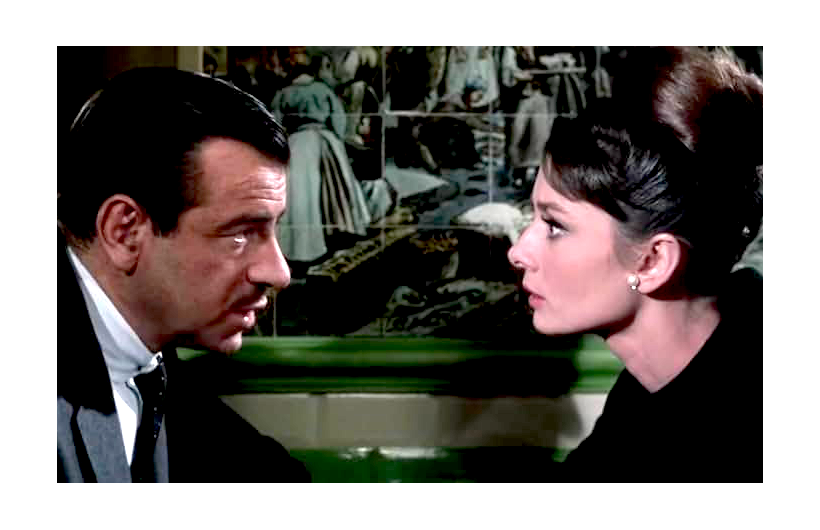
The glamour-chic quotient is high, something fairly guaranteed by the presence of the classy Ms. Hepburn. Nowhere does Regina Lampert suffer the slings and arrows of Bad Luck in the Big Apple. She has lost everything save the contents of her suitcases, yet manages to always be chic in the wardrobe by Givenchy. By having to bunk in an old hotel, Reggie references the cute, gamin-like Hepburn. The trio of villains are colorful but rather ineffectual, despite covering a wide spectrum of menace. James Coburn’s crafty Texan killer was a big step in his leap from featured support to leading-man stardom. For all their snorts ‘n’ threats, the trio is mostly guilty of bad manners. Even the kidnapping and threatening of Reggie’s bratty nephew (the one given the task of telegraphing the MacGuffin) doesn’t raise a sweat. When people are horribly murdered, it’s always off-camera.
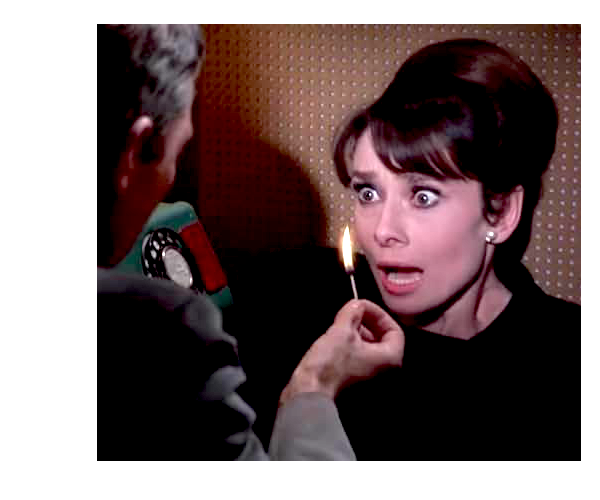
Hepburn is thoroughly convincing when menaced, giving us a preview of her World’s Champion blind lady in Wait Until Dark. Her panic feels real when James Coburn threatens her with lit matches, even though she could have made him look silly by simply blowing them out! Cary Grant is his late-career coy comic, doing little Charlie Chaplin double-takes and, just to entertain Audrey, enacting too-cute-for-words scenes like that fully-dressed shower. It’s another alignment with North by Northwest, by the way. When things get serious near the finale, the change in tone is helped along by the always dependable Walter Matthau.
Stanley Donen gets to do what MGM had denied his old partner Gene Kelly: shoot in France. He’s far better evoking at continental gloss than Blake Edwards in his Pink Panther pictures. One of the few French actors on view is the suspicious inspector is played by Jacques Marin, but voiced by Gregoire Aslan. Of the three villains, James Coburn is a class act, George Kennedy is an agreeable hulk, and Ned Glass (West Side Story) is a delight as a diminutive smart aleck who is neither clever nor cute.
one of the classics
Mancini’s score is a really great asset for the movie.
Speaking Peter Stone scripted films, MIRAGE [referenced by Glenn above] is quite good, but alas, falters with an ending that’s pretty half-baked. I would have enjoyed hearing an audio commentary from Stone on that movie.