
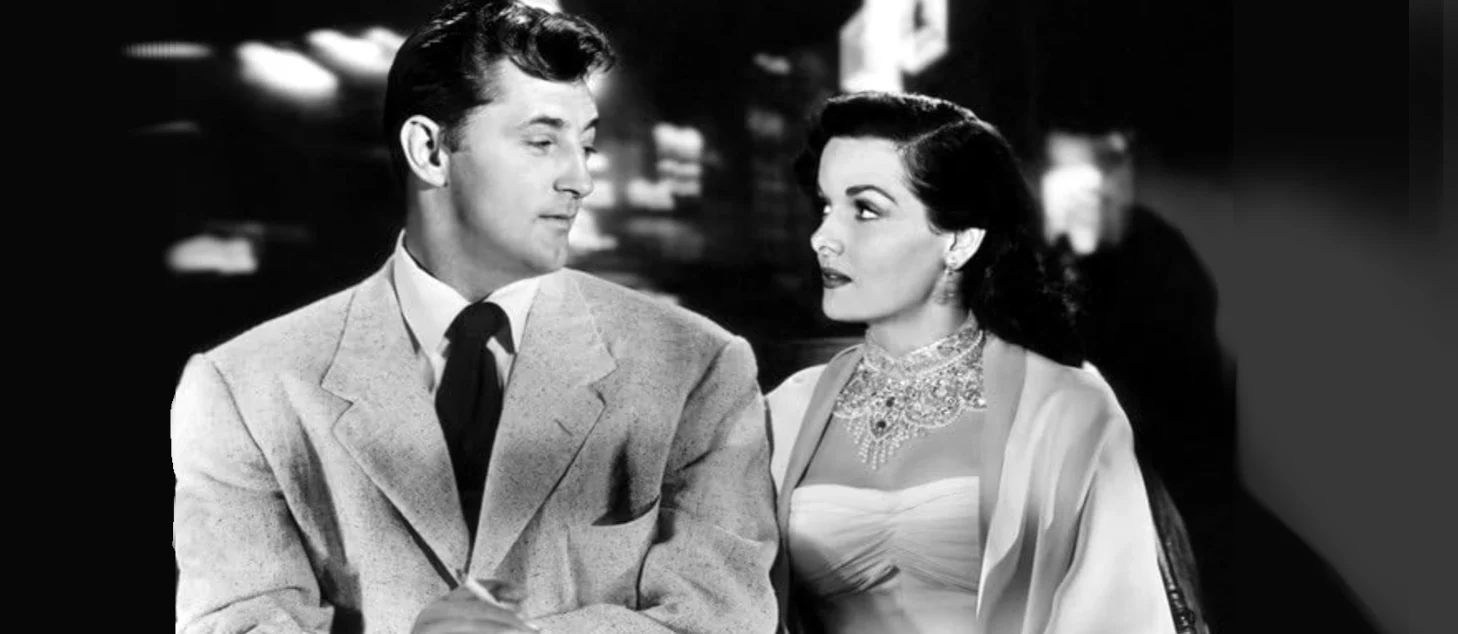


Why Howard Hughes chose the grand artiste director Josef von Sternberg to direct his aviation thriller Jet Pilot is beyond understanding … Sternberg was one of the classiest names in Hollywood back when Hughes was making Hell’s Angels and Scarface, but was practically out of the industry in 1949. The director’s input on Jet Pilot ended in 1950, although Hughes would tinker with and re-shoot the movie for the next six years, until its every aspect was way out of date. Von Sternberg owed RKO another picture, and the one he got would seem like a perfect choice. Macao is an thriller set in an exotic Asian city, as did several Sternberg classics. Apparently, Sternberg took the assignment as something to get out the way. He’d direct only one more movie, and that one in Japan.
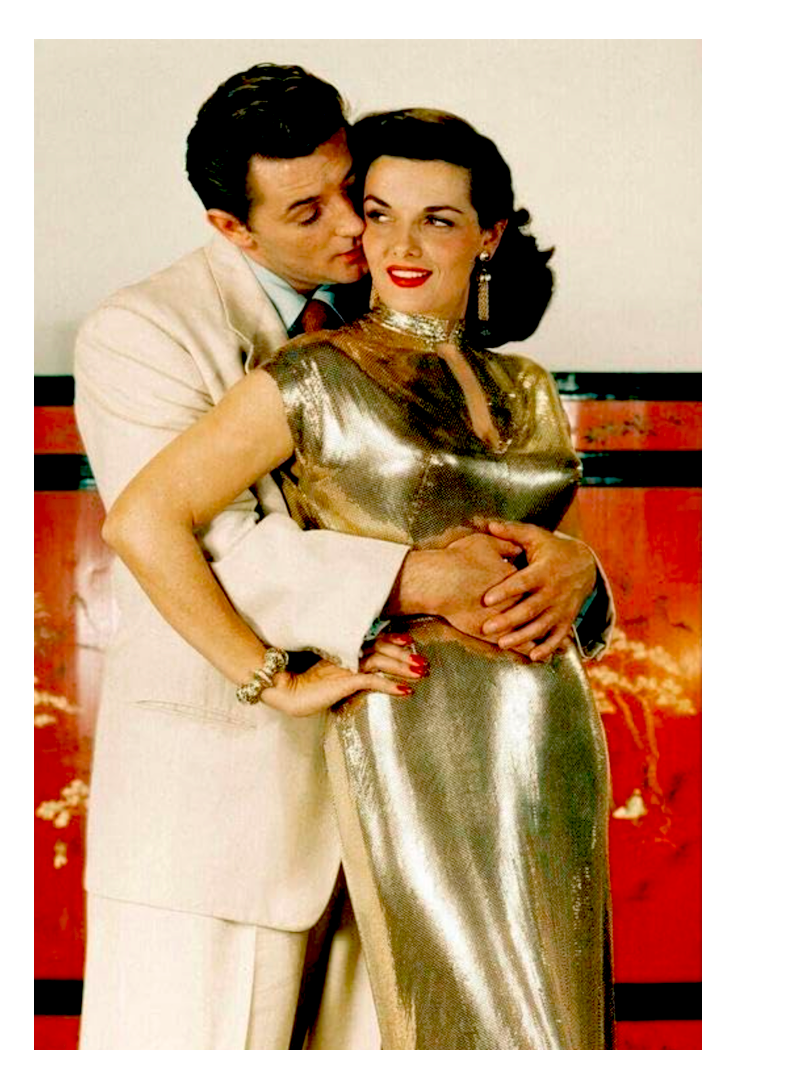
As for RKO’s top stars Robert Mitchum and Jane Russell, we’re shocked to realize that Hughes only cast them together twice, in this show and the much more conflicted His Kind of Woman. Historian Eisenschitz describes Macao as a product of the confused state of RKO. Howard Hughes had pink-slipped most of the technical staff. He micromanaged everything, giving his executive producers less authority than they needed. Nobody was in creative control on Macao, said Jane Russell. Shooting finished in 1950, but the result was such a mess that Hughes kept it in limbo for the better part of a year, for rewrites and re-shoots.
Fans of Macao are fans of its stars. Mitchum and Russell have chemistry, even if some of the script falls flat. There’s plenty of setup for intrigues, but the plot never seems to get into gear. The hepcat patter in His Kind of Woman is a lot smoother.
Failed gambler and fugitive from American justice Nick Cochran (Robert Mitchum) meets singer / ex-fortune teller / ex-cigarette girl Julie Benson (Jane Russell) on the ferry from Hong Kong to Macao. Julie steals Nick’s money and throws his wallet and passport overboard, but they become fast friends anyway. Portuguese police chief Lt. Sebastian (Thomas Gomez) is conniving with Vincent Halloran (Brad Dexter), a slimy crook who runs a gambling casino. Sebastian is convinced that Cochran is yet another undercover cop interested in luring Halloran to where the International Criminal Police Commission (ICPC) can arrest him.
Halloran is incapable of dealing straight with anybody. He already has a semi-loyal club girl in Margie (Gloria Grahame), but hires Julie to sing with the idea of making a quick seduction. He then tries to bribe Cochran into taking a powder. Instead, American salesman Lawrence C. Trumble (William Bendix) attracts Nick to a diamond smuggling operation. Cochran has a hard time convincing Julie that he cares for her after he’s caught at Margie’s place, but that’s the least of his problems. Halloran plans to dispose of him just as he did a previous international cop.
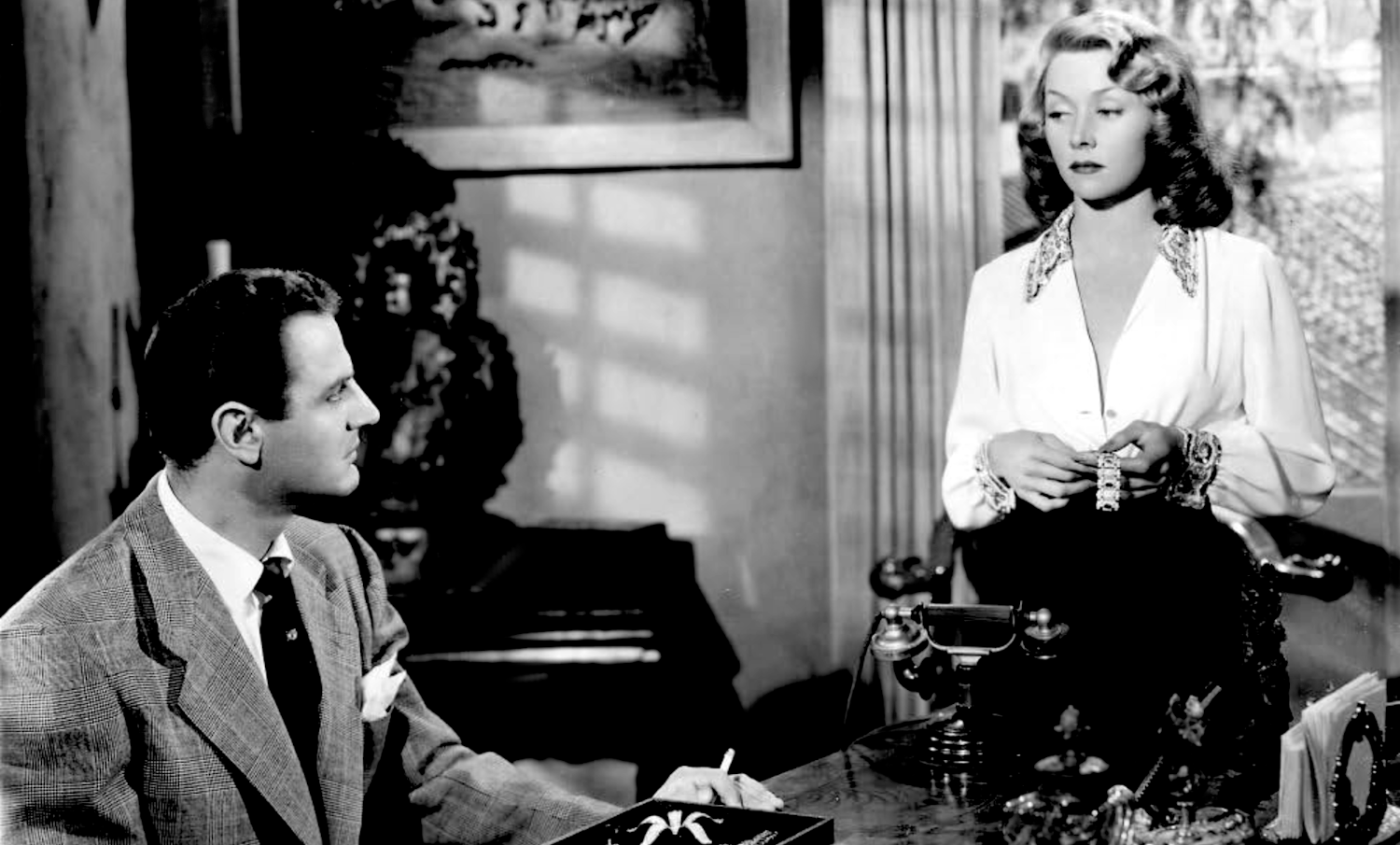
Most of Macao feels so generic that we at first scoff to hear of a crimefighting organization called the International Criminal Police Commission. As it turns out, the ICPC was real … it’s the forerunner of the better-known Interpol. Live and learn.
Macao is not bad, exactly. It has the ingredients for intrigue — an exotic locale, beautiful women and a laconic chain-smoking hero with bedroom eyes. The reshoots by mogul Howard Hughes account for a full third of the movie. Yanking scenes he didn’t like left gaping plot holes, and quickie dialogue was written to plaster over the discontinuities. Robert Mitchum was becoming accustomed to this (incompetent) patch-up filmmaking method, and even contributed some dialogue writing.
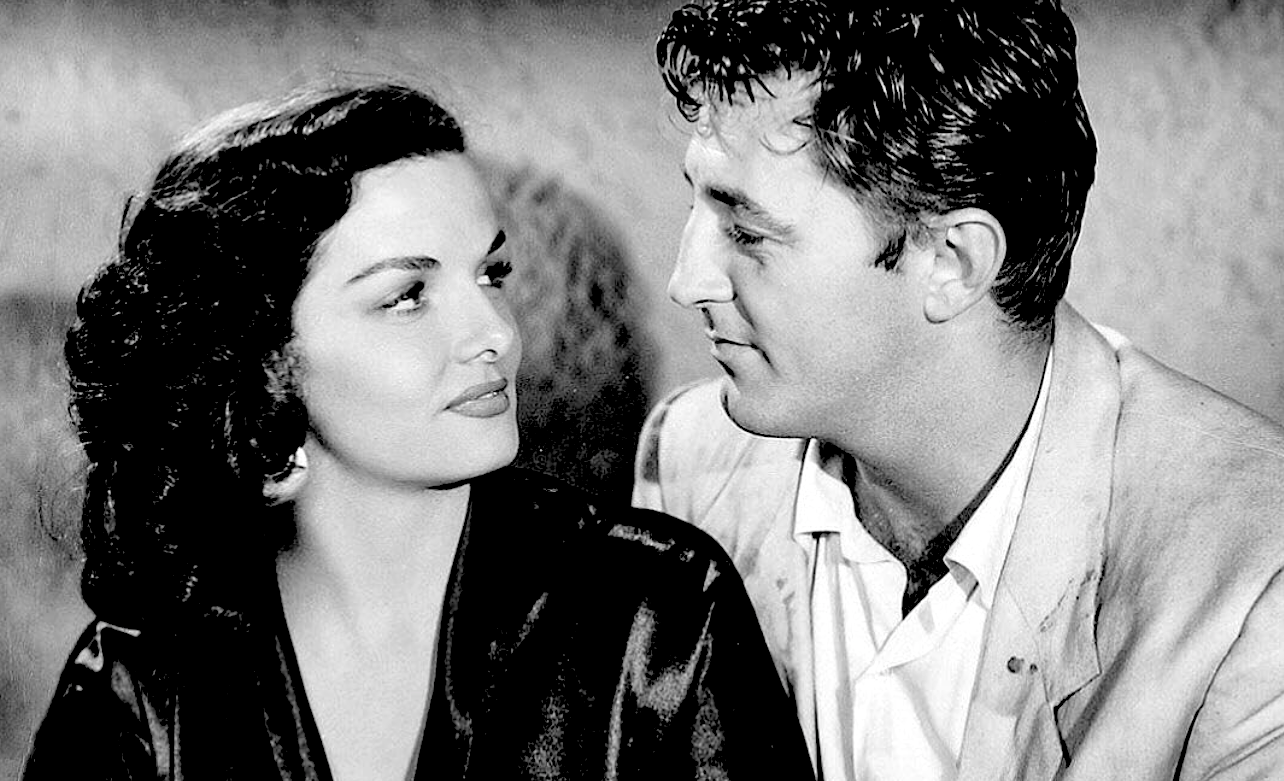
A succession of directors performed the re-shoots — Robert Stevenson and Mel Ferrer, but mostly the more celebrated Nicholas Ray. Ray had gotten his start at RKO and made some of his best films there; he didn’t mind doing reshoots for the boss, on pictures like The Racket.
Von Sternberg would seem the last director on Earth that Howard Hughes would add to his stable. The thirties’ stylist was still fussy and imperious, and the cast reportedly hated him. It doesn’t look as if anybody wanted Macao to look or feel like one of Josef von Sternberg’s exotic, atmospheric classics. Shanghai Express was the champion for Sternberg’s artistry, and his The Shanghai Gesture took place in a similar oriental gambling den. There is indeed a betting system around a table, where wagers are raised and lowered in baskets from a higher floor. But Sternberg doesn’t try to duplicate his famous atmospheric effects, with smoke and veil-like layers of fabric. All that arty stuff had been out of fashion for years. A large indoor set with a water tank held dozens of boats with fishing nets spread out. In 1932, von Sternberg made the lighting of such as set as important as the actors’ performances. Macao just shoots it all straight, no filters, no misty depth effects.
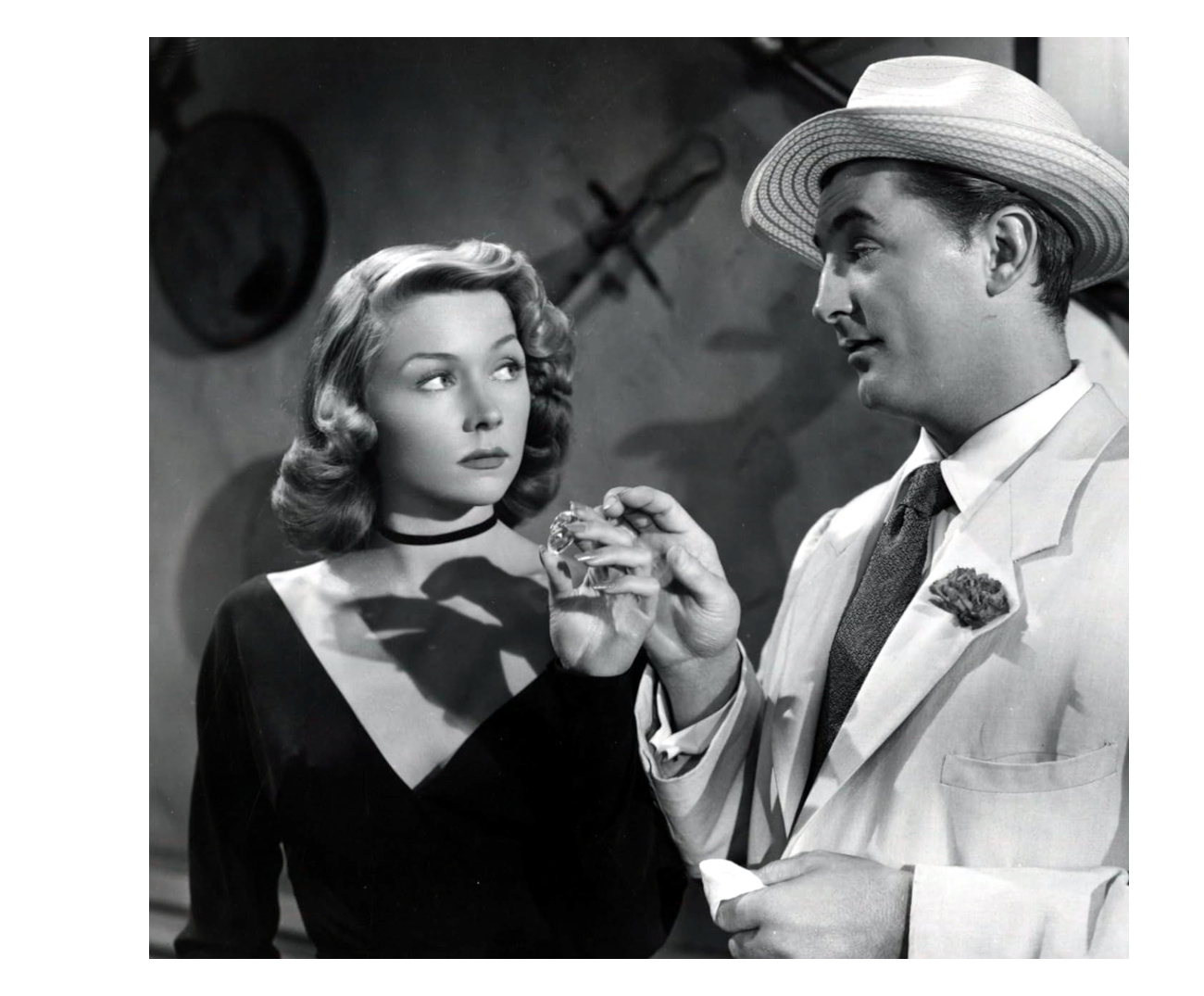
A couple of scenes play out in front of rear projection as the stars sort out their iffy romance in a rickshaw or a sampan tour of the harbor. There are some good line deliveries, but few that are actually funny. The occasional bad continuity is distracting. The final shot is not framed like a standard finale. Robert Mitchum’s last smart remark falls flat. A better ending would have helped — a movie like this one needs to leave the audience with a smile.
The acting is mostly fine. Everyone gets an okay shake, except for Thomas Gomez’ embarrassing Portuguese cop. Gloria Grahame is cute but not much more. Her Marge is a moll with a soft heart for Mitchum, so we know she’ll be on his side by the last act. Likewise, William Bendix’s character doesn’t fool anyone. We know there’s some new ICPC agent out there, and he’s the only candidate.
Brad Dexter never shook his oily, untrustworthy persona from classics like The Asphalt Jungle. His Halloran is such a slimeball, we don’t understand why his assassins-on-the-payroll are loyal to him. The script doesn’t sufficiently explain Halloran’s obsession with Julie — or why he suddenly breaks his own rule and strays into police jurisdiction. The dean of character actors Vladimir Sokoloff is a stereotyped blind Chinese beggar, the kind that helps out kindly Americans on the street, just out of a sense of mystical justice.
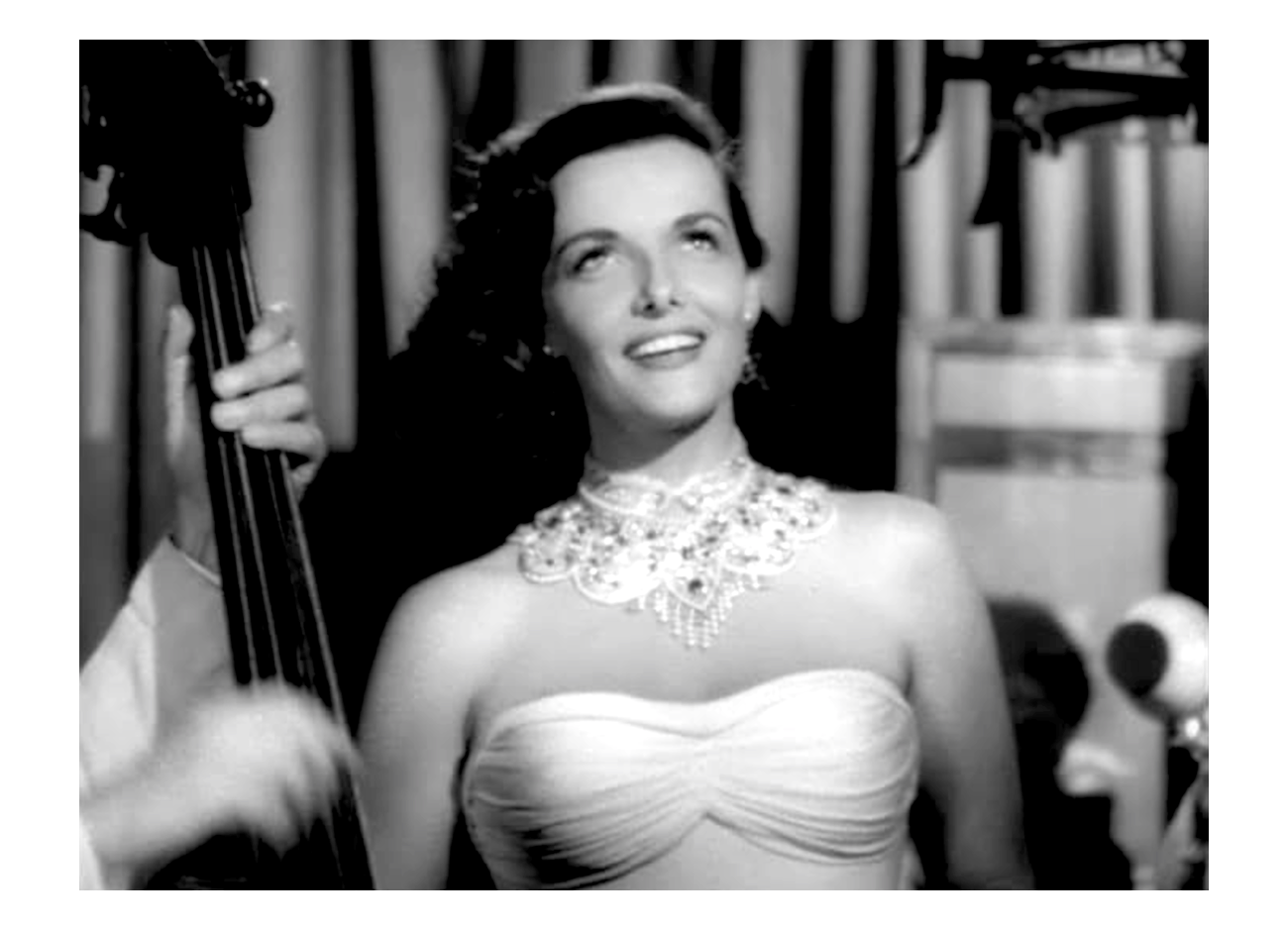
Robert Mitchum must work hard to make Nick Cochran function. Nick entertains Julie with a proto-hepcat charm that suggests a hidden sense of honor. When first explaining his globe trotting ways, Nick says that before he hit Hong Kong, he was smuggling guns into Iraq. Tell us, Howard, were you helping the C.I.A. with their middle-Eastern adventures around this time?
It’s Jane Russell that we feel the most for. She’s out there trying to look here best in those show-off gowns, knowing that the censors will curb every excess wiggle that might slip through. She sings a couple of torch songs reasonably well, especially the Arlen-Mercer number with the famous lyric “That’s one for my baby and one for the road.” We don’t know what Jane wanted when Hughes (reportedly) hired her out of a dentist’s office. She put up with all the sex symbol baggage accrued through the publicity for Hughes’ The Outlaw, only for the mogul to neglect her career. Her big hits while under contract were loan-outs, to play opposite Bob Hope and Marilyn Monroe.
Hughes played similar games with others of his starlet harem, making us wonder if he really expected the actresses to volunteer to go to bed with him. He gave Faith Domergue a couple of highly-publicized pictures, and then nothing. Jane Greer had it the worst, as her talent could have made her a front-rank leading lady. The wondrous Out of the Past was pre-Hughes, after which she cast in only 3 films over four years. By the time she was free, she was already playing as somebody’s mother.
Much of the story of Macao comes from a book by Bernard Eisenschitz on director Nicholas Ray.
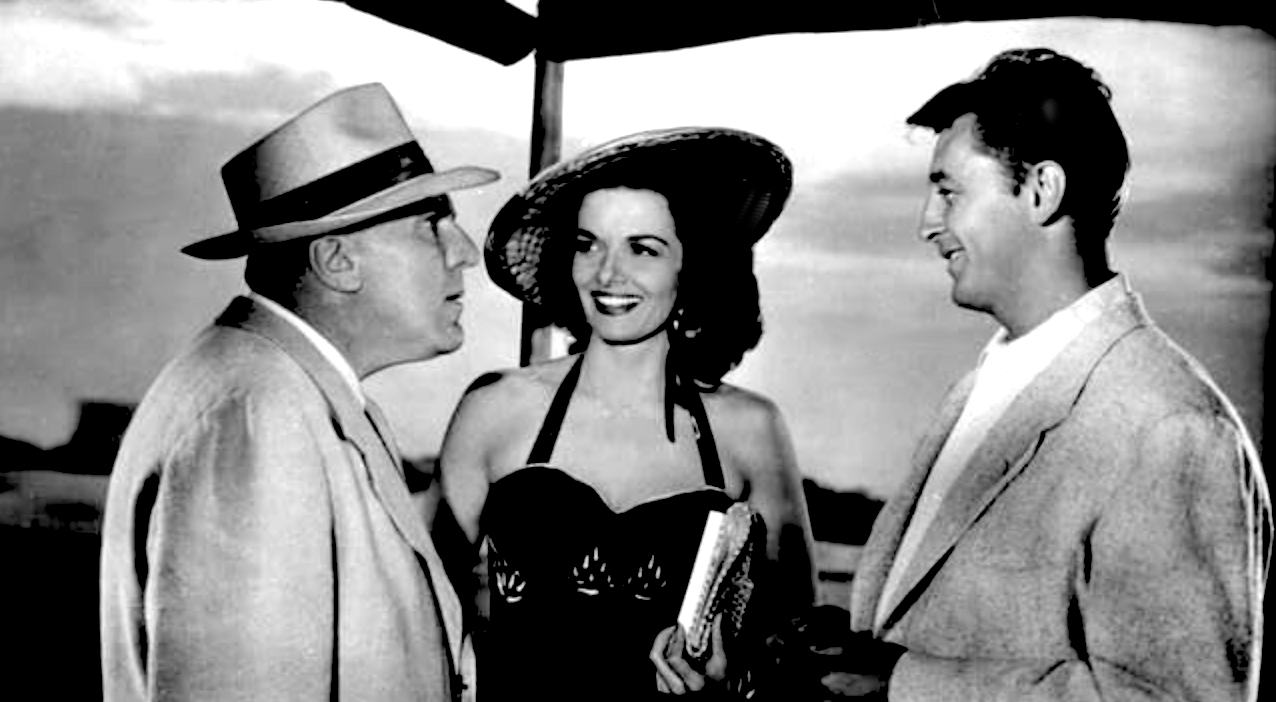

I preferred Macao to His Kind Of Woman back when I viewed the Netflix DVDs. Hopefully, Macao will come to streaming services in HD at some point in the future. Warner Archive Blu-rays have become too expensive ($28?) for a one or two time view.
I don’t pay $28.00 for a Warner Archive Blu-ray disc. If you pre-order at Movie Zyng, they’re available for about $22.00
A piece of trivia about the city itself. It was a colony for the longest time of any place on Earth. China leased it to Portugal in 1557, and Portugal owned it until the end of 1999, when it reverted to China.