
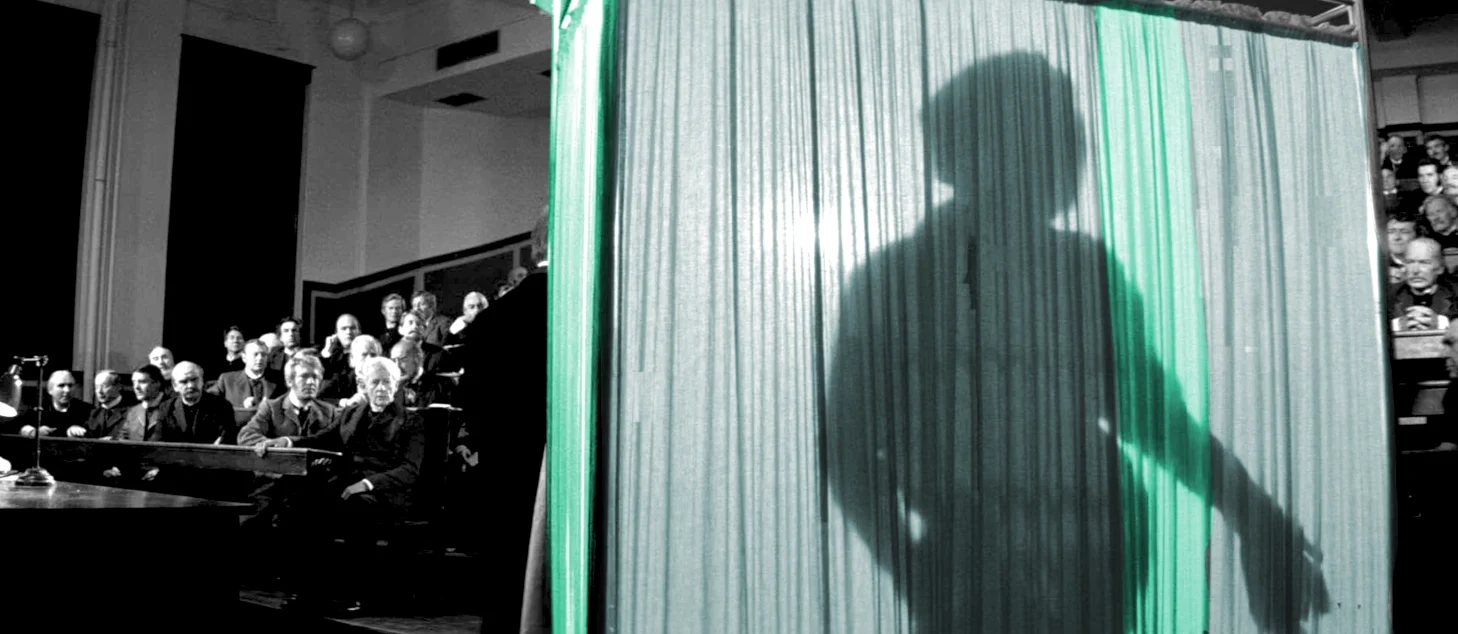
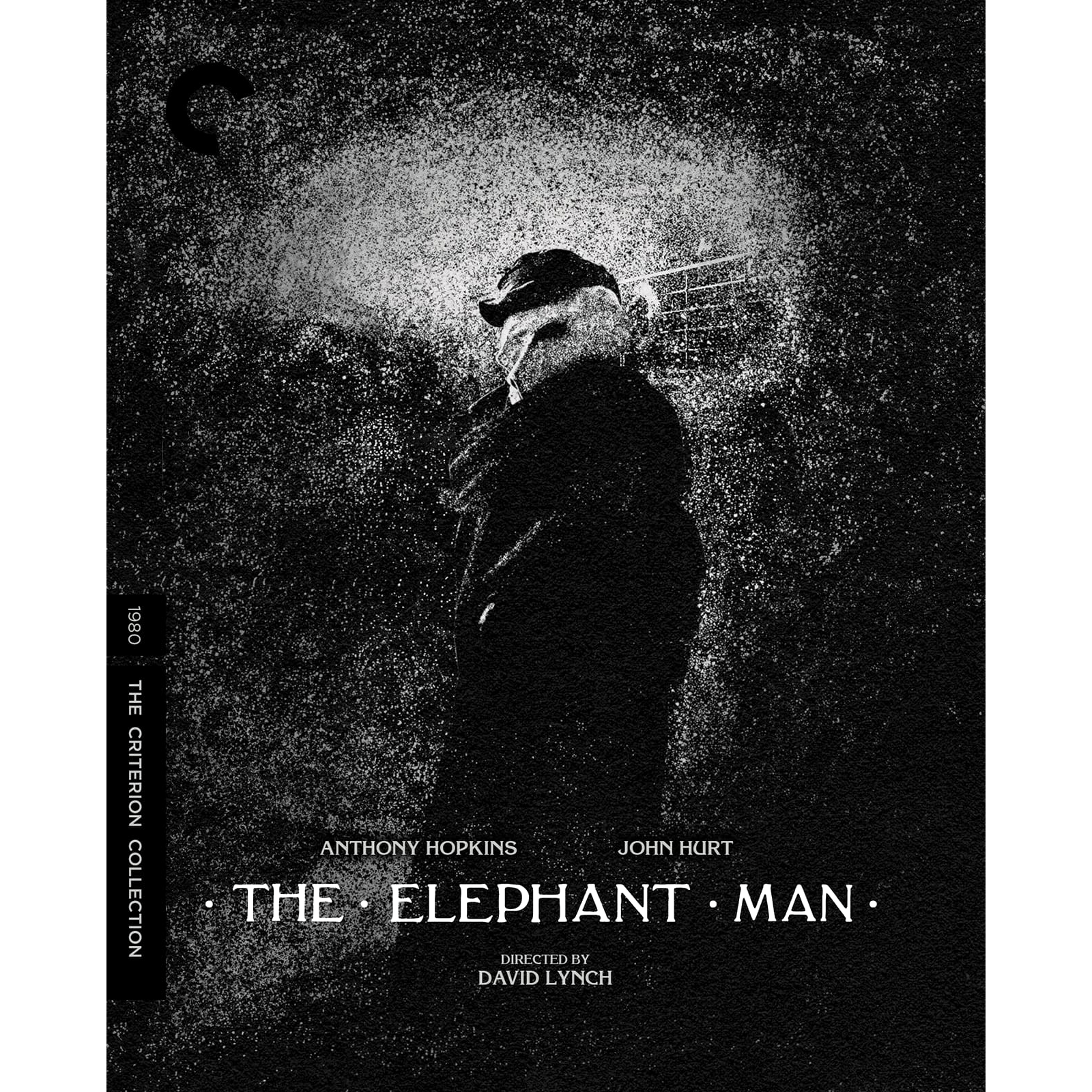

Like a film student version of It’s a Wonderful Life, Lynch lived out the daydream of every imaginative but not-particularly well connected young filmmaker. In the late 1970s he was a fairly obscure A.F.I. fellow, patching together a weird, nightmarish picture with a highly complex soundtrack. We knew him briefly as a night-crawling midnight screening mystery artist… and then he advanced directly to the front rank of international filmmakers.
The gift-from-heaven catalyst for Lynch’s career was comedian-writer-producer-director Mel Brooks, who took one look at the young man’s cult sensation Eraserhead and offered him the directing chance of a lifetime. It wasn’t easy to connect the Mel Brooks we knew with his support of David Lynch. The comic legend behind Young Frankenstein proved his commitment by producing a film that extends and perhaps transcends the horror genre. Everybody sympathizes with Frankenstein’s monster, but how many horror movies have really explored the crisis of humanity in monster-dom? The screen horror of 1980 had devolved into gore-porn sagas about zombies and razor-wielding maniacs. Where was the mystery, the allure, the beauty of classic horror fantasy?
It’s the best Hammer Film that Hammer never made.
The Made-in-England The Elephant Man fronted a different agenda. It has a superb script, top-rank performers and a return to the camera by Freddie Francis, the artist that filmed Sons and Lovers and The Innocents. Just for Francis, England’s Rank Film lab cleaned and reassembled its B&W developing machines, just for this film. Backed by such technical virtuosity, David Lynch was primed to make a classic, right out of the box.
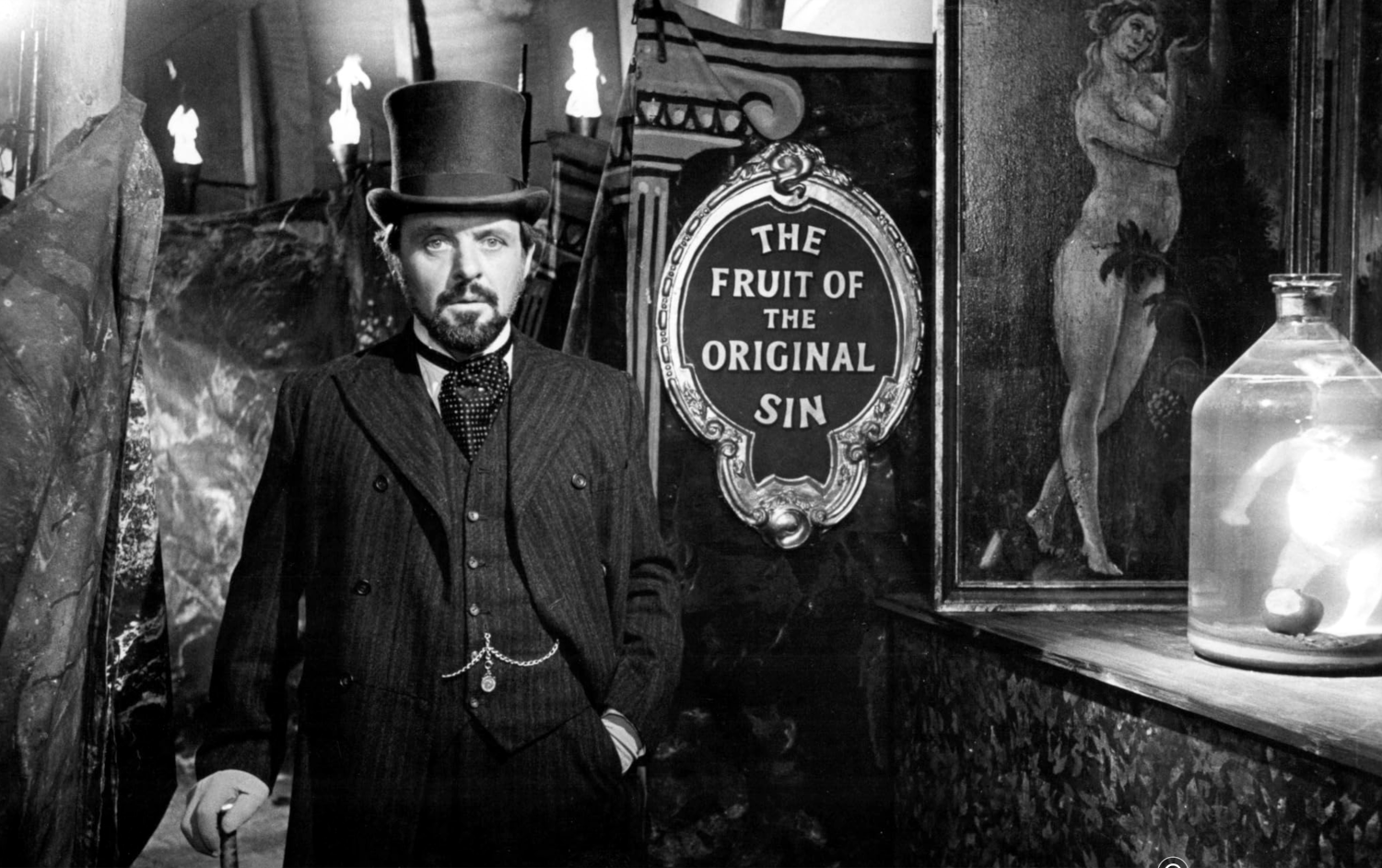
The film roughly follows the true story of Joseph Merrick, renamed as John Merrick (John Hurt), a revoltingly deformed young man who must wear a hood in public. John cannot walk straight. He cannot lie down normally without risking self-asphyxiation. Surgeon Dr. Frederick Treves (Anthony Hopkins) performs progressive work with anesthetics at a London Hospital. He takes an interest in Merrick when he sees him exhibited in a carnival sideshow. A scurrilous mountebank named Mr. Bytes (Freddie Jones) ‘manages’ John, and ‘rents’ him to Merrick for some study. Dr. Treves presents John for a medical conference, but loses track of him when the abusive Bytes takes his show to France.
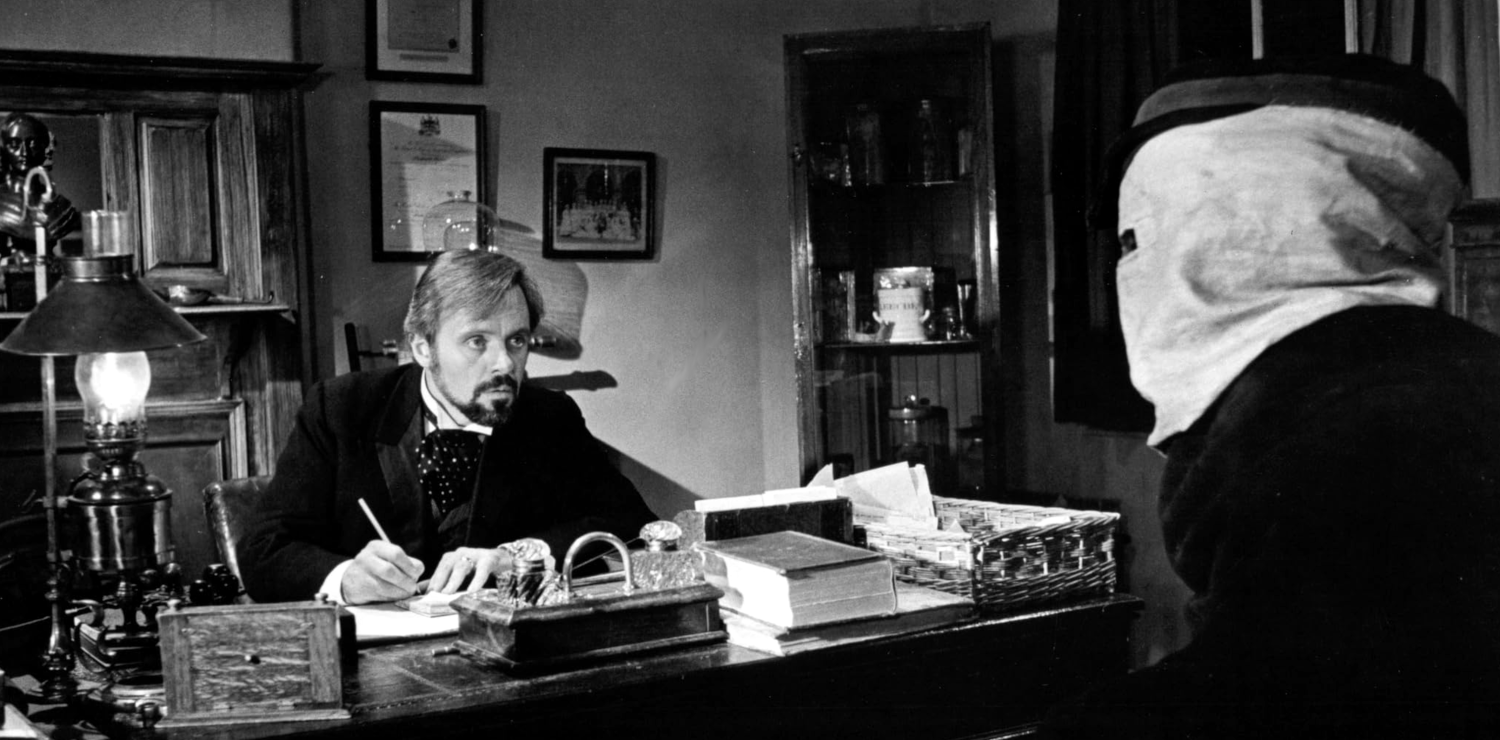
Merrick eventually escapes his owner and makes his way back to London. Treves secures him residence in the attic of the hospital, winning the approval of the House Governor (John Gielgud) and head nurse (Wendy Hiller). Cleaned up and treated with respect, John shows himself to be a sensitive gentleman and even a bit vain. Publicity surrounding his case attracts the attention of London’s ‘charitable’ class. John is visited by royalty and celebrities like actress Mrs. Kendal (Anne Bancroft). But he falls victim to an exploitative, thuggish night porter (Michael Elphick). Treves begins to question his own motivations. Is he merely a more gentlemanly version of Bytes, using Merrick’s notoriety to advance his own career?
David Lynch’s nightmare film Eraserhead contemplates isolation and misery in a dank industrial environment, that strikes us as more original and more affecting with every viewing. The same sub-surface visions lurk in the corners of this feature produced in the commercial mainstream. Lynch was no loner, but worked well with other to expand his small-scale visions into big productions. With The Elephant Man he won the cooperation of some of England’s best filmmaking talent. The great cinematographer Freddie Francis chose this film to take his place behind the camera again… after sixteen full years working as a director.

The script sets some of the institutions of Victorian England in a rather good light. We expect John Gielgud’s refined, high-toned House Governor to banish John Merrick from his hospital at the first opportunity. But the Governor and Wendy Hiller’s head nurse respond to the challenge of their special patient, an ‘exceptional case.’ Anthony Hopkins plays Dr. Treves as learned and decent, but also a self-promoter and a little aloof. He at first assumes that Merrick is a mindless idiot. He then discovers his own sensitivity through Merrick, eventually coming to question the nature of charity and goodwill. He confesses to his wife his fear that he may not be a good person at all, that he may have only invented a new way of exploiting his fellow man. This self-questioning is The Elephant Man’s best aspect. Is anything that we do truly unselfish?
We think The Elephant Man is still a horror movie. Its concentration on moral values and spiritual worth expands the definition of the genre. While controlled by Mr. Bytes, Merrick must endure beatings and abuse, utterly without hope. Then he becomes the recipient of responsible charity based on respect for the individual — even if it takes a visit from a member of the royal family to push the scale in John Merrick’s favor. Offered a bit of kindness, John Merrick transcends his affliction and blooms into a beautiful soul.

It’s still a David Lynch vision all the way. Beyond the gaslights and lace lurk creepy montage-visions of dark ideas, such as Bytes’ suggestion that his ‘elephant freak’ is the result of bestial rape. The squalor and depravity of the lower depths of Whitehall are always there, waiting to return. Although a comparison to the horror fare of Hammer and Universal is natural, Lynch’s show is too original to be an homage to anything. Jame Whale’s gothic classics pictured society at large as an unenlightened mob. But when an outraged, uncomprehending crowd corners Merrick in the lavatory of a London train station, decency comes to the rescue via a dutiful policeman.
We recognize an associative link to the Hammer Films legacy when John Merrick is victimized by the brutal hospital porter, which reminds us of the corruption in the charity ward run by Peter Cushing in the excellent The Revenge of Frankenstein. But David Lynch’s ‘worldview’ is never cynical. When John Merrick escapes from captivity, he’s accompanied by a parade of carnival performers. It becomes an utopian ‘twist’ on the grotesqueries of Browning’s classic Freaks.
Beauty and the Beast.
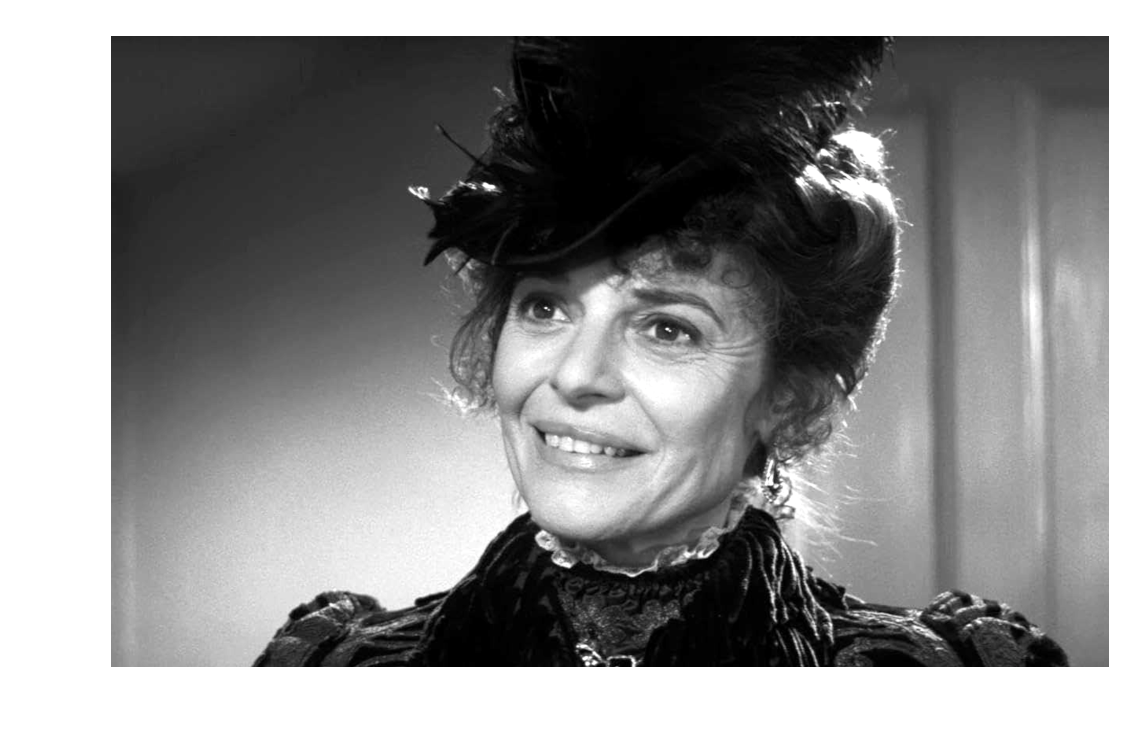
For every ‘maybe’ nod to horror film tradition, Elephant Man gives us something wholly unique. Merrick reportedly loved attending stage shows. Imagery from a Victorian fantasy play feeds John Merrick’s ominous dreams — which also resemble the surreal mystery stage presentations in later David Lynch films. Merrick’s celebrity status prompted a few brave notables to pay social calls on the shut-away young man. Anne Bancroft’s Mrs. Kendal glides into John’s company with a grace and composure that would charm any movie monster. John is certainly transformed into an ardent admirer. Bancroft’s appearance feels triumphant, an endorsement of the acting profession and an expression of pure heartfelt charity.
David Lynch has said that Sound Design had as much to do with his moviemaking inspirations as images. Following up on Eraserhead, The Elephant Man also bears a Lynchian soundtrack of sub-tonal industrial rumblings. In the very first scene, Dr. Treves states his hate of the age of machines. He reveals himself as a closet romantic, looking for truth and beauty in places as unlikely as a dirty circus sideshow. As a Lynchian substitute, Treves seemingly sees the loathsome but God-created crawling things to be found under mossy stones as a key to the secret of some greater grace.
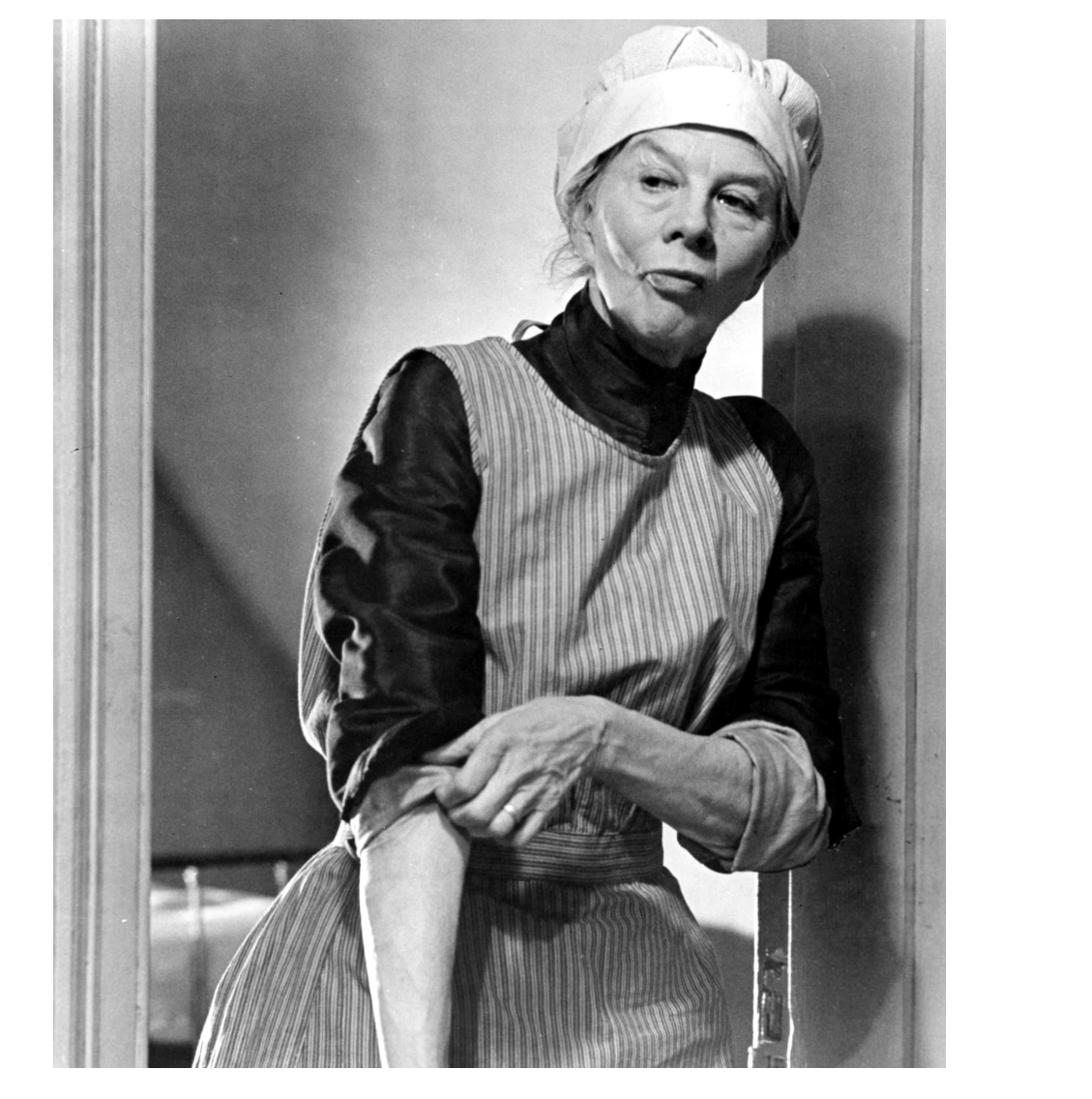
Did any other experimental filmmaker precede Lynch on the path to become an ‘A’ level Hollywood director? If this were a Hammer Film, the Nurse Superior would be one of the walk-on roles. The great Wendy Hiller (I Know Where I’m Going!) sketches a portrait of a harsh woman committed to her professional values — which include empathy and understanding.
The near-comatose English film industry yielded fine performers delighted to find roles more worthy than was normally up for offer. Every London cabbie or nurse-trainee that makes the briefest appearance is expertly played, to thoughtful effect. A fancy visitor for John Merrick is none other than Kathleen Byron, English cinema’s most memorable deranged nun.

Freddie Jones (Dune, Frankenstein Must Be Destroyed, Juggernaut) gives the mountebank Bytes layers of predatory malice, engendered by brutal degradation. Bytes’ filmic lineage traces right back to the carnival showman Caligari, of the movies’ very first adult psychological horror film.
David Lynch was always best when contrasting ‘normality’ with dark and nightmarish fantasy worlds. Elephant Man gives him the London sideshow, the dreamlike French circus, and John Merrick’s mysterious phantasmagorical inner life. Freddie Francis’s evocative camerawork and superb art direction also lend Lynch’s vision period realism. We can appreciate the attempt to be antiseptic in Dr. Treves primitive surgical theater. The cramped, clammy streets and the cozy salons shape an entire world. The street life is more detailed and less exploitative than Elephant’s nearest English horror competition in B&W, the very good The Flesh and the Fiends. It also made occasional use of a stock shot of a long-gone industrial London.
Here’s Karyn Kusama on Lynch’s heartbreaker:


Mel’s instincts were sound here, but he made the occasional stumble: yes, I’m looking at you ‘Solarbabies’ (1986).
Yikes, you’re right. Not a good memory at all !
Everyone should see this movie.