
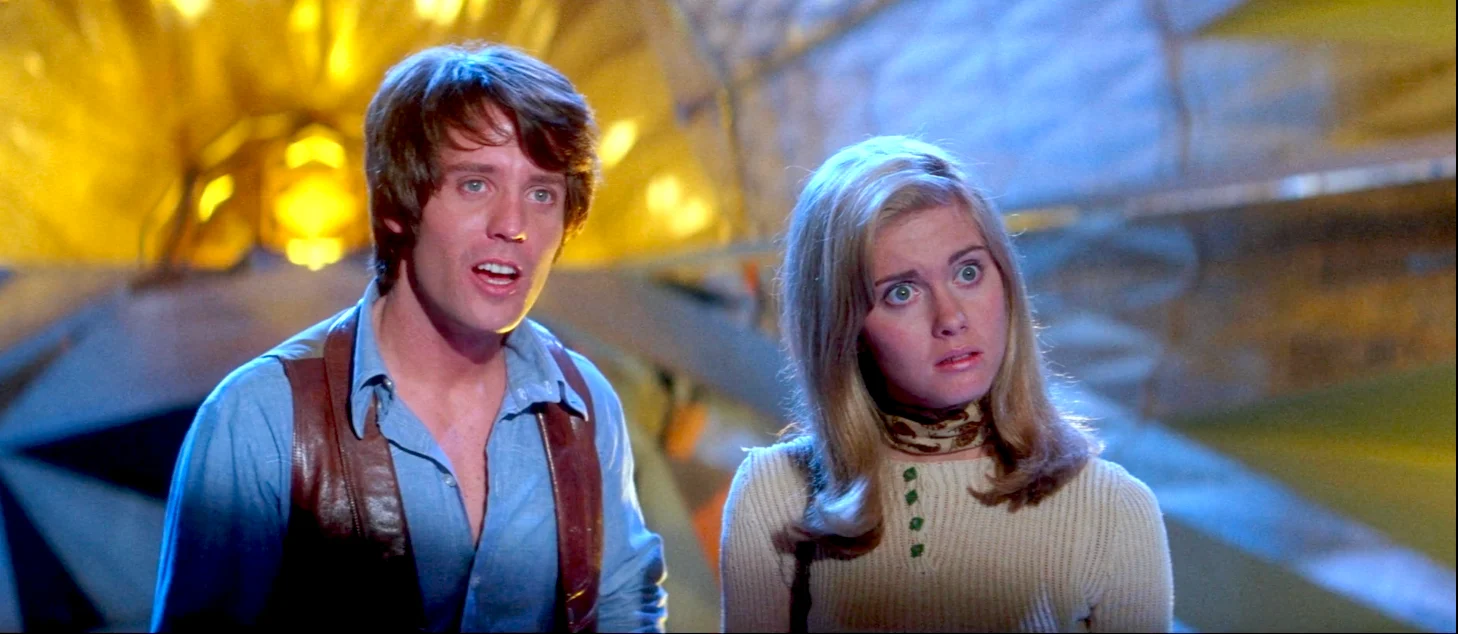


The late 1960s were Desperation Time for the English film industry. The Hollywood money trough dried up and along with it U.S. distribution for a lot of English product. Once-successful film companies lost connection with their audience, and some efforts to win it back now look particularly hopeless. The older money men never had a clue as to what ‘the kids’ wanted to see; they clashed with hotshot younger promoters hungry for any deal that could get made. American music producer Don Kirschner had made a fortune with The Monkees, a synthetic pop group cooked up for a TV show. We teenagers understood right away why the show was a hit. Every teenage girl was a Beatles fan, but there was no place to see them regularly. Like the boyfriend not in the Army, the Monkees were accessible.
007 producer Harry Saltzman was looking for another giant hit, and Don Kirshner got his ear. He had partnered with Harry Broccoli for the Bond series, and on his own had brought an excellent Len Deighton spy series to the screen. Kirschner proposed the kind of deal that only an older, culturally clueless producer would embrace: form a pop music group and make a movie to launch them as the next big music craze. Kirschner and Saltzman could create a performing, recording and film franchise phenomenon, and own it 100%. It’s the perfect fantasy for producers that think music and art were created to make rich men richer.
The movie man chosen to make it all happen was Val Guest, a veteran who started in vintage quota quickies. He had a long career writing and directing comedies with music and then made an impressive series of pictures ranging from progressive Sci-fi to exploitative war movies to good crime films. One of Guerst’s more recent accomplishments was ‘rescuing’ Casino Royale a completely bungled ‘anything goes’ spy comedy with a huge budget. The episodes filmed by a quartet of directors made little sense; Guest wrote and directed connective material that gave Royale a narrative through-line.
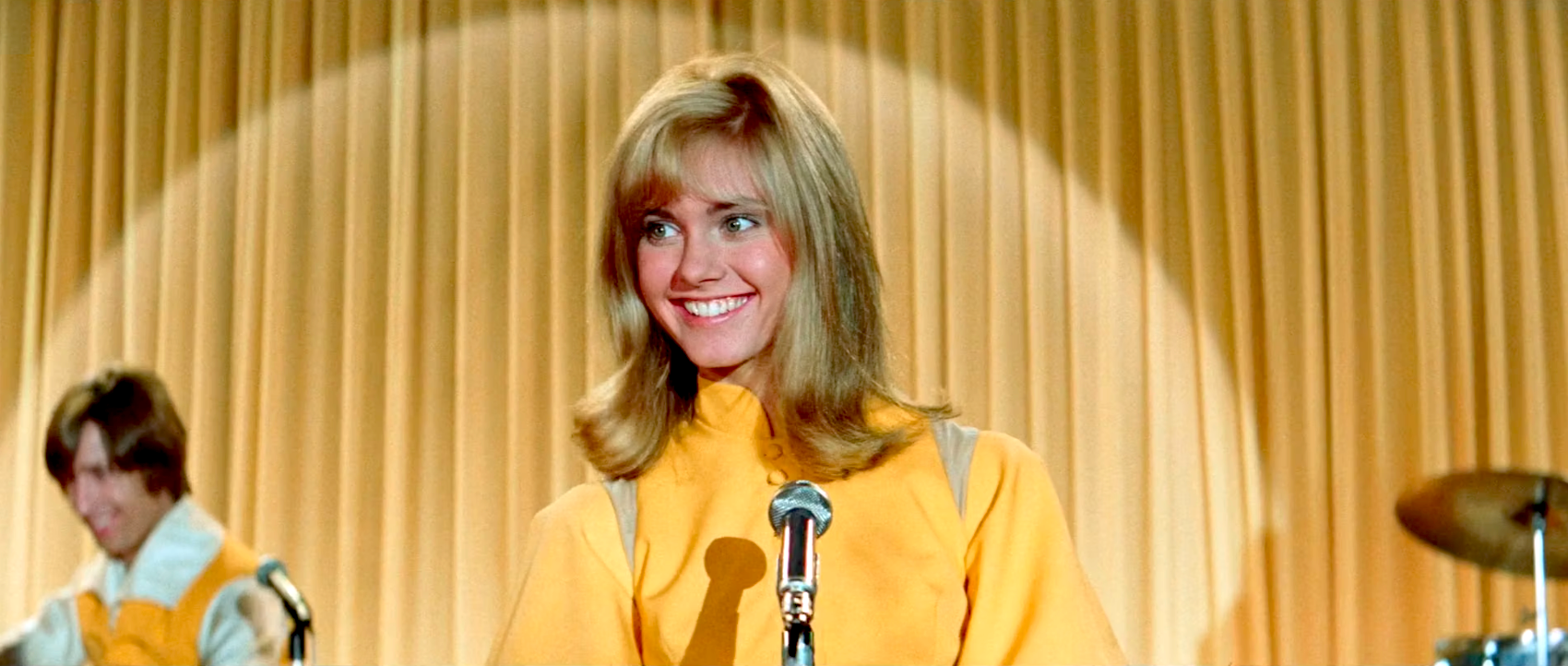
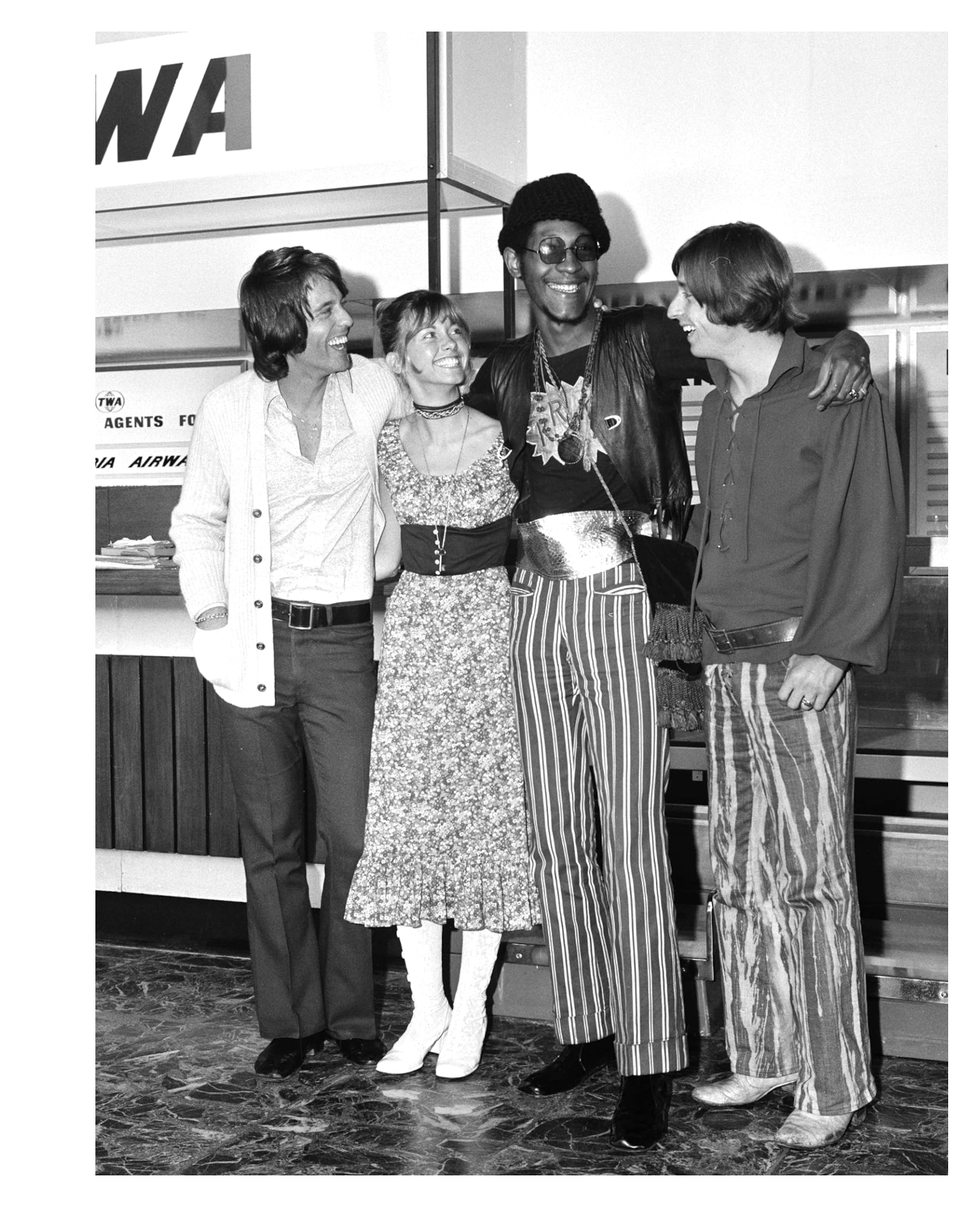
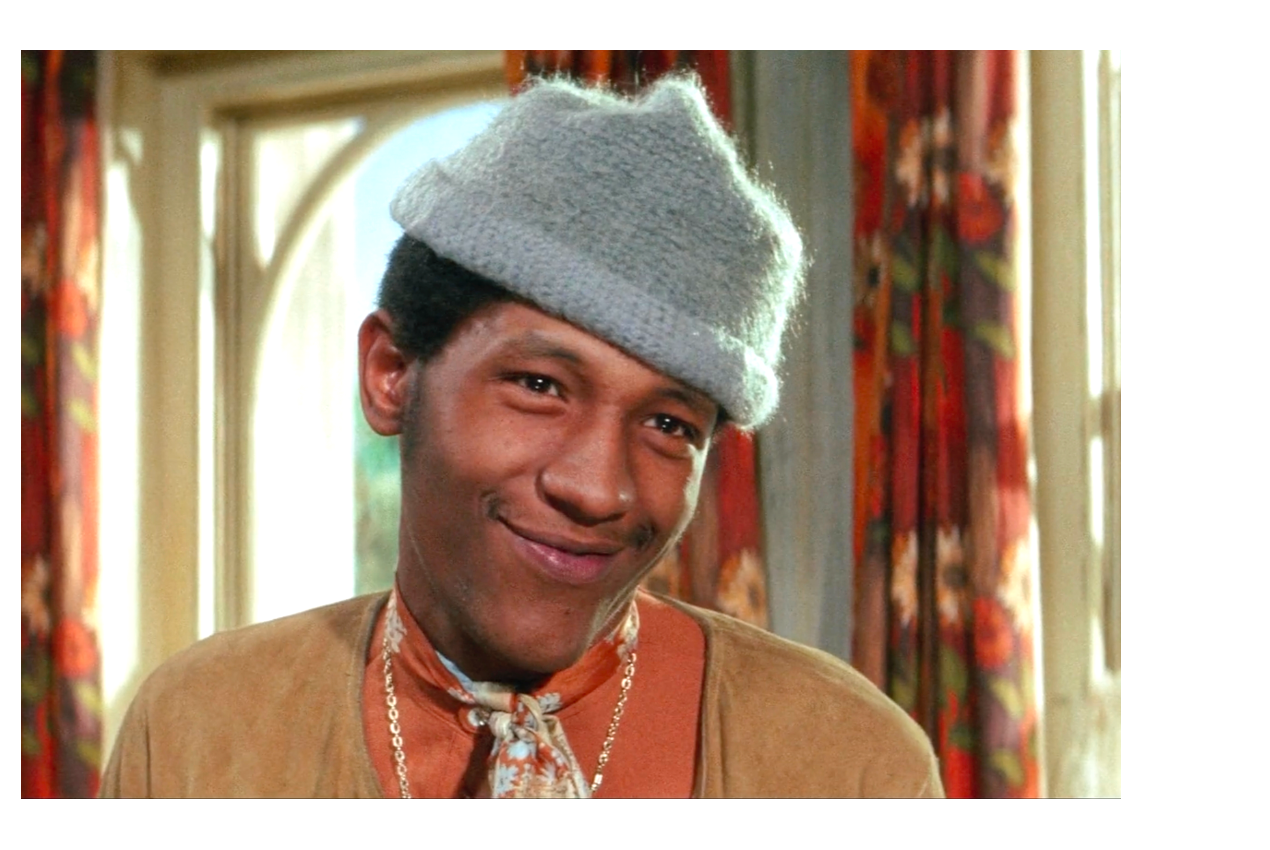
Kirshner’s handpicked band would be called Toomorrow, as would their first film, a swinging rock ‘n’ roll science fiction musical. Unlike the Monkees, they were all working musicians. Toomorrow included a black drummer and a female singer, but overall it cut a bland, wholesome-looking profile. Only the very young Olivia Newton-John, an asiring pop singer projects spark of individuality and spirit.
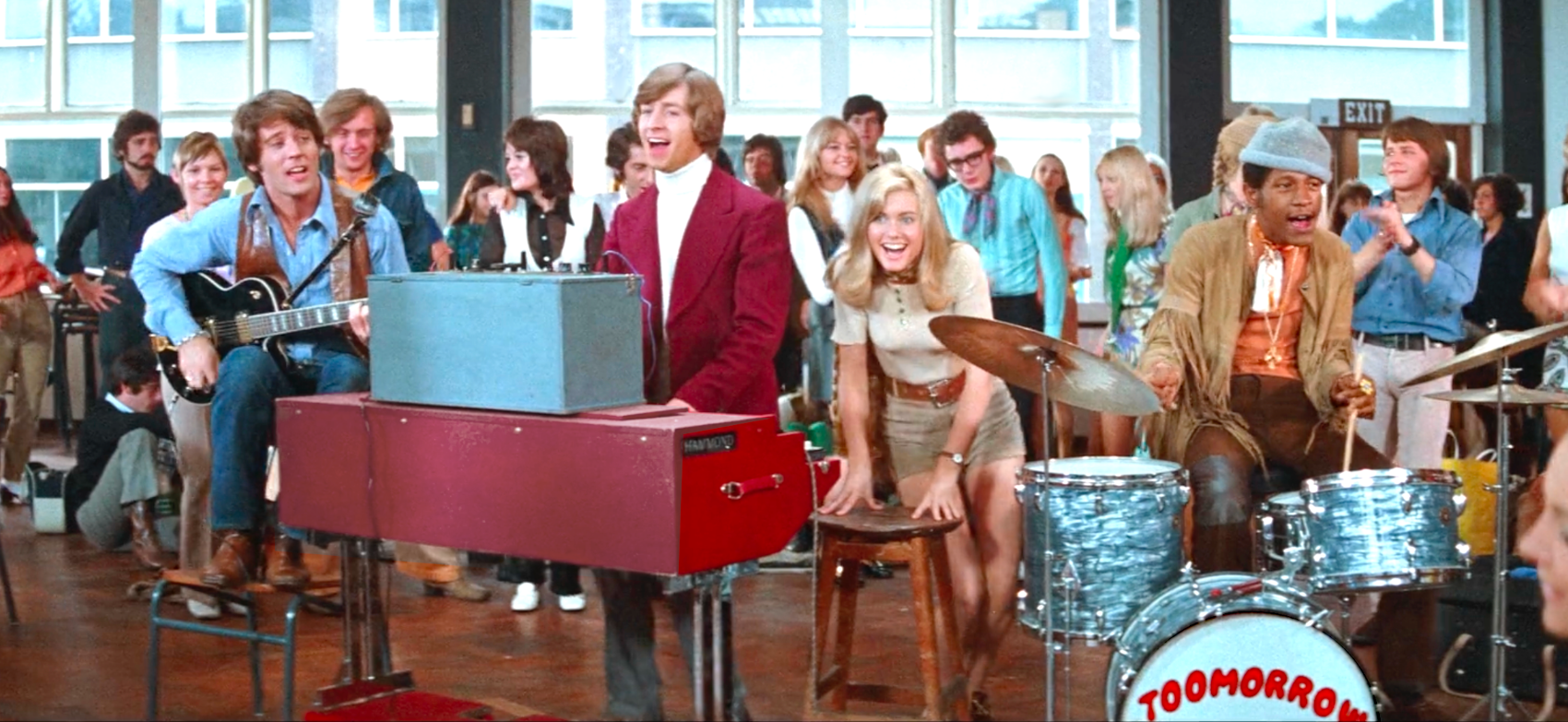
Was Toomorrow more of a Deal than a movie? The plot is too weak for an TV ‘After School Special’: An aspiring rock band is kidnapped by space aliens that need ‘new vibrations’ to save their civilization. When a commissioned script didn’t come together fast enough, the producers just told Val to write it himself. He came up with a featherweight story set in London, about a Big Band Competition among college kids involved in a campus revolt. When not being ‘beamed up’ to an orbiting alien spacecraft, the band must deal with the women in their lives … cue the permissiveness of the with-it sexual revolution. The 58 year-old director must have had a dizzying ’60s, surrounded by actresses of the London scene. The screenplay is overloaded with glamorous women from James Bond movies, Guest’s own spy pictures, and his final Hammer epic When Dinosaurs Ruled the Earth.
The swingin’ / mod / liberated proceedings begin as a Day in the Life of our carefree music foursome. The Toomorrows live in the same house. They use their real names. Olivia (Olivia Newton-John) wears her nightie to wake the boys up. Benny Thomas, Vic Cooper and Karl Chambers all have enthusiastic girlfriends, who sometimes sleep with them. They rush off to the London College of the Arts in their little station wagon with a trailer for their music gear, which includes Vic’s fantastic electronic invention that is their musical secret weapon: the ‘Tonalizer.’
They change their plans when news comes that they can compete in a big music competition that very night. Karl’s girlfriend Sylvana (Kubi Chaza), a nude art model, isn’t bothered, but today is the birthday of Vic’s main squeeze Amy (Imogen Hassall), a ballet student. She doesn’t like being upstaged by Vic’s infantile rock music ambitions. Olivia’s boyfriend Matthew (Carl Rigg) is a student politico directing a sit-in at the administration building. When the principal locks down the campus, the group can’t access their equipment to rehearse. Benny turns on the charm with professor Suzanne Gilmore (Tracey Crisp) to find a way inside.
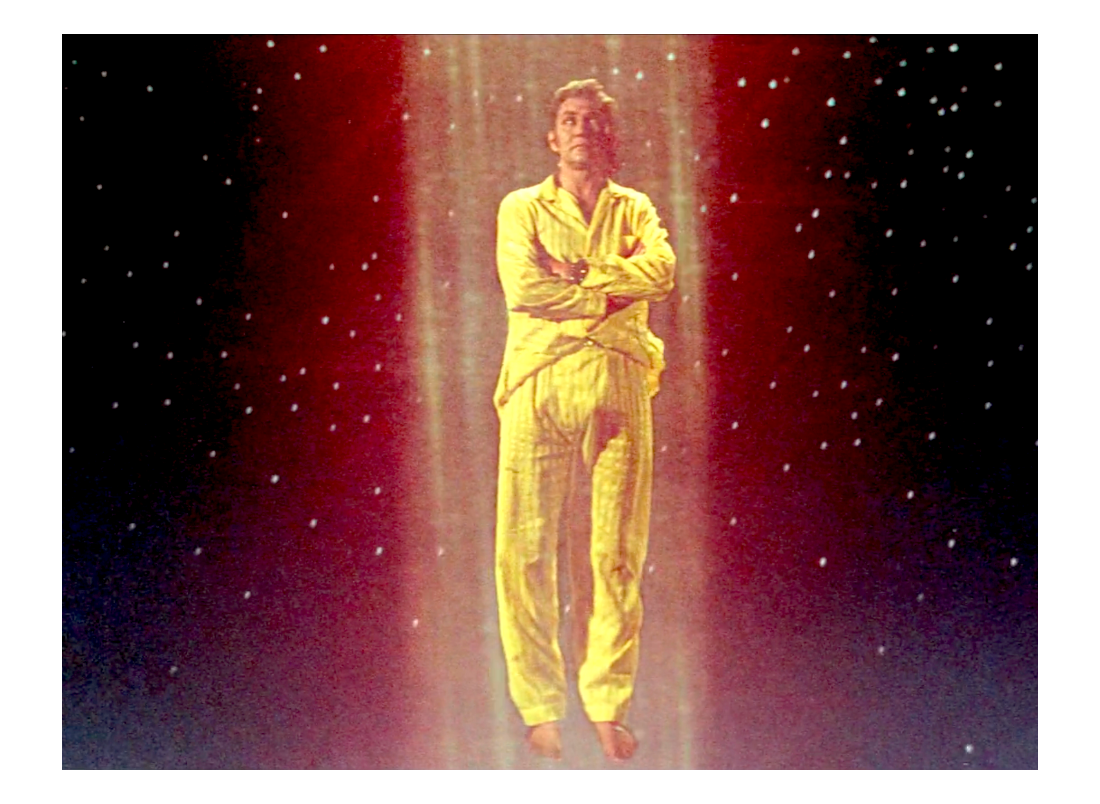
The flaky science fiction angle comes in when the group has nowhere to rehearse. Total stranger John Williams (Roy Dotrice) offers his house in Hamstead. He’s actually an alien Alphoid. Williams has been a deep-cover visitor on Earth for 3,000 years but only now is activated with a mission by his superior Alpha (Roy Marsden). Alpha commands an Alphoid spaceship, a crystalline spindle-thing hiding in Earth orbit (like the alien craft in Quatermass 2?) The Alphoid race is perishing due to a lack of vibration-stimulation, which can be provided by the Toomorrow’s ‘new sound.’ Alphoid music is all electronic, but only Vic’s Tonalizer has found the right combination of heart and soul (or something to that effect).
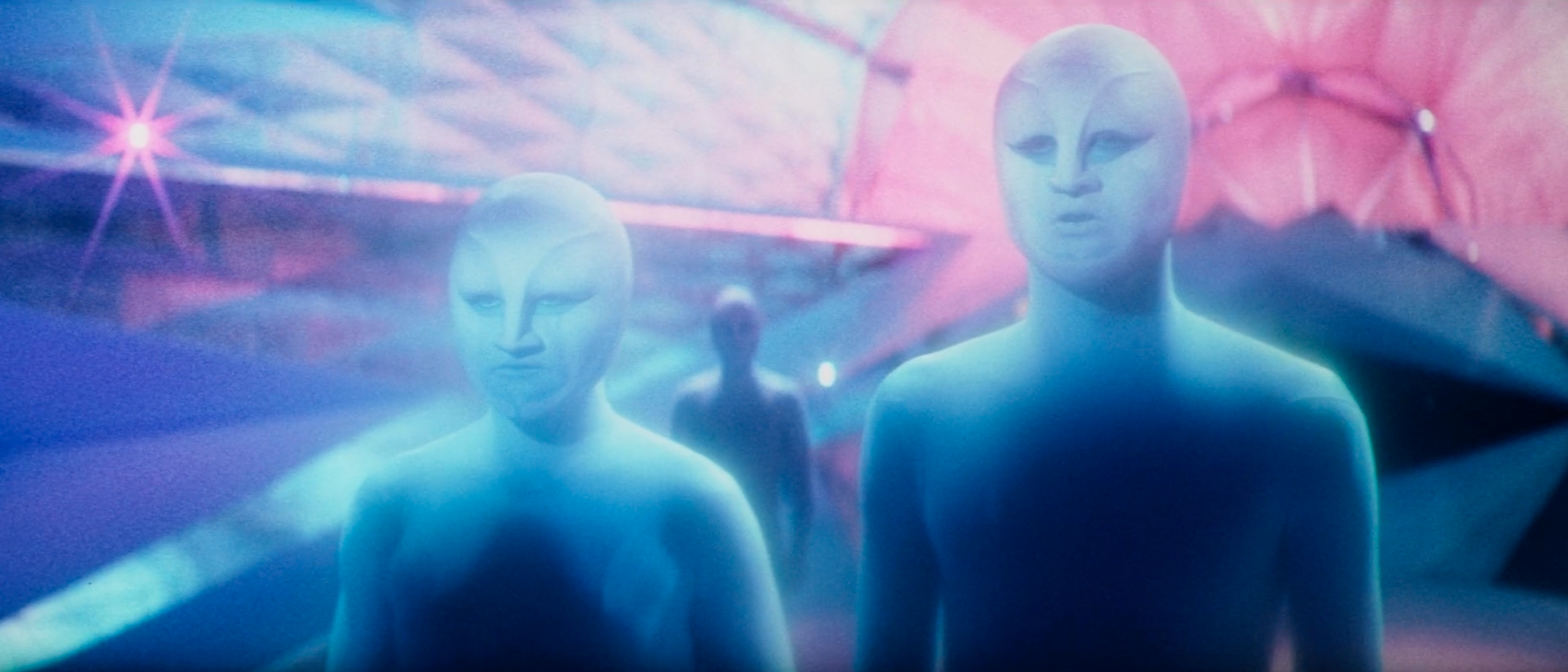
Williams beams up the entire band for a meeting with Alpha inside the crystal ship, where they dig the groovy Alphoid design, and experience some weightlessness. Alpha decides to return them to London so they can go forward with their debut at the festival, held at the Camden Roundhouse. The group’s carefree capers continue right up to concert time. What they don’t know is that the Alphoids intend to beam up the entire concert, dancing audience and all, and teleport everything to their home planet (not Tralfamadore). Groovy.
It’s not fair, or at least not entirely fair, to dismiss Toomorrow for feeling so dated and bland-conventional. A great deal of mainstream U.S. comedy was embarrassingly crass and naughty-imbecilic, and the same appears to be the case with a lot of Brit humor. Spy films in particular promoted the idea that women were babes and had nothing on their minds except sex and treachery. In no way can this reviewer claim to have above any of this … being a mostly uncritical and easy-to-please audience. All of the writing — the lame jokes, the painful hip-speak the actors must recite — is dead on arrival. The ‘with-it lingo’ of Wild in the Streets may be dated, but Val Guest’s misconceived idea of youthspeak is just undigestible. Karl Chambers delivers the klunker catchphrase, the group’s motto:
“I dig it! We’re Too Much — We’re Toomorrow!”
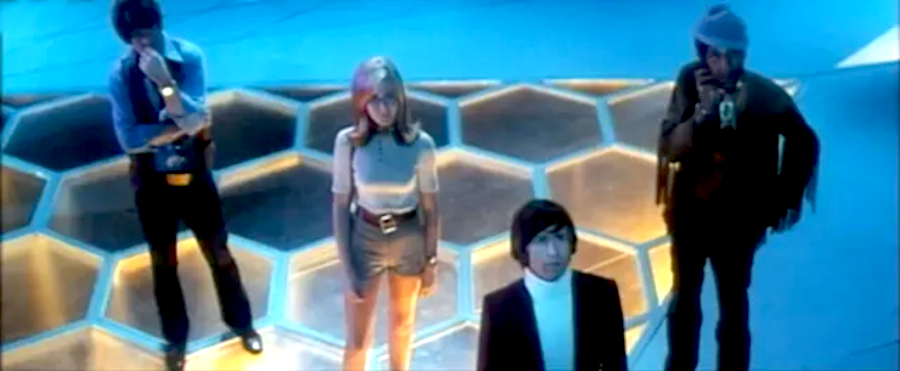
The characters do indeed dress and behave like Kirshner’s animated fake group The Archies. The London college is populated mainly by beautiful 20-somethings in outdated mod fashions and perfect blow-dry hairdos. The campus unrest is led by a clean-cut guy who urges full cooperation with the administration.
The women have other interests (modeling, dance, teaching) but really function as sex playthings, the angle that stamps Toomorrow as yet another Brit dirty old man movie. Olivia appears chaste but offers a wink and a smile when finding her bandmates in bed with their girlfriends. We forget the specific reason why, but Williams creates ‘Johnson,’ a synthetic woman to seduce Vic. Johnson bimboes about in a low-cut dress; her programming is off so she mistakes every man she meets as her seduction target. She’s played by Margaret Nolan, noted as 007’s Miami toy ‘Dink’ in Goldfinger.
Don Kirchner clearly had to have some taste in music, but the film’s kiss of death are its supposedly superior Toomorrow songs, filled with ‘heart and soul.’ Was Kirchner unable to interest music talent in yet another synthetic band, or was he too busy with multiple projects to give Toomorrow his full attention? We don’t want to diss anybody, but all of Toomorrows songs were written by Mark Barkan and Richie Adams. Adams co-wrote Bobby Lewis’s 1961 pop song “Tossin and Turnin” … but Barkan’s claim to fame at the time was his credit for writing the theme song for TV’s The Banana Splits, ‘The Tra La La Song’ aka ‘One Banana Two Banana.’ Giving credit where it’s due, it’s a halfway catchy tune … for a show about yet another artificial rock group, albeit for tots.
The Toomorrow songs are beyond vapid. With the dippy feel-good lyrics and costuming fit for a conservative kid’s show, the group couldn’t be more generic. There was no audience for this in 1970, just as the world was embracing the spectacle of the Woodstock festival. Watching Toomorrow now qualifies as an activity in cultural anthropology.
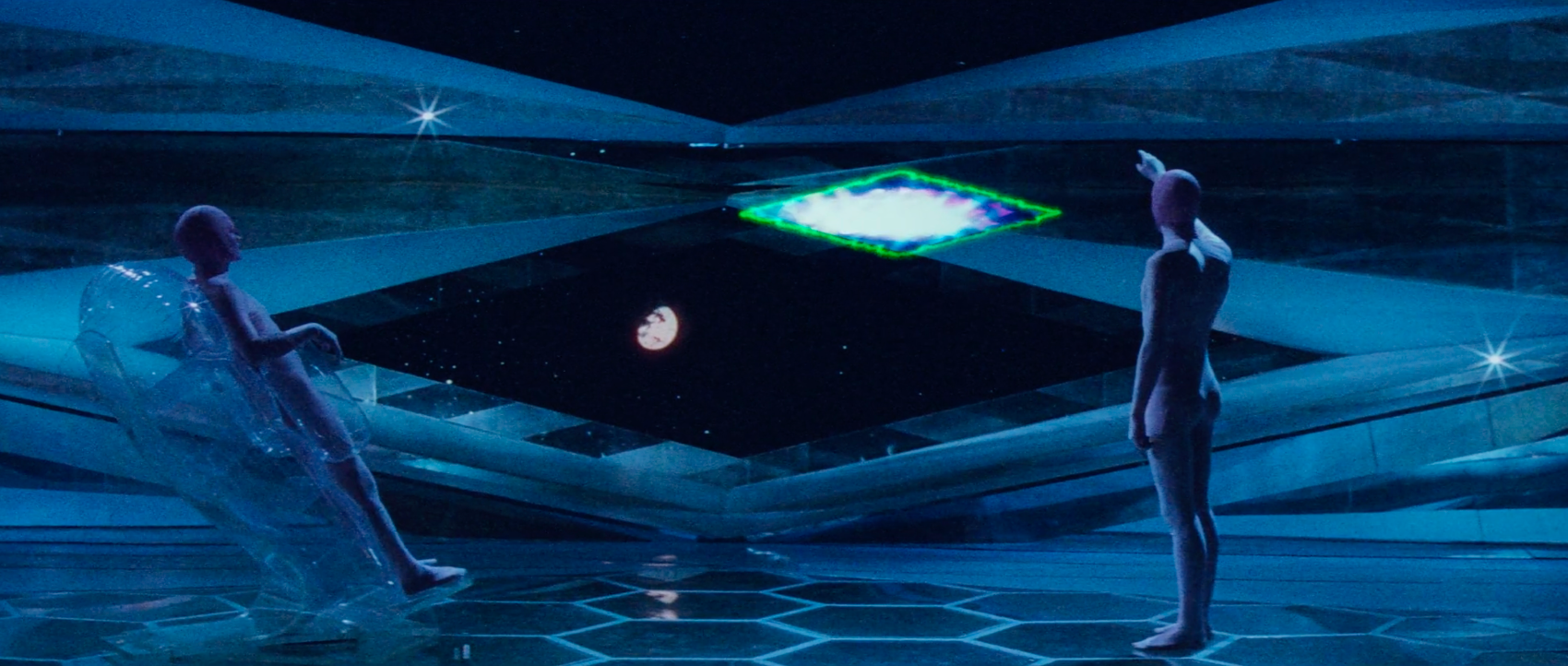
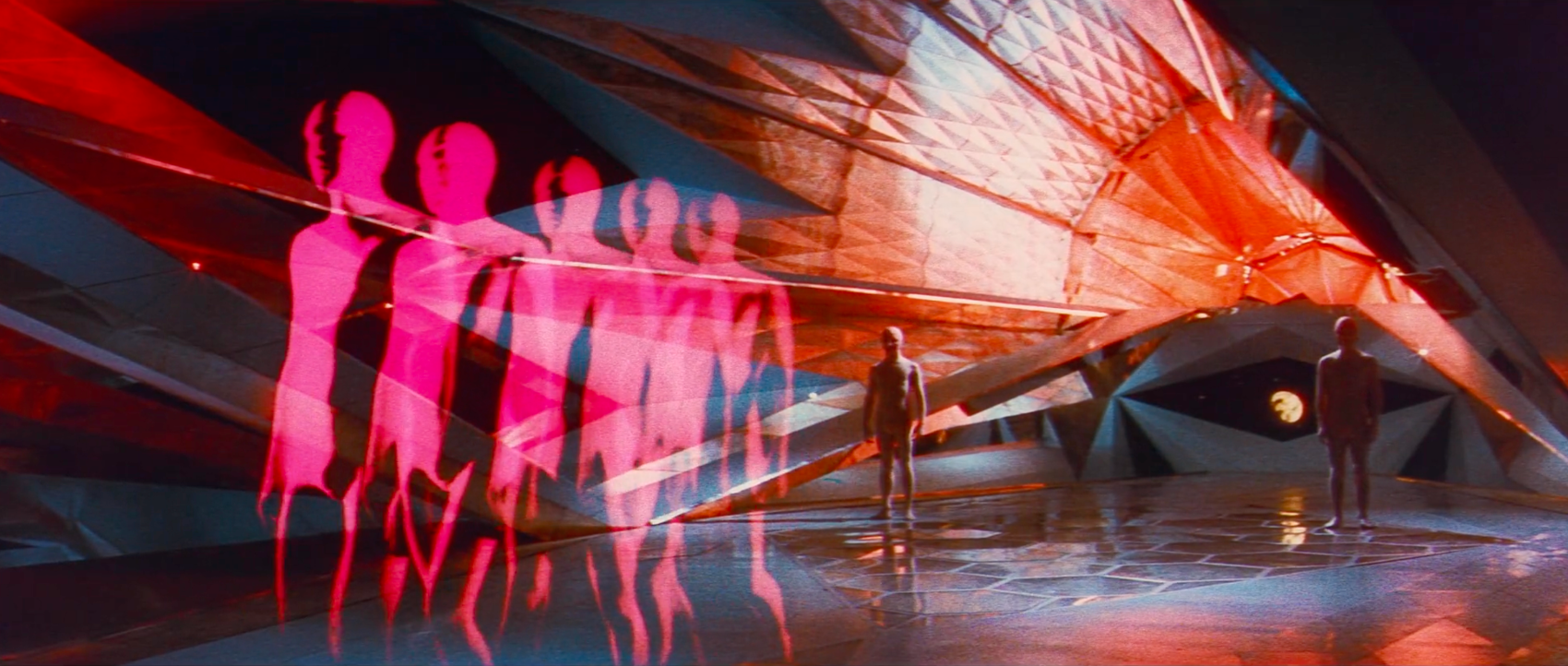
Viewers will see that is one of the more elaborate, expensive-looking films of its time. Although not of 2001 quality, the visual effects in Panavision and Technicolor are decently performed, with many space scenes, an Alphoid spaceship that’s not an embarrassment and alien costumes that don’t offend. The opticals use animation tricks for the Alphoid transport beam; other effects are on a par with ‘magic’ in TV shows like I Dream of Jeannie. As the space stuff is never taken too seriously, the show gets a pass on effects creativity — who will complain, when they can’t get their minds past the terrible dialogue and songs?
The female stars of Toomorrow perform admirably in their stylized roles. Tracey Crisp and Imogen Hassall are attractive in different ways, while bouncy Margaret Nolan is tasked with playing a Brit version of Little Annie Fannie. In the 1960s these young actresses were still typed as ‘starlets.’ Half of their comedy roles seem to be parodies of seductive and/or brainless sex objects. The only way an actress could succeed is to convince the audience that they are in control of the comedy, rather than the joke being on them. I’d have to say that Stella Stevens achieves this in the Matt Helm spy comedy The Silencers: the movie treats her like a prime bimbo, but Ms. Steven’s personality triumphs.
As explained in Deaf Crocodile’s comprehensive extras, the failure of Toomorrow more or less brought Harry Saltzman’s producing career to a finish. Some claimed that Saltzman had backed the show with guarantees from his James Bond successes, something not allowed by his contracts with Cubby Broccoli; it may have been a big factor in Saltzman’s split from the 007 franchise.
Whatever happened with the financing, it did not stop Toomorrow from being completed, and inked in for a gala premiere at the London Pavilion. But director Val Guest wasn’t paid, and he brought an injunction against the producers that effectively shut down its release. Given the sad state of the English film industry, Guest relented to allow for the premiere to go forward, on August 27, 1970. The Variety review bends over backward to find ways to praise the show, calling it ‘ a naive but quite jolly little tuner geared to please both young and old.’ The new rock group is also praised, even if the review states that Drummer Karl Chambers had already quit, to return to the States.
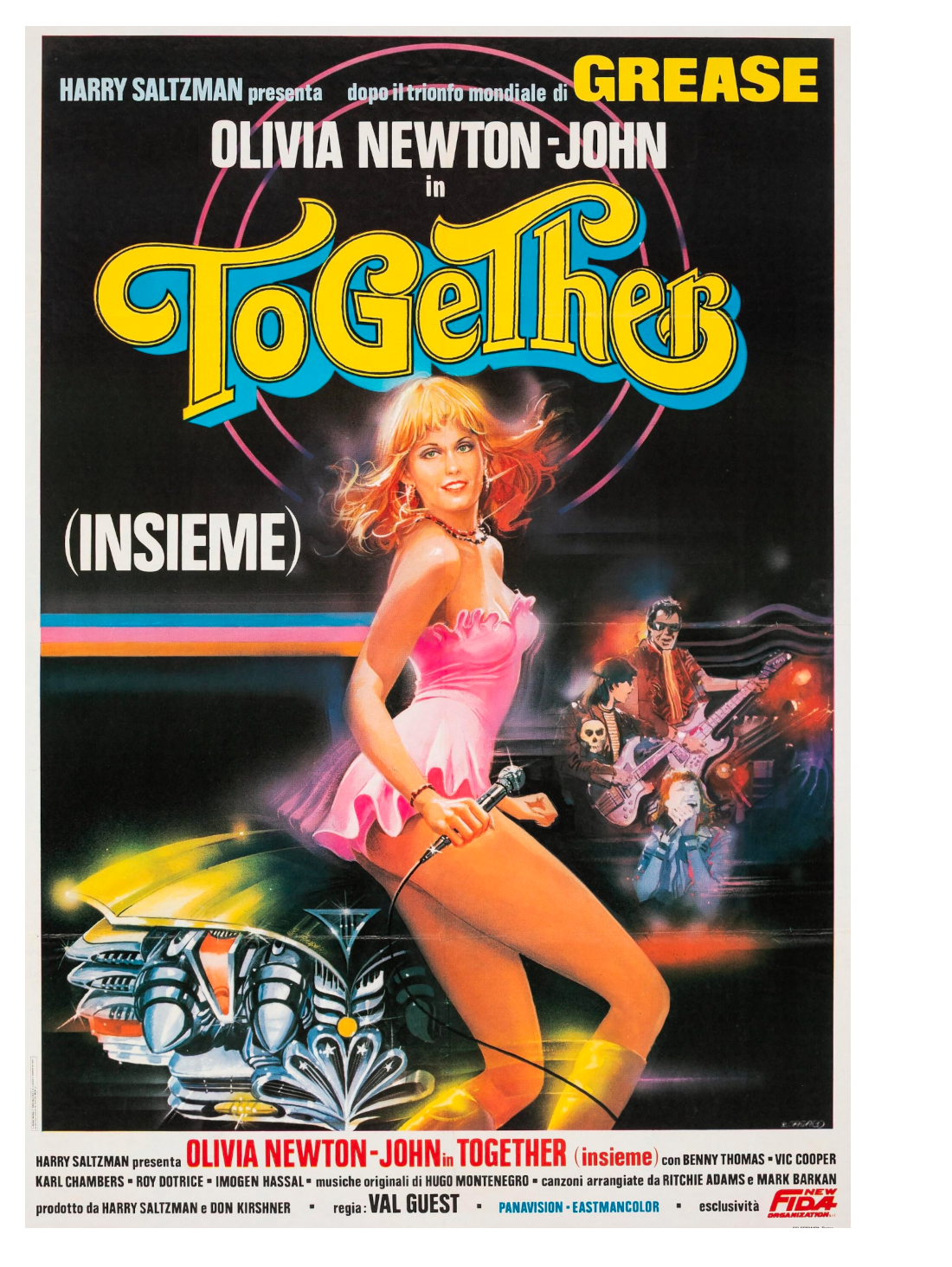
The word is that the premiere audience were the only ones to see the movie, because Toomorrow’s general release was cancelled, flat out. Knowing a little of how showbiz works, we’re a tad suspicious. Did the exhibitors take one look at the movie and get cold feet? Could Guest’s suit have been used as an excuse to cancel the roll-out of a film that all agreed would be a huge bomb? Posters exist of attempts to release the show eight years later, when Olivia Newton-John was a newly-minted star in the mega-hit Grease. ←
Dig it — Toomorrow is back!
Deaf Crocodile’s Dennis Bartok was the central factor in the revival of Toomorrow. As the organizer for The American Cinematheque Bartok brought the 90 year-old Val Guest to Hollywood for a season of Hammer Films; I was present when Joe Dante interviewed him after a screening of his The Abominable Snowman. In 2002 Bartok gave Guest a full career retrospective, which he attended with his wife, actress Yolande Donlan. That series turned out to be re-premiere of sorts for Toomorrow, with a Technicolor print sent from London. Twenty-plus years later, Deaf Crocodile collaborated with the BFI on the film’s digital restoration.
A question for music fans: as a college student I remember watching two or three hours of the TV show Don Kirschner’s Rock Concert, around 1973 or 1974. The late night show featured entire concerts, supposedly uncut. I have a memory that we turned the TV sound off, but tuned into a cooperating FM radio station’s stereophonic simulcast of the concert audio. Is that factual? Or is it a false memory that I made up in the ensuing 50 years?
This sounds as insane as the staggering ‘Pufnstuf’ feature, but likely more watchable than ‘Xanadu’.
I have been an Olivia fan since the early 70’s. Until the late 1990’s, seeing this movie was only a dream for me. Then in the 1990’s VHS copies started appearing and fans were about to see badly copied versions of the film. Over the years the copies got more watchable but still pretty bad VHS. Then, sometime in the 2000s, there was a screening of the film that Olivia actually attended. A better DVD version came out and I was actually able to make out a lot of the movie, finally. I am looking forward to seeing this Blu-ray copy after watching poor copies ot the movie over the last 30 years. I love the kitchieness of the film and Olivia is absolutely adorable! It’s very British but I found it very enjoyable fun movie. Watch it, if nothing else, for seeing a beautiful and engaging Olivia.
from CineSavant correspondent Willard Carroll, by Email:
“Believe it or not, I have the soundtrack LP for TOOMORROW.
And yes, the DON KIRSCHNER ROCK CONCERT TV show was simulcast on FM in stereo.
This was more common in the early 70’s than most people realize. The ABC SUNDAY NIGHT MOVIE often broadcast on FM in stereo – although I don’t think this was ever actually advertised on TV. I was usually alerted via newspaper listings. Of course, at the time we had one of those console stereo players (basically a piece of furniture) which was on the other side of the room so the “Stereo” effect was somewhat muted!
Best,
Willard