
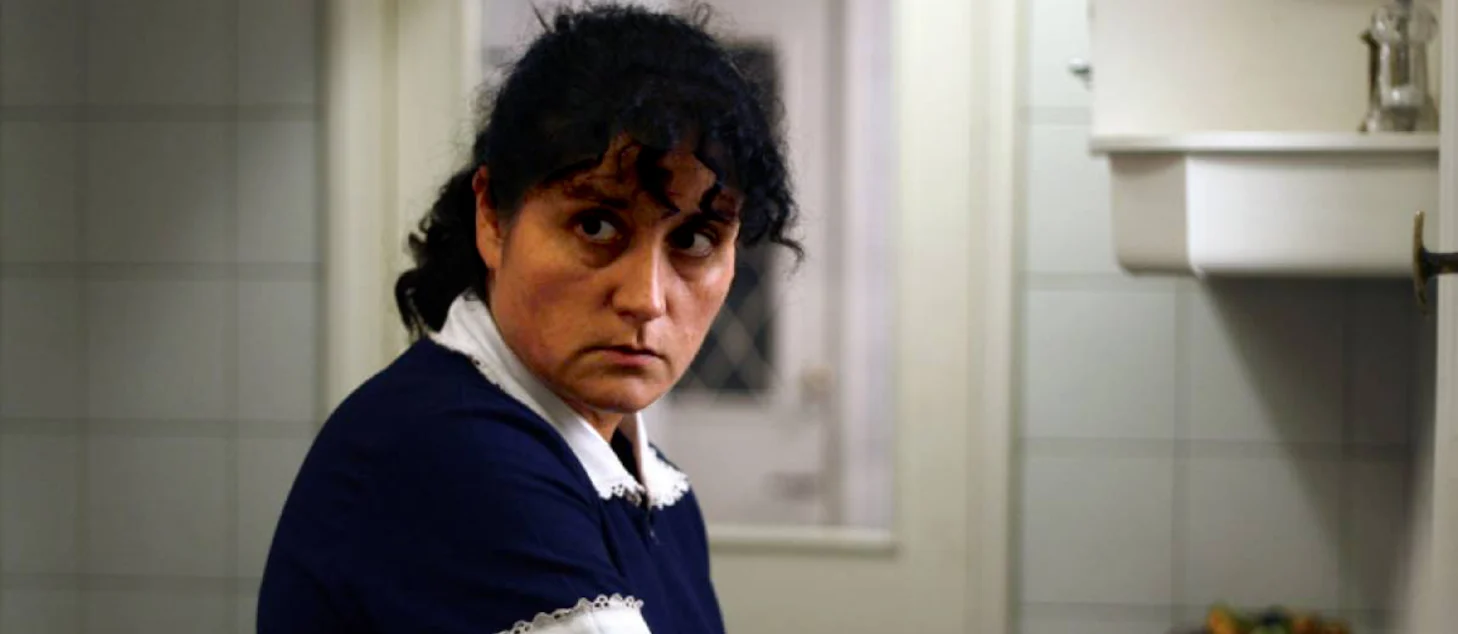
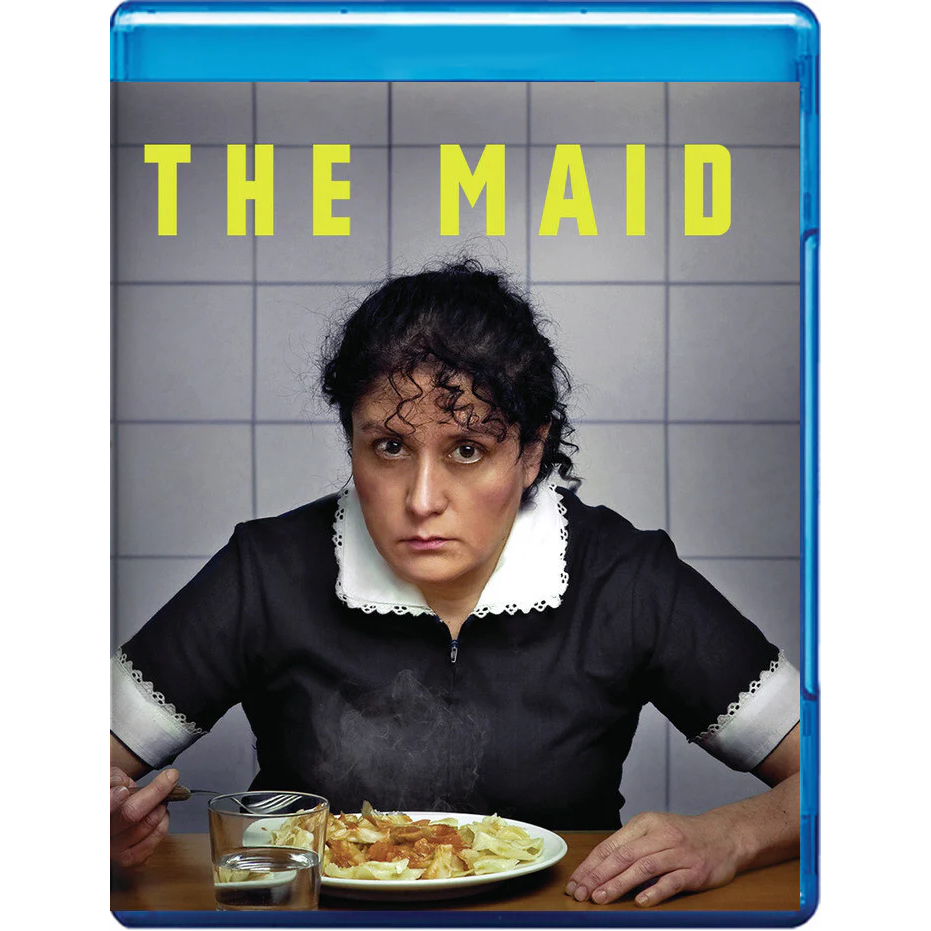

The Chilean film The Maid, aka La nana, was given a pair of DVD releases in 2009. This new Blu-ray is listed by MovieZyng as being from Rising Sun Media, but the package states Shoreline Entertainment and Darkside Releasing.
Sebastián Silva’s movie was a performer at Latin American awards ceremonies and was a Golden Globe nominee. It hasn’t much in common with the usual foreign film hopefuls and its graces are not easy to describe. Dramas that don’t fall into an easy category are often called character studies; this tale of a maid in a well-to-do Chilean household makes us think about the inequities of employers and servants, yet finishes with positive thoughts about people in general. 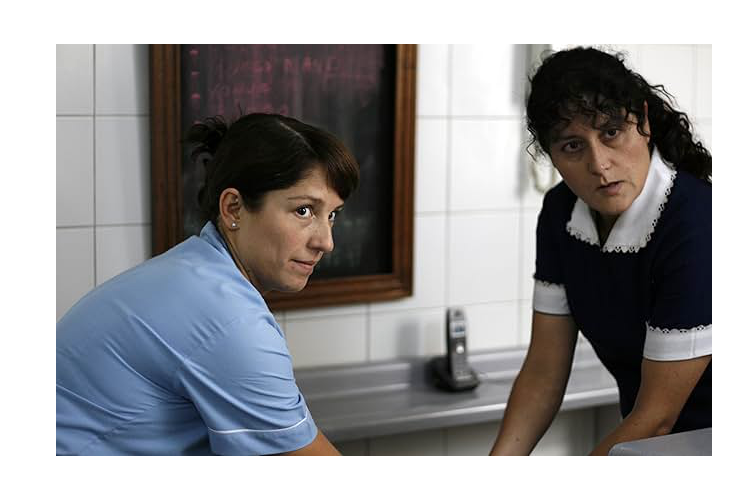 It repeatedly goes against our expectations, refusing to hype conflicts or resort to a heightened sentimentality. When the overworked maid’s day-to-day domestic stress peaks, we begin to fear that something psychologically devastating will happen.
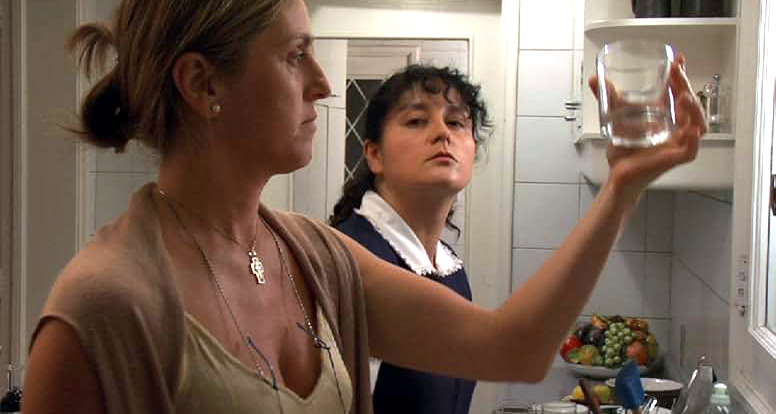
In Latin America, the middle class is still so small that it’s really an upper-upper middle class. Labor is so cheap that people that can afford a car and a house can also afford to have a servant or two. We meet a family that is celebrating the 41st birthday of its live-in maid Raquel (Catalina Saavedra), a ritual that shows she is ‘part of the family’ yet also shows that she’s not. Raquel has taken care of Mundo and Pilar (Alejandro Goic and Claudia Celedón) and their children for 23 years, and appears to be under some serious stress. Does she resent being taken for granted by her employers, her lonely life, her lack of options?
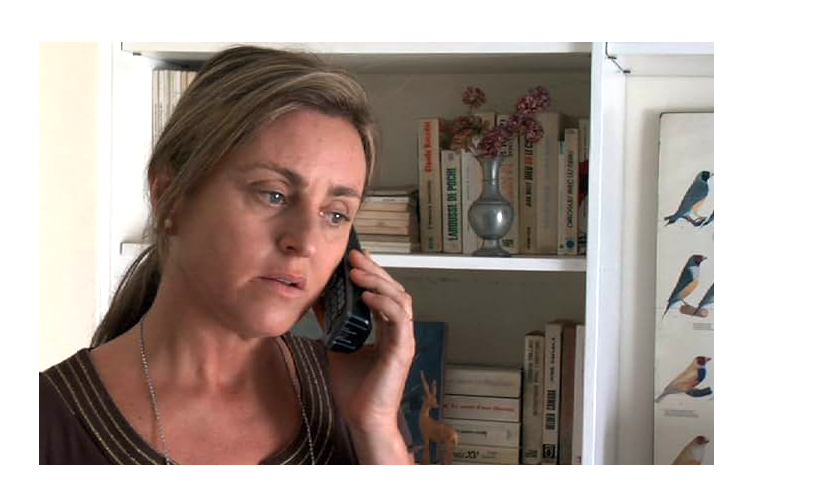
The screenplay doesn’t use explanatory exposition to ‘fill us in’ on every character. Only by observing do we learn who’s who and what is going on. Raquel works constantly to keep up with the household, which isn’t easy. She brings the parents breakfast in bed. People leave their towels and clothes on the floor. Mundo is a college professor and is a little fussy; even Pilar has to indulge his hobby, spending a year to build a single model boat. The younger kids of course take Raquel for granted, but it’s the older daughter Camila (Andrea García-Huidobro) who gets on Raquel’s nerves. We hear hints that Raquel never sees her own family.
We’re prepped for a moral lesson about bosses and servants and the cruelty of the class system … but The Maid is not about social warfare, as in Tate Taylor’s The Help. The subject is a single situation, about immediate personality issues. Nobody here has an outside agenda.
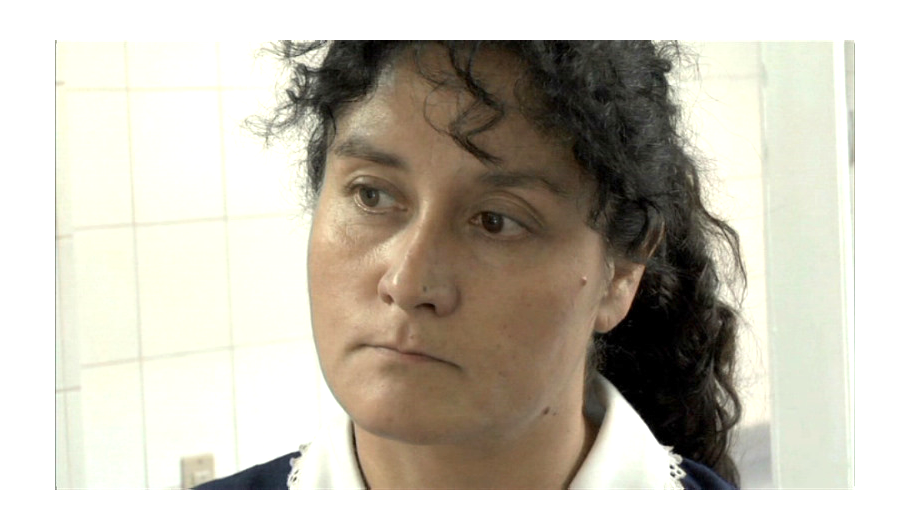
Raquel looks very run-down. She takes pills. She has also become rather erratic, picking fights by purposely trying to annoy Camila, who she thinks is behaving in an imperious manner. Pilar at first seems a little superficial, but to our surprise, she shows genuine concern about Raquel’s fatigue. Perhaps Raquel is overworked now that the kids are getting to be a handful. Pilar decides to hire an extra maid to help, and won’t listen to Raquel’s objections.
Already exhibiting hostile passive-aggressive tendencies, Raquel panics. In addition to all her other work, she’s supposed to share duties and responsibility with a stranger — a stranger who might compete for attention and favor? What if the family preferred this new hire? Rachel’s desperation peaks. While still waging a petty war of disobedience with Camila, Raquel sabotages every new hire. The aim is to get them to quit. She trips them up with bad or contradictory instructions. She insults them by disinfecting the bathroom whenever they shower. Her most successful ploy is to lock them out of the house.
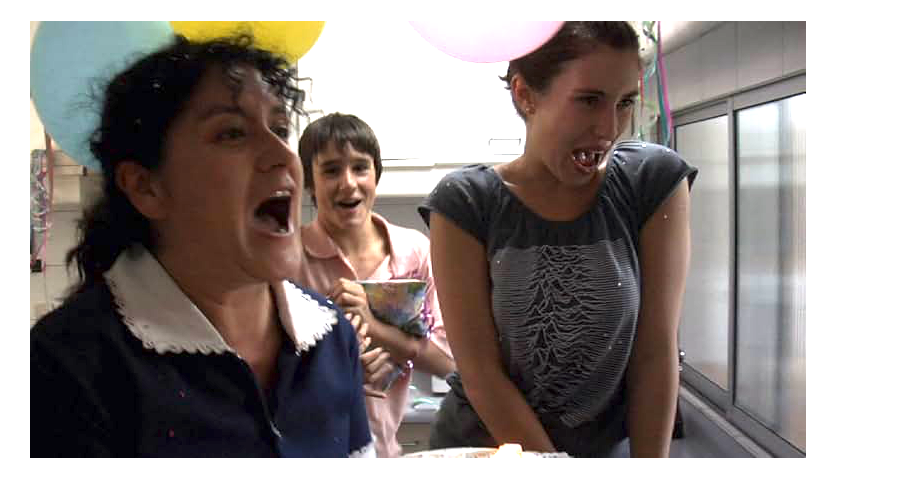
How far is Raquel going to take this? The second or third hire is a strong-willed older woman who becomes furious when Raquel locks her out. To get back in, she takes a dangerous climb to the roof. The lady is up there risking her neck, while Raquel runs her vacuum, pretending not to hear. We wonder how dark things will become. Will The Maid devolve into a psycho-thriller, like Peter Weir’s The Plumber or Joseph Ruben’s The Stepfather?
Too many reviews give away the rest of the story, doing no favors to Sebastián Silva’s accomplishment. Suffice it to say that a medical emergency does come up, perhaps because Rachel seems to be taking too many of her pills. Is a combo of drugs and stress bringing on her dangerous behavior? Without going into detail, The Maid brings in another character that changes everything. Lucy (Andrea García-Huidobro) arrives ready to work, and Rachel gives her the works. But things don’t work out the way Rachel expects ….
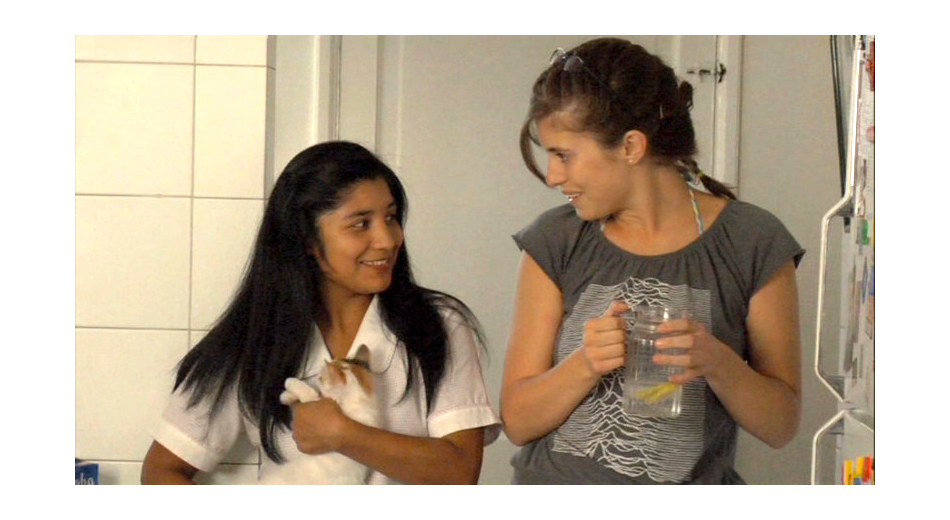
We found The Maid’s conclusion to be exemplary. Nobody in this household is a villain, as we see when Rachel has her medical emergency — even the small kids are rushing to help with their beloved Nana. The movie instead sees the importance of not losing contact with one’s self, of maintaining some kind of independent life. Rachel is a vital part of the family; she knows secrets about the teenagers that the parents don’t. She is also intelligent, and feels a sense of humiliation in her job. Emotional isolation distorts perceptions and motivates strange behavior. Rachel looks in the mirror and must think, ‘do I have a life?’ Could I make a friend of my own? Would anyone ever like me?
The Maid may draw comparisons with Alfonso’s celebrated Roma, the excellent domestic character study 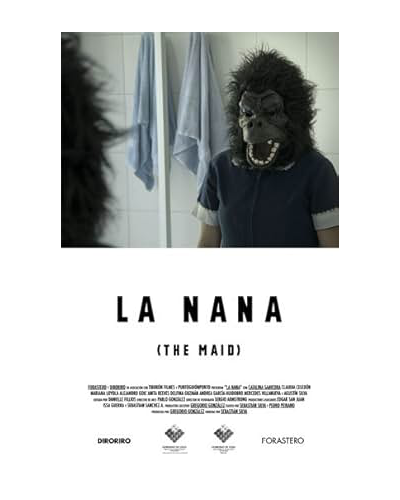 in 1968 Mexico City. A dutiful maid is part of that family as well. But that drama is about a broken marriage, against an epic background of radical politics. It ends with an outsized emotional crisis, very nicely dramatized. The Maid is much smaller-scale, intimate. It offers a compelling, winning and positive image of family dynamics in a situation of social imbalance, with a character we come to like — despite her hard-headed crazy behavior.
I’ve skipped descriptions of the last act — the Lucy / Rachel relationship is a delight.
Writer and co-director Sebastián Silva’s show does not have a docudrama feel, and nor does it strive for an artful style. There’s precious little that happens that might telegraph an ‘author’s message,’ although there is an interesting moment in which Rachel plays with a gorilla mask belonging to one of the kids. Silva’s camera is often in tight on the actress Catalina Saavedra, whose hard stares and fits of sublimated rage are fascinating. We at first think that the daughter Camila will be revealed as an ungrateful monster, determined to victimize Rachel. But the entire family is nice and decent — just a little spoiled by having such live-in service.
Modern life being what it is this year, we derive extra enjoyment from smart movies that find something good to say about people, without resorting to sentimental clichés.
Modern life being what it is this year?