


Who the Hell is Antoine Doinel?
Back in the early days of DVD, the Criterion Collection found it could group films in boxed sets where appropriate. The Adventures of Antoine Doinel shapes up as an excellent introduction to the world of François Truffaut. This new upgrade of a 2003 disc set gathers François Truffaut’s entire Antoine Doinel cycle of pictures, four features and one shorter piece, filmed between 1959 and 1979. All star Jean-Pierre Léaud. The boxed set also includes two Truffaut short subjects, many interview clips and a couple of additional documentaries on Truffaut, plus text essays in an accompanying booklet.
Let’s get the film credits out of the way:
The 400 Blows
1959 / B&W / 2:35 widescreen / 99 min. / Les quatre cents coups
Starring Jean-Pierre Léaud, Claire Maurier, Albert Rémy
Cinematography Henri Decaë
Film Editor Marie-Josèphe Yoyotte
Original Music Jean Constantin
Written by F. Truffaut and M. Moussy
Directed by François Truffaut
Antoine and Colette
1962 / B&W / 2:35 widescreen / 30 min. / episode of Love at Twenty
Starring Jean-Pierre Léaud, Marie-France Pisier, Rosy Varte, Francois Darbon
Cinematography Raoul Coutard
Film Editor Claudine Bouché
Original Music Georges Delerue
Written by François Truffaut
Produced by Pierre Roustang
Directed by François Truffaut
Stolen Kisses
1968 / Color / 1:66 widescreen / 91 min. / Baisers volés
Starring Jean-Pierre Léaud, Claude Jade, Delphine Seyrig, Michael Lonsdale, Claire Duhamel
Cinematography Denys Clerval
Production Designer Claude Pignot
Film Editor Agnés Guillemot
Original Music Antoine Duhamel
Written by François Truffaut, Claude de Givray and Bernard Revon
Produced by Marcel Berbert
Directed by François Truffaut
Bed and Board
1970 / Color / 1:66 widescreen / 97 min. / Domicile conjugal
Starring Claude Jade, Jean-Pierre Léaud, Hiroko, Barbara Laage, Daniel Ceccaldi, Claire Duhamel
Cinematography Néstor Almendros
Production Designer Jean Mandaroux
Film Editor Agnés Guillemot
Original Music Antoine Duhamel
Written by François Truffaut, Claude de Givray and Bernard Revon
Produced by Marcel Berbert
Directed by François Truffaut
Love on the Run
1979 / Color / 1:66 widescreen / 95 min. / L’amour en fuite
Starring Jean-Pierre Léaud, Claude Jade, Marie-France Pisier, Dani, Dorothée
Cinematography Néstor Almendros
Production Designer Jean-Pierre Kohut-Svelko
Film Editor Martine Barraqué
Original Music Georges Delerue
Written by François Truffaut, Marie-France Pisier, Jean Aurel and Suzanne Schiffman
Produced and Directed by François Truffaut

The 400 Blows:
Rebellious young Antoine Doinel (Jean-Pierre Léaud) is rejected by his mother and treated roughly by his father. Disobedient in school, he’s caught in lies until he falls into petty crime with a buddy. He’s sent to reform school, but retains his spirit and quietly escapes …
Antoine and Colette:
Still in his teens, Antoine lives alone and works at a record factory. At a concert, he falls madly in love with Colette (Marie-France Pisier) and tries to woo her by moving in next door. Her parents love him, but Colette herself is another story …
Stolen Kisses:
Discharged from the Army almost directly from the stockade, Antoine tries out a number of failed occupations while pursuing a new girlfriend, Christine (Claude Jade). As a detective, he goes to work. undercover at a shoe store, but finds himself getting involved with the owner’s wife (Delphine Seyrig).
Bed and Board:
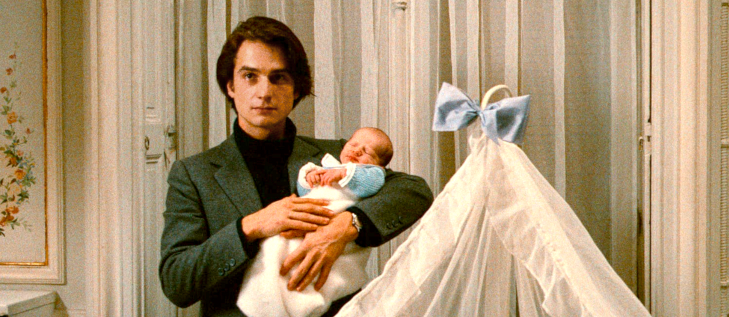
Now married to Christine and expecting a baby, Antoine nevertheless carries on an affair with a Japanese woman while working for an American company. He and Christine separate, then reunite tentatively.

Love on the Run:
Antoine’s divorce with Christine is final, but he’s having problems with his adorable new girlfriend, Sabine (Dorothée). He also chases after his old flame Colette, after a chance sighting at the train station. Then the three women touch base with one another, and compare notes.
The French New Wave was a cultural ambush by ambitious, audacious film critics.
Prior to 1959, film critic François Truffaut had dabbled in a few short subjects, as had his cohort at the magazine Cahiers du Cinéma Jean-Luc Godard. The Antoine Doinel ‘cycle’ began with The 400 Blows, a one-shot filmed in B&W, in a fresh semi-documentary style. It became known as the first film of the French New Wave; its originality impressed the European film community, with a ‘style’ built around Truffaut’s no-budget limitations.
Truffaut demonstrated a skill with non-actors and children, and a willingness to relax directorial control to allow natural rhythms into his scenes. The 400 Blows has a harsh visual look with a sensitive approach. The 14 year-old Jean-Pierre Léproved an actor with a gift for being unaffected in front of a camera. Through this actor-surrogate, Truffaut has said that he expressed many of his own feelings about his own semi-delinquent childhood.

Three years later François Truffaut needed a subject for Antoine and Colette, his segment of a multi-part omnibus film called Love at Twenty, produced by Pierre Roustang and featuring the work of Truffaut plus Shintarô Ishihara, Marcel Ophüls, Renzo Rossellini and Andrzej Wajda. He decided to return to see what Antoine Doinel was doing, now that he was in his late teens.
Again, Truffaut chose a semi-autobiographical storyline was. His alter-ego’s clumsy attempts to interest the ravishing Colette (Marie-France Pisier) covers an almost identical episode from the director’s own life. The account of how an inexperienced young man mismanages his love affairs is wholly believable. The truth be told, because Doinel is the product of a broken home, he engages better with Colette’s parents than he does with her. The ending will be a surprise to many young male viewers: when it comes to romance, many of us were incapable of seeing things that ought to be obvious.
Six years later in Stolen Kisses Doinel leaves the boundaries of autobiographical reportage to become the center of a coy romantic comedy, complete with soft snowfall and a charming title song touted on the French poster. It was a big success.
Doinel’s rude exit from the Army mirrors Truffaut’s experience, but he’s soon ensnarled in a light farce about a detective agency, with comic snooping and misbehaving wives. Antoine falls madly in love with Christine (Claude Jade), the first female to respond to his wistful, immature affections. The comic proceedings include impressive contributions from Dephine Seyrig and Michael Lonsdale. Truffaut’s valentine-like film is posed somewhere between the epic romanticism of Jacques Demy, and a more realistic appraisal of human behavior.

Bed and Board shows Doinel married to Christine (Claude Jade again). He’s still refusing to become a part of responsible adult life, cheating on Christine with the ‘exotic’ Kyoko (Hiroko Berghauer) and letting himself be caught in foolish lies.
It’s the least charming and the most painful of the stories. Most of Antoine’s gallic cuteness has worn off, revealing a selfish, unapologetic brat. But Truffaut’s script insists that the little jerk is still irresistible.
(spoilers)
The final film Love on the Run tells a more complicated story. Antoine is newly split from Christine, and has taken up with yet another impossibly lovable female, Sabine (Dorothée). Yet he is ruining his chances with Sabine by impulsively chasing after the newly rediscovered Colette (Marie-France Pisier), the object of his first foolish pursuit, three films previous. Recycled scenes from the older pictures are employed as flashbacks, with all-new material filling in some narrative gaps. It at first feels like a ’roundup episode’ of a television show, until the full pattern emerges.
The realizations of these women reveal Antoine’s flaky true nature. Will he never grow up? He could have a chance at happiness if he just stopped being so dishonest with women, starting with Sabine. Colette, whose life has gone through its own problems for no fault of her own whatsoever, sees Antoine’s shallowness for what it is. Christine also decides that her love for Antoine will just have to be in the past tense. The film’s wrapup is hopeful, but nothing about Antoine Doinel’s personality is reassuring. He’s still the delinquent street kid stealing what he wants, wherever he can get it.

We forget that the New Wave directors weren’t all liberated social progressives. Jean-Luc Godard began as politically right-wing, and director François Truffaut’s attracted quite a harem for himself. Two years before Love on the Run Truffaut made The Man Who Loved Women, about a ladies’ man obsessed with his conquests. It’s an even more accurate autobiographical account of a womanizer sans malice. Antoine Doinel is a universal image of a wholly insecure young male, who sometimes feels guilty about his desires and needs, and who tries everything in his pursuit of love except honesty. Truffaut surely loves the women he hires to act in his films, as each is accorded a special respect and concern. They each get their own little corner of character rights. Jean-Pierre Léaud has the harder job of amusing us with his charm, all the while maintaining the reality of incorrigible selfishness.
Whatever the setup, we don’t need to be Truffaut experts to appreciate these actresses, all of whom reveal fascinating personalities behind their beauty. Delicate Claude Jade is much tougher than she looks. Dorothée, formerly a hostess from children’s TV, proves that techniques for handling kindergartners apply well when managing an unreliable young man. Marie-France Pisier was a stunning teenager who became a world-class beauty. Her character is the only one in the story with a heavy-responsibility occupation, and a personal history with some tragic weight.
In the final film, Truffaut brings back memories of Doinel’s mysterious mother, and introduces through flashbacks another problem female, his wife’s best friend Liliane, played by Dani of Day for Night. Truffaut shows an enviable skill for creating sympathetic characters.
Spanning 20 years of French moviedom, the Doinel cycle begins with the rough B&W of the New Wave and ends up in the caressing colors of Néstor Almendros. Savant’s favorite will always be Stolen Kisses, which I saw alone around the time I met my wife. Now it’s a favorite of my adult daughter as well.
