

We have this habit of trolling for film remasters on TCM, to see if particular titles might suddenly look improved. A sudden boost in quality, as with the public domain picture Our Town, sometimes indicates a new remastered Blu-ray is on the way. One show we’ve recorded scores of times hoping to see an upgrade is Vincent Sherman’s Nora Prentiss. It’s a slick Warners item from 1947, a peak year for film noir. What we saw at TCM was a fairly dull video master, with some scenes that almost looked blurry. Nora Prentiss became one of the first Warner Archive Collection DVDs in 2009, but it wasn’t much of an improvement.
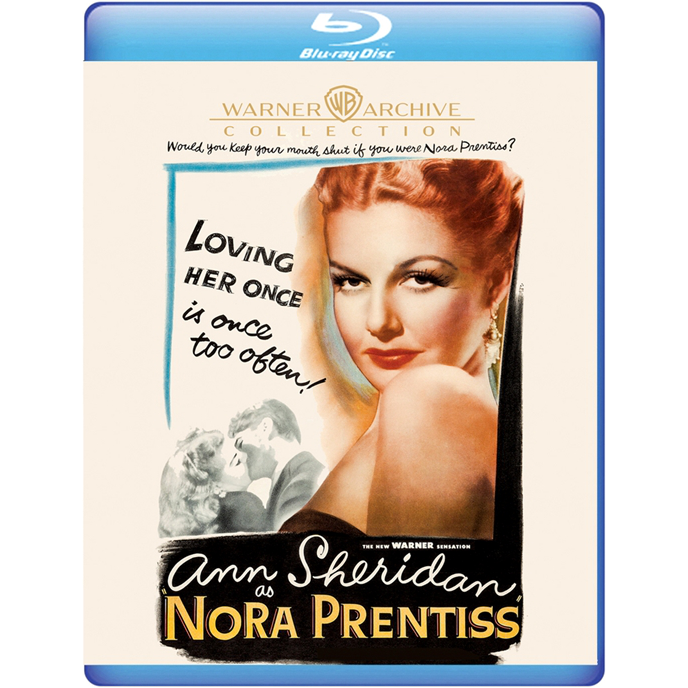
Fifteen years later this Blu-ray finally lets us see this strange film noir as it ought to look… Great. More in the evaluation section below.

“If I can die remembering you can live remembering ….. promise?”
At what point does a ‘downer’ drama become so bleak that we withdraw our involvement? Nora Prentiss pushes the edge of that envelope. This glossy Loser Noir was was clearly intended to do for Ann Sheridan what the hit Mildred Pierce did for Joan Crawford. The Oscar-winning star was running at full steam and choosing her own material.
Warners had all but run out of appropriate projects for Bette Davis, and was giving its 2nd-string leading ladies a shot at topping theater marquees. Ida Lupino shone brightly in her showcase picture The Man I Love, and Warners’ promotional push for Ann Sheridan resulted in this well-marketed, well-reviewed star vehicle. The poster art for all three movies was similar, with saucy taglines arranged like the graphics in women’s magazines. ←

Once again the leading lady’s name is the film’s title. But Sheridan’s Prentiss isn’t the in-control character that Crawford and Lupino played. The central figure of Nora Prentiss is actually Kent Smith’s doctor, a strangely passive self-willed victim. It’s a tragedy about a broken marriage, and Sheridan’s Nora is just collateral damage. Noir Losers wallow in self-pity, as with the classic example of Al Roberts in Edgar Ulmer’s Detour. Playwright N. Richard Nash’s Nora Prentiss is a much more upscale masochistic experience, a domestic nightmare about the destructiveness of sexual obsession. Illicit love affairs can go bad, but Nora’s is a catastrophe.
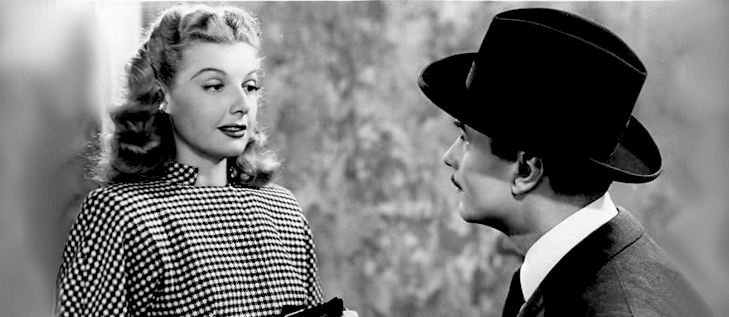
Strait-laced and unworldly Dr. Richard Talbot (Kent Smith of Cat People) has a successful San Francisco practice. He feels rejected by Lucy, his wife of twenty years (Rosemary DeCamp). Around the house she’s a consistent joy-killer, especially with their spirited teenagers Gregory and Bonita (Robert Arthur of Ace in the Hole & Wanda Hendrix of Ride the Pink Horse). Then Talbot treats cabaret singer Nora Prentiss (Sheridan) for minor bruising received in a crosswalk accident. Surprised that the doctor never takes a break, Nora sees his sweet side and begins a flirtation. It becomes serious, but the mutual bliss subsides when Nora discovers that Richard is married. She tries to break off the relationship, unsuccessfully. Talbot neglects his medical practice and ignores his family. Lucy becomes concerned, but Richard’s medical partner Joel Merriam (Bruce Bennett) doesn’t know what’s going on either.

Not seeing herself as a home-wrecker, Nora decides to end the affair by relocating to New York. Talbot responds by losing what little control he still has over his actions. He uses the sudden death of a patient (John Ridgely) as a means to swap identities, and follows Nora back East. He tells Nora that he’s waiting for a divorce, but doesn’t explain his paranoid behavior — he dares not show his face in public. Nora takes a singing job in a NYC club owned by her friendly boss Phil Dinardo (Robert Alda). Alone in her apartment, Richard works himself into a drunken state of jealousy.
‘Next Up: Male Weaklings and the Sad Women who love them.’
It’s a pure case of Fatal Attraction. The show has about six minutes of good humor as the alluring Prentiss teases her doctor-rescuer, wondering what makes such an uptight guy tick. Doctor Talbot must have been on the verge of a breakdown before he met Nora. Overwhelmed by Nora, too spineless to face Lucy and ask for a divorce, he turns his back on his profession and his family. From that point forward the romance is a painful ride on the Doom Slide.
It’s not typical in a film of this vintage for a practicing doctor to be this unstable. The screenplay doesn’t make apologies for Richard Talbot, who brings untold suffering to his family. He soon loses our sympathy; many viewers likely lose faith as soon as they see what he throws away — his profession, his place of respect in the community, an incredible house. Richard’s bedroom has a view of the Golden Gate Bridge that people would kill for. * Those teenaged kids are so precious that we can’t forgive his selfish actions.

This may be Kent Smith’s best film performance. He all but specialized in dull conformists and moral weaklings: The Damned Don’t Cry!, The Fountainhead. He later shifted into a career of stuffed shirts and hollow authority figures, as in Sayonara.
An Intense but Joyless Noir.
This is also Disillusioned Dames territory, a familiar locale for late ’40s noir femmes Joan Bennett and Alice Faye. Ann Sheridan’s Nora isn’t quite as demoralized, but she does allow herself to be blind-sided. Richard’s crazy actions leave Nora with no choice but to watch everything fall apart. Viewers that wax nostalgic over failed romances will enjoy every humiliating step. The congealed romantic fatalism confirms the show’s Noir credentials.
Nora ought to know better — she’s too smart to fall prey the usual slick males. Nightclubs in films noir are usually where shady things take place, a convention that Nora Prentiss reverses. This must be the only 1940’s nightclub without an unsavory underworld connection. Robert Alda’s even-tempered nightclub owner Phil Dinardo is completely legit and ethical. He’s enamored of Nora, but doesn’t interfere in her love life. That’s the opposite of the corrupt nightclub impresario Robert Alda played in the previous year’s The Man I Love, opposite Ida Lupino.
Ann Sheridan was short-changed by the star system. Even in her best movies she played support to Warners’ male leads: They Drive By Night, Kings Row, City for Conquest. The actress projects sincerity and no-nonsense pragmatism, qualities that keep Nora Prentiss afloat. Sheridan is so appealing that Nora could be cutting throats and we’d still see her side of things; her Other Woman is sympathetic even when the thriller aspects strain credibility.
This is one of director Vincent Sherman’s best pictures. He maintains control of the film’s difficult moods and masks the holes in the plot — which never become as ridiculous as a synopsis reads in print. Cameraman James Wong Howe’s increasingly claustrophobic images build the feeling that Talbot’s life is closing in on him. By the finale, most viewers have forgotten that the body of the story is a flashback recalled from a prison cell. We don’t want to give away more particulars …

Noir Gimmickry, and a compelling air of Doom.
Joan Crawford developed several noir projects as her star vehicles, one of which utilized that old standby gimmick amnesia. Nora Prentiss balances unsteadily on two such plot twists. Richard Talbot’s identity swap with his dead patient is a serious credibility stretch. It’s not as absurd as Paul Henreid’s I.D. switcheroo in the expressive Hollow Triumph, yet we’ve read about real-life I.D. swaps that seem even more unlikely.
Richard’s rash action — making himself into a nameless nobody — is doomed from the start. His goal of personal freedom soon vanishes. He hides out at Nora’s, getting drunk and nursing violent thoughts. ** When Nora loses patience with this lack of explanations, he squabbles with her the same way he fought with his wife Lucy. Unable to shake free of this trap and wanted by the police, Richard dooms himself through his own character flaws. Nora Prentiss is not a good film choice for anyone experiencing depression — it finishes almost like a horror movie.

Richard Talbot’s unlikely identity swap idea is eventually compounded by another melodramatic gimmick, plastic surgery . . . the particulars of which we’ll avoid ‘on account of spoilers.’
Sherman and Howe nail the film’s macabre finish. Dr. Talbot and Nora speak to each other through a metal grating, a setup repeated to memorable effect in Andre De Toth’s Pitfall, Raoul Walsh’s White Heat and Akira Kurosawa’s High and Low. Seen through two layers of steel mesh, Talbot’s damaged face becomes an indistinct mass of shadows. He has effectively chosen not to exist, and the visual suggests that he is already disintegrating into poetic nothingness. It’s not the ending Nora had in mind.
Fans fond of noirs that play the Doom Card at the fade-out will find Nora Prentiss to be just the ticket. It is less of a cosmic downer than Safe in Hell or The Seventh Victim, but only by degrees.
“If you were Nora Prentiss, would YOU keep your mouth shut?”
Warners’ provocative sales campaign harped on this question to raise moviegoers’ curiosity. We wonder if the mass audience responded the way exhibitors hoped … later in the year, Joan Crawford would team with Otto Preminger for Daisy Kenyon, a sensitive drama about adultery that bypassed gruesome plot machinations. Movie audiences usually like their masochism in smaller doses.


1 comment