
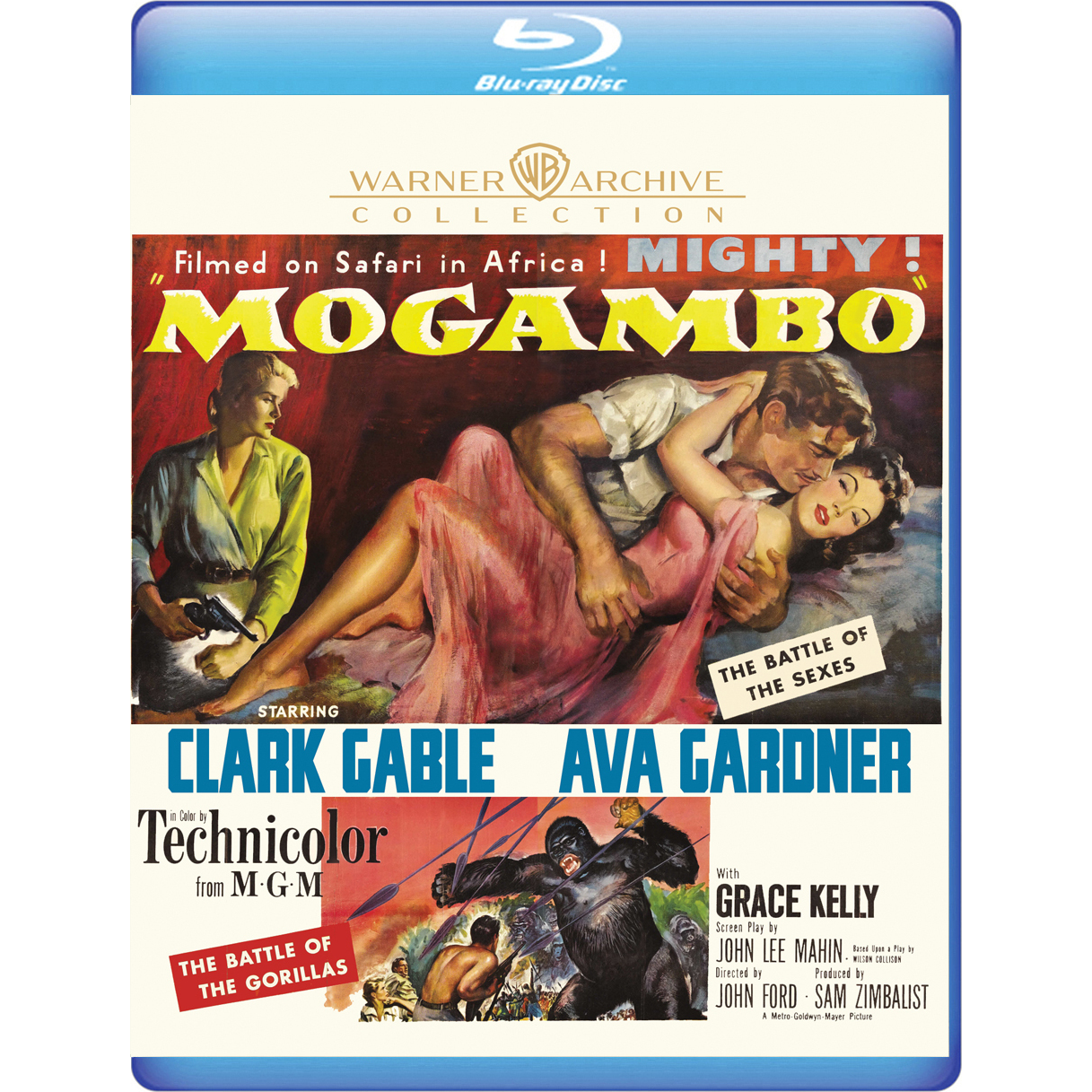

The standard approach to Mogambo is to compare it with the pre-Code hit Red Dust from 21 years before. The Technicolor film is a fairly close revisit of the first storyline, but audiences can be excused for seeing little connection, as the whole world had changed in the interim. The two decades brought star Clark Gable heights of success and terrible personal tragedy. He went through a war with the rest of America and lost a wife in the process. In 1952 the collapse of the MGM movie factory was already well under way. The big contract stars and featured players were being let go. Plenty of pictures were being made, but nowhere near the flood of product 7 years before.
That made every new picture an important gamble. Mogambo was a better bet than most, as the romantic setup from Red Dust was still a sizzler. The casting was crucial — audiences were interested in the possible friction between Ava Gardner and Grace Kelly, the new kid on the block. Her big picture so far was the western High Noon. In terms of screen personae, the actresses couldn’t be more different.


Mogambo can’t touch the original’s pre-code naughtiness — Clark Gable doesn’t get to stare into Ava Gardner’s bathtub like he had Jean Harlow’s. When she’s in the shower, he’s asked to turn his back. But the situations and dialogue are still fairly frisky, even this deep into the repressed ’50s.
Filmed partially in Africa, the British co-production carries a lot of English names in the crew list. It’s actually one of John Ford’s better films. The natives are just there for atmosphere. The patchy matching job may not convince us that the leads came anywhere near the big game, but the atmosphere is realistic. Mogambo is smartly directed and highly entertaining.
Unlike some of Ford’s late-career pictures, it’s not a downer about defeat, old age or social injustice. It’s also worth noting that this is a John Ford hit that does not star John Wayne … the great director did not enjoy many post-war hits without that iconic actor.

American playgirl Eloise ‘Honeybear’ Kelly (Ava Gardner) is partying in Africa when she finds herself marooned far off the beaten path, at the wild animal capture camp of Victor Marswell (Clark Gable). That makes her a problem when Victor’s veddy proper English clients Linda and Donald Nordley (Grace Kelly and Donald Sinden) arrive for a pricey safari to gorilla country, for scientific study. Victor has a known habit of getting involved quickly with beautiful women, and can’t help striking sparks with Linda. With the husband and Kelly right there he ill-advisedly makes a play for the vulnerable Linda … which leads to the expected fireworks.
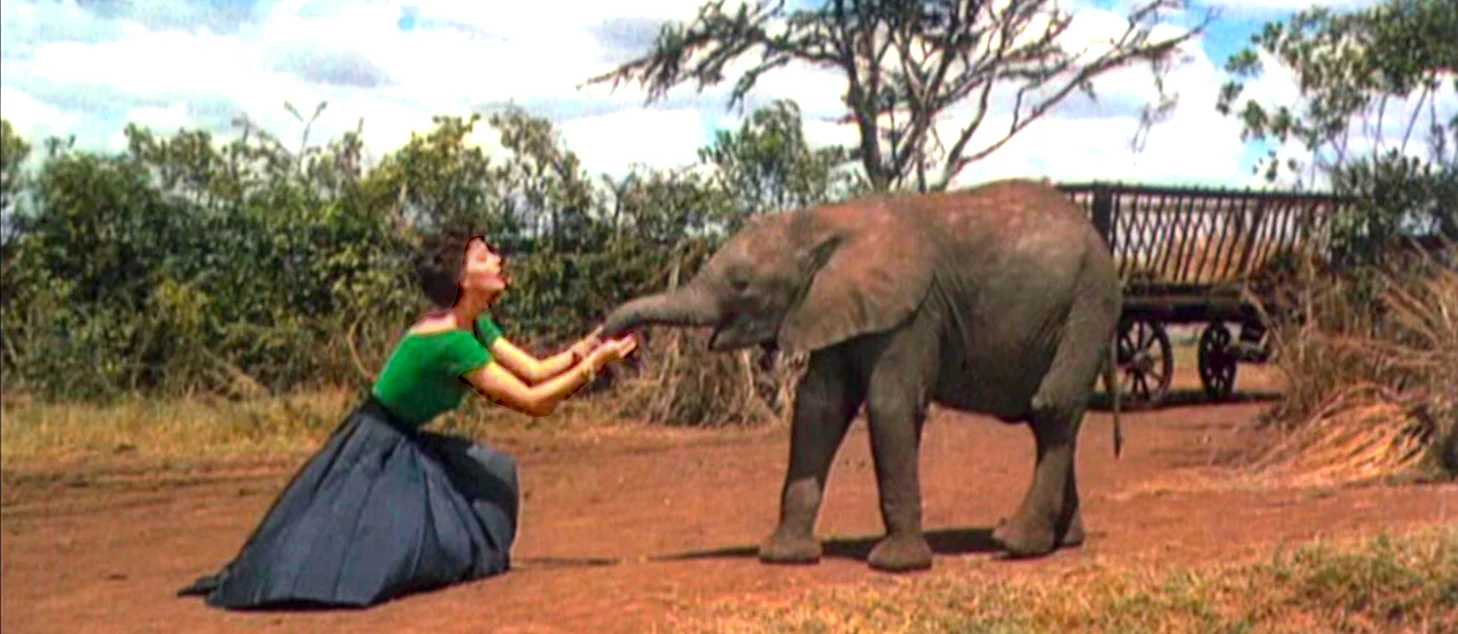
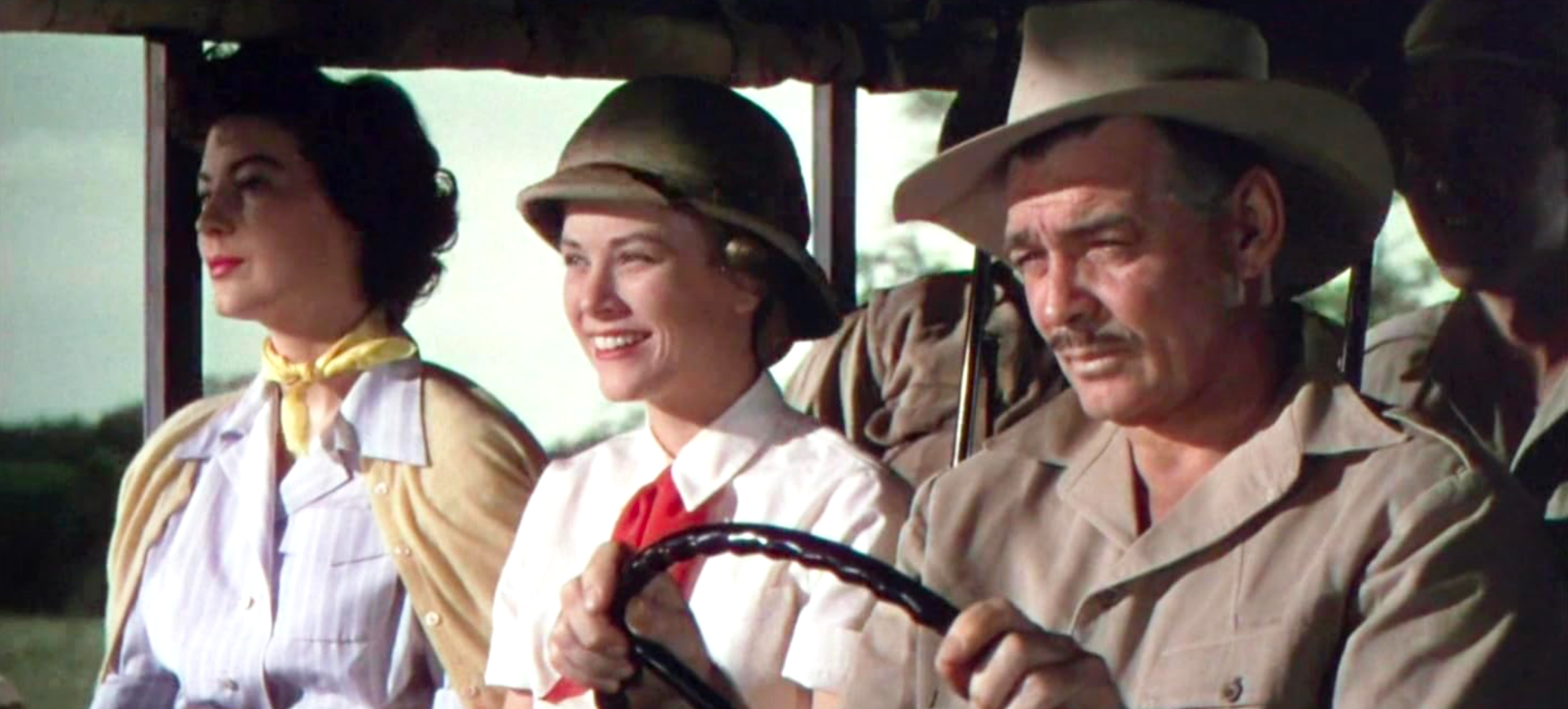
Aided by a witty screenplay, the film’s old school star power all but guarantees a winning movie experience: a romantic tropical location, with pleasant people, lots of attractive animals and plenty of liquor. Clark Gable may look a little long in the tooth, yet he still has ‘it’ to spare. His Victor is a winningly innocent womanizer … he just loves ’em, you see. Victor falls for one girl, sassy saucy Eloise, a dreamboat who doesn’t know the difference between a kangaroo and a rhino. She’s also given a fun five-minute experience trying to feed a baby elephant, a scene that you can bet Howard Hawks studied at length.
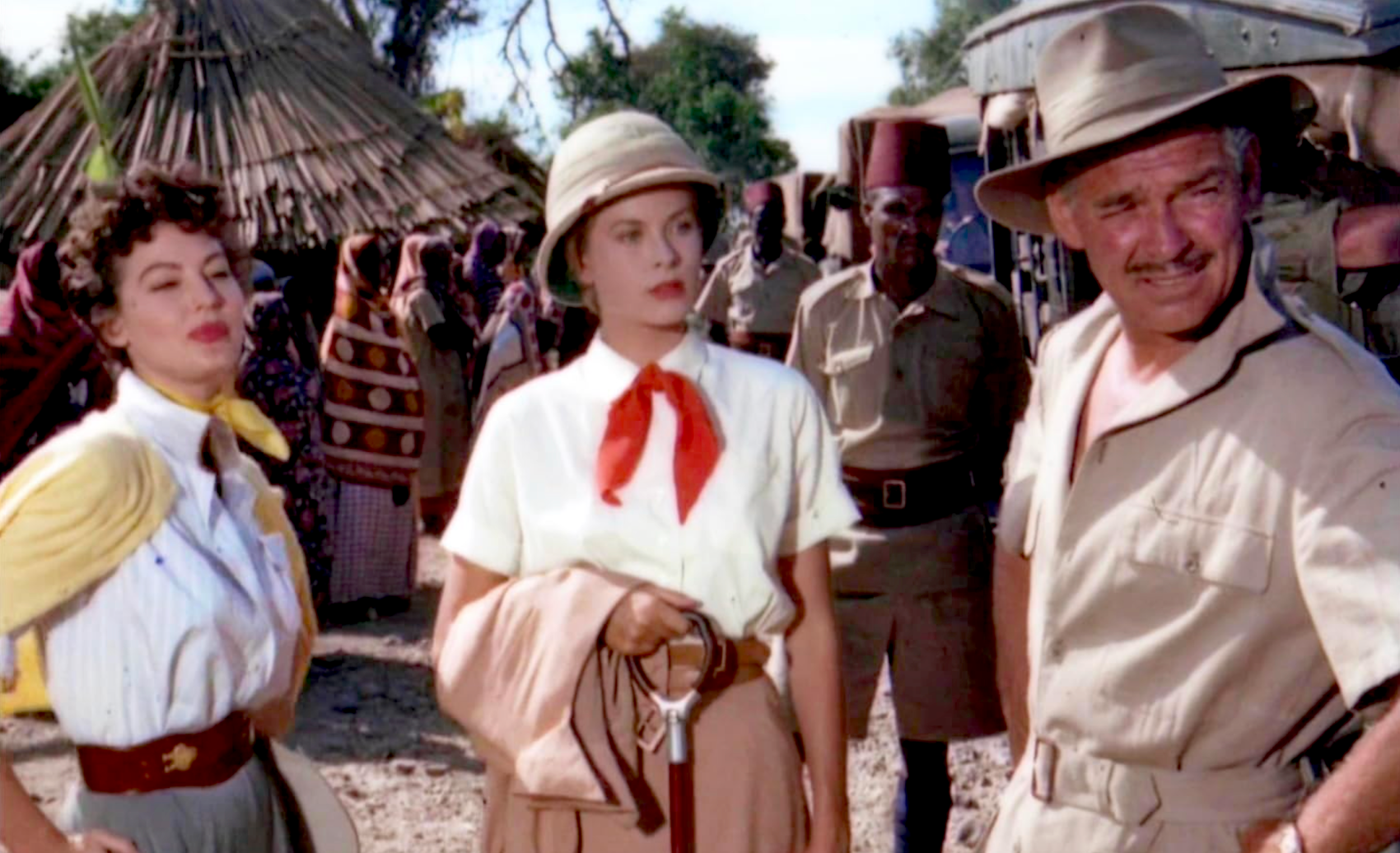
Miss Gardner has fun with a characterization that’s at least a little bit autobiographical. When hiding from husband Frank Sinatra to frolic with Spanish bullfighters, Ava did come off as being the pampered playgirl painted by her biographers. The actress gets to flash that celebrity image, yet we’re still convinced that she’d be a helluva fun person to be with, any time and anywhere. Being the kind of dame that likes a drink, John Ford gives Eloise his stamp of approval. She cocks one leg up on a log and holds her cigarette just like Anne Bancroft’s doctor in Ford’s 7 Women. Eloise can be as frank and sharp as Betsy Palmer in Mister Roberts. True, Ava’s Eloise is a lot more feminine than either of those memorable characters. Ford may have respected a woman who could swear right back at him and make it stick.
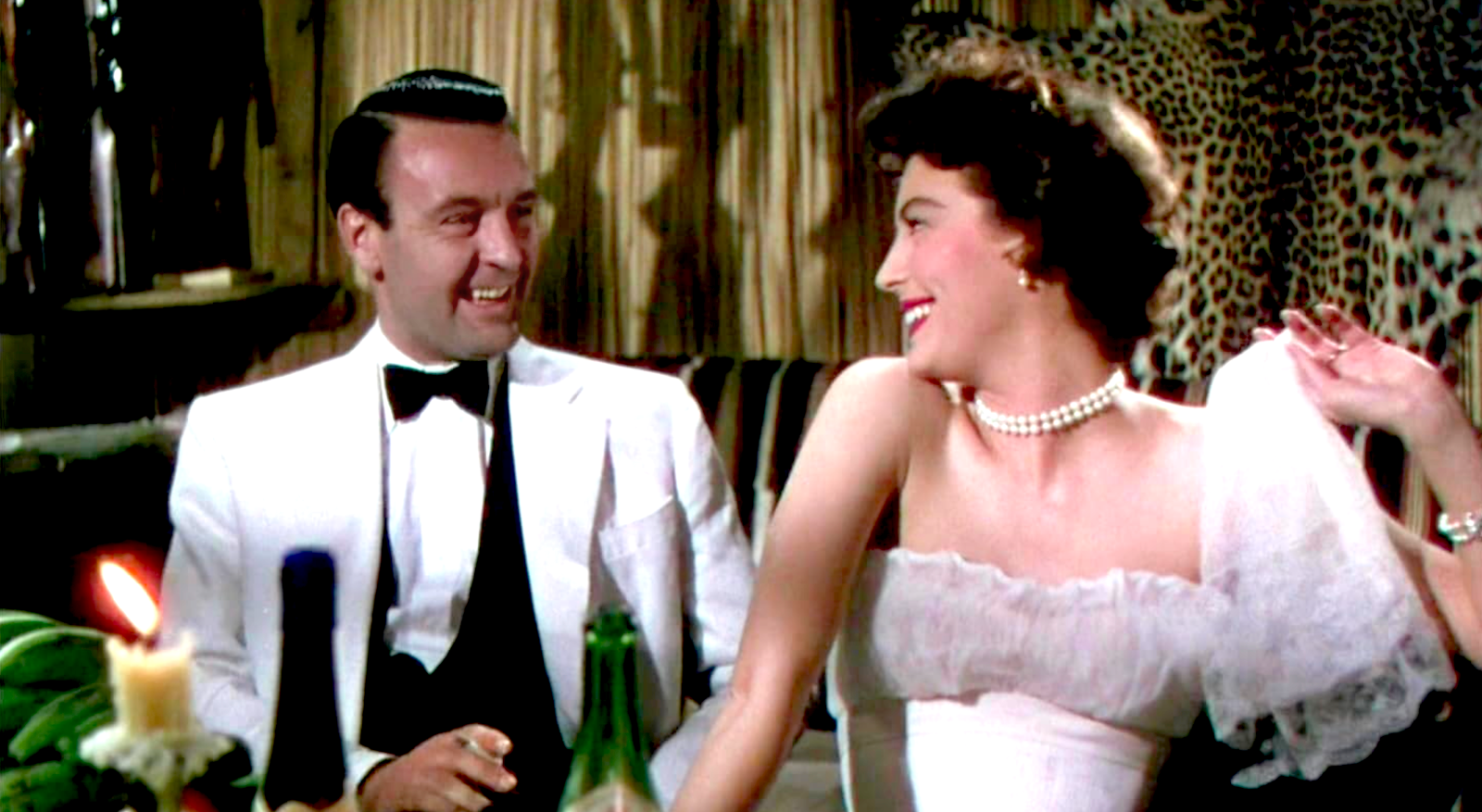
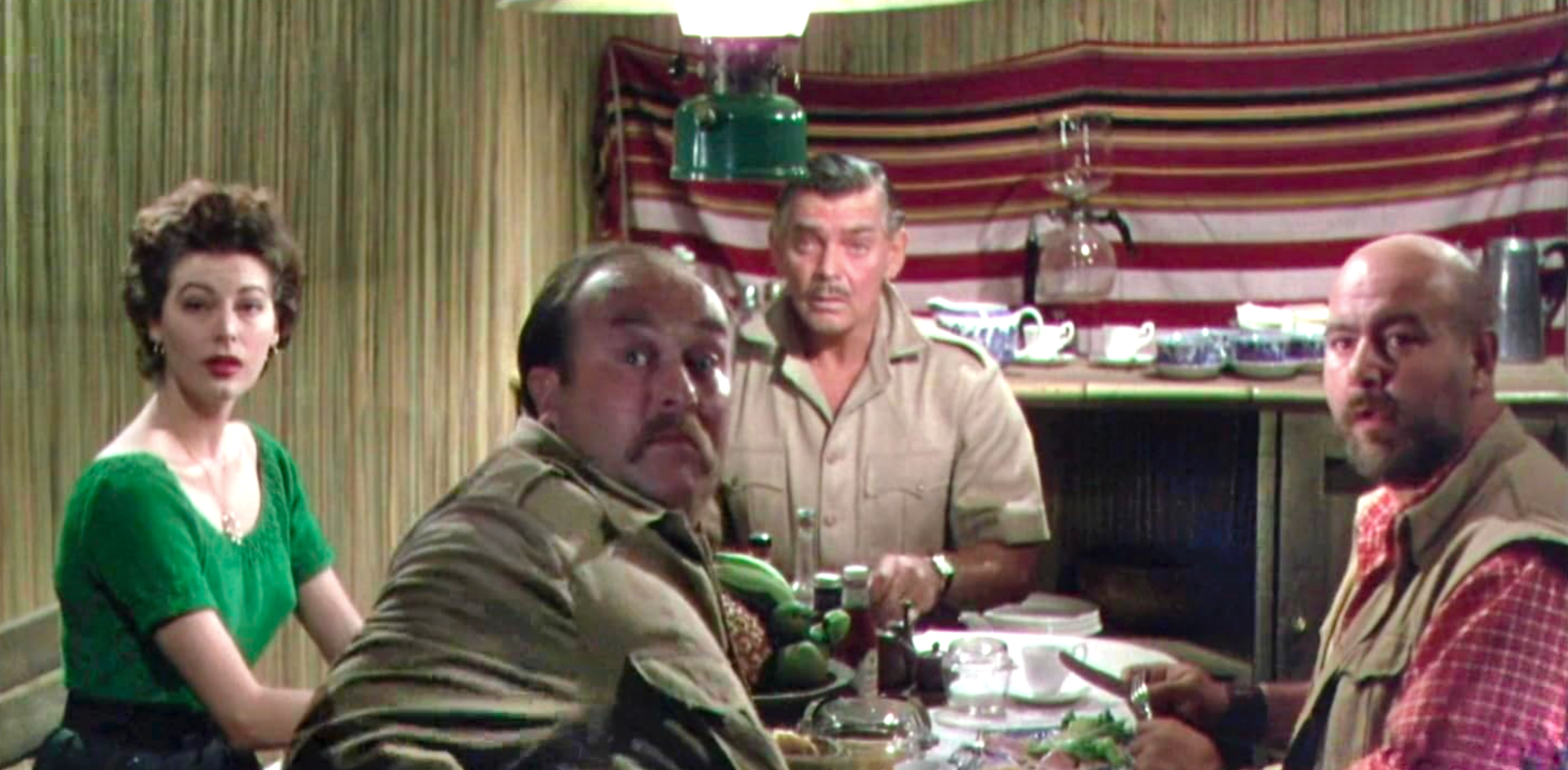
Mogambo pairs Ava opposite the blonde Grace Kelly, Hollywood’s freshest femme star here playing delicate and naïve. Her husband Donald is (only initially) portrayed as a slight to English males, simply because he doesn’t make a show of a tough exterior. He redeems himself trading quips with Eloise at the formal dinner table — he may be a gentleman, but he’s not sexless. That Donald trusts his wife should not automatically make him a fool.
The script and Ford respect Kelly’s Linda as well — her ‘sheltered’ reactions are not overplayed. She blushes at the wrong times and angrily opposes Victor’s treatment of Donald’s fever. But it’s the old story: when Gable comes on to Linda, it’s like shooting fish in a barrel. Linda all but goes into a heavy breathing fit whenever that assertive musk ox gets within scent range.
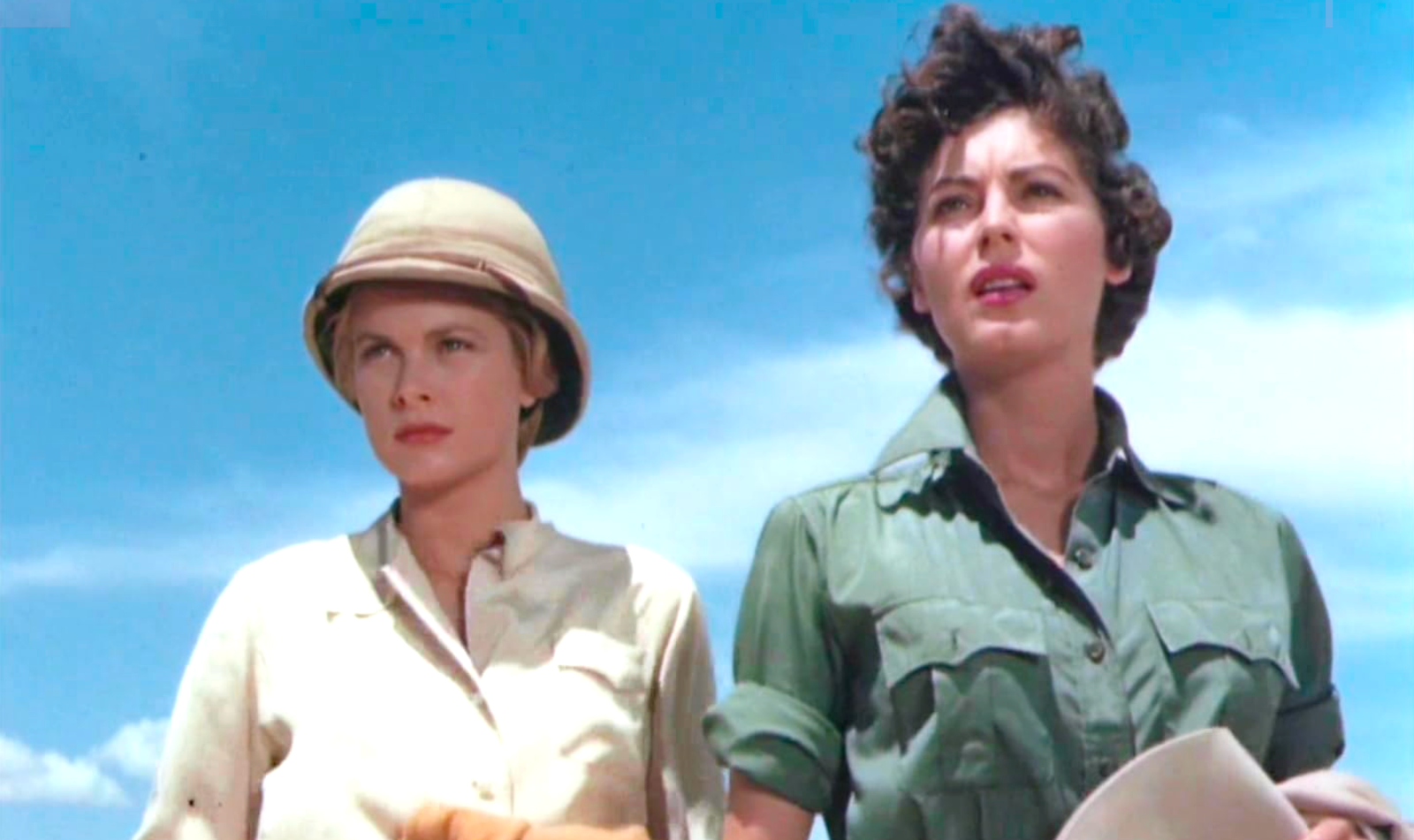
What we’ve got here is a Howard Hawks situation being filmed by John Ford: Hawks of course revisited the vocational premise of this picture ten years later and called it Hatari — more animal hunting, less sticky romantic stuff. Ford’s script borrows other things from the Hawks playbook as well. As noted by critic Robin Wood, the dialogue repeatedly compares the women to cats in heat, pacing to and fro in their cages. The already feline Ms. Gardner fits this pattern, and Grace Kelly receives some of the same treatment. She actually falls into a leopard-trap … a symbolic event not weighted with undue significance.
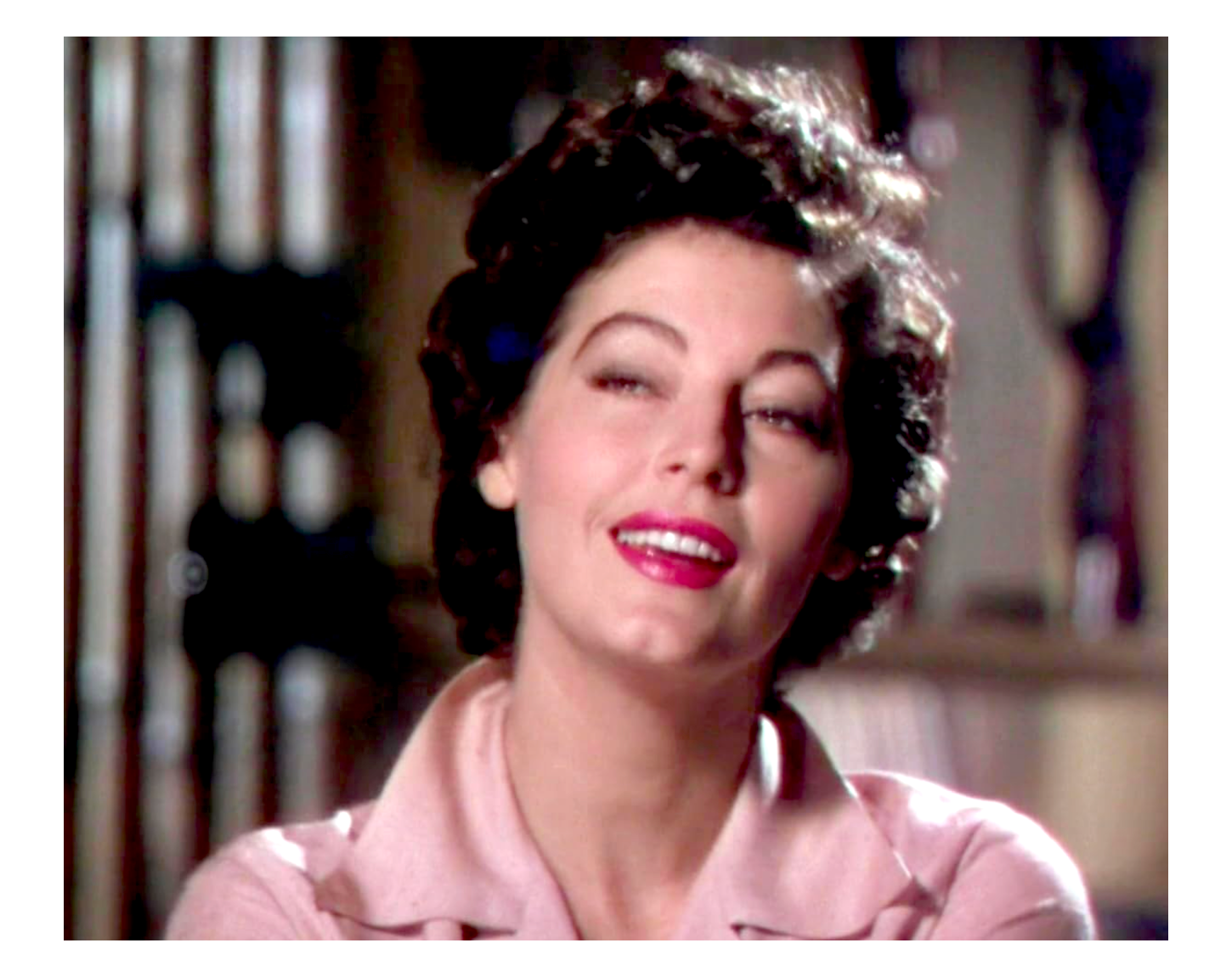
We’re convinced that John Ford shaped the characters. His way of honoring Ava’s Eloise is to make her a Catholic who goes to confession when the safari comes upon priest Dennis O’Dea out in the sticks. That’s a sure sign of a 100% endorsement from the director. Ford should have worked with more women he respected — it improved his game.
Mogambo works up a genuine interest in finding out who Gable will end up with. Grace Kelly’s Linda has certainly learned a thing or to about her own sexual reserves. The story doesn’t peg her as a too-shallow snob. As in another old Jean Harlow vehicle, China Seas, Gable’s Victor falls for Linda because he considers her ‘a lady.’ Without giving away the ending, just let’s just say that it’s satisfactory and free of fancy plot work. Nobody acts noble here. In the long run, people pursue their own self-interest. Victor and Eloise find a solution to a sticky situation. The relationship with the English safari clients can’t be salvaged, anyway.
Philip Stainton is a congenial animal wrangler and Eric Pohlman an uncouth one. The cast list practically ends after Laurence Naismith’s rum-soaked river rat, a real African Queen type. Four African tribes get on-screen credit. Modern PC types may reject the whole movie because Gable’s safari outfit captures animals for zoos and circuses. As in Hatari, that sure beats shooting them for trophies.
More Fordian grace notes: the locals natives greet Laurence Naismith’s boat singing, just like the islanders in John Ford’s South Seas movies. Ava Gardner is given a nice shot sitting on her luggage, a setup that clues me into another Ford pic … Dorothy Lamour or Elizabeth Allan in Donovan’s Reef? Or Anne Bancroft again?
In any case, the interactions between the three leads in this picture are choice. All three are charming. In terms of performance, this may be Ms. Gardner’s best picture.
Mogambo isn’t the kind of movie that a review needs to stretch to recommend — if the cast, director and location appeal, it’s pretty much guaranteed that you’ll like it. It’s an audience-pleaser from the word Go.
I think Clark remained Gable for the entirety of his career.
This one doesn’t work for me (Gable), but fine overview, Glenn.
I take it Clark Gable, Ava Gardner and Grace Kelly were the first members of their families to go to Africa, even if it was only to film a movie.