
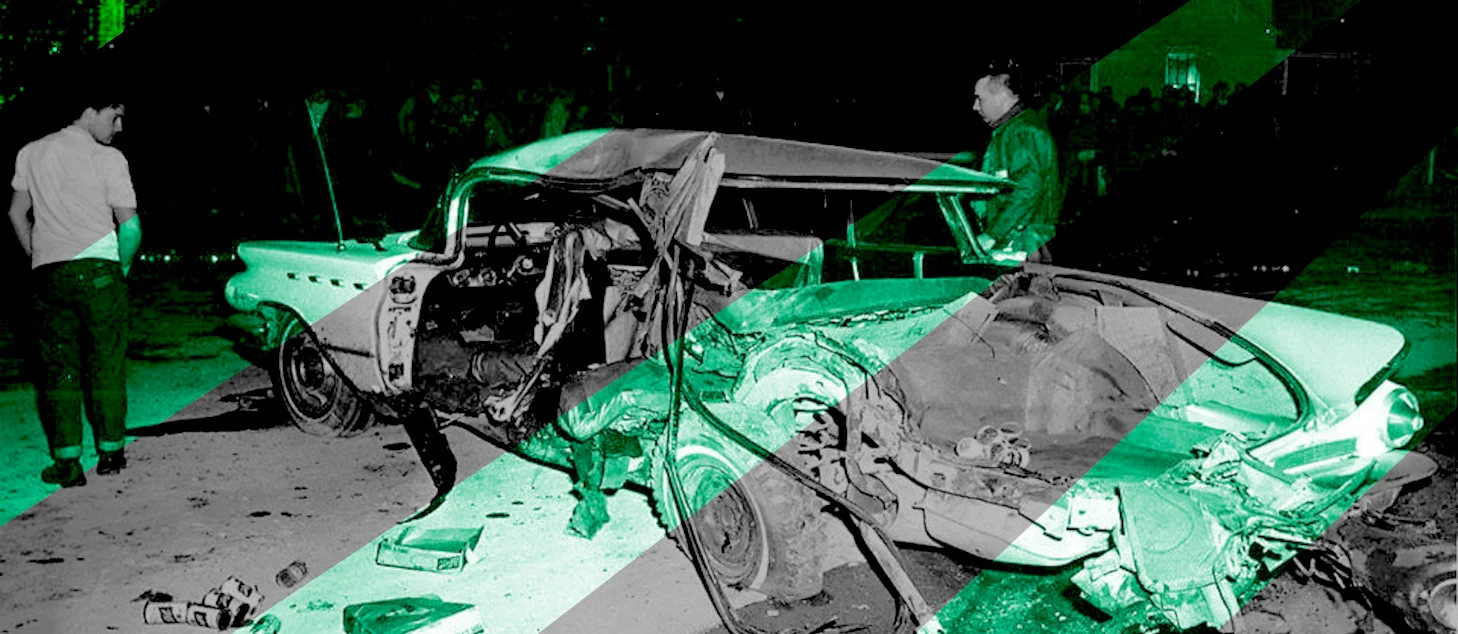
Two decades later, this daring documentary is still the only authoritative reportage on a near-taboo subject: the gross and gory graphic auto accident movies once shown to high schoolers with the idea of scaring them into driving more safely. Filmmaker Bret Wood has reconstructed and partly revised the docu, which tells the full story of the Ohio-based company that made them. It’s the whole, strange story, presented in a non-exploitative way. Included are several full ‘driving safety’ films, and excerpts of others.
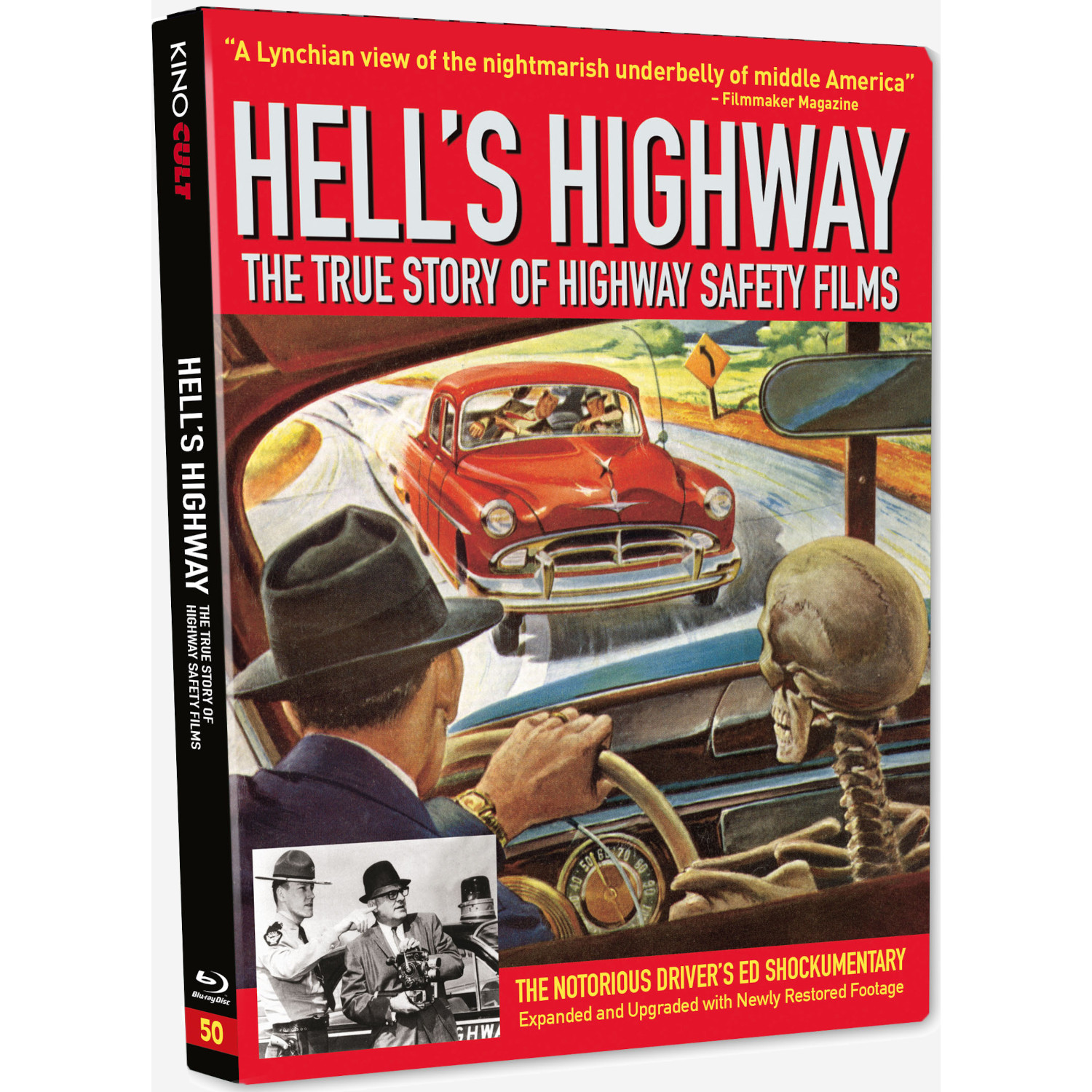
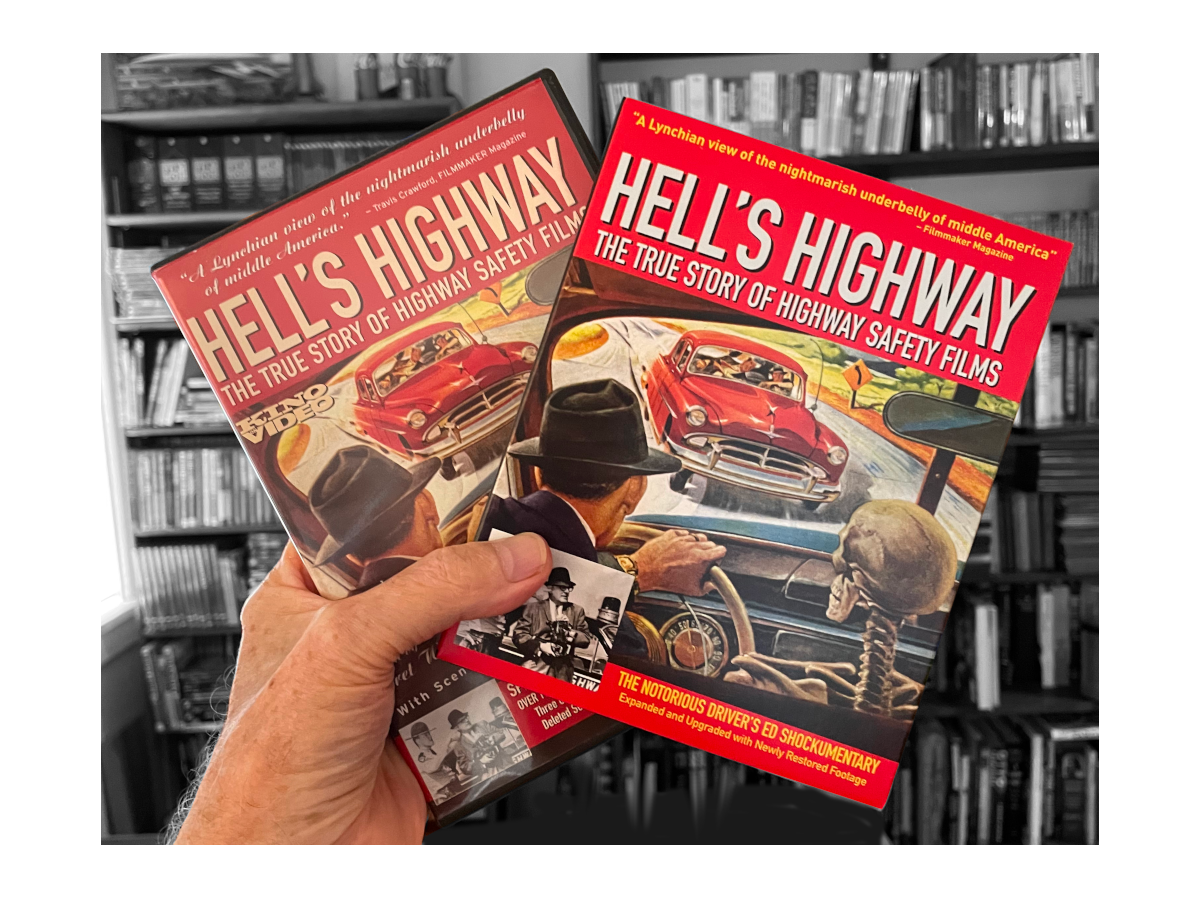
Hell’s Highway The True Story of Highway Safety Films
Blu-ray
Kino Cult
2003 / Color + B&W / 1:37 Academy / 92 min. / Street Date September 8, 2026 / Available from Kino Lorber / 39.95
Starring: John F. Butler, Earle J. Deems, Rick Prelinger, Mike Vraney.
Cinematography: Steve Anderson
Produced by Felicia Feaster, Tommy Gibbons, Bret Wood
Written, Directed and Edited by Bret Wood
Is this teenage nostalgia, or a high school nightmare?
Hell’s Highway, The True Story of Highway Safety Films is a thoughtful, watchable and worthwhile feature documentary about a genre of ‘instructional’ films of the 1950s, ’60s and ’70s, the notorious gore films that showed real auto fatalities close-up in blood-drenched horror.
The documentary raises the controversial issue of using scare tactics as a psychological tool for behavior modification. It doesn’t editorialize or advocate, but simply lets the makers of the films speak for themselves. The films stepped right over the taboo line that fictional films never crossed. Many people, given a choice, wouldn’t watch George Franju’s movie The Blood of Beasts, a slice of brutal truth about the normal operation of a slaughterhouse. These safety films depict real pain, mutilation, and gruesome death visiting ordinary people. They were endorsed by police authorities and force-screened to millions of American high schoolers.
The documentary approaches its sensational subject without itself becoming sleazy. It’s a serious work that shows the extreme end of the educational films examined in the short subject collection Driver’s Ed., The Educational Archives.
Let’s scare kids into
driving safely.
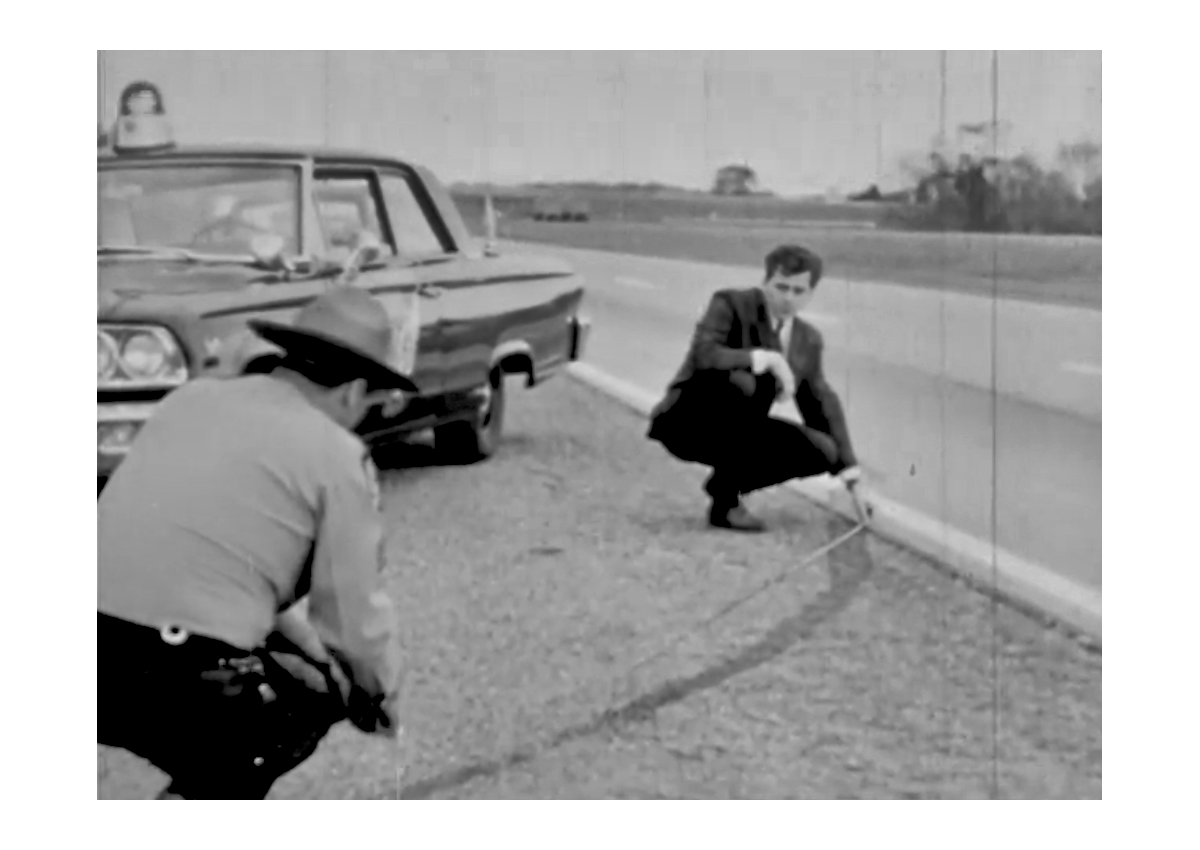
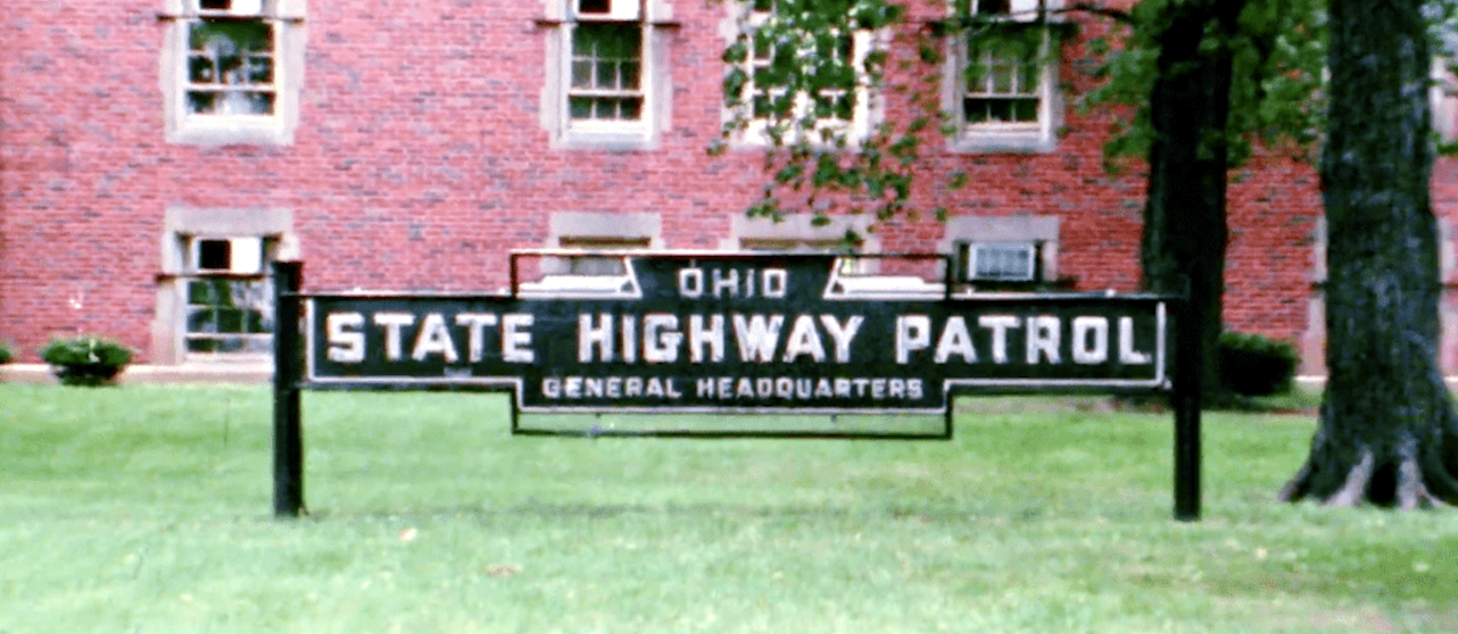
The docu charts the history of The Highway Safety Foundation, which began as a local effort in Ohio. Richard D. Wayman thought the public was too sheltered from the reality of traumatic car accidents, and also wanted to champion the cause of the Highway Patrolmen who had to deal with the consequences. Official cooperation was obtained, first to organize still photographers, and then 16mm color movies.
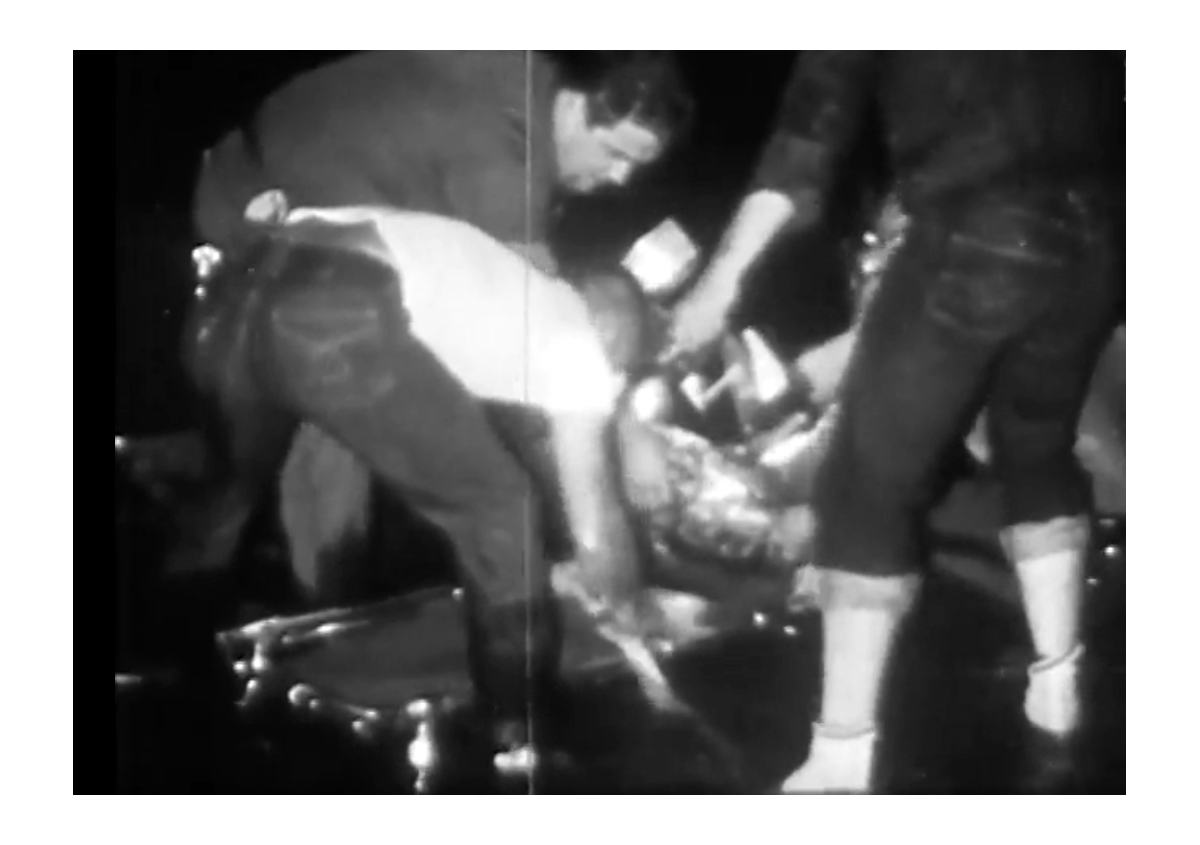
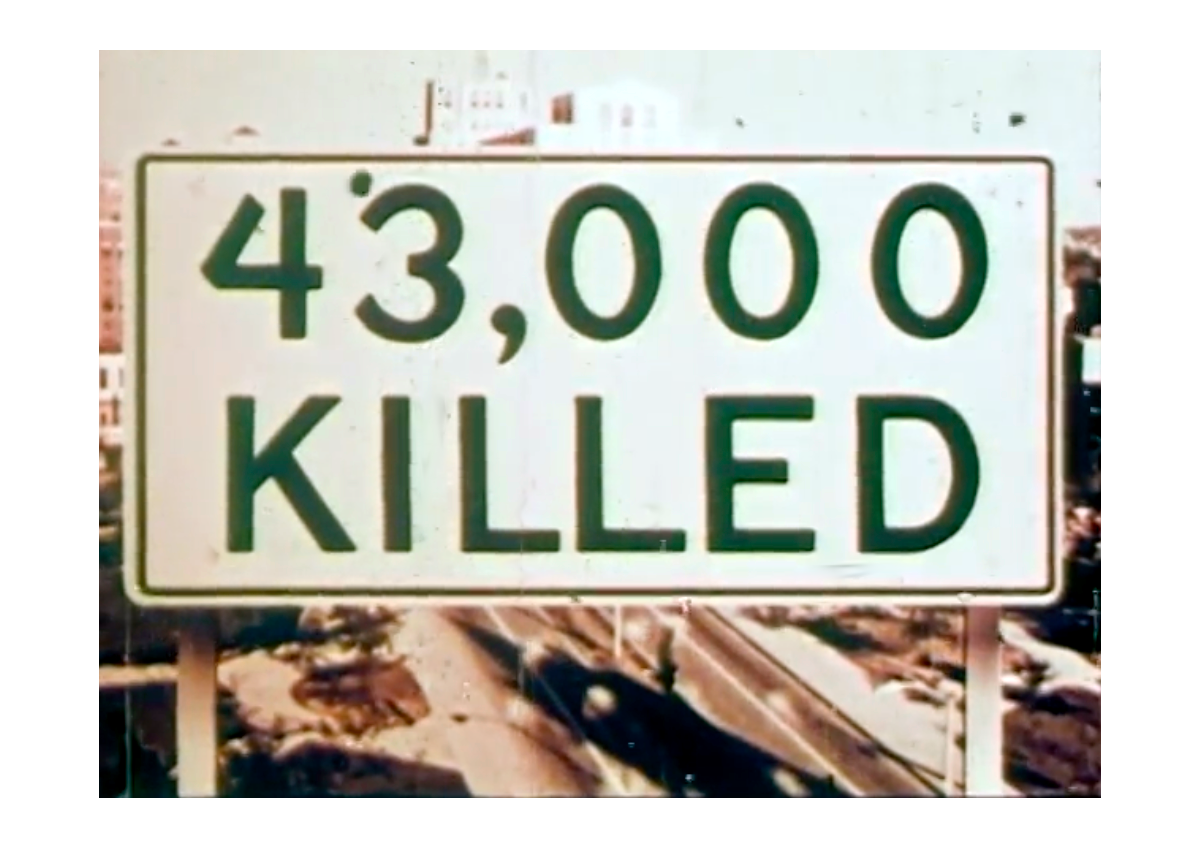
The resulting short subjects range from twenty to thirty minutes in length. The films’ key content is ghastly wreck footage shot before the living or dead victims could be removed from the vehicles. The cinematography is primitive yet effective; sober voiceovers spell out the traffic violations that led to ferocious scenes of mayhem. The twisted wrecks are wrapped around trees and poles. The passengers have been flung through windshields, mangled or burned alive.
Hell’s Highway features interviews with filmmakers Earle J. Deems and John R. Domer, along with policeman John Butler. Their testimony centers on Wayman of the Highway Safety Foundation, which until the 1970s had a monopoly on this kind of film. They state their case for the scare film as an honest way of confronting people with the result of drunken driving, speeding and simple inattention. All claim that the difficult-to-watch films had beneficial effects.
We also get hindsight opinions from a qualified collector historian, Rick Prelinger. He made a name for himself in the 1980s with his groundbreaking Voyager/Criterion laser disc compilations he called Ephemeral Films. Prelinger identifies highway safety films as an outgrowth of short subjects produced by the insurance companies underwriting heavy industry. The workplace safety films often had an underlying motive: to shift responsibility for injuries in unsafe factories from the bosses back to the employees themselves.
Wayman’s highway safety films must have been incredibly traumatic in complacent 1959, when such ugly things weren’t fit subject matter. They films use ominous music to good effect. There are obviously no actors, and the clumsiness of staged events only adds to the queasy vibe. Often worse than the in-your-face close-ups of shredded flesh and charred limbs are the audio snippets recorded at the scene. Men scream in pain, and one old lady shrieks like a banshee. It’s all there, including accidents where the body count climbs as wrecks are turned over … adults, children, babies. Hell’s Highway presents these taboo images just as they were in the original films. Unpleasant as they are, they’re a truthful record and therefore don’t carry an exploitative charge. We’re instead amazed by the stamina and kindness of the rescuers. Lawmen appear to be assisted by passing motorists.
Prelinger and contributing interviewee Mike Vraney reach no conclusive answers for the question of whether or not these films were an effective deterrent to bad driving. Prelinger argues that the films co-opted the conservative establishment view that teen dating is itself a prime cause of traffic accidents. This attitude is shown in Last Date, one of the included extra short subjects. Some of the voiceovers imply that the real guilt lies with the crime of being young and unsupervised, un-chaperoned.
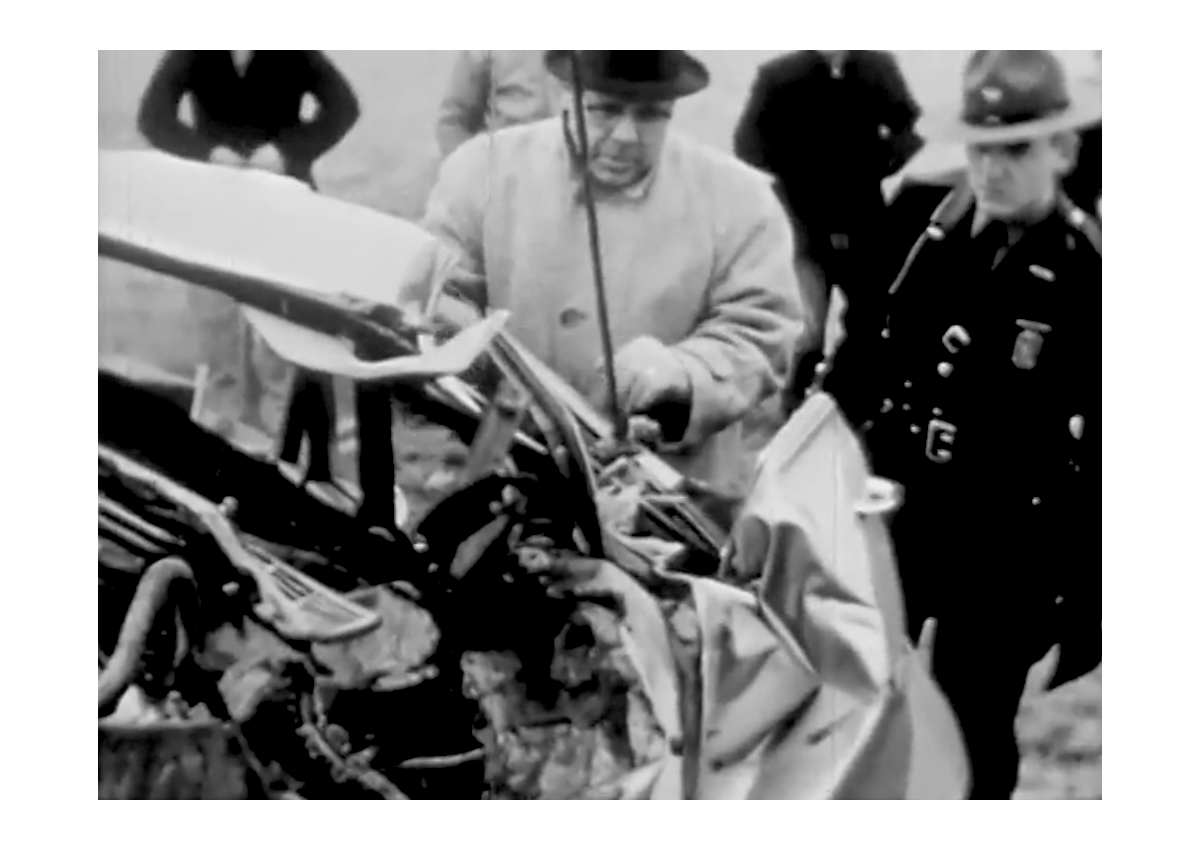
Every person can’t be a qualified pilot for a ton of hurtling metal.
Wayman and his scare documentarians were sincere do-gooders. The movies are tough to watch but not demeaning. Gore-hound film fans will find something different than they expect. Our only objection is the films’ insistence that every one of the accidents we see is the result of gross negligence. We also believe that breaking traffic laws is potentially murderous (by callous indifference) but the narrators rack up tragic mistakes as equally guilty.
The films talk about our well-engineered highways (very true) but also tout the cars of 1960, which were nowhere near as safe as they could be. Ralph Nader proved that the auto industry resisted safety improvements for decades. It wasn’t until the middle 1960s that our family began using seat belts. We see one Corvair ripped in two in a crash. My father got rid of his Corvair. when he discovered it was so rear-heavy, it would spin out in any hit-the-pedal locked-brake situation. With their passenger-conscious construction and the simple addition of safety belts, most modern cars are far safer.
Few others made this kind of film, as full police cooperation was obviously required. One competitor utilized red paint to touch-up still photos of corpses deemed insufficiently disturbing. In the 1970s, safety films began to make use of the industry’s new safety research, and their scientific test footage using crash dummies. [ Unsolicited personal note: I was taught to edit Mattel toy commercials by Pat Shields, the ‘auteur’ of the very effective non-gore safety short Safety Belt For Susie. ]
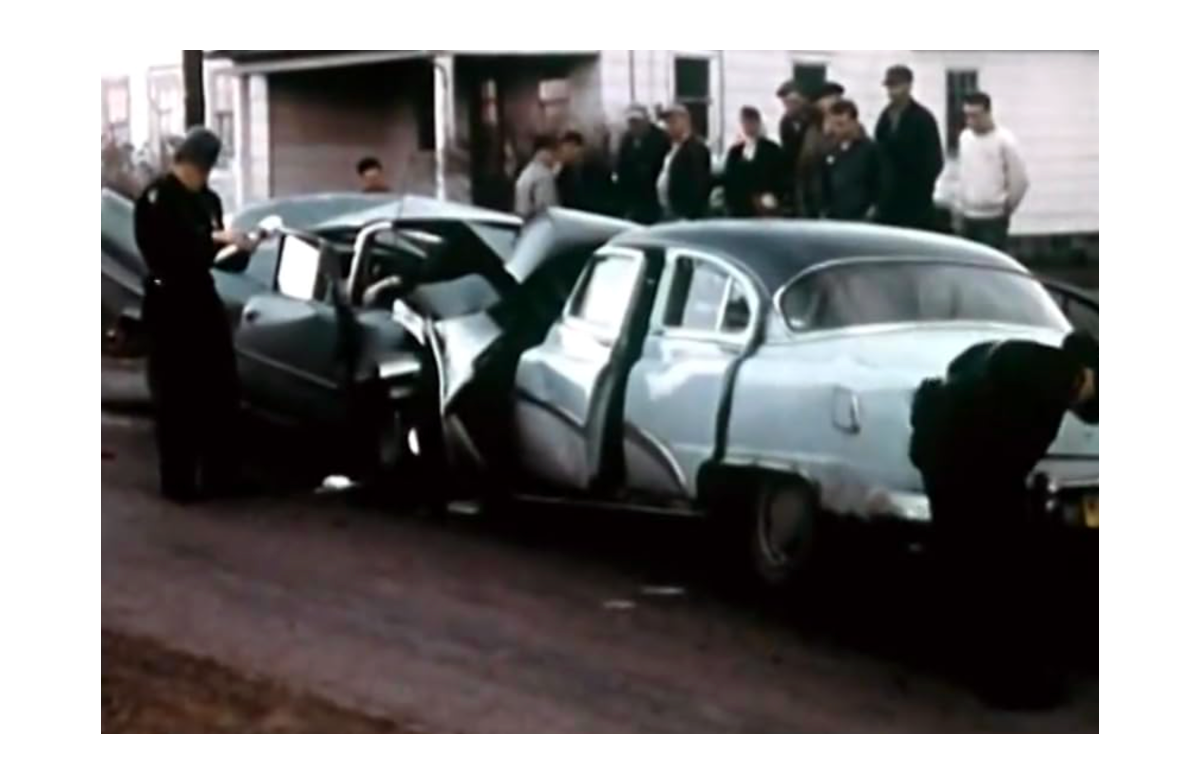
The auto carnage movie moguls
move to diversify.
The Highway Safety Foundation had already tried to branch out into other unorthodox subject matter. It lost its way, eventually
succumbing to financial disaster in a badly planned Telethon. The documentary leaves the highway for a few minutes to cover the company’s digression into films warning about homosexuals criminals. The police help the HSF set up a camera in a public restroom frequented by homosexual men. Hell’s Highway veers into different extreme content with a few seconds of surveillance footage showing off-topic snippets of real sex activity in the restroom.
The resulting footage ended up showing in local homes, where some of the participants were recognized. The activity opened a hornet’s nest of trouble for the company when the newspapers charged them with making porno films. One interviewee attests that exactly that did happen, separately from the company. The real crime would seem to be an invasion of privacy. The cops and a private company coto surveilled citizens with films that were then shown on an exclusive home screening circuit. Somebody ought to have gone to jail for that one.
Only a little less offensive is a section on the company’s foray into anti- Child Molesting films. Their key film clumsily dramatizes the kidnap and murder of two girls and ends with graphic photos of their bloodied corpses. We’re told that the film was screened for six-year-olds in a school situation. Two of these children, now adults, are on camera to testify to having been severely traumatized.
Few were worried about the rights of gays back at that time. Was the car crash fatality footage also a gross invasion of privacy? The idea that being a car crash victim entitles others to film and exhibit one’s dead body touches an ethical nerve. The concept of being displayed after death to suit somebody else’s agenda feels very wrong on multiple levels. We wonder about the feelings of the relatives of the corpses we see — many of the bodies are very recognizable. This grisly death stuff is a personal matter.
This is a staggering. important film.
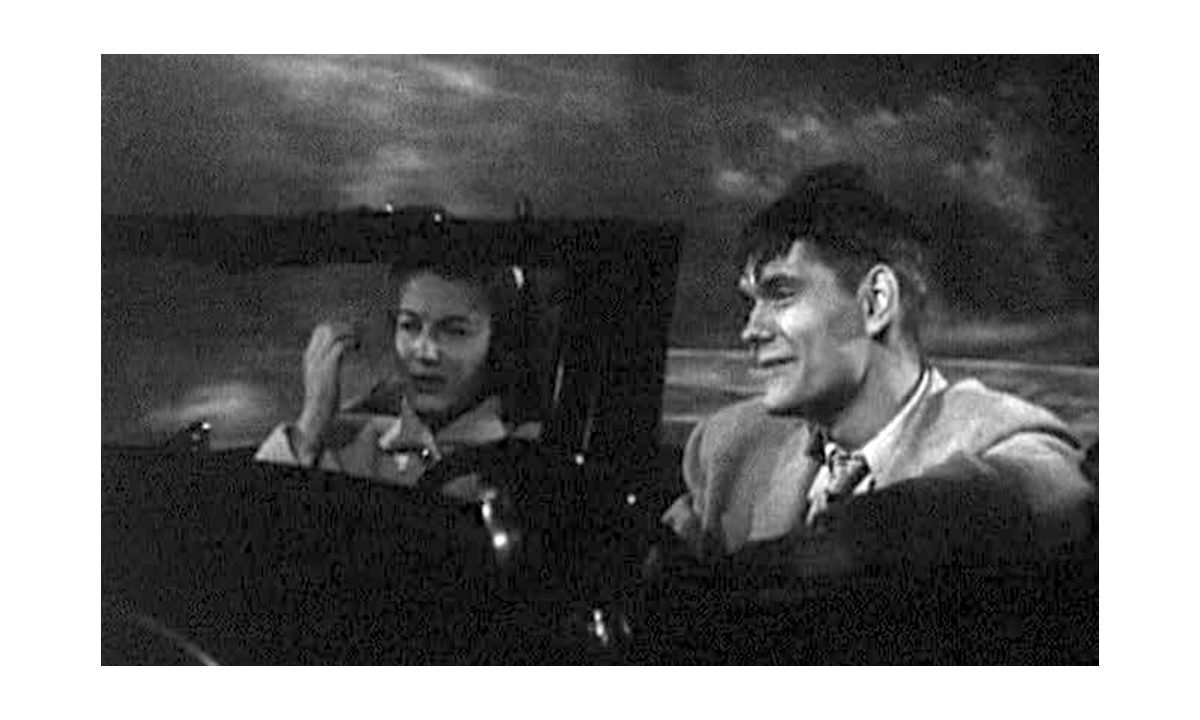
Certainly the most artistic of all Highway Safety Scare films has got to be Carl Th. Dreyer’s They Caught the Ferry (1948). It’s available on YouTube.
I recall them showing me a film where an obese woman is trapped in a car coughing up blood and they were showing it to me in elementary school. Is that one in here?
My mom recalls the anti-drug movies shown in schools. As she put it, they made drugs look fun.