


Last year, Arrow Video gave us an unexpected 4K disc of Abel Ferrara’s interesting Ms. 45. Now Vinegar Syndrome rolls out an ultra-fancy Ultra HD limited edition of Ferrara’s sojourn into studio filmmaking, 1993’s Body Snatchers. As official screen adaptation #3, this is yet another version that goes its own way.
The 1956 Don Siegel film of Invasion of the Body Snatchers remains a classic of modern paranoia. That version sidestepped the physical details of a biological invasion to concentrate on the horror of possession. The concept of aliens that can duplicate our bodies touches on disturbing philosophical problems. It’s not like humanity has come to any consensus about what constitutes personal identity. Is there some essence that makes us who we are, or are we just an accident of biology? Do we have souls? People were asking these questions 3,000 years ago. What is consciousness? Are we in control of our minds, or are we ‘possessed’ by cultural conditioning? Can a person become an involuntary slave to outside ideas?
By keeping the mechanics vague and the sentiments simple — “I want to love and be loved” — that first Don Siegel version invites numerous interpretations. It serves as a political Rorschach Test, as different viewers see the film’s menace as a cover for any number of ‘-isms’ from the editorial pages. It’s one of the top science fiction films of the 1950s because it transcends the usual limits of the genre — it opens minds to difficult abstract ideas.
We’re told that author Jack Finney saw the need to revise his original book with a happy ending. The makers of that first version thought the concept was too dark for the movie audience, and revised their show to suggest that the invasion might not spread much further than Santa Mira. But by the 1970s nihilistic horror was firmly established. Many stories chose bleak endings — the vampires win, the zombies prevail. The next adaptation would be more pessimistic.
W.D. Richter and Philip Kaufman collaborated on a 1978 update, also titled Invasion of the Body Snatchers. Their biological conspiracy-invasion takes place in a big city instead of a small town. New-age designer lifestyles and self-realization trends make San Francisco especially vulnerable to takeover. Jaded city folk are too fixated on their personal interests to catch a trend before it peaks, even if the trend is a pernicious bio-invasion. In keeping with commercial necessity, the last act stops revealing new ideas and settles for an explosive action-horror climax.

Enter Abel Ferrara
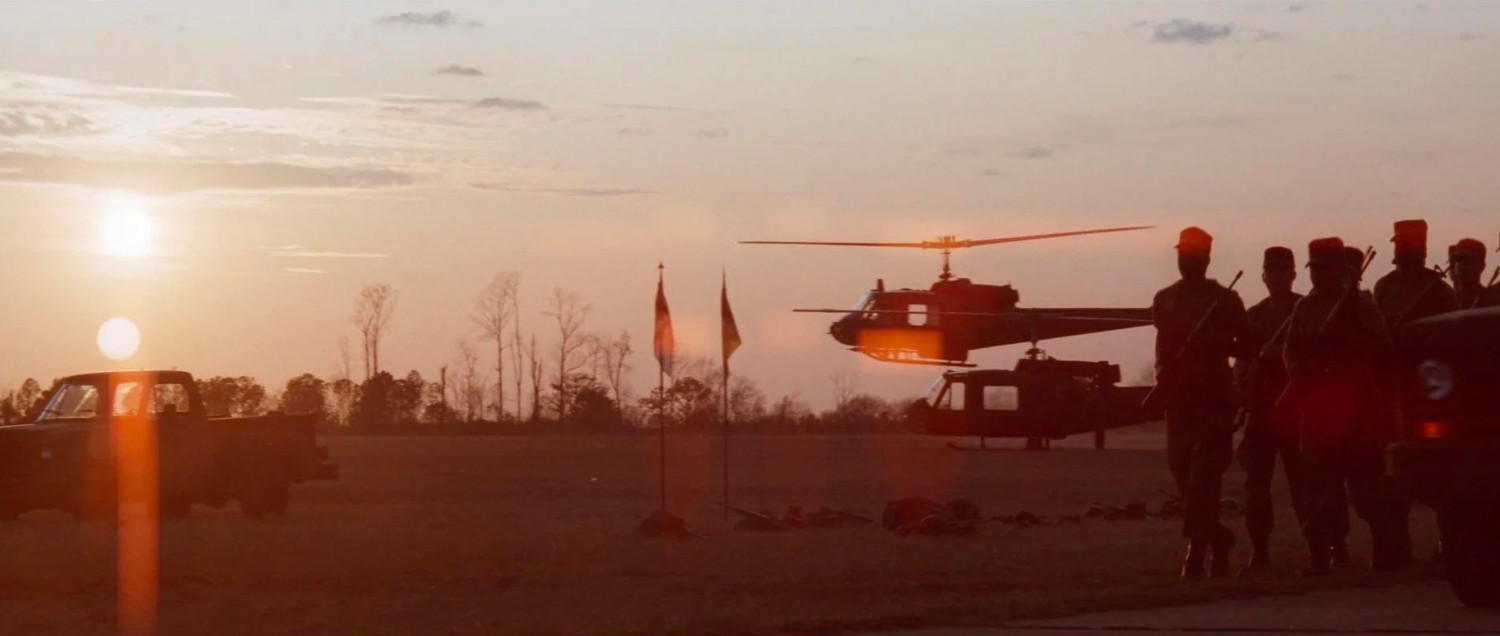
The next adaptation would arrive fifteen years later, in 1993. Titled simply Body Snatchers, the second remake is sort of the Never Say Never Again of science fiction: the producers decided that it would be good business to make it again, the same only different. Unlike the botched remake of the Sci-fi classic Invaders from Mars, this show retains its dignity. Noted genre names Larry Cohen and Stuart Gordon are listed in the writing credits. Abel Ferrara directs an able cast. The main change that everybody notices, yet isn’t really explored to any specific purpose, is the setting: instead of a sleepy small town or a big city, this invasion begins on a U.S. Army base.
E.P.A. inspector Steve Malone (Terry Kinney) is doing a survey of Army installations, which means that his wife Carol (Meg Tilly), young son Andy (Reilly Murphy) and teenage daughter Marti (Gabrielle Anwar) must accompany him from base to base. Arriving at the establishment run by General Platt (R. Lee Ermey), the Malones encounter what we recognize as telltale symptoms of mass bodysnatching from outer space: an irrational, panicked soldier; a Major in the medical corps (Forest Whitaker) who expresses a nervous anxiety that something very wrong is happening.
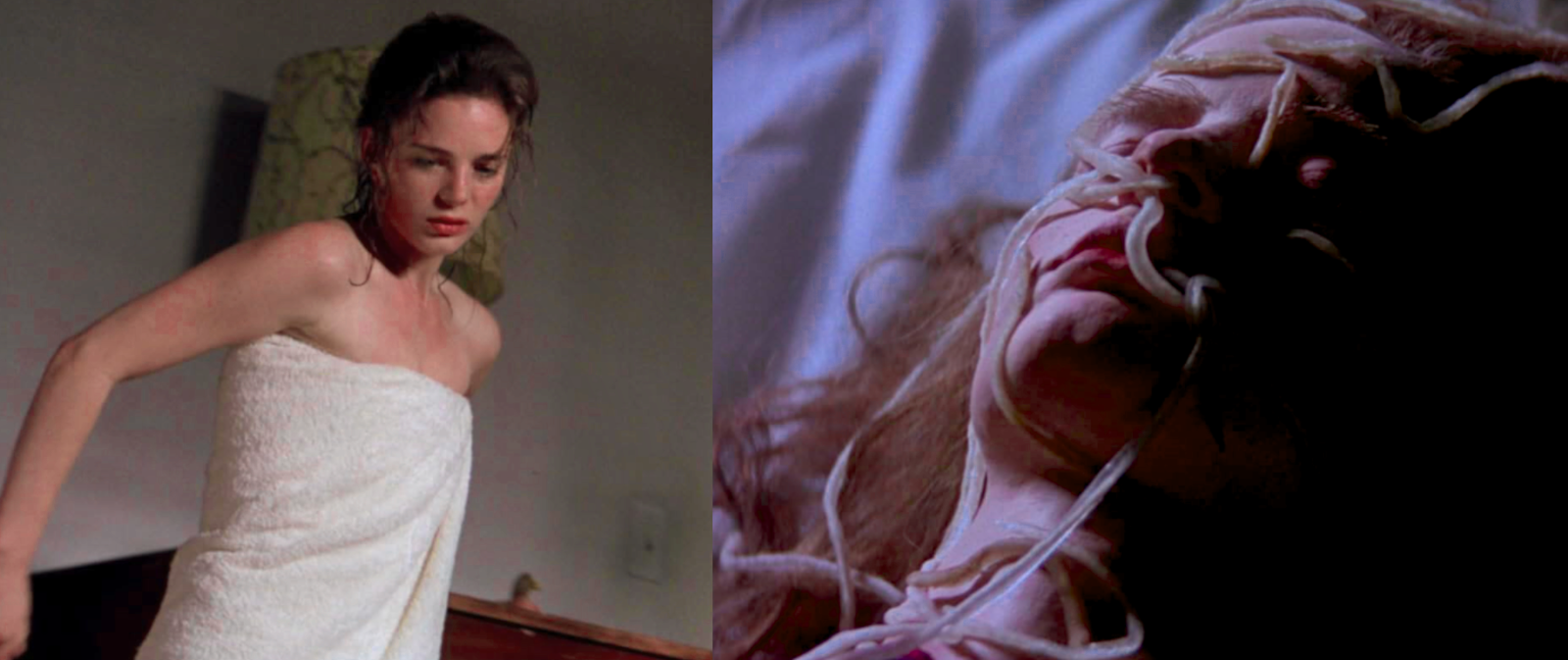
Mari makes a friendly connection with the General’s spirited daughter Jenn (Christine Elise), and with Tim Young (Billy Wirth), a gentlemanly helicopter pilot. The regimentation of Army society makes the mass duplication of the thousands of soldiers and civilian personnel on the base practically an overnight process. The only limiting facor is how quickly alien pods can be grown in a nearby marsh. With hardly a chance to react, the Malone family is taken over, starting with poor Carol. This time, the physiological mechanics are explicitly shown… and they’re not for the squeamish.
🎶 “Pod People got No Reason, Pod People got No reason! … 🎶
Through no fault of their own the individual Malone family members fall victim to the impersonal alien takeover. This third go-round for the Jack Finney story doesn’t try to generate ‘what comes next’ suspense, as the Cinema of Paranoia tenets are now too well known. Anyone acting strange is probably an alien duplicate. If contact is lost with a loved one, the next time we see them they will be a duplicate, and so forth. The screenplay repeats key dialogue bits from the first film, which may have been in the book as well: ‘it is futile to resist us;’ ‘your humanity is a burden.’
A fresh notion is introduced in Andy’s preschool class, when all of his Pod classmates produce identical finger-painting artwork. Andy is righteously freaked out. But the idea is counterproductive to the overall story idea: why are the preschool kids being taught to think and act the same? Aren’t Pod people like that already? It doesn’t make sense for the Pod People, whether kids or adults, to be telepathically connected, like the aliens of Village of the Damned. If they were, they’d know automatically who is or isn’t a Pod.
We hear few if any philosophical discussions of the kind put forward in the first two films. Overt message statements were common in the 1950s, and the 1978 remake gave us Leonard Nimoy as a self-help guru prone to theorizing about abstract notions. For him, the surrender to alien duplication was merely another lifestyle option to be considered — that’s part of the quirky charm of the Kaufman version.
The main disappointment is that there is nothing particularly significant in choosing an Army base as the alien invasion’s Port of Entry. If the writers seek to criticize the military by likening it to Pod culture, it’s a really lame analogy. The only benefit of the Army base setting is that scurrilous activities are easily hidden behind security fences: toxic waste dumping, or the breeding of alien invaders. The Ferrara version’s main positive is that sticks fairly close to one family with children, as in the original Invaders from Mars. When little Andy Malone discovers that ‘something’s wrong with Mom,’ the show has us in its pocket.

The military context does make us think of the great Nigel Kneale’s Quatermass 2, which cleverly suggested that the bureaucratic reorganization of England’s postwar trend toward socialism could provide a ready-made beachhead for alien invaders. Perhaps Kneale was against all those social programs like The National Health? Body Snatchers does not equate military life with the Pod existence, at least not to this viewer.
The jarring ideas introduced in the ’56’ version were such a bullet to the brain, we didn’t care that its pod mechanics didn’t add up.
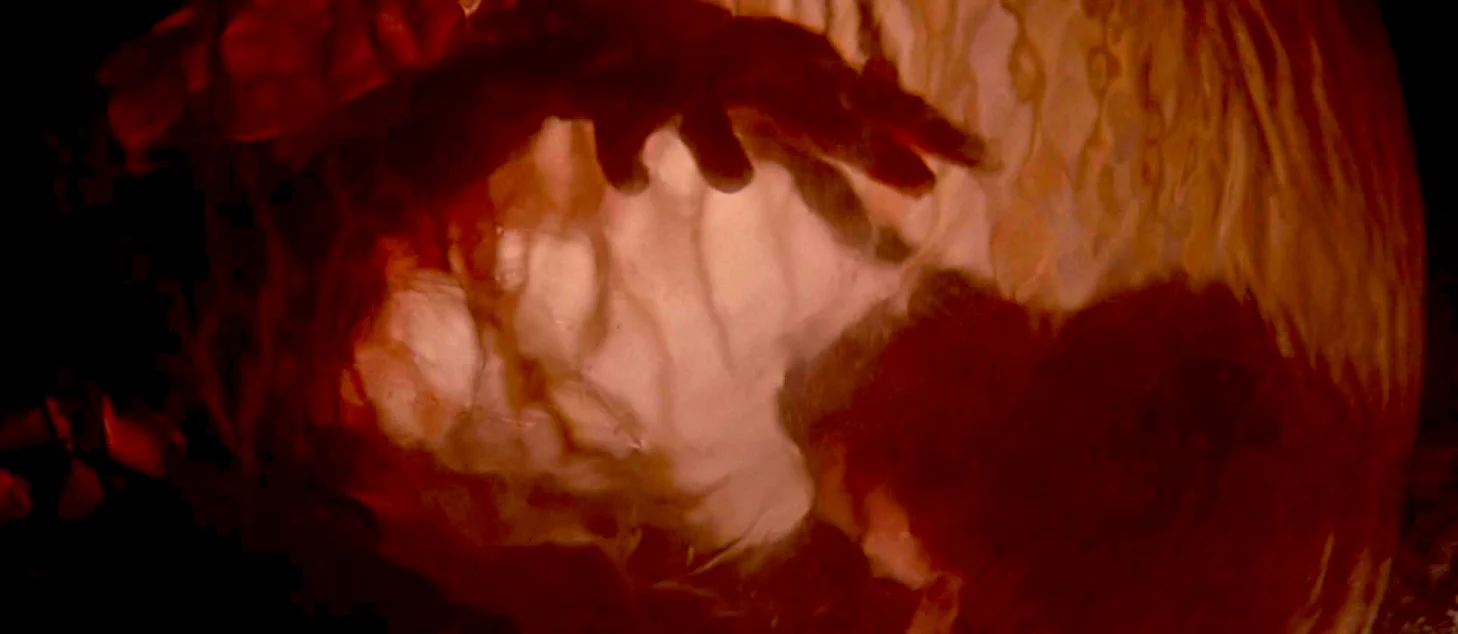
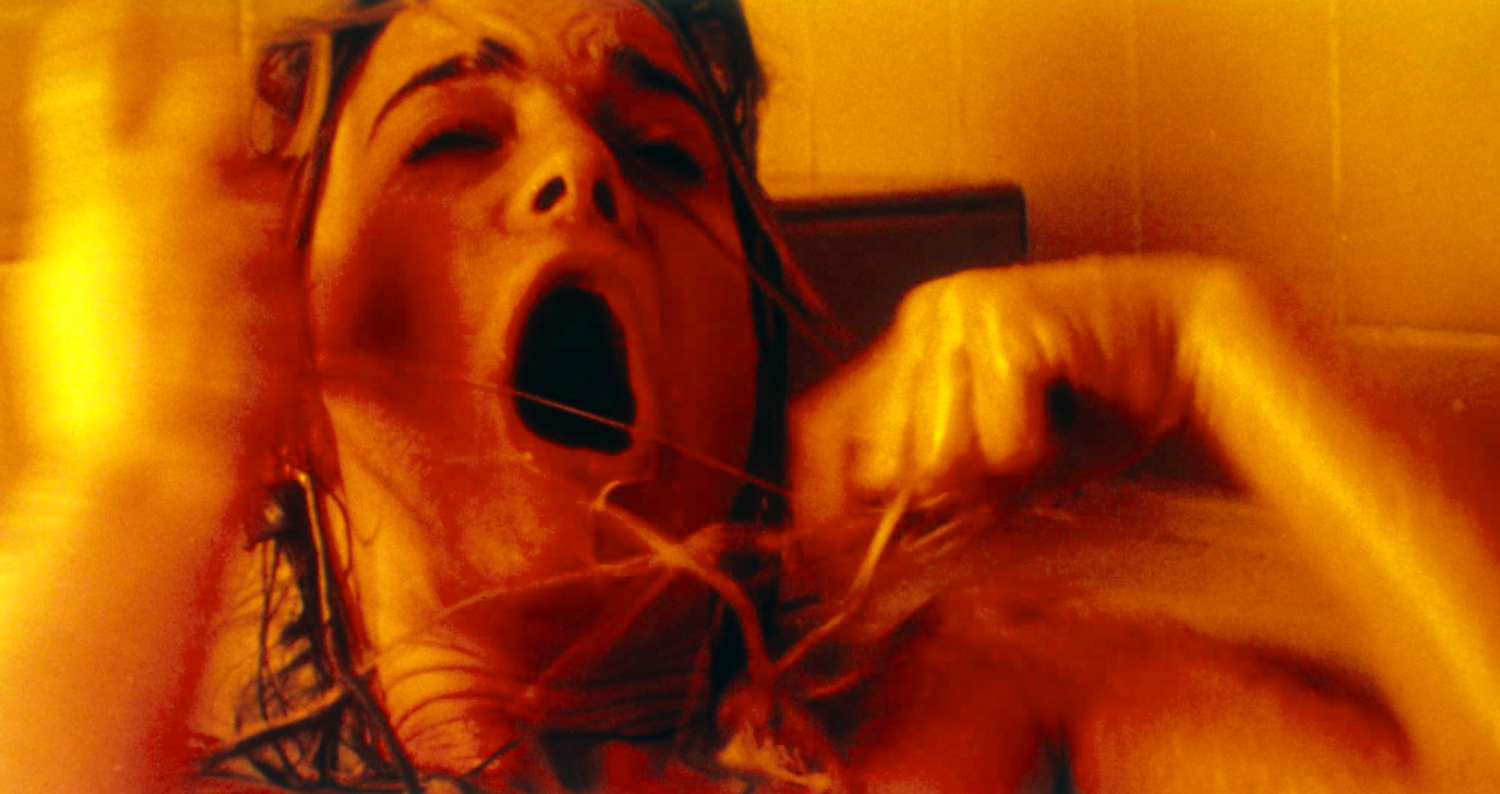
Made more explicit than in previous versions is the physical duplication process, which we see in action several times. Abel Ferrara’s Pods are nasty shapeless sacs, from which ooze dozens of tendrils that look like bean sprouts. They invade the body through one’s nose and mouth; victims are nasally raped by slimy squid tentacles. We see the replacement body forming at lightning speed. Some key Life Force Identity element must be the last thing transferred, for if the tendril connection is broken in mid-duplication, the unfinished new body crumples into a disgusting mess. It then turns to dust, just like Chris Lee at high noon. The physical effects to accomplish this are simple and impressive.
Body Snatchers feels like a favorite bedtime story told and told again with variations. Repeated from the shock ending of the earlier sequel is Donald Sutherland’s point-and-scream schtick, which alerts the Pod Hive that an unduplicated human has been detected. The producer must have decided that ‘the fans’ would not be happy without this detail repeated. I didn’t mind Gabrielle Anwar’s voiceover narration… except that it makes us ask, from what future point of stability is Marti narrating?
Ferrara’s direction is quite good, whether handling the effects sequences or directing his actors. As none are stars-that-must-prevail, we fear from the start that things will not end well. Frightened soldiers, concerned officers, hipster friends, beloved family members — all are replaced by the alien duplicates. Ferrara plays the story straight, and doesn’t use much screen time to bring us closer to the characters. Steve and Carol play a little matrimonial footsie in bed, Marti and her new pilot friend have a nice little exchange that leads to a kiss, and that’s about it.
Ferrara doesn’t make this ‘Invasion of the Driller Killers.’
Body Snatchers doesn’t go overboard with exploitative content. Its explosive climax is properly motivated. The emphasis on human bodies in transformation validates the nude scenes with Gabrielle Anwar and Meg Tilly’s body double. Don’t worry mother, she was naked but it was only because she was growing into a duplicate of herself, you know, an asexual biological clone. It didn’t inspire a single impure thought.

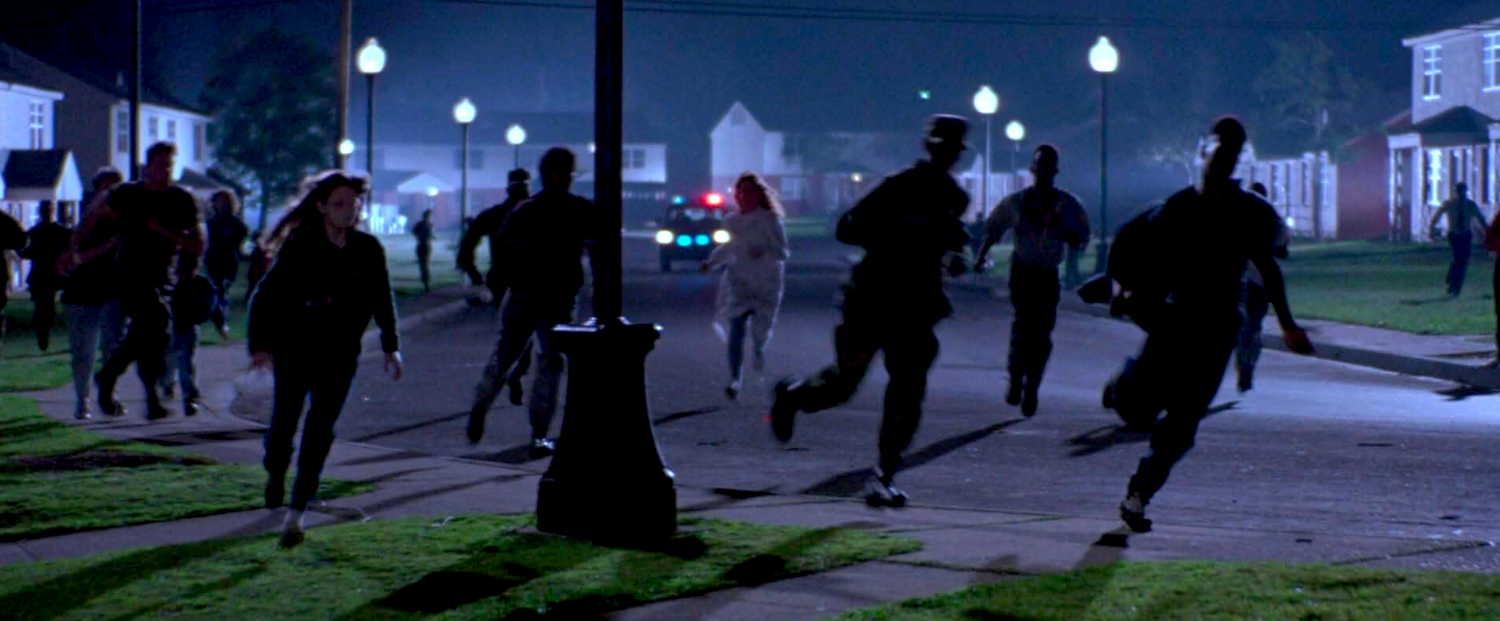
The takeover of the Army base is so swift that we doubt than anything could stop the invasion. As noted near the conclusion of Carpenter’s The Thing, when all the humans are possessed, the aliens will no longer need to ‘pretend’ to be human. Will this copycat alien life form continue to mimic humanity, only with less emotionalism? We don’t know if they procreate like we do, or if they are immortal, or if they will just die out. They will no longer need armies, that’s for sure. As the Pods claim to not have basic human ambitions or desires, we have no idea what they will be up to, post-victory.
These Vegetable People now have the bodies of humans and live in our world. Will they learn to enjoy being in human form? This Body Snatchers concept is more than ready to proceed to the next level. No more re-do’s, please. Next time out let’s see a conceptual remake.
I guess it’s worth mentioning an unofficial remake, 1962’s The Day Mars Invaded Earth. It depicts the duplication of a single family without an icky biological in-between stage. Yet another official Jack Finney adaptation arrived in 2007, The Invasion starring Nicole Kidman. It has its grace notes but also doesn’t advance the basic concept to the next level. I propose a special triple-bill screening of the movies The Invasion, Of The and Body Snatchers. But that can’t happen until somebody makes a movie called ‘Of The’.

I saw this in the theater when it was released and never liked it to the point where I thought something bad must have happened behind the scenes for it to turn out like this. I have no idea if I was right or if there was some story about what happened during the making of the film.
In the original novel it’s revealed that a pod person has a lifespan of five years, so within a decade the earth would be devoid of human life.
This was my first time viewing Body Snatchers, I was tempted to stream because of Glenn’s mention of Warner Archive. I’m a fan (equally) of the previous two Body Snatcher movies. Body Snatchers has some good ideas & special effects however something went wrong in either the direction or editing that makes the movie disjointed. There was also over use of the military personnel, mainly running around for no reason, smaller crowds of familiar faces may have worked better. I wonder if anyone will be brave enough to tackle Body Snatcher again, cheers!