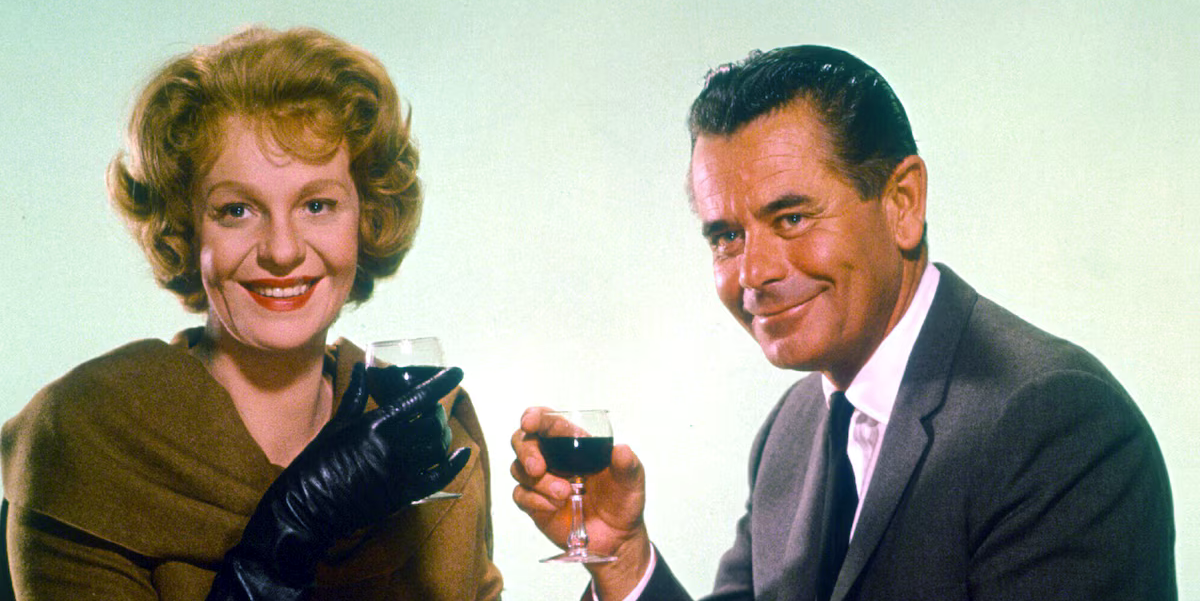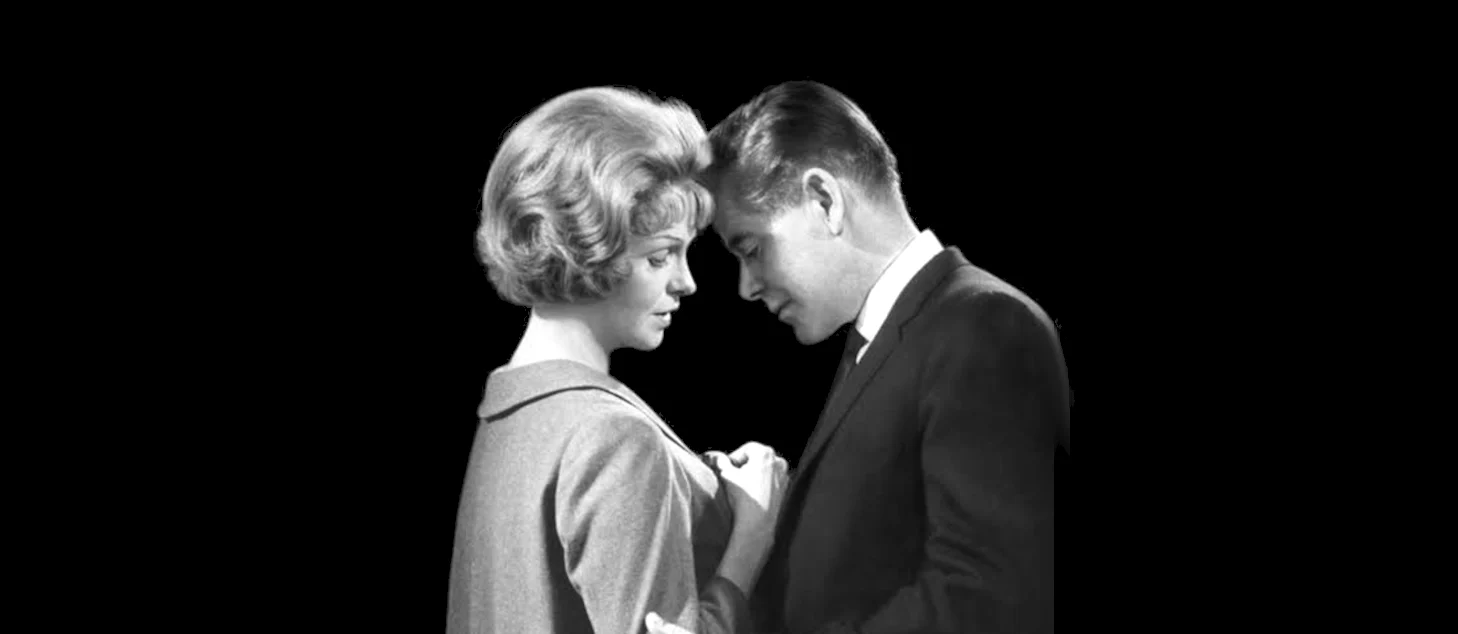
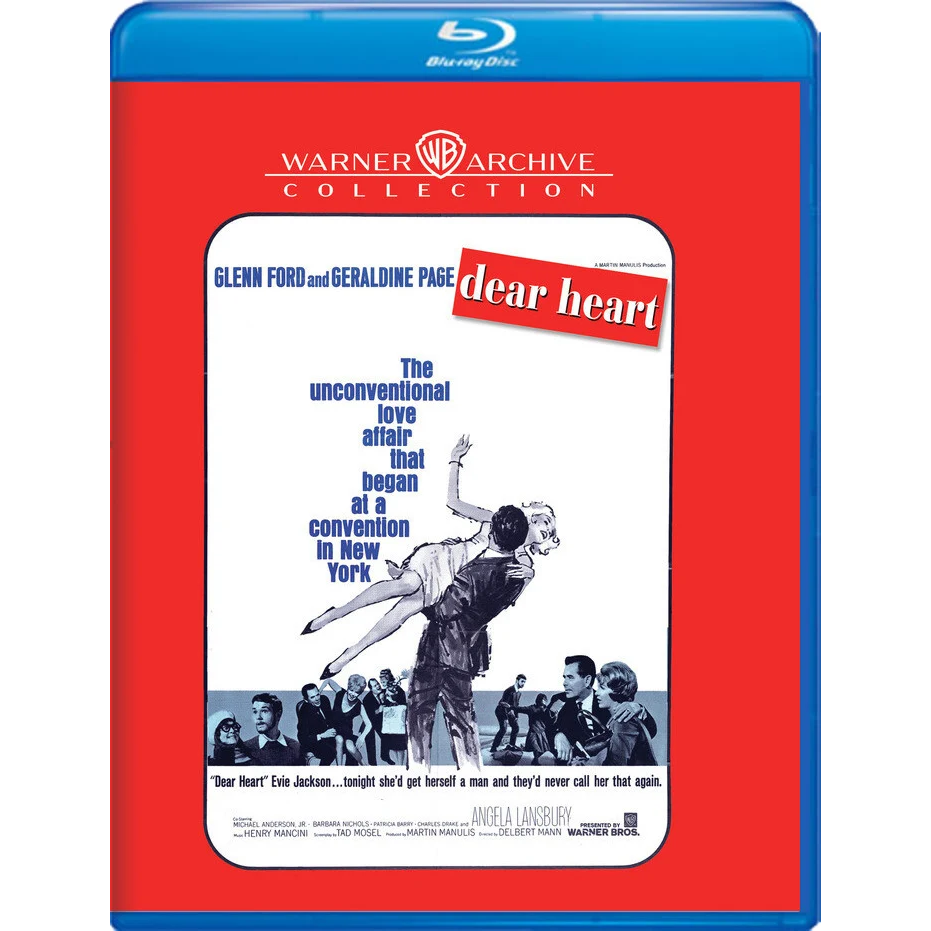

 We listened to The Beatles in 1964, honest, and we even had a couple of their records. But there was an entire spectrum of TV and radio entertainment to take in back then, and we weren’t always so discriminating. Thanks to the first Warner Archive DVD, we found this gentle romance and took to its positive, sane attitude about people and relationships. Those things don’t date.
A 1964 the Henry Mancini song ‘Dear Heart’ played on every radio station seemingly five times a day, and for years lingered as a constant Muzak® hit for elevators. I was the owner of a cover version on an album by the Baja Marimba Band…
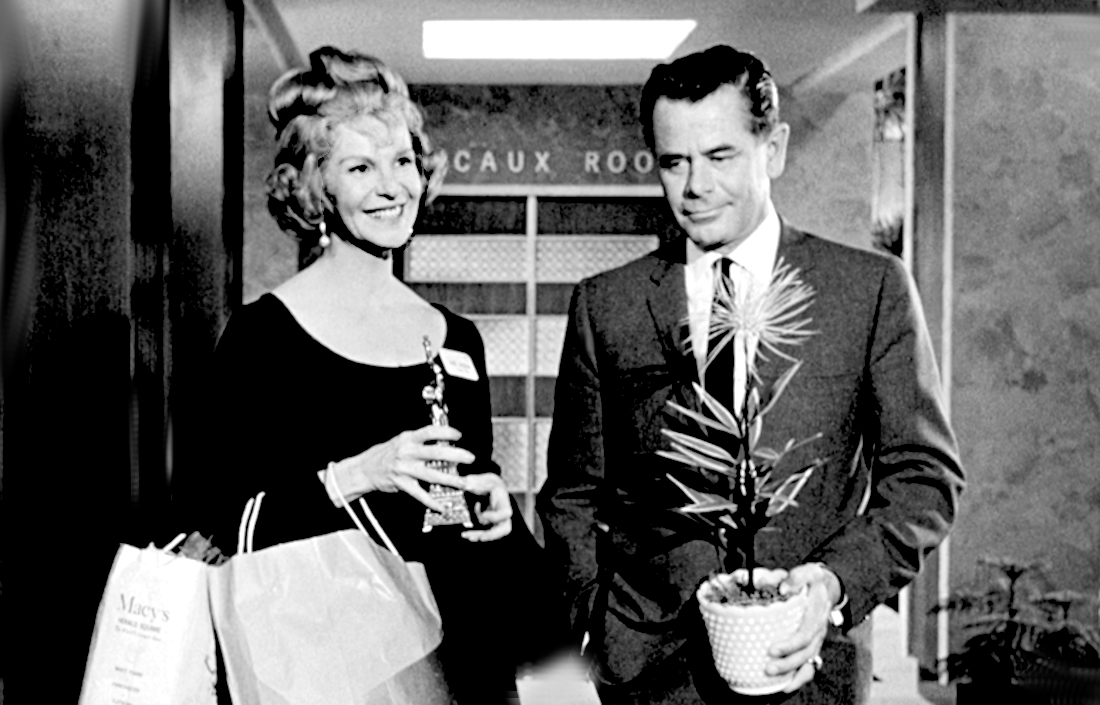
The song ‘Dear Heart’ goes with Dear Heart, a delightful light romance that now plays like a gift. The consistently charismatic Glenn Ford is simply great here, projecting his basic decency and sincerity. Geraldine Page didn’t make enough films to settle on a single screen image, but what she does for the character of Evie Jackson, postmaster on vacation, now looks as challenging as playing a crazy mother (You’re a Big Boy Now) or a scattered, selfish movie star (Sweet Bird of Youth).
The story is a screen original by Tad Mosel, a writer from TV’s Golden Age, just a few years previous. The director is Delbert Mann, who is much better than the reputation given him by auteur critics looking for personal themes. Although most of Dear Heart is resolutely old-fashioned, it’s honest and intelligent, too. That combination is not all that common.
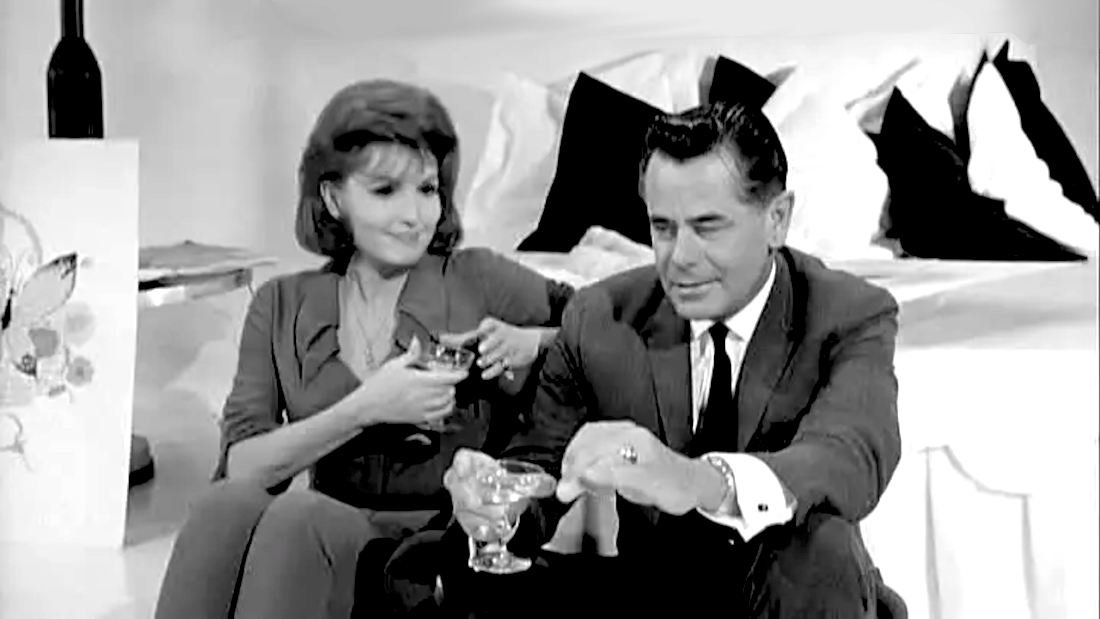
Welcome to downtown Manhattan. Traveling greeting card sales executive Harry Mork (Glenn Ford) has decided to settle down and have a home rather than live in hotels. He’s also giving up the women he visits in every port city. He’s come to NYC to rent an apartment for himself and his fianceé Phyllis (Angela Lansbury). Before checking into his hotel Harry stops off to give the bad news to his steady playgirl-partner Mitchell (Patricia Barry). In the lobby he meets Phyllis’ son Patrick (Michael Anderson Jr.), an errant college boy presently shacked up with his girlfriend Emile Zola Bernkrant (future author Joanna Crawford).
Harry still has an eye for ladies, it seems. He tries to set up a hot date with the hotel’s cigarette counter girl June Loveland (Barbara Nichols). Filling the hotel to capacity is a convention of postmasters, at least seventy solid-citizen squares using their annual get-together to do their version of ‘running wild.’ People are hooking up left and right, but not Evie Jackson (Geraldine Page), a delightfully upbeat postmaster passed up for marriage yet optimistic for her chances. Evie makes everybody’s business her own. Only the rudest New Yorkers are immune to her sweet solicitations of friendship. She convinces many that she’s a sincere & caring soul. Evie dodges a married conventioneer on the make (Charles Drake) and a masher in the hallway (Ken Lynch). She deftly sidesteps the triumvirate of spinster biddies (Ruth McDevitt, Alice Pearce & Mary Wickes) that expect her to join them in card games and tours.
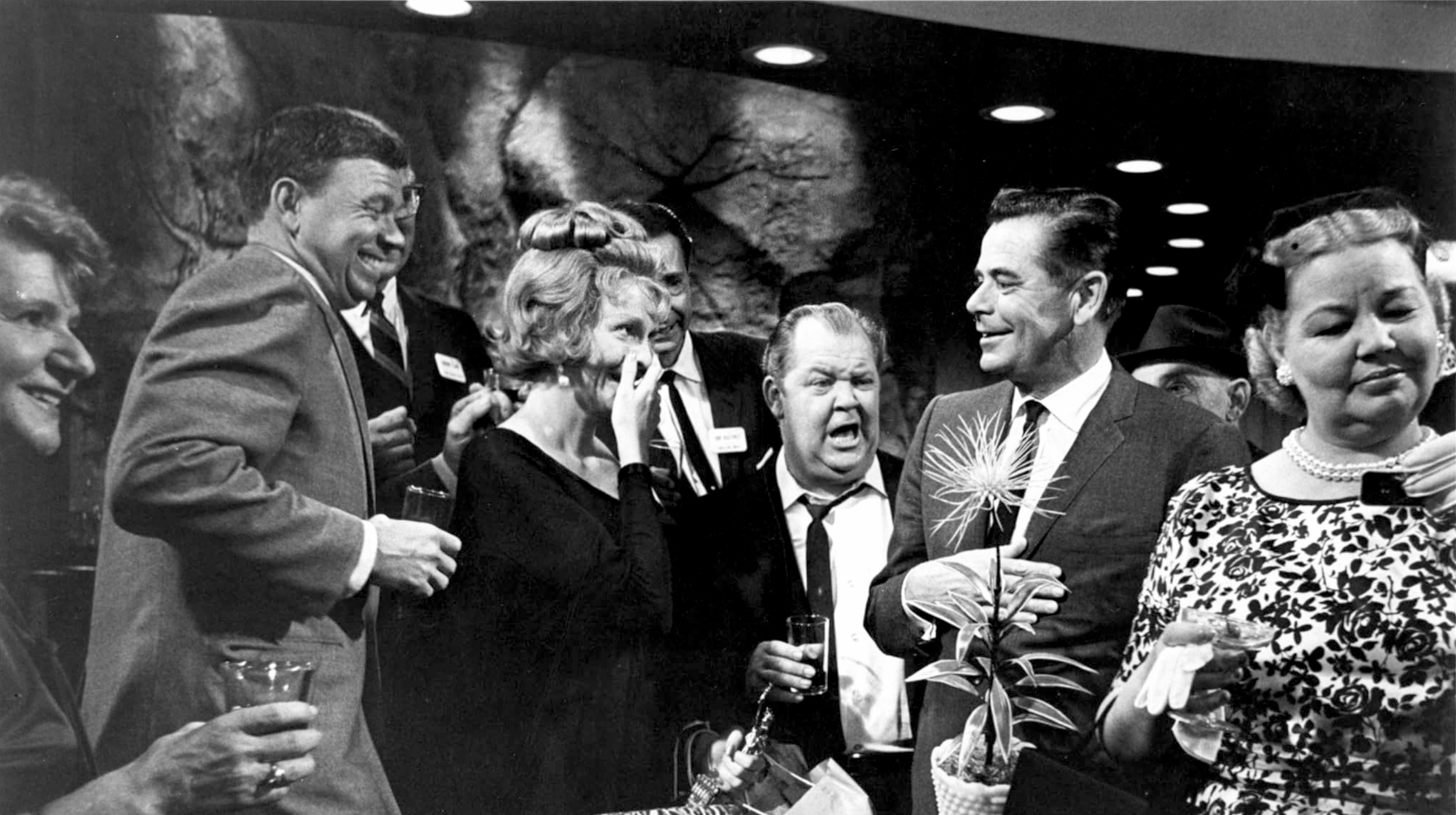
But she keeps running into Harry, who is trying to straighten out his own problems. Their human connection is at first just casual socializing, then an earnest challenging of each other’s personalities, and then something more. One problem for Evie is that she never counts on anything: “It’s a way I have of avoiding disappointment.” She gets the mistaken idea that Harry’s upcoming marriage is a fib he’s made up to protect himself. She feels sure that his desire to spend more time with her will be an invitation to romance. Will she be hurt again?
There’s an awareness of the philandering and one-night-standing that occurs with conventions.
Dear Heart has a post- The Apartment attitude. Harry Ford is engaged yet hot to trot with the pneumatic Miss Loveland, which leads to some Billy Wilder- level humor as they attempt to slip across the street for a quick one. Did men ever really pick up the counter girls in hotels, as Harry does here? I guess the ones who looked like Glenn Ford could. Tad Mosel’s screenplay develops gag situations with ease. Wilder’s dialogue would likely be sharper, yet Dear Heart’s human observation is consistent. Some interesting comment about ‘locked and unlocked doors’ keys into whether people are open or closed to honest communication.
Evie makes busy-bodying seem the way to be. For the right person she would be a real find. She’s open and friendly to all. She can’t pass a person without offering a compliment. She’s constantly making positive observations about people, not just the feel-good junk one might read in Harry’s greeting cards. Just as Harry communicates his desire for something better in the scene with his old flame Mitchell, Evie is contrasted with a childhood friend who left for New York years before. The friend acquired cosmopolitan manners and a new accent, but also three divorces.
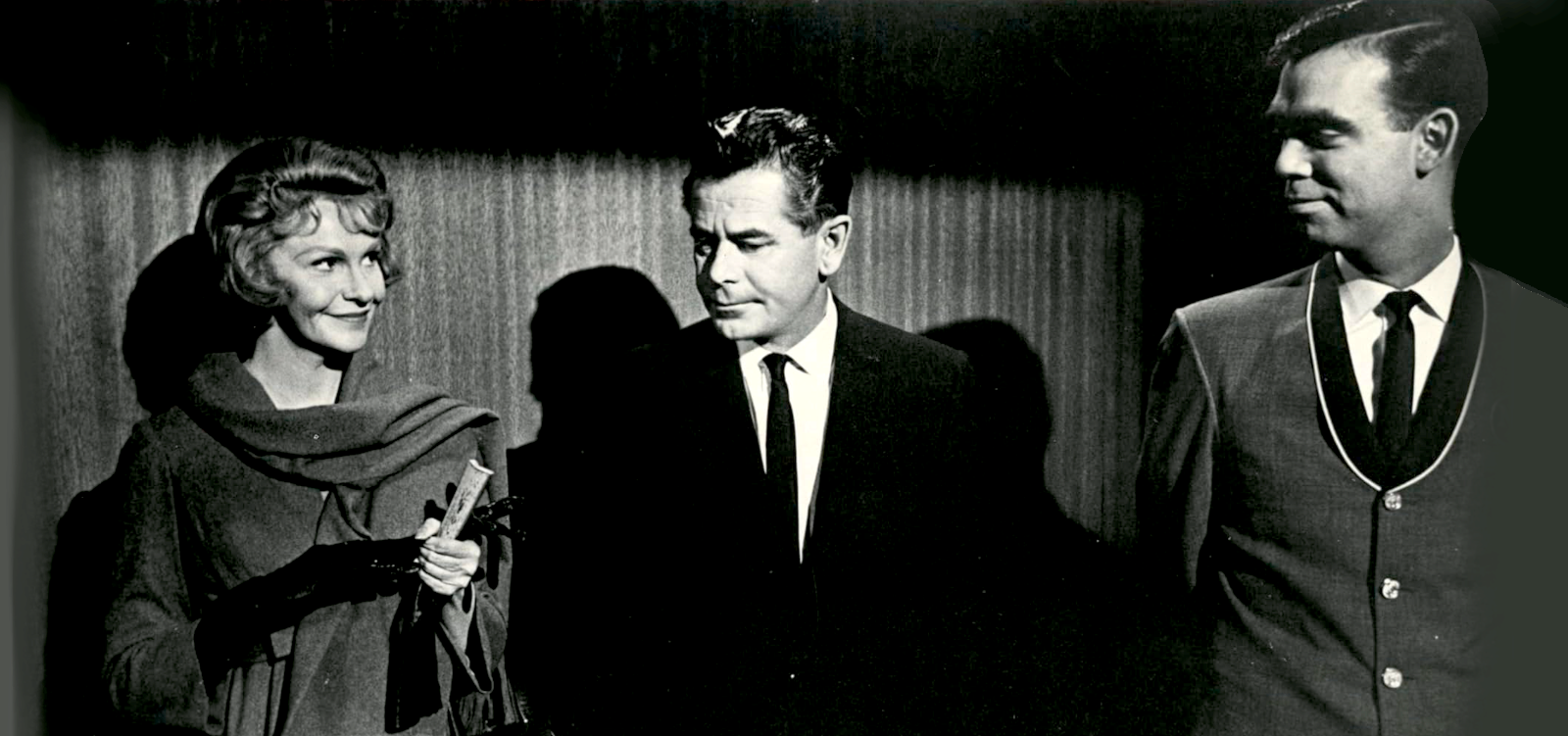
Evie makes a good case for being choosy with one’s love mates. The postmasters — not remotely a glamorous bunch — engage in impromptu sing-a-longs, something we hadn’t seen since Capra’s It Happened One Night. But more than a few are sneaking away and pairing off. We knew Alice Pearce as comic relief on TV, playing obnoxious neighbors. Her drunken biddy here keeps trying to break up a party with the words, “Everybody go to bed.” Evie comes up with a great line when dodging a casual offer to jump in the sack. The horn-dog argues that sex is not a big deal, to which Evie replies that if it’s nothing, she doesn’t want it. She wants more than ‘nothing,’ thank you.
Much more than nothing is Harry Mork, who is gracious no matter what ploys Evie uses to pair herself up with him. They interact well, and his only complaint is that she’s a little pushy. They can be sincere and plain-spoken together; they’re both good listeners. They’ve come upon a forgotten but important quality missing in so many screen romances: simple congenial companionship. Evie’s insecurities fade, even if she continues to make little mistakes, predicting that the bubble will burst. The way she registers happiness is indeed heartwarming.
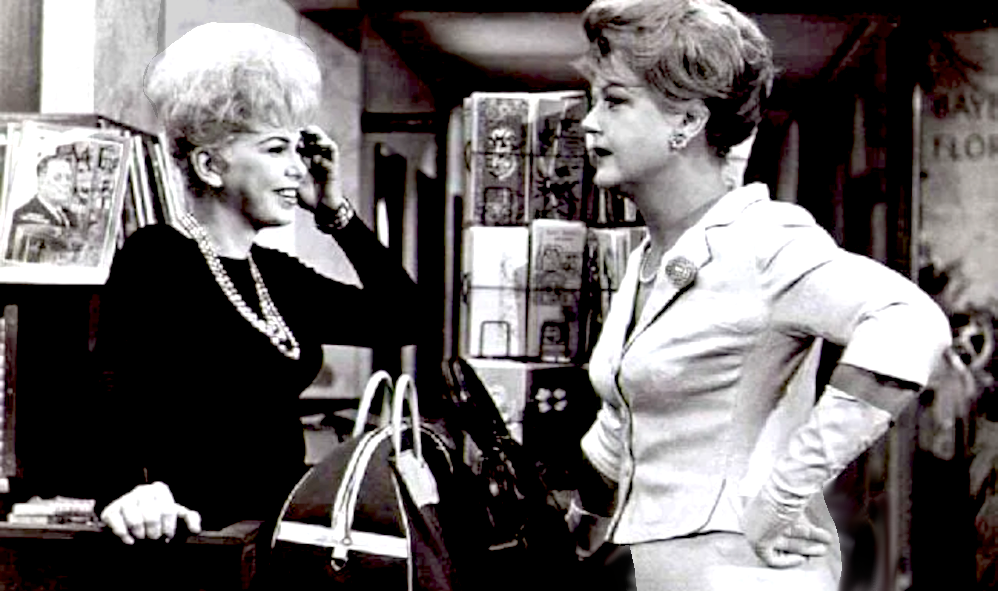
The film’s other main players get a chance to shine. Anointed as the everywoman bimbo in Sweet Smell of Success, Barbara Nichols is handed some great jokes. Harry walks up to Miss Loveland’s counter in the lobby, trying to think of what to say. Harry: “I’ve got a strange thing…” Loveland: “Well I don’t want to see it.” Nichols’ deadpan delivery of that and other lines is priceless.
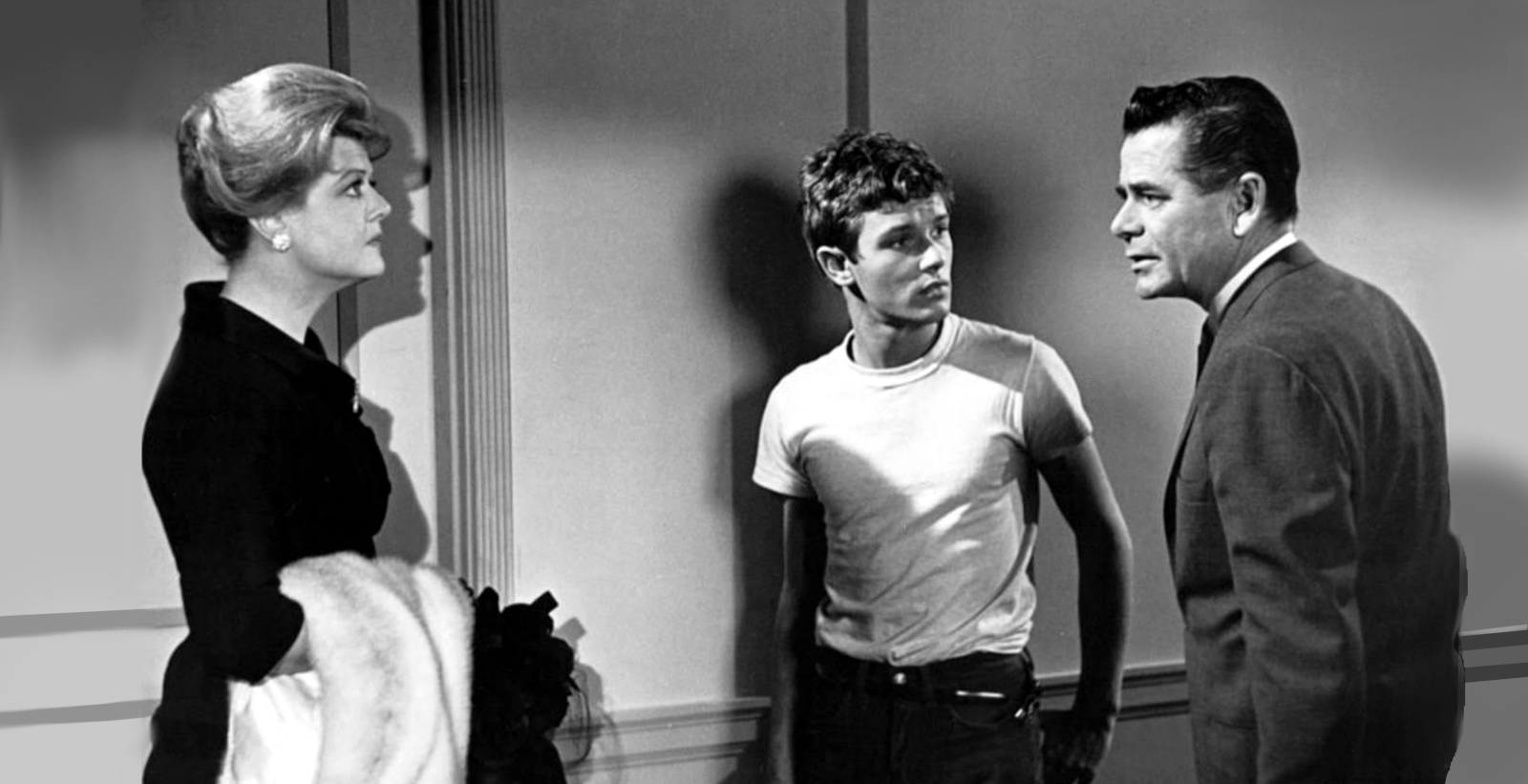
Former child actor Michael Anderson Jr. does very well with a part that’s a real stretch — the kid is glib and eccentric and apparently sleeping with his girlfriend, who always seems to be in the next room taking a bath. Angela Lansbury for the umpteenth time excels in what should be a thankless role. Her Phyllis has the idea that her marriage will entitle her to have everything done for her. She expects to be set up in a hotel with an elevator and room service so she’ll never have to cook or answer the door. She expects Harry to take over responsibility for her son Patrick. Harry feels prejudged, as if he’s already failing to meet her demands. Lansbury plays this kind of character to a ‘T’.
Director Mann has excellent help setting up crowd scenes, for the convention parties and some action in a New York train station. Which one? Sorry, I’m from California. A few visual jokes resemble the observational humor in Jacques Tati’s Playtime. Edie and Harry end up sitting together in a lunchroom, where the tables are crammed so tightly together that one scoot sets off a chain reaction. The pair’s attempts to talk in the hotel hallway are interrupted, either by drunken conventioneers, or elevator boys that detect hanky-panky in all things.
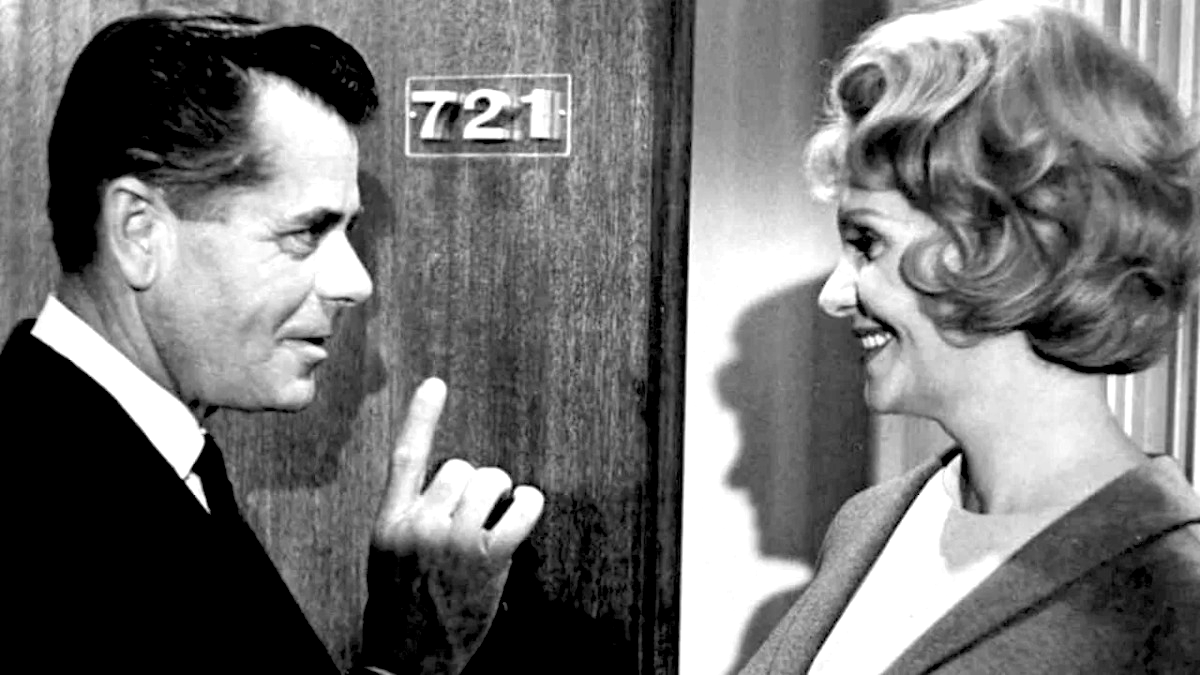
By the middle of Act 3 we’re so invested in Geraldine Page’s Edie that we’re dreading a bittersweet ending — she may just be setting herself up to be hurt. But she and Harry can’t seem to separate. When he asks her to see an apartment with him, she jumps to the wrong conclusion, and must offer the kind of humiliating confession that lonely single people hate to make.
Was Dear Heart considered hopelessly square when new? It now seems a non-condescending ode to ordinary people, with characters less anguished than Delbert Mann’s breakthrough hit Marty. It doesn’t pretend that things work out for everyone, yet puts hope in the idea that connecting with the right person does happen. Come to think of it, Billy Wilder might have admired Dear Heart. After The Apartment he had a few years in which his Warm And Human Quotient took a dive, and his contemporary instincts became brittle. Dear Heart carries a very positive charge.