
Walk a Tightrope
Dan Duryea’s slimy killer fesses up to a cold-blooded murder, but insists that the victim’s wife Patricia Owens hired him to do it! This cheap English production is only fitfully competent but we were fascinated anyway … it provides more context to the story of a big film producer run out of Hollywood by the labor Guilds. The miracle is that the great Dan Duryea comes out of the show with his head held high … even though so little of what happens makes sense.
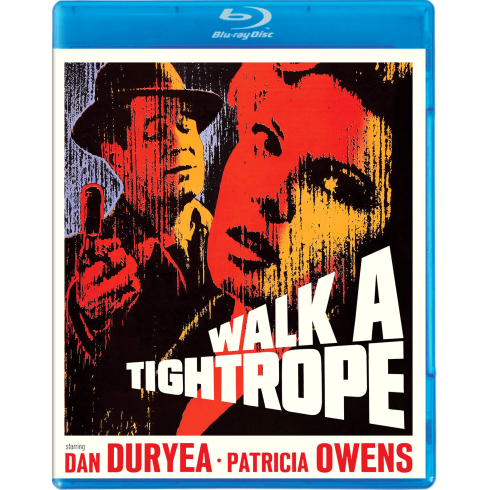
Walk a Tightrope
Blu-ray
KL Studio Classics
1963 / B&W / 1:85 widescreen / 69 74 min. / Street Date July 28, 2026 / available through Kino Lorber / 29.95
Starring: Dan Duryea, Patricia Owens, Richard Leech, Neil McCallum, David Bauer, Terence Cooper, Shirley Cameron, Trevor Reid, A.J. Brown, Jack Melford.
Cinematography: Basil Emmott
Art Director: Harry White
Film Editor: Robert Winter
Music Composer: Buxton Orr
Written by Mann Rubin and (uncredited) Neil McCallum
Produced by Jack Parsons
Directed by Frank Nesbitt
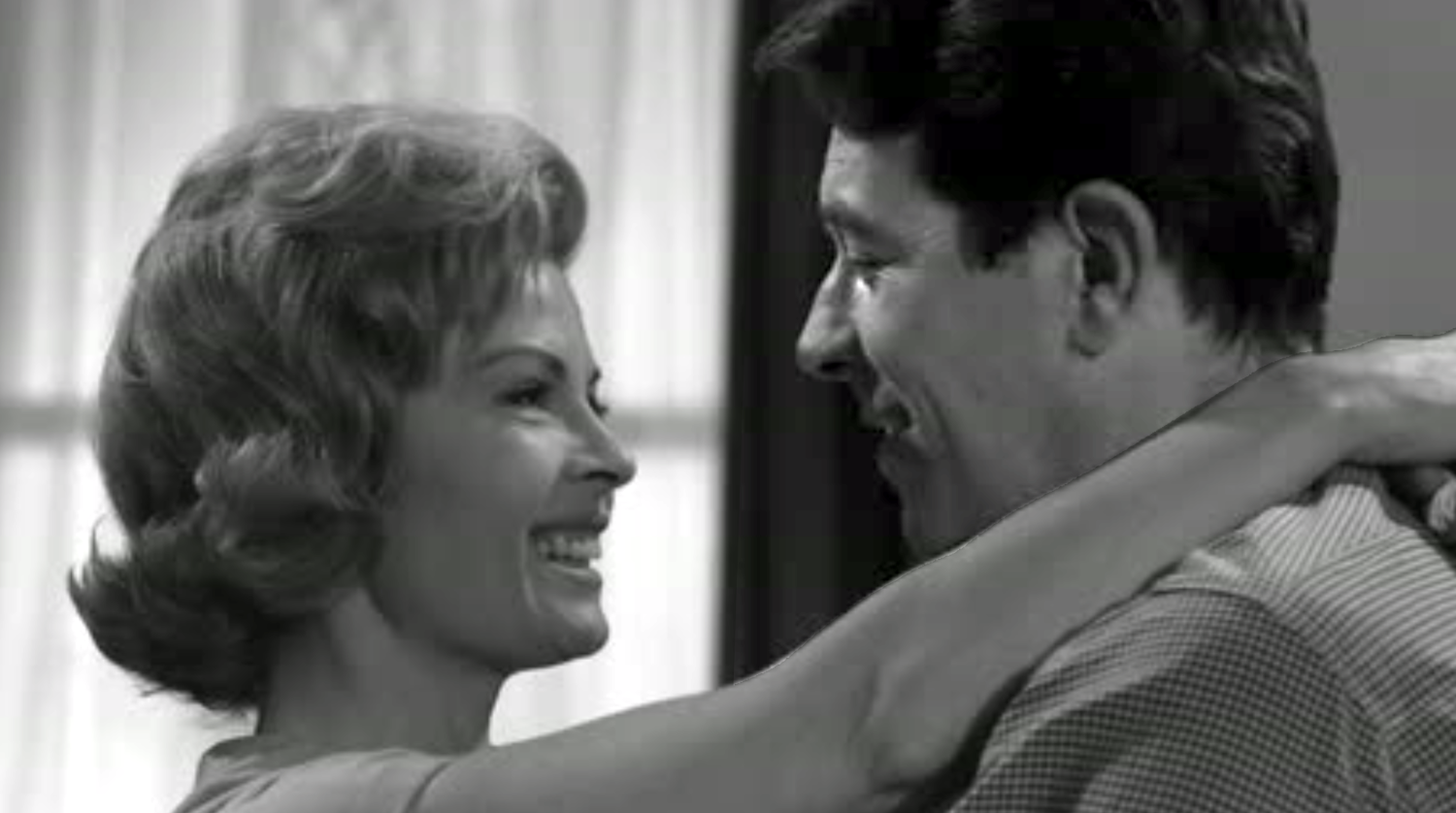
 When does a clever murder thriller with a strange character and unexplainable coincidences really begin to interest us? When it proves to make as little sense as this one does.
There’s not a great murder thriller that doesn’t have at a small plot hole in it somewhere. The 1963 independent English film Walk a Tightrope is a Swiss cheeze of plot holes, combined with nonsequiturs that confound and contradict character behavior and common sense. Competent actress Patricia Owens is seemingly left without a director’s guidance, and makes it up as she goes along … she’s the main character, but her performance never comes together. Old pro Dan Duryea gives his villain everything he can, and makes the picture work whenever he’s on screen. When he’s not, watch out.
There must be quite a story behind the making of Walk a Tightrope, as it combines the talents of underachieving filmmakers on both sides of the Atlantic. The producing team-up could count on an American release through Paramount, apparently a deliver-the-negative-and-run arrangement. What they produced resembles a competent murder thriller …
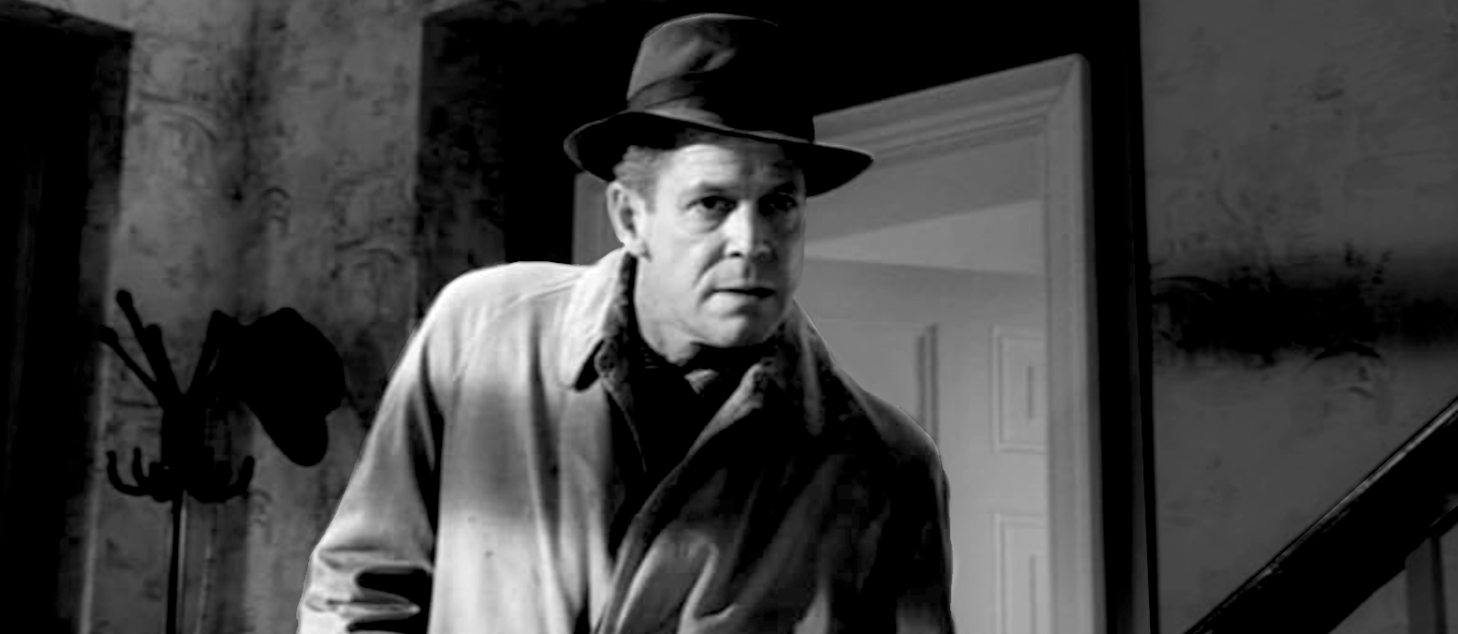
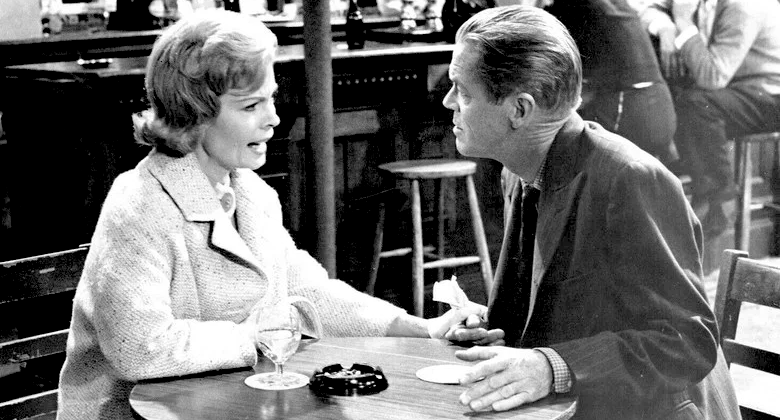
Dazed and confused, Ellen Sheppherd (Patricia Owens) seems to know that she’s being followed when she heads into a small pub. Her husband Jason (Terence Cooper), a successful architect, sees her from across the street and tries to join her. Ellen panics and faints, and both Jason and his partner Doug Randall (Richard Leech) take her home. But it turns out that she is being followed. The man shadowing Ellen is Carl Lutcher (Dan Duryea), a seedy neer-do-well in a dirty trench coat. He has a pistol with a silencer …
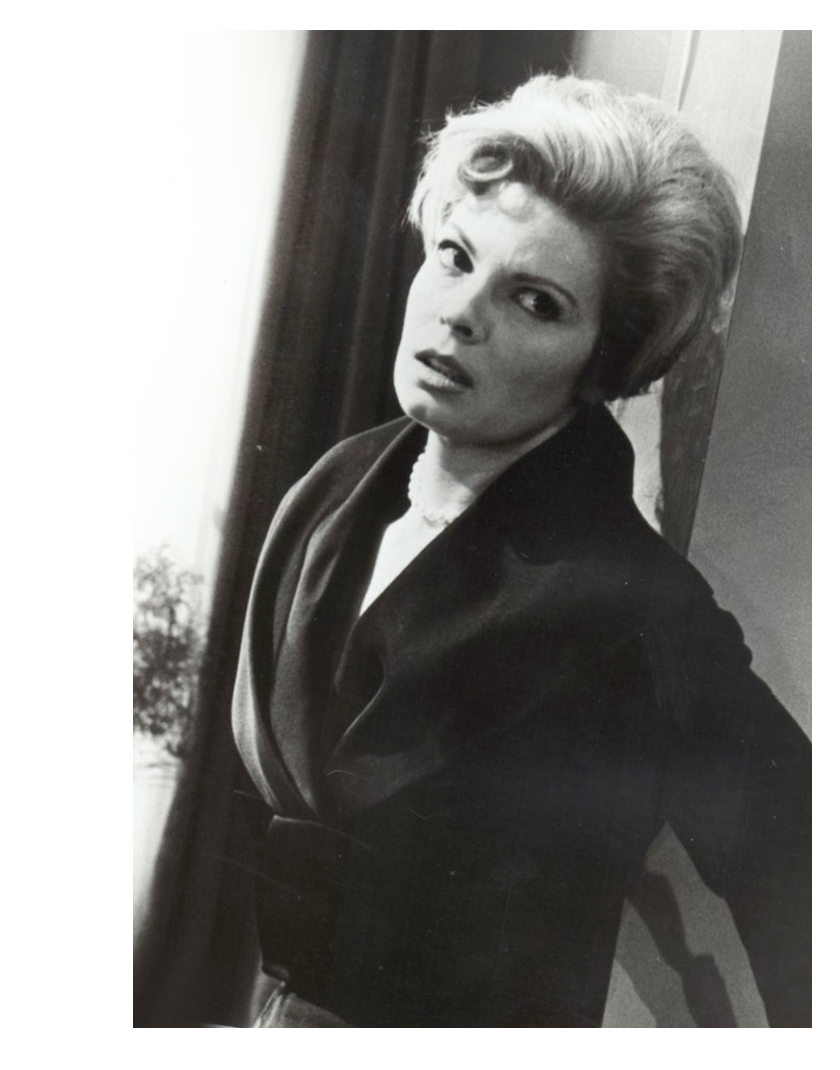
Most every synopsis of Walk a Tightrope gives away the plot, including Kino Lorber. We would rather not do that … it was fun following the film’s illogical turns of plot sans foreknowledge. True, the biggest plot upset happens in the first reel, but we’re glad that it was a surprise.
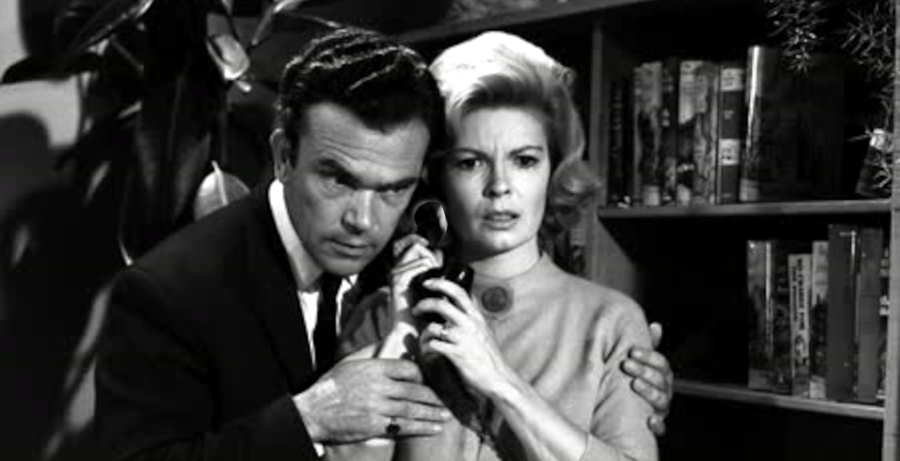
This compact murder tale doesn’t so much as unfold, as simply fall apart. Ms. Owen’s leading lady is a fretful mess from the start, first begging for understanding from her handsome hubbie, and then from the business partner Doug. The term ‘plot hole’ doesn’t suffice to describe the strangeness of this movie. The performances are stranded in what must have been a rushed filming schedule. The director lets all kinds of behaviors slip through that contradict the story being told.
In most stories with narrative twists, we accept a bit of cheating or waffling in early scenes, to help make later surprises so effective. Patricia Owens and especially Richard Leech are allowed to play scenes that contradict the sense of later revelations. Leech’s Doug Randall hears the killer say things that directly implicate Ellen Sheppherd as a murderess. Even though he’s an honest fellow, he tells nobody, not even when he’s testifying in the (joke of a) trial that comprises most of the final act.
I don’t understand why reviewers praise Patricia Owens’ performance. He Ellen spends most of the movie in an emotional fog, shocked by the murder she has witnessed. It’s almost the same ordeal she endured in her previous hit film The Fly. Owens’ ‘delicate’ wife in that tale mopes around for the entire picture, purposely not explaining things that would clear up the mystery in a few seconds. Couple Ellen’s disconnect from reality with Carl Lutcher’s inexplicable eagerness to confess to 1st degree homicide, and we know some ‘reveals’ are coming that will overturn ‘what we think we know.’
That’s of course what many murder mysteries do, except anybody who’s seen a few will figure out what’s up before the first corpse is cold. We’re glad that we can watch Dan Duryea at work, valiantly bailing water to keep the whole film from sinking. We’ve seen far duller pictures, but few as incompetent. The finale is a sudden freeze-frame that’s supposed to be a major dramatic revelation … but is not.
The show’s provenance allows CineSavant to once again study a favorite topic in Hollywood chicanery: exhibitor-producer Robert L. Lippert. As discussed in earlier reviews, theater owner Lippert began producing around 1948 and had some initial success backing writer-director Sam Fuller and a Sci-fi film by Kurt Neumann. His most profitable groove through the 1950s seems to have been co-producing with English companies. British producers chased the Golden Apple of an American release, which Lippert could provide by contracting for the services of U.S. talent that English companies weren’t allowed to hire directly. The actors with name value that Lippert found were usually ex-studio contractees looking for paying gigs, and keen to look for more work overseas: Lloyd Bridges, Cesar Romero, Dane Clark. A main Lippert collaborator was Hammer Films. The edge he provided enabled Hammer to expand, beginning with the breakout hit The Quatermass Experiment, with Brian Donlevy.
By the time of Walk a Tightrope, Robert Lippert had long been a Hollywood pariah. Around 1955 he sold his film library to TV, and refused to pay Guild-negotiated residuals … a move that ended with Lippert blackballed from production. By some semi-underhanded maneuver, the (still well-connected) Lippert than began a shadow relationship with 20th Century Fox. That big studio needed low-budget B&W product in CinemaScope, but independent companies balked at paying CinemaScope’s licensing fees. And some Fox paperwork said that all CinemaScope films were supposed to be in color. Thus Lippert invented Regal Films, which used Fox ‘scope lenses but billed the process as ‘Regalscope.’
The studio lawyers must have received a bonus for dodging those contractual obligations. Meanwhile, Robert Lippert’s name couldn’t be anywhere on these films. He became a shadow producer, pulling the strings while others took screen credit.
We know that in 1959 ‘Regal Films’ came to an end. Not much later Lippert moved his production office to London, where he continued to churn out non- ‘A’ B&W features for the Fox release schedule. The new company name became ‘Associated Producers.’ Anamorphic releases reverted to displaying the CinemaScope logo again.
This next thought is conjecture. Fox’s major 1958 hit The Fly may have what made the change happen. It was begun as a Regal Films project, but Fox upgraded it to front-line ‘A’ status, with CinemaScope and stereo sound, and the addition of star Patricia Owens. Did The Fly bring the Regal arrangement to the attention of the Guilds (and CinemaScope), putting the double-dodge out into the open? Relocated in London, Robert Lippert could once again take credit on his own films. English production was also cheaper. He could turn out his small-scale ‘almost an A’ movies for much less than he was spending in Hollywood.
Walk a Tightrope isn’t a direct Lippert production. His Associated Producers merely helped the Brit partnership of Jack Parsons and Neil McCallum, presumably providing the two American leads. Patricia Owens had spent only three years as a first-rank Hollywood actress, playing opposite James Mason, Marlon Brando and Robert Taylor. After The Fly her best offers were support roles in action pictures. That explains exactly why most actresses avoided Sci-fi at any cost. Associated Producers had her share the limelight with other actresses in the down-market Five Gates to Hell and 7 Woman from Hell. This picture at least gave her top billing.
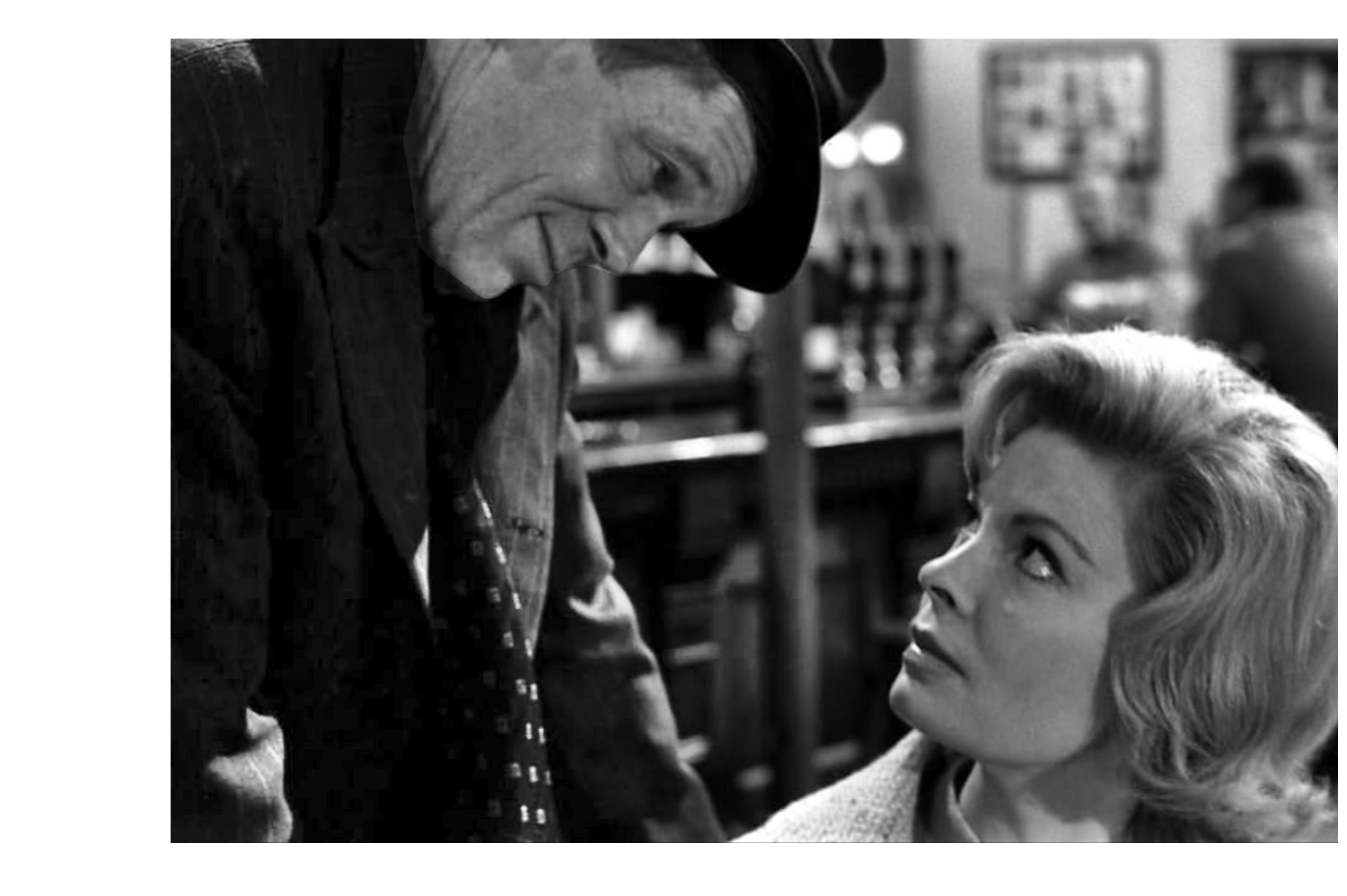
Walk a Tightrope has maybe five scenes on London locations, but skimps on situations where we’d expect production value. All the interior sets are stock and flat-lit; a flashback explaining Carl Lutcher avoids entering a third Pub. When Ellen flips out and faints in the first scene, director Nesbitt tries for a subjective effect with some visual distortions. Neither Owens’ performance nor the visual effects work well. We have the sneaking suspicion that, if at any point during the filming Patricia Owens asked her director, ‘what exactly is happening in Ellen’s mind right now?,’ he wouldn’t have had an answer for her.
The coverage of scenes is flat and minimal, and too much of the dialogue recites convenient exposition, as when one character provides a verbal run-down of recent events. Many line readings play as if the Brit actors are giving scenes their first try, and whatever came out on take one is what was kept. Ellen’s friends at the movie theater stay rooted to recite their lines, as do various policemen and courtroom officials. Ellen’s standard shot is a look of confusion and distress, made necessary by the need to not give away her motivations. With the direction being this basic, when Ms. Owens does try to deliver a pointed reaction or meaningful ‘look,’ its as if a red flag had been dropped: Look, she’s not as innocent as she acts.’ The scenes are so flat, waiting for plot twists is our only activity.
Filmmakers operating at the level of Robert Lippert’s must have recognized each other’s problem on sight: ‘we have to make good films to survive, but every film we make is a rushed compromise.’ Writer Mann Rubin began as a writer for DC comics. He had a scattered career with some notable credits; just before this film he had worked uncredited on Del Tenny’s Psychomania. Lippert would hire producer Parsons to be his line producer for his pictures going forward, both for ‘Associated Producers’ and when he started working once again as Lippert Films.
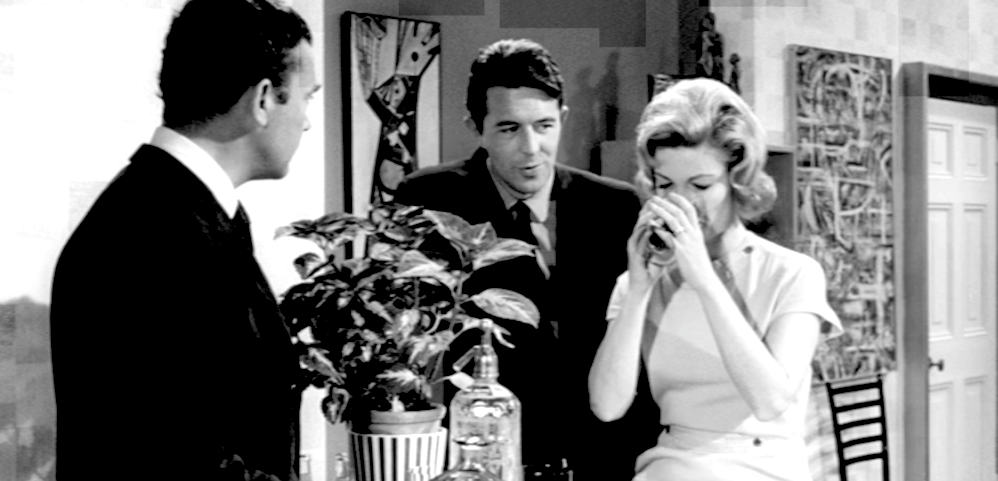
We’re surprised when Terence Cooper has no dramatic scenes with Dan Duryea; he’s a good-looking guy who would come off much better given a glamour treatment in the 1967 spoof Casino Royale. Substitute leading man Richard Leech normally had smaller utility roles, like his Captain’s officer in the classic A Night to Remember. Leech’s character Doug has a lot of screen time yet is barely written to do anything but hold Ellen Sheppherd’s hand. Revelations at the end of the show, make much of Doug’s earlier behavior seem like a big cheat.
British Lion distributed Walk a Tightrope in the U.K.. Numerous reviews of a UK DVD of list a running time 4 to 6 minutes longer than this Paramount-sourced disc, and describe an additional opening scene. It is apparently another ‘domestic’ scene with Carl Lutcher and his girlfriend Maisie (Shirley Cameron), in which we learn that he’s leaving the house to commit a murder. Although very little in our cut of Walk a Tightrope feels well-judged, the prologue does seem superfluous.

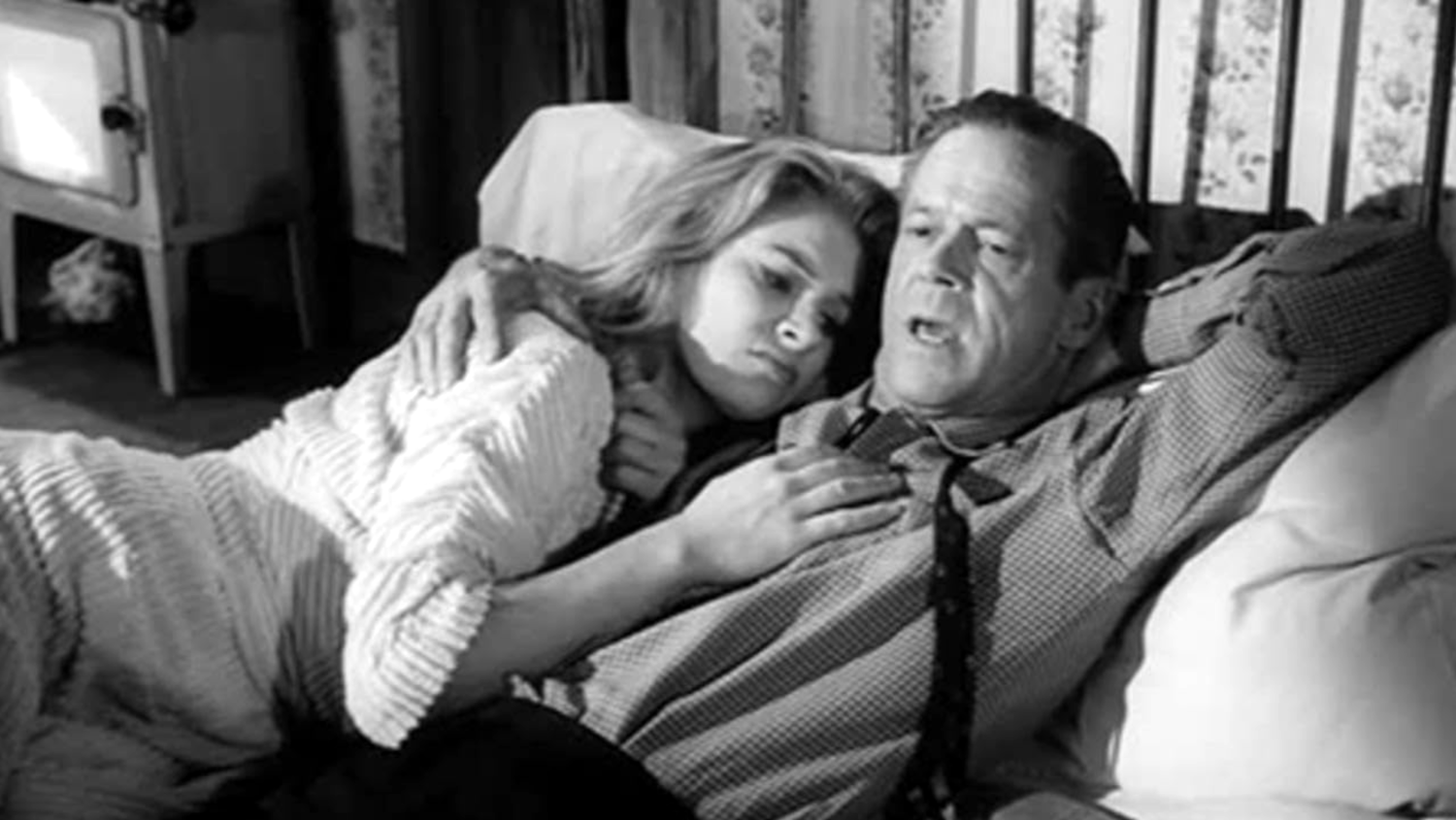
The KL Studio Classics Blu-ray of Walk a Tightrope is a pristine encoding of this program filler from the years just before B&W features faded away. The location scenes look reasonably attractive, and the interior sets are as generic as ever; it really helps that Dan Duryea is present to bring the show to life when he’s on camera.
Audio commentator Gary Gerani makes with a pleasant discussion of the show and some of the politics behind it. He too notices things that make the movie look particularly cheap. The Sheppherd murder case is supposed to be the trial of the century, yet when Ellen leaves the crucial hearing, only one reporter and a photographer are present.
We like movies that illustrate conditions on the margins of feature production, where filmmakers could work under crazy commercial limitations. Robert Lippert apparently felt he could fight the changing tide in film production — ‘who says I owe anybody these residuals‘ — and when the blowback wiped him out, found a brilliant work-around. But who’s complaining … among his contributions to fantasy, horror and Sci-fi are his Kurt Neumann gems Rocketship X-M, She-Devil, Kronos, and The Alligator People, plus The Fly and its two sequels. All are very entertaining.
Reviewed by Glenn Erickson

Walk a Tightrope
Blu-ray rates:
Movie: Fair
Video: Excellent
Sound: Excellent
Supplements:
Audio commentary by Gary Gerani.
Deaf and Hearing-impaired Friendly? YES; Subtitles: English (feature only)
Packaging: One Blu-ray in Keep case
Reviewed: July 19, 2026
(7551walk)
Visit CineSavant’s Main Column Page
Glenn Erickson answers most reader mail: cinesavant@gmail.com

Text © Copyright 2026 Glenn Erickson
About Glenn Erickson

Glenn Erickson left a small town for UCLA film school, where his spooky student movie about a haunted window landed him a job on the CLOSE ENCOUNTERS effects crew. He’s a writer and a film editor experienced in features, TV commercials, Cannon movie trailers, special montages and disc docus. But he’s most proud of finding the lost ending for a famous film noir, that few people knew was missing. Glenn is grateful for Trailers From Hell’s generous offer of a guest reviewing haven for CineSavant.
I hate plot holes and, normally, being warned about them would put me off a movie. I’m probably going to buy this disc and I’ll probably conclude I’ve wasted my money!