



This is a key wartime homefront movie, written and filmed as America’s sons and husbands were fighting and dying for the country. Back then a war was an unusual occurance, not the norm. William Saroyan’s heart-tugging original story fits in perfectly with the MGM / Louis B. Mayer definition of family entertainment. It is a weepie that may indeed shake you up. Yet this remains an intense feel-good movie … an Utopian vision of a nation with values that unite its people and give them strength.
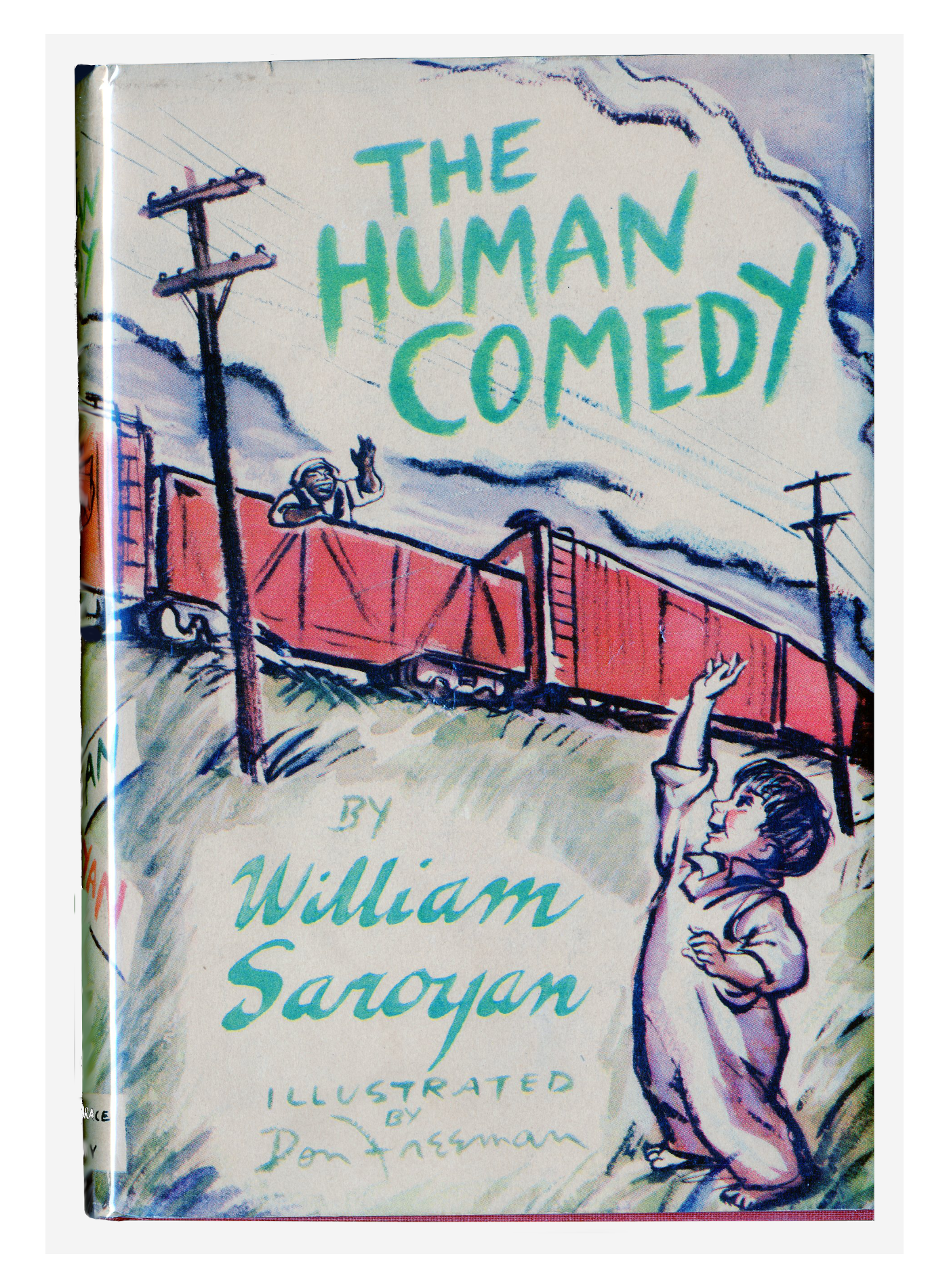
Heartfelt and humanist, The Human Comedy was first written to become a movie, and then adapted into a popular wartime novel by its author William Saroyan. As such it was considered important literature in the school systems of 1960, probably because it had no swearing, no sex and no troublesome political content, in contrast to that questionable scallywag John Steinbeck. I think I saw the film projected in a classroom at least twice in Junior and Senior High, you know, when they could have been teaching me something.
The movie has all the earmarks of a wartime film tailored for morale purposes, coming as it did before the war turned in favor of the Allies. No doubt the script was reviewed by more than one Government office. It such offers a strange mix of Saroyan poetry and overbearing MGM sentiment. But even critic James Agee, who routinely condemned soapy tearjerkers, found enough good qualities in The Human Comedy to recommend it highly. It’s a respectful look at the tensions felt by small town America.
I’m attracted to the movie for personal reasons. My mother grew up in Mountain View, a somewhat larger California town. Most of the boys in her high school graduating class disappeared into the service. With so many men drafted, she spent her late teens serving as a mail carrier for the Post Office — two deliveries a day, on foot. The Human Comedy comes closest to what I imagined my mother’s home town experience to be — her own young husband was away somewhere in North Africa.
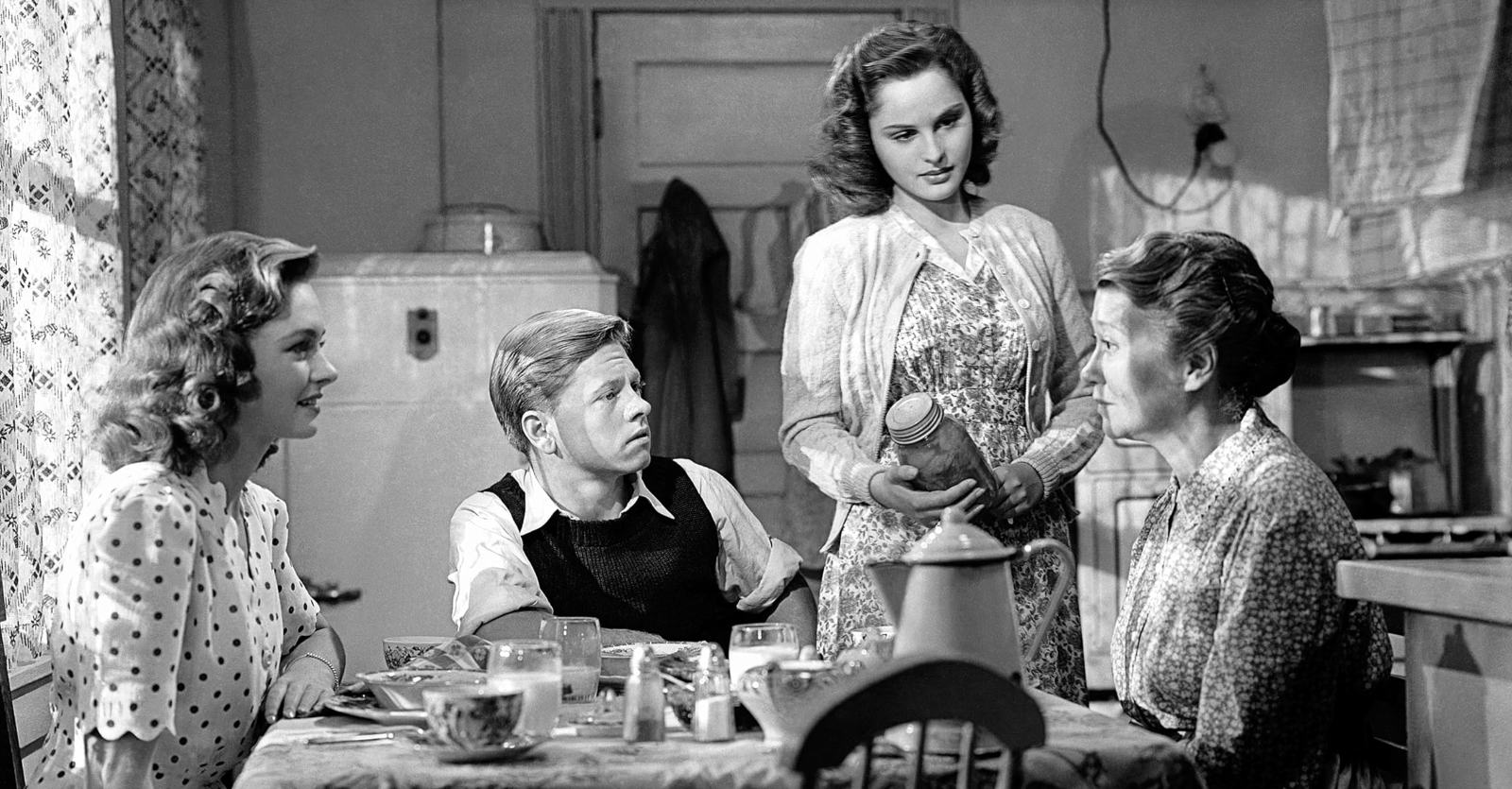
The Human Comedy is an MGM film produced and directed by Clarence Brown in the familiar studio style. It’s a tough sell nowadays because, although most of its scenes have an honest, natural appeal, it oversells parts of its message. The movie is not the embarrassing, absurdly maudlin hoot that is MGM’s On Borrowed Time, but it does push some buttons too hard. I don’t remember the novel making the same mistakes.
These Macauleys have a thing for names from The Odyssey.
As in On Borrowed Time, there is an active ‘from beyond the grave’ aspect. The deceased narrator Mr. Macauley (radio great & Orson Welles actor Ray Collins) introduces his family, which in the lean wartime economy has been left without its main breadwinner. Pre-schooler Ulysses (Jackie ‘Butch’ Jenkins) is just learning about trains and eggs and strains to understand why his father isn’t coming back, and why his older brother Homer (Mickey Rooney) must work after school. Mrs. Macauley (Fay Bainter) guides her boys and plays the harp in the evening, while Homer’s sister Bess (Donna Reed, gorgeous) plays piano. Young Mary (Dorothy Morris) drops in from next door; she’s the girl friend of the oldest Macauley boy, Marcus (Van Johnson) who is away in the Army preparing to fight. All are naturally worried for Marcus. *
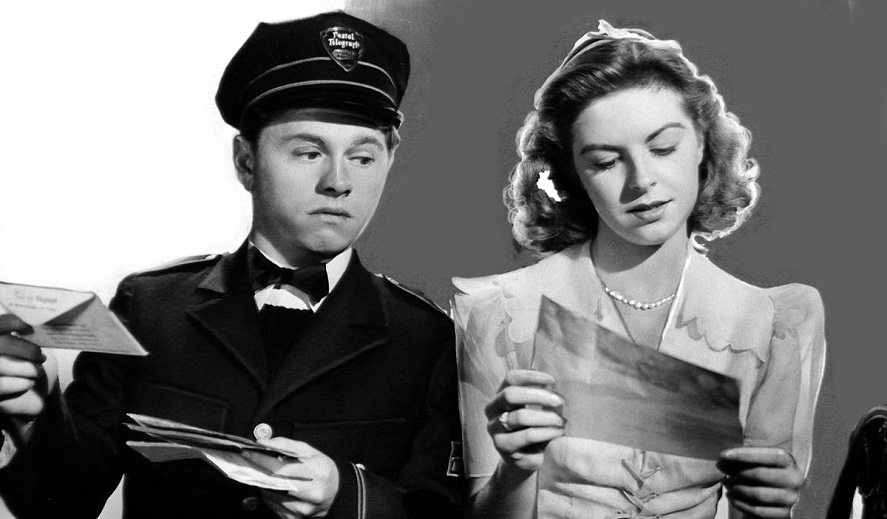
Homer has obtained a job in the telegraph office, and grows up quickly when he must deliver death notices from the War Department. His boss is the able-bodied Tom Spangler (James Craig), who while waiting to be called up has fallen in love with Diana Steed (Marsha Hunt) of the wealthy Steed family. The old telegrapher is Willie Grogan (Frank Morgan) an alcoholic who needs close tending to function.
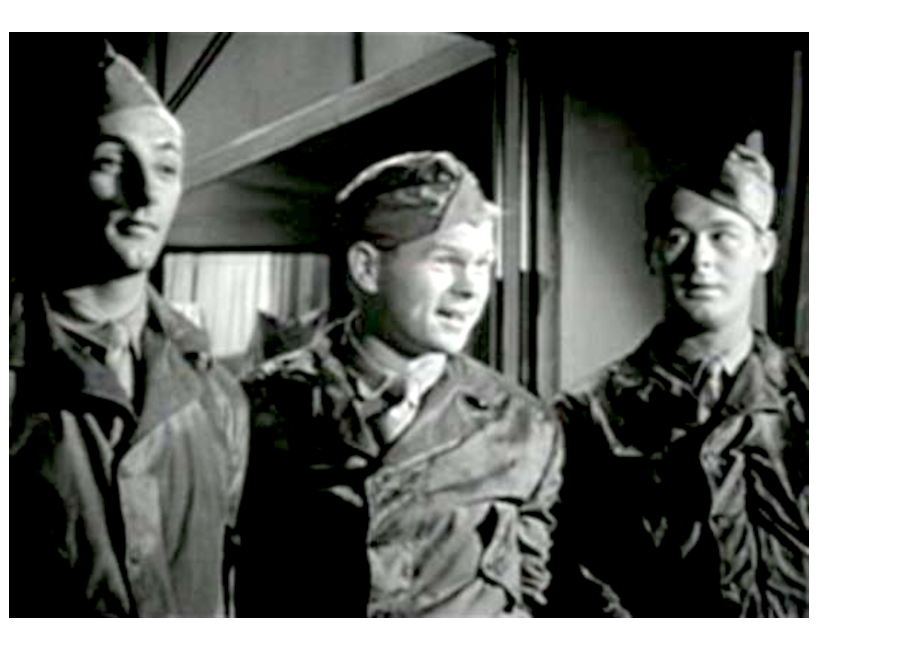
Big pieces of the story are free-standing scenes of life in Ithaca. Kept after school by a teacher, Homer misses an important track meet. He is somewhat frustrated that the girl he likes is attracted to a rich schoolmate. Little Ulysses visits a library accompanied by the older but scarcely brighter Lionel (Darryl Hickman). Ulysses helps some kids raid an apricot orchard and watches a ‘mechanical man’ perform in a drugstore window. One night on the way to the movie show, Mary and Bess do something wild and crazy … they allow three sweet soldiers (Barry Nelson, Don DeFore and Robert Mitchum) to escort them. ↖
Meanwhile, Marcus is far from home. He entertains his fellow soldiers with church songs and regales his new best friend Tobey (John Craven) with idyllic stories about his family. Tobey is an orphan. He ‘adopts’ Marcus’es family as his own. If he survives, he pledges to return to Ithaca with Marcus, and make it his own hometown.
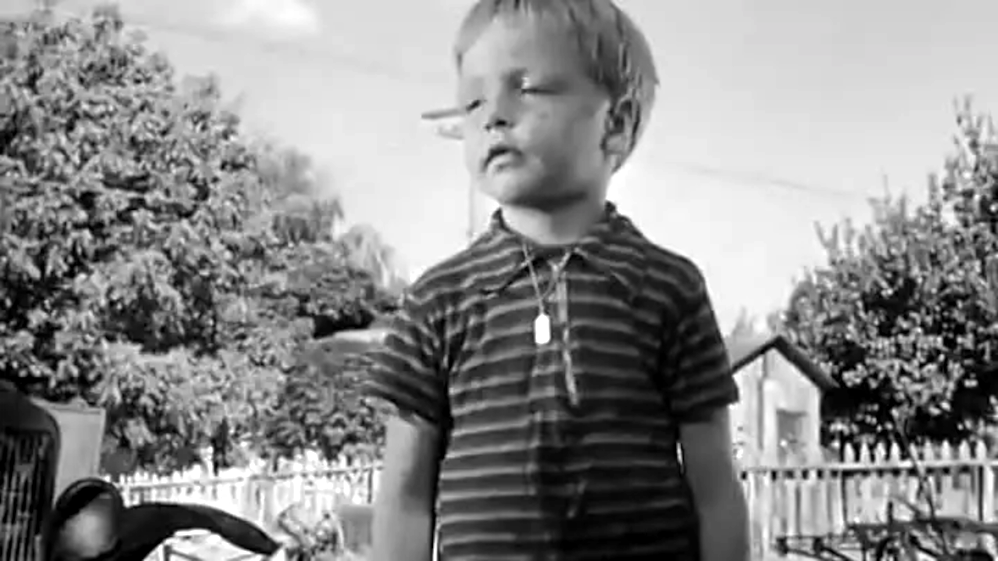
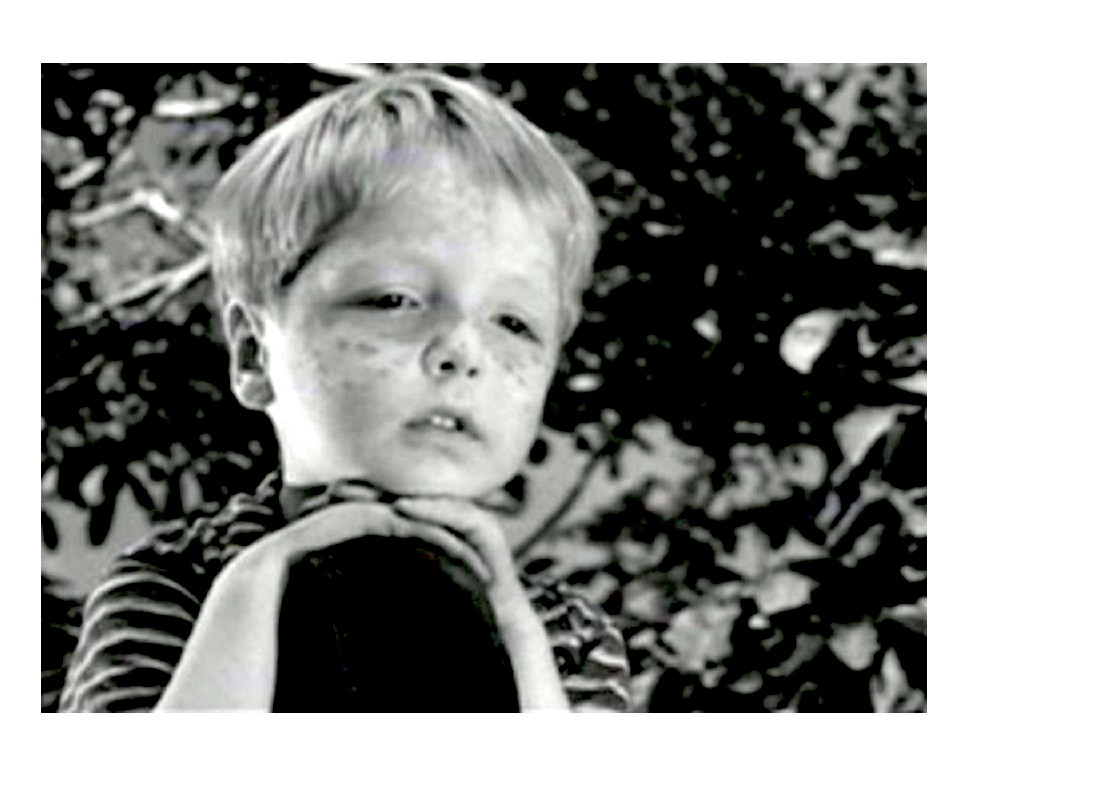
The Human Comedy has intelligence as well as heart. It faces up to wartime realities in a direct way not often seen in pix made during hostilities. If it’s propaganda, it’s propaganda for a better America and not simply a Valentine to Ma & Apple Pie. The people appear real and unaffected. Homer’s sister and the neighbor girl wear simple print dresses, not Hollywood fashions. Tow-head Butch Jenkins’ Ulysses ↑ seems to be all freckles and hair. Adorable as he is, he’s also believably ordinary, not some brat from a child star academy. In this rural town, the 5 or 6 year-old can wander far afield, without anyone considering it a risk. Saroyan and Brown begin the movie with a terrific scene of Ulysses waving at a passing freight train, and getting a response from a black man who shouts that he’s ‘going home.’ This is John Steinbeck country — James Dean could be riding on the same train.
Louis B. Mayer must have been impressed by this show, for MGM reprised much of what Butch Jenkins does almost event-for-event to showcase child star Margaret O’Brien in the next year’s Technicolor hit Meet Me In St. Louis.
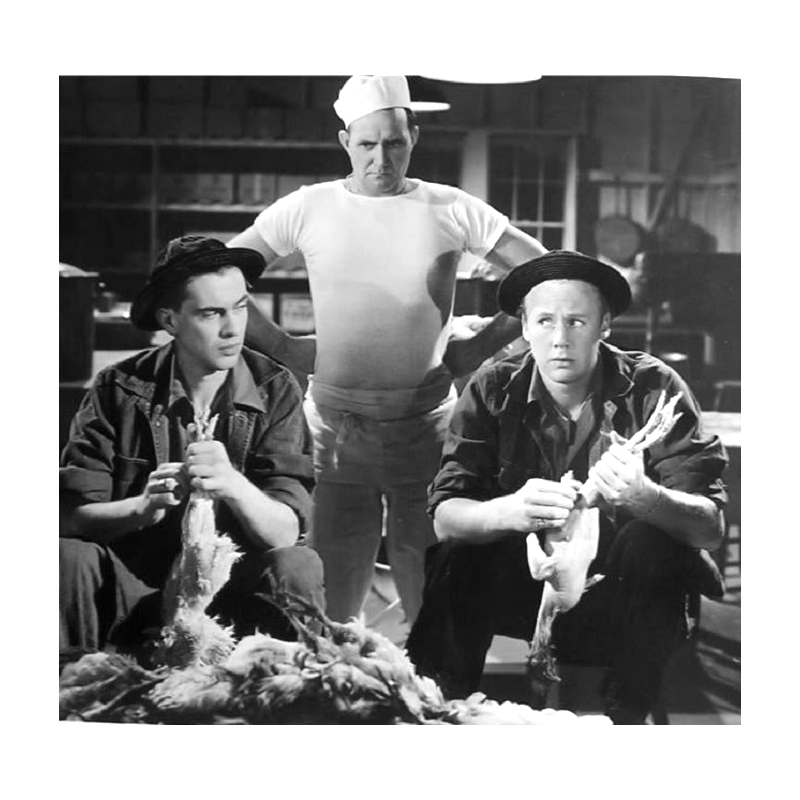
William Saroyan didn’t like MGM’s rewrites and never again allowed Hollywood to take control of one of his stories. Just the same, Howard Estabrook’s screenplay tries too hard to retain Saroyan’s verbal poetry. We hear several characters ‘thinking aloud,’ which would be an okay device, but they all parrot the author’s sentiments in the exact same style, with the same ‘voice.’ Many scenes pause so that Mrs. Macauley or old Willie Grogan or Homer’s wise teacher (Mary Nash) or Marcus can deliver a gilt-edged author’s message. The speeches are sincere yet more appropriate to a stage presentation. And again, it’s all in poetic Saroyan-speak, so that Mr. Macauley (the ghost), his wife, and Marcus all seem to be puppets of the same personality.
This complaint qualifies as nit-picking … the movie backs up its sentiment with solid drama. The sincerity is so powerful that we almost want to overlook certain dated content, sentimental and social-political.
Were the scenes with Marcus and Tobey away in the Army really necessary? They are outside the experience of the town; and now play like sanitized Army life propaganda. ↗ Mr. and Mrs. America are assured that their sons in the Army are sitting around a campfire somewhere, singing church songs and opening packages of cookies from home. Tobey is really curious about Marcus’s sister, who without being consulted, is all but promised as Tobey’s future mate.
For the hometown audiences of 1943, any scene about bad news coming from the War Department would be very touchy stuff. I can see The Human Comedy playing better if Marcus Macauley remained an off-screen presence, through letters, etc. But then MGM wouldn’t have a showcase for its heartthrob Van Johnson.
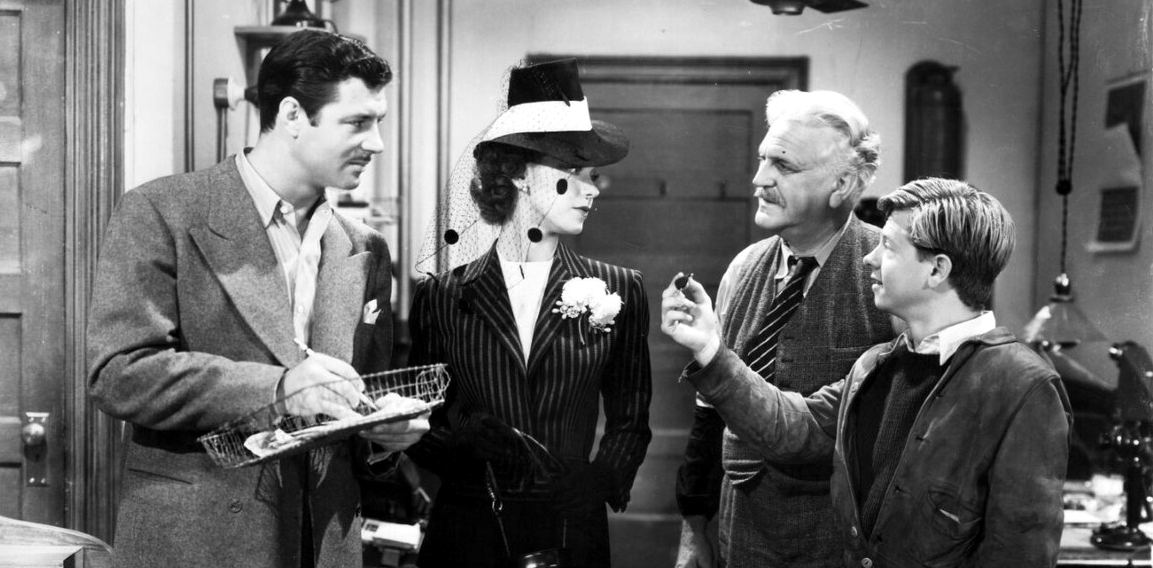
Wow — “know your place, you unwashed immigrants.”
Marsha Hunt’s Diana Steed snubs Tom’s co-workers in the telegraph office, and then takes him on a car tour of a local festival attended by various ethnic groups. The sequence now plays as class-conscious patronizing. Those Poles, Mexicans, Greeks, Russians, Armenians — they believe in Priests and kids, did you know? It’s the ‘melting pot’ theory rearranged as a Lazy-Susan platter of minorities. As if in a theme ride, Tom and Diane look at the all the music and dancing packed into one small area, an acoustic impracticality. They don’t get out of the car … important people don’t mingle with the underclass.
To us the scene resembles the It’s a Small World theme ride at Disneyland. While the stylish, privileged Diane points out all the happy foreigners, we can almost hear her cooing,
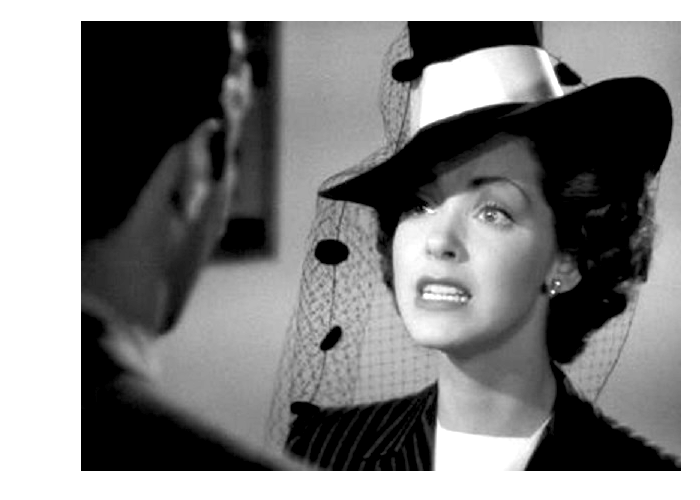
“Look! There’s my gardener and there’s my grocer and there’s my manicurist and there’s the shoeshine guy …”
You’d think that Louis B. (no unions!) Mayer was afraid that victory would bring a revolution of class equality.
Another passage in The Human Comedy makes us think that some government office was concerned about the public perception of privileged draft dodgers. Wealthy Diana Steed speaks up to assert that Rich People aren’t getting any favors. ‘We may live in big houses but our boys are going off to war just like yours are!’ The dialogue certainly doesn’t sound like something William Saroyan would have come up with.
The film’s most serious misstep is its attempt to co-opt the supernatural vibe of Thornton Wilder’s Our Town. The story is bookended with the spectral presence of the dead Mr. Macauley. Special effects allow him to enter a scene to kiss his widow on the head. As in more blatant films blanc, the widow feels something but doesn’t know he’s there. Several characters talk about religion, faith and the meaning of prayer and belief. But the ghostly storytelling device undercuts their real, honest sentiments by removing the need for faith in the afterlife. We can see the proof for ourselves: benign ghosts are real and we’re all going to our appropriate rewards. Mystery solved. The Human Comedy did not need this supernatural dimension.
But that doesn’t stop us from loving The Human Comedy. Its core remains honest despite these Hollywood add-ons. Strangely, Mickey Rooney’s performance is beautifully understated… something very rare for him at this time. He understands the story and communicates its spirit beautifully. Homer is a smart-ass in his history class, but we aren’t really on his side. When he imagines his reaction should his brother die in the war, Homer delivers a speech worthy of a film noir loser: “I’ll spit at the world.” ↗
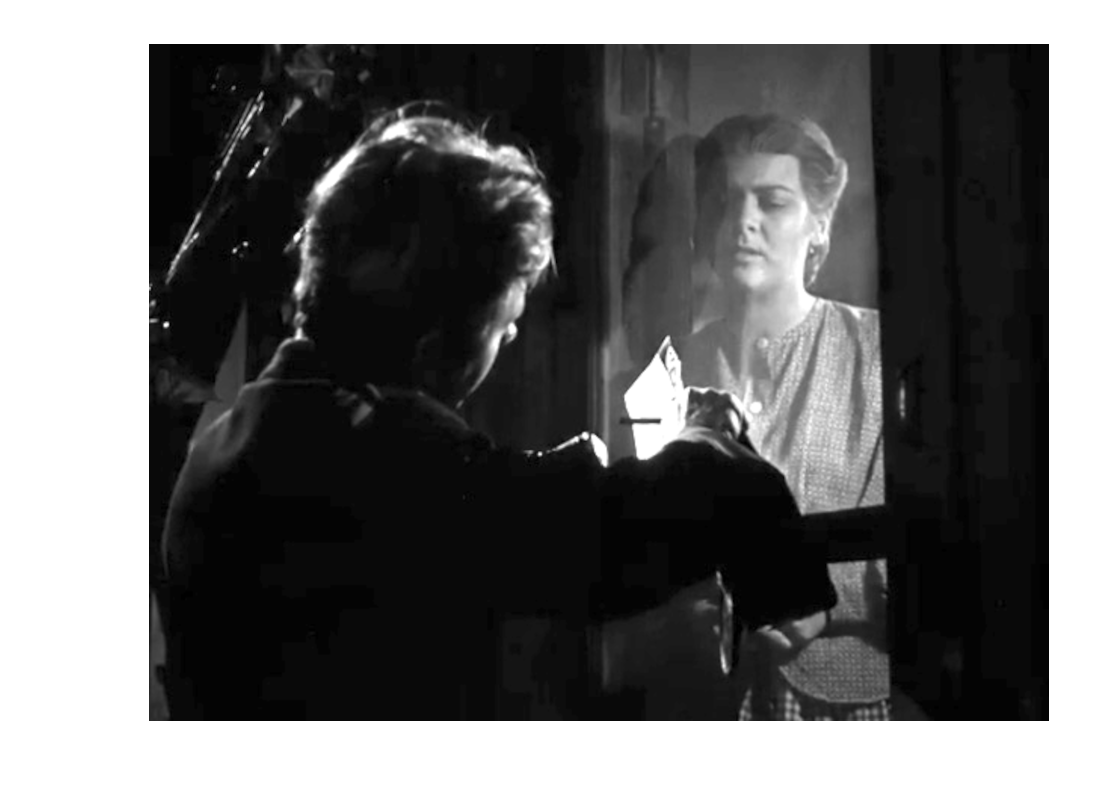
The key scene that Rooney gets just right, is when his Homer must deliver a dreaded “The War Department regret to inform you…” telegram to a Mexican-American mother. Homer stammers a bit, but then shuts up and gives the scene over to the other actor, Ann Ayars. It’s about the woman’s suffering first and Homer’s emotions second. And Rooney plays it flawlessly.
 some rear-projection is used, much of The Human Comedy was filmed in a Calabasas ranch area, resulting in a more realistic, down-to-earth look than we're accustomed to seeing from MGM. The film's music score has a wistful quality reminiscent of quieter scenes in The Wizard of Oz ... MGM's corps of talented music arrangers often augmented the good taste of its filmmakers. The Human Comedy will prove rewarding to viewers able to understand its wartime background. It is said to have been studio head Louis B. Mayer's favorite MGM film.
Hi Glenn, Marsha Hunt had a very personal reason for loving this film. I talk about it in my documentary , “Marsha Hunt’s Sweet Adversity” You can find a link to the film online through my distributor Indie Rights Movies – or it is on YouTube Movies, Pluto TV, Tubi TV.. I hope you get a chance to watch it. I’m trying my best to keep Marsha’s story and memory alive.. GREAT in-depth review Congratulations! – roger
Roger C. Memos correct name!