
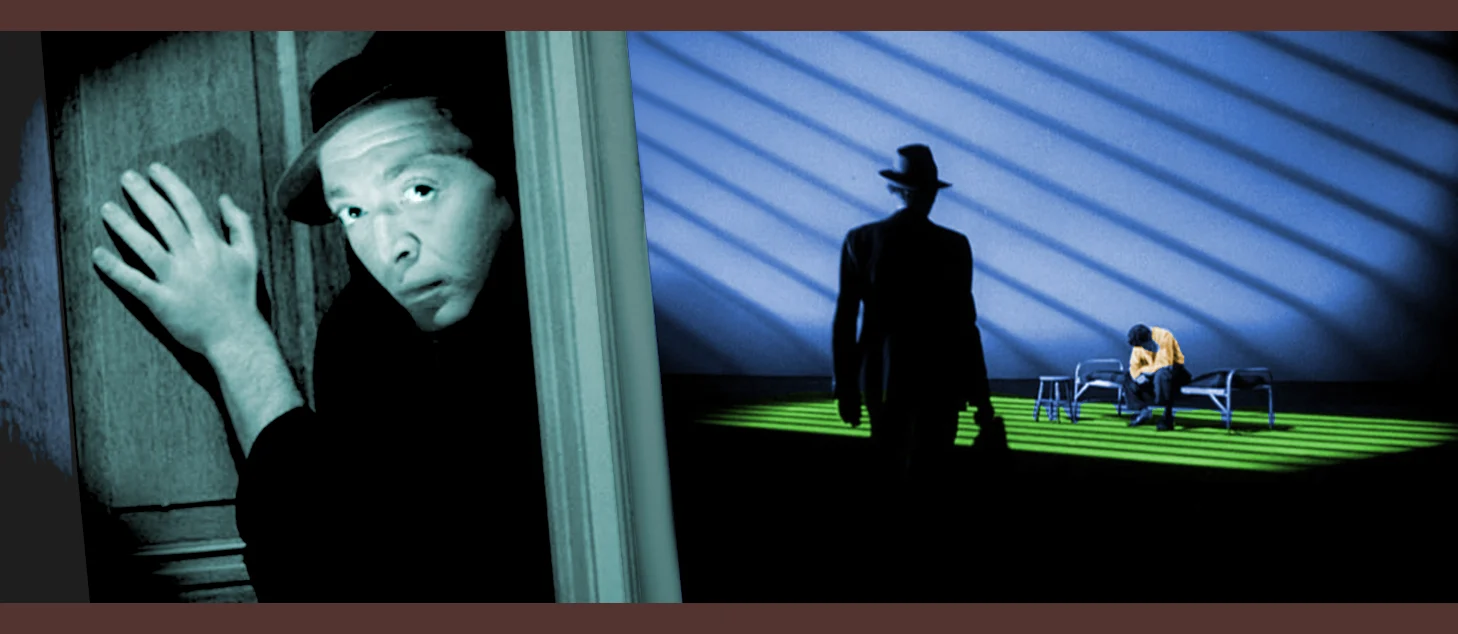
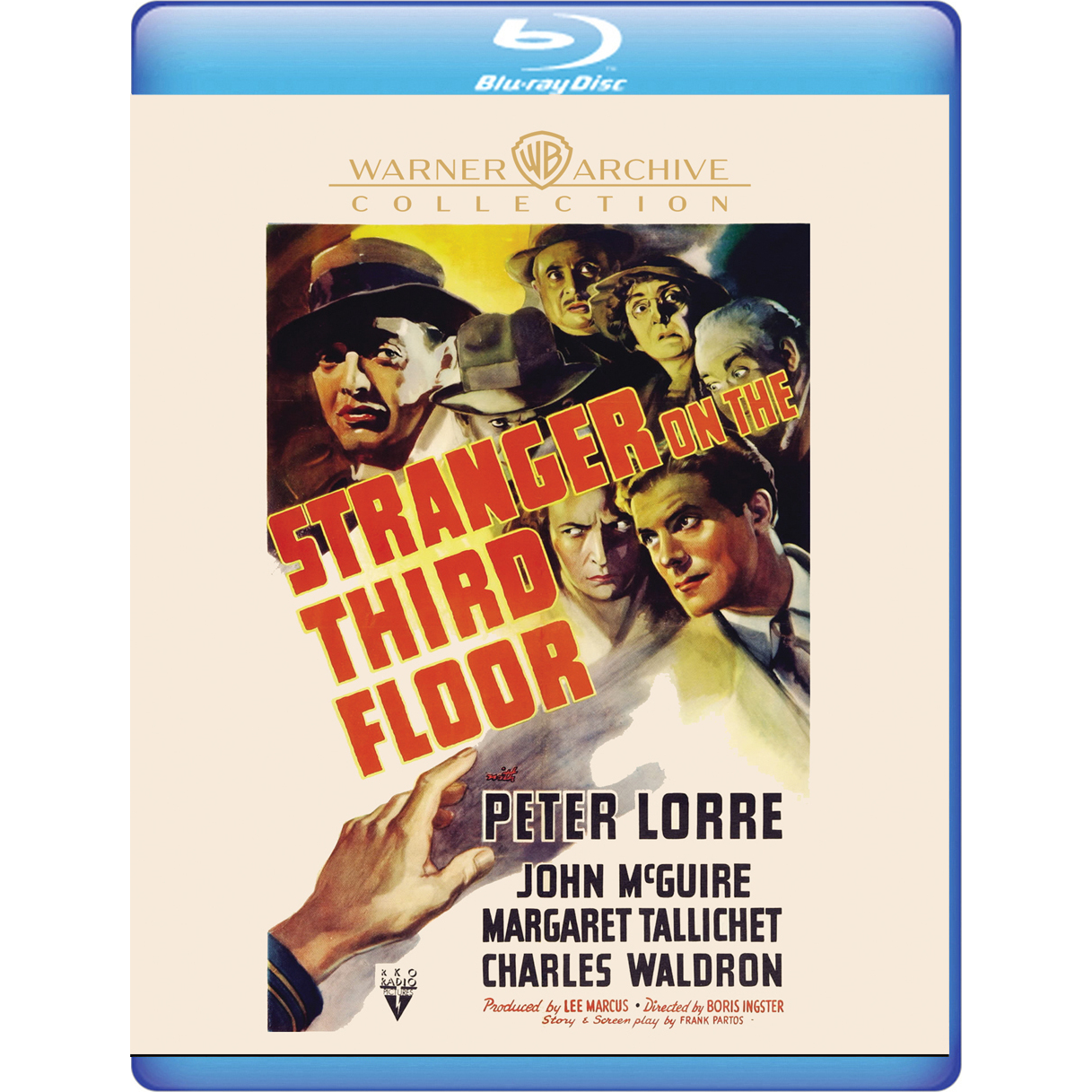

Stranger on the Third Floor plays better now than ever. A big-city soda fountain romance opens up into a full-blown paranoid nightmare, fronting some of Hollywood’s strongest expressionist visuals ever. RKO’s overachieving program picture is pegged as film noir but it’s just as effective as a horror picture. Scarcely more than an hour long, it is a masterpiece in miniature.
First-time director Boris Ingster helmed only three features but continued to a long career writing and directing on TV. Frank Partos would be credited as a writer on the spooky classics The Uninvited and The Snake Pit. They apparently didn’t have much interference from producer Lee Marcus, who in the same year had to oversee 25 RKO productions.
All who see Stranger on the Third Floor remember it. Even Forrest J. Ackerman’s less than scholarly Famous Monsters magazine knew it was something special, as it was featured in an article on scary movies that weren’t exactly horror, but that elicited the same reaction. It was listed with other titles that meant little to young monster fans, like The Queen of Spades. I eventually saw that old article again, in a reprint … many of those titles are now favorites.
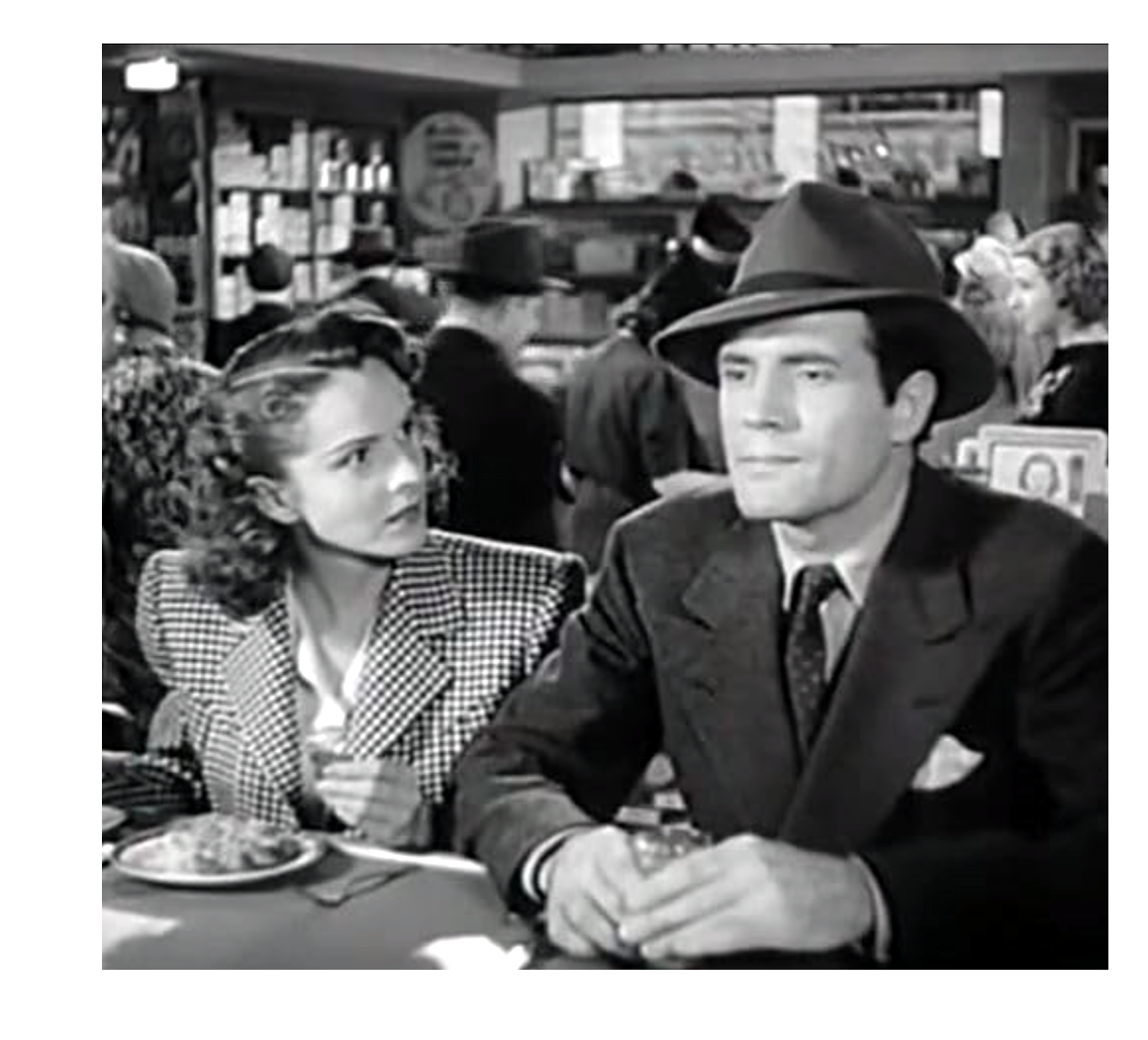
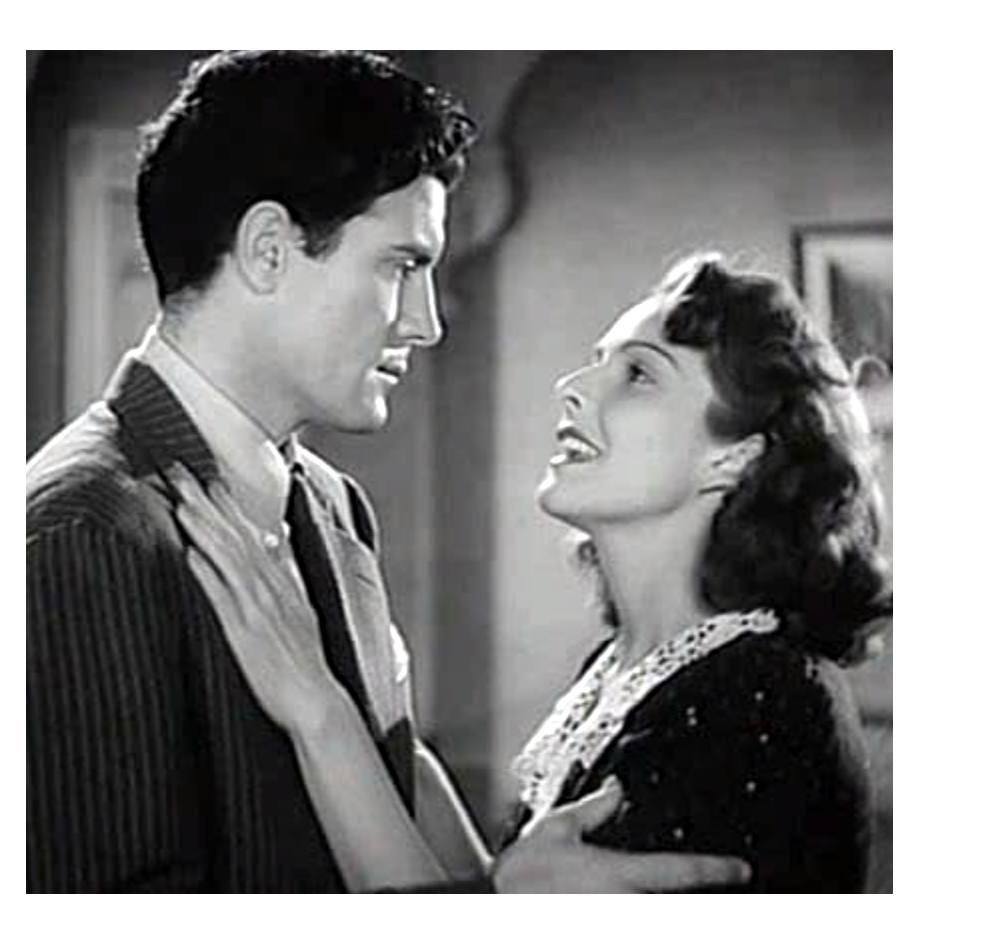
Stranger takes place during lean times in New York. Few jobs pay a living wage. Working ‘kids’ Mike Ward and Jane (John McGuire & Margaret Tallichet) want to marry, but Mike, a newspaper reporter, doesn’t want to commit until he wins a promotion. But opportunity does not come in a desirable way. Mike is a key witness in a murder case, in which cab driver Joe Briggs (Elisha Cook, Jr.) is convicted on circumstantial evidence. Mike is uncomfortable knowing that his testimony, overstated by his newspaper, has weighed the verdict against Briggs. But he can’t be responsible for just telling the truth, can he?
Mike takes Jane up to his room to dry off from a rainstorm, which brings both the prudish landlady (Ethel Griffies) and Mike’s obnoxious neighbor Mr. Meng (Charles Halton) over to heap scorn upon them. When Meng insults Jane’s virtue Mike becomes livid, and says he’d like to kill him. The next day Mike notices that he can’t hear Meng through the paper-thin walls. He then imagines that someone has murdered the nasty old man — and experiences a harrowing nightmare in which he is accused of the crime. Everything he’s said and done works against him as circumstantial evidence. When Mike wakes, he worries more about his neighbor Meng. Could he really be dead? What will Mike do if he is?
Stranger on the Third Floor has long been cited as the first official film noir of the classic period. It contains the visual elements we think of as noir, but Forrest Ackerman had the right idea when he described it as functioning more like a horror movie. We identify with Mike Ward as doubt and fear close in around him, but his panic is not an existential trap as in the noir The Dark Corner, nor does it spring from a character weakness. Mike isn’t a self-defeating loser hero like Al Roberts of Detour. He’s just an ordinary guy with ordinary desires and no particular axe to grind. Guilt is imposed from without and amplified by doubts from within. Putting aside the fate of a condemned man because it’s convenient for his career …. guilt. Taking a girl up to one’s room, and being shamed by the disapproving neighbors … guilt.
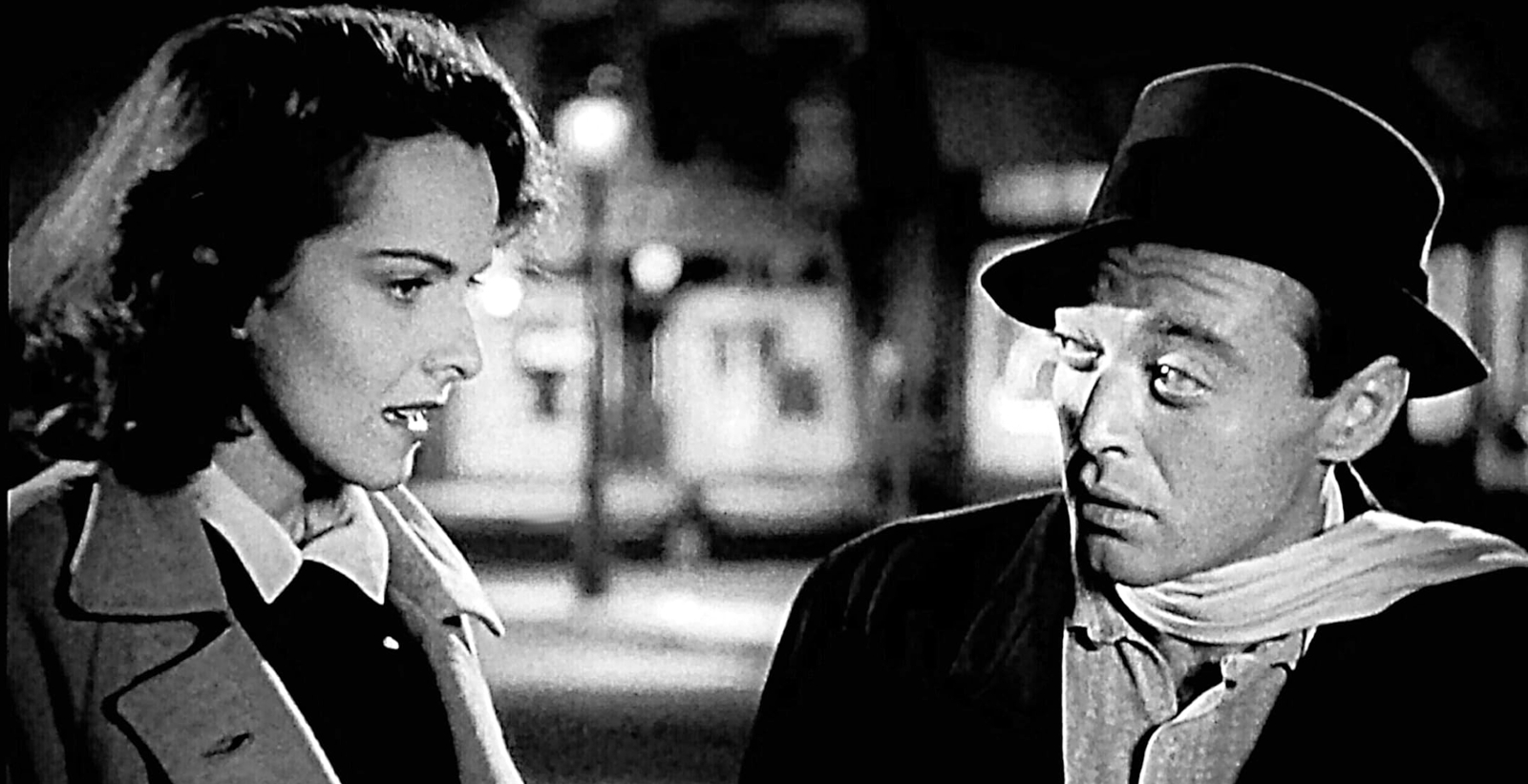
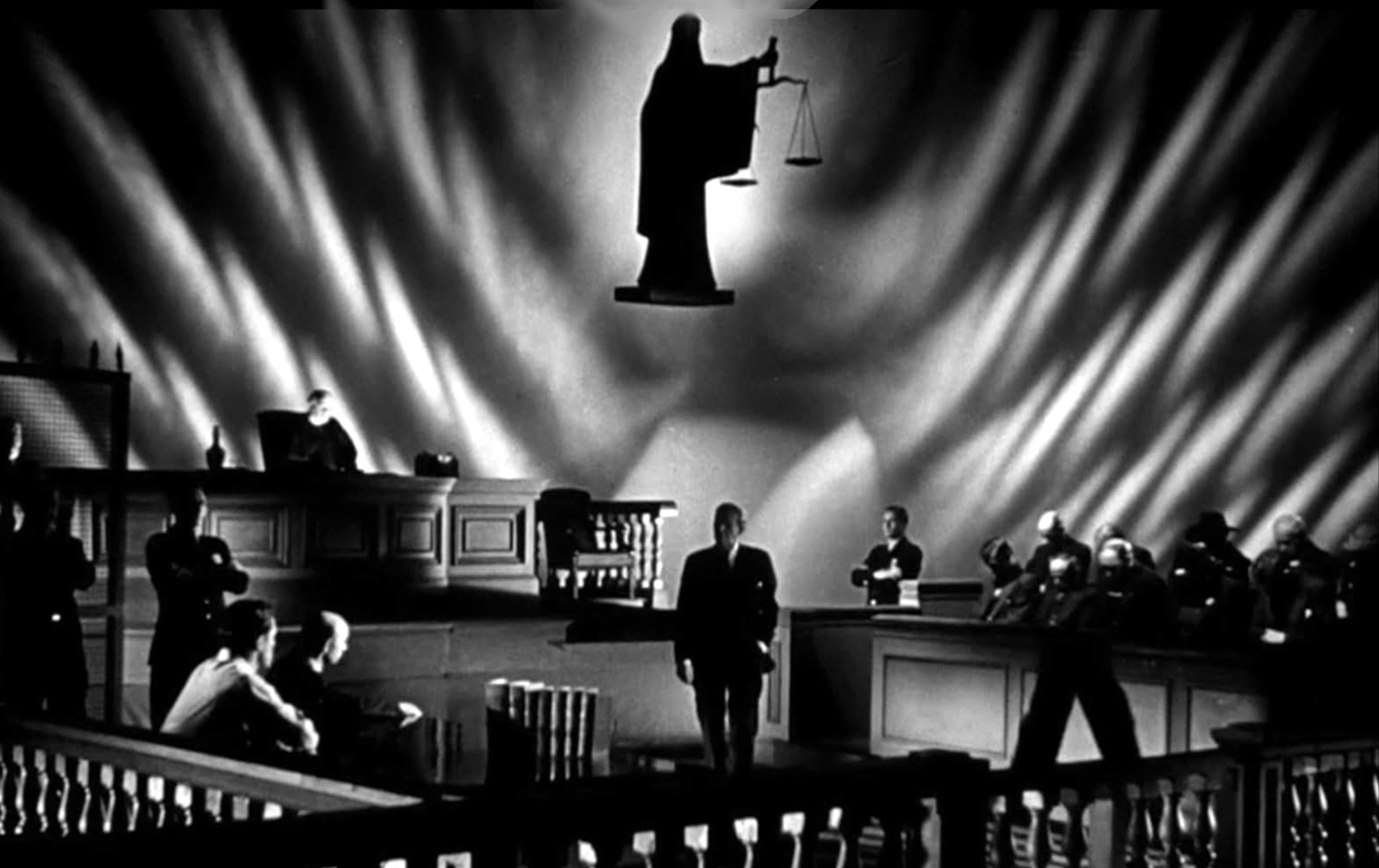
The bulk of the movie takes place on street-level New York, represented by a vivid studio street set. The wannabe bride and groom must conduct their romance on barstools at a local lunch counter. Beyond that, there’s only Mike’s cramped room, where he can’t even use a typewriter without his intolerant neighbor Mr. Meng protesting the noise. What everyone remembers, of course, is the horrific nightmare sequence, which kicks the film into full-on Cabinet of Dr. Caligari mode. Crazy distorted visuals follow one another in fast succession as smug policemen and smirking officials railroad the boy for Meng’s murder. Mike’s cell and the courtroom dock are islands in a forest of monstrous shadows; everything seems to be happening in a malevolent limbo. Everybody is against Mike. The judge and his officers presume his guilt and the jurors sleep like dead men. With perfect irrational dream logic, even the victim Meng turns up in the courtroom to jeer at him. Mike walks the last mile alone and abandoned…
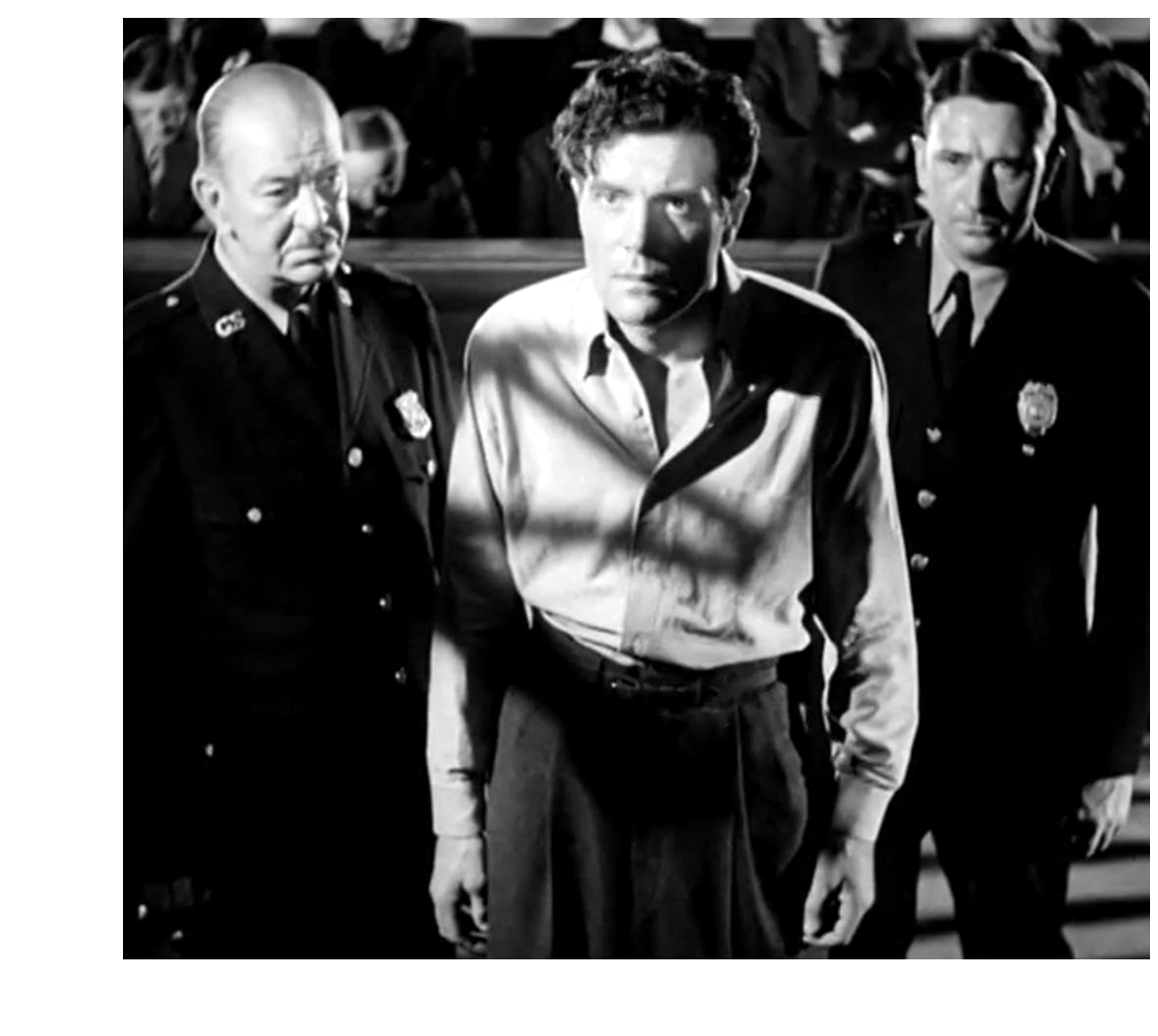
This must have been powerful stuff in 1940. The visual onslaught makes the audience feel Mike’s nightmare of persecution and helpless isolation. The delirious courtroom nightmare is not a serious statement about justice in America, but an ‘interior’ fantasy that belongs in the Land of Oz, or Dante’s Inferno. The graphic stylization is of course a dose of classic German Expressionism, served straight up.
Stranger certainly didn’t introduce expressionist visuals to American films. American talkies associate the style mainly with a few horror movies, isolated montages and effects scenes, some of them made by expatriate European directors. A primary precursor was Busby Berkeley’s weirdly sinister, epic musical number Lullaby of Broadway from Gold Diggers of 1935.
The Tell-Tale Noir
So, is Stranger on the Third Floor really noir, or not? The answer is yes, with reservations. It passes the checklist test for a noir of the classic period. But it functions more like horror, with a psychological effect more like an Edgar Allan Poe Story. Mike Ward’s friction with Mr. Meng mirrors Poe’s The Tell-Tale Heart, right down to the audio cues that fuel Mike’s anger. Ward is more than a little aggressive with his emotions. His outbursts include thoughtless, rash death threats. Are they just a plot device to make his trial go badly, or are they a manifestation of an irrational fury against the despised Mr. Meng?
Many films noir present the struggle of a man to prove himself innocent of a murder he didn’t commit. A subversive few try to surprise us with the revelation that the hero is actually guilty. A couple of late noirs by Nicholas Ray and Fritz Lang take this gambit to the next level — In a Lonely Place and Beyond a Reasonable Doubt.
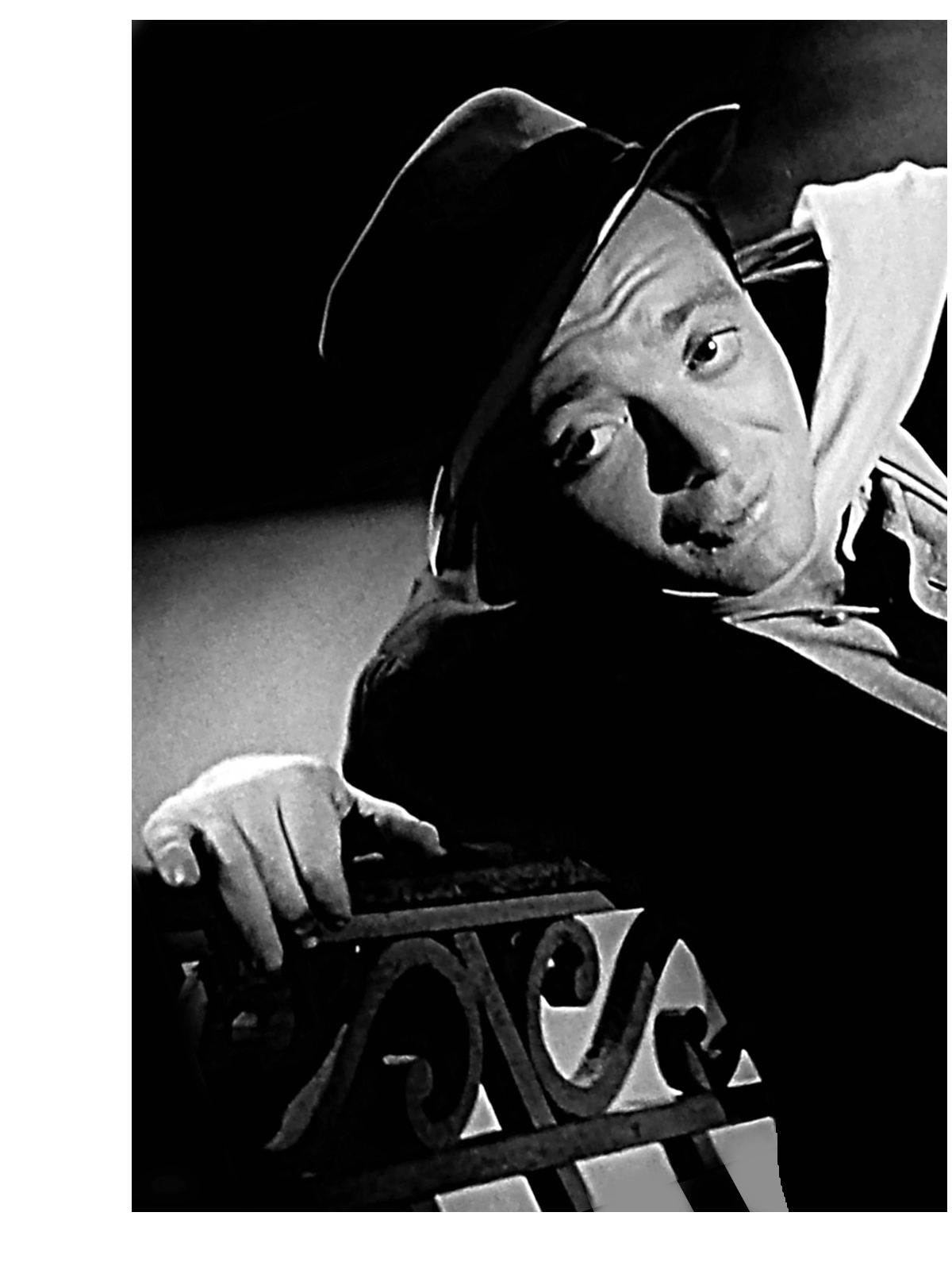
Peter Lorre is given star billing but appears on screen for just a few minutes as ‘The Stranger.’ Production-wise, that’s a low-budget horror gambit: write a script that needs Karloff or Carradine only for two days but use their names for marquee bait. Lorre makes every moment count with an exaggerated take on his previous child-killer in “M”. The Stranger is another mess of psychological disturbances. He is tender and loving to small animals, but apparently slaughters people without the slightest sense of responsibility. A psychology student might laugh at the schematism of it all — The Stranger is like a piece of Mike Ward’s personality, split off to commit the nasty crimes Mike only thinks about. If the movie has a flaw, it’s that the nightmare sequence is its real climax, and that the mystery wraps up too quickly. Lorre appears barely long enough to … no spoilers. Here’s Peter! — and there he goes.
Able-bodied actor John McGuire makes for a likable hero, but he pretty much missed the big career opportunities. He had played a proto- ‘John Wayne’ role in John Ford’s Steamboat ‘Round the Bend, where he was even given the character name ‘Duke.’ From this movie forward, McGuire’s true-blue looks mostly got him bits as cops and soldiers. He is memorable as the unlucky cop at the beginning of the noir classic He Walked by Night.
Cute but capable, Margaret Tallichet reminds some viewers of Frances Dee. She had ambitions as an actress and got off to a great start, only to retire when she married director William Wyler, who didn’t want her to work. Charles Halton, the humorless bank examiner in It’s a Wonderful Life, is at his slimiest as Mr. Meng — he represents every roadblock standing in the way of young lovers. It’s a generational constant: why don’t unpleasant fossils like Meng just die, and make room for us wonderful young folk?
↓ After Lorre, the most expressive face in the movie may be that of Elisha Cook, Jr., the cosmic loser in film classics by everybody from Huston to Hawks to Stevens to Kubrick. Cabbie Joe is saved, but not because anybody stuck their neck out for him — a handsome hero’s life had to be on the line first. But the glorious trio of handshakes at the finale is not diminished — the grateful Joe doesn’t care how his freedom was regained. I’d identify Stranger as Cook’s breakout role, but he continued to play bit parts throughout his career, scattered between his more noted appearances. Both he and fellow ‘any role, any time’ veteran Douglas Fowley share a 10-second comic bit in Spielberg’s “1941“, and were scarcely acknowledged on the set.
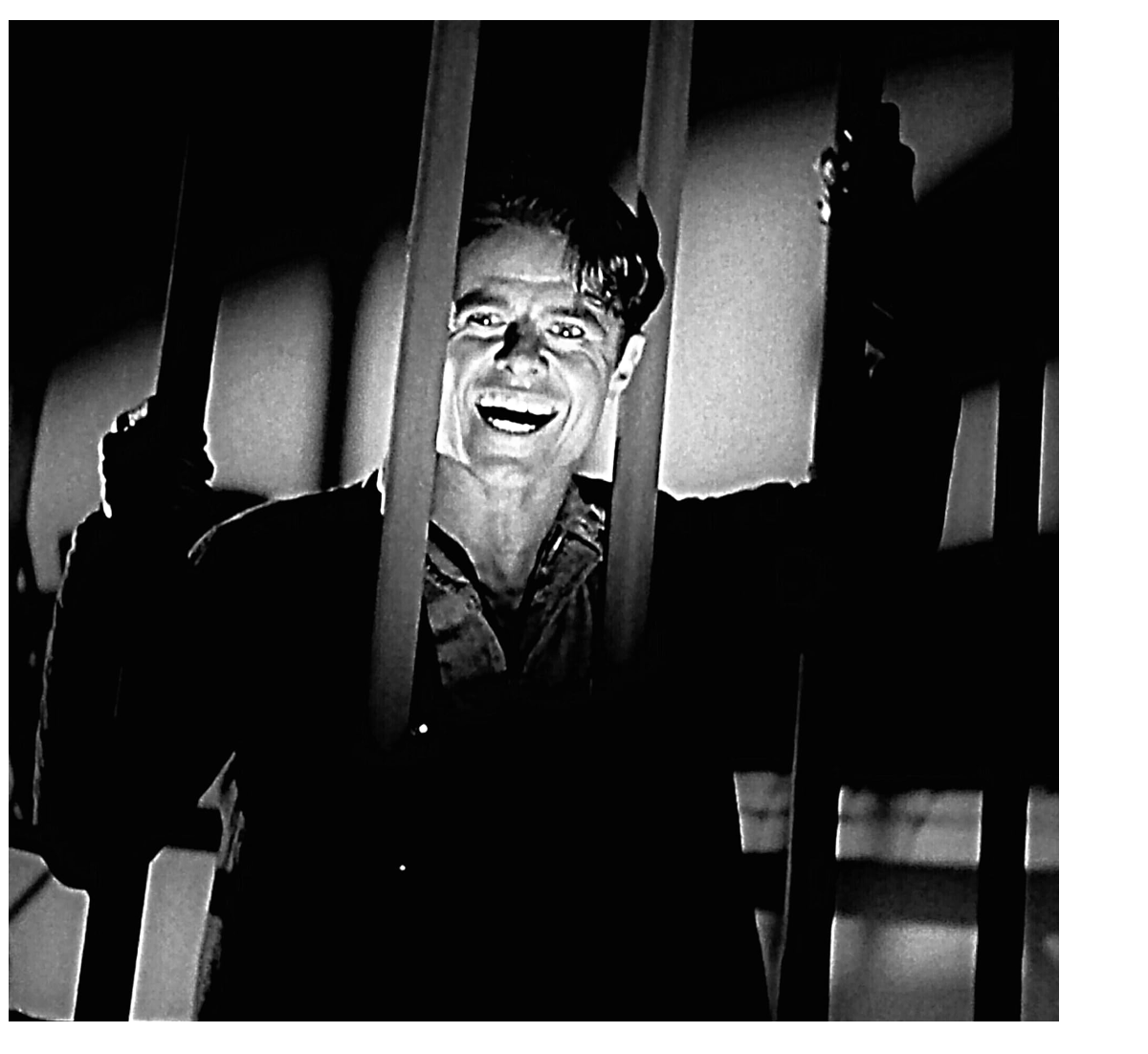
Appreciation for the director of cinematography Nicholas Musuraca would also come only later, when critics began extolling the consummate artistry in his Val Lewton pictures and noirs like Out of the Past. Musuraca’s work on Cat People established the RKO house style for thrillers of all kinds. He takes the stylized nightmare scenes all the way — each shot is a little nightmare in itself.
That radical dream sequence surely inspired Hitchcock’s ‘Dali’ episode in Spellbound. But, unless one fetishes shadows from venetian blinds, not that many noirs succumb to full-on expressionism. Kirk Douglas pitches forward into a stark death-portrait at the end of Billy Wilder’s Ace in the Hole, a jarring effect with an expressionist element. But it isn’t blatantly abstract or a distortion of reality. The interesting thing about Stranger’s nightmare scene, is that it is more extreme than the German originals themselves.
It didn’t pay for a small film to have artistic pretensions in 1940. Critic Bosley Crowther led a chorus of critics that dismissed Stranger on the Third Floor as incompetent and pretentious, decreeing that director Ingster’s “inspiration has been derived from a couple of heavy French and Russian films, a radio drama or two and an underdone Welsh rarebit.” Ingster’s crime was not conforming to bland realism. “The notion seems to have been that the way to put a psychological melodrama across is to pile on the sound effects and trick up the photography.” Sounds like a fair start to me.
Stranger on the Third Floor would make a great double bill with Preston Sturges’ Christmas in July, a classic comedy released the same year. Both feature young couples frustrated by a stagnant job situation, a lingering effect of the Depression. Neither couple has any privacy. They are dogged by self-appointed chaperones that assume they’re doing sinful things. It’s interesting how the structures of comedy and horror can be so similar. Both men try to succeed through writing. One enters a foolish contest for an advertising slogan, and the other seeks the promotion that a successful, sensational news story can give him. And both fall into a nightmare partially of their own making.

Out of curiosity, what were the other films on that Famous Monsters List?
I was having trouble recalling them. The obvious ‘must have been one of them’ is Night of The Hunter, though. Any help from readers on this?
Great to see some appreciation for actor John McGuire who (in spite of being second-billed) is the actual star of “Stranger on the Third Floor”. This is a performer I’ve always liked – even though only a few of his roles have been substantial in length. But – when given a chance to shine – I felt the guy always delivered.
First saw him in Ford’s Will Rogers gem “Steamboat ‘Round the Bend”(1935) and I thought he and Anne Shirley really did great work as the young lovers of the piece. McGuire was a Fox contract player at the time. His other major appearances at Fox were in less prestigious vehicles. But titles like “This is the Life” (with Jane Withers) and “Charlie Chan at the Circus” were thoroughly entertaining, the more so for McGuire’s presence in them.
After that, though, Fox seems to have lost interest in developing him as a star personality and roles got smaller and smaller.
But 1940 seemed to represent a real uptick in his film fortunes. Aside from his turn in RKO’s “Stranger on the Third Floor” in which I find him sympathetic, committed and quite charismatic, Mr. McGuire also had the de facto lead at Fox in what sounds like a rather intriguing B called “Street of Memories”. He plays a man grappling with amnesia – a part which I think would be a good fit for McGuire’s proven knack for conveying earnest intensity. Unfortunately I’ve never seen the film. Seems to be a particularly elusive item in the Fox catalogue.
Next stop was Monogram – but in one of their most entertaining chillers, “Invisible Ghost” supporting Bela Lugosi and Polly Ann Young. McGuire has a dual role in this one (as twin brothers) and carries off the assignment with distinction.
Sadly, after that it was mostly bits – though sometimes in classics like “Shadow of a Doubt”. He and Dave Sharpe were enjoyably ruthless villains in “Bells of San Angelo” a Roy Rogers Trucolor effort from 1947. And I thoroughly agree with you that he was excellent in “He Walked By Night”. The role was brief but – within that context – McGuire made his character memorably sympathetic.
As the 50’s arrived, McGuire had fully maintained both movie star looks and rock solid acting chops. But – inexplicably -the guy continued to be consigned to bits.
By 1952 he’d left films. After that a blanket of silence seems to have descended on all his subsequent activities. The next time he seems to have made any ripples at all in the press was when he died in 1980 at age 69. That occurred in Dublin, Ireland.
And how the man’s journey brought him from Hollywood to there is a mystery that will probably remain unsolved.
I 1st saw this on a Peter Lorre quadruple bill at the great and lamented Scala cinema in London. I think with Mad love, You’ll find out and Black Angel. Fabulous
Thanks for celebrating the contribution made by Nicholas Musuraca who deserves more admiration. His superb lighting skills are also notable in another recent Warner Archive release The Mad Miss Manton.