
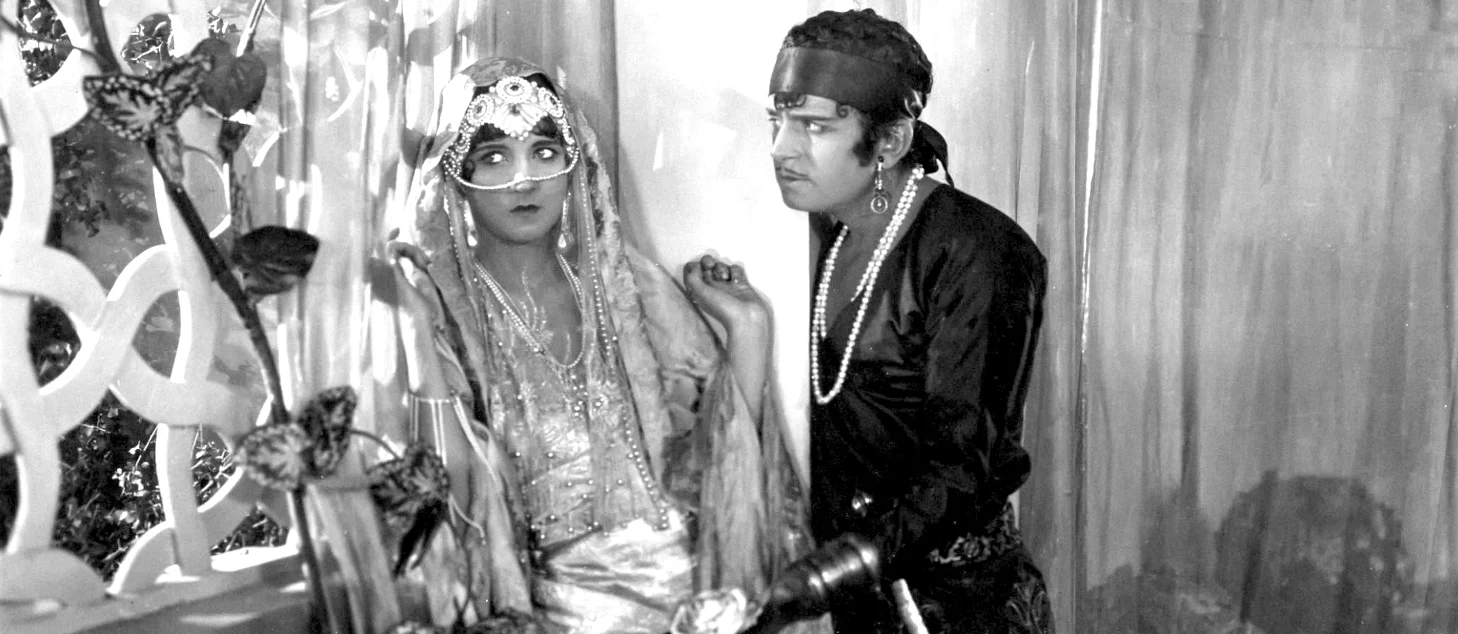
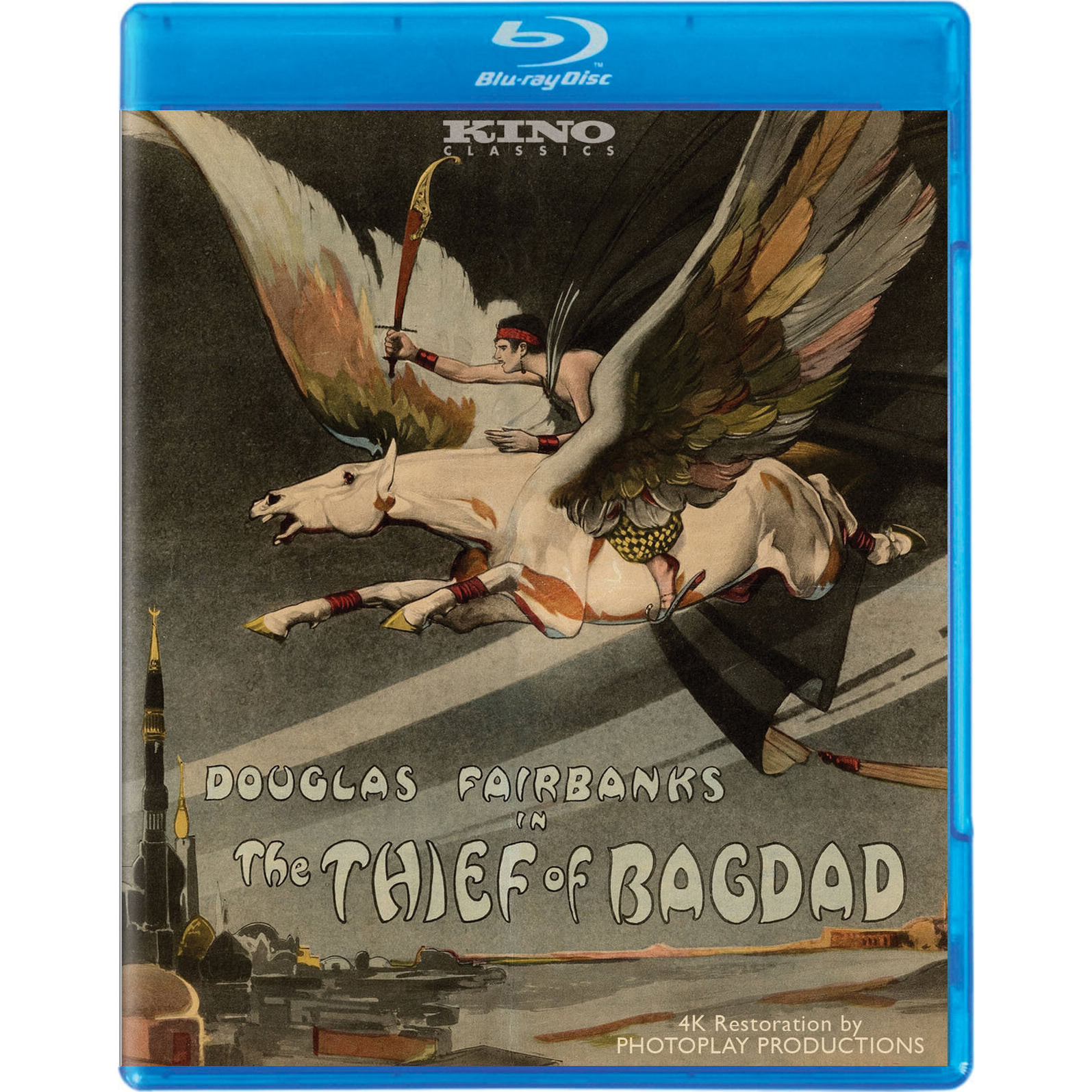

With the coming of Blu-ray we started seeing parallel releases of some silent classics from different video companies, as with the films of Buster Keaton. Back in 2012 the TCMfest screened a fabulous restoration of Douglas Fairbanks’ The Thief of Bagdad for its closing night, and the next year an excellent Blu-ray appeared from The Cohen Film Collection. Another restoration of the Fairbanks epic was done a few years later, and now it’s on Blu-ray through Kino Classics.
Photoplay Productions’ restoration has some differences, including a different running time. What immediately grabbed our attention were the extras, which include rare vintage film associated with the production.
1924’s The Thief of Bagdad must have seemed the wonder of the ages. It had the biggest star of the era in a production that dwarfed anything Americans had ever seen: a towering Arab city, magical domains in dark grottoes under the sea and in the sky. Movies once convinced people that Hollywood could create entire environments out of nothing, and this picture tops all previous efforts. Its sets are bigger than those of Intolerance and its costumed crowd scenes rival the enormous Italian spectacles of the day. What’s more, the picture is packed with elaborate special effects, many of which still have the power to impress.
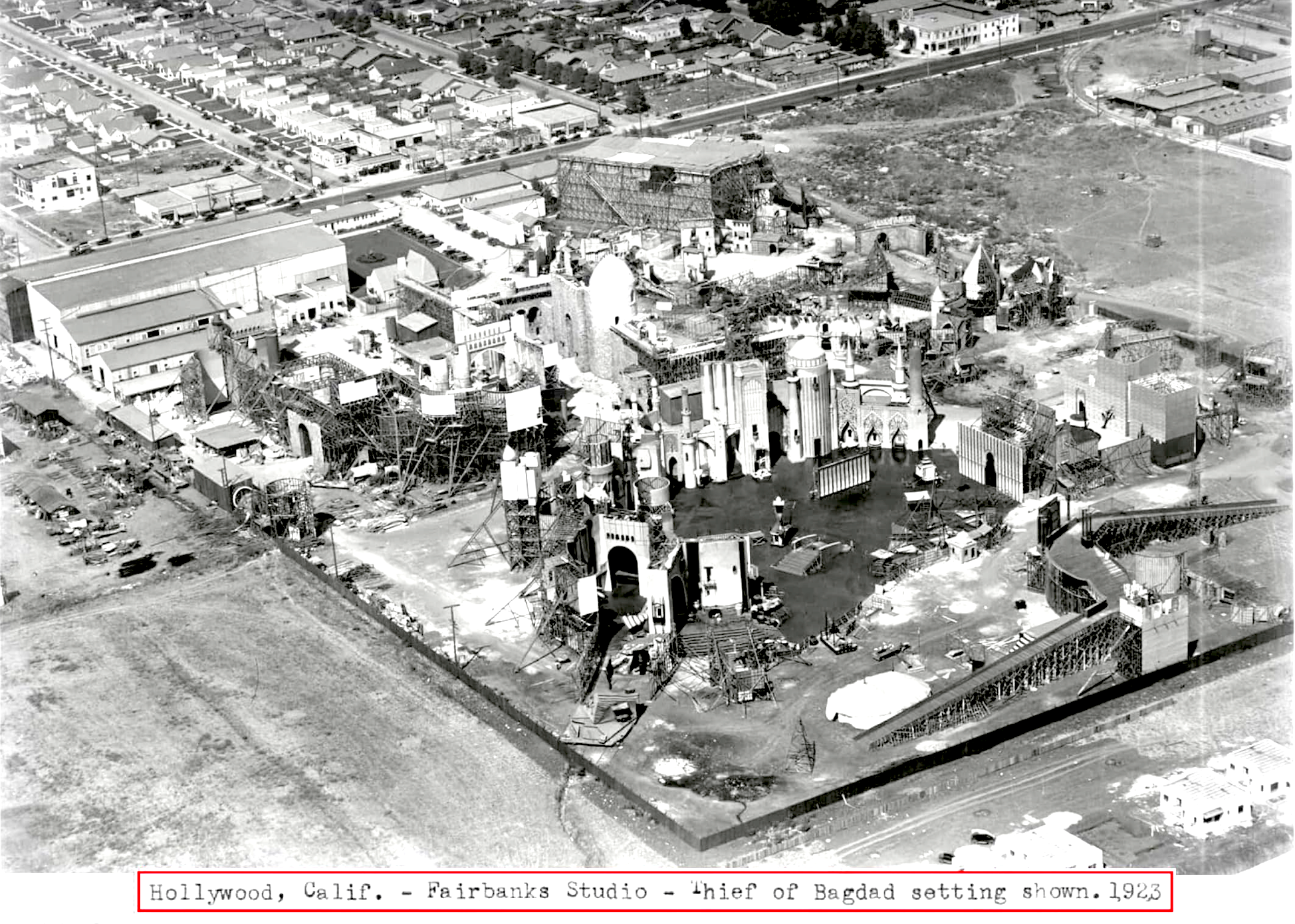
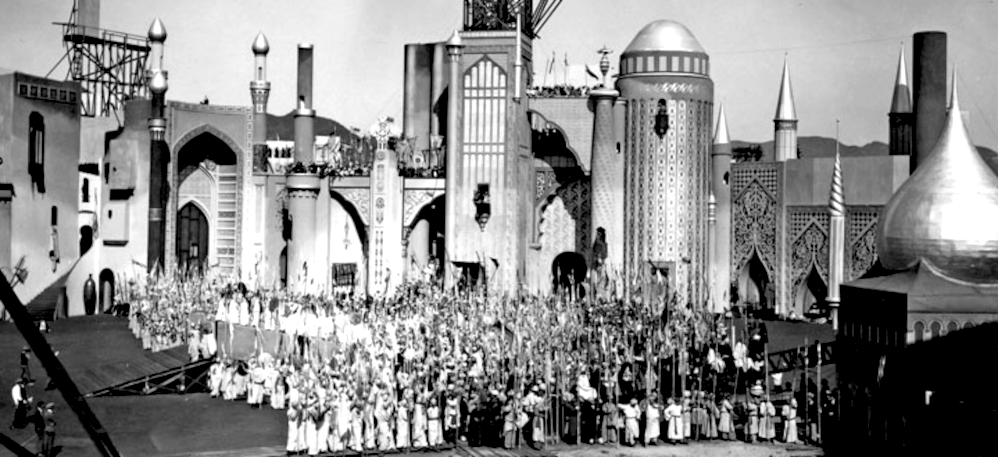
The credited director is the talented Raoul Walsh, but the wonder man behind everything was Douglas Fairbanks, a true superstar whose image of vigor, virtue and robust vitality was celebrated world-wide. Clearly running away with his own ambitions, Fairbanks poured unheard-of resources into his giant film. Its sets were constructed at Hollywood’s Pickford-Fairbanks Studios, where the Goldwyn Lot later stood; it’s now called ‘The Lot at Formosa.’ ↓ That enormous elevated ramp in the foreground is impressive … was it built as a platform for a moving camera? — the images enlarge —
The story takes its cues from several ideas in 1001 Arabian Knights. The happy Thief (Fairbanks) scoffs at a faithful, wise and kindly Holy Man (Charles Belcher), and amuses himself by stealing purses and food in Bagdad’s market. He hides his loot in a secret cave at the bottom of a well, where his ‘Evil Associate’ (Snitz Edwards) keeps watch. Taking up the dangerous challenge of burgling the enormous palace of The Caliph (Brandon Hurst), The Thief sneaks past the guards, only to be captivated by the sight of the Caliph’s beautiful daughter (Julianne Johnston). Three rich Princes have come to compete for the Princess’s hand, including a conniving Mongol (Sojin Kamiyama), whose spy-slave (Anna May Wong) has been embedded in the palace staff as the Princess’s handmaiden. The Thief disguises himself as a fourth Prince. Before he is captured, he gets close enough to the Princess to profess his love.
Stalling for time, The Princess asks her father to send her three suitors on a seven-moon search for treasure, with the one who brings back the most incredible gift to be her husband. The Thief has escaped with just a bad whipping, but his heart is even more deeply wounded. The Holy Man has the answer … if he is to win the Princess, he must become a Prince.
100% Irony-Free
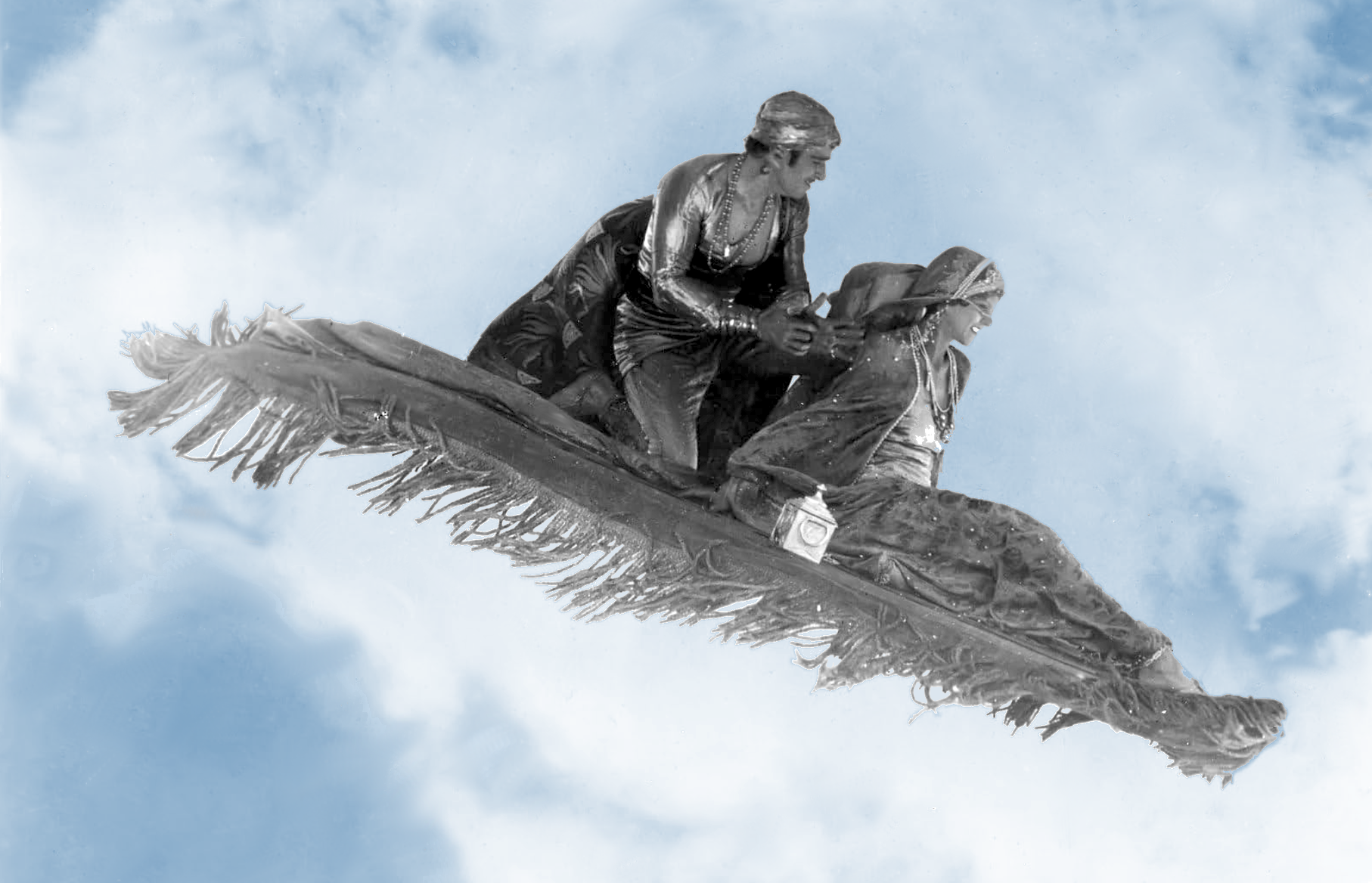
The Thief of Bagdad captures a storybook purity that today’s movies have lost. Its satisfying motto is Happiness must be earned, even though The Thief would more accurately state, I get by with a little help from my friends. What makes the difference is The Thief’s / Fairbanks boundless optimism and energy. He takes nothing seriously; he laughs at life until love makes him feel unworthy. With just a little Holy counseling, The Thief is dedicating himself to feats of daring and danger on a hunt to collect various magic items. Before you can say ‘Legend of Zelda’ the screen overflows with wonders: a magic carpet, a golden apple of the sun, an all-seeing eye, a cloak of invisibility, a winged horse. The topper is a magic item that can do just about anything its bearer desires, including conjure an entire army out of nothing.
The Princess is sweet, the various Arab muckety-mucks amusing (one is our fave actor Noble Johnson) and the villain quite interesting. The Mongol Prince’s aspiration to wed the Princess is but one step in his dastardly plan to conquer Bagdad. Anna May Wong’s treacherous spy feeds him inside information. She poisons the Princess at his command, and helps him sneak a commando force into the Caliph’s palace disguised as gift-bearers. The entire last act of The Thief of Bagdad is one exciting or miraculous scene after another.
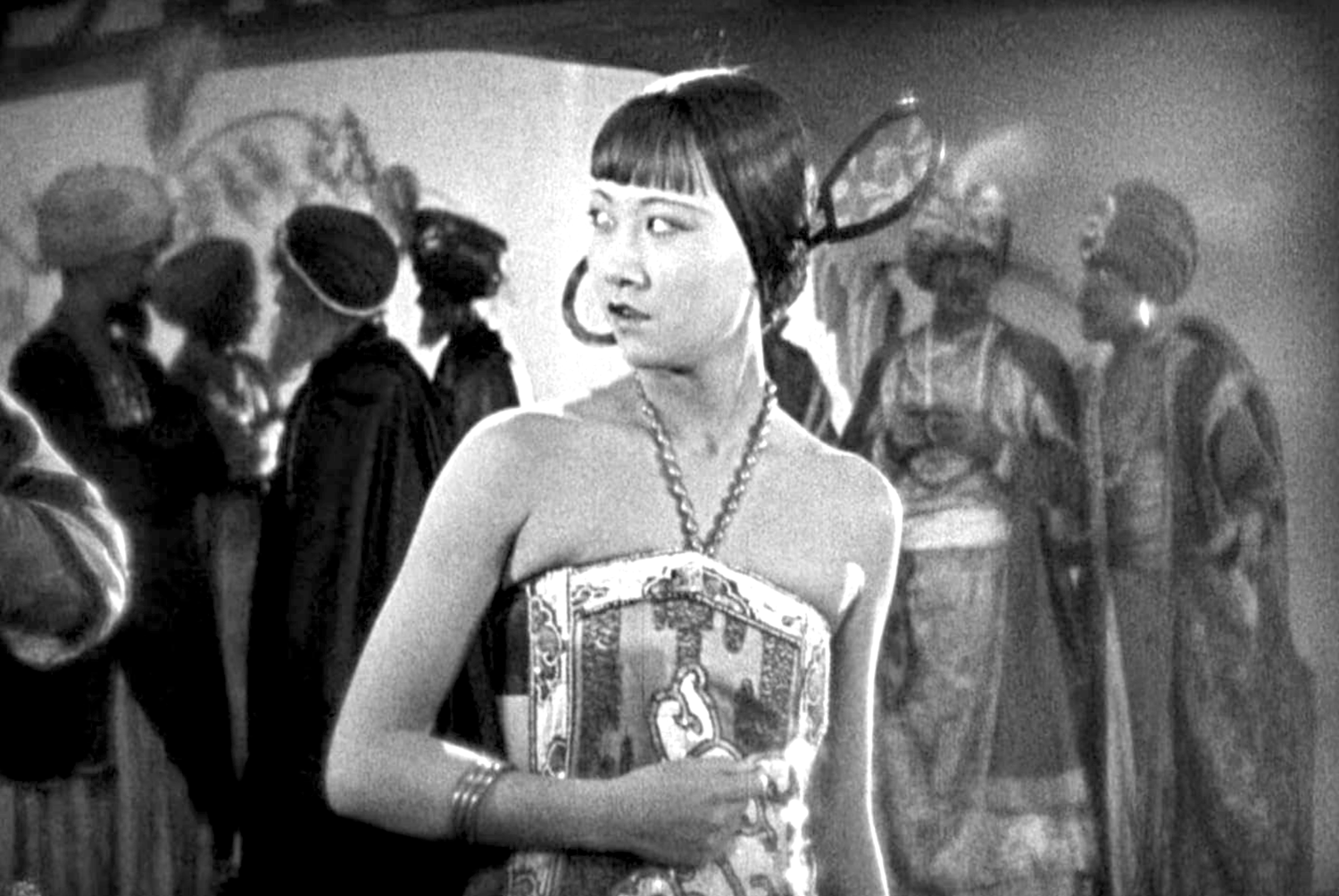
Some critics prefer Douglas Fairbanks’ earlier modern-day adventures to his twenties’ costume epics, but this dazzler still takes people’s heads off. The production’s overall design and execution are coordinated so tightly that the illusion of grandeur is complete: sets, costumes, lighting, special effects. Even now, the impression is of being in a magical place, not some movie set. Fairbanks’ costume designer was the future director Mitchell Leisen, a perfectionist who insisted on the finest fabrics for his sophisticated costumes.
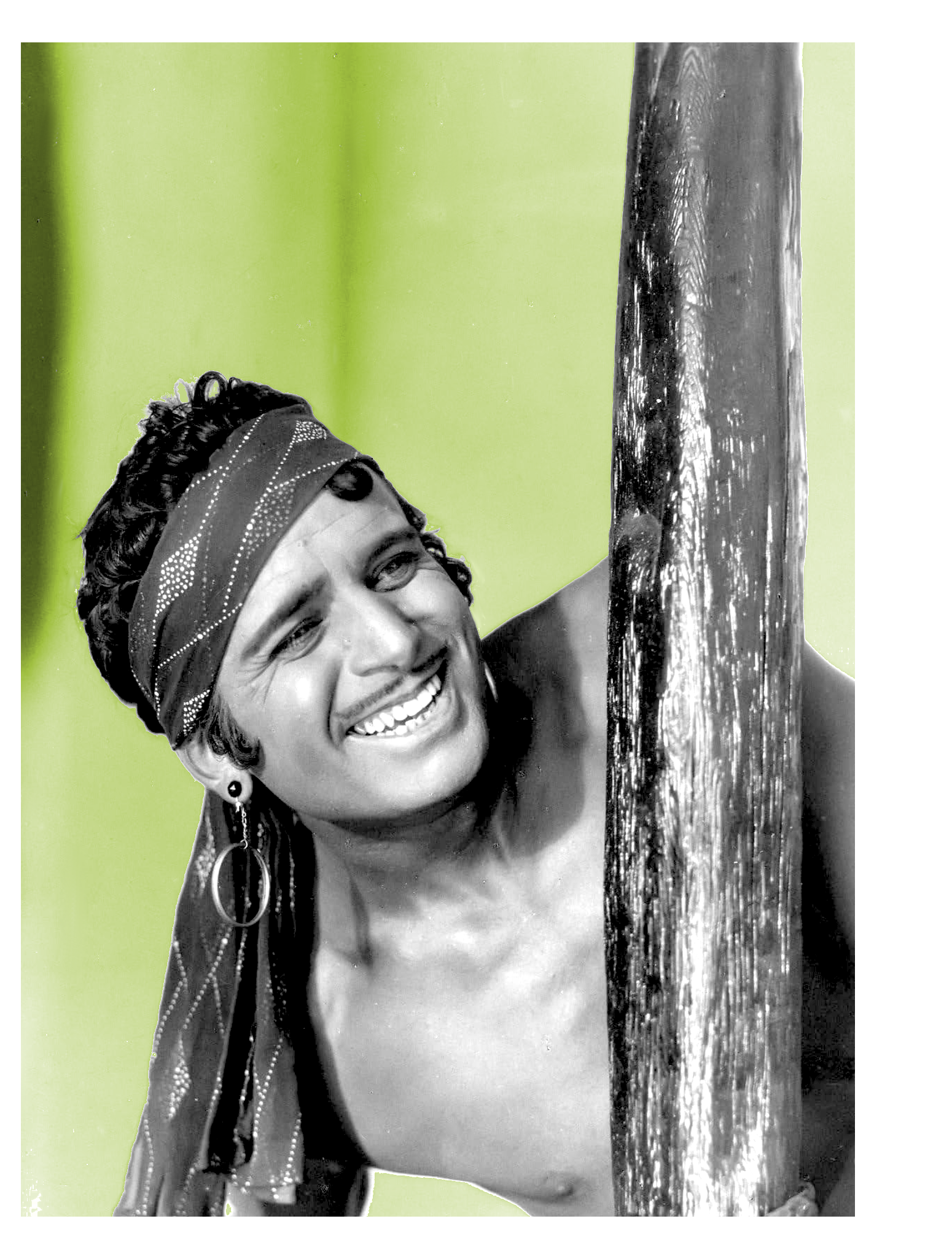
Exotic film costumes in the 1920’s often looked more suitable for Minsky’s runway. The Princess and her court wear neither robes atop robes nor ersatz lingerie, but fine attire that might make a woman feel like a princess. Every serf and soldier has something interesting to wear. The Mongol Prince’s commandos sport impressive battle helmets, and halberds appropriate for harvesting cocoanuts.
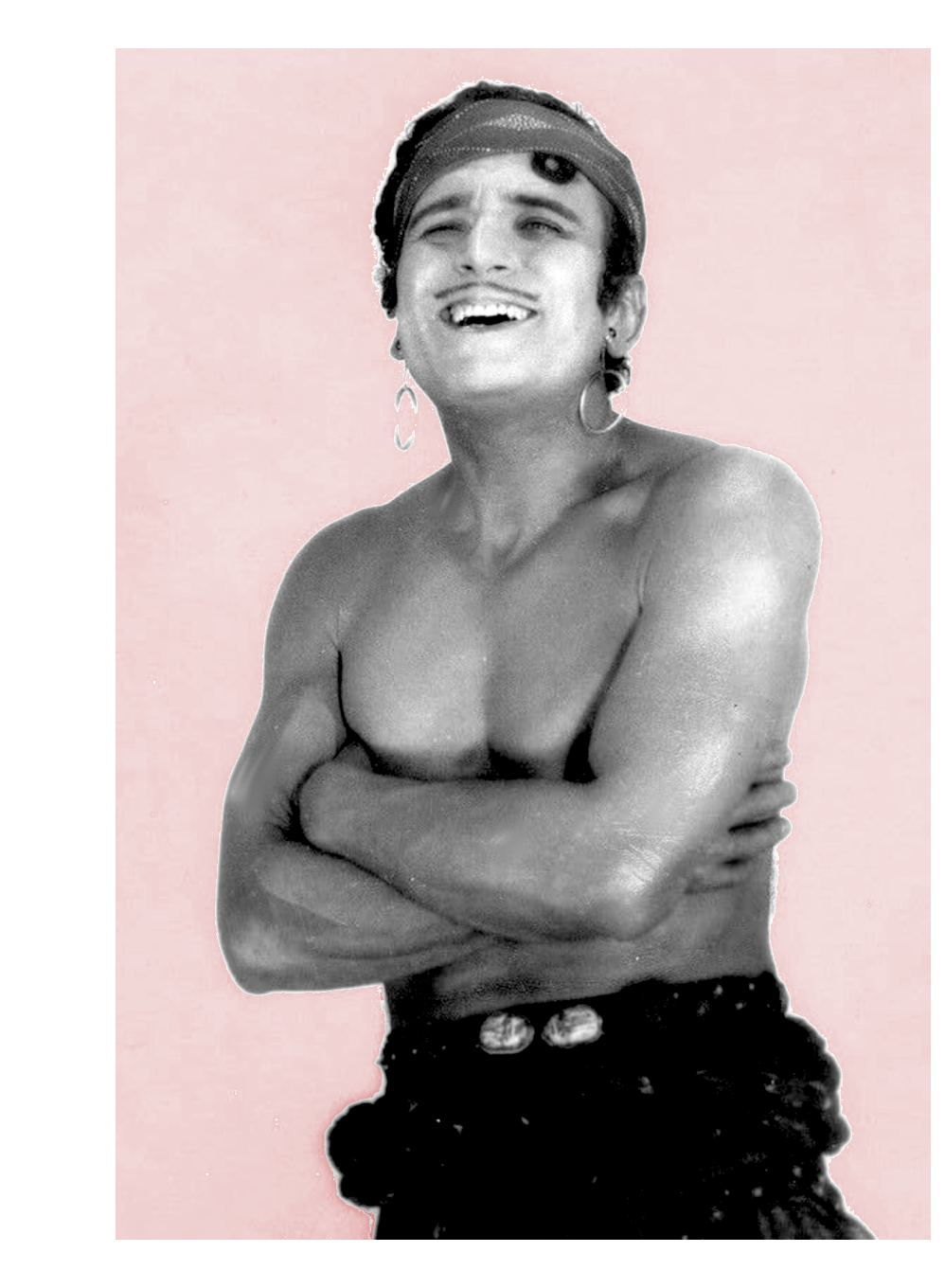
For most of the picture The Thief goes about in patterned pants and a headband, showcasing the dazzling smile and incredible physique that had made Douglas Fairbanks a dream lover for a generation of women. The ‘prince of Hollywood’ had just turned 40, and looked like someone who would be forever young.
The film’s visual genius is William Cameron Menzies, classic Hollywood’s most famous Production Designer — a job title that was invented for him. His design work ‘directed the camera’ for the classics Gone With The Wind and Kings Row, and when he became a director, his designs were the most important element in the movies Things to Come, Address Unknown and Invaders from Mars. For Fairbanks’ outsized epic Menzies constructed gigantic structures on the West Hollywood film lot, and then augmented them with expert glass paintings. The palace wall (a giant row of curious panels) and the palace interiors are architectural wonders that glow with light and have enough shiny floors to employ a squadron of wax & polishers. Filmed dry-for wet, an undersea kingdom is all curves and flourishes; other structures look vaguely Moderne, but not quite Art Deco.
Most importantly, Menzies gives The Thief of Bagdad a sense of enormous scale. The Thief enters the palace by climbing a vast web of ivy snaking up a wall that must be forty feet high. Many shots hold wide to show characters moving like ants amid structures too big for Mount Olympus.
Old ‘flat and square’ standard movie screens could look enormous in old movie palaces; audiences had to tilt their heads up and down as well as left and right. Menzies’s designs make the screen look even bigger, playing spatial games with the relative sizes of objects. An ivy-covered wall is several stories tall, and Menzies makes it feel even taller. We saw Thief on the extra-tall screen of The Egyptian Theater. On an appropriate screen, a vintage flat film like Metropolis or King Kong can look truly colossal.
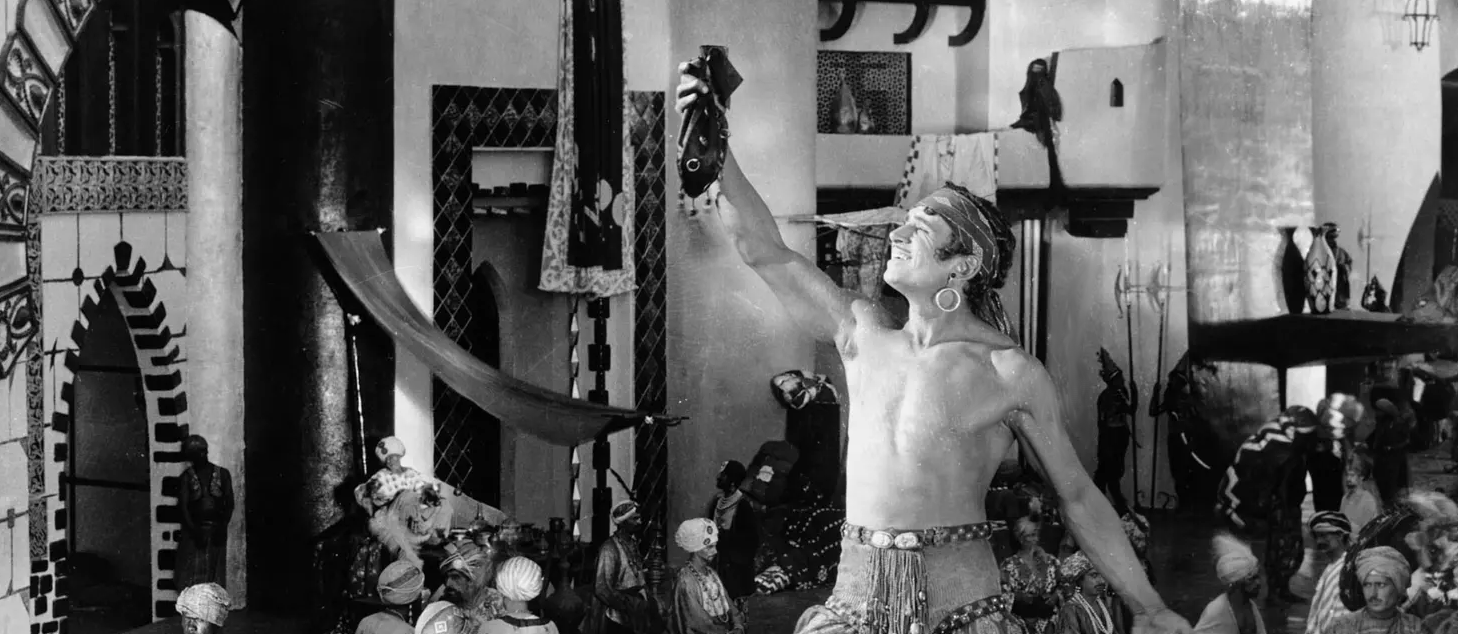
The effects are of course very old-school. The wires on the fabled Flying Carpet are visible, but it helps to know the main actors rode that thing when suspended from a high crane, with no safety net. Even more impressive are the optical effects for the cloak of invisibility. We see parts of people not covered by the cloak, and sometimes a whirring blur indicates where the ‘invisible’ Thief is. There is no degradation of the image, no telltale matte fringe, nothing. Many flawless effects are apparently perfect in-camera multiple exposures.
The Thief of Bagdad is a long movie but never a boring one. We never tire of watching Douglas Fairbanks bounce across a row of oversized cisterns, scale tall walls or drop three times his height and land on his feet. At age forty. His one ‘stylized’ acting gimmick is to mime an odd grabbing motion whenever he sees something he wants to steal. The storybook characters hold up quite well despite not being multi-dimensional. Anna May Wong’s spy never reveals a conscience, and neither does her master The Mongol Prince, who has a beggar killed just to see if the Golden Apple will revive him (shades of Jay Robinson, thirty years later). A favorite moment shows the Mongol villain, realizing he’s beaten, calmly ordering his own decapitation. But his Number One interrupts — Wait! there’s still hope! In The Thief of Bagdad even the bad guys can hope for the best.
And don’t forget the fire-breathing dragon and the huge aquatic spider monster!
I remember reading somewhere that it was reported in the trades back in 1924 that the giant spider just walked off the set one day, scaring a couple of people passing by the studio. Always made me curious to see this even though I understand it is quite visibly a marionette when you watch the movie.
It was certainly a fun one.
As Hedley Lamarr asked about Douglas Fairbanks, how’d he do those stunts with such tiny feet?