

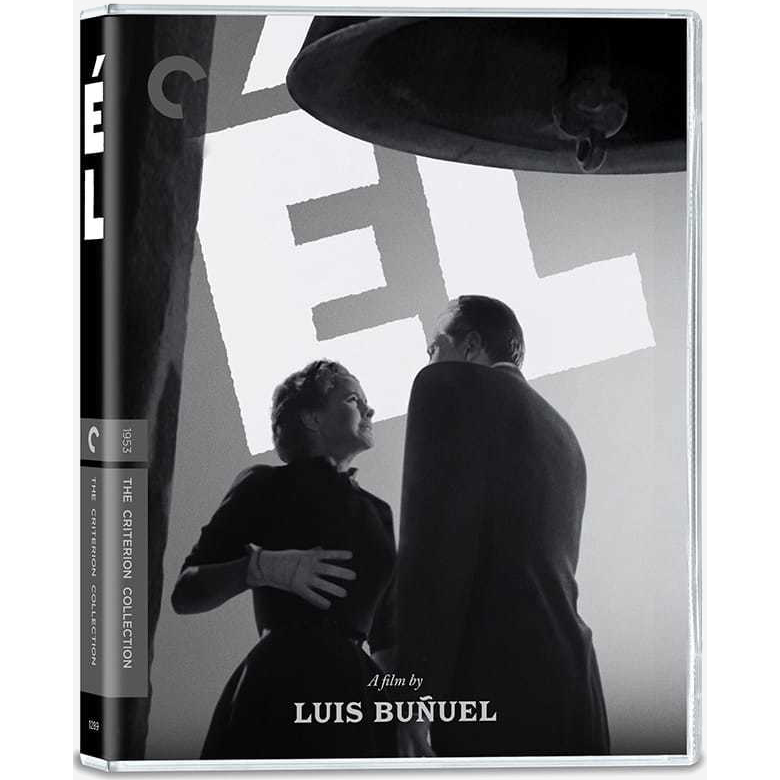

We’re told that most of Luis Buñuel’s Mexican features were commercial efforts concocted by producers, that the director worked with the best he could. Even when Los olvidados picked up major awards at European film festivals, its success was mostly as a prestige item. One of his highest-rated Mexican films is a harrowing account of a marriage gone wrong, adapted from a 1926 proto- feminist novel. Finding that she married a paranoid brute determined to assert total control, author Mercedes Pinto discovered that she had nowhere to turn for help: her complaints were dismissed by her family, the police, and the church authorities. Buñuel and his frequent co-scenarist Luis Alcoriza retained Pinto’s basic conflict and the mysterious title, adding some jarring but wholly appropriate surreal touches. It’s a surreal masterpiece.
The romantic thriller genre generally resolved marital distrust with platitudes, often of the same kind dramatized by author Mercedes Pinto. Film critics now link “Él” with Alfred Hitchcock’s Vertigo, another movie about a perverse, controlling relationship. Hitchcock’s earlier Suspicion has even more similarities: its leading lady is distressed by the perplexing behavior of a new husband who may be trying to kill her. Hitchcock was restrained from telling the story he wanted to tell — neither the Production Code nor the studio would abide a twist ending that revealed Cary Grant to be a murderer. The conflict is instead revealed to be a foolish misunderstanding that makes nonsense of much of what we’ve seen. Buñuel and Alcoriza’s film is an uncompromised masterpiece with universal relevance … that was rejected by the Mexican audience and most European film festivals.
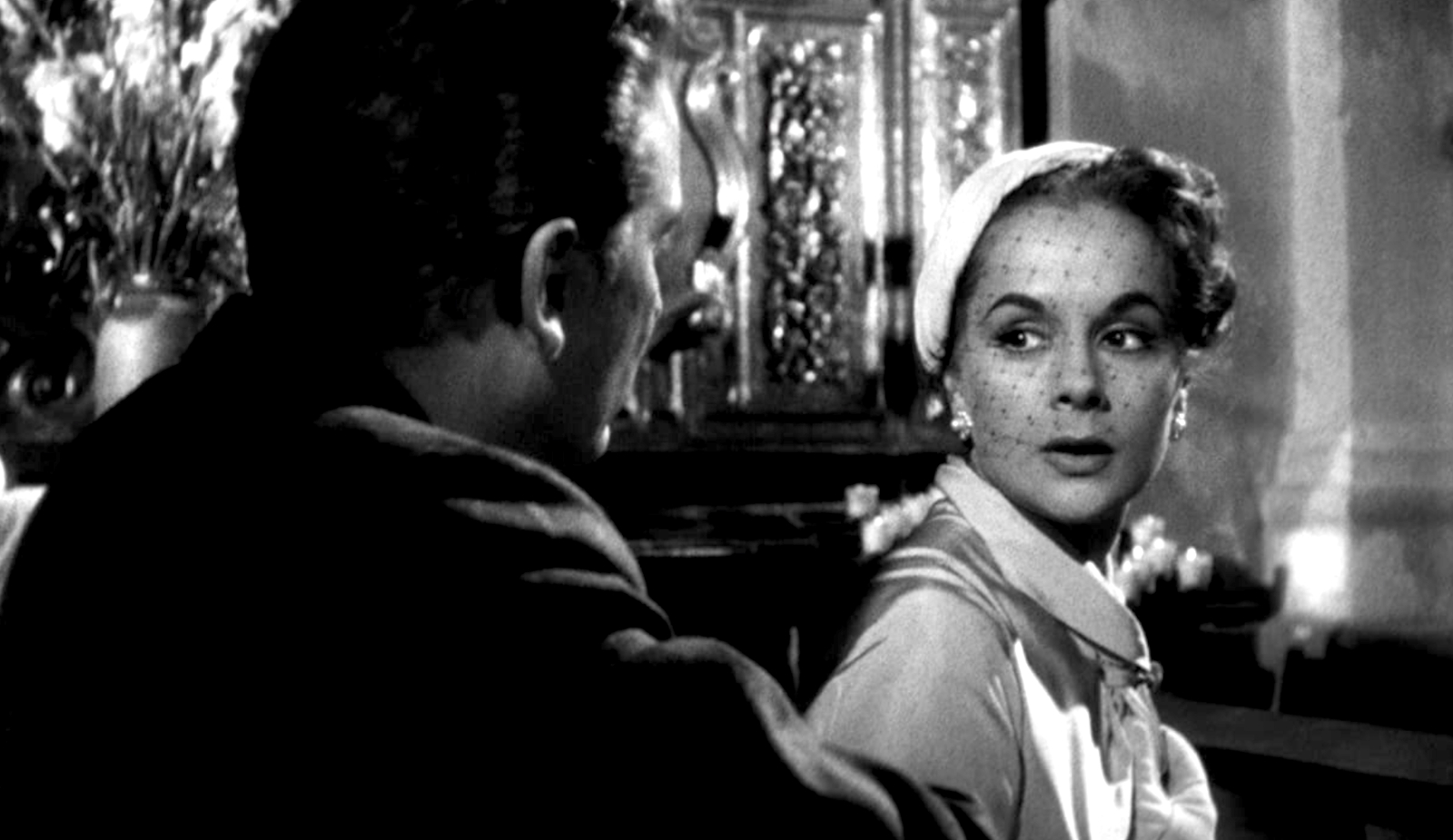
Gloria Vilalta (Delia Garcés) is engaged to Raúl (Luis Beristáin), yet can’t help herself when accosted in church by Francisco Galván de Montemayor (Arturo de Córdova), who seems to be her ideal mate: masculine, emotional, attentive. The wealthy Francisco is also devoutly religious — they meet when he assists a priest in the Easter week washing of the feet ceremony, Maundy. Gloria learns of Francisco’s mental instability only after they are married. He projects his paranoid fears and insecurities onto Gloria. When she declines to divulge her previous romances, he decides that she can’t be trusted; every contact with another man brings forth accusations of infidelity. Francisco encourages her to entertain a business associate, and then decides that they’re plotting against him. He confronts an old acquaintance of Gloria, and then attacks him in a hotel.
Francisco’s mania ebbs and flows in cycles — he’s furious and threatening one minute, and the next is tearfully remorseful, begging for forgiveness. Convinced that he’s dangerous, Gloria confides in Raúl, who has remained a faithful and understanding friend. It’s too much for Francisco, who retaliates by concocting a grotesque plan to ‘control’ his wife.
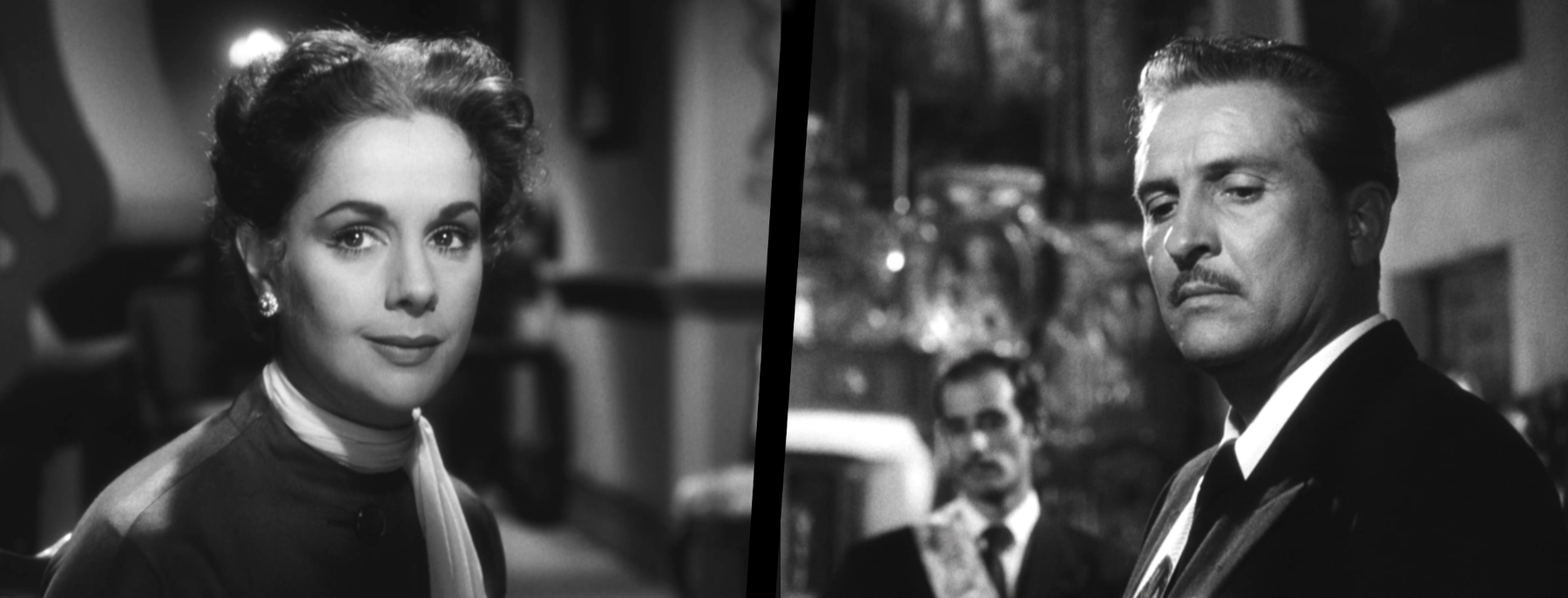
The performances in “Él” could not be bettered. In his big, blocky suits, Arturo de Corodoba has the solid masculinity favored in the Latin culture — such a massive man suggests strength and security. * In public he wins everyone over; only later does Gloria discover that he’s a neurotic, an emotional crybaby. We learn that Francisco was also a virgin. He is faithful to Gloria, but his idea of marriage prioritizes possession over passion.
Teach the children well?
Like Buñuel himself, Francisco is very much into feet. Buñuel’s fans know that ol’ Luis is on the job right away, with the spectacle of a priest washing (and kissing) the feet of a row of somewhat perplexed-looking boys. The lay assistants with towels and water bear solemn witness as the priest kisses the boys’ feet tenderly. How is a non-Catholic to judge this? By 2025 standards it the entire ritual comes across as perverse.
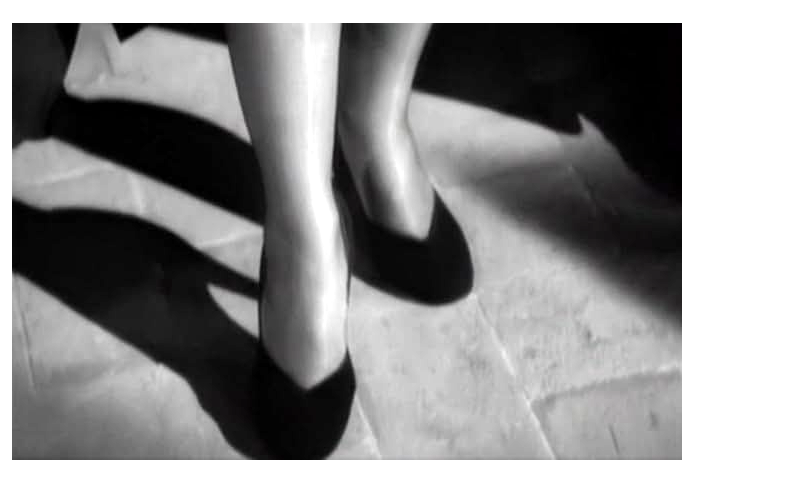
The feet of niños hold no special appeal for Francisco, but his eyes wander to the pew behind and settle on the comely pair belonging to Gloria. It’s love at first instep. Mexican audiences of 1953 can’t have reacted as do today’s Buñuel fans. The camera cruises past Gloria’s feet, and then does an abrupt reverse-course back to them. We have no idea if Luis Buñuel liked Tex Avery cartoons, but the shot is very much what Tex would do:
Foot, foot, foot, f — that’s the one!
When stalking Gloria, Francisco cruises in his car like Scotty Ferguson in Hitchcock’s Vertigo; the only difference is that both cars have chauffeurs. A crucial scene in a church bell tower will make fans of Vertigo think that Hitchcock must have seen “Él”. We aren’t normally conscious of costumes, but in another scene Gloria wears a stylish coat cut very much like one Kim Novak wears in the Hitchcock film.
Francisco soon yields the film’s moral center to Delia Garcés’ Gloria, who exudes class and good judgment. She’s the victim of her own romantic drives, allowing herself to be swept off her feet by a man she doesn’t really know. Francisco is everyone’s idea of a Prime Catch, starting with his ancient fortress-like home, decorated in an eccentric art nouveau style. If Gloria weren’t so strong and secure in her own self-image, she wouldn’t have a chance against Francisco’s charm offensive. He accuses her of keeping secrets, but goes behind her back to get Gloria’s mother on his side, and to tell the priest that she’s unstable. When Gloria tries to share her concerns with her mother, the older woman dismisses them without discussion. The priest is so invested in Francisco’s unassailable virtue, that he all but accuses Gloria of being an ungrateful hysteric.
When Gloria resists being bullied by paranoid fantasies, the “He” of the title festers in silence, playing around with perverse punishments imagined and real. We know that Francisco is Bad News for Women right at the start. Catching his manservant Pablo (Manuel Donde) molesting a maid, he dismisses the maid: all sexual misbehavior is presumed to be the woman’s fault. Churchly notions of feminine obedience and submission only worsen Francisco’s oppressive resolve. As the proudly devout husband’s ‘object of desire,’ Gloria is a big problem.
In the grip of his mania, Francisco asks Pablo for advice. When Pablo says ‘Get rid of her,’ he isn’t thinking of murder. But we suspect that Francisco is.
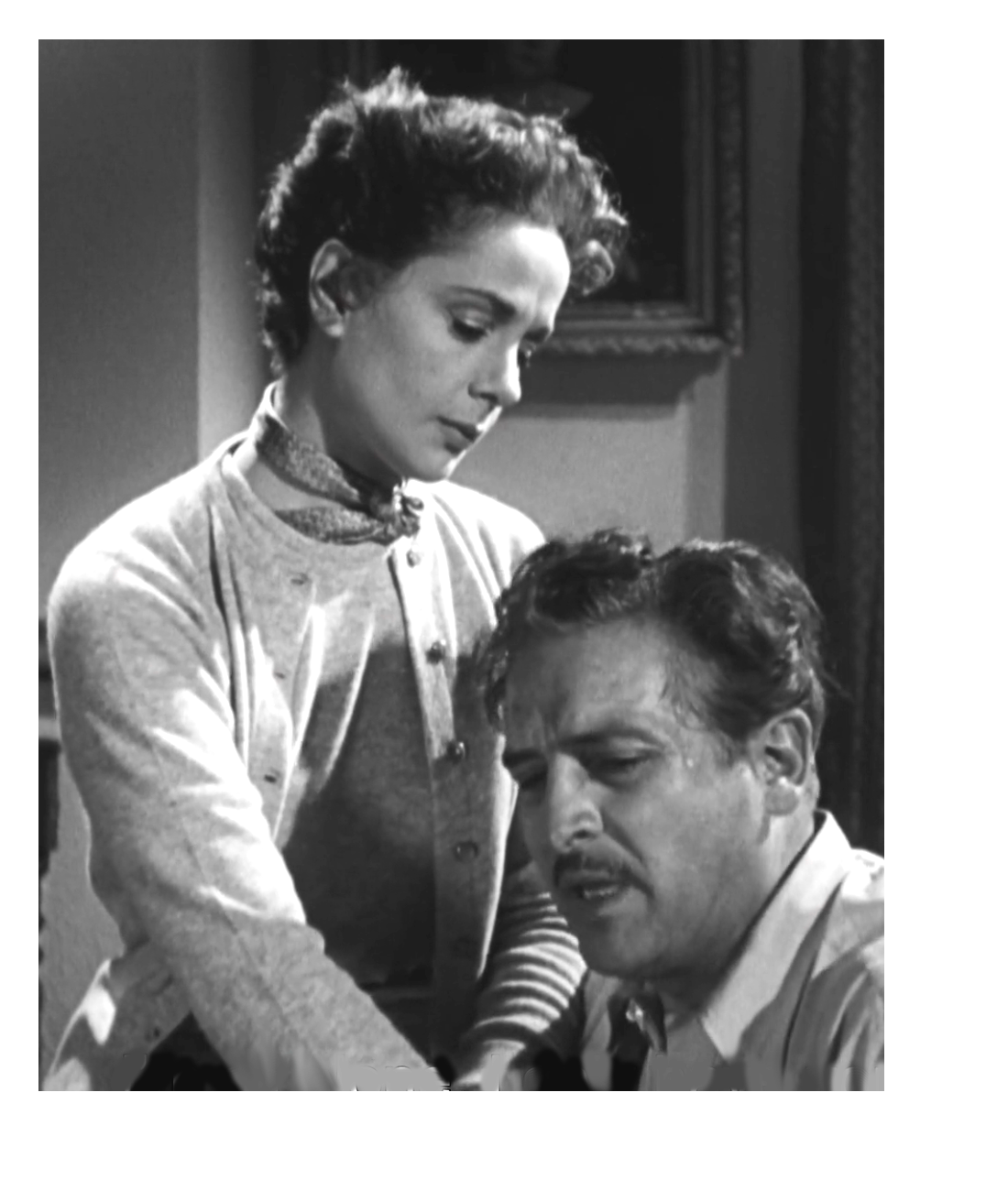
Will many women recognize the ‘Francisco’ factor in their personal experience? A lot of male viewers will squirm, seeing bits of Francisco in themselves. Are you insecure? Then accuse the missus, just so you won’t look weak. Inexperienced in lovemaking? Accuse her of being a tramp. If she won’t cooperate with your mind games, assume that she’s conspiring against you. Francisco eventually thinks everyone is laughing about him behind his back … the paranoia is complete.
In the middle of this is the personal fetish mania. When punishing Gloria with a hostile silent treatment, Francisco catches a glimpse of her feet under the breakfast table … and is suddenly re-enraptured. Gloria must put up with yet another mood swing. The man is an infantile wreck, whether flying into a violent fit or going overboard with passion. When Gloria cries ‘enough’ and puts her foot down, Francisco’s murderous posturing evaporates, and he becomes a boy begging forgiveness.
Luis Buñuel had a reputation as a wild man, sourced in controversial quotes about the Catholic church. But he must have demonstrated integrity in his business dealings, because most of his producers were very loyal to him. Óscar Dancigers gave him his first directing job in Mexico. Some of the movies they made together, especially Los olvidados, were real long-shots for box office potential. Other producers invested in the genius director just to see what he would come up with. Buñuel’s most creative movies weren’t the ones with strong political messages. La fièvre monte à El Pao is about a revolution and little else, but Susana, Death in the Garden and Viridiana see Buñuel using a surreal approach to subvert familiar themes.
In narrative terms “Él” manages a double victory … the finale is both conventionally reassuring and stubbornly radical. Several minutes confirming Francisco’s spiritual, therapeutic regeneration are overturned with a solid Buñuel coda, one that surely had Alfred Hitchcock clapping.
The music score by Luis Hernández Bretón keeps the emotional pot boiling, as a ‘women’s film’ should. When working for Buñuel, Gabriel Figueroa’s cinematography steered away from his ennobling, decorative images. He shot five Buñuel films, four of which are masterpieces.
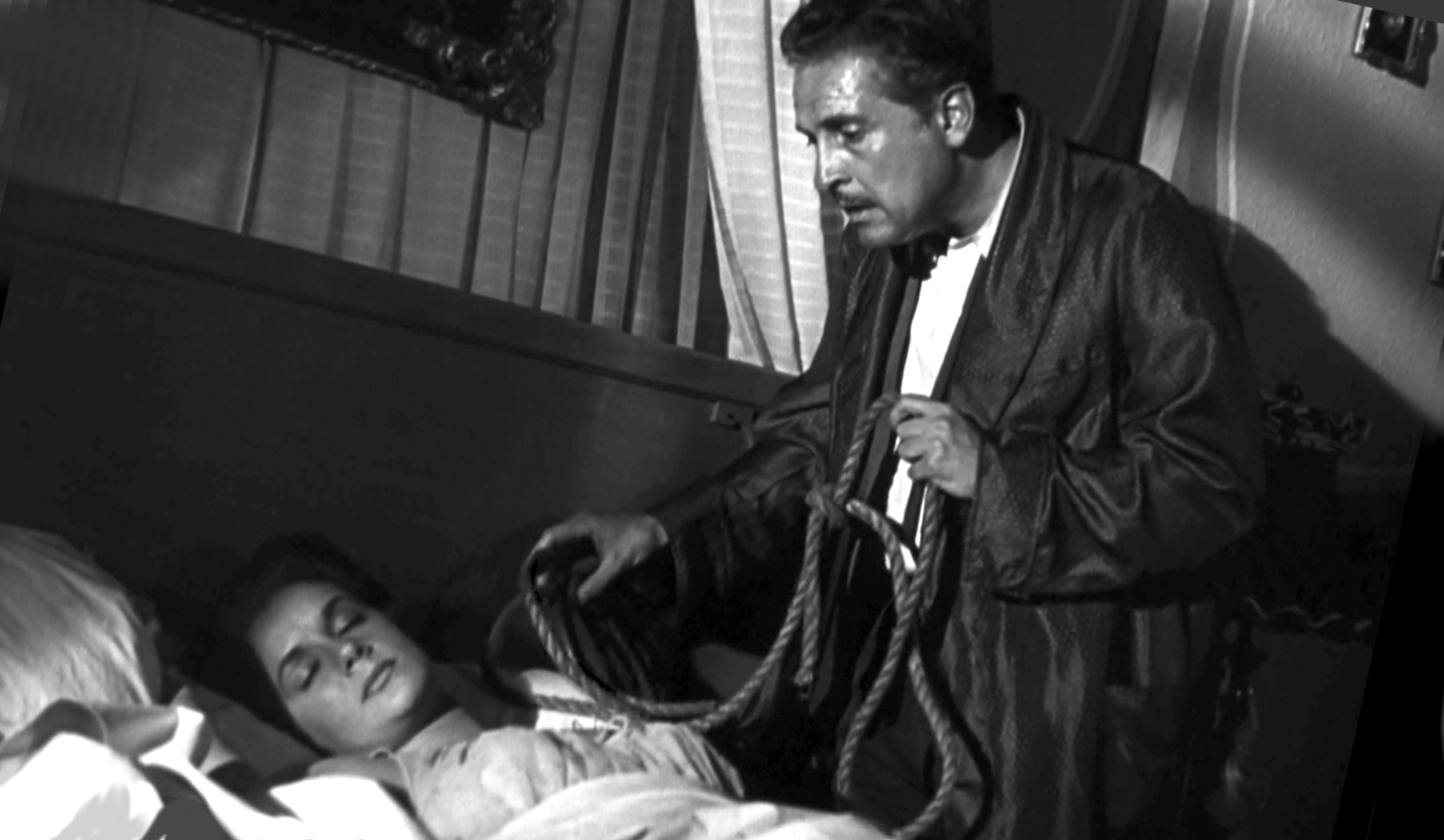
Luis flies the Freak Flag.
“Él” brings back the undiluted surrealism of Buñuel’s avant-garde classics. As pointed out by the critics on Criterion’s disc, Francisco isn’t much different than the weird Gaston Modot in L’Age d’Or, deriving sexual satisfaction when he sees Lya Lys sucking the toe of a marble statue. Francisco creeps around Gloria’s bedroom like Fernando Rey in Viridiana, carrying a stout rope and a frightening bundle wrapped in spun cotton — twine, a razor blade, a needle, a bottle of antiseptic. Good grief, what is he up to?
This is the director at his most impish. He knows that a big part of his audience will be mystified. The first time we saw the picture, the ‘rope and needle’ scene caused an uproar, as soon as we realized what Francisco is threatening. We couldn’t believe Buñuel could get away with that scene in 1953, no matter where the movie was made. In his 1981 interview, Buñuel looks a little disappointed when he says that ‘the movies can show anything now.’
Luis Buñuel never abandoned his surrealist ideals. “Él” is not among his most-screened pictures, but it sits a high roost in his filmography. Movies now can and do ‘show anything.’ The provocador from Aragón could imply much, much more with very little.
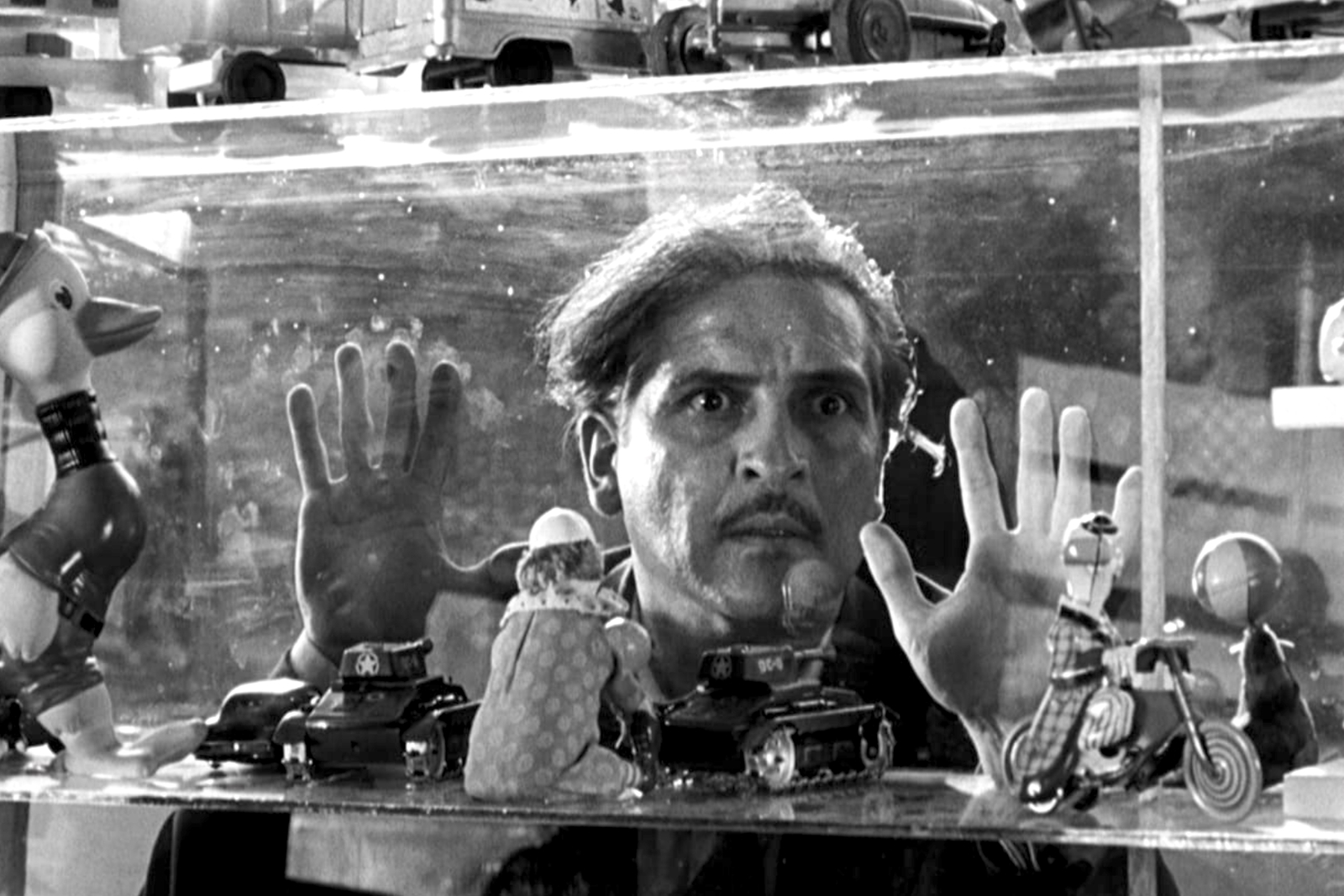
The Criminal Life of Archibald Cruz is another fetish-heavy Bunuel film.