


Here’s one for which we’ve been hoping or quite a while. The presentation is as expected, flawless. Outside of some of the von Sternberg classics, I can’t think of another disc that conjures the specific feeling of 1930s ‘silver screen’ nitrate.
Probably giddy with its Depression-era profits, the MGM studio went on a ‘culture’ binge starting in 1934 or so, adapting famous novels in a bid for the kind of upscale notices that lead to Academy Award nominations. But Warner’s retaliatory high art effort took the big prize. A Midsummer Night’s Dream is a wondrous adaptation of Shakespeare’s play set to the music of Felix Mendelssohn and dressed up with phenomenally successful special effects. The year before, the famed stage director Max Reinhardt had floored Tinseltown with a concert & dance version of Dream at the Hollywood Bowl. Warners signed him almost instantly to recreate the experience on film. The movie is famous for its high production values and excellent, if wildly eccentric, star turns by James Cagney and Joe E. Brown. The result is both beautiful and funny — and truly magical.
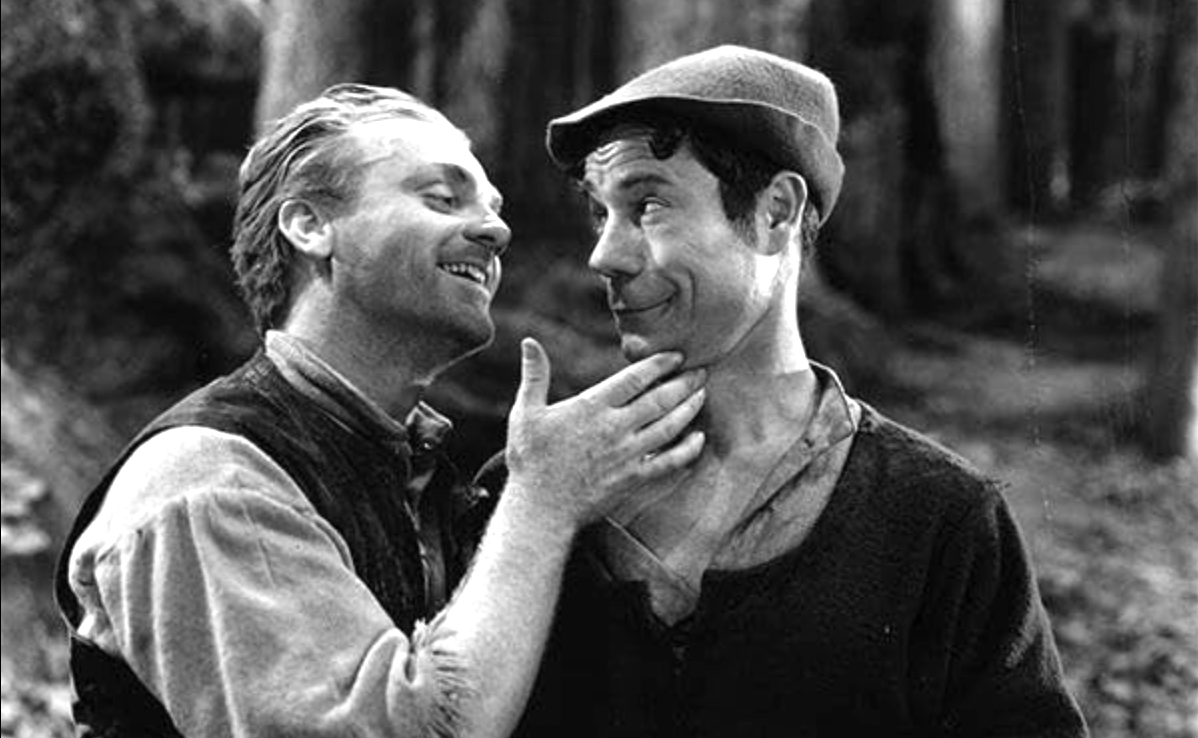
In old Athens, Theseus (Ian Hunter) returns from victory with his war bride Hippolyta, Queen of the Amazons (Verree Teasdale) and announces a week of celebrations. A mixed-up young foursome wanders into the forest to settle their romantic differences: Lysander (Dick Powell), Demetrius (Ross Alexander), Helena (Jean Muir) and Hermia (Olivia de Havilland). They choose the very same night that the Fairies come out to play. Titania, Queen of the Fairies (Anita Louise) leads an army of flying pixies in dance while she embraces her beloved ‘Changeling Prince’ (Sheila Brown), a small boy kidnapped from a foreign land. Oberon, King of the Fairies (Victor Jory) is not on good terms with his queen. It’s the original Custody Dispute: he orders the mischievous Puck (Mickey Rooney) to distract Titania with a magic love spell, so he can snatch the Changeling Prince for his own. Also in the woods are tradesmen rehearsing a play to present at Theseus’ court, a group that includes Quince (Frank McHugh), the simpleton Flute (Joe E. Brown) and Bottom, the Weaver (James Cagney). Puck’s love potions not only complicate things with the four young lovers, they transform Bottom into an Ass, and make Titania fall in love with him!
Shakespeare experts may not look favorably on the altered tone of this rendering of A Midsummer Night’s Dream, which is reportedly both darker (in the forest and in Oberon’s character) and sillier (the absurdly hammy star turns from Rooney, Cagney and others). To audiences unfamiliar with The Bard’s plays, it’s still a delight. Directors Reinhardt and Dieterle were close collaborators, although we’re told that the actors remember Dieterle as their principal director … Reinhardt did not speak English.
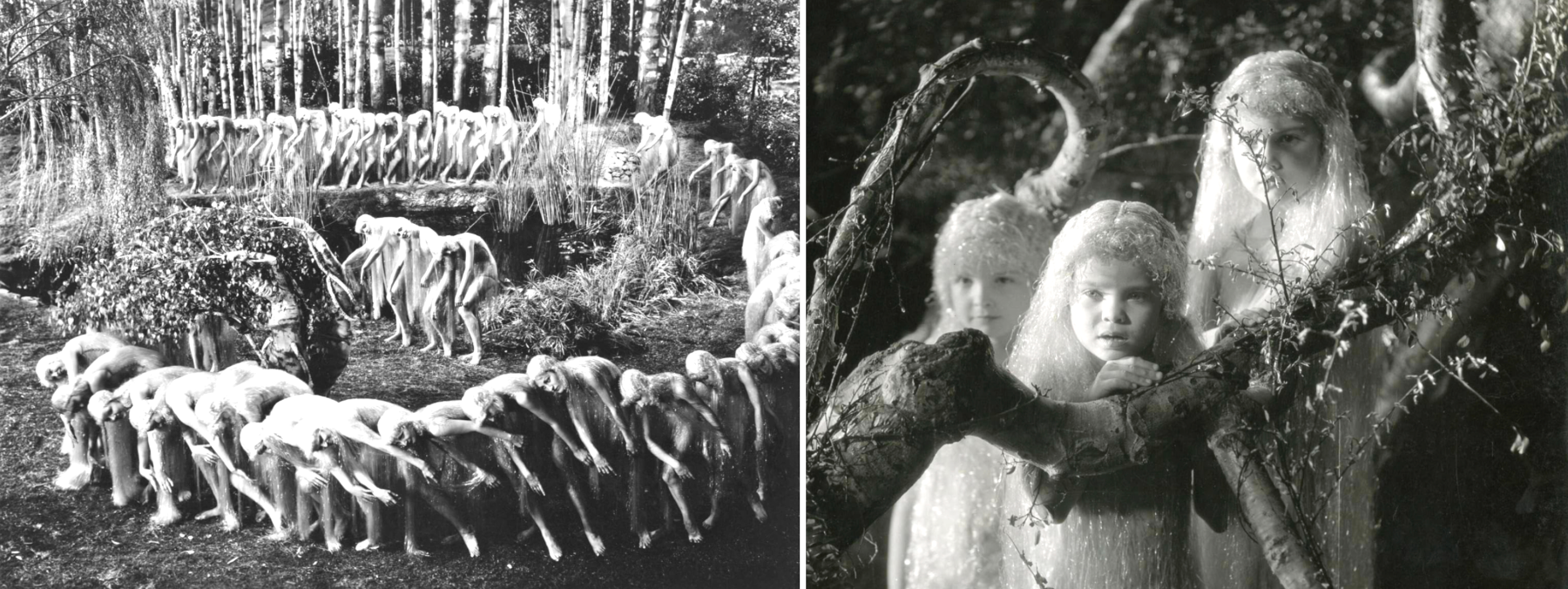
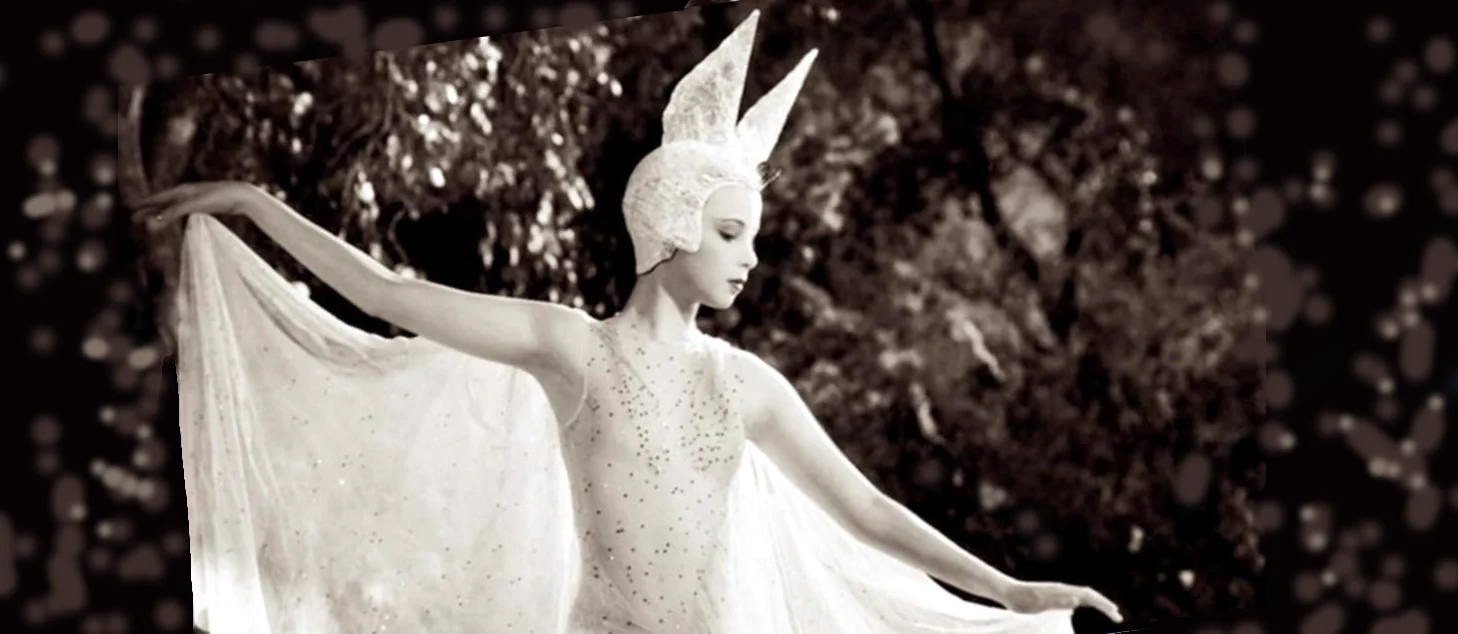
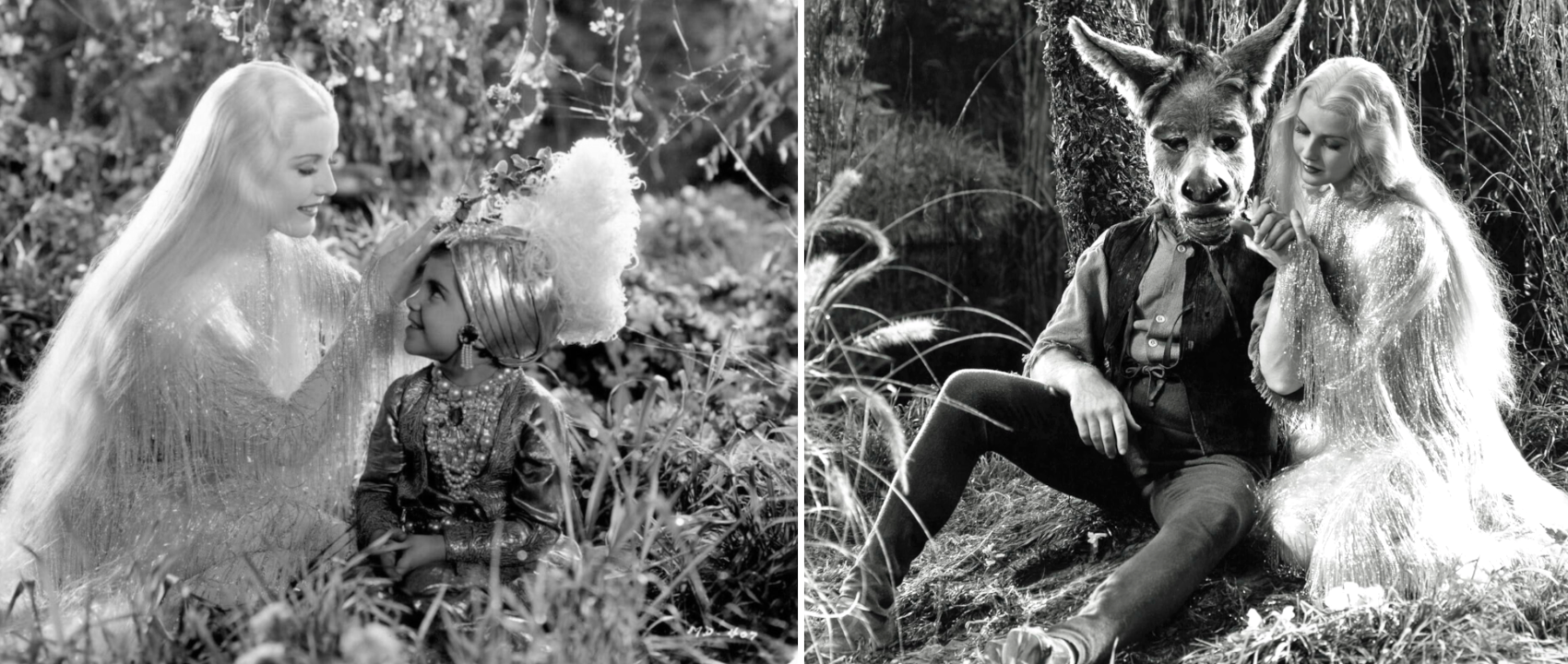
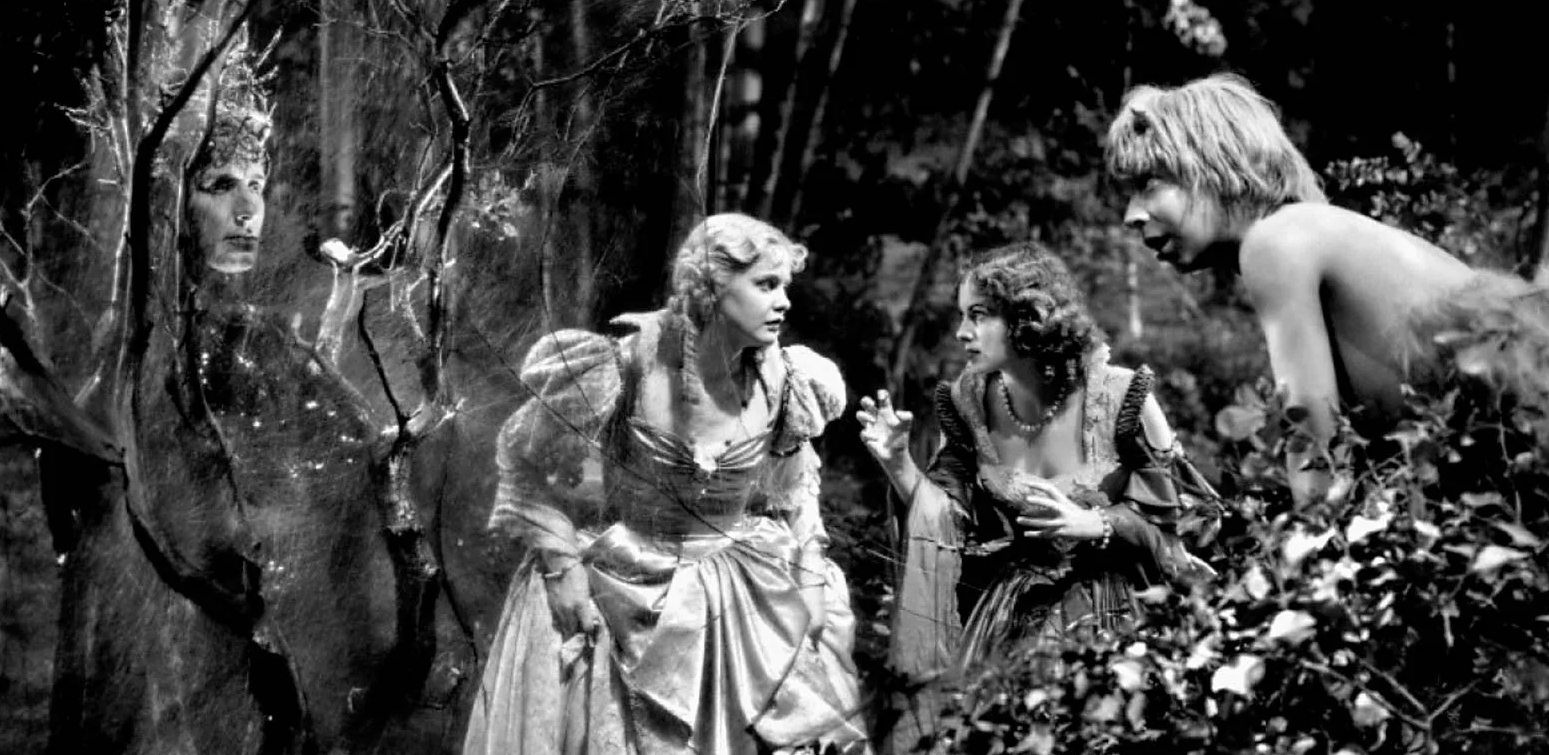
The movie plays as a garden of delights. Mendelssohn’s music is a beautiful match; it happens to be the piece from which the traditional wedding march was taken. About 25 minutes in, we enter one of the movie world’s most magical forests, a vision out of Fritz Lang and Die Nibelungen that surely influenced Disney’s Snow White and the Seven Dwarfs. Mists of fog and distorting lens filters enhance forest glades and silvery fairies as if the entire night were bathed in glittering magic. The ballet dancers prance and twirl like fireflies, and dance on special-effect clouds. The lead dancer is Nini Theilade, a strange silvery phantom who seems as insubstantial as a firefly. (top image ↑ ) Her Queen Titania is the lovely Anita Louise, a blonde nature goddess who all but glows in the silvery light. Titania proceeds to cuddle both her kidnapped child and a scruffy tradesman transformed by magic into a mangy, braying Ass. It’s James Cagney’s Bottom, the most egotistical of the actors.
Golden-age movie history was distorted by avant-garde filmmaker
Kenneth Anger’s false claim that he portrayed the Changeling Prince
for Midsummer. It was another youthful actor. Scott McQueen’s
commentary refutes Anger’s claim several times, without naming names.
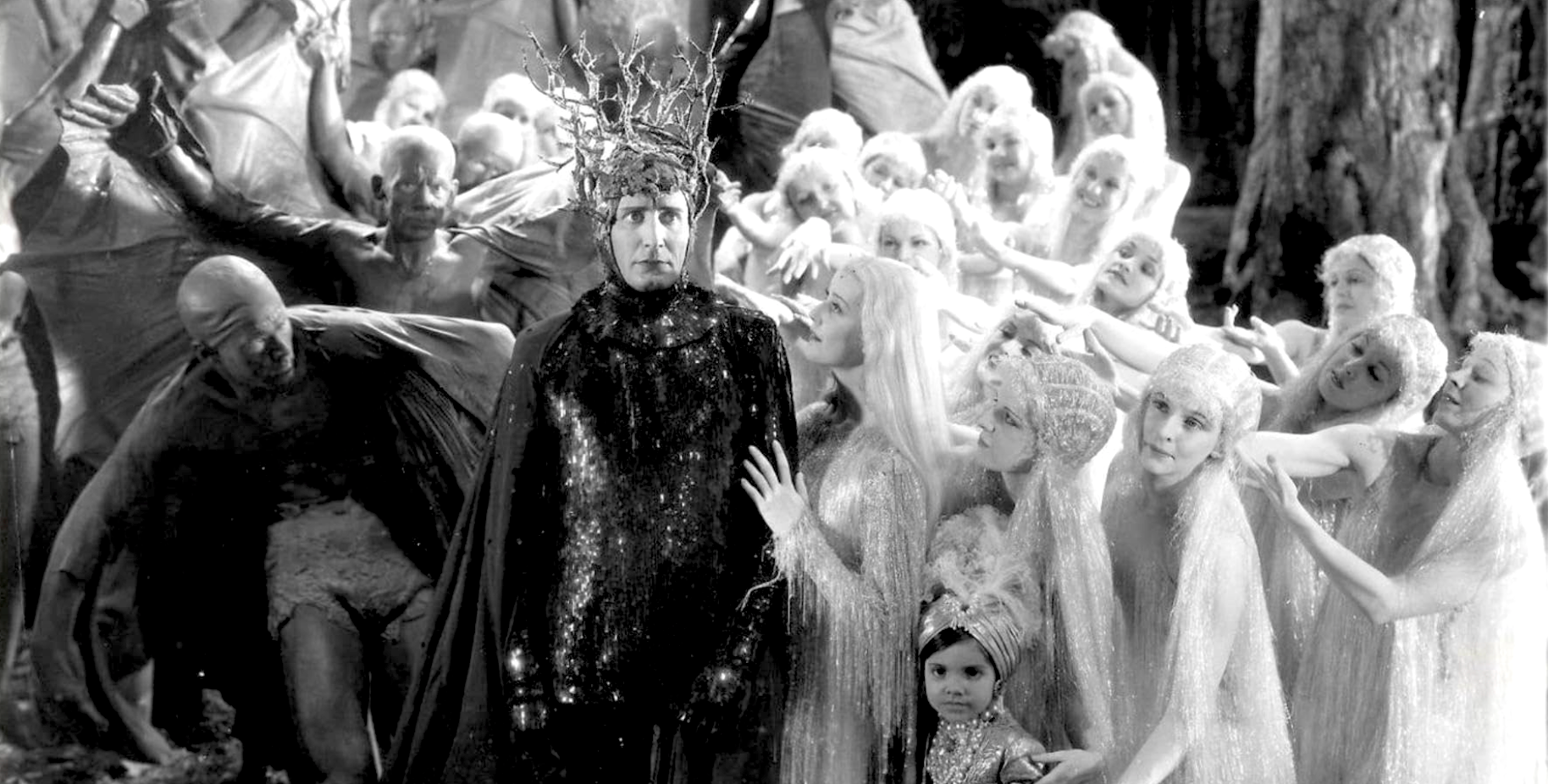
The transformational magic is the work of Victor Jory’s Oberon, a black-cloaked King of the Night who rides a horse accompanied by a platoon of skulking bat-men. Oberon and Titania are having … marriage difficulties, as she refuses to sleep with him. Each wants to raise the Changeling Prince without interference from the other, and Oberon is willing to win by cheating. Oberon’s eager lieutenant is the horned fairy Puck, played with antic skill by Mickey Rooney, for once putting his exuberance to work in a worthy vehicle. Rooney had broken his leg just before filming began, which explains why he’s often partly behind foliage. The fact that Mickey can’t jump around the scenery is probably a blessing.
Around the periphery are a pack of wood trolls (?) wearing grotesque masks that remind us less of Shakespeare and more of Benjamin Christensen’s creepy horror show Häxan. They play stringed instruments with glowing bows, apparently borrowed from Busby Berkeley’s bag of tricks. The pagan forest fairyland is a place where anything can happen, a happy alternative to the profane-devout rigidity of Fantasia’s “A Night on Bald Mountain.”

That’s only about a third of the show. Just as delightful is the nonsensical romantic competition among the young lovers. Dick Powell’s Lysander and Olivia de Havilland’s Hermia elope into the forest after her father gives her a choice between Ross Alexander’s Demetrius or death. That doesn’t prevent her from being a cheerful delight, eager for a kiss in the forest. Demetrius follows, himself pursued by Jean Muir’s love-struck Helena. Puck’s aphrodesiac makes Lysander switch his affections to Helena, causing no end of trouble. Jean Muir is delightful as Helena, especially when threatening a cat fight with Hermia. The big winner in this acting foursome was Olivia de Havilland, who had already won the part in the stage role by a happy accident. She went from total unknown to major star status with just two films, this comedy and her Errol Flynn vehicle Captain Blood.
For ‘ordinary’ audiences, the surprise must have been to see established stars like Dick Powell perform Shakespeare, navigating all those complicated speeches. Our collegiate foursome excels at the fun and games, as do James Cagney and the other play-within-a-play performers from the Warners stock company, who clearly brushed up their Shakespeare. Frank McHugh and Cagney have a delightful time with their makeshift presentation of Pyramus and Thisbe. Cagney’s Bottom is so keen to perform that he wants to play all the roles. When somebody worries that the play is too grim, Bottom suggests that he step out of character to tell the audience that nobody should fear that the bloodshed is real, because he’s really a weaver named Bottom.

Wait a minute — a guy named Bottom is transformed into an Ass.
James Cagney finds a way of expressing dismay while wearing an articulated Ass’es head, and it is hilarious to hear his signature laugh become a braying sound. Cagney must vie for attention with Joe E. Brown, whose big hits of the 1930s aren’t shown much these days. A Midsummer Night’s Dream allows us to see Brown do a different kind of clown. He dresses in drag to play Thisbe, trying to kiss Pyramus through a chink in the Wall — the Wall being played by Hugh “Woo Woo” Herbert.
With both Dieterle and Reinhardt expatriates from Nazi Germany, we’re told that the language spoken behind the camera was mostly Deutsch. Warners’ top designer Anton Grot gives A Midsummer Night’s Dream a strong Germanic look in the massive trees of the dark forest inhabited by those Lorelei-like Nordic fairies. The costumes are an amusing jumble of styles suggesting how Shakespeare’s time represented ‘old Athens.’ Hal Mohr’s images are extra-luminous in the forest scenes, because he sprayed the trees with aluminum paint. He won an Oscar for Best Cinematography — the first and only time that a write-in vote produced a winner.
Byron Haskin’s special effects surely contributed to that win; the opticals and double exposures are far more precise than in the average effects film of the time. Whenever Oberon’s Night King is on-screen, he’s accompanied by a cloud of jewel-like soft-focus points of light. Few seams show in any of these illusions. The graceful ballets turn truly magical when Titania and her fairies unexpectedly take flight; the wire-rigged takeoffs and landings are perfect, even better than Christopher Reeve’s in Superman.
What would be ho-hum in modern computer-created visual effects is amazing here … every illusion is the concentrated effort of the studio’s best resources.
MGM’s 1946 film The Yearling has an impressive ‘running in the forest’ montage that uses some of the same Mendelssohn music. When similar images with deer pop up in Midsummer, an involuntary mental connect/disconnect always occurs. And a final thought … Victor Jory’s weird, commanding Oberon is quite a spectacle … but upon first hearing his voice this time, we really got the impression that he was channelling the delivery style of none other than Bela Lugosi. Is that a common observation?
Here’s Joe Dante on the Reinhardt/Dieterle classic:

I watched this a couple years ago for the first time and kept thinking of Ridley Scott’s Legend, my favourite 80s fantasy film. Was Scott channeling Reinhardt? Ha!
Can anyone nowadays see Joe E. Brown and not hear “Zowie!”?
I can’t. ha ha. He’ll always be a dirty old man who understands nobody’s perfect.
I saw a nitrate print of this at Chapman College (now University) in 1973. It was part of a Warner Brothers 50th Anniversary retrospective – the same line-up shown at MOMA in NYC.
There’s a story that Jack Warner was pitching this to an actor’s agent, saying that all of the stars assembled for such a prestige picture could, perhaps, forego their usual fees. “Like, for instance, we give them a car.” The agent responded, “So Jack, what would my commission be – a bicycle?”