
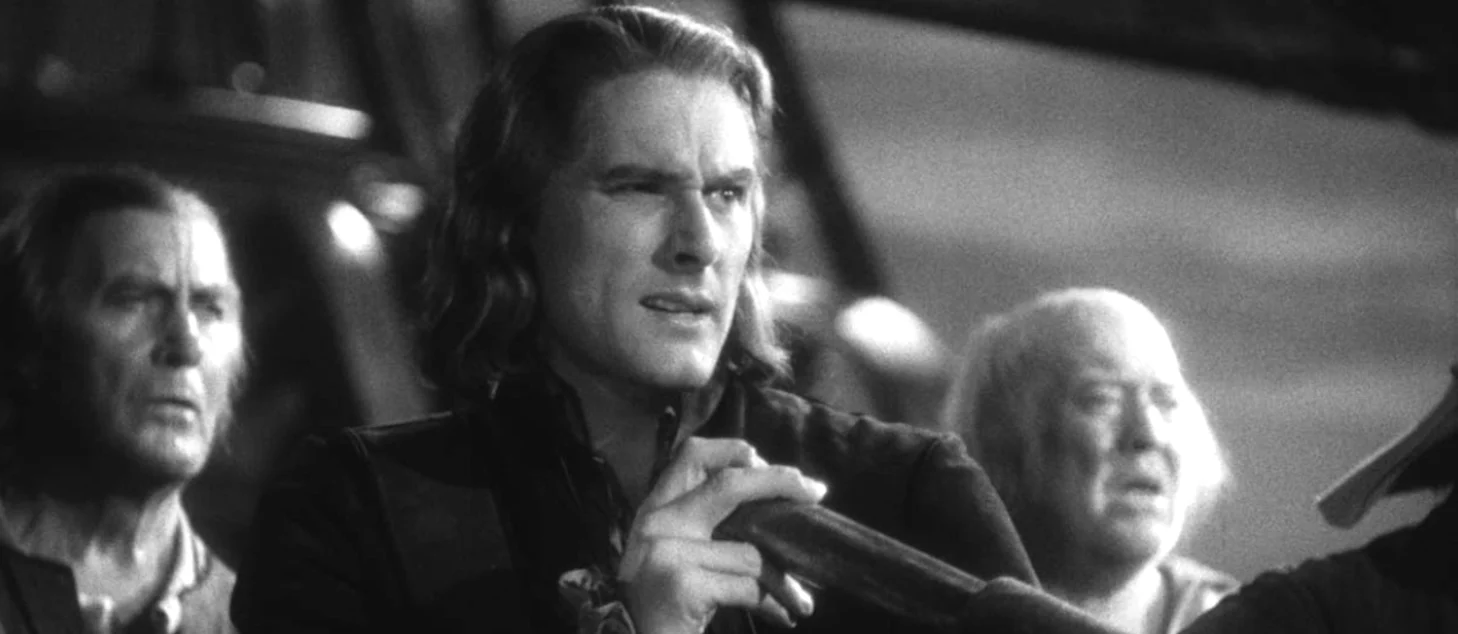
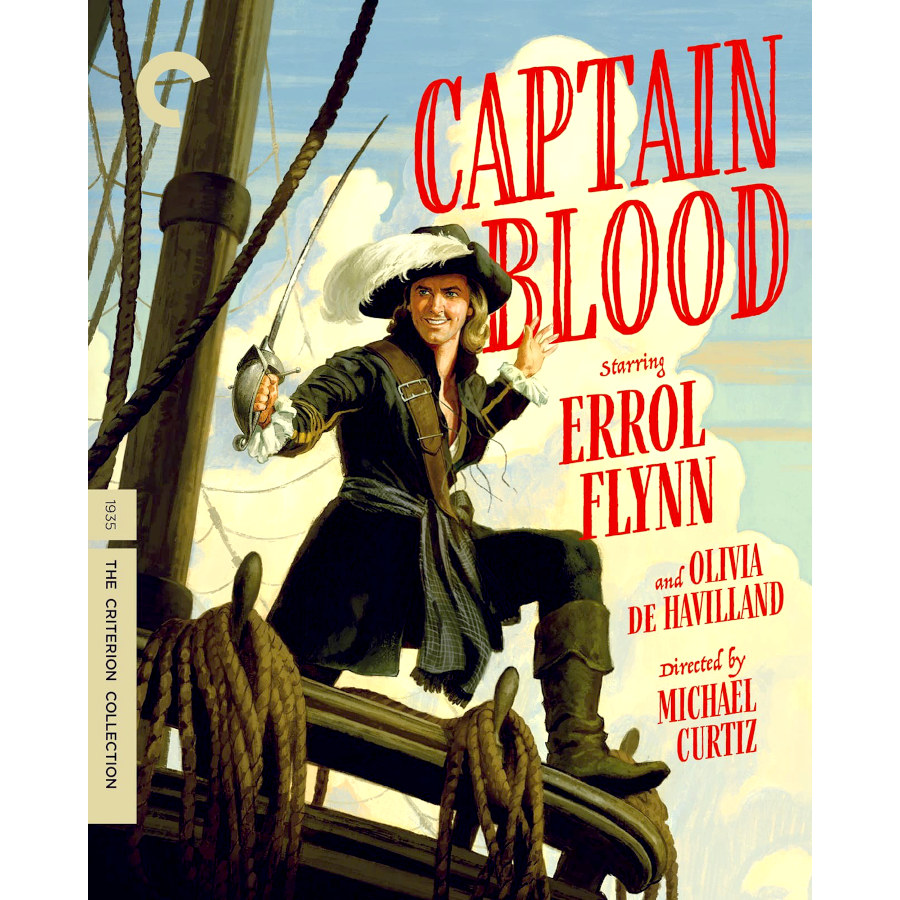

A certain CineSavant contributor-friend has always lobbied for more Warners Blu-rays featuring the studio’s classic male stars — James Cagney, Humphrey Bogart, Errol Flynn. Why some titles were seemingly delayed became clear with the 2024 Criterion release of The Roaring Twenties — Criterion licensed certain big titles, and then kept them on the back burner for years. *
In the case of Warners’ landmark adventure epic Captain Blood, the delay gives us a crackling 4K remaster. As none of the artists and craftspeople of that era are still around, Criterion gives us input on this bright piece of Hollywood film history from today’s top experts. A great many disc collectors are fully invested in classic Hollywood fare of this vintage — and fans of action movies will be impressed by the fierce ‘n’ furious sea battles and sword duels.
Byt 1935 some of the Depression’s financial issues were clearing up, allowing Warners to make more big-budget pictures, even artsy prestige productions. The lavish Busby Berkeley musicals had run their course, but an impressive Hollywood Bowl production of A Midsummer Night’s Dream inspired a very expensive film adaptation by William Dieterle. Rafael Sabatini’s pirate tale may have been green-lit because Warners wanted to compete with MGM’s upcoming Mutiny on the Bounty. According to author Alan K. Rode, the Warner lot had been reorganized into an even more efficient movie factory. Captain Blood commenced filming in August of 1935, and made its debut before Christmas.
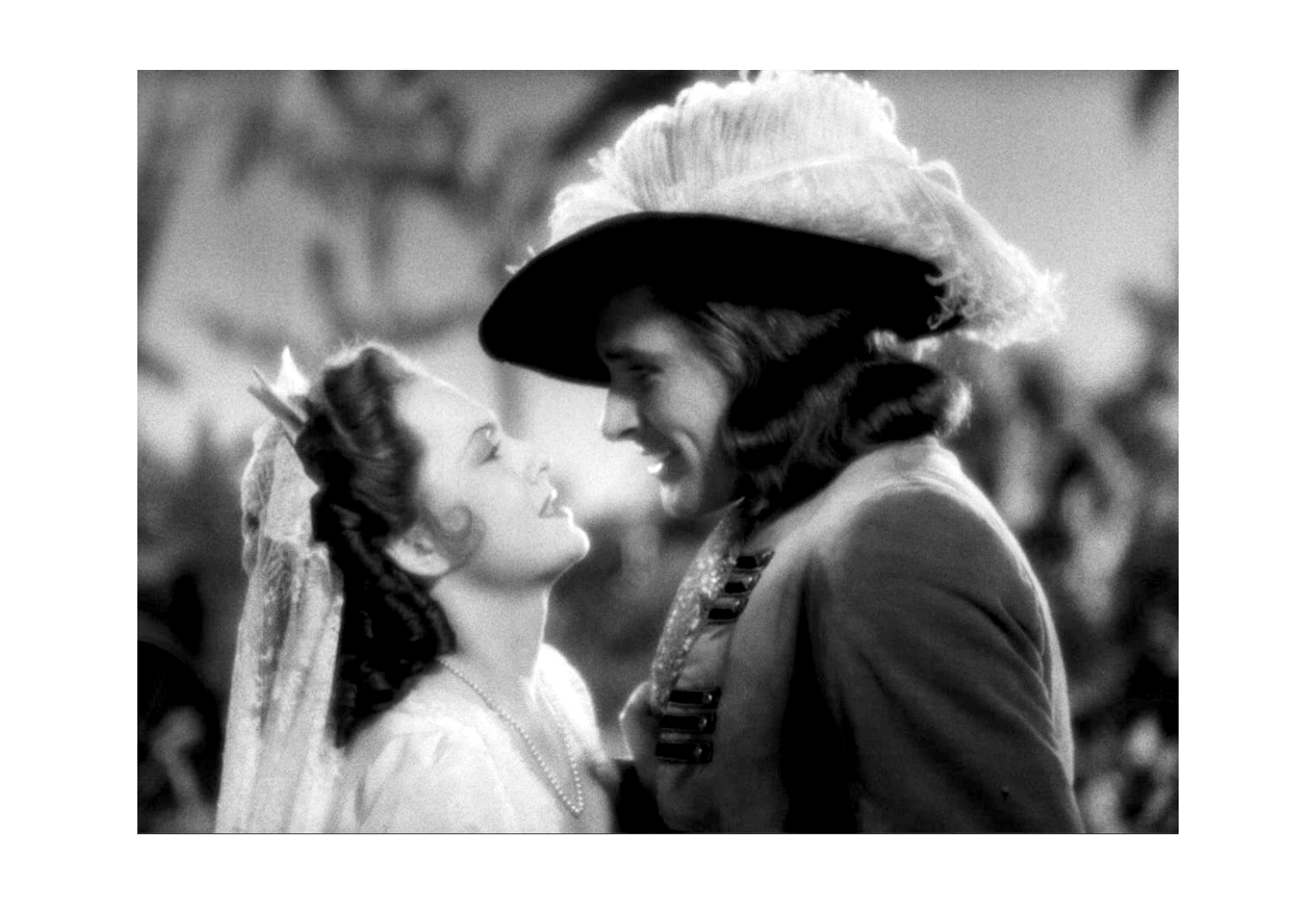
Director Michael Curtiz was happy to be given such a big and prestigious product, although he was expected to bring the epic in for under a million dollars. For the film’s leading characters, the studio took a chance on two relative unknowns already on the WB payroll. Not yet 20 years old, Olivia de Havilland had been given a contract after charming the studio with her performance in that production of A Midsummer Night’s Dream. When health concerns forced Robert Donat to back out of the title role, the studio eventually tossed the dice on their contractee Errol Flynn. He had barely been seen on screen, but several exces deemed him perfect; the approval of Jack Warner’s girlfriend may have influenced the decision. The happy outcome was that Flynn and de Havilland were naturals together on screen, the definition of romantic chemistry.
Sabatini’s fanciful pirate story was first written as a series of short stories. It had some basis in fact. After a failed overthrow of James II, England’s 1685 ‘Monmouth Rebels’ were sentenced to gruesome executions. Many were spared the rope or the axe, and ‘transported’ to the New World to be sold as slaves. A real-life Dr. Pitman was convicted only by association with rebels. Enslaved in Barbados, he escaped only to be captured by pirates. He did not himself become a pirate. Just three years after the rebellion, King James was overthrown, enabling fugitives like Pitman to return to England with honor. Sabatini’s book imagines a noble, heroic pirate rogue.
The film is everything a Hollywood adventure should be, well-paced and stylish. Michael Curtiz’s direction is not quite as taut as in his later wartime films, which makes for welcome moments that allow us to relax a little. The visuals affect a literary stance: the new pirate’s notoriety is hyped in a battle montage with the word “BLOOD!” splashed across the screen three times. Occasional inter-title cards also get across necessary exposition, as in a silent movie. That saves a lot of dialogue explanations of where we are and what’s going on.
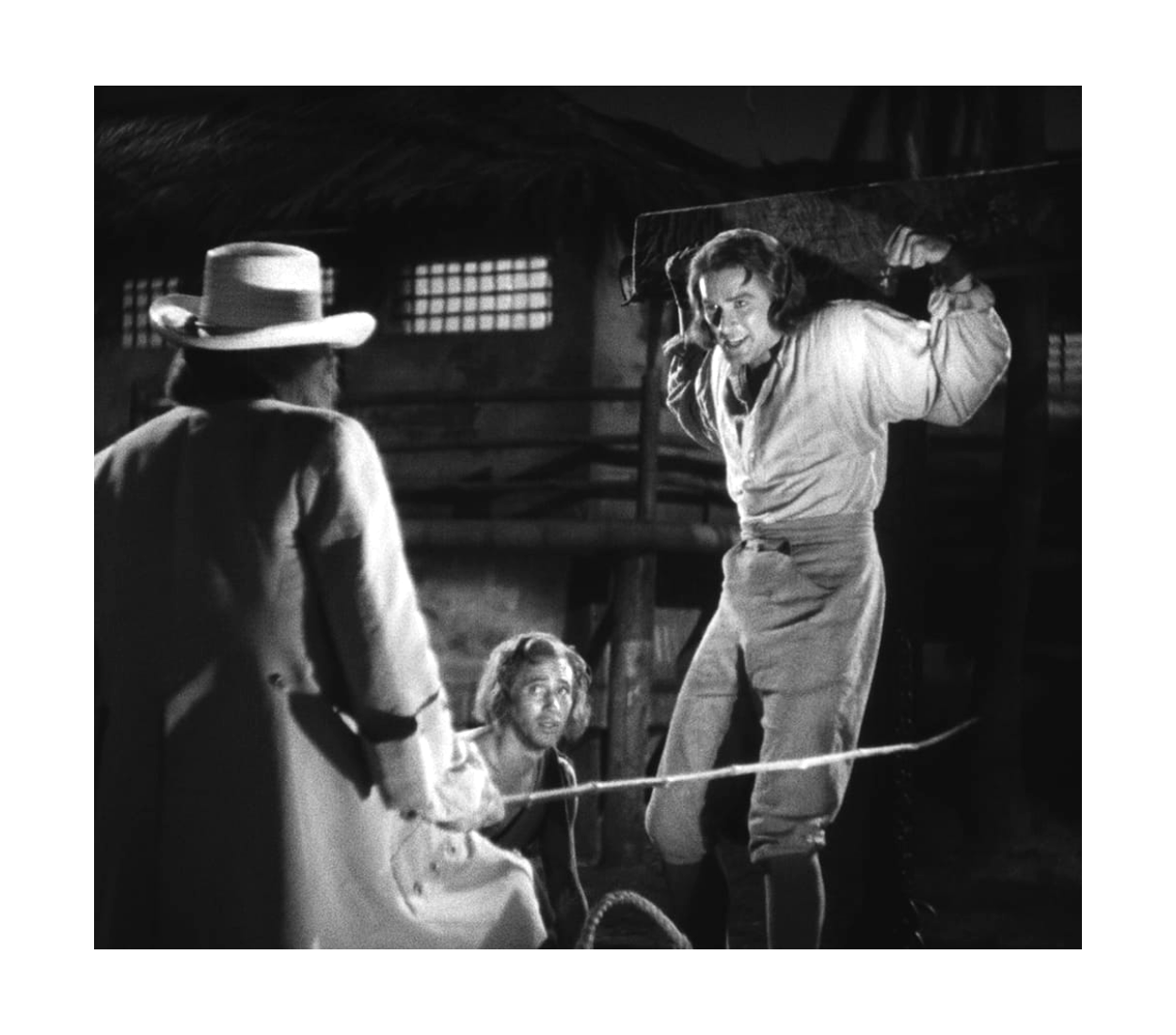
We are immediately caught up in the dilemma faced by the Irish Dr. Peter Blood (Flynn). Condemned by the feared Judge Jeffrys for tending to a wounded rebel, Peter is spared the gallows because King James wants to profit by selling them as slaves. Along with several hundred others, Peter is shipped to Port Royal, Jamaica and put on the auction block. He’s bought by the impulsive Arabella Bishop (Olivia de Havilland) and put to work in the plantation of her father, Colonel Bishop (Lionel Atwill). At first full of hate for Arabella, Peter sees that his ‘owner’ isn’t so superficial. Not realizing her own attraction to Peter, she finds him doctoring work tending to the Governor’s gouty foot.
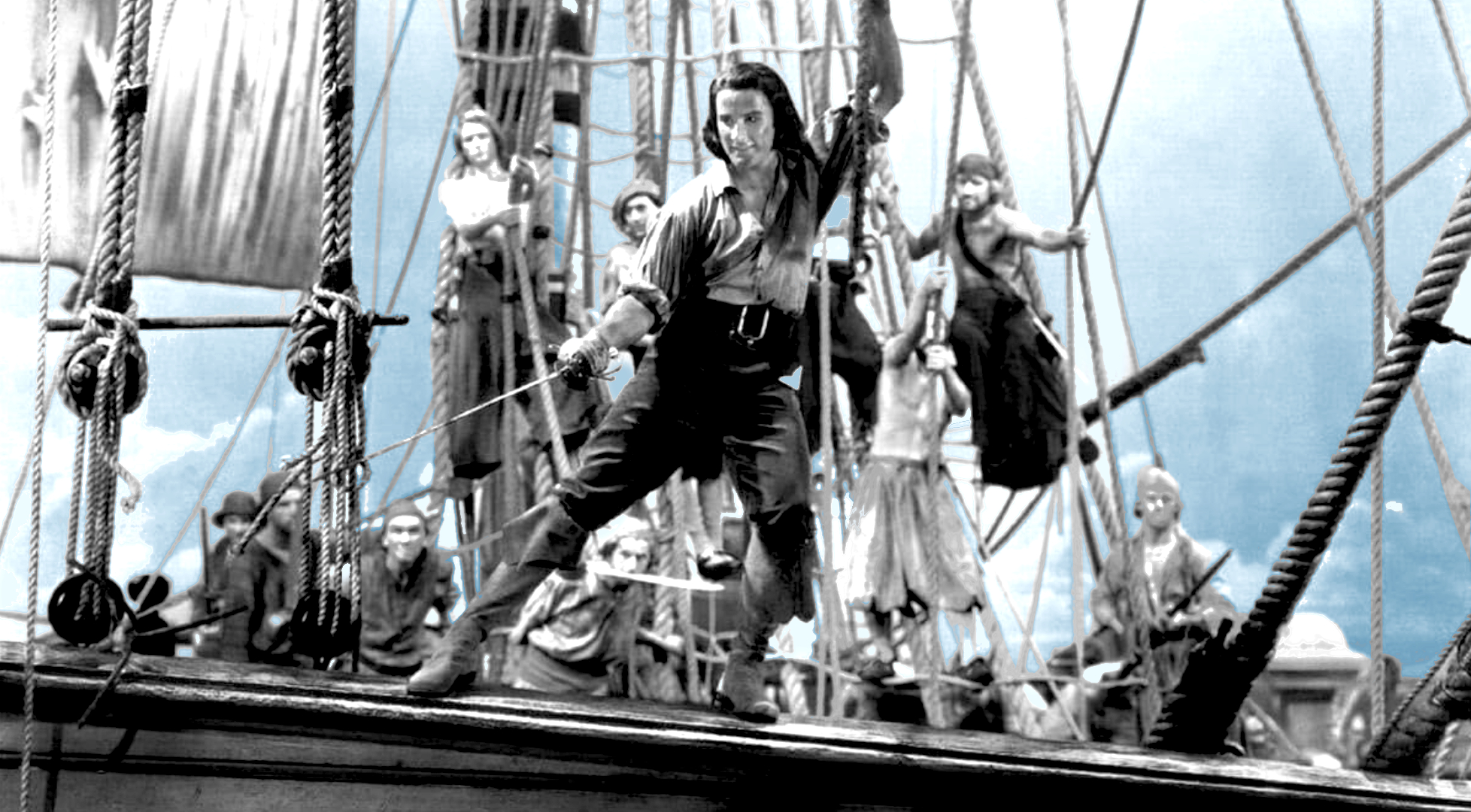
Hoping to spare his comrades from more cruel punishments, Peter Bloodorganizes a daring escape only to be caught at the last minute. But he is saved from Colonel Bishop’s branding iron by a ‘convenient interruption’ — an attack on Port Royal by Spanish-paid freebooters. The Spaniards easily take the harbor, but Peter leads his fellow escaped slaves in a counter-attack. In one amazing night, he becomes the captain of a ship, with a crew eager to commit piratical acts. The humiliated Colonel Bishop becomes the Governor of Port Royal, but neglects his post to instead pursue the new buccaneer criminal ‘Captain Blood.’ More reversals follow. In the open port of Tortuga, Blood hooks up with the nefarious pirate Captain Levasseur (Basil Rathbone). He later regrets his hasty alliance, when the duplicitous Levasseur takes Arabella as a prisoner-hostage.
Captain Blood became a major hit, reinvigorating a genre that had languished in the budget-conscious years after the coming of sound. Errol Flynn’s instant rise to stardom gave him the swashbucking mantel left behind by the silent superstar Douglas Fairbanks. Everything clicked in Captain Blood: the dashing Flynn, the funny and adorable Olivia de Havilland, that great Erich Wolfgang Korngold symphonic music score that set the standard for ‘big’ movies music going forward. The show must have been one heck of a thrill ride in 1935, bursting the screen with tall-masted ships at battle, sword duels, broadside cannonades and flashy derring-do.
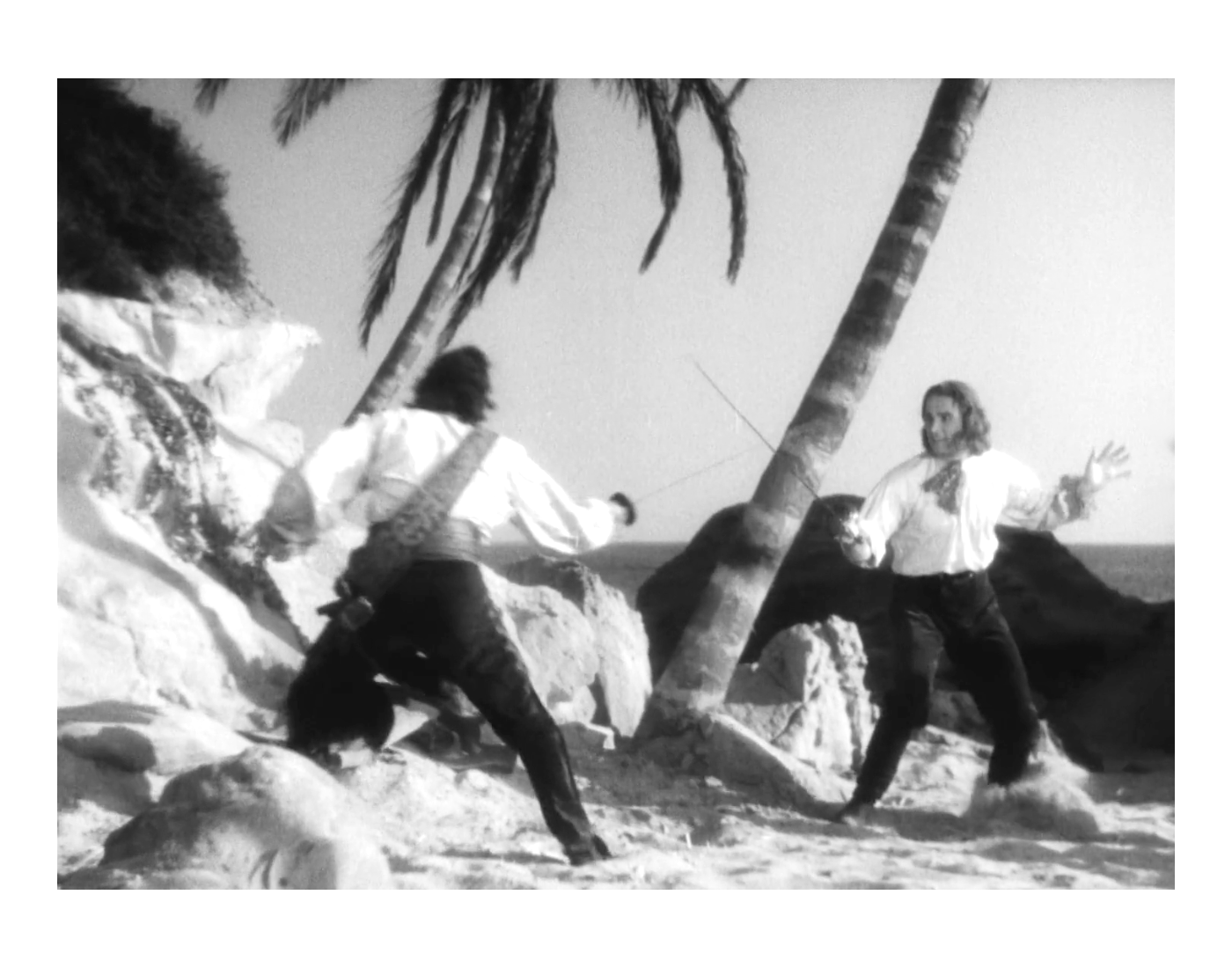
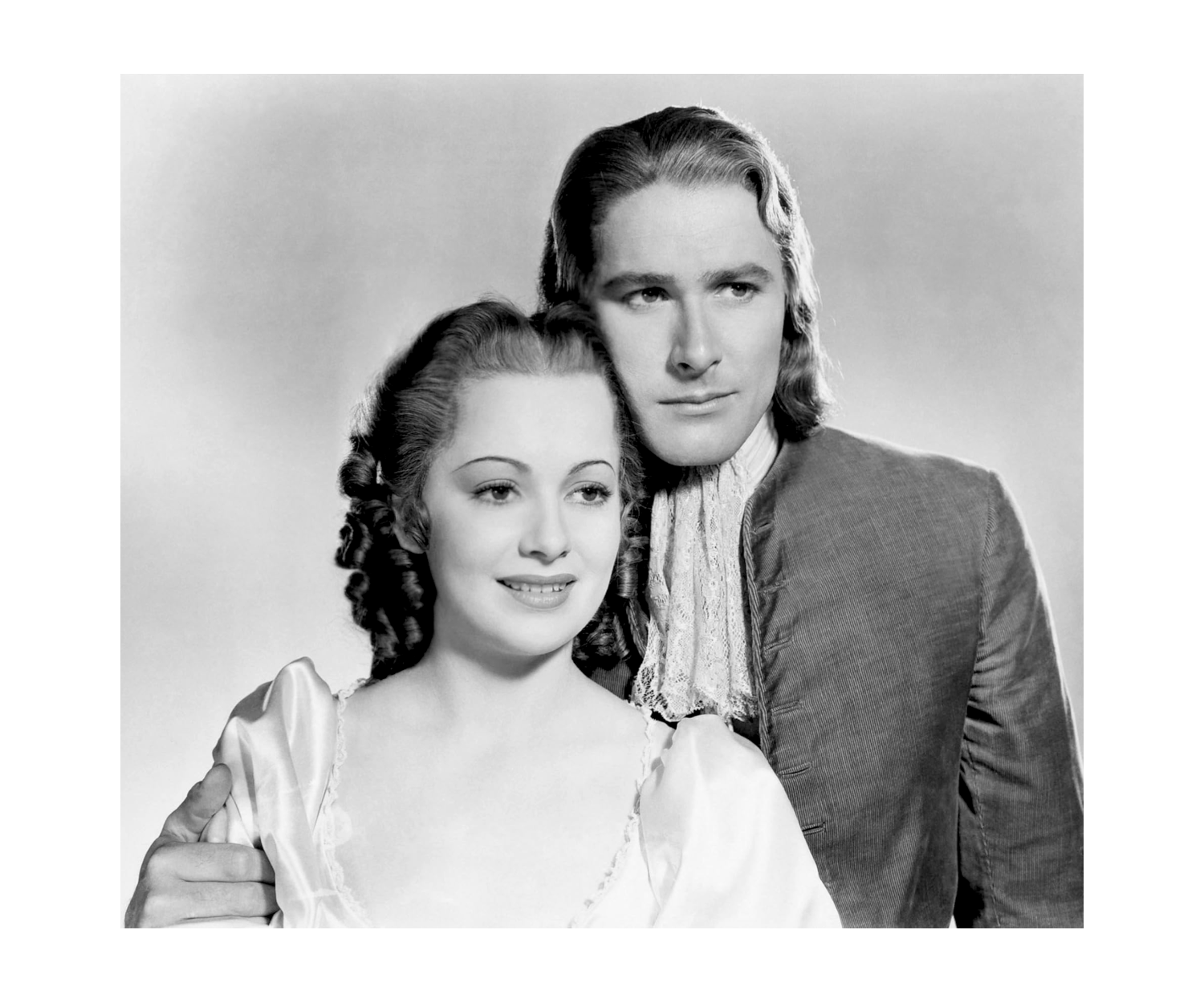
Wanting to make the most of his big break, Flynn worked hard to get his acting skills up to speed. He’s a bit tentative in the early scenes, as if unsure of his footing. De Havilland has no trouble at all dazzling us with Arabella’s impulsive gaiety. Together they lighten the drama with a pairing made in romance-novel heaven.
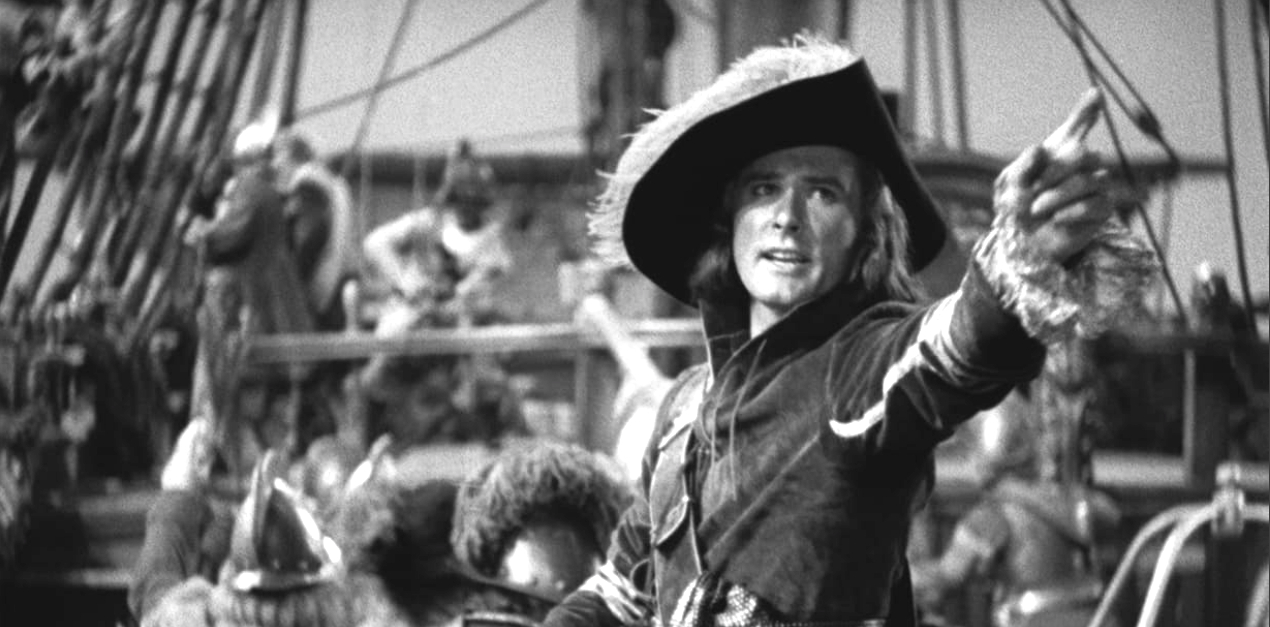
It’s oft-repeated that a few early scenes were re-shot after Flynn hit his stride. We like seeing him before he became a thousand-percent self-assured hero. Doctor Blood’s entry is subdued, and Flynn seems more vulnerable than he will ever be again. Until he’s the captain of his ship, even his chin seems a little ‘tentative.’ But going forward Flynn’s would enter his costume thrillers in grand style, heralded by theme music, with a big smile and a smart remark.
Warners artisans did more than build elaborate sets like the giant pirate ships. Art director Anton Grot gives the opening scenes of injustice England the entirely different expressionist design look of Curtiz’s previous The Mystery of the Wax Museum — all distorted spaces and shadows. When the action moves to Jamaica, day scenes are conventional but the highly-efficient night scenes of the Spanish attack bring back the expressionistic shadows, … a Curtiz action affectation that would figure strongly in sword duels in The Adventures of Robin Hood and The Sea Hawk.
Scenes routinely use a hundred extras minimum. Curtiz and his assistants really show their stuff in the action scenes. Those huge ship mockups fill an entire soundstage. Much of the fighting between rope-swinging combatants and crazed gunners is interrupted by pyrotechnics, with breakaway boat parts flying in all directions. Michael Curtiz’s reputation for callous sadism and risking his extras is said to be greatly exaggerated. Yet everything we see looks plenty dangerous. It’s difficult to believe than no bodies ended up on the bottom of the studio tank. The only visual deficiency on view are painted sky and sea backdrops that look exactly like theater backings, sometimes with wrinkles. In the interior-exterior set of the Bishop plantation, we see an big expance of white sky … a painted white wall complete with visible seams. Overexposing a bit might have cleared up those seams, and made the scene look more like high noon in sunny Jamaica.
Visual effects veteran Rocco Gioffre long ago told me that a number of terrific shots of fighting on the decks and in the rigging were purloined from Warners’ own silent movies … indicating that the studio didn’t junk its silent pix immediately after sound came in. The visual quality on older transfers jumped from sharp to dull. In 4K, likely with a bit of digital help, everything pretty much matches.
Things that later became Errol Flynn action clichés feel very smooth here. Captain Blood’s group of Somerset rebels turned slaves and then pirates are very nicely orchestrated. Forrester Harvey’s cowardly sidekick is alotted due respect, as is a member of the gang who speaks in Bible quotes. The only characters mercilessly mocked are the quack doctors that Blood replaces, Hobart Cavanaugh and Donald Meek.
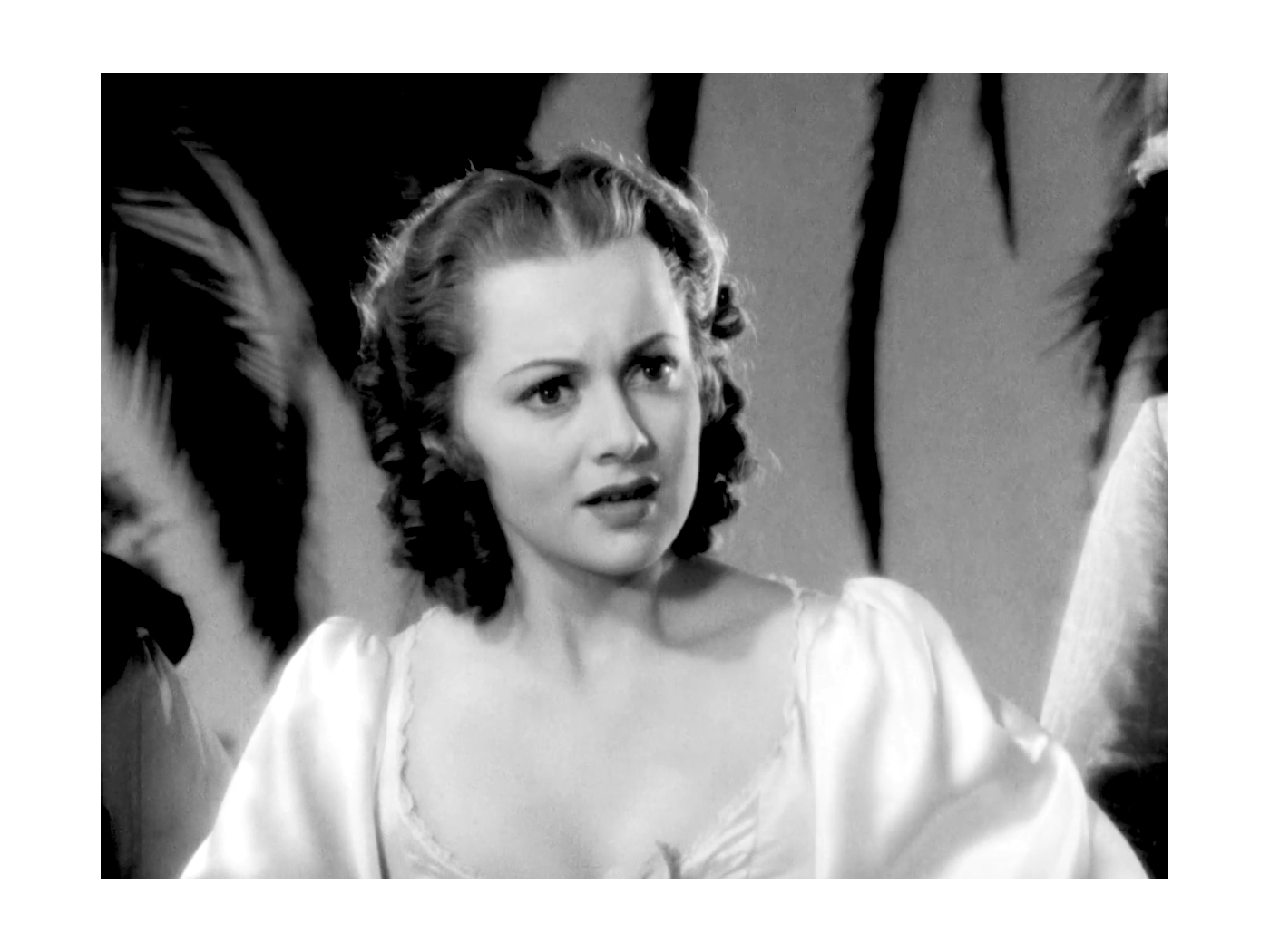
Casey Robinson’s screenplay surprises us with lighter touches, especially the ‘meet cute’ business between Blood and Arabella, with her doing him a favor by buying him at a slave auction. It’s a welcome contrast to an episode otherwise concerned with unjust tortures. In 1935 the cute angle would have been the turnabout on the pulp convention of women being put up for auction, scenes frequently presented as fun. Dr. Blood is understandably made furious by enslavement, and remains hostile toward the giggling Arabella for the better part of a reel. A 2025 audience will realize that the same romantic enslavement notion is made fun of in Harold Ramis’s Groundhog Day, where Andie McDowell buys Bill Murray for a night: “I OWN you.” Much later, Peter Blood gets to turn the tables on his lady fair when he purchases her ‘hostage contract’ from a fellow pirate. Arabella isn’t as amused when Blood looks over his newly-purchased property — her. Touché.
Lionel Atwill is a decent stuffed-shirt baddie, and Basil Rathbone impersonates a lusty French corsair with ease. Rathbone’s superior fencing skills are also much in evidence. Guy Kibbee is good as Blood’s gunner, and a big surprise for us that met him as various infantile sugar daddies in Gold Digger movies. Young actor Ross Alexander is a standout as the pirate navigator, and we were saddened to learn from the docu that he committed suicide not long after finishing the picture. J. Carroll Naish has a nice bit, and famed athlete Jim Thorpe is said to be among the pirates.
For the longest time our favorite Flynn adventure film was the more spectacular The Sea Hawk, but Captain Blood has the edge now. The show feels like the beginning of something good. We see everything coming together: Flynn’s acting chops and his conversion to a charismatic action star; the romantic chemistry with Olivia de Havilland, and Michael Curtiz developing his intense directing style. It all feels new and fresh, even 91 years later. We’re told that it was filmed fast and that the studio demanded a lot of budgetary shortcuts, but the show doesn’t feel compromised. Even the cutesy finish, with Peter and Arabella playing a ‘got-cha’ prank on her stuffy Uncle, is welcome. Semi-historical escapism should be able to pay off with romantic fun as well as exciting mayhem.
Who can resist a big-scale escapist semi-historical action epic? I remember some girls I met in the UCLA dorms being very vocal in their approval for Errol Flynn. You’d have thought he was the greatest thing ever to walk on two legs. I even remember adoring comments about his long hair. Time to go back to my own dorm room, I guess.
Another Errol Flynn movie to add to the “must see” list!
What a fabulous film
Time to pull out the WB DVD of Captain Blood to see if it needs an upgrade. Can The Adventures Of Robin Hood be far behind? Obviously a more costly three strip Technicolor project for sure & I’ve only just recently upgraded from DVD to Blu-ray, so no hurry. Cheers!
I can’t imagine why I thought this had been released on Blu-ray by Warner Archives, but I guess I got it mixed up with another Flynn movie. I will have to buy this during the next Barnes and Noble sale. Alan K Rode is one of my favorites on the commentary tracks.
Great shame it wasn’t released by Warner Archive. That way, we’d have had the disc at a more sensible price!
I was raised on my old black and white ’50s TV watching films like Captain Blood. While nostalgia has a strong pull for me with Blood the film itself holds up extremely well. Seeing Captain Blood again is like visiting an old friend.
I recall the time that I was listening to a CD of Franz Liszt music and when his Mazeppa started to play I instantly recognized it as the sea battle music from Captain Blood. “Hey, Liszt stole from Korngold,” I thought. “Oh, wait,” I reconsidered since Liszt had died a decade before Korngold was born,”maybe not.”
Korngold had something like three weeks in which to create that great score, the reason he resorted to using some classical music because of time constraints. That’s why, to the ever lasting credit of Korngold, he insisted that his credit in the film should read “Music Arranged By”, rather than composed by.
The title might lead people to assume that it’s a slasher movie.
Assumptions are ridiculous.
This new 4k restoration of this classic was a revelation for me. Having suffered the various previous home video iterations I wasn’t expecting it to look & sound this good.
Part of the problem with the surviving materials was its post WW2 reissue when, in order to be able to release it as part of double bills, it was savagely cut with 25 minutes removed. Unfortunately, the actual camera negative was cut and the footage discarded. When it was reassembled in the 80s, it had to be patched together from inferior sources.
There’s one minor problem with this new restoration. At about the 1 minute mark of the Main Titles, there’s a strange audible glitch that ruins Korngold’s superb music almost as if there’s been an edit even though the image is unaffected. This glitch has never affected any previous release of the film so must have occurred during the mastering process.
The rest of the presentation is an absolute joy. Thank you Criterion.