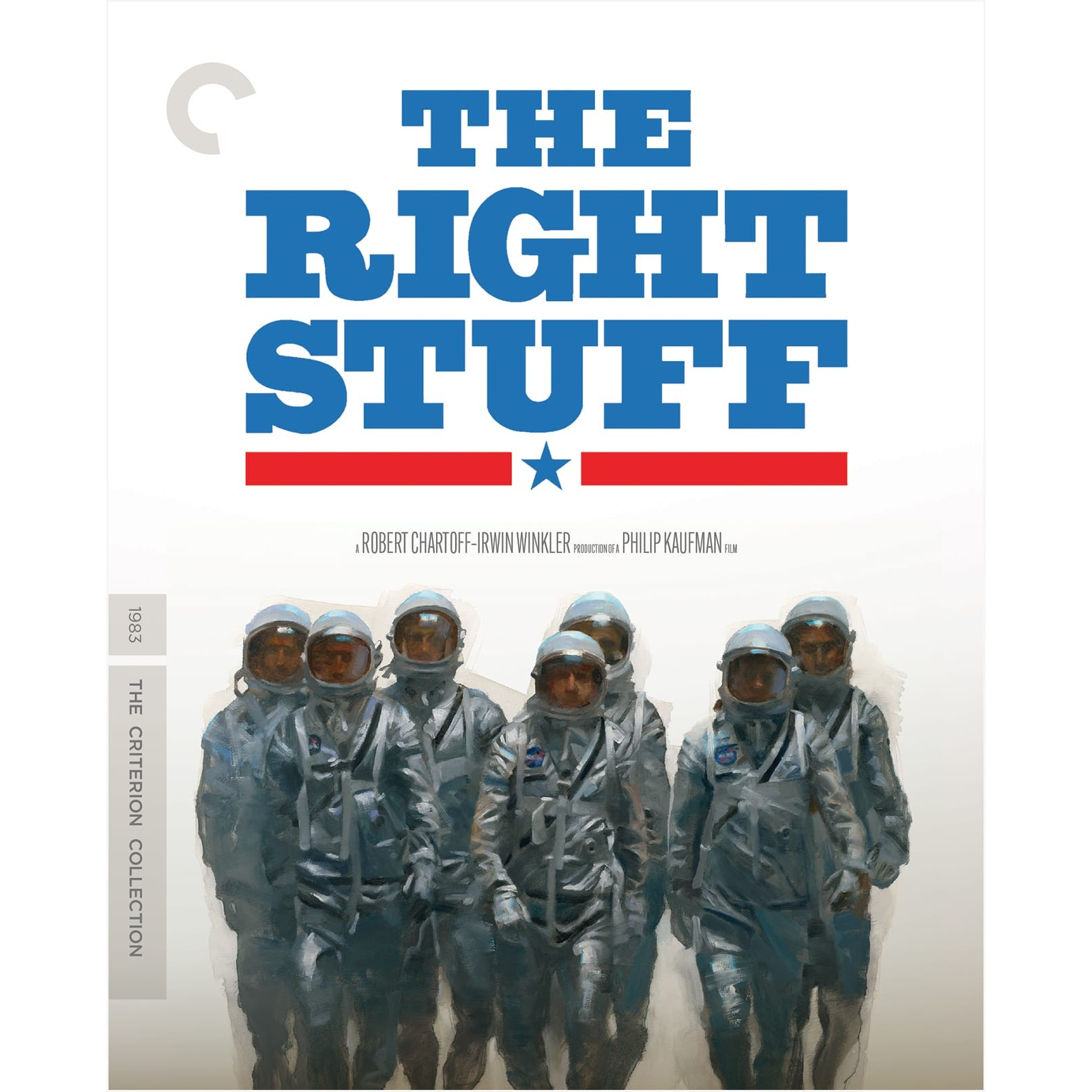

 Was the movie world of 1983 too tied up in Star Wars fantasy to give this show a looksee? We could hardly believe it when Philip Kaufman’s The Right Stuff was judged a box office non-performer. Philip Kaufman took on the entire Mercury Program as documented in Tom Wolfe’s highly readable book, surmounting all the problems inherent in heroic historical narratives. The very look of the film is inspiring, thanks to Caleb Deschanel’s consistently riveting images and special effects that bettered then- trendy motion control work.
The very exciting docu-drama has plenty to say about the NASA space program. It seemed as if all of America’s technical resources and wealth had been dedicated to a massive, nation-steering project that wasn’t directly about warfare. President Kennedy’s idealistic moon challenge raised hopes that ‘the country that can do anything’ might seriously pursue solutions to society’s most difficult problems. If there ever was a Kennedy Camelot, the space program was its knighthood.
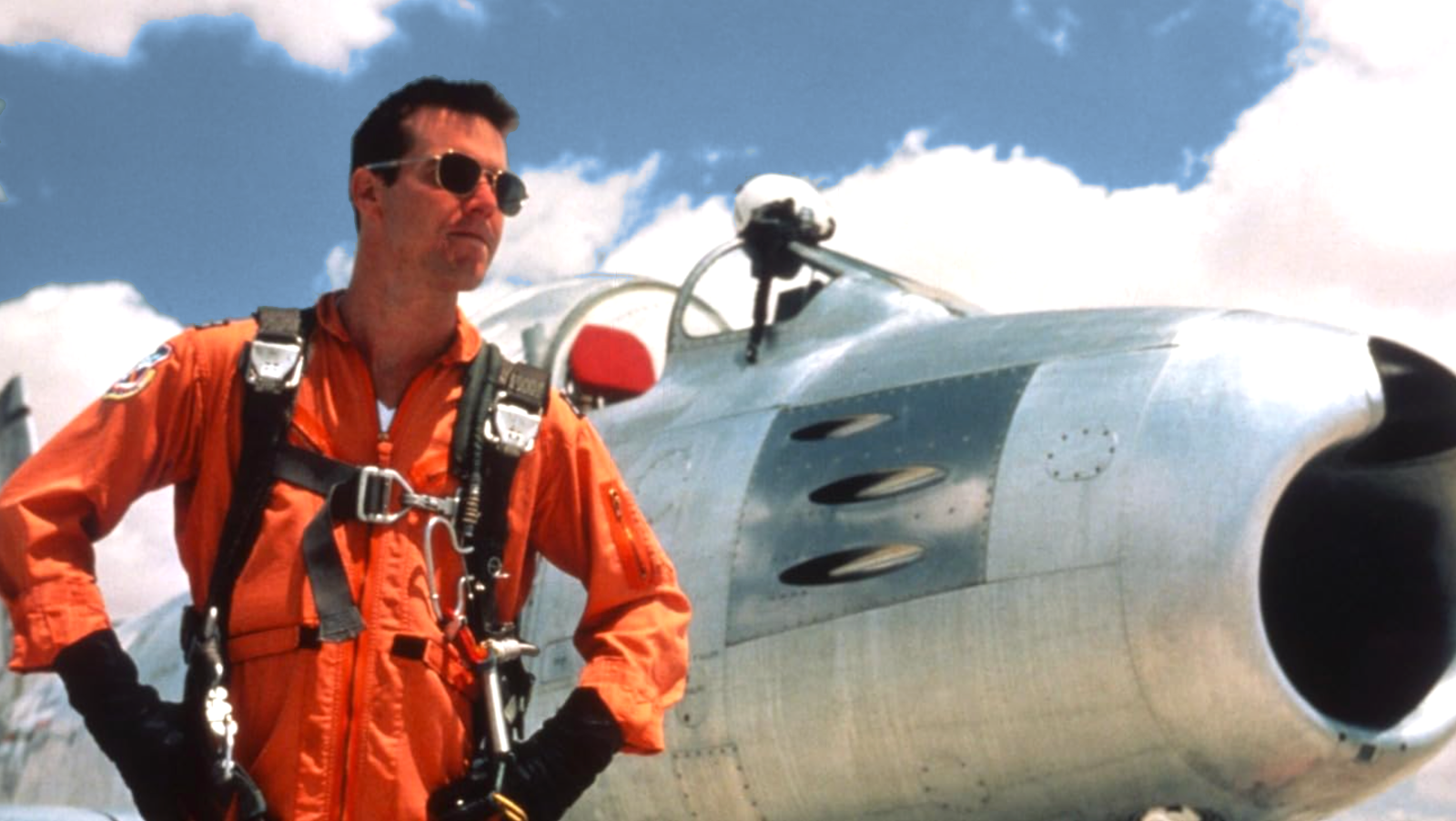
Several Mercury astronauts had been bred for high-tech combat in highly advanced warplanes. Jet aces may have been killers with wings, but this batch were compelled toward high risk, seeking to prove something about themselves. The audience I saw the show with on its first Saturday matinee laughed in all the right places. They were duly impressed by the sight of Chuck Yeager’s rather unstable-looking rocket plane, fueling up on the dry lake bed safe a distance from buildings and personnel. It seemed both funny yet proper that the pilot of a million-dollar experimental craft had to use a broom handle to secure its entry hatch, rather than report an injury to his arm.
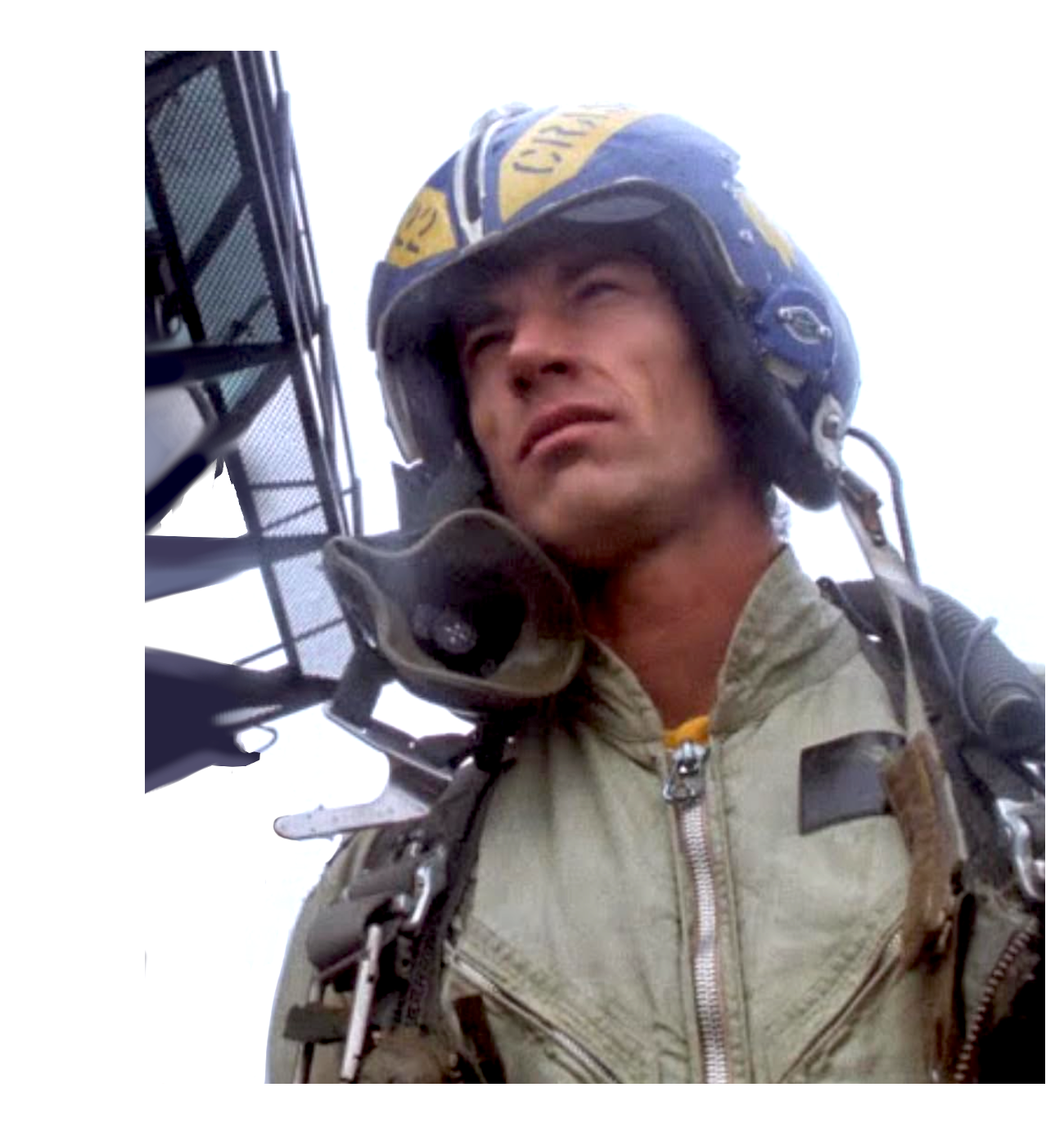
The Right Stuff rekindles the kind of emotional optimism remembered from childhood dreams of cowboy stars and baseball heroes. Naval aviator Alan Shepard (Scott Glenn) is handed an offer to join a corps of space men willing to fly into unknown hazards. Shepard responds without hesitation: “Sounds dangerous — count me in!” We applauded like John Wayne fans of olde.
The movie repeats author Tom Wolfe’s comparisons of the Mercury space men to the Air Force’s military test pilots. The government also had a group of civilian pilots, hired pros that also tested new aircraft funded by the phenomenal defense boom of the 1950s. High above the Mojave Desert, they all risked their lives for little more than regular flight pay. Some died testing airframes and innovations in aircraft design, often in utter anonymity.
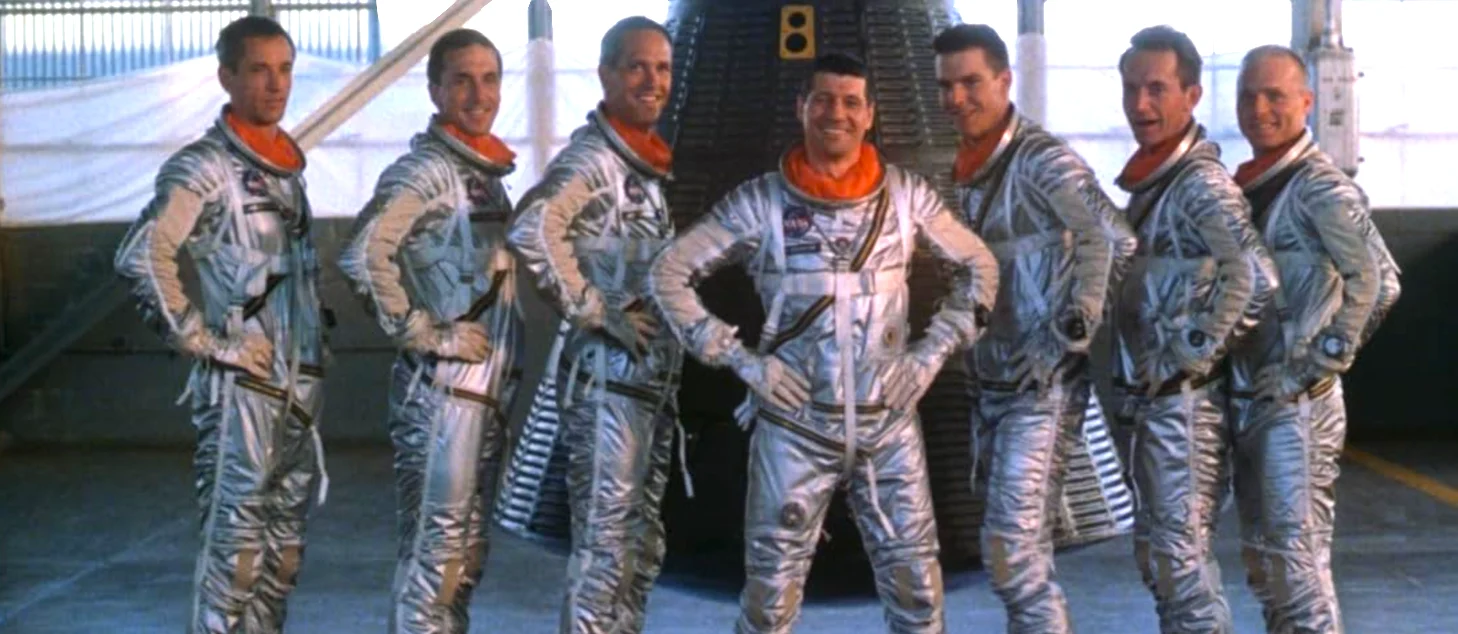
By contrast, the Project Mercury space men were backed by a Public Relations budget. They were global celebrities from the moment their identities were announced, a new generation of noble warriors to challenge the heavens. With one look at their silver space suits we ’50s kids wondered if our destiny would be in outer space as well. The Mercury Program was science fiction — but happening every night on the news.
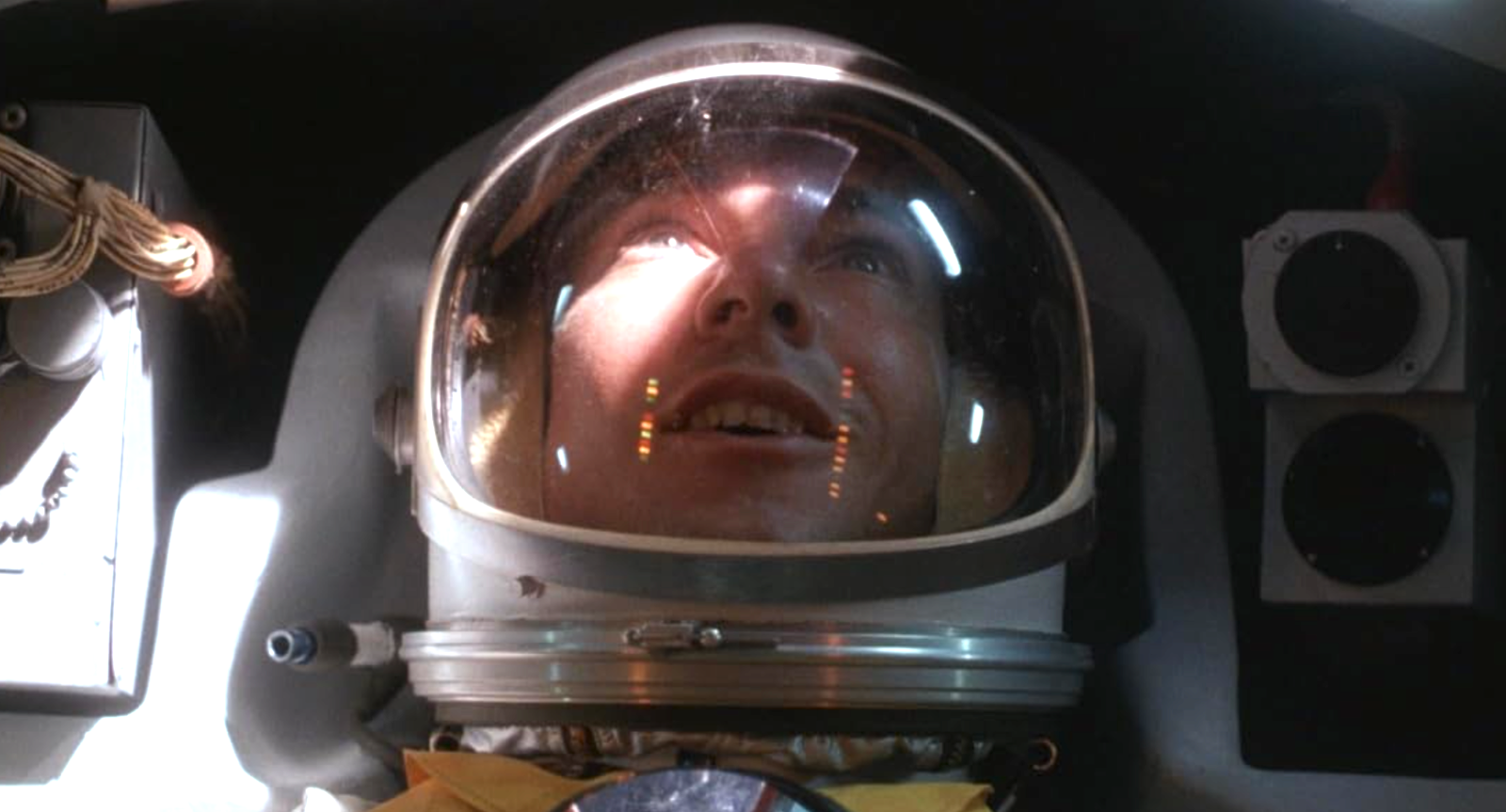
The Right Stuff is docu-fiction expressing the spirit of Wolfe’s book, not the exact truth. Its tone shifts from high drama, to knockabout comedy & satire, to a dreamy contemplation of the wonder of man’s quest to fly. The major players are used to express different aspects of astronaut-hood. Chuck Yeager was a rambunctious and aggressive daredevil, a natural leader uncomfortable in the role of team player. Through actor Sam Shepard, Kaufman simplifies Yeager into a plain and simple Gary Cooper type, a ‘natural man’ following a higher vision. He’s given a western sidekick with the thickest drawl you ever heard, played by Levon Helm. Is the extreme accent perhaps a tad demeaning?
According to my father * the first astronauts were highly disciplined fliers. They had to be ambitious and competitive in their personal quest for achievement. They had bright personalities and were definite team players. Psychologists helped choose them for a special purpose — to get the job done but also to promote an idealized image of American virtue. The Right Stuff takes license to externalize and amplify personal traits Wolfe found in these gentlemen. All had a sense of humor, but Kaufman exaggerates their clowning. Dennis Quaid’s Gordon Cooper is the class cut-up and Lance Henrickson is a moody Wally Schirra. Scott Glenn’s Alan Shepard is given the warrior edge, while Charles Frank’s Scott Carpenter is the sterling high achiever and best buddy.
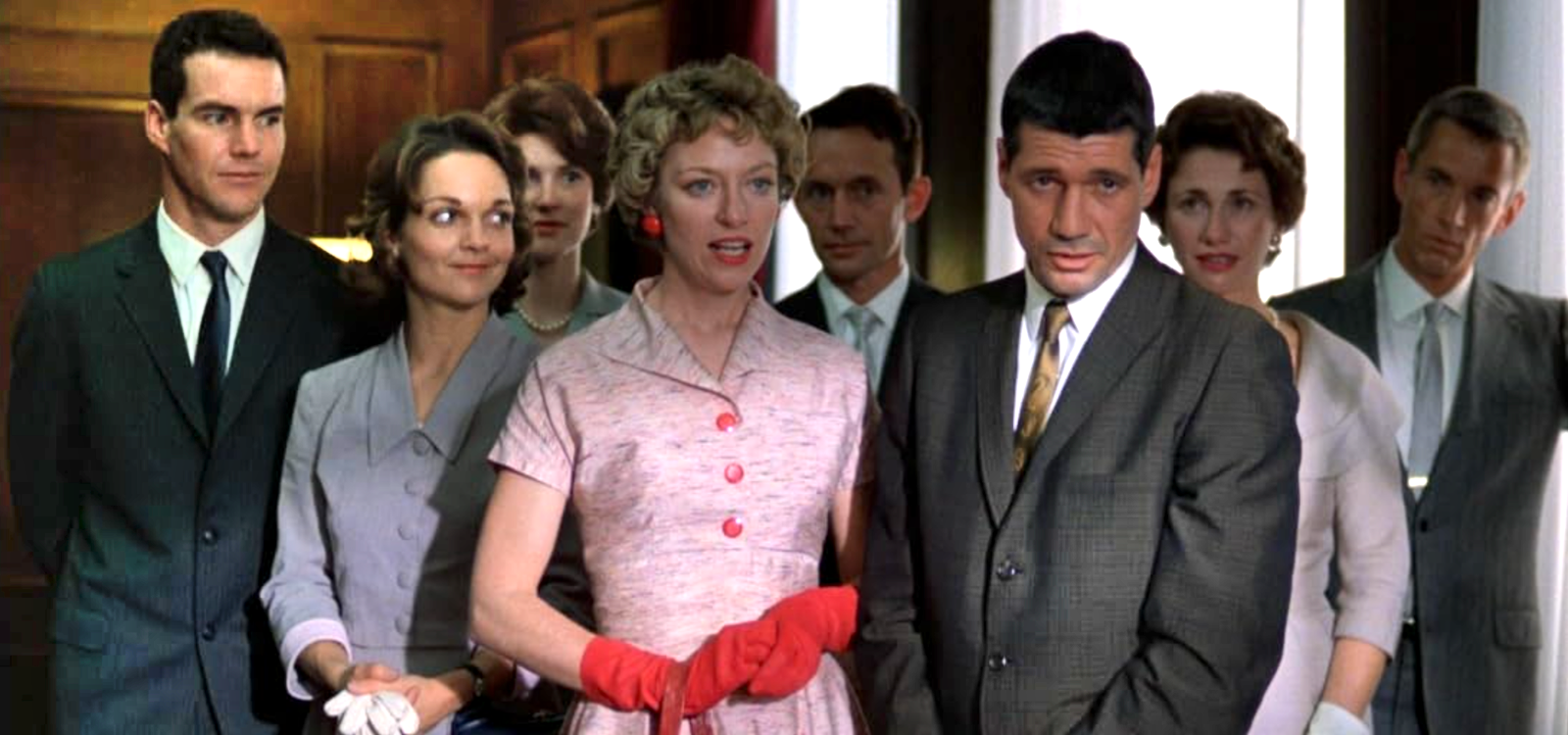
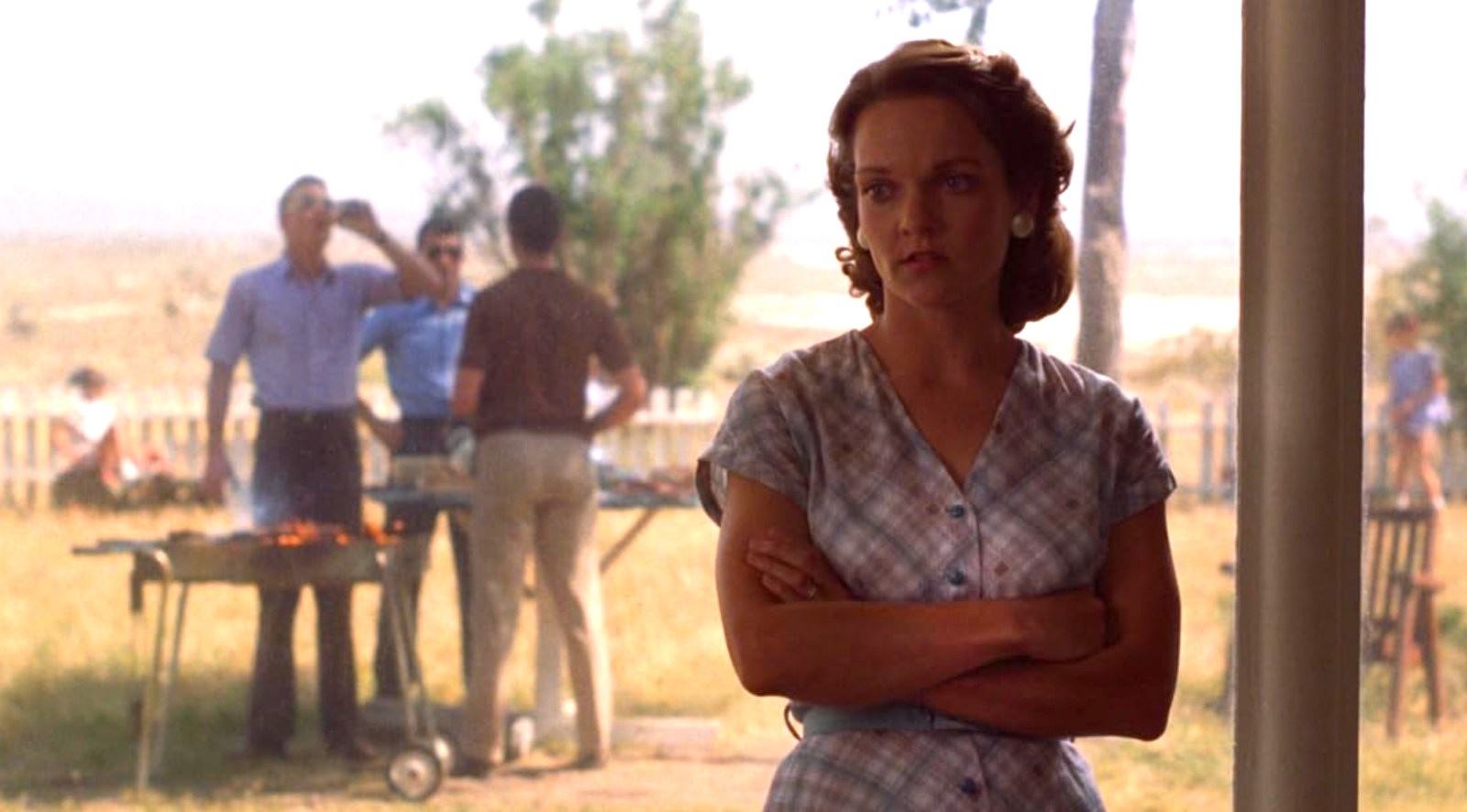
Fred Ward’s Gus Grissom is a Fred Flintstone- like joker presented as if he had less imagination and less class than his compatriots. Gus takes a bunch of souvenirs along on his flight, and is made to act guilty when his space capsule malfunctions upon splashdown. Grissom is used to express the big truth of many military families, in which the wife not only gets a raw deal in lifestyle terms but ends up being taken for granted by a husband more interested in Beer Call. “What, no Jackie Kennedy?”
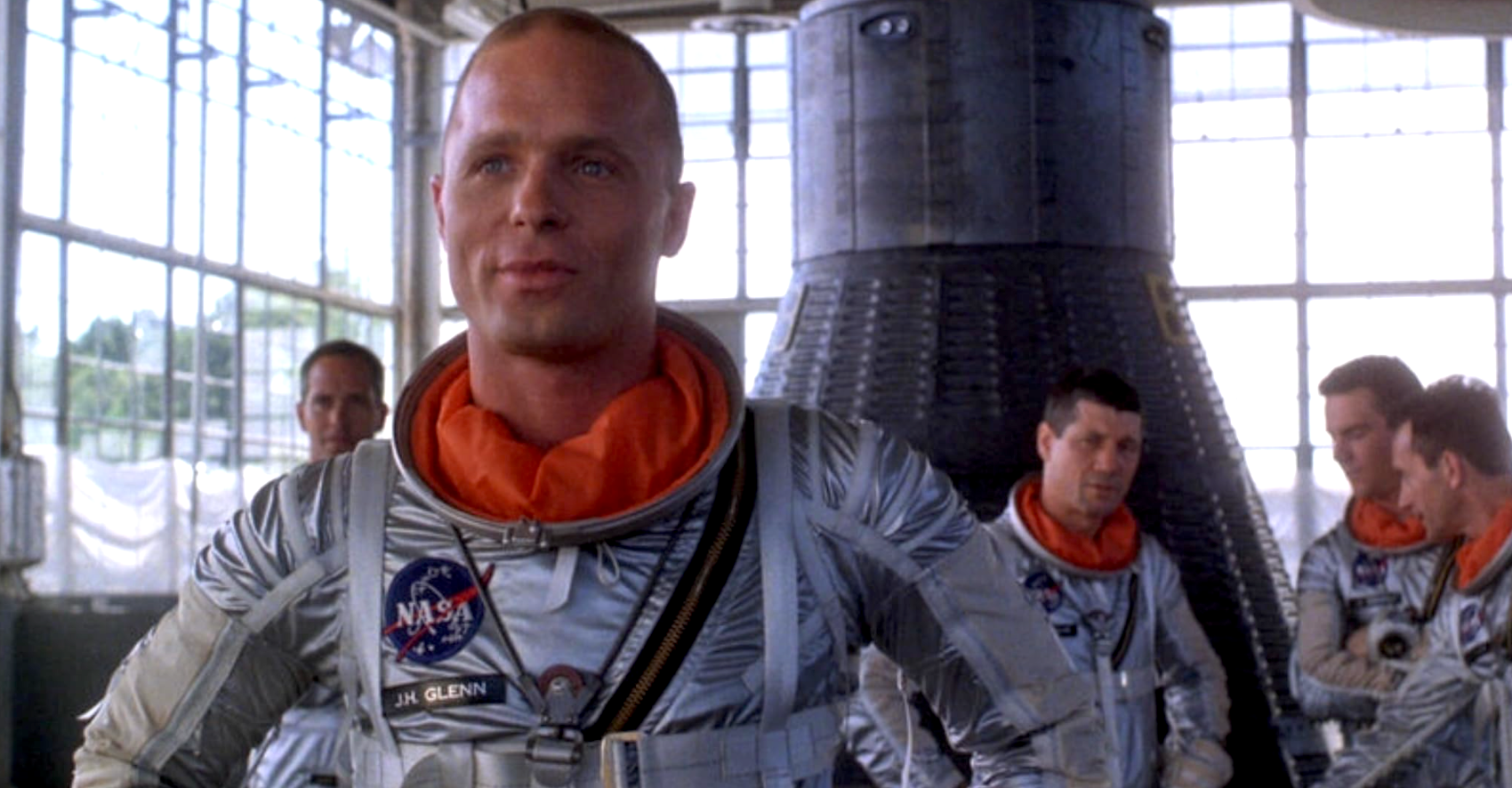
Finally, Ed Harris is phenomenally charismatic as the flying Marine John Glenn, a square’s square so motivated by virtue that he can’t force himself to say ‘damn.’ He’s a natural spokesman and motivator. When John speaks his words tumble out as gems of altruism, like Christopher Reeve as Superman. Unlike Gus Grissom, John is there backing up his wife all the way: “I’m behind you 100%!”
The big picture of the space race is presented in even broader comic terms, from Jeff Goldblum and Harry Shearer’s goofball recruiters to the vintage news film edited to comic effect. A test capsule ejects with a feeble ‘pop!’, like a champagne cork. Donald Moffat’s broad lampoon of an apopleptic LBJ. is hilarious: “Gladiolas!” The astronaut applicants are put through batteries of gruesome, humiliating physical tests that provide an unending source of slapstick humor. Kaufmann even gets away with a sustained masturbation joke in this PG epic. The ‘permanent press corps’ is played by a comic troupe that turns every news and photo op into a silly circus. Kaufman overlays the chattering of locusts to further characterize the press corps as parasites. Now is that fair to the journalists that promoted the space program so well?
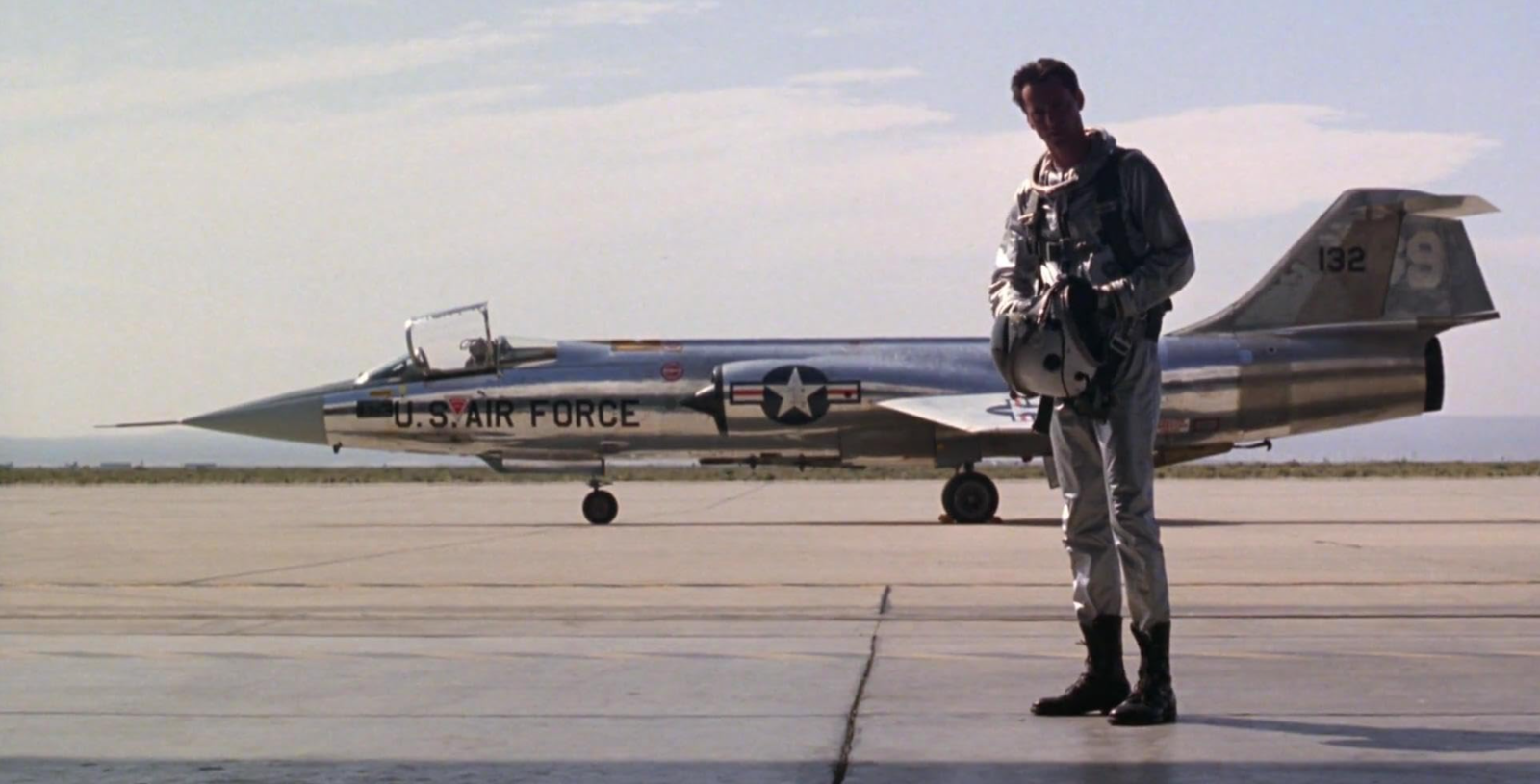
The story does perhaps push a few details too far. The narrative stresses the rebelliousness of the astronauts against the rocket scientists — “Our Germans are better than their Germans” — when the relationship between the two groups was harmonious and cooperative to an extreme. The space men were often trained engineers, and their survival depended on excellent communication with the experts tweaking the machinery. Out at Edwards, the flying being done by Chuck Yeager is made to look like a two-man operation, with Yeager deciding on his own when to hop in a plane and go break another altitude record. It’s part of the film’s lionization of Yeager as the lonely, unappreciated hero who flies by a personal set of rules. That’s mostly bunk. Yeager followed orders and had to work with a bureaucracy just like any other pilot. Had he gone to college, he’d have been elbowing his way into the Mercury program with the rest of them, defying anybody to scratch him on account of his age.
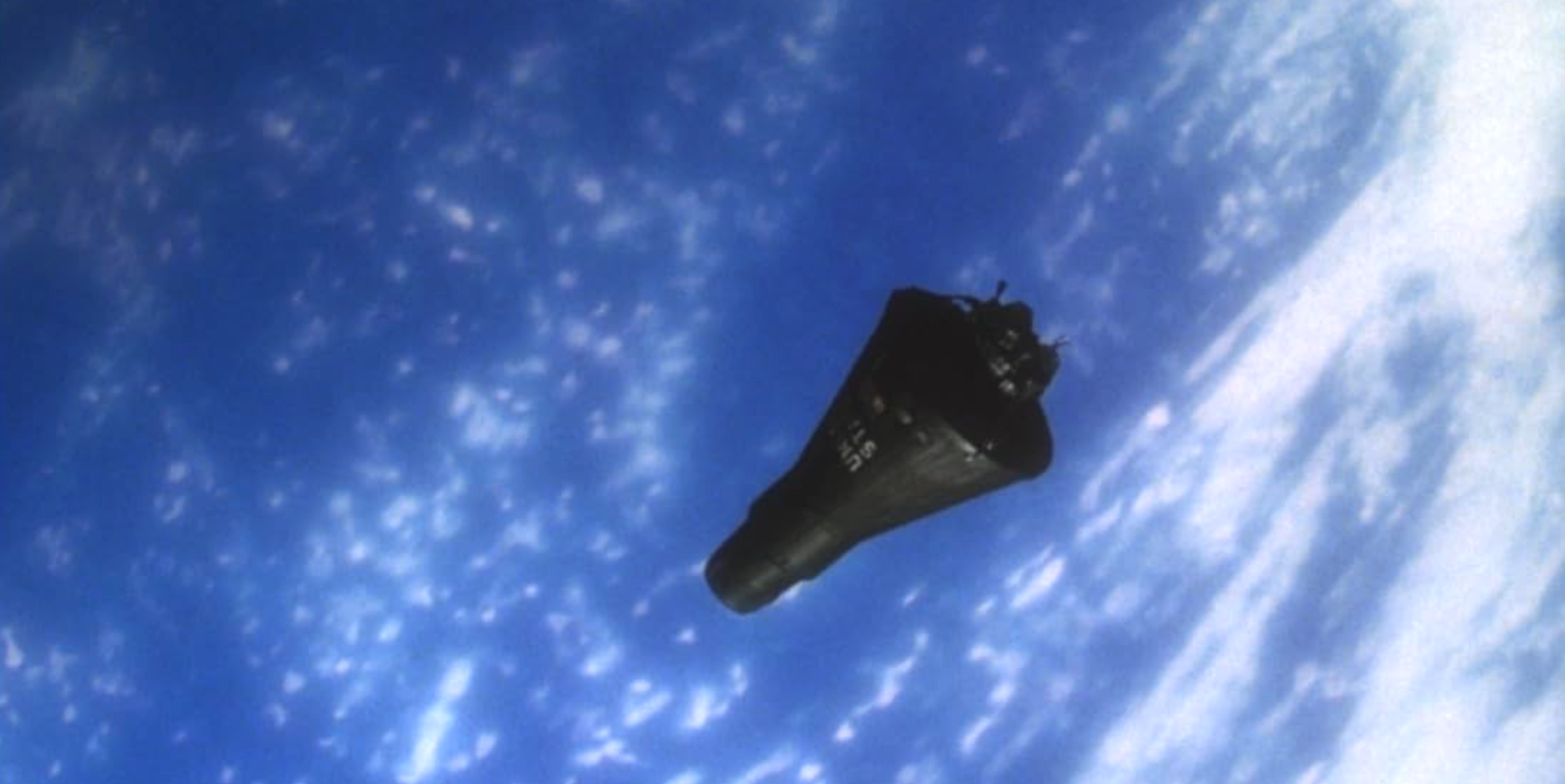
Some specifics may be off but The Right Stuff conveys the full spirit of daring and adventure at the dawn of the space program, which like everything else Not Brand New in our present culture, risks being forgotten. (Really. Ask ten people under age fifty if they know what the X-15 was.) The show makes good use of old B&W shots of the Bell X-1 experiments and excellent color footage of missile tests and Mercury launches. Producers Chartoff and Winkler commissioned a number of motion control visual effects. But director Kaufman rejected many as too mechanical and unexciting, and obtained his dynamic ‘aircraft zooming’ footage using models large and small. Filmed in outdoor sunlight, they were dropped from great heights and suspended before cameras running at multiple speeds. Twisting camera moves and buffeting motions provided dozens of snippets of film the editors could assemble into jolting, impactful montages. The addition of hyper-dynamic sound effects imparts even more excitement to the viewer.
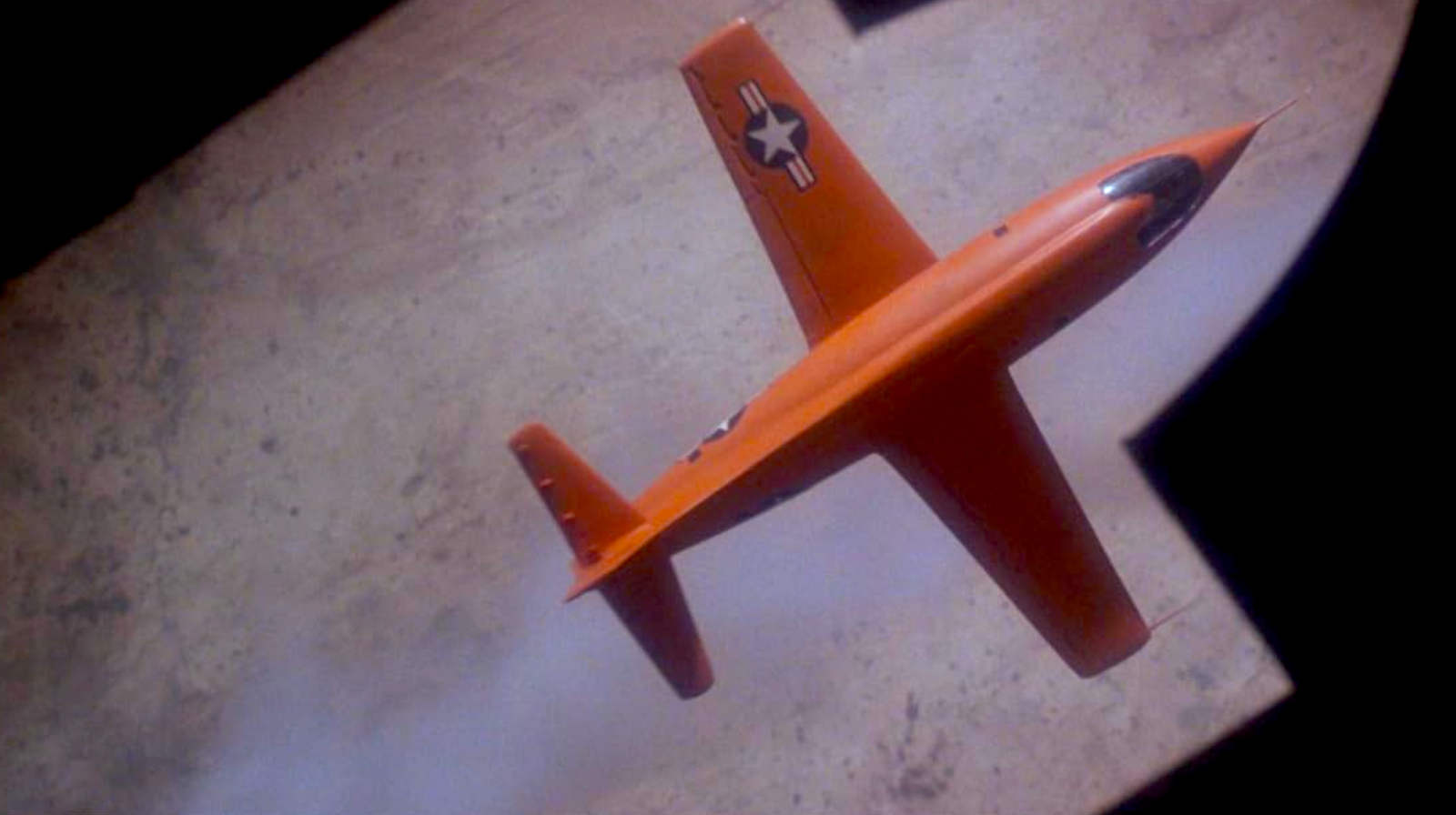
Kaufman began as a footloose experimental filmmaker out of Chicago; his flaky superhero comedy Fearless Frank is the work of a director willing to try anything. To suggest an other-worldly awe experienced by pilots breaking the sound barrier or reaching outer space for the first time, Kaufman engaged the ethereal experimentalist Jordan Belson to create a weird light show effect, sort of a “Star Gate lite.” We film students had ooh’d and ahh’d at Belson’s abstract short subjects Samadhi and Allures. Nobody had a clue how his signature visuals were filmed, but they were immediately recognizable.
Amid the fantastic visuals and fast-paced fun, The Right Stuff gives us more striking characterizations. Old Royal Dano is the local man of the cloth, whose black-clad presence makes him a messenger of death whenever a pilot goes down. Kim Stanley is the amusingly vulgar Pancho Barnes, the proprietor of a high desert beer joint frequented by the fliers. Pamela Reed has fun clowning with Dennis Quaid, but reacts with horror when she imagines him the next pilot to be reduced to crushed cinders. Everybody seems to have wanted a part in this picture, no matter how small. Mickey Crocker, Susan Kase and Kathy Bates are ‘other’ astronaut wives, while Mary Jo Deschanel gets the plum role of the not-comfortable-speaking-in-public Annie Glenn. The likeable David Clennon tries to liaise between the Air Force and the new NASA, and perennial John P. Ryan loses a key argument with John Glenn. The go-to actor to play aborigines, David Gulpilil, befriends Gordo Cooper in an unnecessary ‘magic’ episode in Australia. The Right Stuff suggests that unexplained sparkly objects seen by John Glenn in orbit were really cinders from a campfire in the Outback.
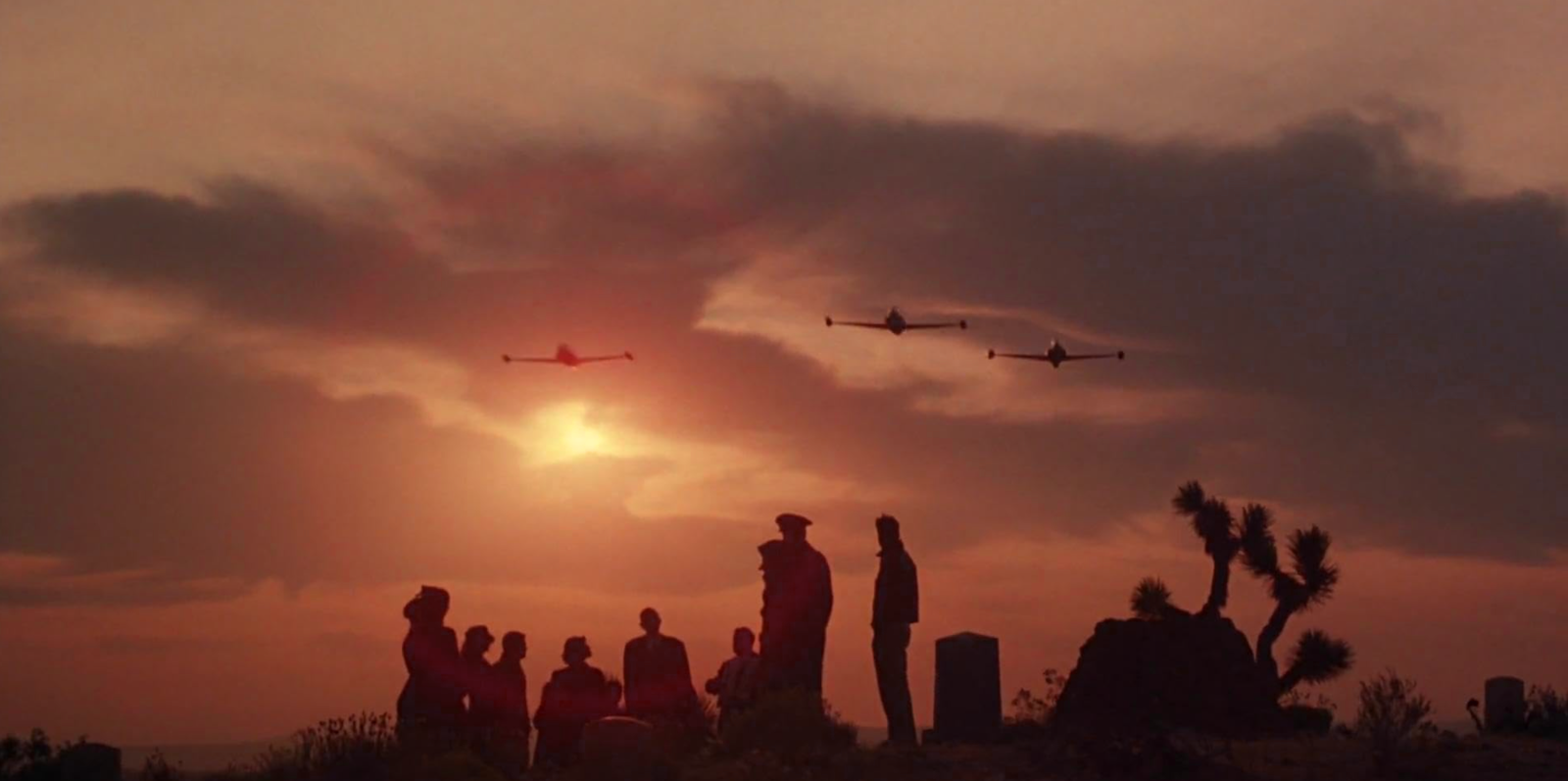
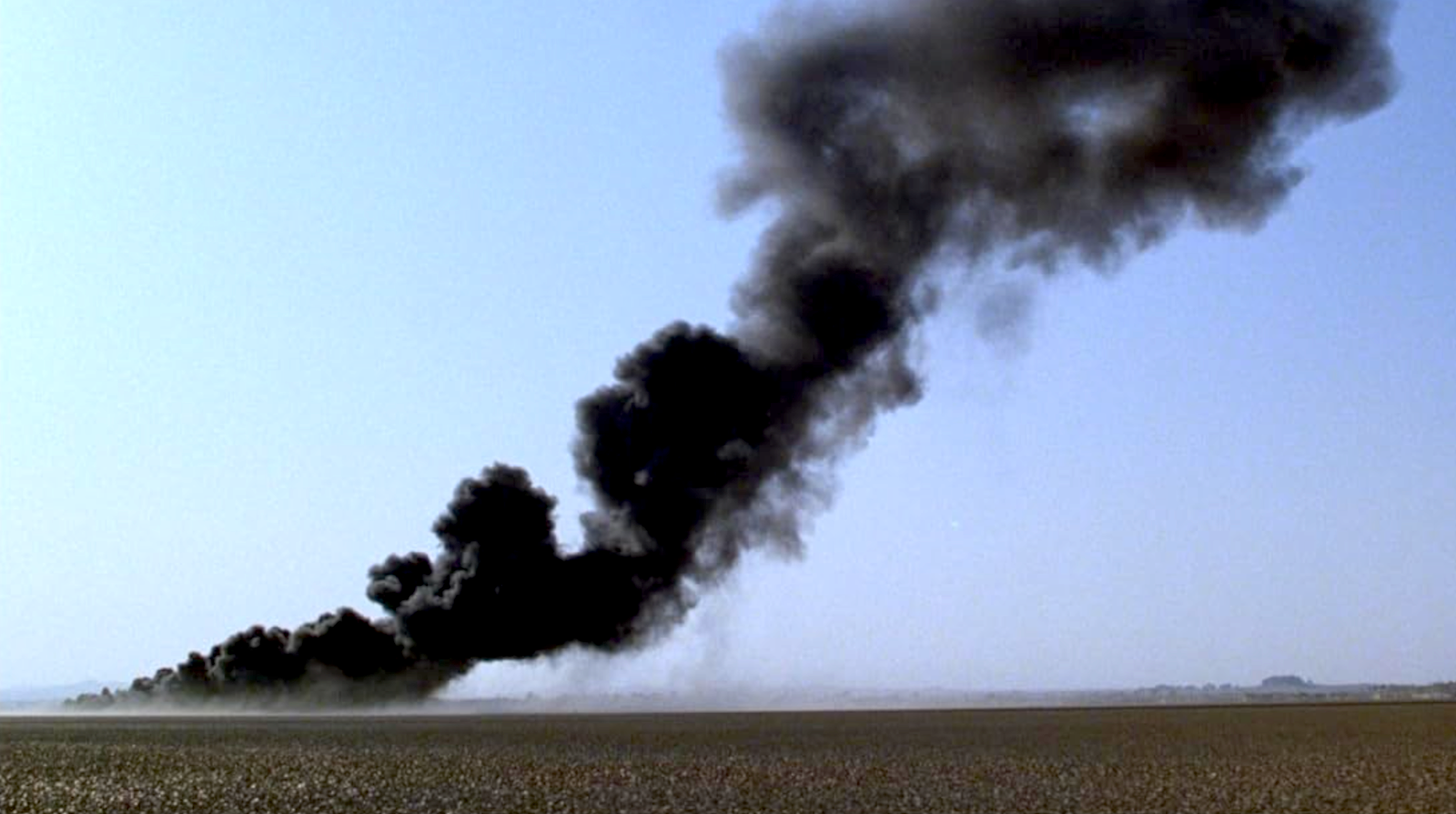
Sam Shepard’s Chuck Yeager eventually speaks up in favor of the astronauts’ gallantry and bravery — they’ve succeeded in piloting their craft rather than allowing the scientists to make them into passive ‘specimens’ just along for the ride. Philip Kaufman goes in for some daring thematic juxtapositions, almost all of which work. The boldest one is Yeager’s near-disastrous rocket plane flight, which is inter-cut with LBJ’s celebratory pork-barrel barbecue for the inauguration of the Houston Space Center. While Yeager’s plane goes into a lethal spin up in the stratosphere, the Mercury astronauts enter an arena in a parade, like conquering heroes. Gordo and Gus contemplate their status as heroes, when most of the seven have still yet to fly a space mission. To symbolize the ‘spirit of flight,’ Kaufman matches idealized images of Sally Rand performing a fan dance, to a soundtrack by Debussy. Back in the Mojave, the film’s living spirit of flight Yeager counts himself happy to have survived: any landing one can walk away from is a good landing.
The participants give several reasons for the theatrical failure of The Right Stuff, despite the shower of accolades given it by the critics. Today, everybody loves it. I think that in 1983, only twenty years after the events pictured, Americans still had boring memories of astronauts playing golf on the moon. Nobody remembered the near-disaster of Apollo 13. The kids wanted Luke Skywalker space fantasy, not a history lesson. Space was ‘cool’ for only a small tech-head segment of the country. It’s too bad, because Philip Kaufman’s movie is about as inspirational as an upright and patriotic film can get.