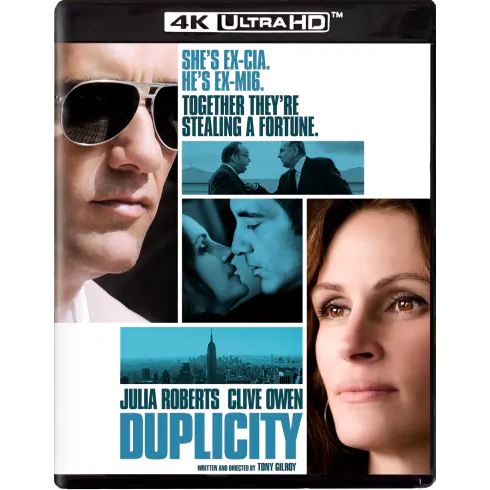

 We had a very good time with this show back in 2009 when it was new — Julia Roberts was still a reasonably hot commodity, and we always liked Clive Owen. He never attained full cruising altitude as a starring leading man, but he could do no wrong for us in Croupier, Gosford Park and Children of Men.
We thought the screenplay for Duplicity to be absorbing, clever and sophisticated. As if to atone for his wildly popular Bourne movies, writer-director Tony Gilroy (Michael Clayton) fashioned a credible nail-biter with attractive characters, laughs and a little sex. More importantly, his thriller achieves a light tone that’s not easy to maintain. Viewers looking for an update of, say Charade will know what I’m talking about. If you actually have heard of Cary Grant and Audrey Hepburn, let me reach a bit farther into the past to resurrect Ernst Lubitsch’s incredibly witty comedy about jewel thieves, Trouble in Paradise. Gilroy’s Duplicity isn’t quite that elegant, but compared to today’s average pea-brained thriller it’s an instant classic. We’re told that it didn’t take off in the theaters, a fact that doesn’t augur well for mainstream feature films pitched above the seventh grade level.
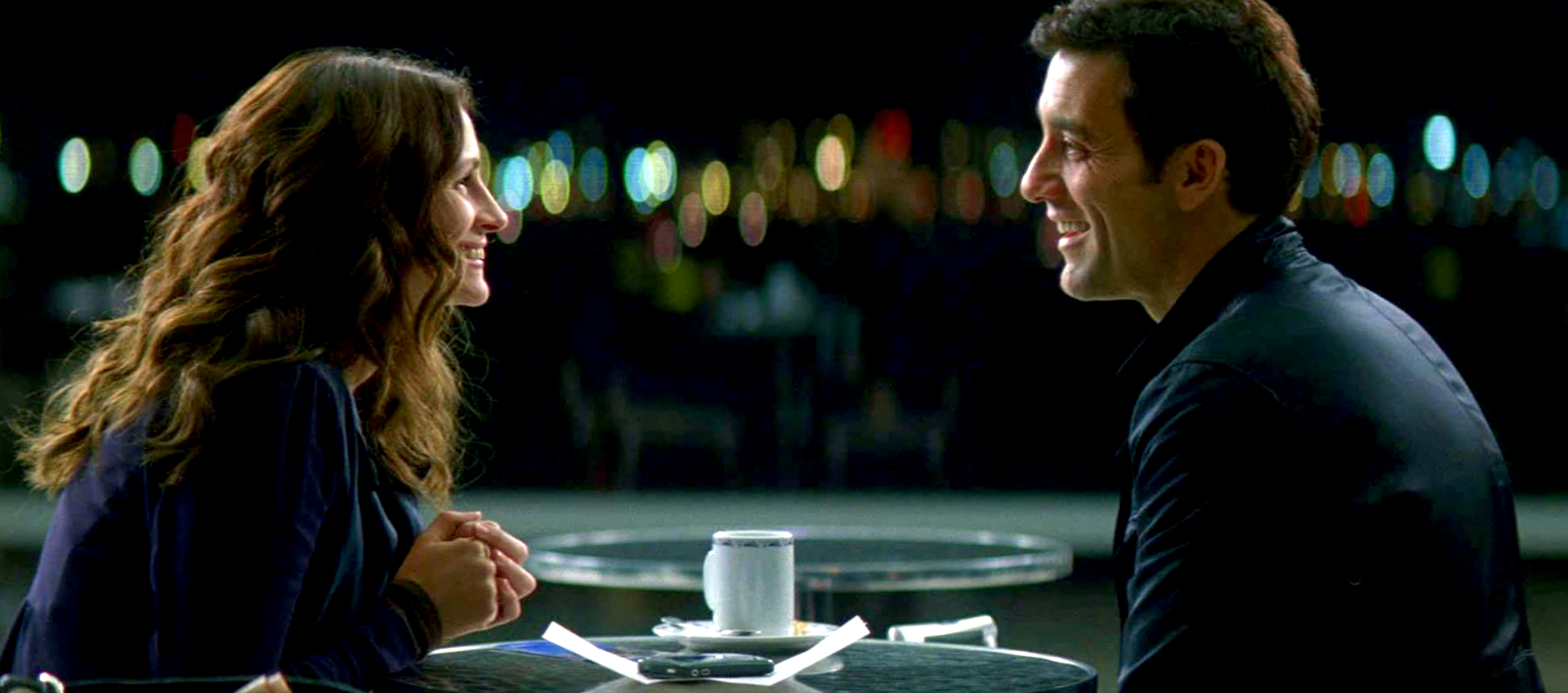
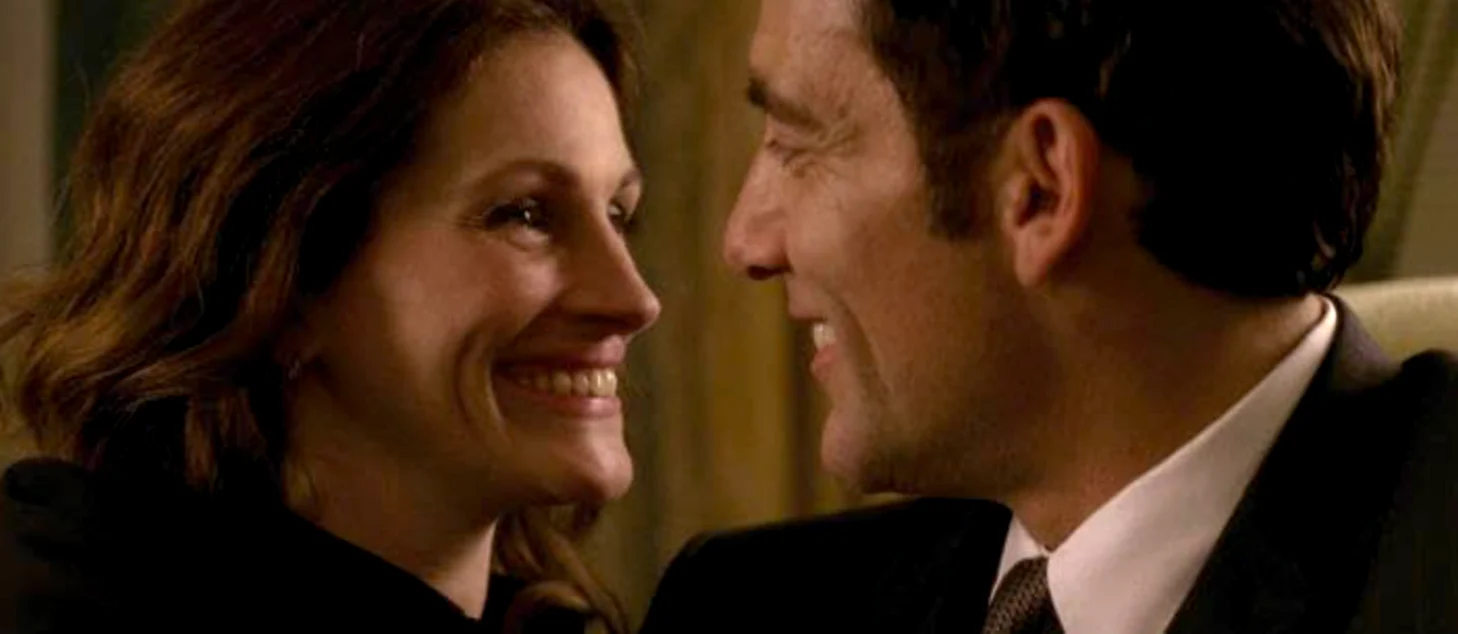
MI6 operative Ray Koval (Clive Owen) wants to quit his job and use his considerable skills in the private sector. The goal is to retire early, preferably to a Caribbean resort. That ambition becomes a possibility when Ray meets Claire Stenwick (Julia Roberts), a clever counter-agent who repeatedly gets the better of him. Claire and Ray fall deeply in love even though neither can tell when the other is ‘gaming’ the relationship … i.e., faking some scam, engaging in an elaborate lie or using espionage tactics to investigate a private suspicion about the other’s motives.
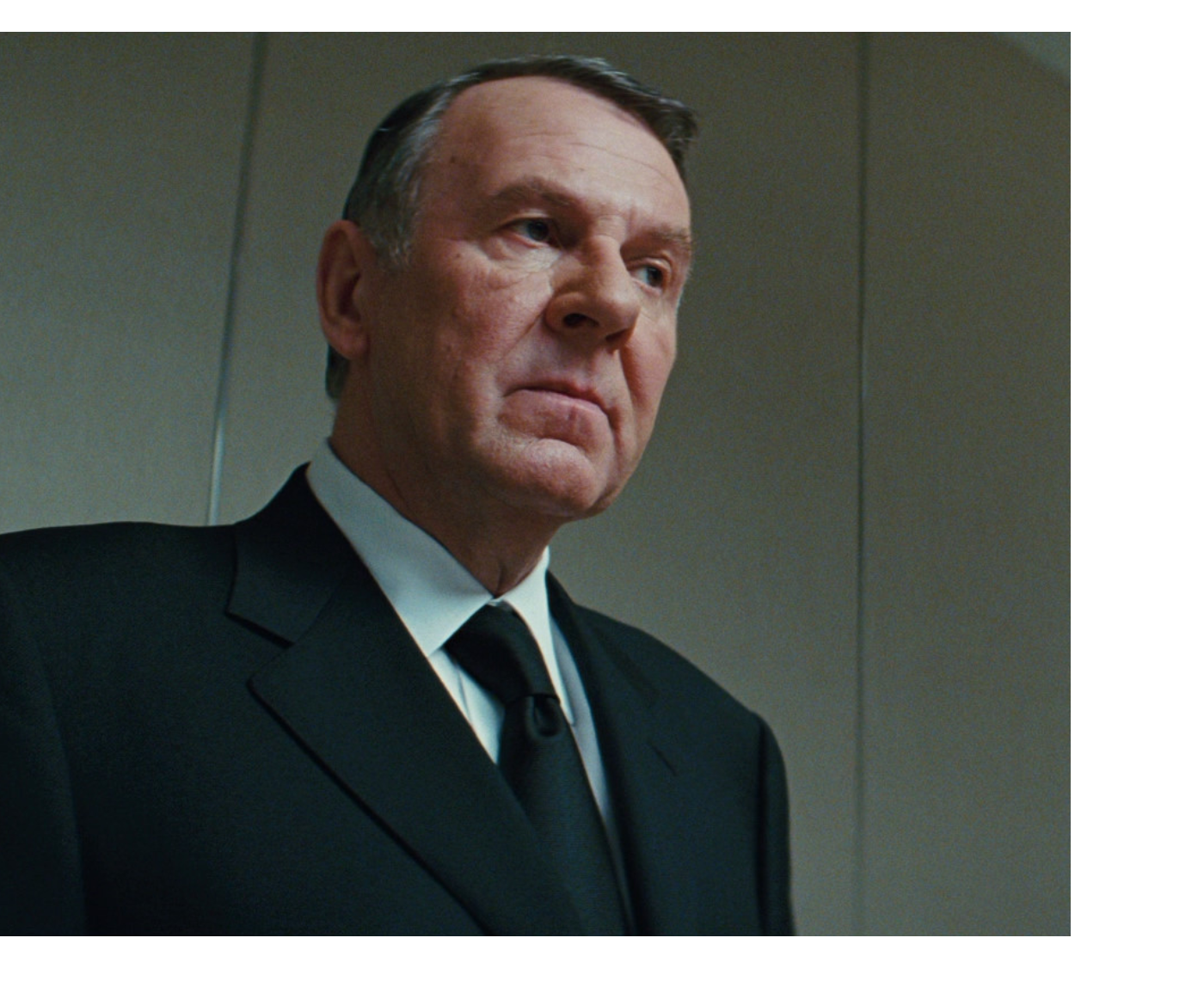
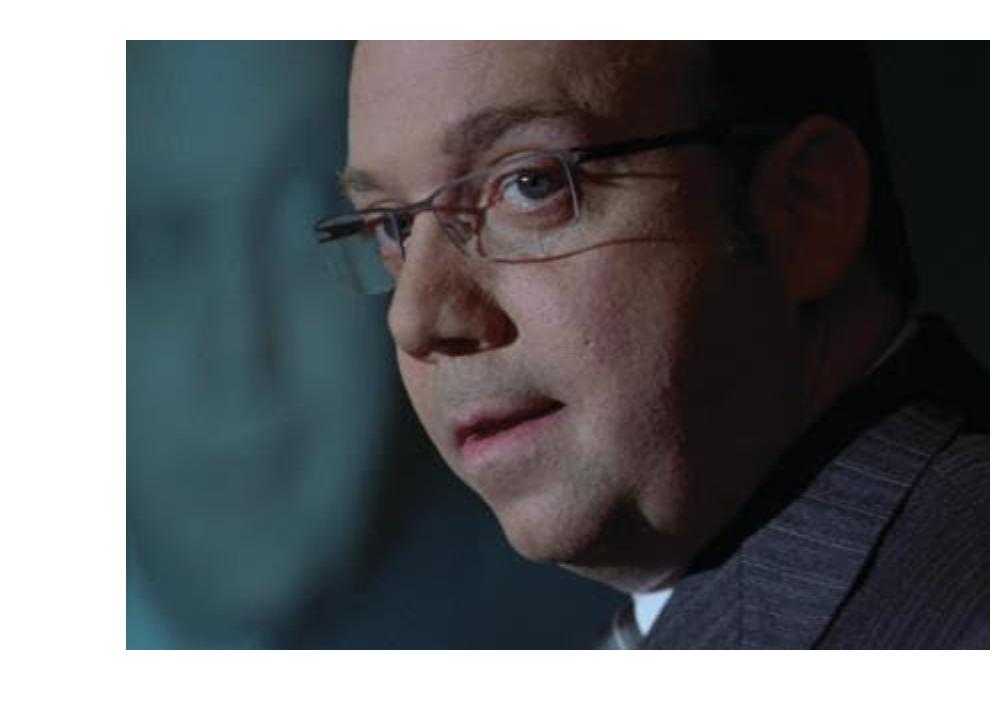
The spy duo finds an opportunity to get rich by inserting themselves into the industrial security teams of two major consumer product companies. ‘Burkett & Randle’ C.E.O. Howard Tully (Tom Wilkinson) and ‘Equikrom’ chief Richard Garsik (Paul Giamatti) are bitter competitors. Their security divisions are constantly trading underhanded sneaky tricks; each would do anything to trounce the other. B&R bought an entire landfill dump just to be able to go through Equicom’s garbage.
That’s when Garsik’s industrial spies get wind of Tully’s mysterious new breakthrough product, said to be a world-changing breakthrough. The mission is to steal it … and find out what it is. Claire works as a double agent in B&R while Ray acts as the ‘closer’ for Equikrom. Claire and Ray must make a convincing showing in their individual roles as intelligence operatives, scheming while under close scrutiny from their highly trained colleagues. Their goal is to find a way to hijack the formula for Tully’s new secret product — whatever it may be — so they can sell it for millions to a third party.
All that may be the easy part. Clive Owen and Julia Roberts shine as a matched pair of ‘gamers,’ who toy with one another out of habit and ego necessity. Ray nails Claire with sexual digs just as often as Claire skewers Ray with her own verbal jibes. Love is love but business is business, and they’re in the business of deception. Neither can ever be too sure that their partner is faking the romance, for some personal advantage.
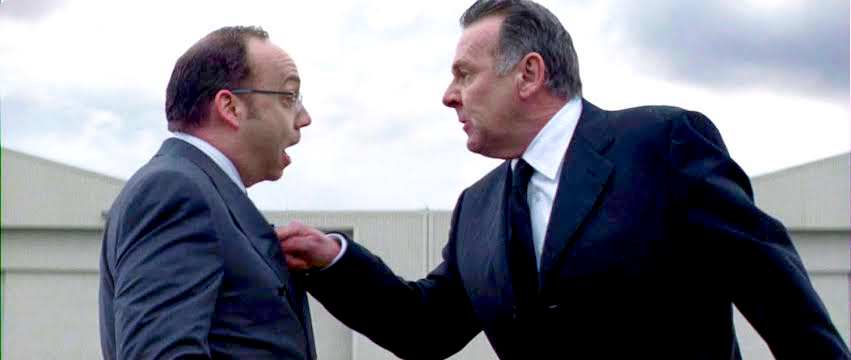
Duplicity doesn’t lack for smarts or wit. It begins with a terrific slow motion fight between C.E.O.s Tully and Garsik as they wait beside their corporate jets. The ethics of big business become an infantile squabble in a sandbox. For every penny Equikrom and Burkett & Randle spend on their formidable product lines, they must spend $50 on security & espionage. The corporate war involves setting up secret spy nerve centers. Any hire might be a deep-cover sleeper agent. Agents go to ridiculous extremes to tap into the competitor’s phones and data lines. A software hack allows Equikrom to print out duplicates of B&R documents the moment they are scanned.
It’s essential that we like our lover-spies, because they’re at heart little more than a pair of sneak thieves who think they’re above the rest of square humanity. Their courtship is a series of cynical one-upsmanship spy games. Ray’s ‘meet cute’ experience involves being drugged and having his hotel room ransacked. When they cross paths, it’s never clear if it’s pure coincidence or if one of the parties is running a con on the other.
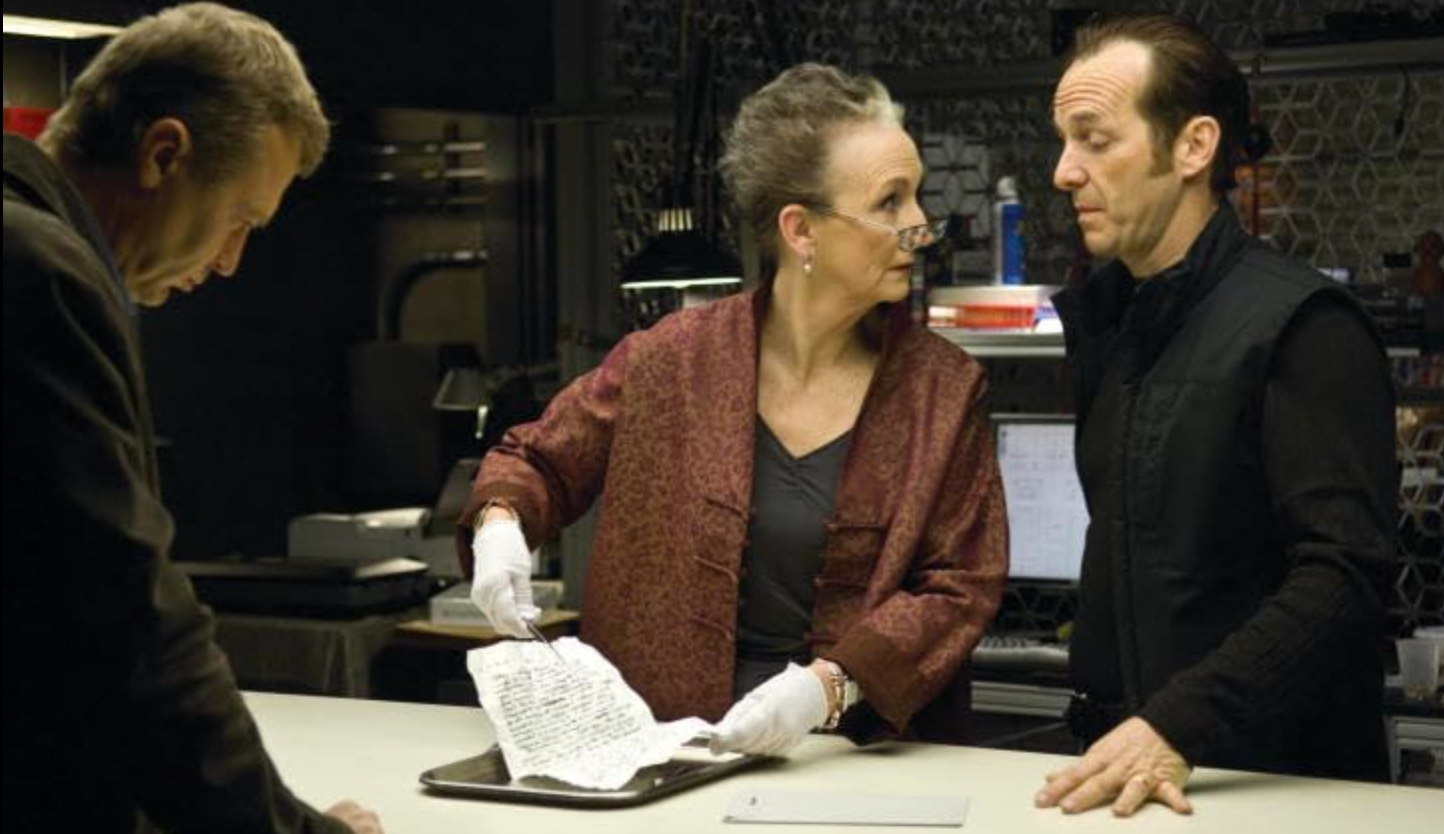
The good natured, sexually charged word games between these two make Duplicity resemble virtually extinct examples of film art like the above-mentioned Ernst Lubitsch film. Ray and Claire play the same underhanded tricks on each another that Lubitsch’s suave jewel thieves did; the humor is that, for these amorous conmen, duplicity is a major part of their sex appeal.
A particular funny dialogue interchange between Ray and Claire is repeated several times, each time for a different purpose — romantic, sarcastic, and ‘espionage-tactical.’ It’s sufficiently original to merit comparison with Trouble in Paradise. It’s also a barometer for viewer appeal: if you don’t know why they’re repeating the same words after the third iteration, Duplicity is not for you. Clever? Too clever?
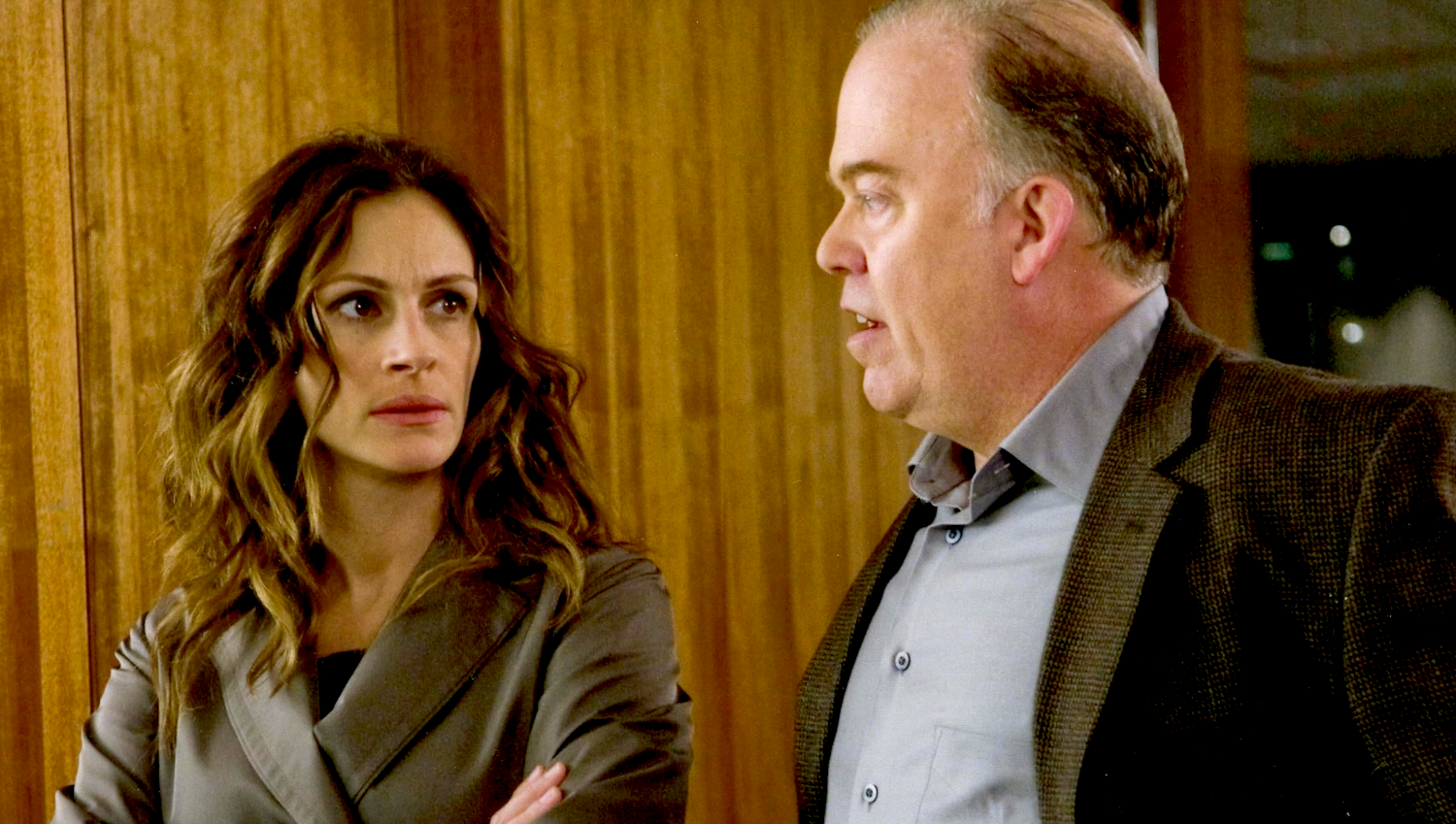
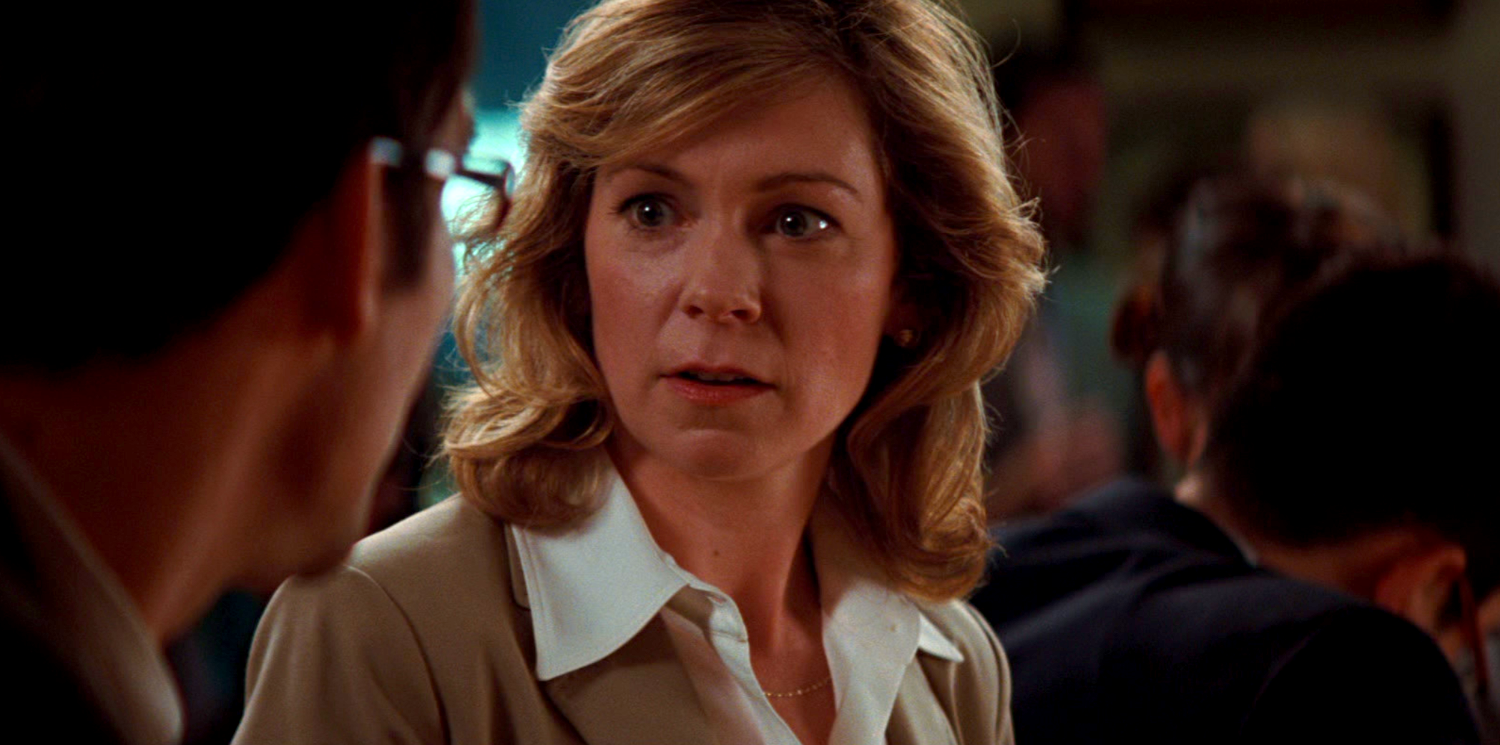
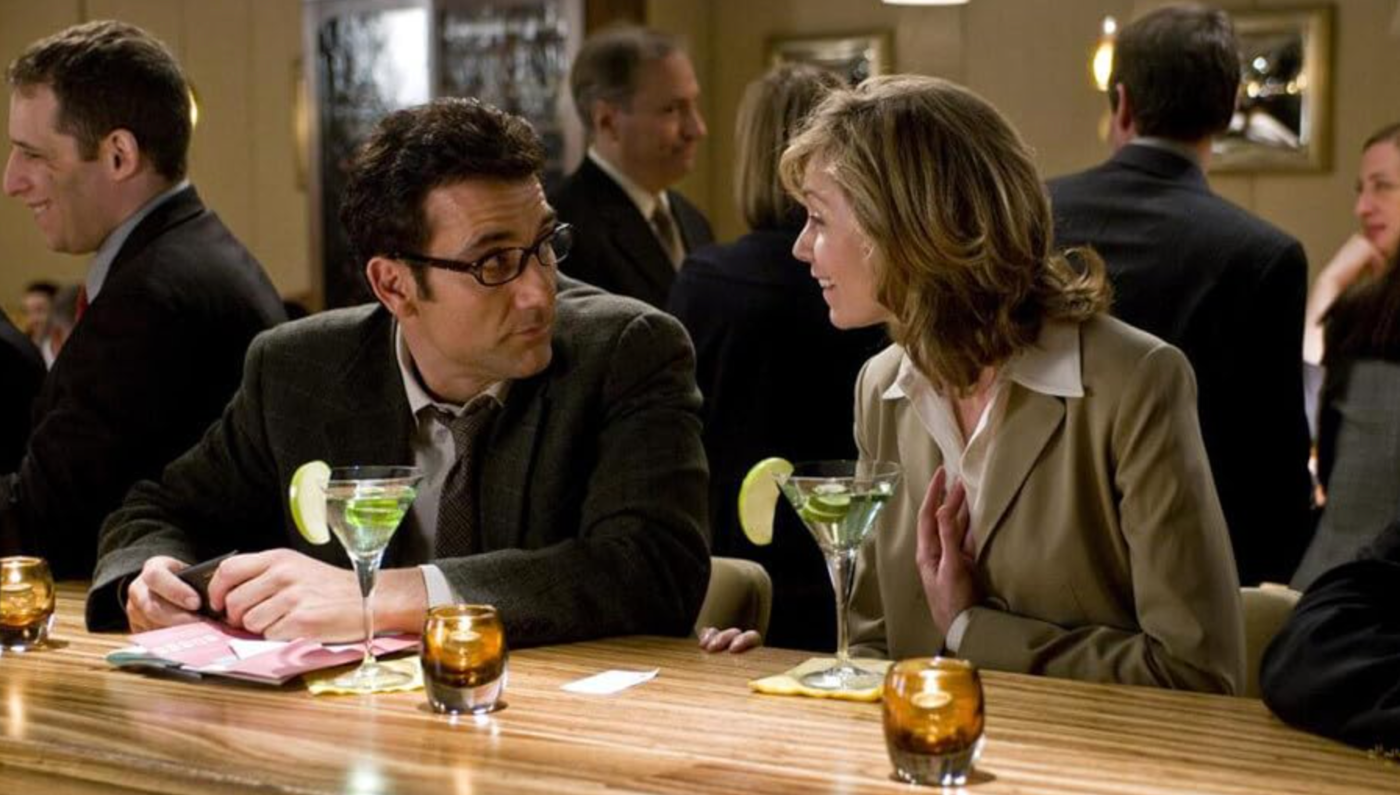
Ray remains in our good graces despite his dastardly dirty tricks. Equikrom hired him because he’s an expert seducer of women. In one hilarious scene Ray maneuvers B&R travel agent Barbara Bofferd (Carrie Preston, marvelous) from a bar stool to sex in her office in just a couple of hours. Even funnier is the look on Claire’s face when, in her capacity as a top B&R security officer, she reviews the evidence of her partner seducing Ms. Bofferd. The woman claims that it was the best night of her life, and she’d do it all over again without even blinking!
Duplicity may not please people who want the movie to do all the thinking for them. It takes a few minutes to suss out the pattern of flashbacks to Ray and Claire’s various earlier meetings, that stretch back seven or eight years. I found some of the editorial tricks with multi-screens occasionally distracting, which is probably a subjective problem. When the screen repeatedly shrinks down, making the scene a box within a box, I find myself comparing aspect ratios to see if the movie is being projected at its full width!
I’ve also heard some sniping at the ending, which we thought appropriate to the film’s theme of gaming the corporate system. All the pieces of Duplicity’s splendid spy satire fitted together for us; we don’t like to think about smart projects being rejected because Fred and Wilma Flintstone won’t ‘get it.’ This one found a satisfactory ending. The audience I saw the film with expressed their approval. They enjoyed the baronial Tom Wilkinson and the neurotic Paul Giamatti almost as much as they did the romantic leads.