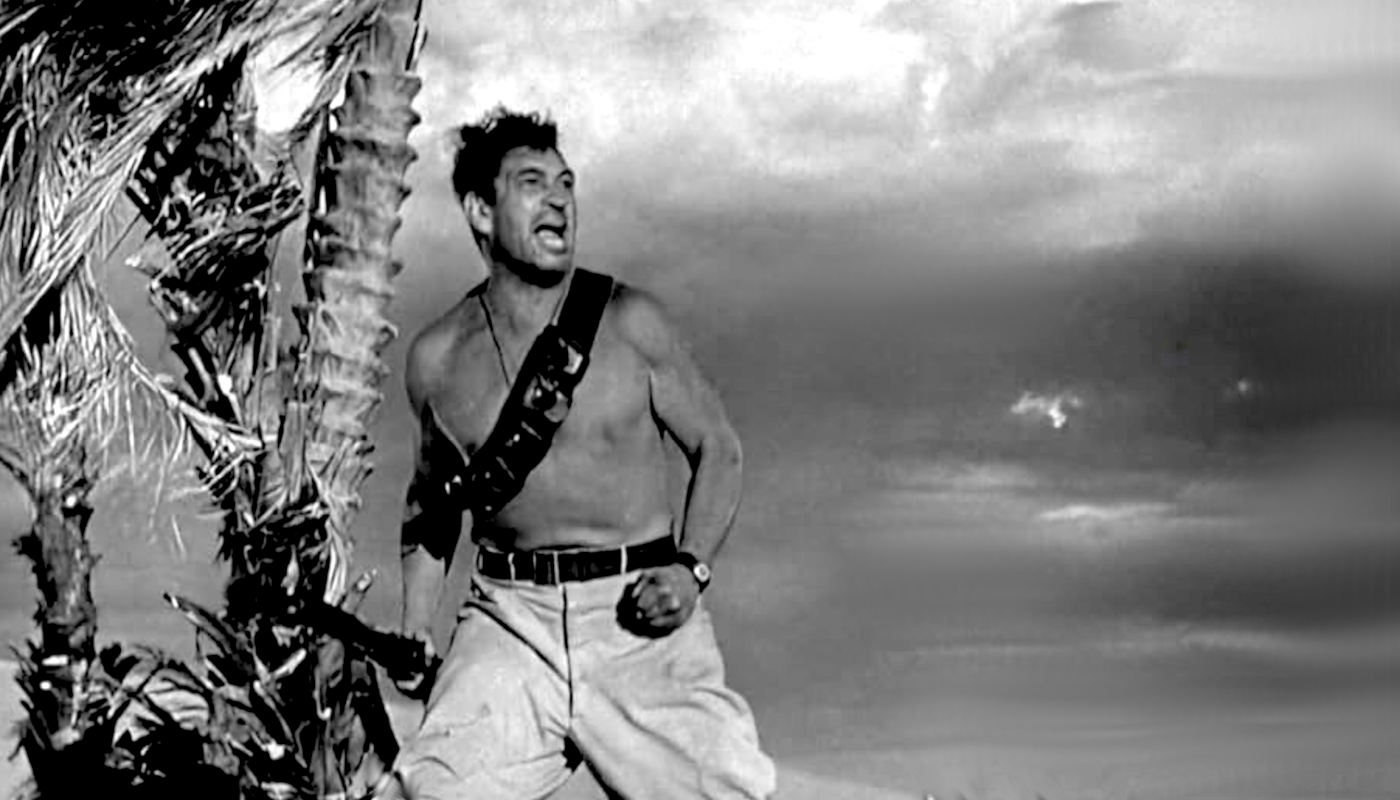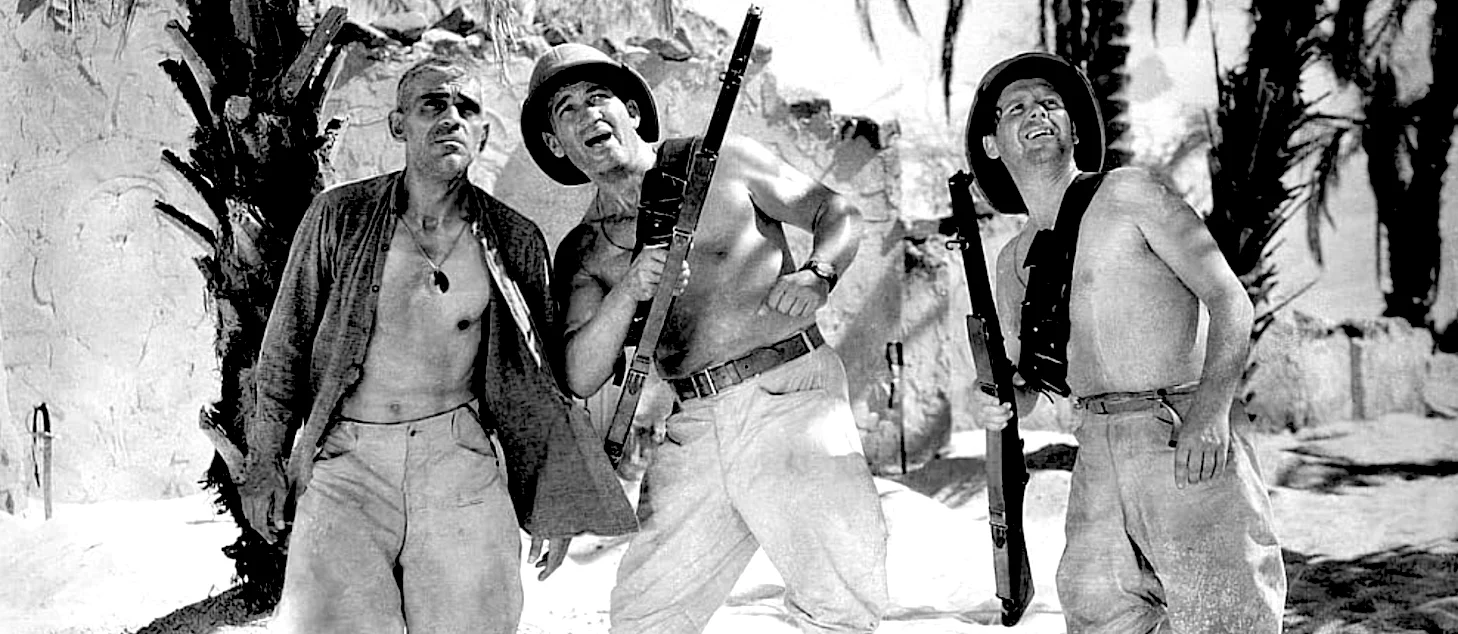
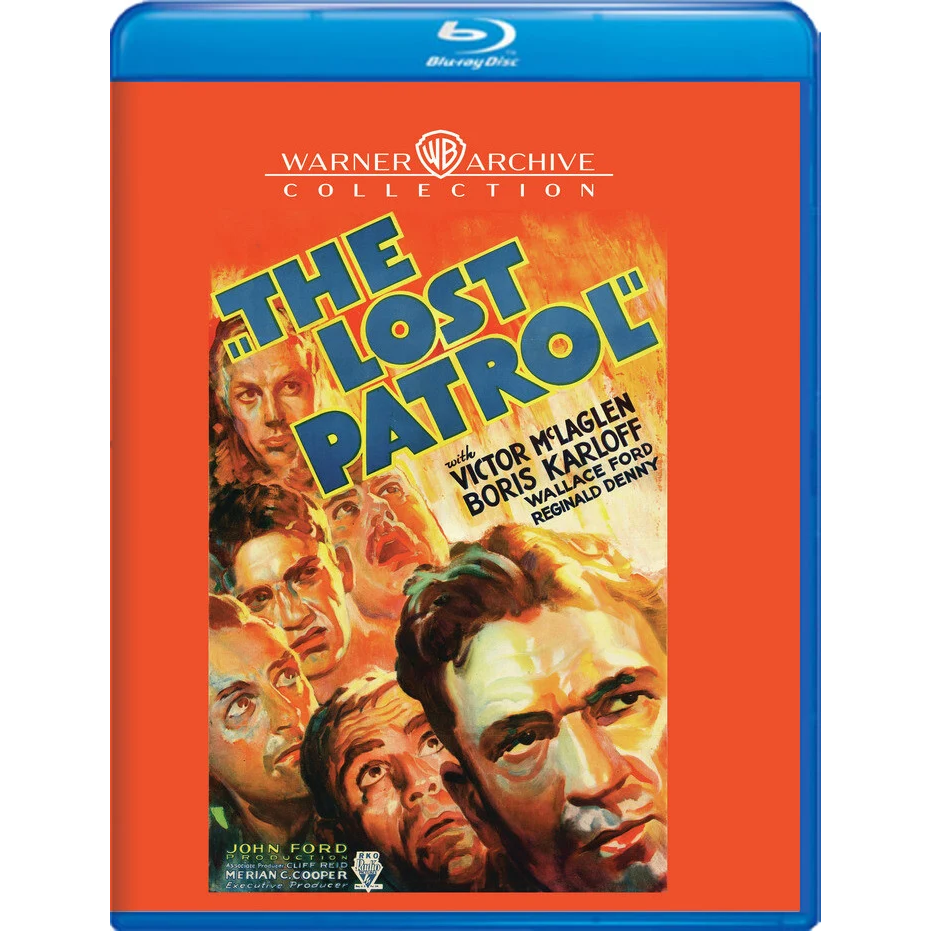

 Boy, the stone-litho original poster for this show is surely a work of art. The movie itself is a good entry in what came to be known as ‘lost patrol’ movies … war dramas, often derived from plays, that try to distill ‘epic’ emotions in a battlefield setting far from the main action. One of the most successful is Korda’s Sahara from a decade later, but the format has long been a standby for producers with little money to spend.
In the early ’30s John Ford split his time between several studios. Among prestigious pictures like Arrowsmith and some successful comedies with Will Rogers, he stuck to manly-man tales about men in war or tough professions, much he same as did Howard Hawks. For RKO and Merian C. Cooper, Ford filmed the ‘tough, uncompromised’ tale The Lost Patrol on location in Yuma, Arizona, where giant sand dunes reached to the horizon.
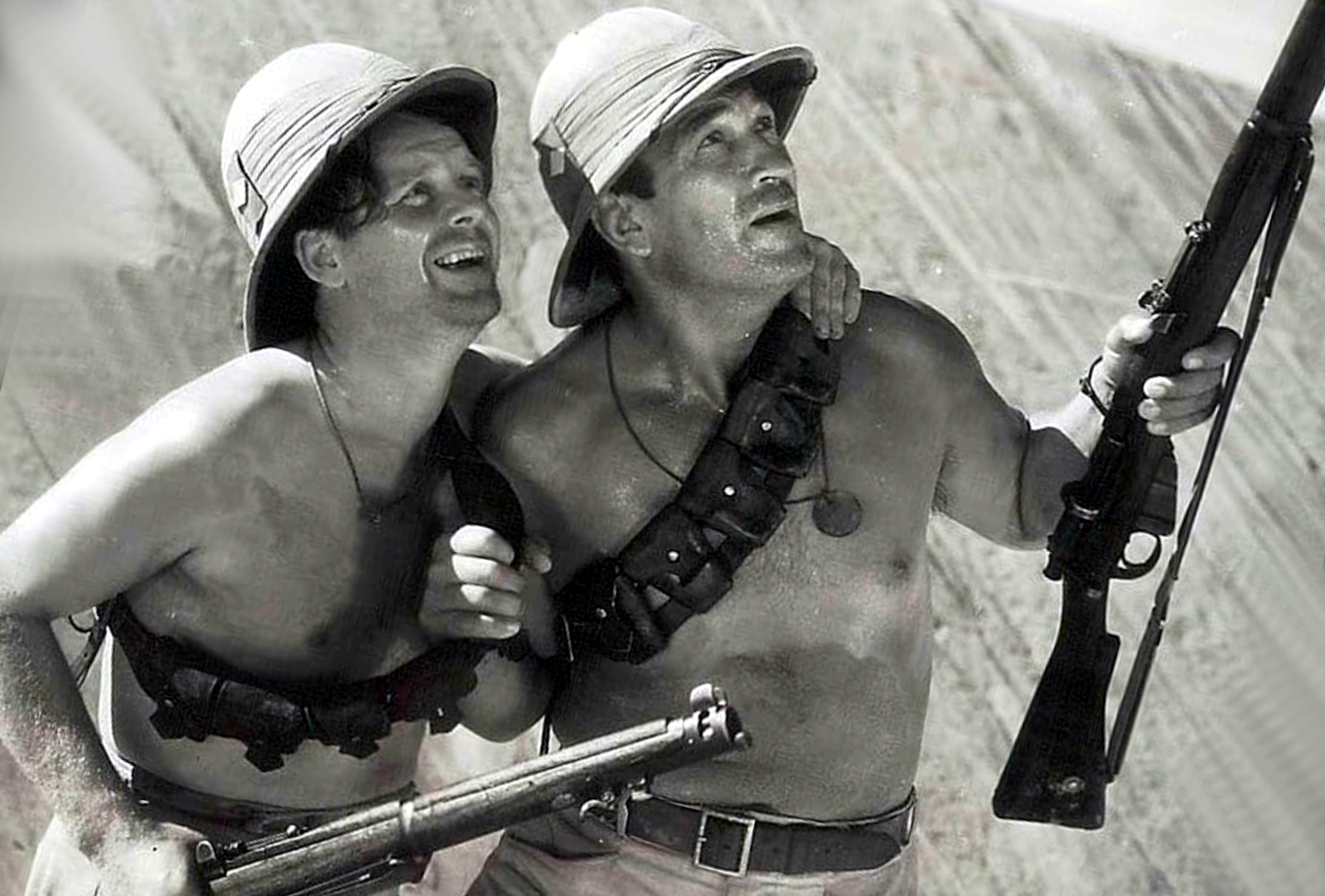
The Warner Archive hasn’t shied away from upgrades of John Ford movies. Even the lesser known titles have plenty to admire. We confess that we’re in no rush to see Mary of Scotland again, not without someone as knowledgeable as Joseph McBride aboard to comment. The obvious title to go for would have been Ford’s superlative Irish rebellion movie The Informer, a 4-time Oscar winner. Ford’s The Lost Patrol could have gotten the nod first because of restoration issues, but we also have to take into consideration the Karloff factor. The grand old actor would be surprised to know that audiences a full century later, still know his name and his fame. His fans want to see every show he filmed.
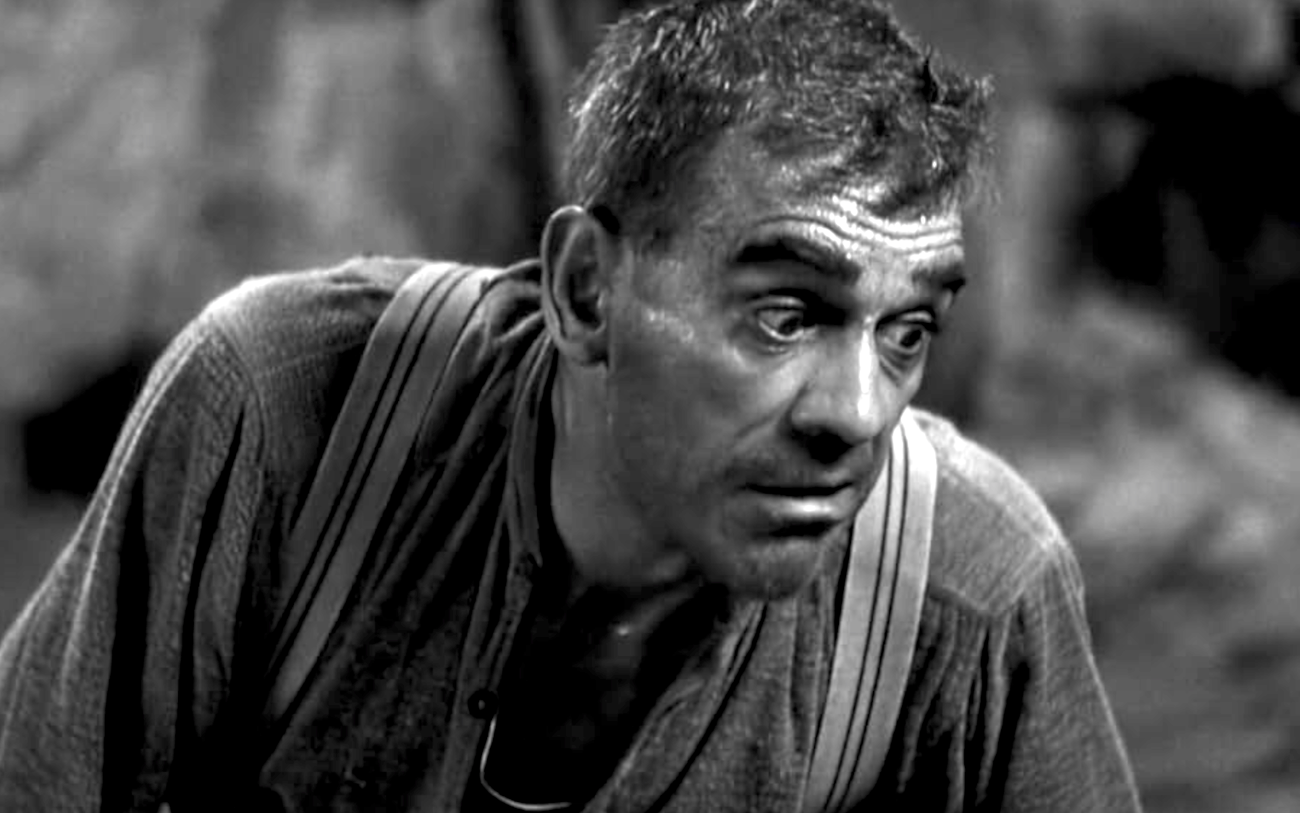
The movie is now considered somewhat dated, which is a common fate for innovative features that nail a formula so well, they’re followed by a thousand imitators. A small group of soldiers, cut off in the desert, are picked off one by one by an enemy they never see. Actor Victor McLaglen stars, yet the picture is stolen by Boris Karloff. His performance often attracts criticism, but it’s certainly tuned to the dramatic pitch of John Ford’s desert ordeal.
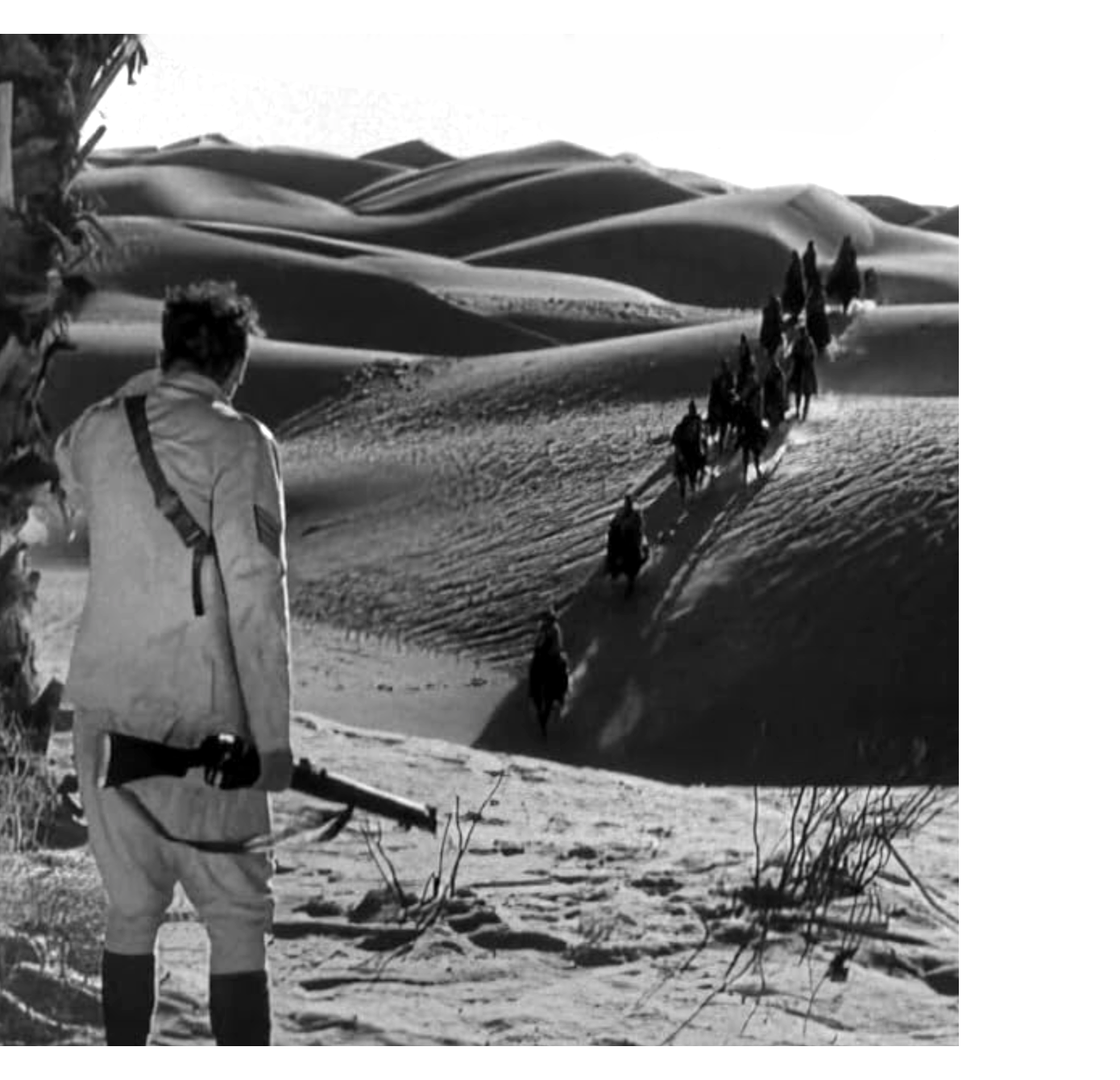
A mission in the deep Mesopotamian desert goes very, very wrong. The Sergeant (Victor McLaglen) is leading a patrol through a sandy wasteland when the patrol’s only officer is killed by an Arab bullet. That leaved the patrol in a bad spot, as the officer did not even tell his Sergeant where they were going or what their orders were. Ex-music hall performer Morelli (Wallace Ford) is the one to spot an oasis with water, and the small group is pleased to be able to drink and rest their horses.
Two soldiers serve as sentries, but the next morning Corporal Bell (Brandon Hurst) is found wounded and young Pearson (Douglas Walton) slain … and all the horses are gone. While biding their time and hoping for rescue, the soldiers tell their personal stories, and sometimes argue. The Sergeant sends out two men to try and find help, but the gesture does no good against the persistent Arab snipers. Soldier Sanders (Boris Karloff), already very religious, cracks up under the pressure. No matter what the soldiers do, the silent and unseen enemy keeps whittling their numbers down, one by one.
According to the AFI, John Ford optioned the story source Patrol. He and Nichols turned around a final script for The Lost Patrol in eight days, just in time to leave for the shoot in Yuma. The show’s situation appears to owe something to another Ford men-in-trouble picture, the 1930 Fox film Men Without Women. Sailors are trapped underwater in a disabled submarine, and one is a Bible-quoting madman. That submarine picture was the first collaboration between Ford and writer Dudley Nichols, a teaming which would produce a number of acknowledged classics.
We’re told that the film was shot in August and September, around Yuma and just across the border in Califormia’s Buttercup Dunes, a chosen Hollywood backyard for anything Sahara-ish. Our thinking is that they must have been nuts. I’ve lived in both California and Arizona, and temperatures in the summer can peak at Fahrenheit 115. At night, the thermometers can stay above a hundred. * It took the advent of good air conditioning to convince many to stay in the Arizona desert during the summer. The AFI’s account mentions grips working in punishing heat, pushing a heavy camera dolly on tracks laid on the dunes. Stories from the set allude to arguments and disputes. A (reportedly drunken) Victor McLaglen was accused of firing live rounds on the set.
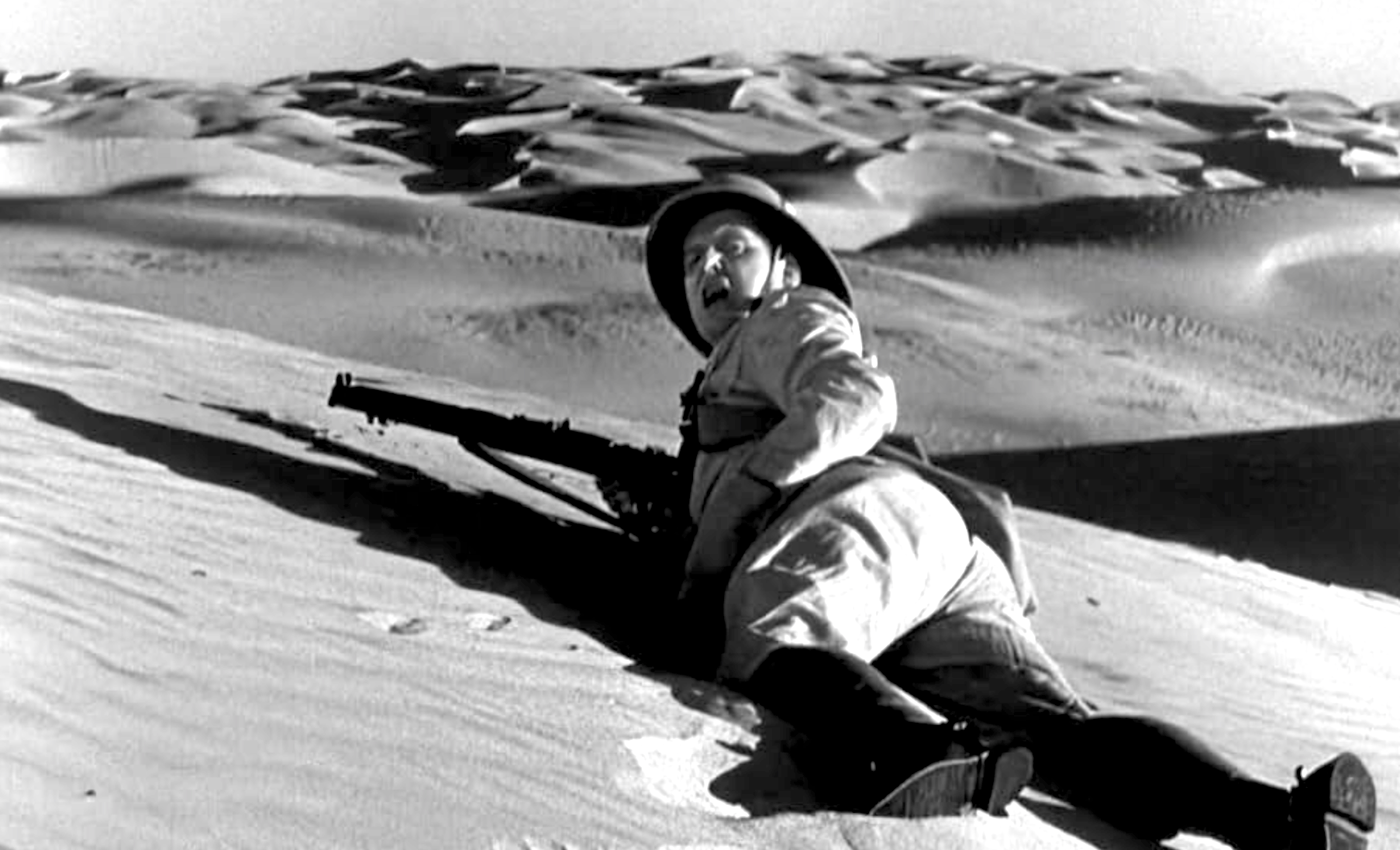
The mostly unseen Arabs are an almost abstract presence. Their rifles whittle the patrol down to nothing. The soldiers react with various attitudes toward what looks like certain doom. Some of the killings are telegraphed in the dialogue. When young Pearson begins to talk about what he’s going to do when he gets home, we know that he’s a sure goner. But Ford and Nichols surprise us with killings that happen silently, off camera. At one point a biplane lands to offer aid, with predictable results. These castaways can’t get a break … although the Sergeant does hang on the airplane’s .30 caliber machine gun.
We do become a little impatient with the patrol. Our guys know that any exposed man is a target for th unseen Arab snipers, yet they keep sticking their heads up, as if asking to be shot. Again and again we hear a pop, and somebody falls. Not wounded, but dropped dead as a doornail, instantly. The exceptions are victims that need to give pithy farewell speeches.
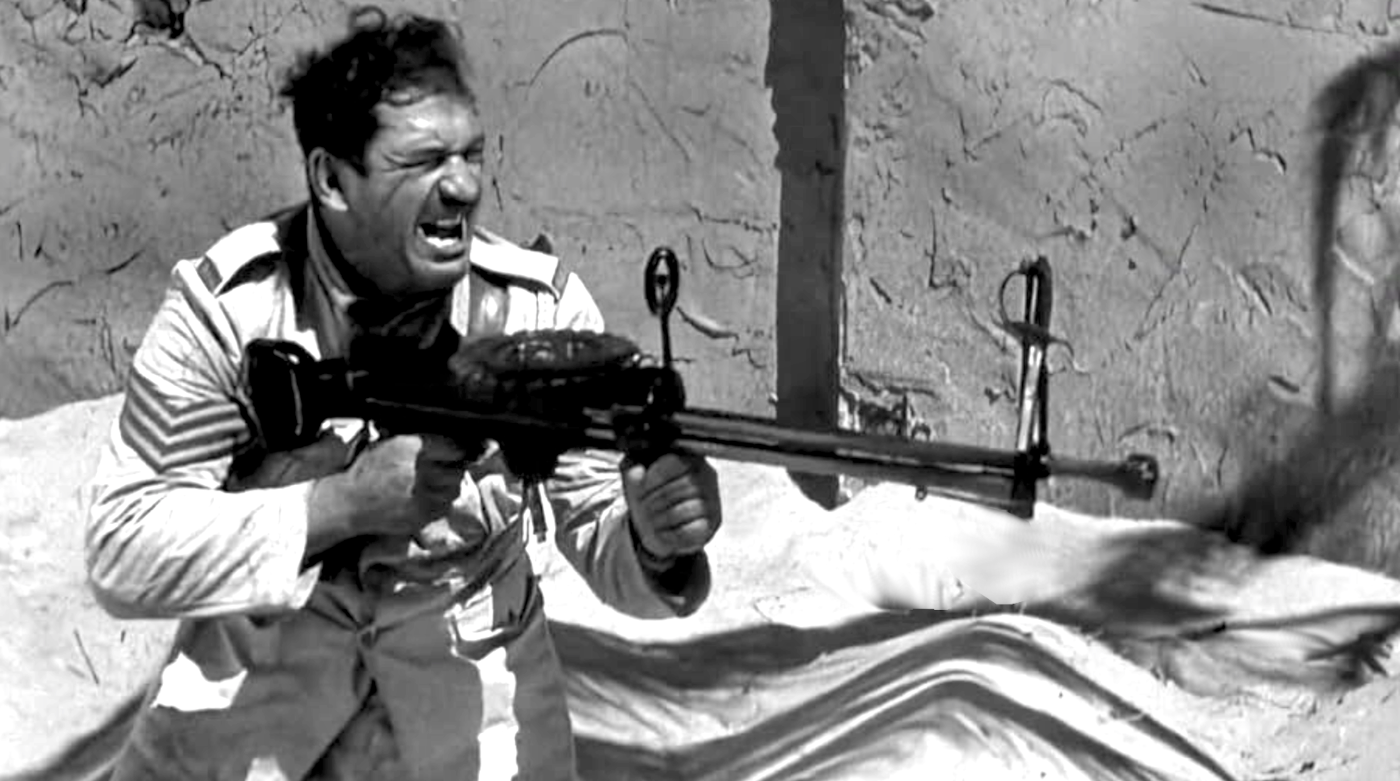
Victor McLaglen carries the unnamed sergeant with ease. He had served in this same Mideast theater of war back in WWI, and can give his character a few realistic touches. The Sergeant’s optimistic outlook is eventually replaced with a tough-guy defiance, a refusal to wimp out under pressure. One of the Sarge’s last speeches is short list of things he likes, and killing Arabs is near the top. It’s not quite as pithy as Brad Pitt’s ditties about ‘killin’ Nazis’ in Tarantino’s movie.
The Lost Patrol kill-off is relentless, with noble characters slain right along with the troublesome or foolhardy. The ensemble cast hangs together well. The acting standout among the troopers being Wallace Ford’s Morelli. The unsung Ford is a great actor in so many pictures: Freaks, Shadow of a Doubt, The Beast of the City, The Mummy’s Hand, All Through the Night, T-Men, He Ran All the Way.
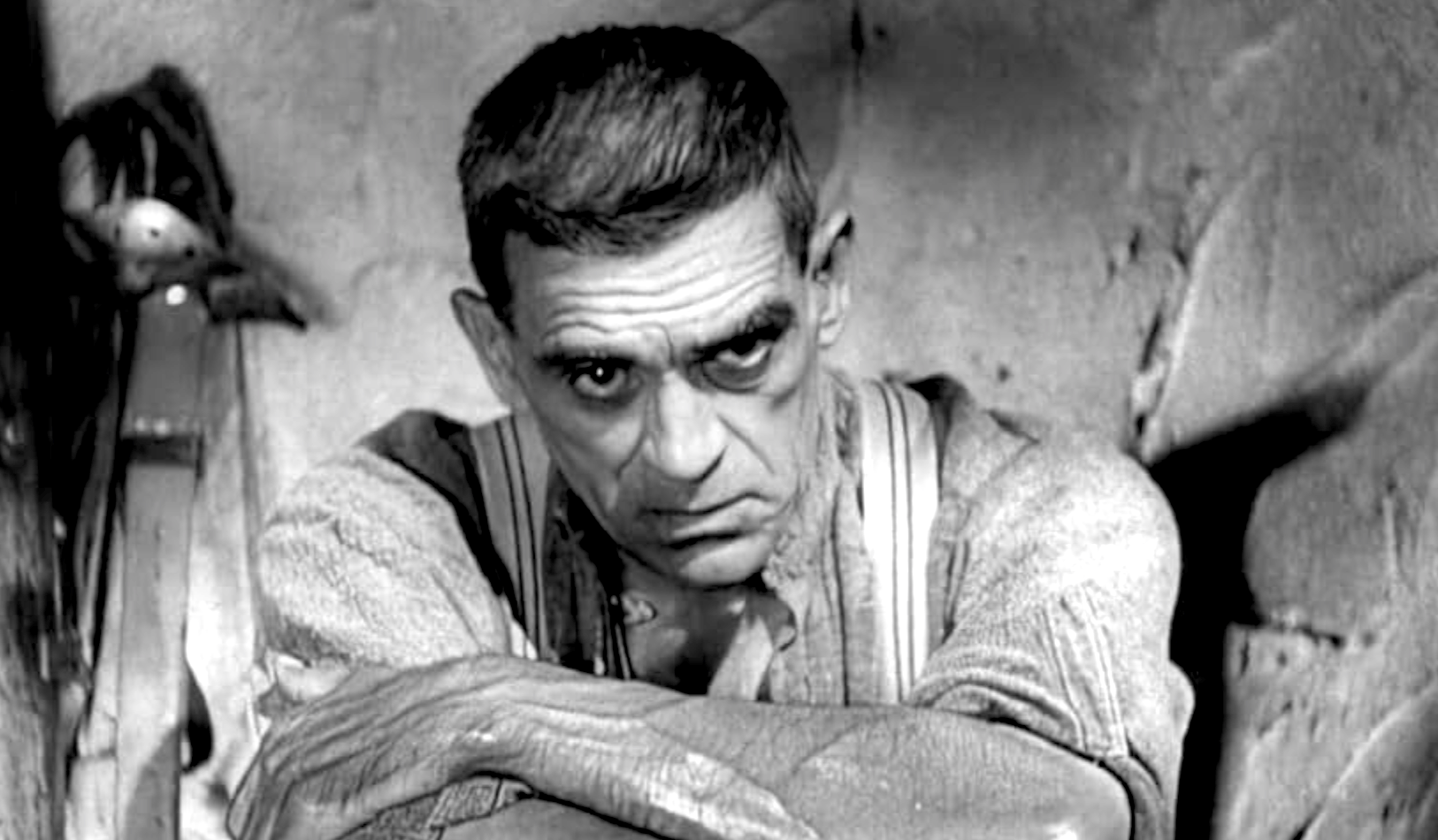
And then there’s Boris Karloff, near the peak of his ’30s popularity. I would imagine that Karloff was directed for exactly the performance he gave: BIG. His characterization is good, even with the extreme faces; it’s as if Boris were projecting to the back row of the theater. There’s not much that’s subtle about trooper Sanders, whose only thoughts seem focused on the Bible and his personal redemption.
If the religious symbolism in the story was meant to be in some way inspirational, Ford seems to have rejected it. Sanders’ preaching is pretty much shoved aside, especially by the Sargeant, who cuts off his flowery eulogy … something that will happen again in Ford films. Sanders receives none of the awe that Ford reserves for John Carradine’s Preacher Casy in The Grapes of Wrath … but then, Casy doesn’t push scripture and instead preaches the simple mystery of faith. Perhaps Karloff was simply miscast, because he was English.
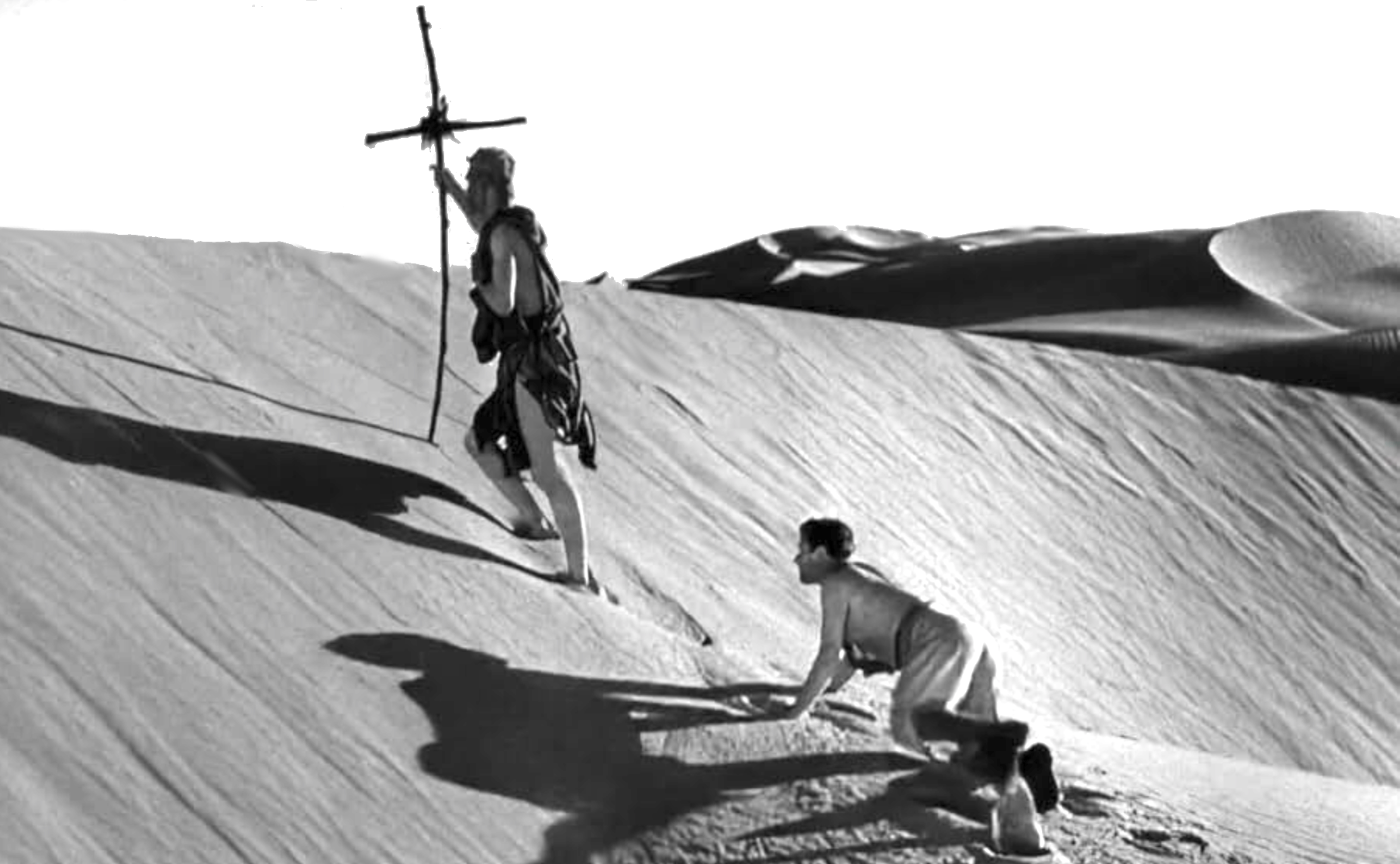
That leaves one of the show’s final scenes as something of a mystery. After being off alone for a while, Karloff’s deranged Sanders is suddenly seen dragging a cross up a sand dune, as if to banish the Arabs with the Power of the Lord — or to emulate Christ. It’s memorable in a curious way.
The Lost Patrol was a decent hit in 1935 despite being an overall downer, with or without a martyred Karloff. The film’s success helped make possible the next year’s The Informer. That classic, near-expressionist tale of betrayal reunited this film’s Ford, Victor McLaglen, Wallace Ford, J.M. Kerrigan, and composer Max Steiner.