
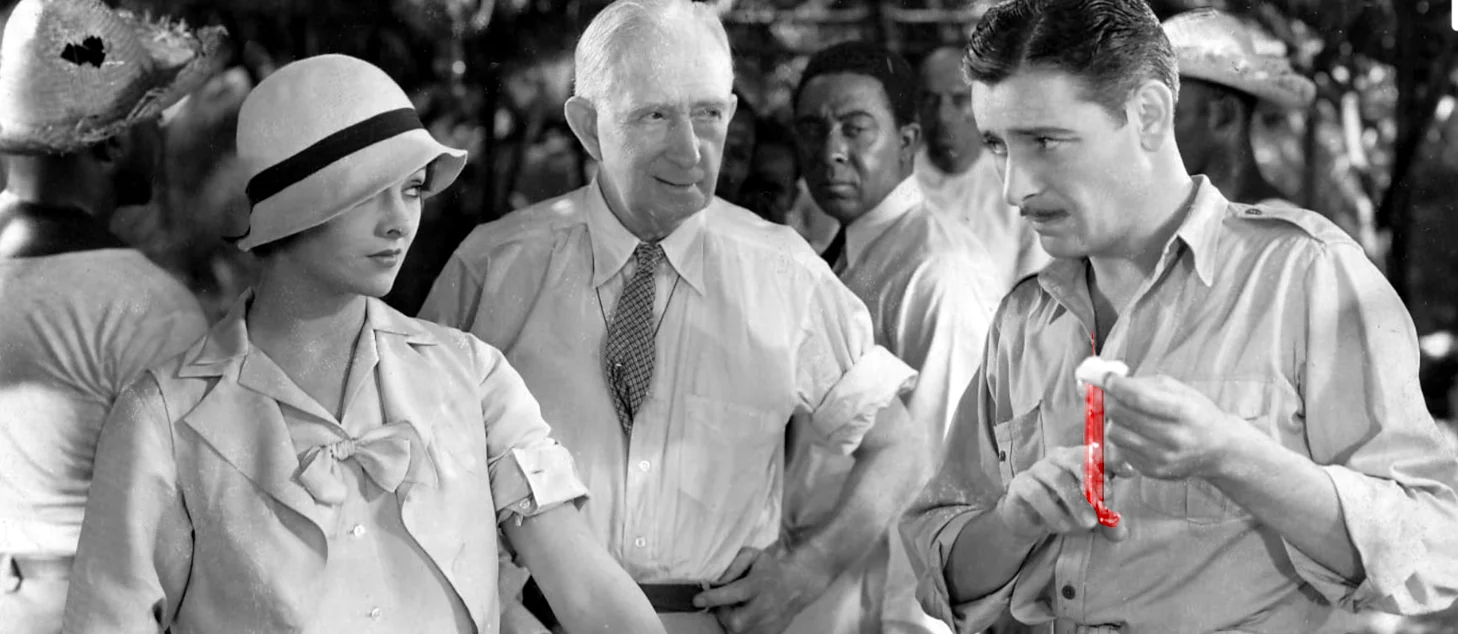


John Ford fans do not dismay — this Blu-ray of the Oscar-nominated John Ford / Sam Goldwyn classic Arrowsmith is not the same as the 2014 Warner Archive DVD, and is even a couple of minutes longer. A new 4K restoration premiered at the Museum of Modern Art in 2024, taken from a special source. MoMA confirmed it as the original theatrical version from 1931, before cuts made by the Code enforcement crackdown of ’34. A full quality and presentation run-down is below, at the end of the review.
Author Sinclair Lewis was the son of a physician. His Pulitzer Prize-winning 1925 novel Arrowsmith gave the medical profession a good whacking, inside and out. Quackery, greed and entrenched interests dog the progress of the book’s idealistic young doctor-hero, who must oppose faith healers as well as resist employers that wish to waste his talent for profit. The book was less satirical than Lewis’s earlier stories of small town boosterism. Director John Ford retained that earnestness when he tackled the esteemed project for producer Samuel Goldwyn. Not particularly well written, the early talkie is beautifully performed by Ronald Colman and Helen Hayes. It waves the banner of science, but oversimplifies medical and research details.
The film’s message pits science against humanitarianism, making our ‘hero’ begin to resemble a proto- Ayn Rand type. Part of this comes from the book, in which the hero’s mentor proposes a new Presidential Cabinet post called the ‘Secretary of Health and Eugenics.’ A similar novel about medical ethics, A.J. Cronin’s The Citadel, was made into a film directed by King Vidor. Vidor also directed a major film of Ayn Rand’s controversial book The Fountainhead.
Frankly, it’s a good to see any show that upholds the notion of dedication to public service, to a communal ideal, rather than naked self-interest.
With its great performances and literary pedigree, Ford’s Arrowsmith was nominated for four Oscars including best picture. But the Production Code showed little respect for such things. As many as eleven minutes were removed from the film after the Code was enforced. Even with certain sections restored the show has continuity issues, which may or may not be due to censorship. This is one film in which apocrypha about John Ford may have been true — he is said to have eliminated script scenes during filming, on the fly.
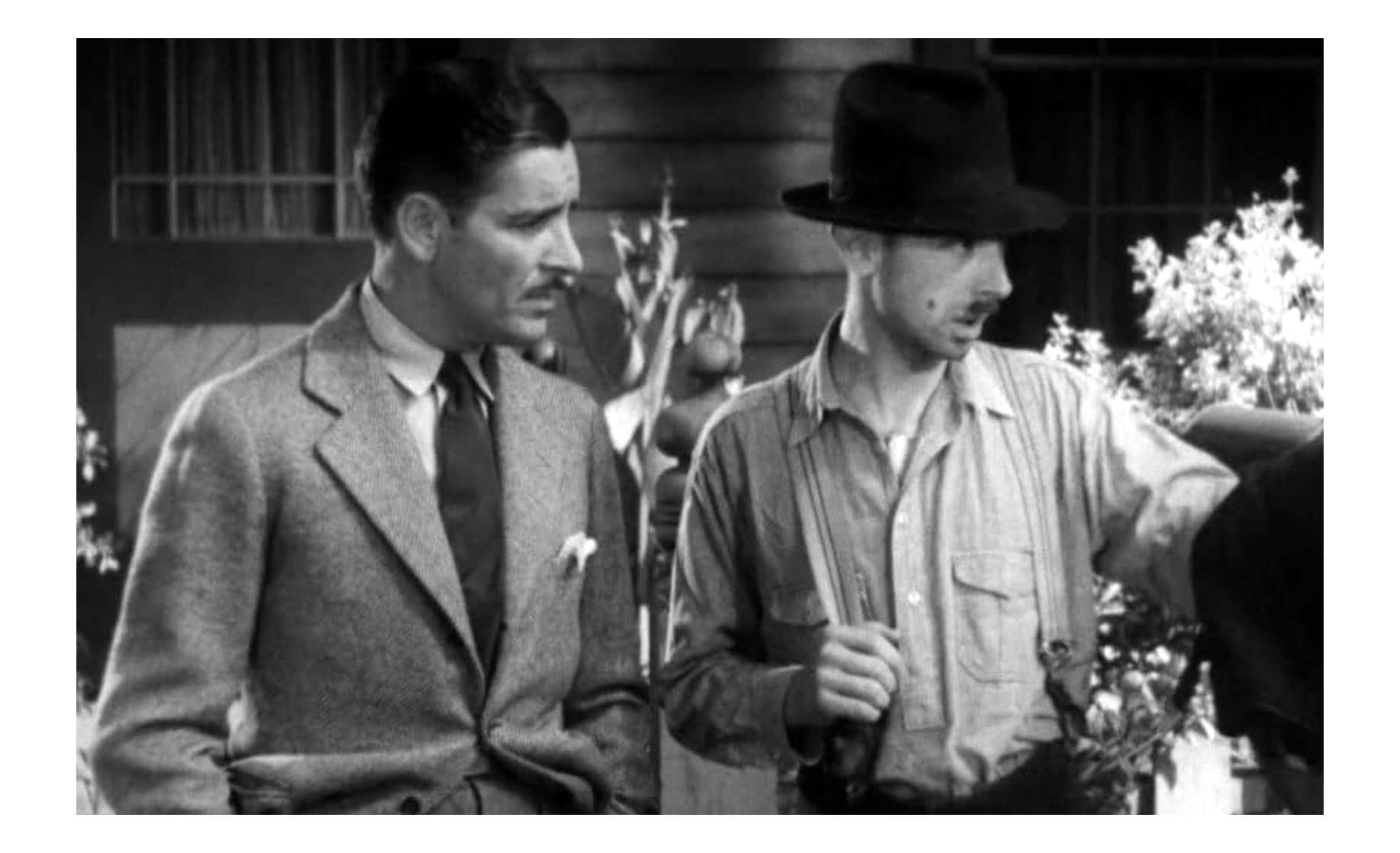
Promising medical student Martin Arrowsmith (Ronald Colman) is an ideal candidate for medical research. But the pay for entry-level researchers at New York’s prestigious McGurk Institute is not enough to support a family. Martin turns down the offer to work with his mentor Professor Max Gottlieb (A.E. Anson) because he wants to marry his sweetheart Leora Tozer (Helen Hayes). The newlyweds have a tough time on the rural doctoring circuit in South Dakota, but Martin is encourged by the advice of touring lecturer Gustav Sondelius (Richard Bennett). When his tinkering creates a serum to cure a livestock disease, Arrowsmith earns a ticket back to New York, to work with Gottlieb.
After a couple years, Martin’s next big breakthrough is “scooped” by Louis Pasteur. Humiliated by the McGurk Institute’s premature publicity, Martin then undertakes a mission to St. Hubert Island in the Caribbean, where a runaway plague crisis offers an opportunity to perform experimental serum trials. Leora refuses to stay behind. On arrival he keeps her away from the main area of contagion… a bad decision. To prove that his anti-plague serum is effective, Martin wants to give it to only half of the people at risk. When the local authorities block Martin’s way, the local Doctor Marchand (Clarence Brooks) offers his village to serve as the first test subjects: half serum, half placebo.
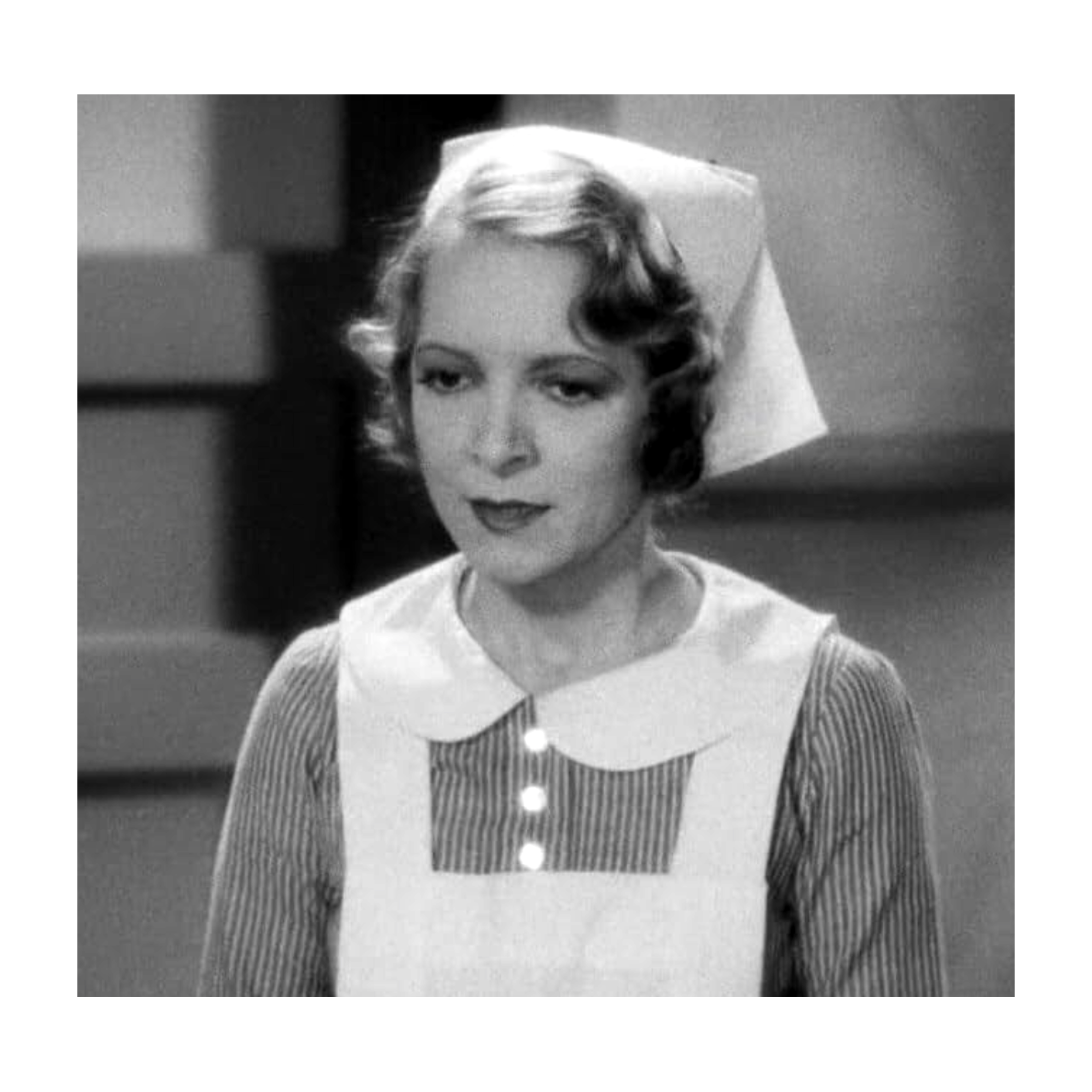
↘ The great stage performer Helen Hayes didn’t act in many movies. She and Ronald Colman make a compelling screen couple. Her Leora is scrubbing a floor when they meet and their wedding ceremony is a depressing visit to a city clerk’s office. She gives up nursing to be a full-time wife, and no mention is ever made of it again. Perhaps it’s for the best, as Leora’s later behavior around vials of deadly plague suggest that she paid no attention in her nursing classes.
The glamorous MGM star Myrna Loy makes an interesting appearance, but her role attracted the ire of the Production Code censors. More on this a bit later.
Sinclair Lewis’s social critique has been partly reshaped into a sentimental drama. Screenwriter Sidney Howard also adapted Sinclair Lewis’s celebrated book Dodsworth for the stage, and then for Sam Goldwyn’s film version, directed by William Wyler. As originally conceived, the book’s Martin Arrowsmith is a flawed idealist who makes big mistakes at every step of his life. The elegant actor Ronald Colman easily conveys the doctor’s high ideals, but Martin seems incapable of taking a misstep. His voice alone gives an impression of infallibility.
John Ford’s personal preferences appear to weigh heavily on the film. A superfluous pioneer prologue has been retained from the novel. Is it because Ford simply liked such material? The director displays his talent for expressive compositions but he can’t do much with the screenplay’s depiction of Sinclair Lewis’s ideas about the state of modern medicine. The script reverts to the cliché that doctors are sacred individuals holding the power of life and death, and that the vocation elevates them above common men. Many doctor characters in Ford’s very Auteur-ish filmography are priest-like sentimentalists, and/or life-loving, outspoken drunkards. Martin Arrowsmith is instead put on a pedestal. When inspired he’s like a mad doctor, working alone without sleep or food. The film’s uninsightful overt message is that scientists must deny their humanity if they wish to achieve great breakthroughs.
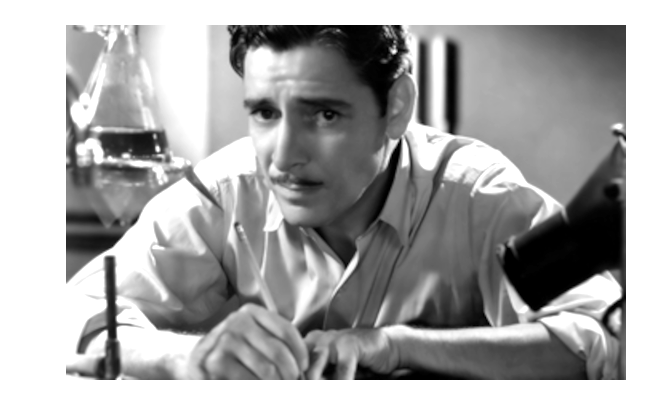
Martin Arrowsmith must choose a rural private practice because entry-level research work won’t let him support his new wife in the city. Both the book and film of Arrowsmith preach that the noble calling of medical researcher is incompatible with a normal home life, a notion that now seems silly. The obvious solution is for Leora to continue to work after marriage, but most American movies treated that option as unthinkable. Today, of course, audiences might also ask why Martin doesn’t take a living-wage job to allow Leora to pursue the vocation of her dreams.
Arrowsmith’s sojourn as a country doctor is treated as a waste of his talent. His bumpkin patients are not worthy of him, even though John Ford is at his best when directing the farmers. One is played by John Qualen, who does the “Yumpin’ yiminy’ Swedish immigrant act favored in Ford’s later The Grapes of Wrath and The Searchers. Ford clearly favors the colorful Gustav Sondelius (Richard Bennett), a hard-drinking, fraud-debunking Swedish scientist. Arrowsmith’s main role model Professor Gottlieb (A.E. Anson) is a drier academic with no bad habits; Ford shows little interest in him.
The book had more to say about doctors and research institutes that put profit ahead of progress, but in the film we’re not exactly sure why the McGurk institute stifles Martin’s work. A brilliant breakthrough is ruined when Martin’s boss releases an idiotic news blurb about a panacea that will ‘end all disease forever.’ None of this is very convincing; John Ford just rushes through it.
Even more troubling is the movie’s wrongheaded view of clinical trials. I should think that concept of dividing test subjects into two groups, those that receive the drug and the ‘controls’ that don’t, would have been around a lot earlier than 1925. Martin and Professor 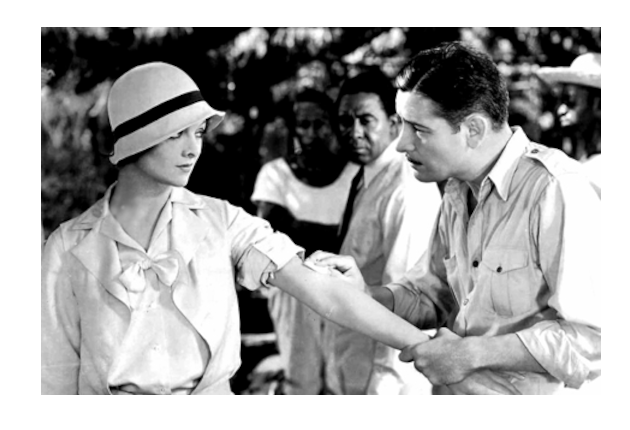
Sondelius’ mission in the West Indies is to get conclusive proof that Martin’s new serum works, that it can be mass-produced for use against the plague in the future. Why is an unproven serum being considered as anything more than a promising step in the right direction? Why isn’t it being tested quietly, with a smaller group? In reality, only a limited number of test subjects (100? 200?) might be needed to conduct an initial trial.
Instead, the McGurk mission appears to be the only serious response to the medical emergency. To heighten the drama, the screenplay has Martin propose his research idea to the local authorities in ridiculously harsh terms. When Martin insists that half the population will be ‘sternly denied’ the serum, it sounds like he wants to commit medical murder.
Arrowsmith therefor makes medical research seem a callous use of humans as guinea pigs. The patients are lined up with the instruction that half will be ‘sternly denied’ the (unproven) life-giving medicine. All the whites are in the serum line, including the attractive Joyce Lanyon (Myrna Loy), who makes an immediate personal impression on Martin. The fact that the experimental subjects are mostly black gives the process a nasty racial aspect. Educated at Howard University, the black Dr. Marchand knows the value of Arrowsmith’s research. We’re 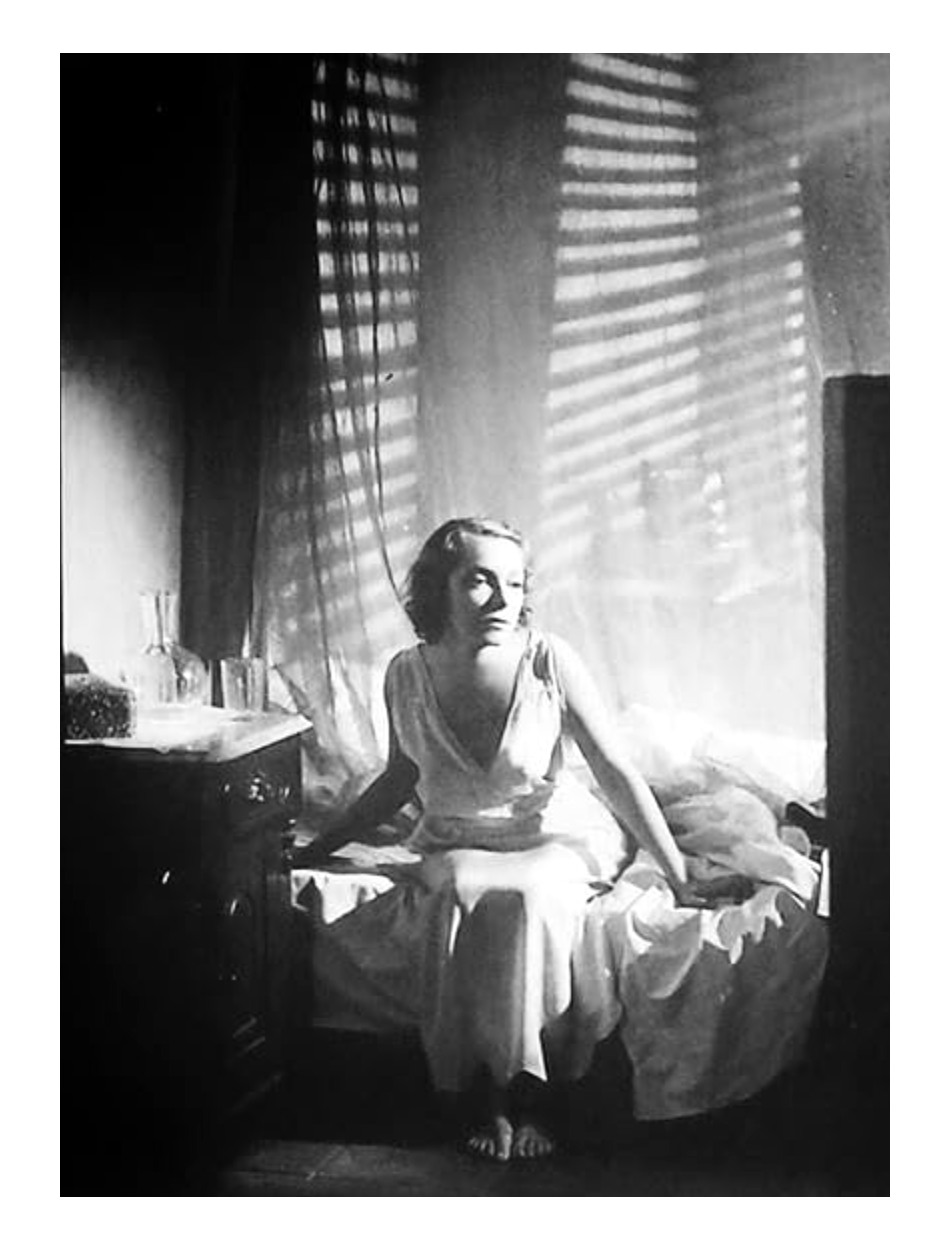
supposed to be pleased when he humbly volunteers ‘his people’ for the serum trials. The unavoidable conclusion is that the film believes that Negro lives are less valuable. Except for Dr. Marchand, the black islanders are fearful primitives incapable of dealing with adult matters. This is supposed to be the multicultural Caribbean, but in its visuals and attitudes the movie makes us think more of a Joseph Conrad tale.
(spoilers)
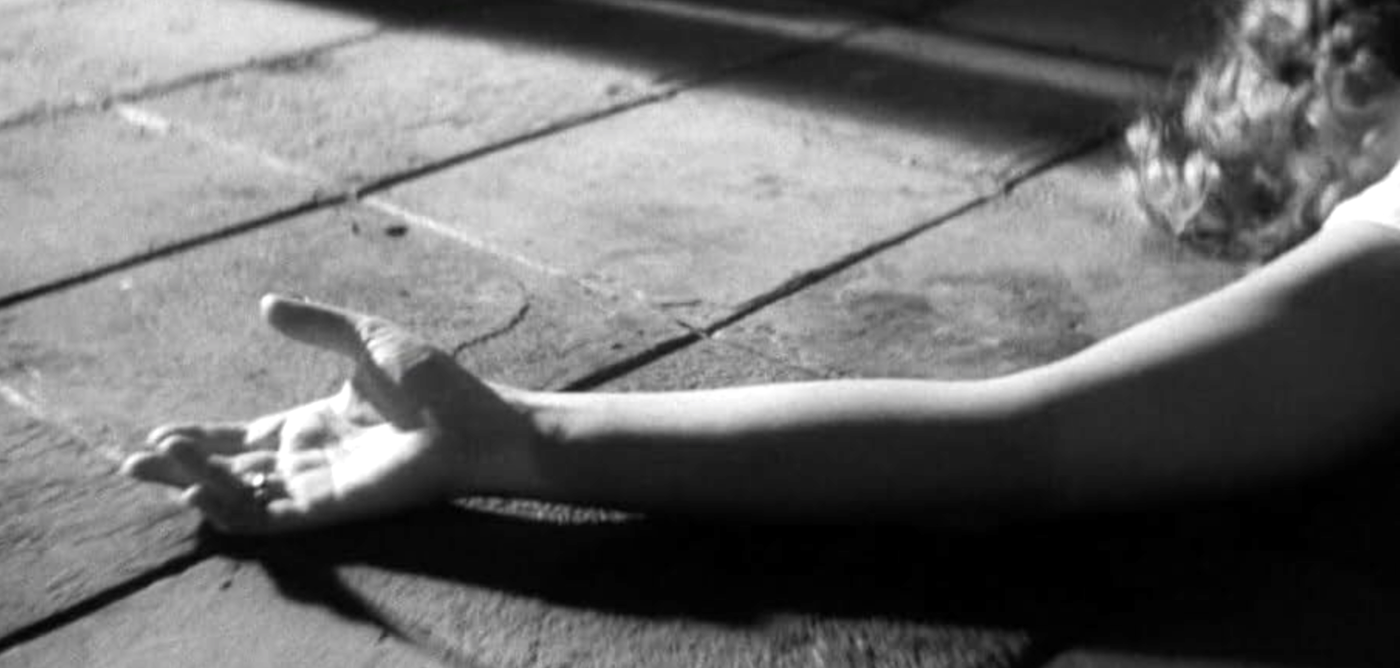
The film’s lack of sophistication (or its capitulation to the demands of the Southern movie market) becomes more clear when Martin goes off to tend to the natives in St. Hubert Island’s back country, leaving his adoring wife Leora behind in the port city. She cowers in dark rooms surrounded by voodoo-chanting natives, a situation almost as menacing as that of the vintage horror film Black Moon. Director Ford applies some Murnau-like expressionist imagery to the scenes of Leora ill and delirious. She reaches toward a blinding light that surely represents death. A sad shot from behind an armchair completes Ford’s expressionist imagery; it would be repeated and refined in Ford’s later The Long Gray Line.
(more spoilers)
The movie adaptation drops the book’s final section dealing with Martin Arrowsmith’s 2nd marriage, to Myrna Loy’s Joyce Lanyon. The screenplay compensates by making the attractive Joyce character into a jungle temptation for Martin, and little else.
According to TCM host John Osborne, Myrna Loy told him that John Ford arbitrarily dropped several of her scenes to speed up the filming. Ford may not have been happy on this show, with producer Goldwyn assigning director H. Bruce Humberstone to assist. According to the AFI, Ford “worked off the production when he and Humbertsone had an argument about staging one of the scenes and Goldwyn sided with Humberstone.”
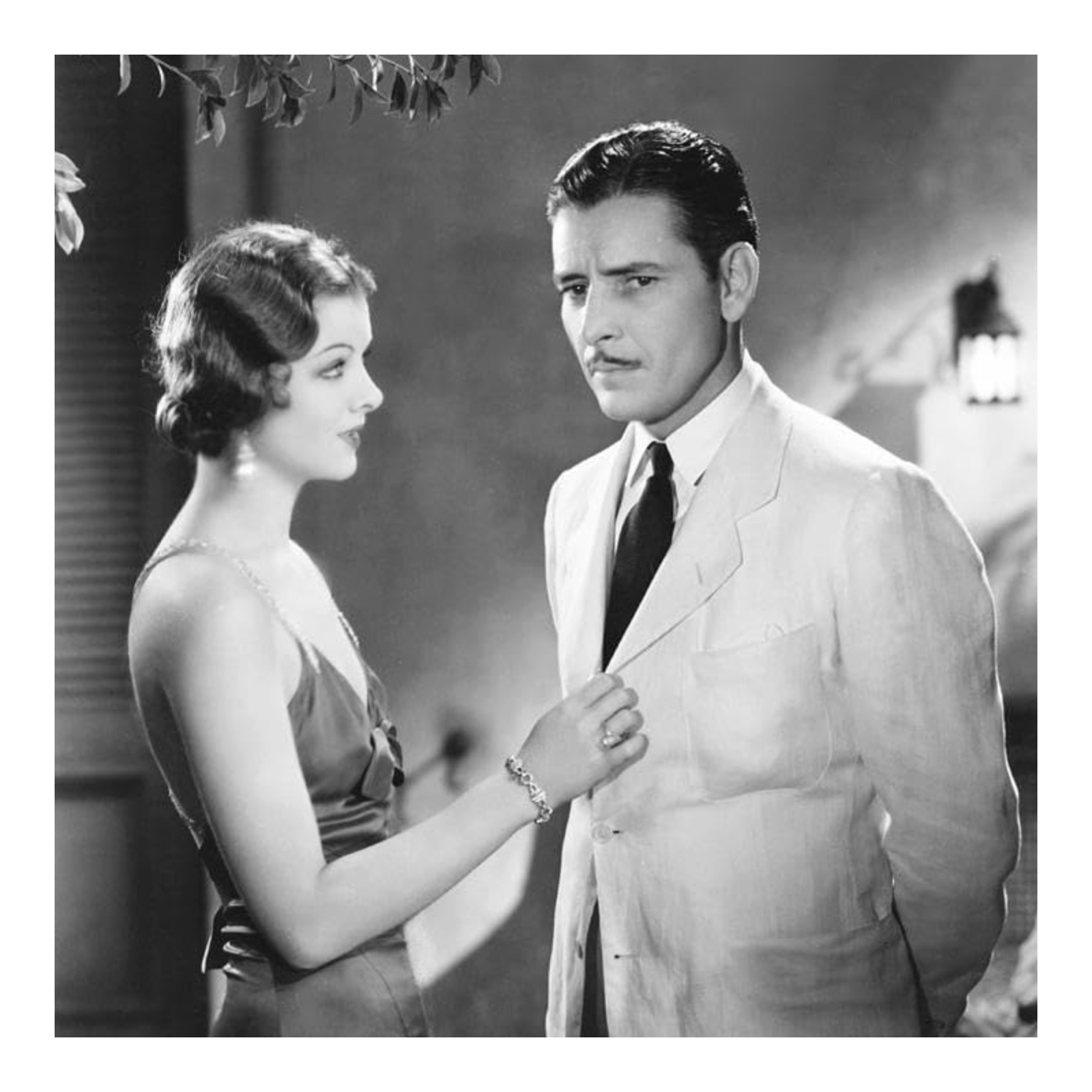
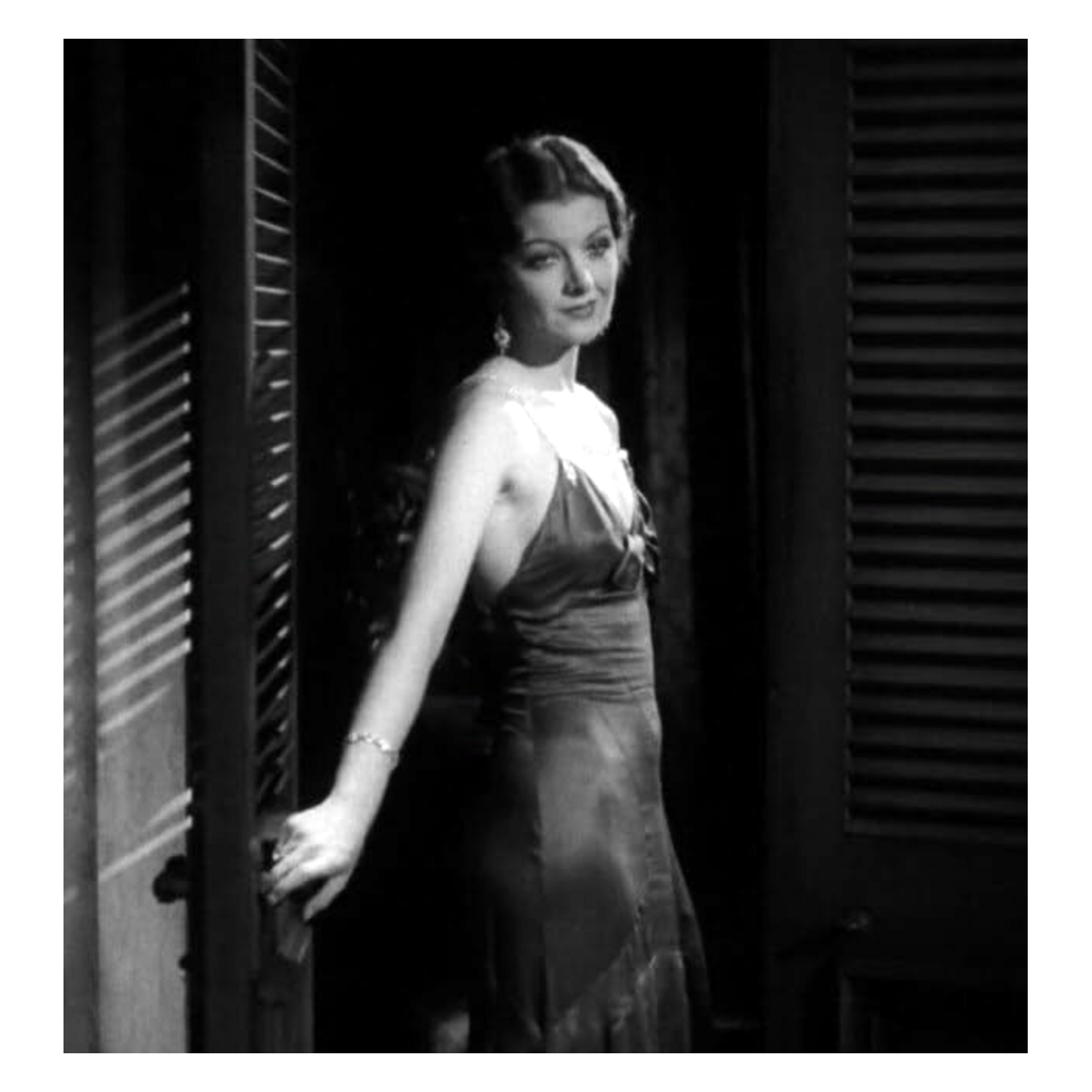
In the censored cut on the old DVD, Myrna Loy’s Joyce has barely been introduced when her role in the movie ends. The new restoration is a couple of minutes longer, and it includes an entire scene we haven’t seen before. Dressed in evening clothes, Loy’s Joyce and Colman’s Martin talk before they part for the night. The attraction between them is reciprocal, especially in the way Joyce pauses at her door — to a room adjoining with Martin’s. The AFI’s synopsis says that they sleep together, but even in the uncut version, the scene leaves Martin in the next room, only thinking about what’s waiting and available next door. The photo on the right is from this restored parting scene. →
Later in New York, the show is wrapping up very quickly, in a scene that has the feel of a rushed re-shoot to collapse several scenes into one. At the Institute, Joyce walks directly into a doctors’ conference, interrupting to ask Martin if they ‘can still be friends.’ He says no; and she abruptly turns and leaves. Martin flatly declares that romantic entanglements are incompatible with the noble call of medical research. Both the book and the movie send the message that scientists need to be free of disrupting influences.
Despite its Academy honors and glowing reputation Arrowsmith doesn’t seem to have been the kind of subject to fire John Ford’s imagination. Ronald Colman and Helen Hayes are charming and Richard Bennett’s Scandinavian doctor is an interesting character. Even in the uncut print, Myrna Loy is barely in the picture. The Pre-Code controversy and dated attitudes will make Arrowsmith interesting to readers of Sinclair Lewis, who turned down his Pulitzer but a few years later accepted a Nobel Prize for Literature.
Sinclair Lewis’s dark political satire It Can’t Happen Here (1935) depicts a fascist takeover of the United States. It was reportedly written to subvert a 1936 Presidential bid by the populist demagogue Huey Long. In 1936 Arrowsmith’s screenwriter Sidney Howard adapted It Can’t Happen Here for MGM, but both Louis B. Mayer and the Hays Code Office stopped it. The reason appears to be more business than political — Hollywood’s studios did not want to risk losing the German theatrical market.
The novel It Can’t Happen Here was becoming less well known … until recently.
Towards the end of production of this film, Ford fell off the wagon and started drinking heavily and refused to do the retakes that Goldwyn wanted, to the point where Ford skipped a meeting with the producer because he was not in shape to be there, and Goldwyn fired him and had Humberstone make the shots. Word got back to Ford’s home studio, Fox, and they fired him, as well. His wife sobered him up and after a few months in the dog house Fox hired him (under the proviso that he stay sober) to direct PILGRIMAGE in 1932 and his second chapter began.
Wow, thanks Jeffry … !